The first time I held a professional-grade Mauviel saucepan, I understood why copper has remained the gold standard in culinary circles for centuries. It isn't just about the warm, sunset glow that elevates a kitchen's aesthetic; it is about pure, unadulterated performance. Copper features 20 times the thermal conductivity of stainless steel and 10 times that of cast iron. In a real-world kitchen scenario, that means near-instant temperature adjustments—essential for delicate sauces, temperamental chocolate, or a perfect sear.
However, as an editor specializing in home appliances, I often hear from readers who are intimidated by the upkeep. Copper is a "living" metal. It reacts to oxygen, moisture, and heat, developing a darkened patina that some adore and others find messy. Whether you want to maintain that showroom-ready mirror finish or simply ensure your pans last for generations, proper care is non-negotiable. Protecting this investment isn't difficult, but it does require a departure from the "toss it in the dishwasher" habits of modern cookware.
Step 1: Cleaning the Interior Lining (Tin vs. Stainless Steel)
Before you even touch the exterior, you must understand what is happening inside your pan. Because copper is reactive—meaning it can leach into acidic foods and impart a metallic taste—almost all modern copper cookware is "lined" with a non-reactive metal. How you clean the interior depends entirely on whether you have a traditional tin lining or a modern stainless steel one.
Identifying Your Lining
Most heritage brands like Mauviel or Falk use one of two materials. Tin is silvery-white and naturally non-stick, but it is soft. Stainless steel is more matte-grey, incredibly durable, and harder to scratch.
| Feature | Tin Lining | Stainless Steel Lining |
|---|---|---|
| Durability | Soft; can wear down over time. | Extremely durable; virtually permanent. |
| Cooking Surface | Naturally non-stick properties. | Requires oil/fat to prevent sticking. |
| Heat Tolerance | Low (Melts at 450°F / 232°C). | High (Can handle high-heat searing). |
| Maintenance | Requires professional re-tinning. | No special maintenance required. |
Gentle Cleaning Protocol
Regardless of the lining, never reach for steel wool or abrasive scouring pads. A soft sponge and mild dish soap are your best friends here. For stuck-on food, soak the pan in warm, soapy water for 15 minutes rather than scrubbing.
Ethan’s Pro Tip: If you have tin-lined copper, remember the 450°F rule. Tin-lined copper cookware is limited by a melting point of 450°F (232°C), necessitating lower heat settings compared to stainless steel or carbon steel alternatives. Never "pre-heat" a tin-lined pan empty, as the lining can melt and bubble in seconds.
When to Re-tin
If you have a tin lining, you should have your copper cookware professionally re-tinned when the interior lining wears thin and the pinkish copper metal begins to show through. Cooking on exposed copper can be reactive and, in large quantities, unsafe. Generally, with daily use, a tin lining lasts 5 to 10 years before needing a refresh.
Step 2: Restoring the Exterior Glow with Natural Methods
This is the step most people find daunting, yet it is where the "magic" of copper care happens. You don't need harsh industrial chemicals to remove tarnish; in fact, the best natural way to clean copper involves simple pantry staples. The secret lies in the combination of an acid and a mild abrasive (salt).
The "Acid + Salt" Chemistry
Tarnish is essentially copper oxide. When you introduce an acid (like citric or acetic acid), it breaks the bond between the copper and the oxygen. The salt acts as a catalyst and a gentle scrubber to lift the oxidation away.
Method A: The Lemon and Salt Scrub For deep tarnish or "heat tint" (the rainbow colors that appear after cooking), this is the most effective method.
- Cut a lemon in half.
- Dip the cut side into a bowl of coarse kosher salt.
- Rub the lemon directly onto the copper in a circular motion. You will see the bright copper emerge almost instantly.
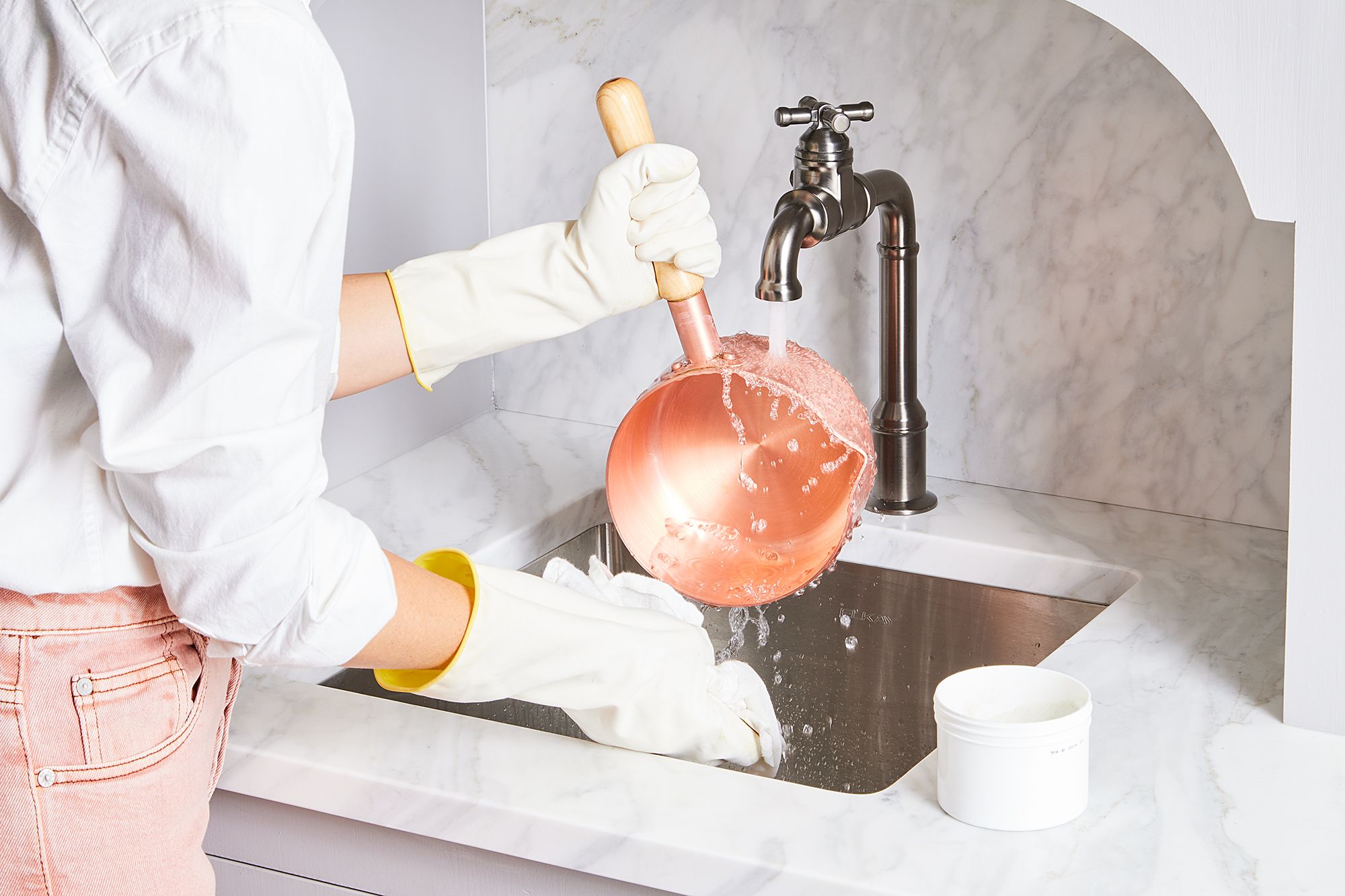
- Rinse with warm water and dry immediately with a microfiber cloth.
Method B: The Tomato Paste Polish If you want a more controlled, gentle polish, use tomato paste or ketchup. It may sound strange, but the high concentration of citric acid in tomatoes makes it a brilliant copper cleaner.
- Apply a thin layer of tomato paste (two parts paste to one part salt for extra grit) over the exterior.
- Let it sit for 5 to 10 minutes.
- Buff it off with a soft cloth and rinse.
Method C: The Vinegar Boil (For Hard-to-Reach Spots) For intricate handles or rivets where grime accumulates, a vinegar bath works wonders.
- Place the pan in a larger pot (or a clean sink).
- Pour boiling water mixed with a cup of white vinegar and a tablespoon of salt over the exterior.
- Let it soak for a few minutes before wiping clean.
Step 3: Proactive Maintenance and Storage
Once your copper is clean and shining, the goal is to keep it that way for as long as possible. The longevity of copper depends heavily on what you don't do.
The Cardinal Sins of Copper
The most frequent question I receive is: Can you put copper pans in the dishwasher? The answer is a firm No. Copper cookware should never be put in the dishwasher. Harsh detergents and high heat can damage the metal and the delicate tin or stainless steel lining. Furthermore, the environment inside a dishwasher is highly oxidative, meaning your pan will come out looking dull, spotted, or even greyish-green.
Drying and Storage
Water is the enemy of a mirror finish. Even a small drop left to air-dry can create a permanent water spot that requires re-polishing. Always hand-dry your copper with a soft, lint-free towel immediately after washing.
For storage, avoid humid environments (like under a sink near plumbing). Ideally, copper should be hung on a pot rack. Not only does this show off the beauty of the metal, but it also prevents "metal-on-metal" stacking, which can scratch the soft copper exterior or the interior lining of the pan sitting inside it.
Maintenance Note: If you prefer the "professional" look of a weathered patina, you can skip the polishing. However, always ensure the interior remains clean and the handles are free of grease, which can become permanent if carbonized by heat.
Troubleshooting: Patina vs. Tarnish
It is important to distinguish between a healthy patina and actual grime. A patina is a natural darkening that develops evenly over time; it is a sign of a well-used kitchen. Tarnish, or verdigris (the green stuff), is a sign of neglect or exposure to moisture and salt.
If you find that natural methods aren't giving you the "showroom" finish you desire, I recommend professional creams. Wright’s Copper Cream or Copperbrill (Mauviel's proprietary cleaner) are excellent. These products often contain a mild anti-tarnish agent that leaves a microscopic protective film, delaying the next round of oxidation.
FAQ
What causes copper to turn green? The green film, known as verdigris, occurs when copper is exposed to oxygen and moisture (acetic acid or salt can accelerate this). While it looks like the Statue of Liberty, it is unwanted on cookware. It can be removed using the lemon and salt method described in Step 2.
Can I use Bar Keeper's Friend on the exterior? Yes, but with caution. Bar Keeper’s Friend contains oxalic acid, which is very effective on copper. However, use the "Soft Cleanser" version rather than the powder to avoid scratching the polished surface. Always test a small spot first.
How do I make my copper pans induction-compatible? Standard copper is not magnetic and will not work on induction cooktops. To bridge this gap, you must use an induction interface disk—a flat stainless steel plate that sits between the burner and the copper pan.
Conclusion
Copper cookware is more than just a tool; it is a legacy item. When you understand that its 20x thermal conductivity offers you unparalleled control over your cooking, the small effort of hand-washing and the occasional lemon-scrub feels like a fair trade. By following this 3-step routine—gentle interior cleaning, natural exterior polishing, and smart storage—you aren't just cleaning a pan; you are preserving a piece of culinary history. Treat your copper as a lifelong investment, and it will reward you with a lifetime of perfect meals.