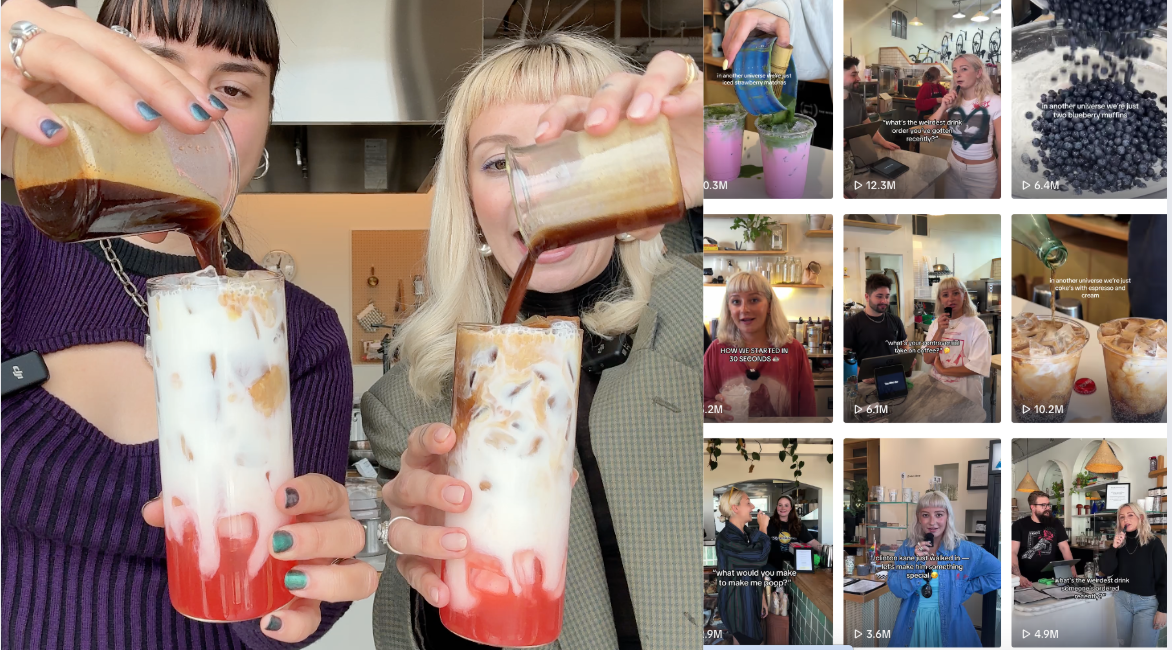
If you’ve spent any time on the "Coffee-Tok" side of social media, you’ve likely encountered the mesmerizing, three-toned gradient of an iced latte from The Nitro Bar. Born in Rhode Island and propelled to global fame by founder Audrey Finocchiaro, these drinks are more than just a morning jolt—they are a masterclass in texture, visual layering, and precise flavor engineering.
While the shop experience in Newport or Providence is unmatched, your kitchen can come a close second with the right gear. As a product editor, I often tell readers that "viral" doesn't have to mean "impossible to replicate." To achieve that signature Nitro Bar look—a dark espresso crown slowly cascading into a creamy white center and a vibrant fruit-syrup base—you need a specific set of tools that prioritize temperature stability and ingredient precision.
1. The Professional Espresso Foundation: Profitec GO
To replicate the punchy, bold flavor that cuts through whole milk and sweet fruit syrups, a standard pod machine won’t suffice. You need a machine capable of pulling a true double shot of espresso with consistent pressure.
The Profitec GO is currently my top-tier recommendation for home baristas looking for professional-grade results without a five-figure price tag. What sets this machine apart is its PID temperature control. In the world of high-end extraction, a variance of just two degrees can turn a balanced shot into something sour or overly bitter. The Profitec GO allows you to dial in the exact temperature needed for your specific bean roast, ensuring that the "base" of your Nitro Bar recreation is as smooth as what they serve in the shop.
Best for: The aspiring pro who wants a machine that will last a decade and deliver café-quality crema every single morning.
2. The Precision Grinder: Baratza Encore or Sette 30
Consistency is the enemy of mediocrity in coffee. If your coffee grounds are uneven, your water will find the path of least resistance (channeling), resulting in a thin, watery shot that disappears the moment it hits the milk.
Whether you are making a concentrated espresso or a batch of cold brew, the Baratza Encore (or its faster sibling, the Sette 30) is the industry standard for home use. With 40 distinct grind settings, it provides the versatility required to switch between the fine powder needed for an espresso-based latte and the coarse, sea-salt texture required for a smooth cold brew base.
3. The Cold Brew Specialist: OXO Good Grips Cold Brew Coffee Maker
While many of The Nitro Bar’s viral lattes use espresso, they are also famous for their ultra-smooth nitro cold brew. If you prefer a lower-acidity base that feels "velvety" on the tongue, cold brewing is the way to go.
While traditional cold brewing takes 12-24 hours for maximum flavor extraction, the OXO Good Grips Cold Brew Coffee Maker simplifies the process with a "Rainmaker" head that ensures even water distribution. This prevents "dry spots" in the grounds and results in a more concentrated, chocolatey base. For those who want the "Nitro" experience instantly, modern professional-grade machines like the Cumulus can produce chilled nitro-cold brew in approximately 60 seconds, though the OXO remains the best value-for-money entry point.
Espresso Machine vs. Cold Brew Maker: Which should you choose?
| Feature | Espresso Machine (Profitec GO) | Cold Brew Maker (OXO) |
|---|---|---|
| Flavor Profile | Intense, bright, acidic, bold | Smooth, low-acid, chocolatey |
| Preparation Time | 5-10 minutes (warm up + pull) | 12-24 hours |
| Texture | Syrupy with crema | Light and clean |
| Best For... | The classic "cascading" layered latte | A refreshing, easy-to-drink morning cup |
4. The Syrup Station: Heavy-Bottomed Stainless Steel Pot
The secret sauce—literally—of The Nitro Bar’s viral success is their homemade fruit syrups, particularly the Strawberry Rhubarb. You cannot replicate this with store-bought, artificially flavored pumps.
To make the signature fruit syrup at home, you need a heavy-bottomed stainless steel pot to ensure even heat distribution, preventing the sugar from scorching. The Nitro Bar’s signature syrup method utilizes a precise 1:1 sugar-to-water ratio to ensure a perfect balance of sweetness and viscosity in every drink.
The DIY Syrup Technique:
- Combine 1 cup sugar and 1 cup water with a handful of fresh strawberries and chopped rhubarb.
- Bring to a soft boil over medium heat.
- Simmer for approximately 10 minutes until the mixture thickens into a glossy syrup.
- Strain through a fine-mesh sieve and cool before using.
5. The Temperature Master: Cuisinart PerfecTemp Electric Kettle
Whether you are simmering fruit for syrup or blooming coffee grounds for a pour-over style base, temperature precision is paramount. The Cuisinart PerfecTemp is a staple in my kitchen because it offers six preset heat settings. For syrup making, you want a controlled simmer, not a raging boil that evaporates too much water and turns your syrup into hard candy. This kettle allows you to maintain that delicate 10-minute simmer technique with push-button ease.
6. The Scale: American Weigh Scales LB-3000
If you watch Audrey Finocchiaro’s process videos, you’ll notice that nothing is "eyeballed." Consistency is key to the Nitro Bar brand. To avoid the "bitter trap," you must weigh your beans and your syrup ingredients to the gram. The American Weigh Scales LB-3000 is a durable, high-capacity scale that fits perfectly under an espresso portafilter or on a countertop for measuring out fruit and sugar for your syrups. Volume measurements (like cups and tablespoons) are notoriously inaccurate due to how ingredients pack; weight is the only way to ensure today's latte tastes as good as yesterday's.
7. The Aesthetic Vessel: Tall Borosilicate Glassware
You’ve put in the work to get the flavors right; now you need to nail the presentation. The "Nitro Bar aesthetic" relies on a tall, clear glass that allows the different densities of the liquids to stay separated momentarily before they bleed together.
I recommend tall borosilicate glassware. Borosilicate is resistant to thermal shock, meaning you can pour hot espresso directly into a glass filled with ice without worrying about the glass cracking. The height is essential for the "Order of Operations" that creates the famous visual gradient.
Founder’s Tip: Audrey Finocchiaro frequently emphasizes the importance of using whole milk. The higher fat content in whole milk provides the necessary density to support the espresso "float" on top, preventing it from mixing too quickly and ruining the visual layers.
Step-by-Step: Assembling the 'Nitro' Look at Home
Once you have your tools, the assembly is what separates a standard iced coffee from a viral-worthy latte. To replicate the signature visual look, follow this specific order:
- Step 1: The Foundation. Fill your tall borosilicate glass to the brim with "tons of ice." This creates a lattice that helps slow down the liquids as they pour.
- Step 2: The Sweetener. Add a "generous pour" (about 1–1.5 oz) of your homemade 1:1 strawberry rhubarb syrup. Because of its sugar density, it will sink straight to the bottom.
- Step 3: The Body. Pour in your whole milk, leaving about an inch of space at the top. The milk will sit atop the syrup, creating a distinct white layer.
- Step 4: The Topper. Finally, top it off with a freshly pulled double shot of espresso (or your cold brew concentrate). Pour it slowly over a single ice cube to break the fall. This creates the "cascading" effect as the dark coffee slowly bleeds into the white milk.
FAQ
Can I use oat milk instead of whole milk? Yes, but for the best layering results, choose a "Barista Edition" oat milk. These are formulated with higher fat and protein content to mimic the density of whole milk, which is necessary to keep the espresso shot from sinking too quickly.
How long does the homemade syrup last? Because of the 1:1 sugar-to-water ratio, the syrup acts as a natural preservative. When stored in an airtight glass jar in the refrigerator, your homemade fruit syrup will stay fresh for up to two weeks.
Why does my espresso taste bitter compared to the shop? Bitterness usually stems from over-extraction. This could be because your grind is too fine, your water is too hot, or you are "pulling" the shot for too long. Aim for a 25–30 second extraction time for a double shot.
By investing in these seven essential tools, you aren't just buying kitchen gadgets; you’re building a home laboratory capable of recreating the most famous coffee drinks in the country. The Nitro Bar's success is built on the intersection of craft and charisma—with these tools, you've got the craft covered.