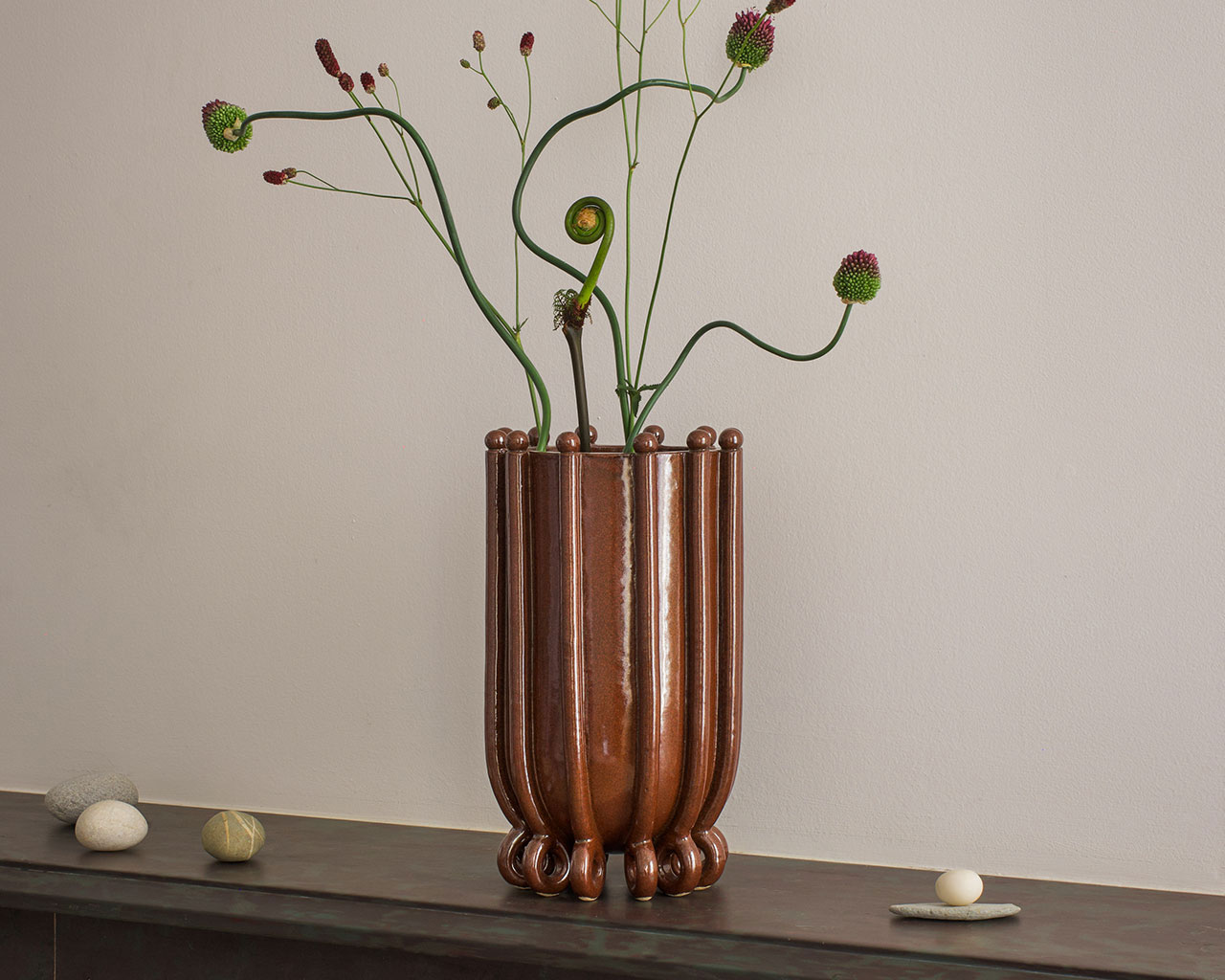
For those of us who spend our days navigating the ephemeral world of digital interfaces and fleeting trends, there is a profound, almost primal pull toward the tactile. In the heart of Brooklyn’s thriving maker scene, a new voice has emerged that speaks this language of permanence and weight with startling clarity. Devin Wilde, who transitioned from the precision-driven world of UX design to the visceral heat of the kiln, launched his namesake studio in 2023. His work doesn't just sit on a shelf; it commands the room. By synthesizing the monumental proportions of architecture with the intimate utility of the vessel, Wilde is redefining what it means to be a "contemporary ceramicist" in an age that often favors the disposable over the venerable.
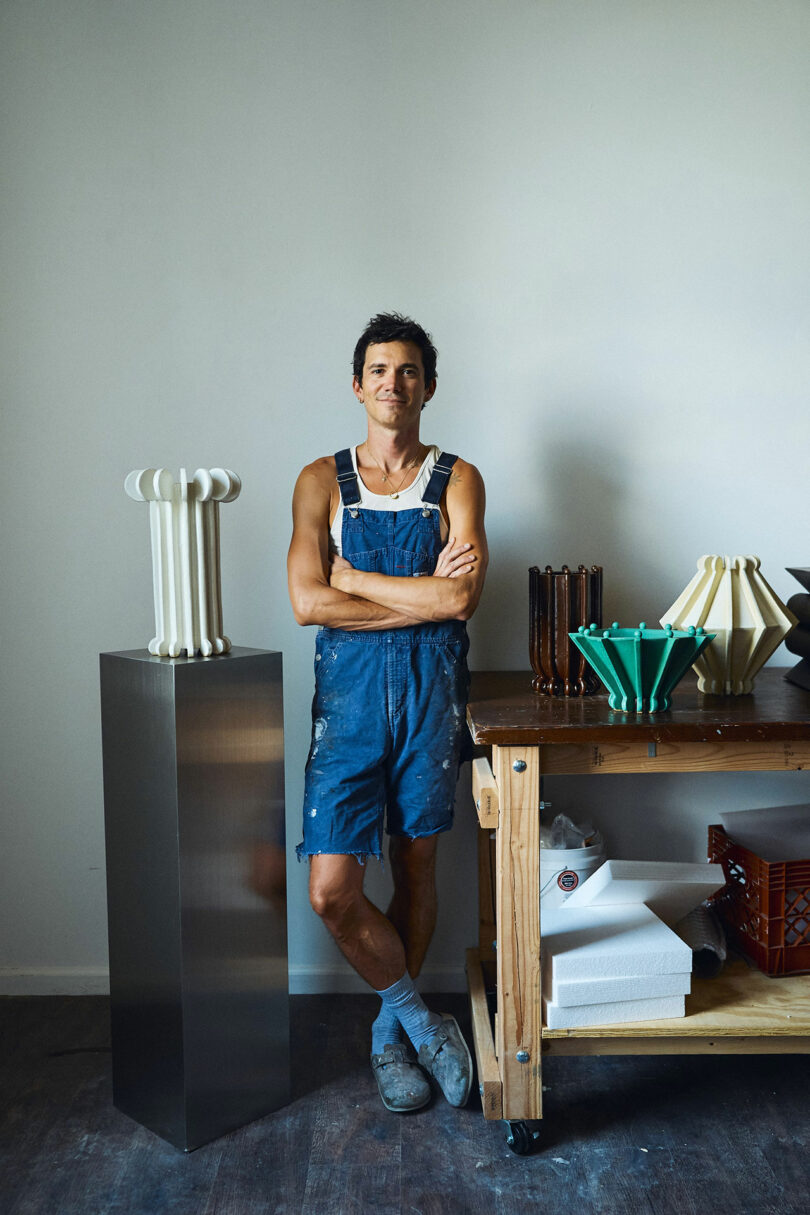
The Philosophy of Duality: Ancient Roots, Modern Context
At the core of Devin Wilde’s practice is a rejection of the "tortured artist" trope. Instead, he approaches the wheel and the slab table with a philosophy of inquiry and self-care. For Wilde, the act of creation is a dialogue between the past and the present, a way to anchor oneself in a world that feels increasingly unmoored. His work occupies a unique space in the interior design landscape—a bridge between ancient metal artifacts and postmodern sculptural design.
These are not merely "pots." They are contemporary ceramic vessels that carry a sense of "venerability." When you place a Wilde piece in a modern living room, it acts as a grounding force. There is a specific duality at play: the forms feel as though they could have been excavated from a centuries-old shipwreck, yet their silhouettes are undeniably sharp, calculated, and architectural. This tension—between the weathered and the precise—is what makes his work a staple for editors looking to add soul to minimalist spaces.
The Architectural Blueprint: Gothic Proportions and Art Deco Lines
Wilde’s aesthetic vocabulary is a sophisticated synthesis of three distinct historical periods, each contributing a specific "DNA" to the final form. As an editor, I often look for pieces that have a clear lineage, and Wilde’s work provides a masterclass in historical remixing.
- Classical Influence: This is seen in his use of friezes and the balanced, rhythmic repetition of motifs that echo the temples of antiquity.
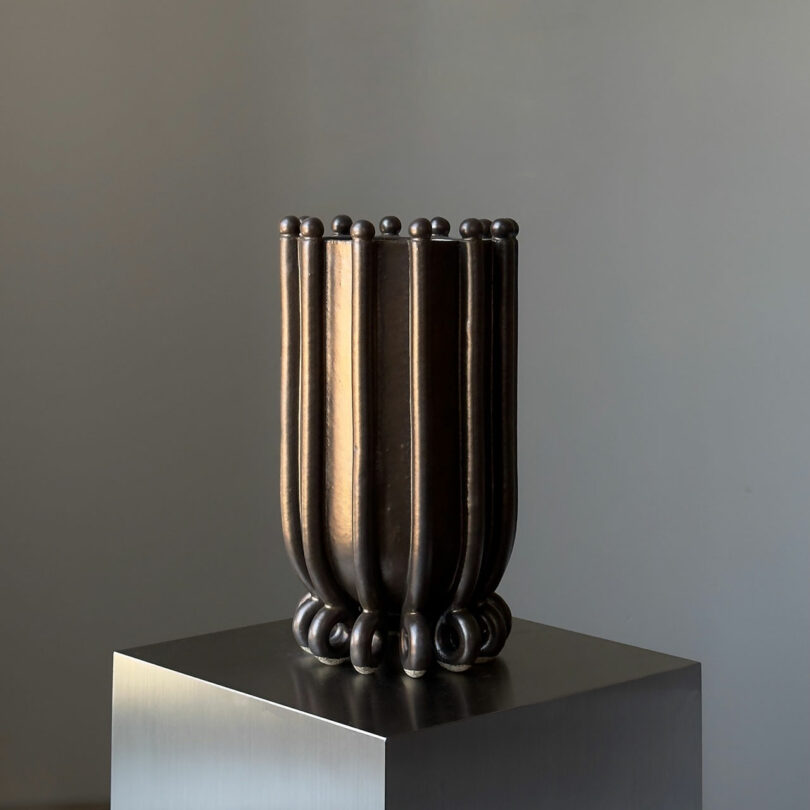
- Gothic Proportions: Wilde draws heavily from Gothic architecture, specifically its volumetric proportions and verticality. You see this in the soaring, fluted columns of his larger vessels, which mimic the structural ribs of a cathedral.
- Art Deco Linework: The crispness of his geometries—the stepped bases and sharp fluting—points directly to the streamlined elegance of the early 20th century.
This isn't just "whimsical" decoration. In Wilde’s world, ornamentation has a functional consequence. The ridges and reliefs aren't just for show; they provide a structural rhythm that allows the vessel to hold its own against large-scale furniture and bold architectural features.
The Technical Foundation: Why 'Grog' is Essential to the Process
To the untrained eye, a ceramic vessel is simply clay and fire. But to achieve the kind of architectural pottery design Wilde is known for, the technical "recipe" is just as important as the artistic vision. One of the most critical elements in his studio practice is the use of grog.
Grog is essentially fired clay that has been crushed into a gritty, sand-like aggregate and added back into the raw clay body. For Wilde, the grog-to-clay ratio is a precise science. Why is it so vital?
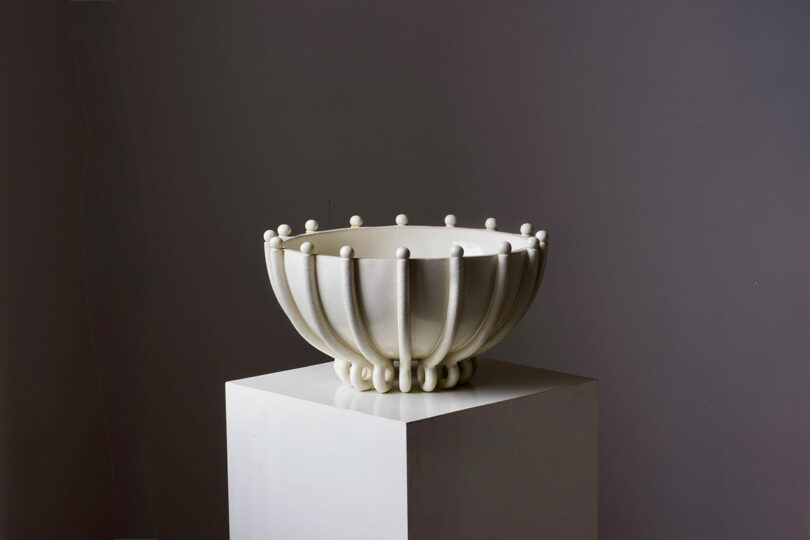
- Structural Integrity: Wilde’s work often features heavy, high-relief ornaments applied at the leather-hard stage (the point when the clay is no longer pliable but still retains moisture). Without the internal "skeleton" provided by the grog, these intricate additions would sag or crack under their own weight.
- Reducing Shrinkage: High-fire ceramics undergo significant shrinkage in the kiln. Grog acts as a stabilizer, minimizing the degree to which the piece contracts and preventing the warping that often plagues large-scale sculptural work.
- The Hand-Building Process: Unlike mass-produced ceramics, Wilde’s pieces are hand-built. This allows him to manipulate the material during that fleeting leather-hard window, carving and attaching elements with a precision that wheel-throwing alone cannot achieve.
Surface Alchemy: Transforming Clay into Metal
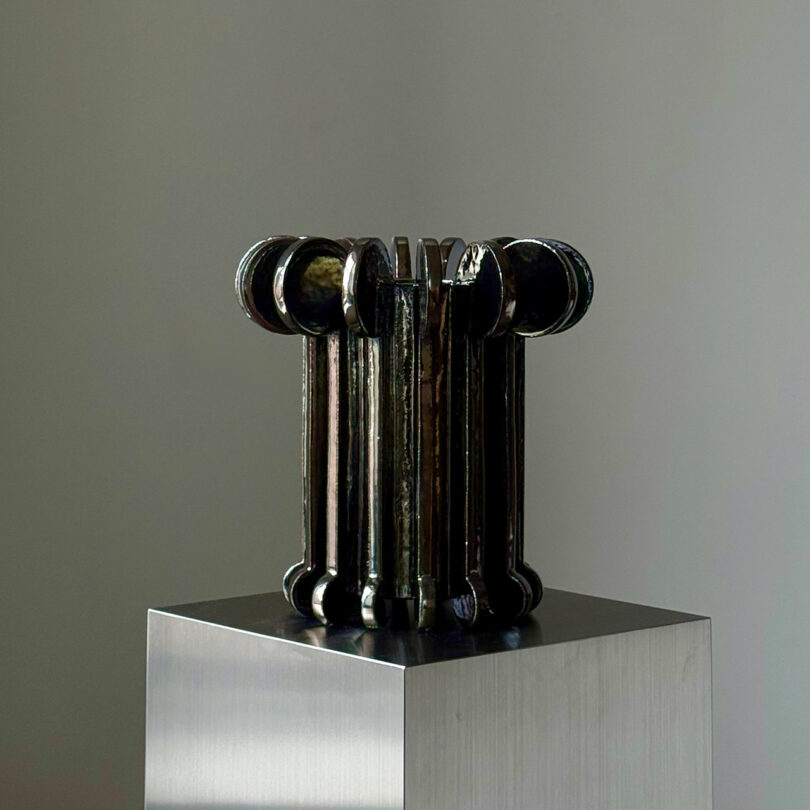
If the form of a Devin Wilde vessel is its soul, then the glaze is its history. Wilde differentiates his work through a process I like to call "surface alchemy." By utilizing metal oxide glaze techniques, he manages to transform vitrified clay into objects that look like they belong in a museum of metallurgy rather than a pottery studio.
His signature palette revolves around the oxidation of metals:
- Aged Bronze: A deep, olive-toned finish that suggests centuries of exposure to the elements.
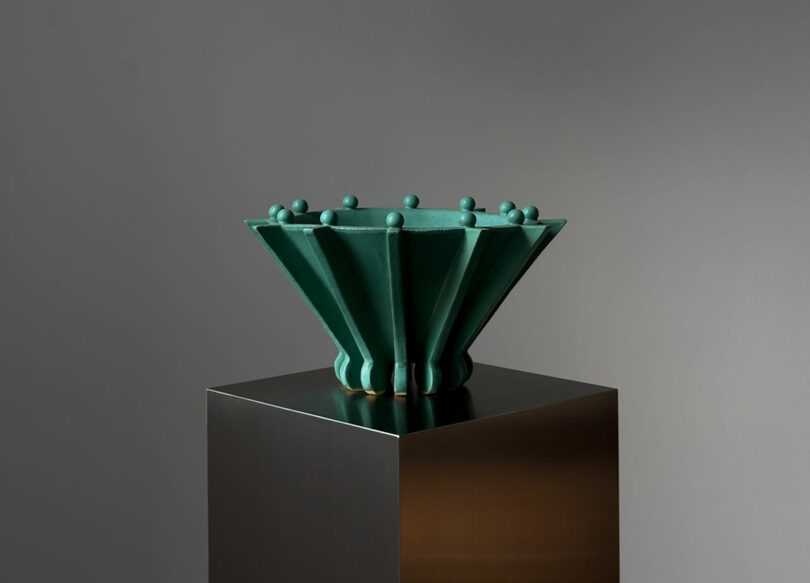
- Patinated Copper: The iconic verdigris green that brings a sense of life and "organic decay" to a space.
- Rust-Covered Iron: A textured, matte finish that feels industrial yet ancient.
These glazes interact with the high-relief textures of the vessels, catching the light in ways that a standard glossy glaze never could. The result is what Wilde describes as a "found at sea" aesthetic. In a world of smooth, factory-finished decor, these tactile, light-catching surfaces provide a much-needed sensory contrast.
| Glaze Type | Aesthetic Effect | Best Interior Placement |
|---|---|---|
| Matte Metal Oxide | Absorbs light, emphasizes form | Under bright, natural light or near windows |
| Satin Patina | Soft glow, highlights texture | On dark wood consoles or stone mantels |
| High-Relief Gloss | High contrast, dramatic shadows | As a centerpiece under directional spotlighting |
Why Devin Wilde is a 'Talent to Watch' in 2024
What makes Devin Wilde particularly compelling for 2024 is the narrative arc of his career. His shift from the "intangible" world of UX design to the "tangible" studio practice reflects a broader cultural movement. We are seeing a shift away from the sterile minimalism that dominated the last decade toward a "new maximalism"—one that isn't about clutter, but about depth, history, and craft.
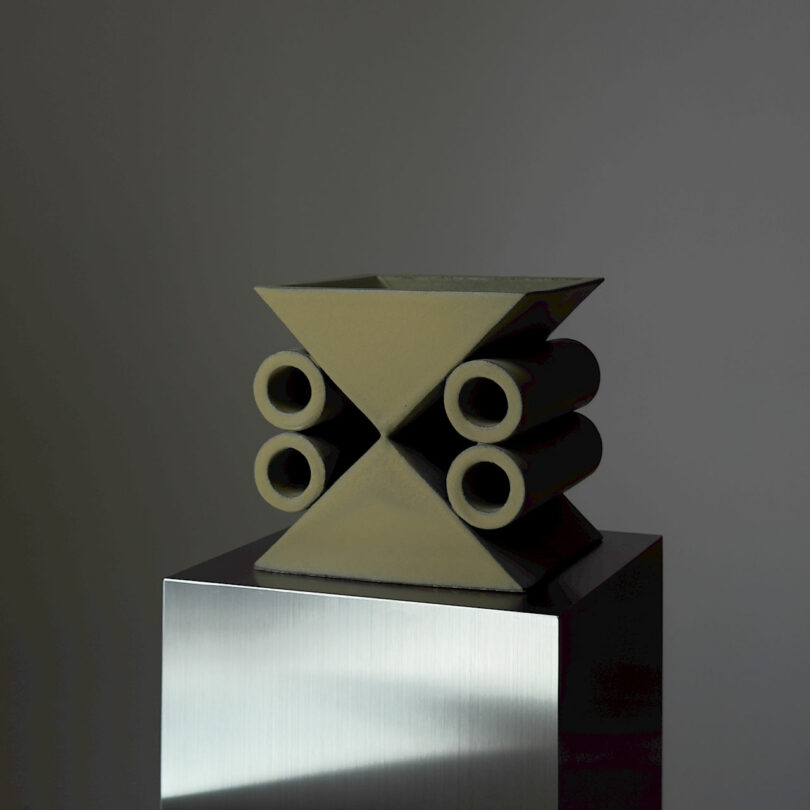
Wilde’s work stands out because it doesn't try to be "cute" or "trendy." It aims for the eternal. By blending Art Deco linework with classical forms and Gothic volumes, he has created a distinct visual language. In a market saturated with "wobbly" organic pottery, Wilde’s disciplined, architectural approach feels revolutionary. He is moving the conversation of functional vs sculptural ceramics toward a synthesis where a vessel doesn't have to choose between being a tool and being a monument.
FAQ
How do I style a Devin Wilde vessel in a modern home? Because of their architectural weight, these vessels work best as "anchor pieces." Place a large-scale fluted vessel (like No. VII) on a minimalist dining table or a raw concrete pedestal. Their metallic finishes pair beautifully with natural materials like walnut, linen, and honed marble.
Are these vessels actually functional, or are they just sculptural? While Wilde views them as sculptural icons, they are fully vitrified and functional. However, due to the intricate metal oxide glazes and high-relief ornaments, they are best suited for dry arrangements (like branches or dried florals) or simply as standalone art pieces.
What is the difference between Wilde's work and standard "Art Deco" pottery? Standard Art Deco pottery often focuses on surface pattern. Wilde’s work goes deeper, incorporating the structural logic of Art Deco (and Gothic) architecture. The use of grog-heavy clay and metal oxides also gives his work a rugged, "ancient" texture that sets it apart from the smooth, polished look of traditional Deco ceramics.
As we look toward the future of interior styling, the "Art of the Vessel" is clearly undergoing a renaissance. Designers like Devin Wilde remind us that the objects we surround ourselves with should do more than fill a void—they should tell a story of human hands, ancient history, and the enduring power of form. Whether you are a collector or simply a lover of good design, watching the evolution of this Brooklyn studio is a journey well worth taking.