Setting the table has always felt to me like the final rehearsal before a grand performance. There is a quiet, rhythmic magic in the clink of ceramic against wood, the unfolding of crisp linen, and the deliberate placement of a glass. For years, the gold standard of hosting was the "complete set"—twenty-four identical pieces of bone china, polished to a mirror finish. But as we look toward the hosting landscape of Spring 2026, that rigid formality has dissolved into something far more soulful and expressive.
Today, the table is a silent storyteller. We are moving away from the "out-of-the-box" showroom look and toward what I like to call the Hybrid Tablescape. It’s a design philosophy that mirrors how we dress: a mix of vintage finds, high-end investment pieces, and artisanal textures. According to recent internal consumer surveys, 68% of modern hosts now prefer these "personalized mix-and-match" sets over traditional uniform dinnerware. This shift isn't just about rebellion; it's about curation. It allows us to honor the history of a family heirloom while grounding it in the contemporary cool of a matte-finished plate.
The Golden Rules of Mix-and-Match Tableware
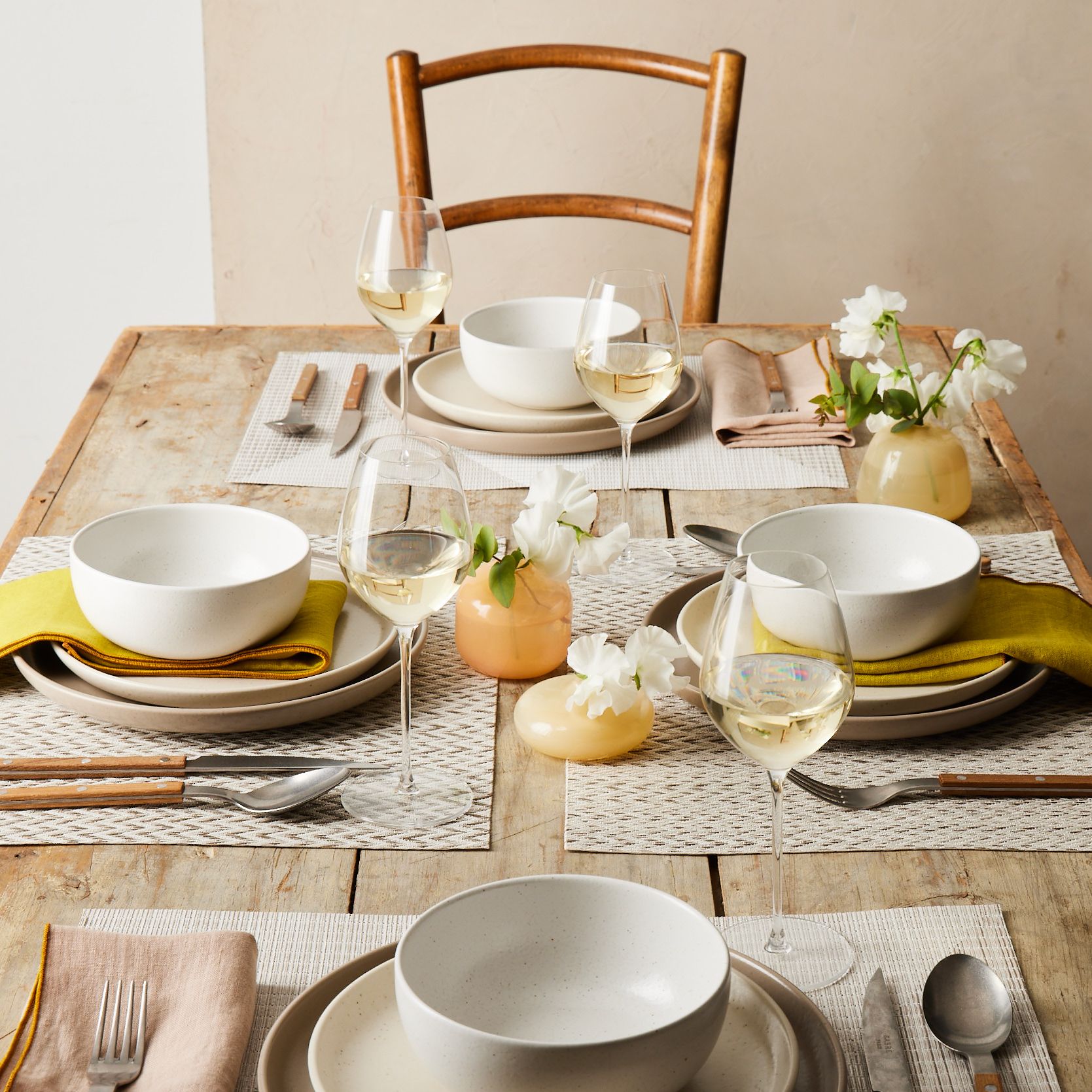
The most common question I receive is: "How do I mix patterns without the table looking cluttered?" The secret lies in the Anchor Strategy. To effectively mix and match dinnerware, you must select a neutral "anchor" color for your base plates—usually your largest dinner plates—and then introduce a single accent color or texture through your bowls or side plates.
Think of your anchor as the canvas. If your base is a creamy, warm-white porcelain, you have the freedom to layer in a sage green salad plate or a terracotta-toned soup bowl. However, to keep the look intentional rather than accidental, maintain shape consistency. I often recommend the "all-coupe" approach. The coupe shape—rimless and slightly curved—is incredibly forgiving. When every piece on the table shares that same sleek, rimless silhouette, you can vary the textures from smooth gloss to gritty matte without losing the visual thread.
Pro Tip: If you’re feeling bold, try the 2+1 Rule. Choose two neutral tones (like sand and charcoal) and one "pop" of organic texture (like a reactive glaze). This creates a sophisticated depth that feels professional yet effortless.
2026 Spring Color Palettes & Textures
For Spring 2026, the color story is a departure from the sugary pastels of the past. We are seeing a return to "Earth-Infused Neutrals." The trendiest palettes feature warm whites paired with sand, clay, and olive. These colors evoke a sense of grounding and tranquility, perfect for long, lingering lunches.
The real star of the 2026 season, however, is the Reactive Glaze. Market analysis predicts a 45% year-over-year increase in demand for these "hybrid" pieces. A reactive glaze is a chemical reaction that happens in the kiln, resulting in variegated colors and unique patterns. No two plates are exactly alike. This "perfectly imperfect" aesthetic adds a tactile quality to the table that mass-produced porcelain simply cannot replicate.
To create visual depth, I suggest balancing your finishes. Pair a high-gloss, deep-olive dinner plate with a matte-sand side dish. The way the candlelight reflects off the gloss while being absorbed by the matte creates a rhythmic, modern aesthetic that feels incredibly high-end. For those seeking a more dramatic flair, designers are increasingly layering deep charcoal or navy accents against a minimalist neutral base—a look that feels particularly "Spring at Twilight."
Material Science: Porcelain, Bone China, or Stoneware?
Choosing the right material is about more than just aesthetics; it’s about the "ROI" of your hosting kit. Each material brings a different weight, temperature, and "clink" to the experience.
| Material | Aesthetic Profile | Durability | Best For |
|---|---|---|---|
| Bone China | Translucent, delicate, pinnacle of luxury. | High (surprisingly chip-resistant). | Formal dinners and "legacy" collections. |
| Porcelain | Clean, white, versatile "canvas." | Moderate to High. | Daily use and high-traffic hosting. |
| Stoneware | Organic, heavy, artisanal feel. | High (but porous if unglazed). | The "Hybrid Tablescape," casual brunches. |
The art of the modern table lies in mixing these materials. A common mistake is thinking you must stick to one family. You can absolutely pair cool-white porcelain with gray-blue stoneware, provided you match the undertones. If your porcelain has a blueish-white tint, stick to cool-toned stoneware. If your porcelain is a warmer, milky white, it will pair beautifully with "clay" or "bisque" stoneware. This consistency in undertones is what makes a mixed set look curated rather than haphazard.
Layering the Spring Table: Beyond the Plates
A beautiful plate is only half the battle. To truly "elevate" your spring table, you need to think about the layers beneath and above.
- The Soft Base: Ditch the heavy, starchy tablecloths of the past. For 2026, we are embracing "Soft Bases"—crinkled linen runners, cotton eyelet napkins, or even raw-silk place mats. These textures provide a "patina" of lived-in luxury.
- The Bud Vase Strategy: Gone are the days of the massive, sightline-blocking centerpieces. Instead, use multiple small vessels. Scatter three to five bud vases of varying heights down the center of the table, each holding a single architectural stem—a ranunculus, a sprig of jasmine, or a sculptural tulip.
- Lighting for Atmosphere: Lighting is the "invisible" element of decor. For a spring dinner party, I always opt for dripping taper candles in vintage brass holders. The flickering flame against a reactive glaze creates a "mini moment" for each guest.
Hosting Logistics: Making it Feel Effortless
Modern hosting is as much about the host's ease as it is about the guest's comfort. If you are stressed, your guests will be too.
- Thermal Shock Resistance: When buying new sets for your mix-and-match collection, ensure they are durable. You want pieces that can go from a warm oven to the table without cracking.
- The Water & Wine Station: Set your pitchers and decanters on a side console before guests arrive. This minimizes interruptions during the meal and allows the table to remain the focus of the conversation.
- Napkin Upgrades: Instead of a complex fold, try a simple "knot" or a "lotus fold" for your cloth napkins. It feels intentional but not over-engineered. Remember, 2026 hosting is about relaxed elegance.
Care & Longevity of Luxury Sets
Investing in high-quality tableware requires a commitment to care. To maintain that "editor-approved" look for years, avoid metal scouring pads which can leave gray "pencil marks" on stoneware. Always allow your plates to reach room temperature before plunging them into hot soapy water to avoid thermal shock.
For your inventory, I recommend the "3 Pieces Per Seat" rule. For every guest you plan to host, ensure you have three varying pieces—a dinner plate, a salad plate, and a bowl. This gives you enough "puzzle pieces" to create different looks for different courses without running out of matching (or complementary) elements.
FAQ
Can I mix gold-rimmed vintage plates with modern matte stoneware? Yes, but use the gold-rimmed plate as the "jewelry" of the table. Keep the rest of the setting very minimal and matte to let the vintage pieces shine without making the table look like an antique shop.
How do I start a mix-and-match collection from scratch? Start with a 12-piece set of high-quality white porcelain. This is your "foundation." Then, buy 4-6 artisanal stoneware bowls in an accent color like olive or terracotta. This immediately gives you two different "looks" for the price of one and a half.
Is stoneware really okay for a formal dinner? In 2026, absolutely. The "Hybrid Tablescape" is the new formal. Pair your stoneware with high-end crystal glassware and heavy silver cutlery to elevate the rustic nature of the plates.
Elevate Your Table This Season
Spring is the season of renewal, and there is no better place to start than the heart of the home. By embracing the mix-and-match philosophy, you aren't just setting a table; you're creating an environment that feels personal, curated, and undeniably modern.