We’ve all experienced that specific Sunday evening dread: opening a refrigerator that is simultaneously bursting at the seams yet somehow contains "nothing to eat." You move a giant jar of pickles only to discover a bag of spinach that has transitioned into a questionable green liquid, and hidden behind a carton of eggs is a container of leftovers from three Tuesdays ago. It’s a frustrating cycle that drains both your sanity and your grocery budget.
But as we move into 2026, the conversation around home organization has shifted. We are moving beyond the "aesthetic for aesthetic’s sake" trend and toward a more disciplined, systems-driven approach known as Fridgescaping. This isn't just about putting flowers in your fridge; it’s about treating your refrigerator as a high-functioning ecosystem. By implementing a few key organizational systems, households are reporting an average 35% reduction in monthly grocery waste simply by improving visibility. If you’ve ever felt like your fridge was a "black hole" for fresh produce, it’s time to rethink your layout.
Sophie’s Pro Tip: A functional fridge isn't one that looks perfect on Instagram; it’s one where you can see every single item you own within three seconds of opening the door.
The Golden Rules of Refrigerator Zoning
To maximize your space, you must first stop treating your fridge as a single large box and start viewing it as a series of micro-climates and zones. Most people toss groceries wherever they fit, but this is the fastest way to lose track of what you have.
Implementing a "First-In, First-Out" (FIFO) system—a method borrowed from professional kitchens—is the most effective way to manage inventory. By simply placing newer items behind older ones and using tiered organizers to keep everything visible, you can increase your usable refrigerator storage capacity by up to 25%.
1. The Temperature Map
Your fridge is not the same temperature throughout. The door is the warmest area, while the back of the bottom shelf is usually the coldest.
- Upper Shelves: Best for ready-to-eat meals, leftovers, and drinks. These items don't require cooking, so the slightly higher (but still safe) temperatures are fine.
- Lower Shelves: This is the "high-risk" zone. Keep your dairy, eggs, and raw meats here. It’s the coldest part of the fridge and prevents cross-contamination if a meat package leaks.
- The Door: Reserved for high-acid items like condiments, jams, and sodas. Avoid putting milk or eggs here, as the temperature fluctuates every time you open the door.
2. The Visibility Principle
If you can't see it, you won't eat it. This is the fundamental law of food waste. Zoning involves grouping "like with like"—snacks in one bin, deli meats in another, and a dedicated space for "open" condiments. This prevents the "hidden food" trap where small jars migrate to the back and stay there until they expire.
Essential 2026 Fridge Organization Tools
The right tools are the scaffolding of a good system. In 2026, we are seeing a move toward sustainable, high-durability materials that prioritize "stackability" and transparency.
Stackable Clear Bins
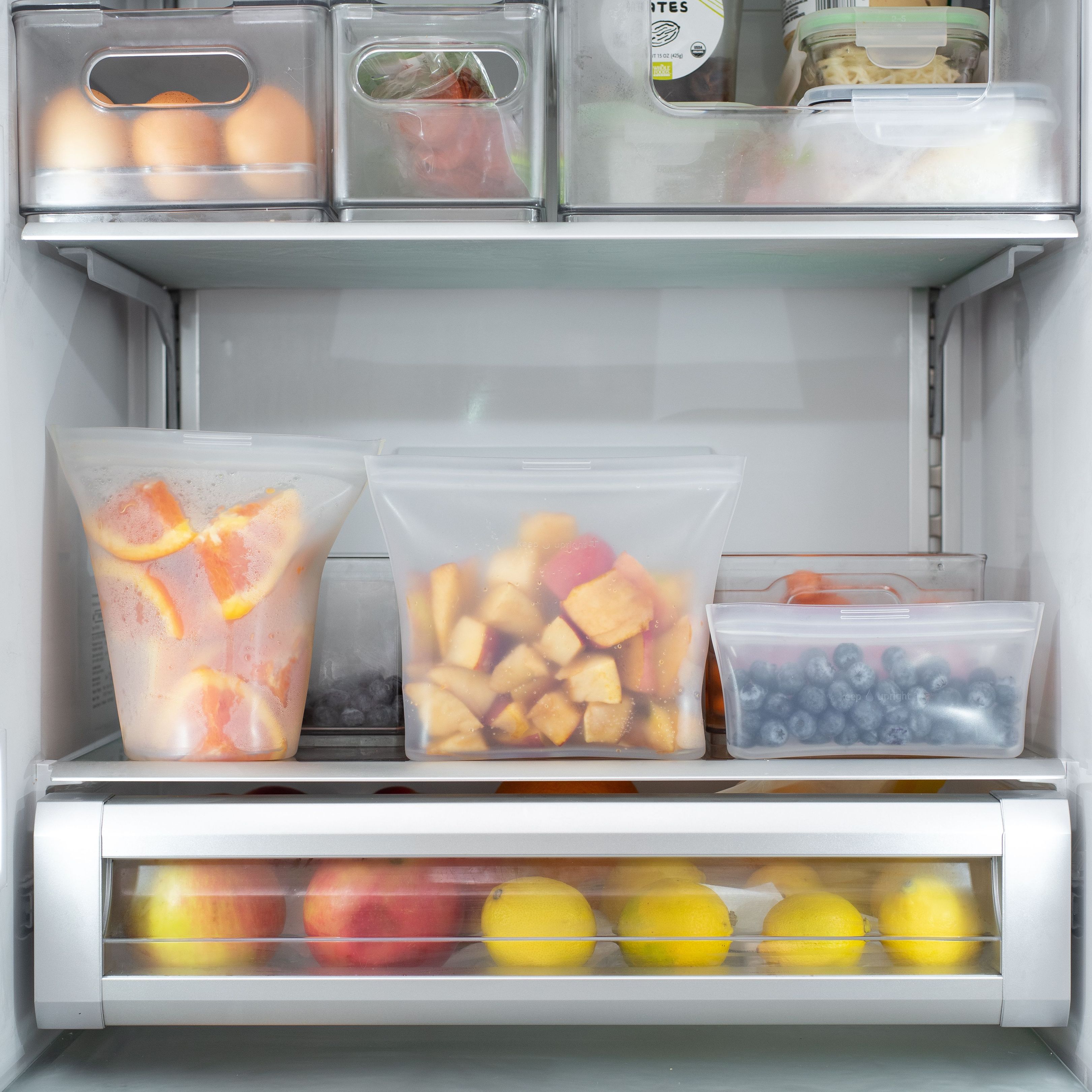
Vertical space is the most underutilized asset in any refrigerator. By using BPA-free transparent stackable bins, you effectively double your shelf space. These allow you to pull out an entire category of food (like "Breakfast Items") at once, rather than rummaging through individual packages.
The Fridge-Specific Lazy Susan
We’ve used them in pantries for years, but the Fridge-Specific Lazy Susan is the ultimate cure for the "condiment graveyard." By placing your jars on a rotating turntable, you bring the items from the dark back corners directly to the front with a simple flick of the wrist. No more buying a second jar of Dijon mustard because you couldn't find the first one.
Square vs. Round: The Geometry of Space
If you want to maximize every square inch, you must eliminate the gaps. Square glass containers are vastly superior to round ones because they sit flush against each other. Round jars create "dead air" at the corners that adds up to a significant amount of wasted space over three or four shelves. Switching your leftovers to a uniform set of square glass containers is one of the fastest ways to make a small fridge feel twice as large.
Silicone Reusable Bags
For snacks, sliced peppers, or half-used onions, ditch the bulky plastic tubs. Silicone reusable bags that are designed to stand upright allow you to "file" your food like documents in a cabinet. This saves immense shelf depth and keeps items airtight for longer.
Maximizing Space in Small Units
Not everyone has a massive French-door refrigerator. For those of us living with compact units, every centimeter counts. Here is how I tackle small-space organization:
- Adjustable Shelving is Your Friend: Most people leave their shelves in the factory-preset positions. Take ten minutes to actually measure your tallest carafe and your shortest bins. Re-evaluating your shelf heights can often yield an entire extra "thin" shelf for flat items like bacon or tortillas.
- Undershelf Pull-Out Drawers: These are "clip-on" drawers that attach to the underside of your existing glass shelves. They are perfect for small, loose items like cheese sticks, ginger roots, or loose lemons that otherwise clutter up larger bins.
- Door Bin Optimization: Use your door for more than just milk. Move small jars of capers, bouillon bases, and specialty sauces to the door bins. If you have extra space there, create an "Eat First" zone specifically for items that are about to expire.
| Old Habit | 2026 Organization Habit | Benefit |
|---|---|---|
| Storing milk in the door | Storing milk on the back of the bottom shelf | Keeps milk colder and fresher for longer |
| Keeping produce in plastic grocery bags | Moving produce to ventilated bins or silicone bags | Prevents moisture buildup and rot |
| Round "nesting" bowls for leftovers | Uniform square glass containers | Eliminates "dead space" and allows stacking |
| Buying in bulk without a plan | "Zoning" groceries as soon as they arrive | Ensures visibility and reduces overbuying |
Strategies to Effectively Stop Food Waste
Organization is the "how," but waste reduction is the "why." To truly stop wasting food, you need a behavioral system that works with your organization.
The "Eat First" Bin
This is the single most effective tool in my kitchen. Place a brightly labeled clear bin at eye level. Any item that is within 48 hours of its expiration date—or leftovers that need to be finished—goes in this bin. When you're hungry, this is the first place you look. It removes the "decision fatigue" of cooking and ensures you use what you already paid for.
Labeling Systems
You don't need a fancy label maker (though they are fun). A roll of masking tape and a permanent marker is an organizer’s best friend. Label your leftovers with the "Prepared On" date. Knowing that a container of pasta was made on Monday makes it much easier to decide whether it’s still safe to eat on Friday.
Ethylene Management
Did you know that some fruits, like apples and bananas, emit ethylene gas that causes greens to wilt faster? Produce Preservation is key to stopping waste. Keep your ethylene-producers (apples, stone fruits) separate from your sensitive items (lettuce, spinach, herbs). If your fridge has crisper drawers with humidity sliders, set one to "High" for leafy greens and one to "Low" for fruits.
"A well-organized fridge is a visual inventory of your life. When you see what you have, you cook more, spend less, and feel a sense of calm every time you reach for a snack." — Sophie Wang
FAQ
Q: Should I wash my produce before putting it in the fridge? A: Generally, no. Moisture is the enemy of shelf life. Wash your fruits and vegetables right before you eat them. If you must wash them ahead of time for meal prep, ensure they are 100% bone-dry before storing them in airtight or ventilated containers.
Q: Are plastic bins better than glass? A: For the fridge interior, high-quality BPA-free plastic bins are often better because they are lightweight and less likely to shatter if dropped. However, for actual food storage (leftovers), glass is superior as it doesn't retain odors or stains and can go directly into the microwave or oven.
Q: How often should I "reset" my fridge? A: I recommend a "Micro-Reset" once a week before you go grocery shopping. Wipe down the shelves, check expiration dates, and move older items to the "Eat First" bin. A "Deep Clean" should happen once every three months.
Ready to Transform Your Kitchen?
Creating a functional, "fridgescaped" home isn't an overnight task, but the rewards are immediate. Start small: buy one set of stackable bins, clear out your "expired" graveyard, and implement the "Eat First" rule. You’ll be amazed at how much space you actually have—and how much money stays in your pocket.