The kitchen is undergoing a quiet revolution. For decades, the measure of a high-end kitchen was the sheer volume of its cabinetry—rows upon rows of heavy, ceiling-height boxes that, while functional, often made the heart of the home feel enclosed and utilitarian. Today, the design pendulum has swung toward what I like to call "visual exhale." Market analysis shows that 78% of high-end homeowners now prefer 'minimalist functional' styling, choosing to trade traditional upper storage for the sweeping, architectural statement of a single, continuous shelf.
But the most coveted version of this trend isn't a simple wooden plank. It is the 20-foot floating marble shelf—a design element popularized by tastemakers like Athena Calderone. It is a feat of both art and engineering that creates a singular horizontal axis, drawing the eye across the room while providing a curated stage for the objects of daily life. Designers report a 40% increase in requests for these massive stone installations as a direct replacement for upper cabinetry in 2025-2026 luxury renovations. However, achieving this "effortless" look requires a masterclass in refined restraint and a deep understanding of what happens behind the drywall.
The Engineering Behind the Floating Marble Shelf
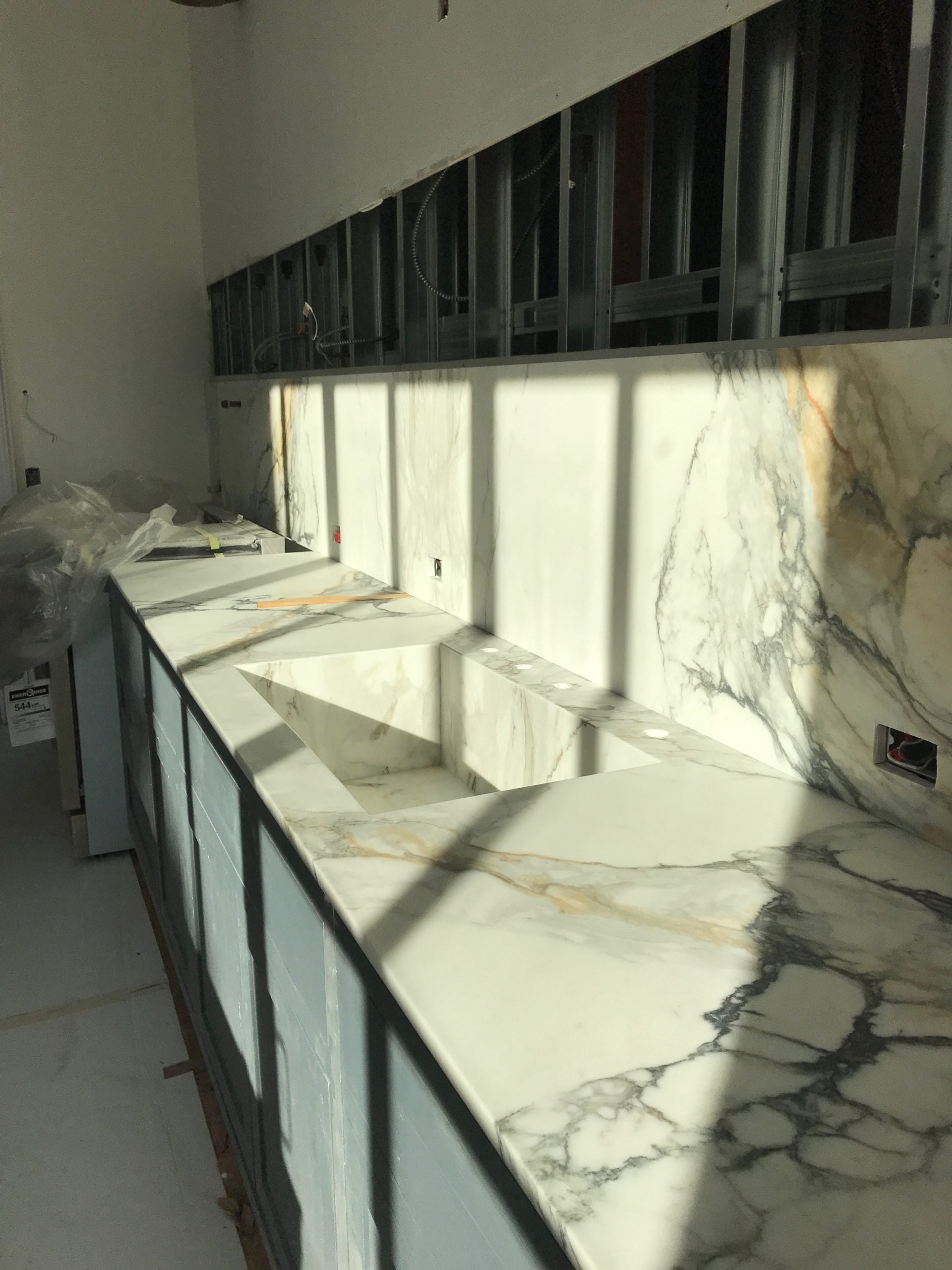
While the façade of a 20-foot stone shelf seems calm and serene, there is a veritable wind storm of engineering roaring beneath the surface. To the uninitiated, the idea of hanging several hundred pounds of solid marble without visible brackets seems like a magic trick. In reality, it is a rigorous structural process that must begin long before the stone even arrives at the site.
How is a 20-foot marble shelf supported? The secret lies in the "backbone" of the wall. A shelf of this magnitude requires a reinforced mounting system integrated directly into the home's framing.
- Structural Bracing: Metal studs must be spaced no more than 16 inches apart. These are then reinforced with 3/4-inch plywood blocking recessed between the studs to provide a continuous, rigid mounting surface.
- Hardened Steel L-Brackets: Custom-fabricated, heavy-duty steel L-brackets are bolted through the plywood and into the studs. These brackets usually feature a "tongue" or a rod that extends outward, perpendicular to the wall.
- The Slotting Technique: The marble slab itself—typically fabricated to look like a solid block—is actually a "box" or a thick slab with a 2-inch deep cavity or slot routed into the back edge. The stone is then slid over the steel tongues, which disappear into the heart of the marble, creating the illusion of a weightless float.
Choosing the right material is equally critical. For the 2026 season, we are seeing a move away from the quiet, uniform whites of the past decade. Designers are gravitating toward Calacatta Paonazzo for its dramatic, honey-gold and purple-grey veining, or exceptionally hard quartzites like Taj Mahal, which offer the beauty of marble with significantly higher resistance to the acids and oils found in a working kitchen.
The Athena Calderone Blueprint: Dimensions for Balance
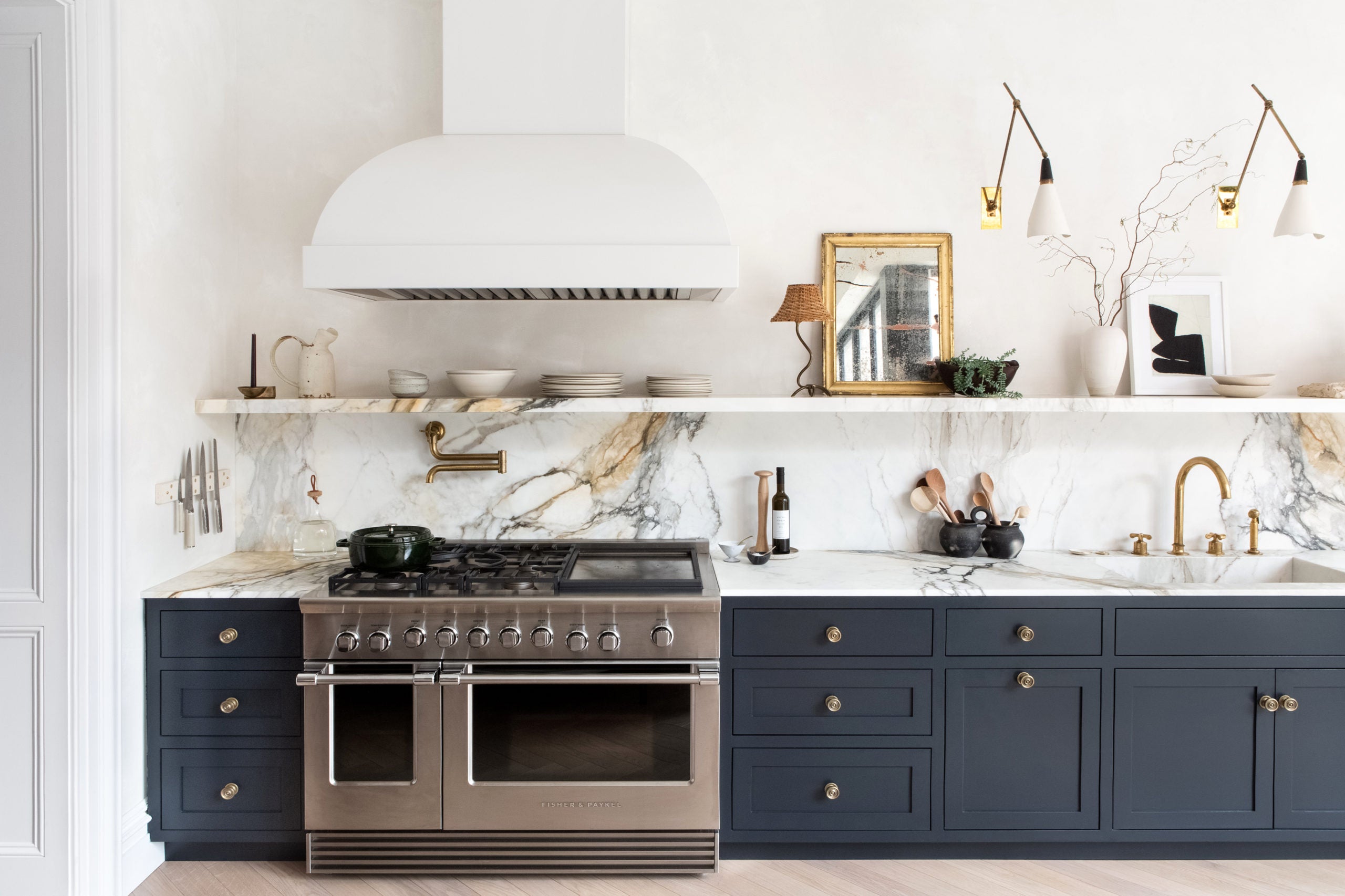
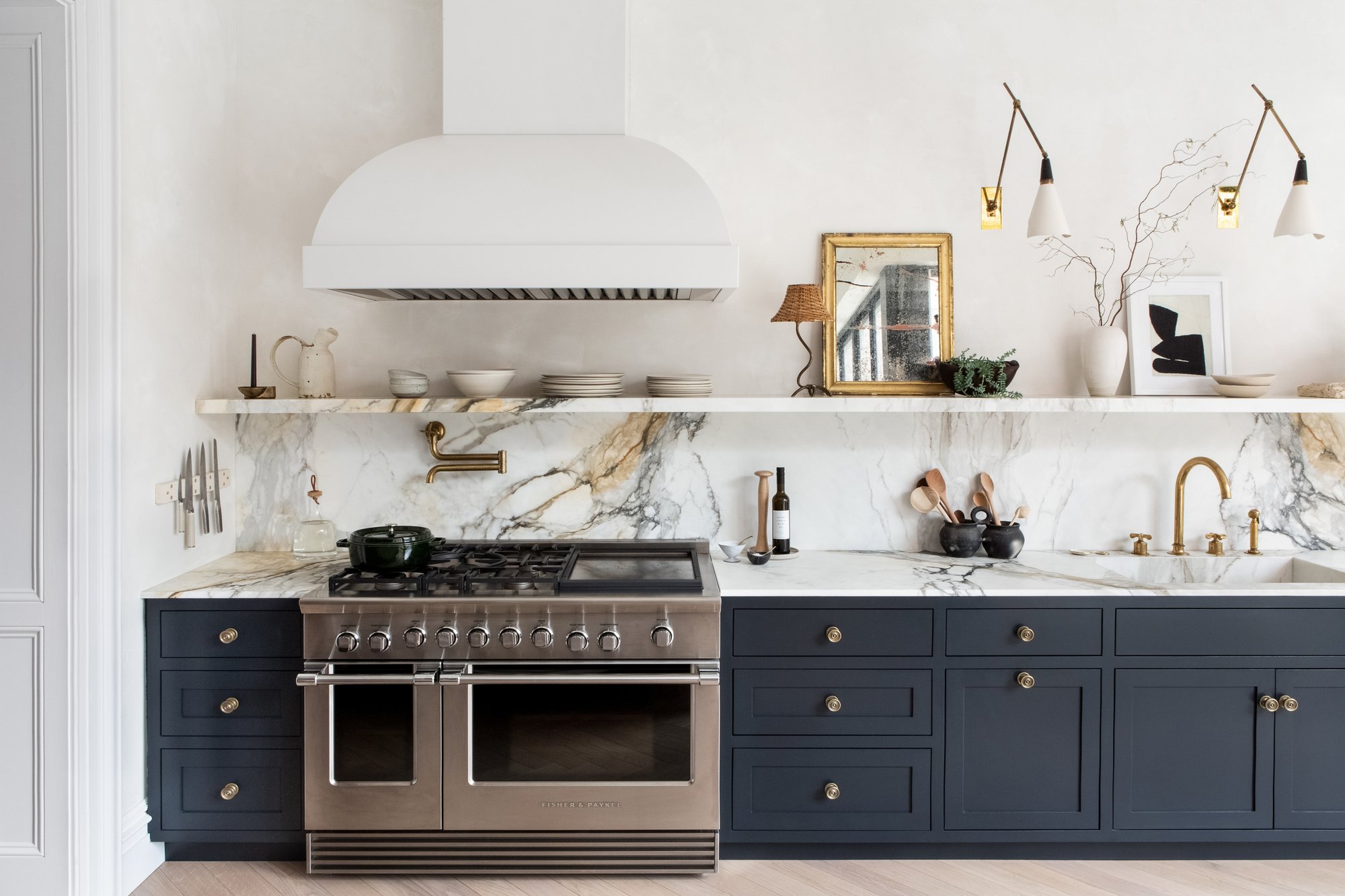
When we look at the most successful kitchen designs of the current era—specifically the iconic "Eye-Swoon" kitchen—we see a specific set of proportions that dictate how the shelf interacts with the rest of the space. A 20-foot shelf is not just a storage unit; it is an architectural horizon line.
Based on the blueprints that have defined this aesthetic, the ideal dimensions for a floating kitchen shelf are 12 inches deep and 2 ¾ inches thick. This thickness provides enough "visual weight" to feel substantial against a large expanse of wall without feeling clunky. If the shelf is too thin, it looks like an afterthought; too thick, and it begins to feel like a structural beam rather than a decorative element.
| Specification | Dimension | Design Rationale |
|---|---|---|
| Length | 240 inches (20 ft) | Creates a continuous visual axis and replaces upper cabinets. |
| Depth | 12 inches | Sufficient for dinner plates and large serving bowls. |
| Thickness | 2.75 inches | The "sweet spot" for structural integrity and aesthetic elegance. |
| Height Above Counter | 26 inches | Allows for tall appliances (mixers, espresso machines) and optimal reach. |
| Wall Sconce Height | 24 inches above shelf | Provides a secondary layer of "jewelry" lighting for the curation. |
Placement is everything. Positioning the shelf approximately 26 inches above the countertop is the "golden ratio" for modern kitchens. This height ensures that the shelf remains accessible for daily-use items while leaving enough "negative space" above the countertop to prevent the workspace from feeling cramped. Furthermore, centering the shelf with a 13.5-inch gap from the range hood creates a symmetrical frame that celebrates the cooking zone as the kitchen's focal point.
Styling with the 'STONE' Framework
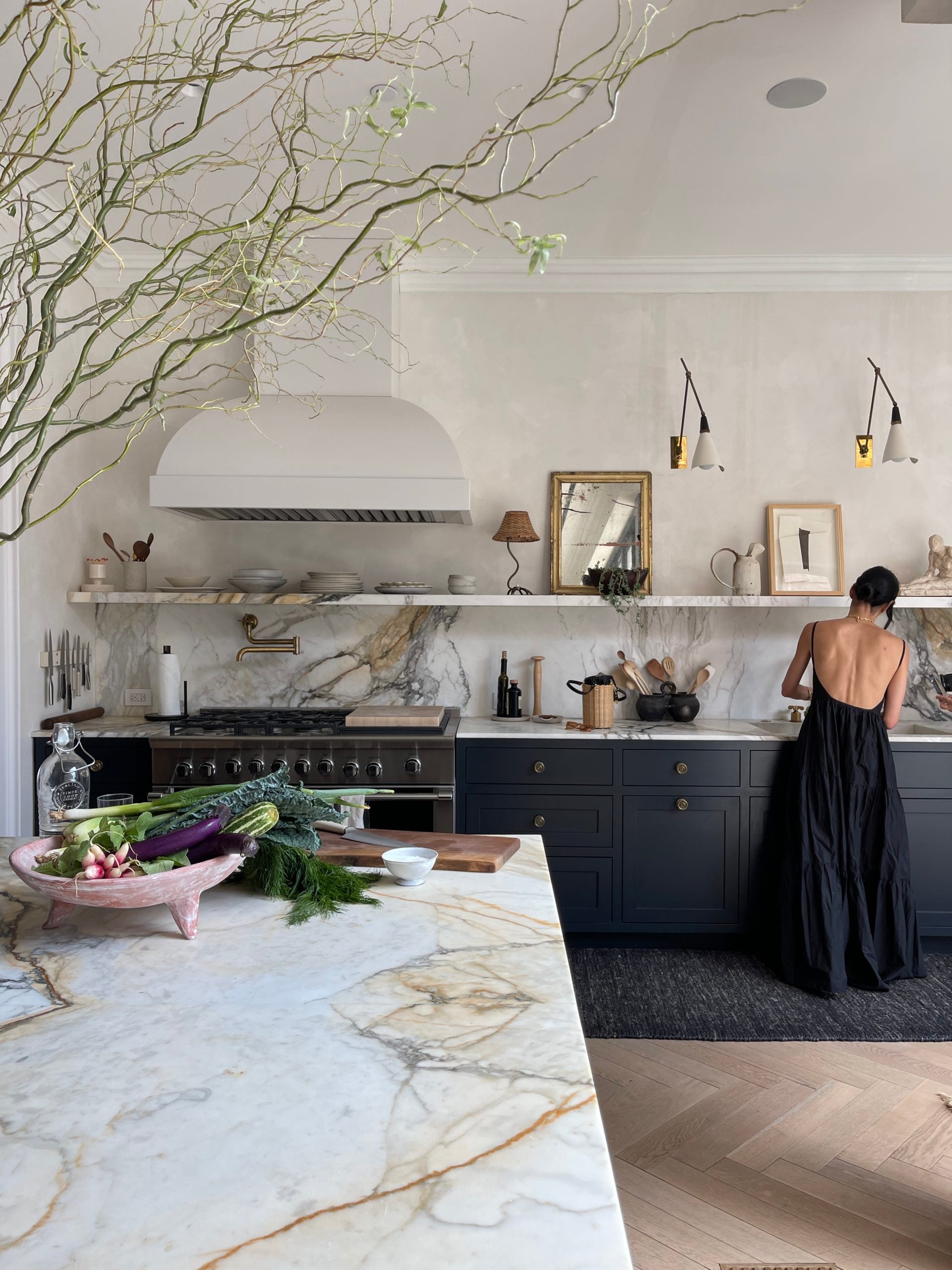
The most common question I receive from readers is: "How do I keep my open shelves from looking like a cluttered mess?" It is a valid concern. Without the "soul" of curation, a 20-foot marble shelf can quickly become a graveyard for mismatched mugs and plastic containers. To master this, I recommend using the STONE framework—a methodology designed to prioritize refined restraint.
- S - Structure: Start with your largest pieces. Place your "anchor" items first—a stack of oversized stoneware platters, a vintage ceramic vase, or a large wooden cutting board leaned against the wall. These create "structural islands" that ground the shelf.
- T - Tone Down Quantity: The 2026 aesthetic is about the "visual exhale." Instead of filling every inch, leave "breathing room" (negative space) between groups of objects. If you have ten bowls, display three high-quality ones and store the rest in lower drawers.
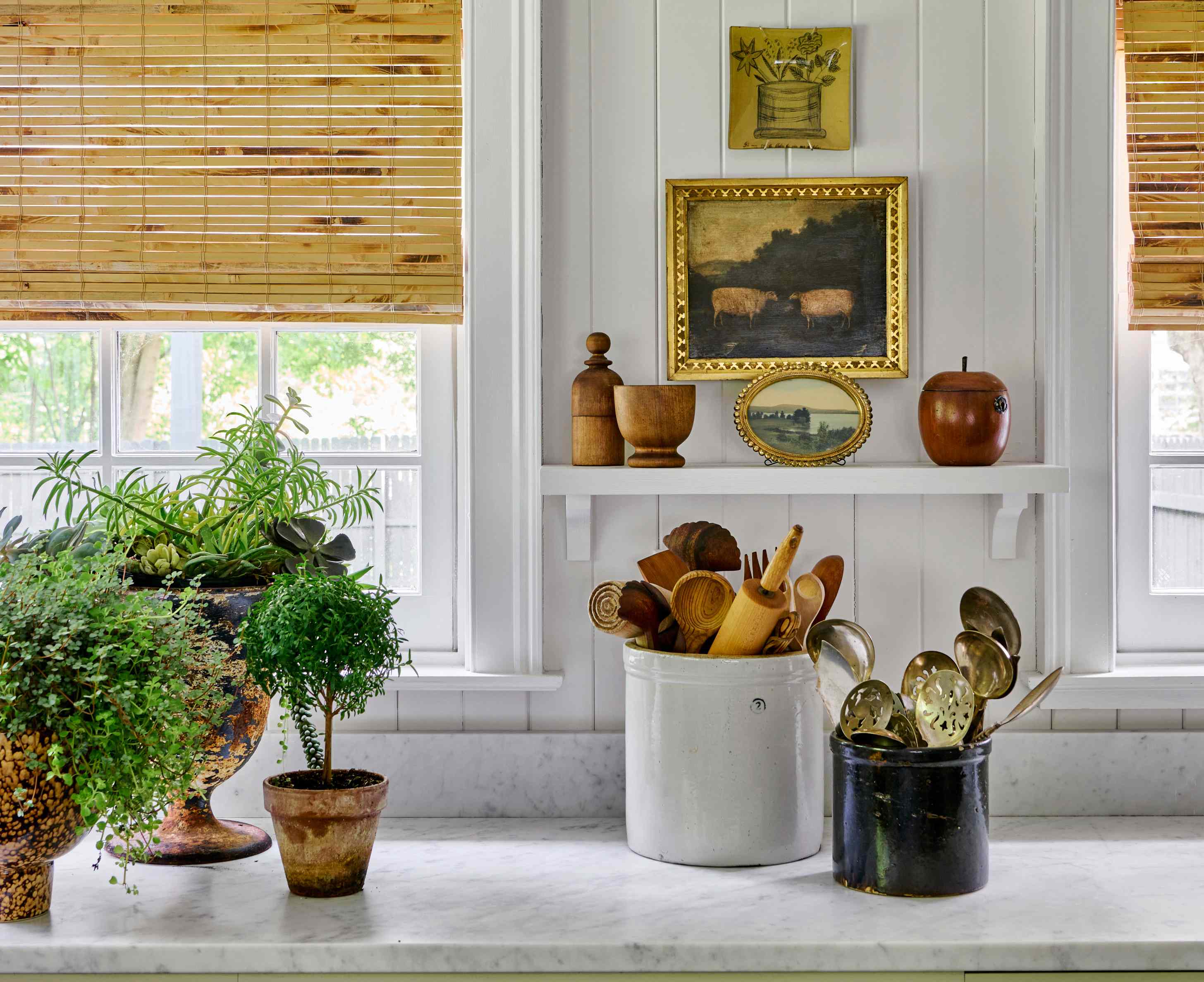
- O - Observe Materials: Balance the coldness of marble with warmth. Mix in unlacquered brass salt mills, white oak lidded canisters, and tactile stoneware. The contrast in textures makes the marble's veining pop.
- N - Normalize Maintenance: Only display items you use frequently. This ensures that your "styling" is constantly being rotated and washed, preventing the buildup of dust that often plagues open shelving.
- E - Ensure Value: Every item on the shelf should either be beautiful or have a "curated soul." Think petite vintage lamps for ambient evening light, a small framed sketch, or artisanal oil cruets.
Design Tip: Treat your shelf like a gallery, not a pantry. If an item doesn't bring you visual joy or serve a daily purpose, it belongs behind a closed door.
2026 Design Trends: Beyond the Minimalist Slab
As we look toward 2026, the 20-foot marble shelf is evolving. We are moving beyond the "all-white kitchen" into a territory of bold materiality and "lifestyle-focused" zones. One of the most exciting shifts is the integration of diverse materials within the shelf span itself.
We are seeing a rise in "material layering," where the marble shelf is paired with a backsplash of the same stone that "waterfalls" down into the countertop, creating a monolithic, seamless look. To keep this from feeling too clinical, designers are mixing in warm elements like white oak cabinetry below and matte black or unlacquered brass hardware.
Furthermore, the 20-foot span is being used to create "mini-destinations" within the kitchen:
- The Integrated Coffee Bar: A section of the shelf dedicated to a high-end espresso machine, with hand-thrown ceramic cups and a small marble tray for spoons.
- The Wine Library: A portion of the shelf featuring a minimalist brass wine rack or a curated selection of beautiful glassware.
- Invisible Lighting: The 2026 trend is moving away from visible LED strips. Instead, we are seeing "invisible" smart lighting recessed into the bottom of the shelf, casting a soft, museum-quality glow onto the countertop without revealing the light source.
Practicalities: Maintenance and Longevity
I would be remiss if I didn't address the practical realities of living with open stone shelving. While the aesthetic is undeniable, it requires a commitment to a certain lifestyle. Marble is porous, and kitchen environments are inherently messy.
Normalizing the Realities: Dust and cooking residue are the two primary enemies of the open shelf. To mitigate this, ensure your range hood is high-performance and properly vented; this captures grease before it can settle on your curated objects. When selecting items for the shelf, prioritize materials that are dishwasher safe or easy to wipe down.
For the stone itself, professional sealing is non-negotiable. I recommend a high-quality penetrative sealer applied every 6 to 12 months. If you are worried about "etching" (the dull spots caused by acids like lemon or vinegar), consider a honed finish rather than a polished one. A honed surface hides imperfections and develops a beautiful, lived-in patina over time—something that only adds to the "curated soul" of a high-end kitchen.
FAQ
Q: Can a 20-foot shelf be made from a single piece of marble? A: Rarely. Natural stone slabs are typically 9 to 10 feet long. For a 20-foot shelf, your fabricator will need to "bookmatch" two or three slabs, carefully aligning the veining at the seams to create the illusion of a single, continuous piece.
Q: Is open shelving actually cheaper than upper cabinets? A: Not necessarily. While you save on the cost of cabinet boxes and doors, the structural engineering, custom steel brackets, and the cost of a large, high-grade marble slab (plus precision fabrication) often make a 20-foot floating shelf comparable in price to high-end cabinetry.
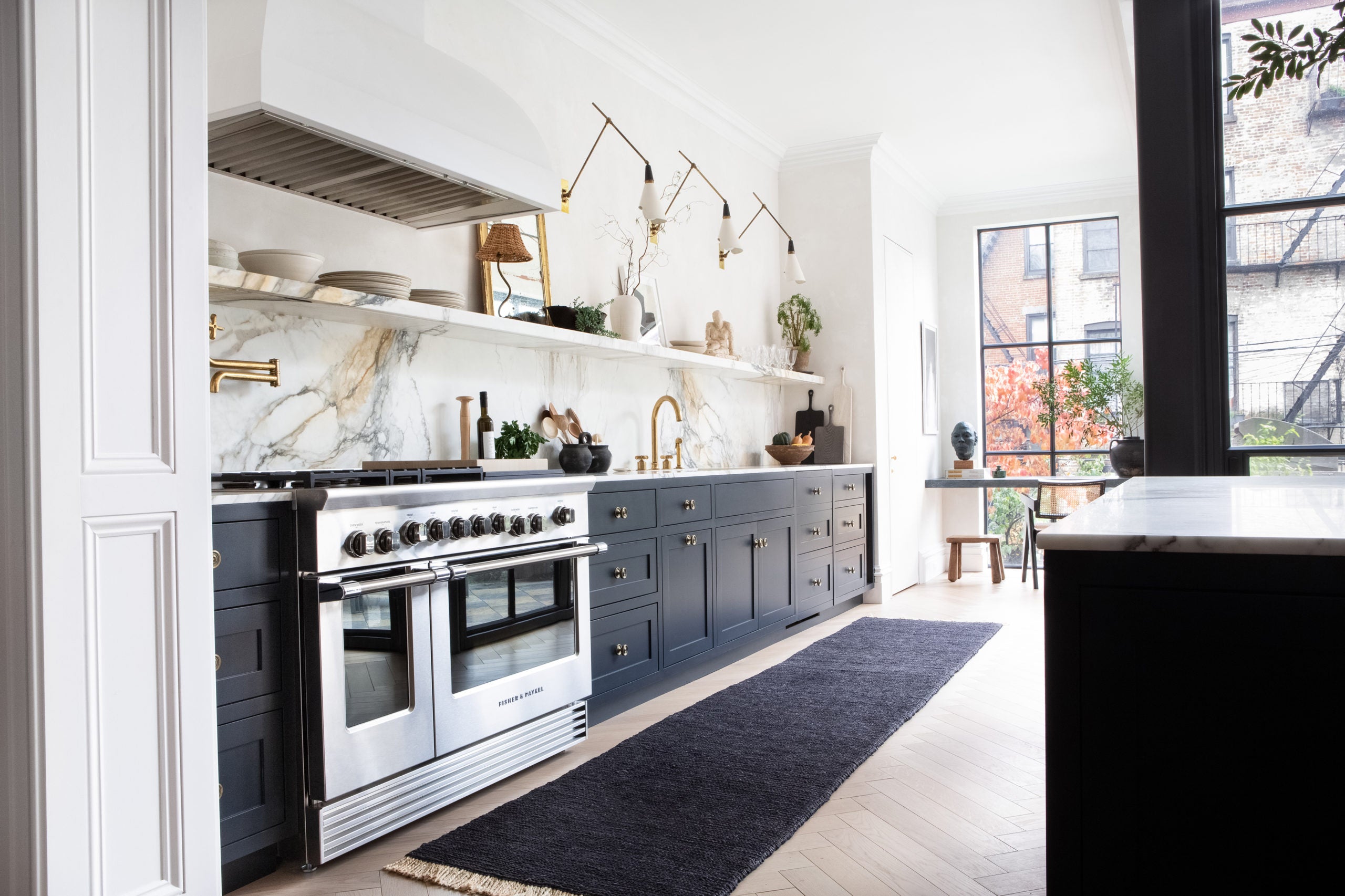
Q: How do I handle lighting for such a long shelf? A: I recommend a "layered" approach. Use recessed LED channels on the underside for task lighting, and space 2 to 3 decorative wall sconces about 24 inches above the shelf to provide ambient warmth and highlight your curated objects.
Are you ready to transform your kitchen into a visual masterpiece? Whether you’re planning a full renovation for 2026 or simply looking to refresh your styling, remember that the most beautiful homes are those that balance high-level engineering with a deeply personal, curated touch. Happy styling!