Quick Facts
- Space Reclamation: Switching to nestable dinnerware and stackable containers can reclaim up to 40% of cabinet shelf volume in small kitchenettes.
- The 2026 Appliance Shift: Multi-functional smart appliances are projected to reduce countertop clutter by an average of 3 square feet per household by 2026.
- Vertical Strategy: Utilizing vertical "dead space" between the counter and cabinets is the #1 way to increase usable workspace.
- The Work Triangle: Even in tiny kitchens, maintaining a flow between the sink, stove, and fridge is essential for ergonomic efficiency.
We’ve all been there: the feeling of "kitchen claustrophobia" where every meal preparation feels like a high-stakes game of Tetris. In my years as a lifestyle editor, I’ve realized that the frustration of a tiny kitchen isn't usually about the lack of square footage—it's about a lack of systems. As we look toward 2026, the philosophy of the "considered" kitchenette is shifting from how much can we fit to how well does it serve us.
Creating a calm, functional home starts with the engine of the house—the kitchen. By adopting a systems-driven approach, we can transform even the most cramped urban rental into a high-performance culinary studio. It requires a shift from "more" to "better," prioritizing items that earn their keep. Here are five pro tips to maximize your tiny kitchen space and the 2026 gadgets that are changing the game.
Tip 1: Conquer the 'Dead Space' with Vertical Rails
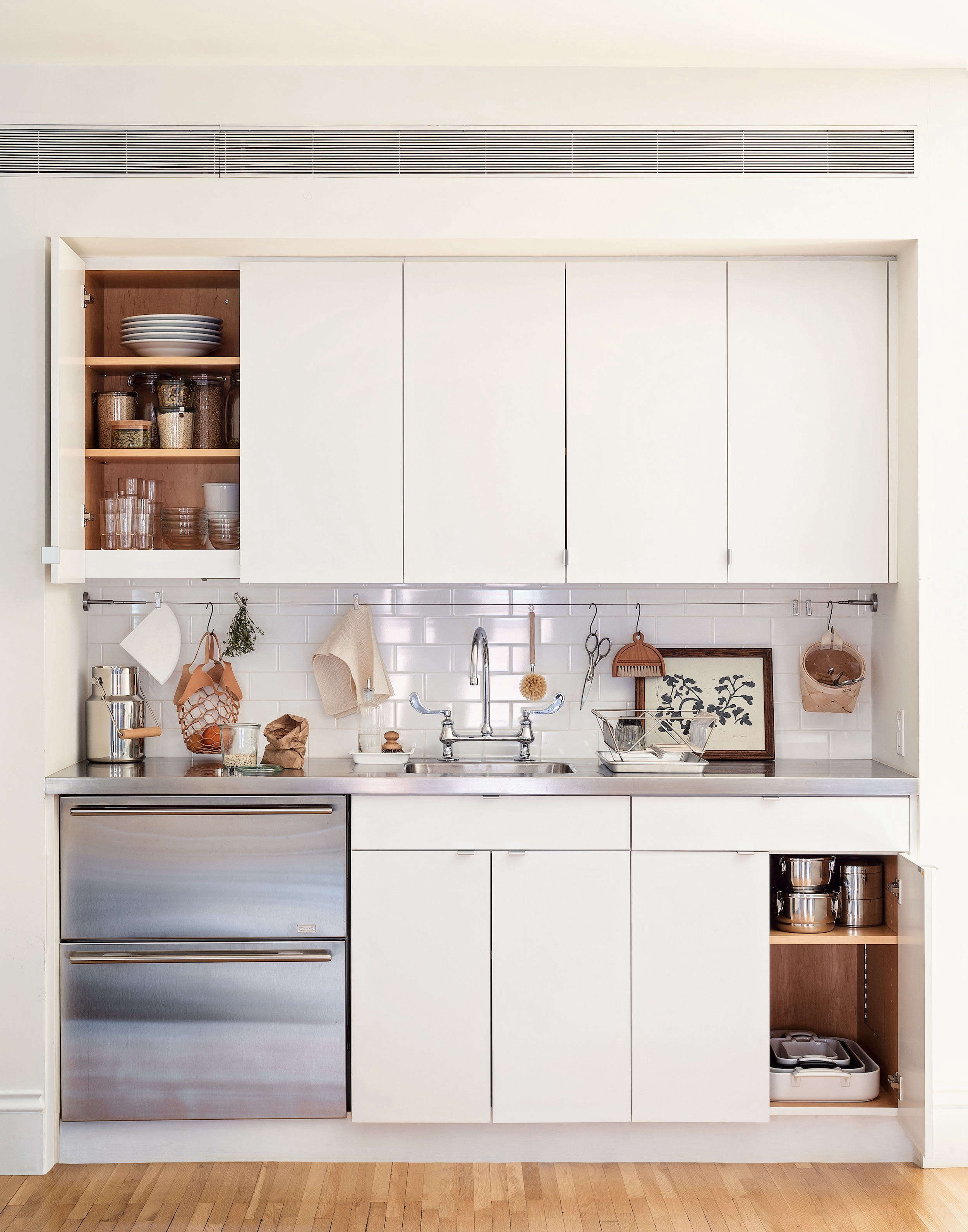
The most underutilized real estate in any kitchen is the vertical "dead space" located between your countertops and the underside of your upper cabinets. Traditionally, this area is left empty or cluttered with leaning cutting boards. To maximize counter space in a tiny kitchen, you must lift your most-used tools off the surface entirely.
A minimalist favorite of mine is the IKEA Dignitet curtain wire hack. While originally designed for window treatments, this stainless steel wire is incredibly strong and unobtrusive. By mounting it along your backsplash, you create a sleek hanging system for S-hooks that can hold everything from stainless steel colanders to your daily-use herb snips. Unlike bulky shelving, a wire system maintains a visual lightness that makes the kitchen feel larger.
Pro Tip: The IKEA Dignitet Hack Use the IKEA Dignitet curtain wire as a heavy-duty tool rail. It’s thinner than traditional pot racks, making it perfect for the tight clearance of a kitchenette. Pair it with Grundtal S-hooks to hang lightweight items like measuring cups, silicone spatulas, and even small pots.
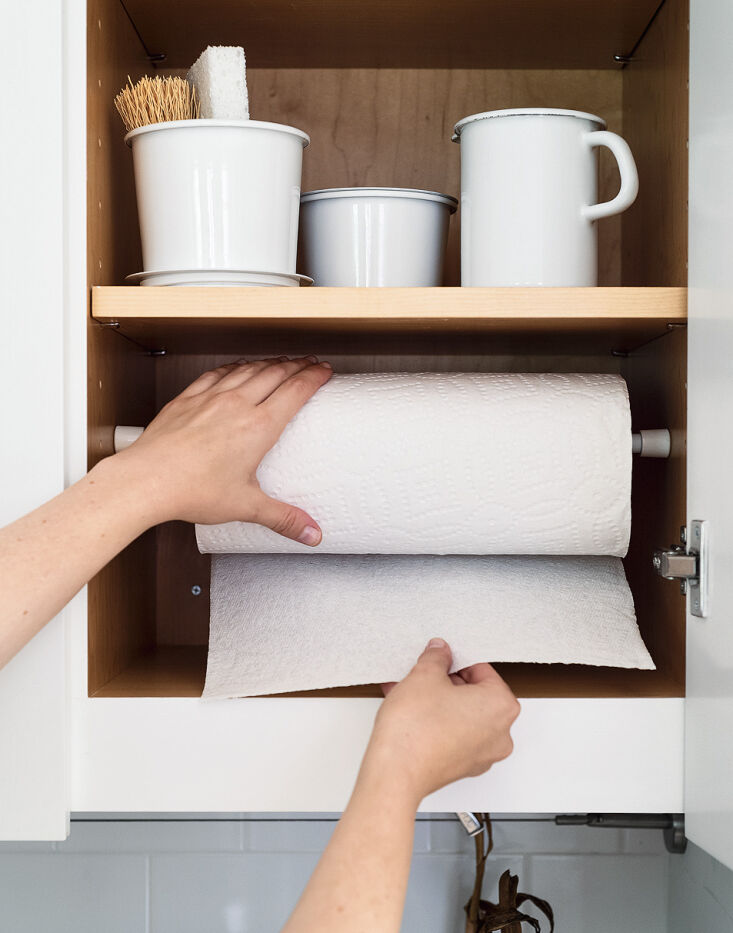
By moving these high-frequency items to the wall, you clear the "landing zones" on your counter. This isn't just about aesthetics; it’s about reducing the friction of starting a meal. When your counter is clear, the mental barrier to cooking vanishes.
Tip 2: Adopt the 2026 Multi-Functional Appliance Standard
The era of the "single-use" gadget is officially over. In a small space, a bread maker that only makes bread or a dedicated air fryer that does nothing else is a luxury your cabinets cannot afford. The best appliances for a small kitchen are those that consolidate three or four functions into a single, compact footprint.
As we move toward 2026, the industry is seeing a massive surge in programmable multi-tools. An air fryer toaster oven, for instance, replaces the toaster, the air fryer, and the convection oven, and can even act as a dehydrator. Similarly, smart programmable rice cookers now handle grains, slow-cooking, and steaming.
According to recent industry data, multi-functional smart appliances are projected to reduce countertop clutter by an average of 3 square feet per household by 2026. In a kitchen where you only have 6 square feet of total counter space, that is a 50% gain in "elbow room."
Tip 3: The Logic of Nesting and Stacking Systems
One of the most common "clutter traps" I see in my clients' homes is a cabinet full of mismatched, non-stackable containers and heavy ceramic bowls that take up an entire shelf. Organizing a tiny kitchen requires a ruthless commitment to nesting dinnerware and stackable storage systems.
How does nesting dinnerware help organize a kitchen? Simply put, it allows you to store more items within the same vertical shelf space, effectively doubling your storage capacity. Sourcing stackable dishes and nested ceramic baking sets—those designed to fit perfectly inside one another—can reclaim up to 40% of cabinet shelf volume.
| Storage Type | Volume Reclaimed | Best For |
|---|---|---|
| Nested Ceramic Sets | 35% - 40% | Baking, Serving, Mixing |
| Uniform Glass Containers | 25% - 30% | Meal Prep, Leftovers |
| Collapsible Silicone | 50%+ | Colanders, Measuring Cups |
| Stackable Drinkware | 20% | Water glasses, Coffee mugs |
When everything has a "home" that fits within another "home," you eliminate the precarious towers of Tupperware that inevitably lead to a "cabinet avalanche." I recommend choosing a single brand of glass storage containers (like Glasslock or Pyrex) so that the lids are interchangeable and the bases stack perfectly.
Tip 4: Optimize Flow with the Professional 'Work Triangle'
In professional kitchen design, we talk about the "Work Triangle"—the distance between the sink, the stove, and the refrigerator. In a tiny kitchen, this triangle often collapses into a single line. However, the principle remains: you need a logical flow of movement.
When space is at a premium, the solution often lies in "slimline" appliances. If you are renovating or replacing old units, look for 18-inch dishwashers (instead of the standard 24-inch) and under-counter refrigerator drawers. These drawers create a seamless look and free up upper eye-level space where a massive fridge would normally dominate the room.
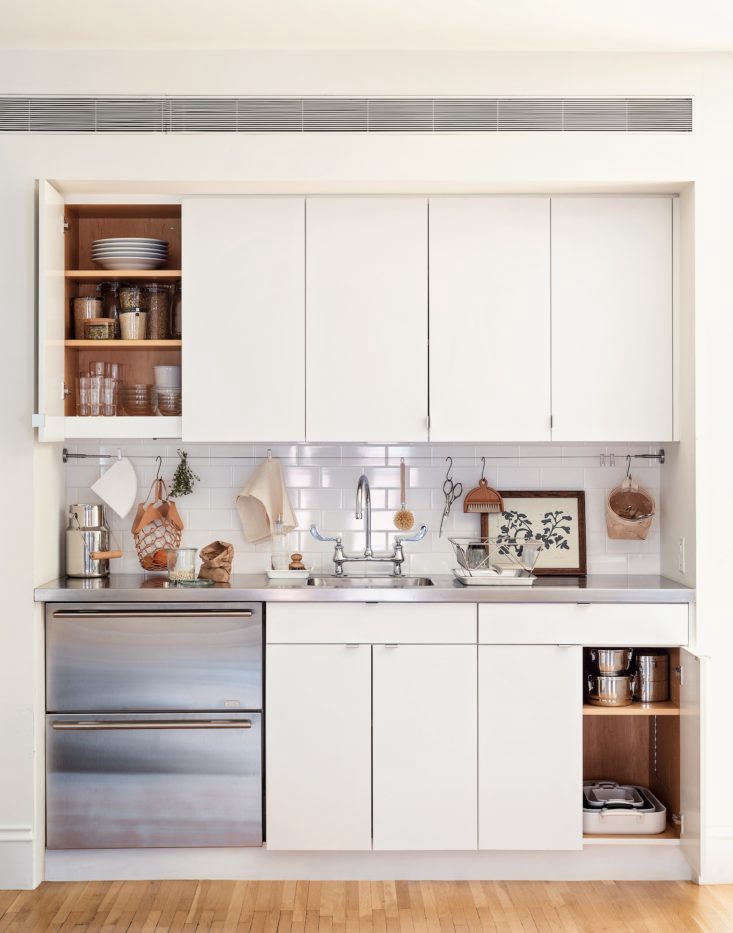
Another way to optimize flow is by looking at your hardware. Traditional protruding handles can be "hip-bruisers" in a narrow galley kitchen. Switching to low-profile tab pulls or "push-to-open" cabinetry allows for a cleaner visual flow and makes the space feel inches wider than it actually is.
Tip 5: Micro-Organization with Trays and Drawer Zones
In a small kitchen, "micro-organization" is the secret to maintaining order. This is the practice of organizing the items inside your storage areas so that no space is wasted. I always recommend the "Tray Trick": corralling counter essentials like olive oil, salt cellars, and pepper grinders onto a single tray.
By placing these items on a tray, you turn five separate objects into one "unit" of visual information. This reduces the "visual noise" that makes a small room feel cluttered. If you need to prep a large meal, you simply move the one tray to clear the entire counter, rather than moving five individual bottles.
Sophie’s Advice: The Drawer Zone Method Stop using one giant cutlery tray. Instead, use individual magnetic organizers and adjustable dividers to create "zones" tailored to your specific tools. A zone for prep (peelers, graters), a zone for cooking (tongs, spatulas), and a zone for serving.
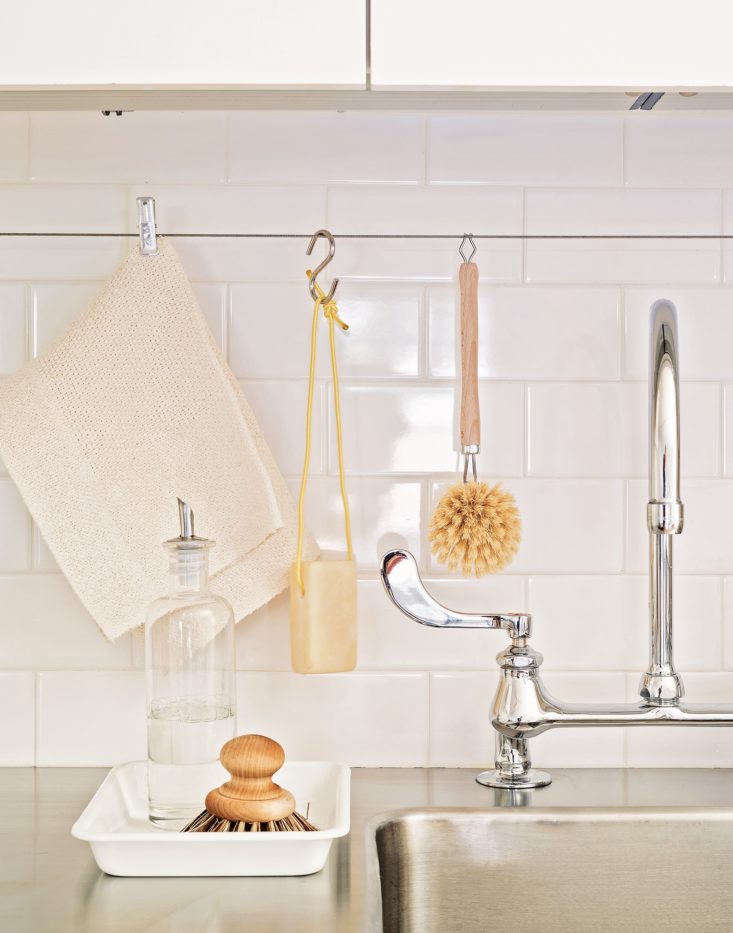
Don't forget the backs of your cabinet doors. Adhesive-mounted spice racks or slim bins for cleaning supplies can turn a flat surface into a high-capacity storage zone. It’s about finding the "hidden" inches that others overlook.
Spotlight: 15 Time-Saving Kitchen Gadgets for 2026
As we look toward the future of home organization, technology is increasingly helping us do more with less. The "Brooklyn Cookspace" aesthetic—compact, high-tech, and incredibly efficient—is becoming the global standard for urban living.
Here are the gadgets and tools that will define the efficient kitchen in 2026:
- Digital Ultra-Slim Food Scales: Models that are less than 0.5 inches thick and can be tucked away like a tablet.
- Wireless Charging Under-Cabinet Stations: Eliminating messy cords for your phones or tablets while following recipes.
- Automatic Pan Stirrers: Freeing up your hands to prep while the sauce is being stirred.
- Collapsible Silicone Colanders: These fold flat to the height of a dinner plate.
- Magnetic Walnut Knife Racks: Replaces the bulky knife block and saves 6 inches of counter depth.
- Rolling Soda Bins: Utilizes the full depth of the refrigerator for canned drinks.
- Over-the-Sink Bamboo Cutting Boards: Creates extra counter space where the sink usually sits.
- Nesting Glass Mixing Bowls with Silicone Lids: From prep to storage in one vessel.
- Vertical Pan Organizers: Stops the "stacking and scratching" of your cookware.
- Clip-on Strainers: Eliminates the need for a full-sized colander for pasta.
- Expandable Drawer Dividers: Bamboo or clear acrylic to customize every inch of drawer space.
- Magnetic Spice Jars: Stored on the side of the fridge or a wall-mounted steel plate.
- Under-Shelf Hanging Baskets: Perfect for storing light items like bread or dish towels.
- Collapsible Dish Drying Racks: Can be rolled up and stored in a drawer when not in use.
- Smart Compost Bins: Compact, odorless countertop units that look like high-end decor.
FAQs
How can I maximize counter space in a tiny kitchen?
The most effective way is to utilize vertical "dead space" by installing minimalist rails like the IKEA Dignitet curtain wire or tension rods. This allows you to hang tools, filters, and brushes off the countertop, keeping your workspace clear for actual cooking prep.
What are the best appliances for a small kitchen?
Prioritize multi-functional electronics that combine several tools into one compact footprint. Look for air fryer toaster ovens (which replace three separate gadgets) and programmable rice cookers that can also steam vegetables and slow-cook soups.
How does nesting dinnerware help organize a kitchen?
Nesting dinnerware—stackable dishes and nested ceramic baking sets—allows you to store multiple items within the same vertical footprint of a single item. This simple change can reclaim up to 40% of your cabinet volume, making it much easier to access what you need without a cluttered mess.
Conclusion
Organizing a tiny kitchen isn't a one-time chore; it's the creation of a system that supports your lifestyle. By lifting tools into vertical space, choosing multi-functional appliances, and being intentional about how your dinnerware stacks, you aren't just "cleaning up"—you are reclaiming your time and your peace of mind.
Remember, a "considered" kitchen is one where every item has a purpose and a place. Start small: clear one counter, install one rail, or swap out those mismatched containers. You'll be surprised how much larger your home feels when your kitchen finally has room to breathe.