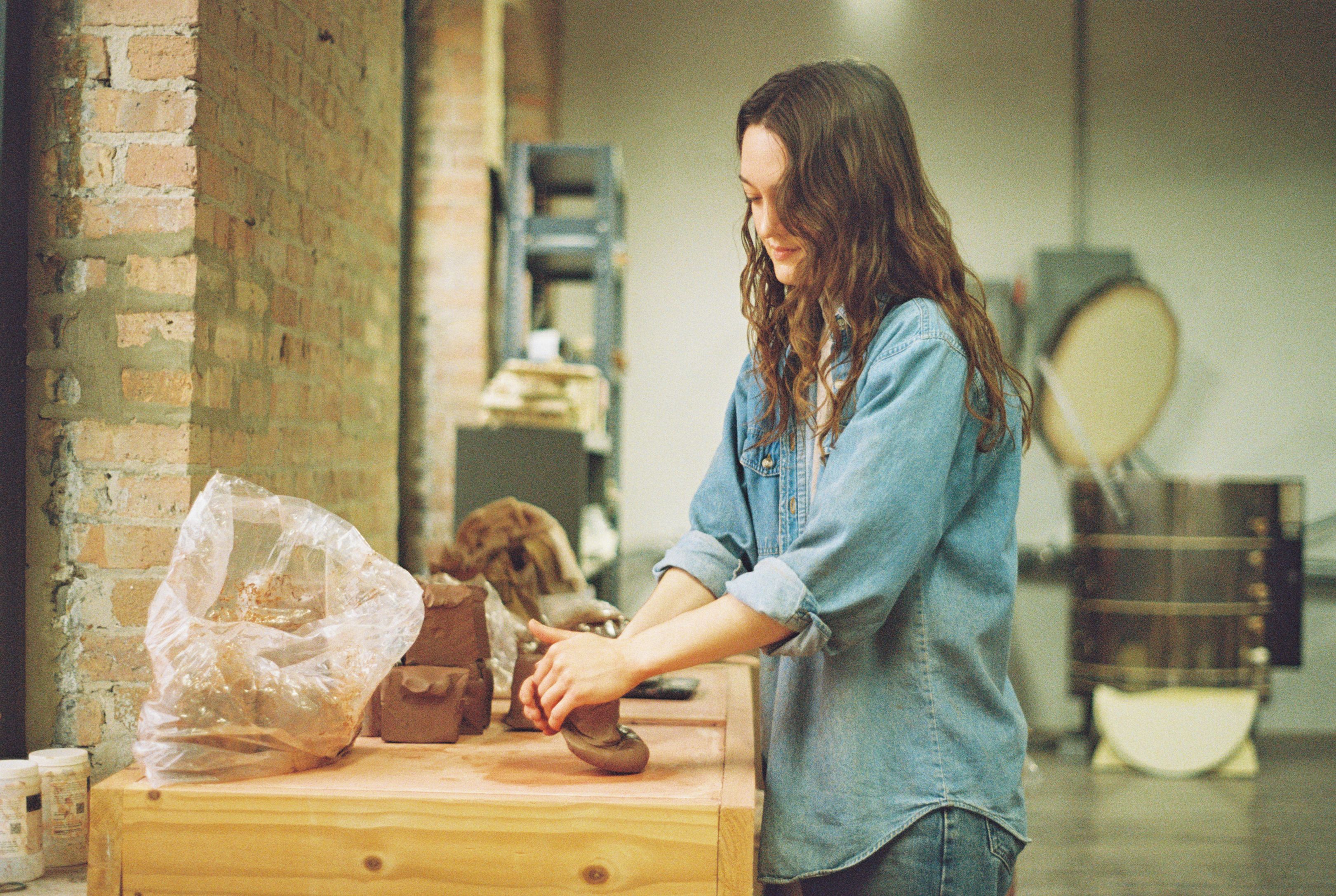
There is a specific kind of quiet that exists in a pottery studio. It’s the sound of the wheel’s low hum, the wet slap of clay against a bat, and the rhythmic breath of a maker lost in the "slow burn" of creation. In the heart of Chicago, Emily Christopherson embodies this quietude through her studio, EMRIS.
As a design editor, I am constantly inundated with "newness"—the latest trends, the fastest shipping, the sleekest factory-finished surfaces. But lately, my eye (and my home) has been gravitating toward the grounded. We are seeing a massive shift toward "tactile minimalism," a movement where the beauty of a space isn't defined by what is polished, but by what feels human. Emily’s work doesn’t just sit on a shelf; it demands to be held.
Quick Facts: EMRIS Ceramics
- Founder: Emily Christopherson
- Location: Chicago, IL
- The Aesthetic: Tactile minimalism characterized by unglazed, textured stoneware exteriors and soft-edged, functional forms.
- Signature Palette: Earthy tones including terracotta, stone gray, and sandy ochre.
- Experience: 15 years of throwing, 6 years of selling, transitioning to full-time studio work in 2022.
- Availability: Through the official EMRIS website and curated monthly drops on Food52’s "All Fired Up" collection.
The Maker Behind the Mud: The Story of EMRIS
The name "EMRIS" is more than just a brand; it’s a sentimental portmanteau of Emily’s name and her father’s. The brand identity is rooted in a core childhood memory of digging in the sand—a primal, tactile connection to the earth that Emily has carried into her adult life.
However, the path to becoming a full-time ceramicist wasn't an overnight success story. Emily describes her career as a "slow burn." While many artists feel pressured to monetize their hobbies immediately, Emily spent 15 years honing her craft at the wheel before making the leap. She spent six of those years selling her work as a side pursuit while navigating the prestigious halls of the School of the Art Institute of Chicago (SAIC). This academic background provided a rigorous framework for her art, but it was the 2022 transition to a full-time studio career that allowed EMRIS to truly flourish.
"There is a profound difference between making art as a hobby and committing your life to a medium. The 'slow burn' allowed me to fail, to experiment, and to eventually find a voice that felt entirely my own before I ever asked the world to listen." — Emily Christopherson
The Art of the Vessel: Defining the EMRIS Aesthetic
When you first encounter an EMRIS piece, the most striking feature is the lack of traditional glaze on the exterior. While the interiors are glazed for functionality (making them food-safe and easy to clean), the exteriors remain raw stoneware. This creates a sensory contrast: the cool, smooth glassiness of the inside against the warm, gritty, stone-like texture of the outside.
The Philosophy of Form
Emily’s aesthetic is deeply influenced by the softening effects of nature. She draws inspiration from the tide pools of Maine, where water and time have worn down jagged rocks into soft, rounded silhouettes. Her work reflects this "softening," resulting in grounded forms that feel stable yet gentle.
Key elements of the EMRIS collection include:
- The 'Plate-Bowl' Hybrid: Perhaps her most popular functional design, this "plowl" offers the depth of a bowl with the surface area of a plate—perfect for the modern way we eat (think grain bowls, pasta, and vibrant salads).
- Textured Pinch Bowls: Small, intimate vessels that show the marks of the maker’s fingers, ideal for salt, spices, or jewelry.
- Muted Earth Tones: By using clays like terracotta and stone gray, Emily allows the material to speak for itself. These aren't loud colors; they are colors that settle into a room like shadows.
Building a Functional Art Collection
For many of my readers, the jump from mass-produced dinnerware to artisan ceramics can feel intimidating. Do they match? Are they too fragile? How do you start?
When building a collection, I always recommend starting with Stoneware. Unlike porcelain, which is delicate and often translucent, stoneware is fired at high temperatures to become incredibly dense and durable. It’s the "workhorse" of the ceramic world.
Starting Small: The "Teeny Bowl Crew"
If you aren't ready to invest in a full dinnerware set, look toward what Emily affectionately calls the "Teeny Bowl Crew." These are small, textured pinch bowls and spreaders. They are an accessible entry point into collecting handmade art. They add a layer of texture to your coffee table or kitchen counter without requiring a total overhaul of your existing décor.
| Feature | EMRIS Stoneware | Mass-Produced Ceramic |
|---|---|---|
| Texture | Tactile, unglazed raw clay | Uniform, high-gloss glaze |
| Durability | High (Chip-resistant stoneware) | Varies (Often prone to hairline cracks) |
| Uniqueness | Each piece has distinct maker marks | Identical factory molds |
| Sustainability | Small-batch, Chicago-made | Large-scale industrial footprint |
Styling and Caring for Handmade Ceramics
As an editor, I believe that the way we style our objects is just as important as the objects themselves. EMRIS pieces thrive in "sun-soaked, calm" environments.
Interior Design Tips
- Embrace the "Wabi-Sabi": Don't be afraid to mix and match different EMRIS tones. A Stone Gray plate paired with a Terracotta bowl creates a sophisticated, layered look that feels organic.
- The Centerpiece Strategy: Use a large EMRIS serving bowl as a permanent fixture on your dining table. Even when empty, its sculptural quality acts as a piece of art.
- Texture Play: Pair the raw exterior of the clay with soft linens and wooden accents. The contrast between the grit of the clay and the softness of a linen napkin is the height of modern living room styling.
Maintenance 101
A common misconception is that handmade means "hand-wash only." Thankfully, Emily designs for real life.
- Dishwasher Safe: Most EMRIS stoneware is dishwasher safe. However, to extend the life of the raw exterior, I personally recommend a gentle cycle or hand-washing when possible.
- Avoid Thermal Shock: Like all ceramics, avoid moving a piece directly from a cold refrigerator into a hot oven.
- Stain Prevention: Because the exterior is unglazed, it is more porous than the interior. Avoid leaving dark oils or pigments on the raw exterior for extended periods.
FAQ
Q: Where can I buy EMRIS Ceramics? A: You can purchase directly from Emily’s studio website or keep an eye out for her exclusive curated collections on Food52’s 'All Fired Up' monthly handmade ceramics drop.
Q: Is the unglazed exterior rough to the touch? A: It is tactile and "toothy," similar to a smooth stone you might find on a beach. It is not abrasive, but it provides a much more secure and interesting grip than slippery glaze.
Q: Can I use EMRIS pieces in the microwave? A: Yes! EMRIS stoneware is generally microwave-safe, making it as functional as it is beautiful for daily use.
The Final Word
In a world that feels increasingly digital and detached, Emily Christopherson reminds us of the power of the physical. EMRIS isn't just about plates and bowls; it’s about the 15-year journey of a woman who decided that the "slow burn" was worth the wait. Whether you’re starting your collection with a single pinch bowl or investing in a full set of "plowls," you’re bringing a piece of Chicago’s artisan soul into your home.