I remember the first time I encountered Tamegroute pottery. It wasn't in a glossy magazine or a staged showroom, but in the dim, dappled light of a courtyard in Marrakech. Amidst the vibrant chaos of the souks, these ceramics stood out not for their perfection, but for their profound, visceral "otherness." The color—a deep, multi-tonal emerald that seemed to hold the secrets of the Sahara—was unlike any glaze I had ever seen. It felt less like a manufactured object and more like a piece of the earth that had simply decided to become a bowl.
Quick Facts: The Tamegroute Dossier
- Origin: Tamegroute, a village in the Draa River Valley, Southern Morocco.
- Signature Hue: A unique emerald green, though variations include mustard yellow and translucent gray.
- The Glaze Secret: A precise alchemy of manganese, silica, cobalt, copper, and barley flour.
- The Seven Families: The technique is a hereditary secret preserved by exactly seven artisan families for over 300 years.
- Sustainability: 100% natural materials, locally sourced clay, and traditional stone kilns fueled by palm branches.
- Aesthetic: "Wabi-sabi" at its finest—celebrated for drips, chips, and irregular textures.
The Green Gold of the Sahara
Tamegroute pottery is more than just dinnerware; it is a study of the color green. In the world of interior design, where mass-produced minimalism has often left spaces feeling a bit sterile, Tamegroute offers a soulful antithesis. Its allure lies in its unapologetic imperfection. Each piece carries the thumbprints of its maker, the scars of the kiln, and a glaze that flows with a life of its own.
What makes Tamegroute pottery unique? Its signature emerald green hue is created using a secret alchemy of manganese, silica, cobalt, copper, and barley flour—a recipe exclusive to seven artisan families in the Draa River Valley. This isn't just a color; it’s a geological signature. The depth of the green changes depending on the light, shifting from a dark forest moss to a bright, translucent lime. This "Green Gold" has become the ultimate trend for 2025 and 2026 because it bridges the gap between ancient heritage and modern organic textures.
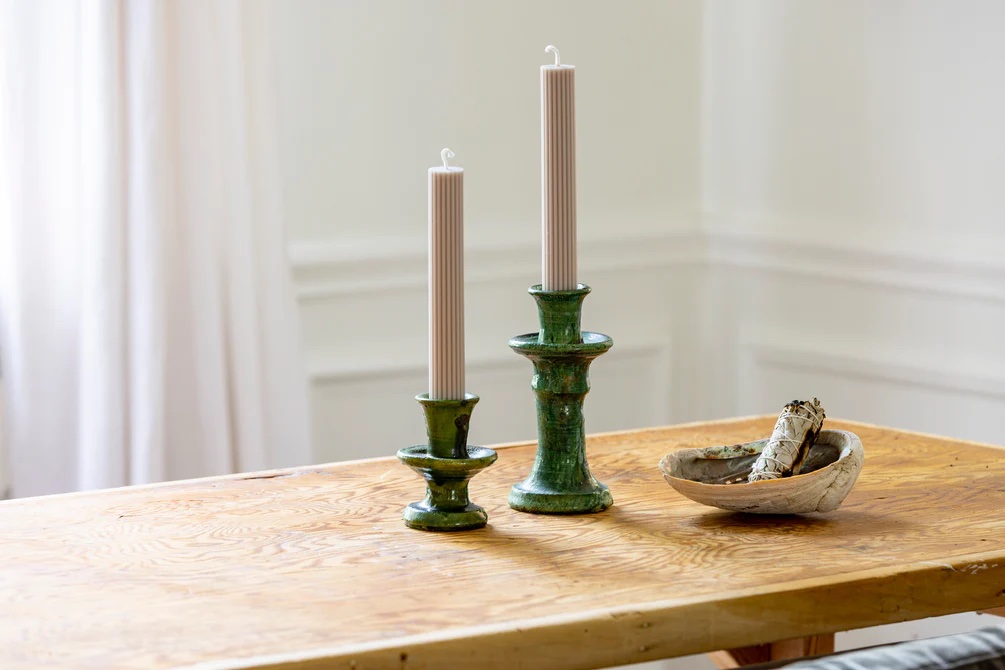
The Secret Alchemy: Understanding the Glaze
The "Tamegroute glaze secret" is a phrase whispered among ceramic collectors with a sense of reverence. Unlike industrial glazes that are formulated in laboratories, Tamegroute’s finish is entirely elemental. The copper provides the green, the manganese adds the dark, metallic undertones, and the barley flour acts as a natural thickening agent and organic fuel during the firing process.
One of the most fascinating aspects of this craft is the 7-day rule. To achieve that signature multi-shade depth, the glaze mixture must be left to thicken and ferment for exactly seven days before it can be hand-applied to the sun-dried clay. This period allows the organic components to interact, ensuring that when the piece hits the heat, the glaze reacts with the minerals in the clay to create those iconic drips and pools of color.
Editor’s Tip: When sourcing Tamegroute, look for the "drip." Authentic pieces often have small bumps or ridges at the base where the glaze pooled during firing. These are not defects; they are the hallmarks of a genuine, hand-dipped process.
A 300-Year Heritage: The Seven Families
The story of Tamegroute is inextricably linked to the village’s history as a center of Sufi learning and trade. For over three centuries, the pottery techniques have been passed down through exactly seven specific artisan families. This isn't just a business; it’s a sacred trust.
The process of how Tamegroute pottery is produced is as grueling as it is beautiful:
- Clay Extraction: Artisans dig clay from the local palm groves, often reaching depths of 10 meters to find the richest, most pliable earth.
- Hand-Shaping: Using primitive kick-wheels, the potters shape vessels that reflect the needs of desert life—heavy bowls for couscous, tall jars for oil, and sculptural candleholders.
- Natural Glazing: After air-drying in the Saharan sun, the pieces are hand-dipped into the fermented glaze.
- The Firing: The ceramics are stacked in traditional stone kilns. The fuel? Dried palm tree branches and thorns collected from the valley. At 1000°C, the smoke and ash interact with the glaze, creating the unique "imperfections" that collectors crave.
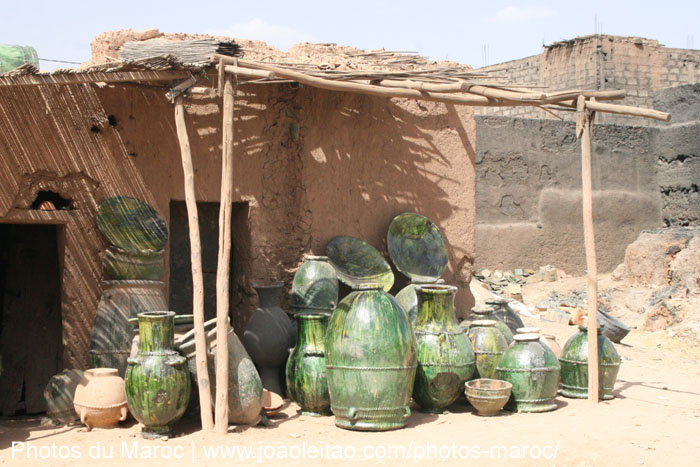
Why Tamegroute is the Ultimate 2026 Dinnerware Choice
In an era of "quiet luxury," Tamegroute feels like a loud, authentic statement. As we look toward 2026, the shift in interior design is moving away from the "perfect" and toward the "narrative." We want objects with stories.
But is Tamegroute pottery durable enough for a modern kitchen? Absolutely. It is celebrated for its exceptional durability, heat resistance, and color stability. Because the glaze is fused during a unique high-heat firing process, the color won't fade or peel. These pieces are built to survive the harsh desert, which makes them more than capable of handling a busy dinner party.
Furthermore, Tamegroute is the pinnacle of sustainable handmade pottery. In a world of plastic and mass-market ceramics, these pieces are entirely biodegradable, made from 100% natural ingredients, and produced with a carbon footprint that has remained virtually unchanged since the 17th century.
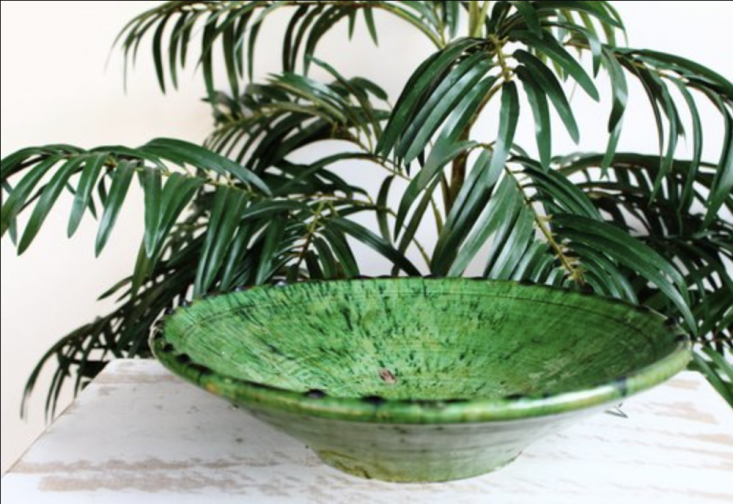
Comparison: Tamegroute vs. Standard Porcelain
| Feature | Tamegroute Pottery | Standard Porcelain |
|---|---|---|
| Aesthetic | Rustic, Irregular, Earthy | Sleek, Uniform, Modern |
| Color | Deep Emerald / Ochre | Solid White / Printed Patterns |
| Material | Saharan Clay & Natural Ore | Kaolin & Synthetic Glazes |
| Durability | High (Heat & Humidity Resistant) | High (Chip Resistant) |
| Production | Hand-crafted by 7 Families | Mass-produced in Factories |
Styling Your Tablescape: The Mix-and-Match Guide
As an editor, I often get asked: "Isn't Tamegroute too 'heavy' for a modern home?" The secret is in the contrast. Tamegroute works best when it isn't part of a matching set. It is an accent, an anchor.
- Pairing with Porcelain: Try placing a heavy, emerald Tamegroute salad bowl in the center of a table set with crisp, white bone china. The juxtaposition of the refined and the raw is incredibly sophisticated.
- Neutral Anchors: Tamegroute glows when surrounded by "desert" tones. Think linen tablecloths in sand or oatmeal, olive wood serving spoons, and terracotta accents.
- Sculptural Functionalism: Don't limit these to the dining room. A Tamegroute jug makes a stunning bedside water carafe, and their oversized platters are perfect for holding fruit on a minimalist kitchen island.
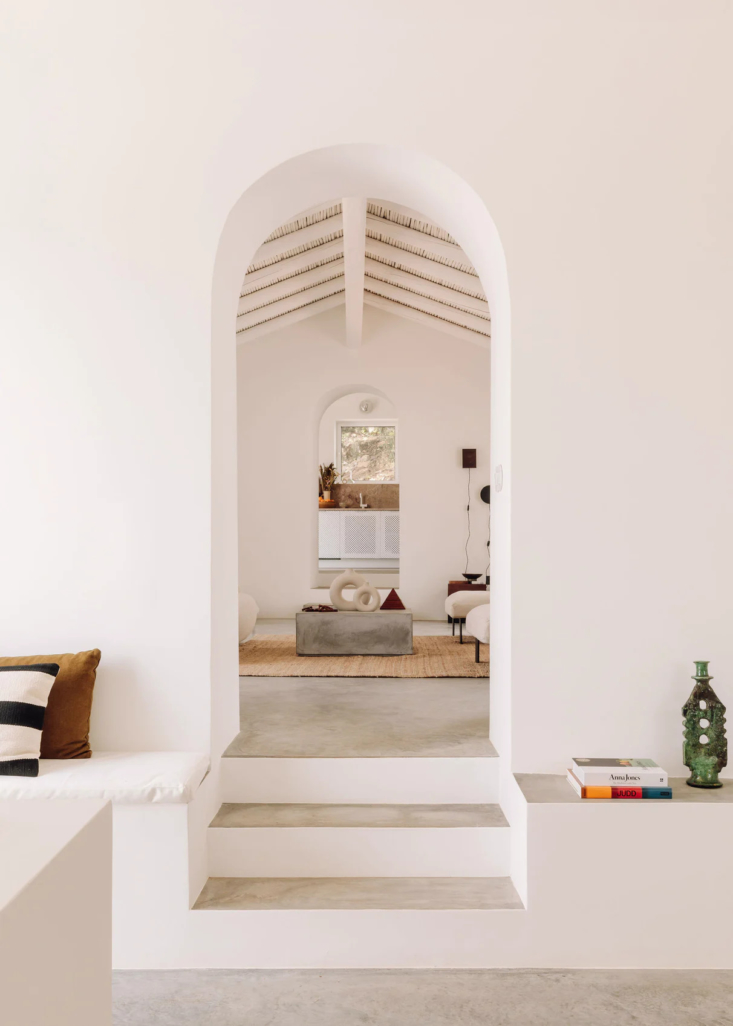
Buyer’s Guide & Care Instructions
Because of its rising popularity, "Tamegroute-style" ceramics are appearing in big-box stores. To ensure you are supporting the original seven families and getting the real "secret alchemy," I recommend sourcing from specialized artisanal importers or reputable Etsy sellers who work directly with Moroccan cooperatives.
Pricing Expectations:
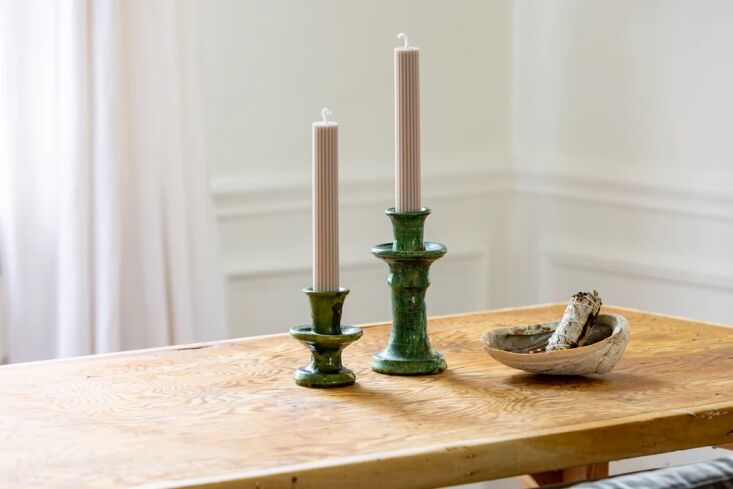
- Small Candleholders: $30 – $50
- Dinner Plates/Bowls: $45 – $80
- Large Sculptural Pieces: $120 – $300+
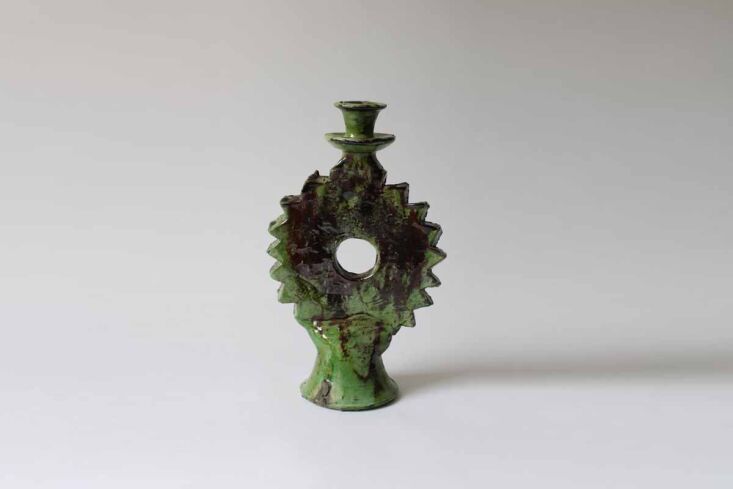
Maintenance 101: Treat your Tamegroute with the respect an ancestral piece deserves. While durable, the glaze can be porous.
- Hand Wash Only: Avoid the dishwasher, as the harsh detergents can eventually dull the organic glaze.
- Temperature Shocks: Avoid taking a piece directly from the refrigerator to a hot oven.
- Occasional Oiling: Some collectors like to rub a tiny amount of olive oil into the unglazed base to maintain its rich, dark color.
FAQ
Q: Is Tamegroute pottery food-safe? A: Historically, yes. However, because these are artisanal products made in traditional kilns, some older or highly decorative pieces may contain traces of lead in the glaze. Always ask your supplier if the specific batch is certified food-safe for modern standards. If in doubt, use them for dry foods (like bread or fruit) or as decorative centerpieces.
Q: Why does my Tamegroute piece have small chips or "scars"? A: This is part of the firing process. In the stone kilns, pieces are stacked directly on top of one another. When they are pulled apart after firing, it often leaves small marks or "scars" where they were touching. This is considered a mark of authenticity, not a defect.
Q: Can I use Tamegroute outdoors? A: Yes! Tamegroute is incredibly resistant to humidity and heat. They make excellent patio planters or outdoor candleholders, as their color will not fade under UV light.
Are you ready to bring the "Green Gold" into your home? Whether it’s a single sculptural candleholder or a full set of rustic bowls, Tamegroute pottery offers a connection to the earth and a 300-year-old history that no factory-made plate can ever replicate. It’s time to embrace the beauty of the imperfect.