We live in the golden age of the "emotional support water bottle." From the viral craze of the Stanley Quencher to the rugged ubiquity of Yeti, our hydration vessels have become extensions of our personalities. Yet, as someone who spends their life testing home appliances and kitchen gear, I’ve noticed a disturbing trend: most of these "sustainable" choices are anything but. They dent, their coatings peel, their straws become breeding grounds for mold, and eventually, they end up in the back of a cupboard or a landfill, replaced by the next $45 trend.
Enter OKAPA. At $300, it is not merely a water bottle; it is a piece of high-precision Swiss engineering designed to end the cycle of disposable "reusable" containers. To many, the price tag is an immediate deterrent. To an engineer or a connoisseur of fine machinery, it is a signal of intent. The OKAPA water bottle costs $300 because it is built with the same micron-level precision as a luxury Swiss timepiece, utilizing medical-grade borosilicate 3.3 glass, Grilamid TR-90 spouts, and over 70 global patents to ensure lifetime durability and uncompromising hygiene. It is the first vessel I’ve tested that treats water not just as a liquid to be contained, but as a resource to be protected.
The Engineering Story: 8 Years and 10,000 Prototypes
In the world of product development, most consumer brands work on an 18-month cycle. OKAPA took a different path. The Swiss team behind the bottle spent eight years in research and development, testing over 10,000 prototypes before they were satisfied with the mechanical integrity of the design.
This isn't just a marketing statistic; it reflects a "Swiss Watch" philosophy that rejects mass-market compromises. While most bottles are made of two pieces of stamped steel welded together, the OKAPA is a complex assembly of high-performance components. Each prototype was a step toward solving the "glass paradox"—how do you create a vessel that offers the pure taste of glass with the ruggedness of a tactical gear? The result is an architecture secured by more than 70 patents globally, ensuring that every click, pop, and seal operates with a mechanical consistency that $40 bottles simply cannot replicate.
Anatomy of a Luxury Bottle: Material Deep-Dive
To understand the OKAPA, you have to look at what it’s made of. In my years of reviewing kitchenware, I rarely see this level of material science applied to something as "simple" as a bottle.
The Core: German-made Borosilicate 3.3 Glass
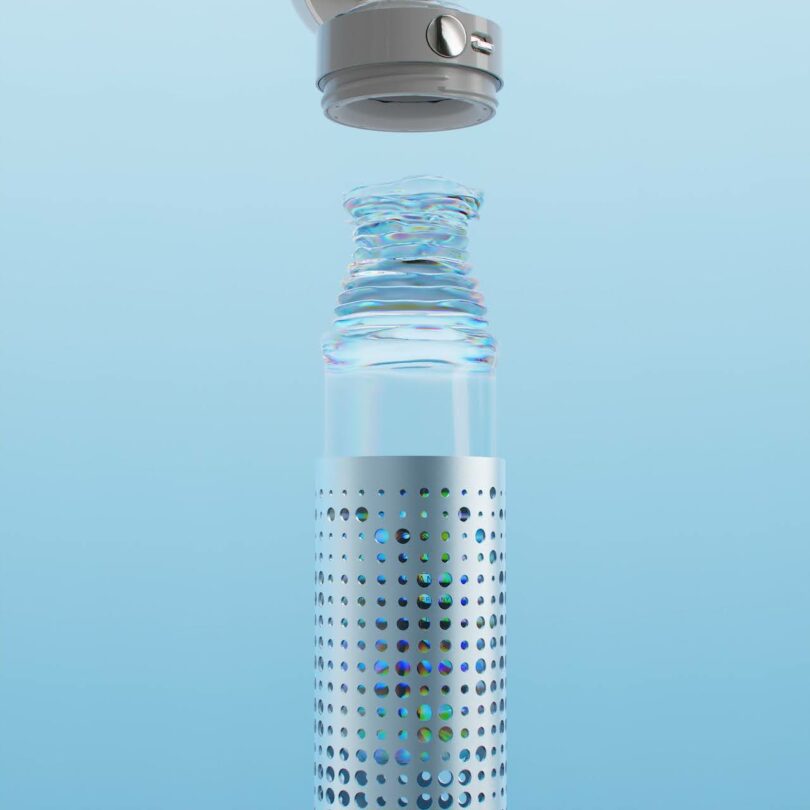
Most glass bottles use soda-lime glass, which is fragile and prone to thermal shock. OKAPA utilizes medical-grade Borosilicate 3.3. This material is the gold standard in laboratory environments because it is chemically inert and highly resistant to temperature fluctuations. It ensures that your water tastes exactly like water—no metallic aftertaste from steel and no chemical leaching from plastic.
The Shield: Perforated Anodized Aluminum
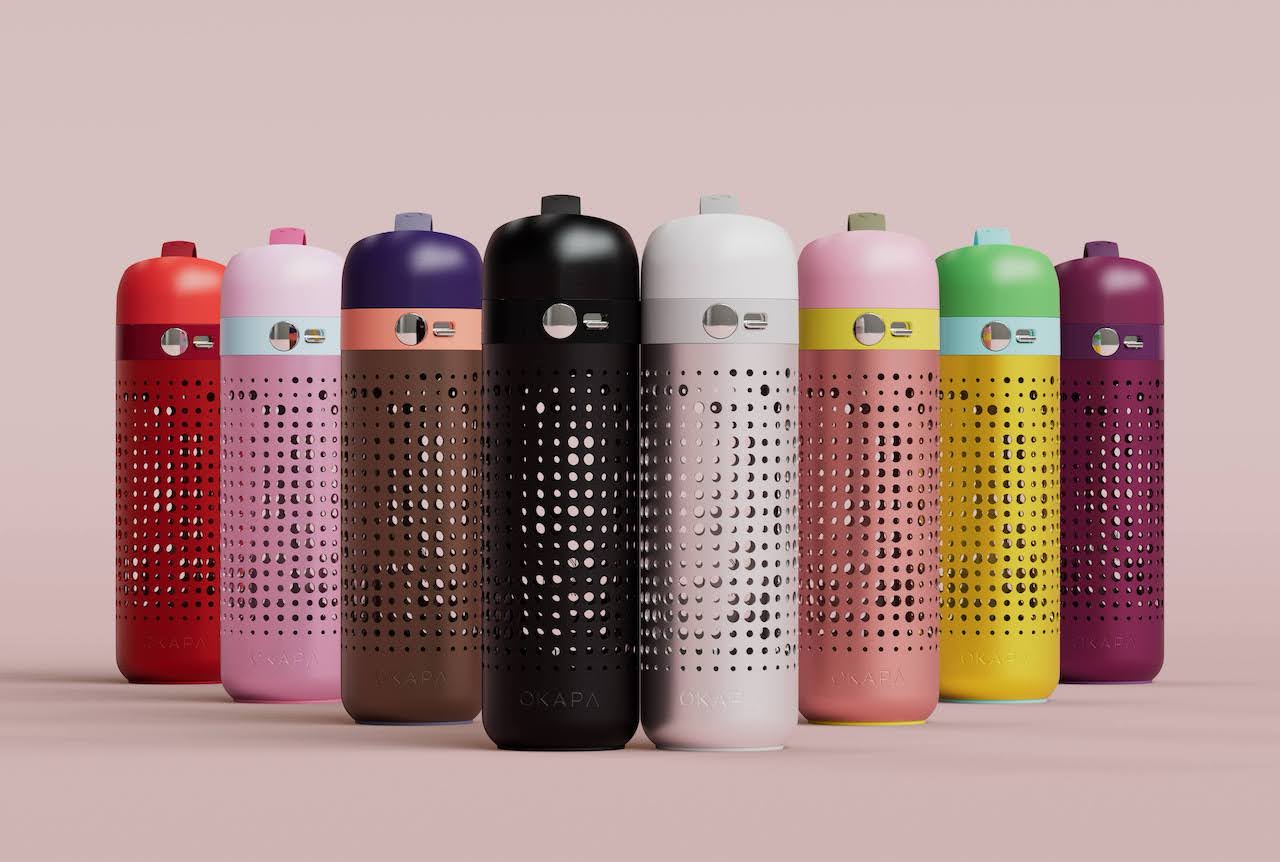
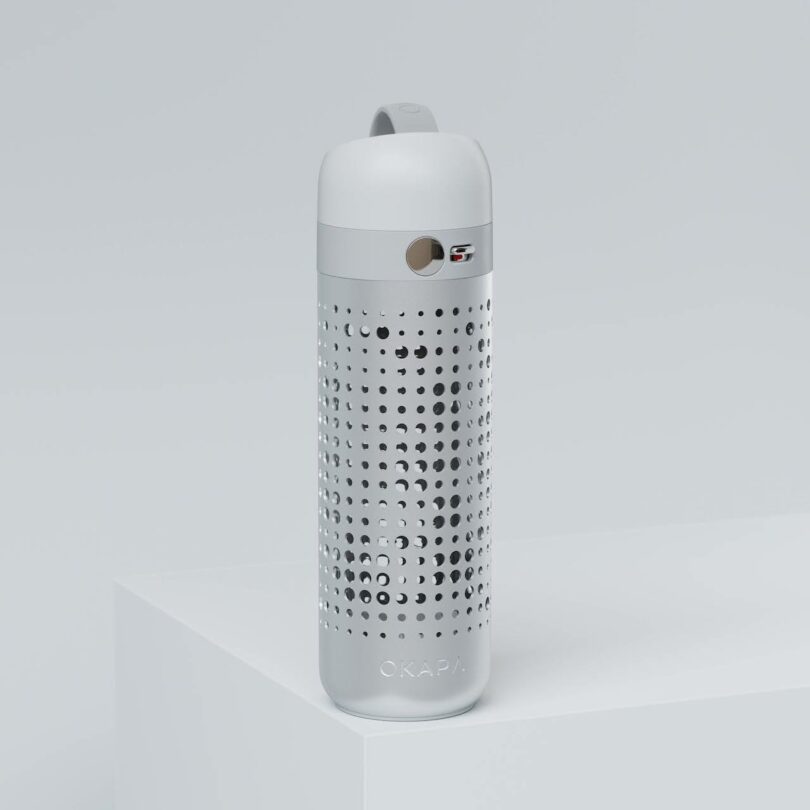
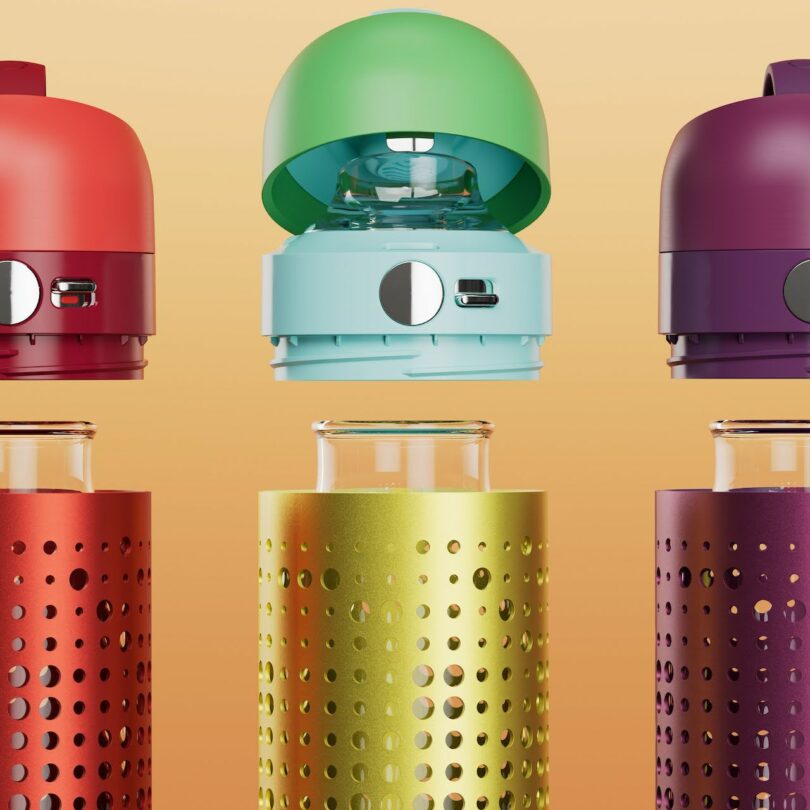
Unlike standard stainless steel bottles, the OKAPA features a German-made glass carafe suspended in a shock-absorbing silicone system and wrapped in a perforated anodized aluminum shell. This "Exoskeleton" serves two purposes:
- Protection: It creates a mechanical barrier that prevents the glass from impacting the ground during a drop.
- Hygiene: The perforations allow for airflow, preventing the moisture buildup between the shell and the core that often leads to "stinky bottle" syndrome in typical sleeved glass bottles.
The Spout: Grilamid TR-90
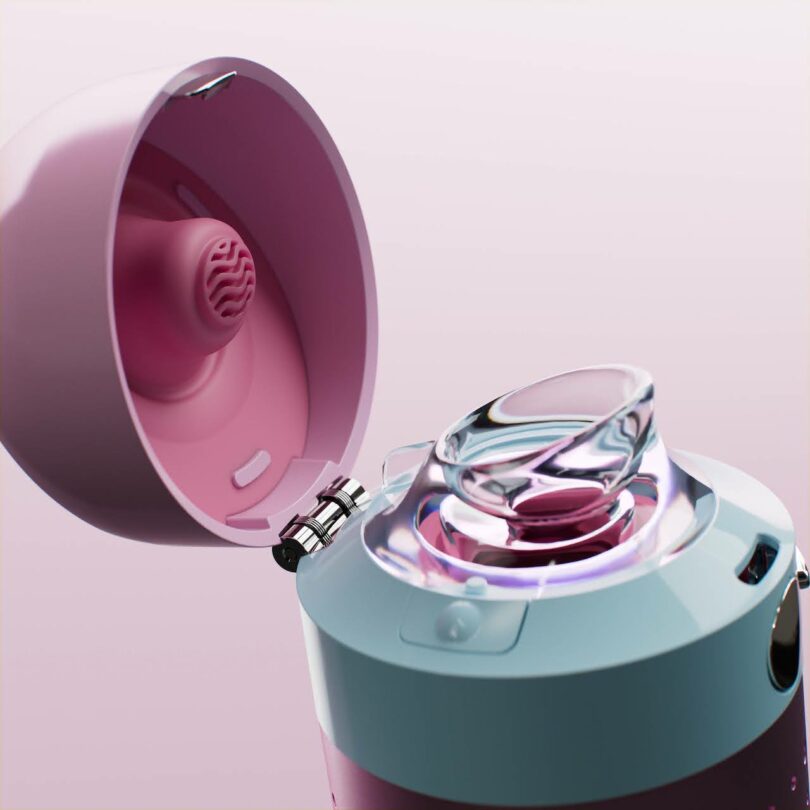
The part of the bottle that touches your lips is arguably the most important. OKAPA uses Swiss-made Grilamid TR-90, a high-performance transparent polyamide often used in premium eyewear and medical devices. It is BPA-free, extremely durable, and, crucially, it is "organoleptically neutral," meaning it contributes zero flavor or odor to your beverage.
Spec Highlight: Material Composition
- Inner Core: German Borosilicate 3.3 Glass (Medical Grade)
- Outer Shell: Perforated Anodized Aluminum
- Drinking Interface: Grilamid TR-90 (Swiss-made Polyamide)
- Suspension System: High-Grade Shock-Absorbing Silicone
- Weight: Approximately 560g (unfilled)
Performance Testing: Does it Live Up to the Hype?
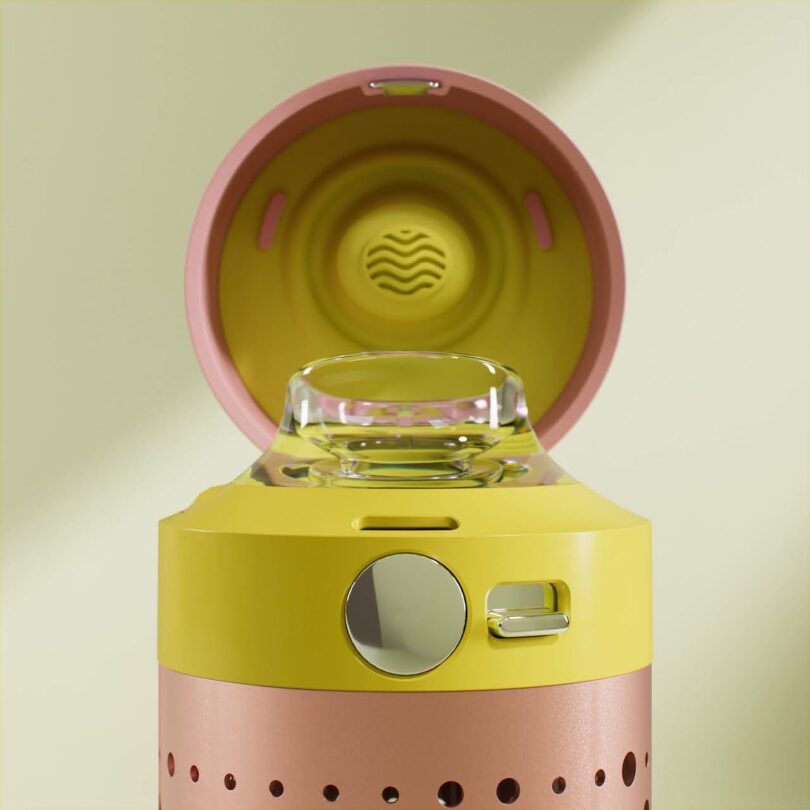
I put the OKAPA through its paces in my home kitchen and on the go. The first thing you notice is the "Crisp Pop." The spring-loaded lid mechanism doesn't just open; it engages with a satisfying tactile click that feels like the door of a high-end German sedan. This isn't just for show; the 70+ patents securing the architecture ensure that the locking mechanism remains leak-proof even after thousands of cycles.
Flavor Neutrality
One of the biggest complaints with stainless steel bottles (like Yeti or Hydro Flask) is "flavor ghosting." If you put coffee or an electrolyte mix in a steel bottle, you can often taste it three washes later. In my testing, the OKAPA’s glass core remained perfectly neutral. I filled it with a potent cold-brew coffee, let it sit for six hours, rinsed it with warm water, and immediately filled it with filtered water. The result? Zero odor retention.
The User Interface
The drinking experience is remarkably frictionless. The spout is designed to mimic the flow of a glass, preventing that "glug-glug" vacuum effect found in many narrow-mouth bottles. The Grilamid TR-90 feels smoother and more premium than the standard polypropylene used in most lids.
Maintenance and Hygiene: The Anti-Mold System
The Achilles' heel of the modern reusable bottle is the "black mold" that grows in hidden crevices of straws and multi-part lids. The OKAPA water bottle is designed for easy maintenance, featuring an integrated aeration system to prevent mold and components that are either dishwasher-safe or designed for quick, intuitive disassembly.
Because the glass carafe is suspended within the shell, you can actually see the cleanliness of your vessel. There are no hidden gaskets that require a specialized "straw brush" to reach. The wide-mouth opening allows for easy cleaning, and the entire lid assembly can be stripped down in seconds. This focus on long-term hygiene is one of the primary reasons this bottle is a better long-term value than cheaper alternatives that need to be replaced when they inevitably become unsanitary.
OKAPA vs. The World: Comparing the Standards
Is the 10x price jump over a standard bottle justified? Let’s look at the data.
| Feature | OKAPA Swiss-Engineered | Standard Stainless Steel |
|---|---|---|
| Material | Borosilicate 3.3 Glass / Aluminum | 18/8 Stainless Steel |
| Taste Purity | Absolute (Zero metallic transfer) | Variable (Metallic aftertaste) |
| Hygiene | Integrated Aeration (Anti-mold) | Prone to mold in seams/straws |
| Durability | Lifetime (Replaceable glass core) | 3-5 years (Dents, coating peels) |
| Engineering | 70+ Patents / Swiss R&D | Mass-produced mold |
| Price | $300 | $35 - $50 |
While a $45 stainless steel bottle is excellent for keeping ice frozen for 48 hours, it is fundamentally a disposable item. Once it is dented or the interior coating is compromised, its lifespan ends. The OKAPA is built to be a permanent fixture. If you manage to break the glass (which is difficult given the suspension system), you can replace the core without throwing away the entire engineering assembly.
Conclusion: Who is the OKAPA For?
The OKAPA isn't for everyone, and it doesn't try to be. If you are looking for something to throw in a gym bag and forget about, a cheaper plastic or steel bottle will suffice. However, if you value the intersection of health, purity, and engineering excellence, the OKAPA is a revelation.
It is for the professional who wants a sculptural piece of design on their desk. It is for the health-conscious individual who refuses to drink out of plastic or metal. And it is for the person who is tired of the "disposable premium"—the hidden cost of buying five "cheap" bottles over a decade rather than investing in one masterpiece.
With eight available colorways—ranging from the industrial Googie Silverline to the elegant Misti Pinku—the OKAPA is as much a fashion statement as it is a high-performance hydration tool. It is, quite literally, the last water bottle you will ever need to buy.
FAQ
Q: Is the OKAPA bottle heavy? A: At approximately 560g, it is heavier than a standard plastic bottle but comparable to a high-end insulated stainless steel bottle of the same capacity. The weight feels substantial and high-quality rather than cumbersome.
Q: Can I put hot liquids in it? A: Yes. Because it uses Borosilicate 3.3 glass, it handles thermal shock exceptionally well. You can transition from cold to hot without fear of the glass cracking.
Q: What happens if I drop it? A: The OKAPA is designed with a "suspended core" system. The perforated aluminum shell and internal silicone spacers absorb the majority of the impact. While no glass is 100% unbreakable, the OKAPA is engineered to survive standard daily drops that would shatter typical glass bottles.