Quick Facts
- Stability Standard: Seek out furniture that meets or exceeds the ANSI/BIFMA X5.5 certification to ensure industrial-grade safety and performance.
- Load Capacity: A high quality extendable dining table is engineered to support a static load of 200 kilograms (440 pounds) when weight is distributed evenly.
- Ideal Budget: For a piece intended to serve as a multi-generational investment, plan to spend between $2,500 and $3,000 for a durable extendable dining table under 3000.
- Clearance Rule: To ensure guest comfort and flow, always maintain a 36-inch clearance between the table edge and the nearest wall or piece of furniture.
- Family-Proof Finish: For households with young children, a catalyzed lacquer finish provides the best defense against moisture and impact.
- Lifespan Expectancy: While typical furniture lasts 15 years, a solid wood extendable dining table seats 12 made from oak or walnut can last from 30 to over 100 years with correct care.
To ensure an extendable dining table seats 12 remains stable, prioritize solid kiln-dried hardwood construction and traditional joinery like mortise-and-tenon. Avoid tables made of MDF or thin veneers, which lack the structural rigidity needed for large spans. Look for high quality extendable dining table mechanisms such as telescoping rails or ball-bearing slides, and prefer trestle or pedestal bases that offer superior weight distribution compared to standard four-leg designs.
Solving the Wobble: Engineering Stability for 12 Seats
When you move from a standard six-person setup to a configuration where an extendable dining table seats 12, the laws of physics become your biggest challenge. Most tables fail at this scale because they lack structural rigidity. As the span of the tabletop increases, any small weakness in the frame is magnified. This is why many mid-tier tables feel like they might tip or flex when a guest leans on the end during a holiday dinner.
The foundation of a sturdy extendable dining table that doesn't wobble is the use of kiln-dried hardwood. Wood that hasn't been properly dried retains moisture, leading to warping. Even a 2mm warp in a leaf can cause the entire surface to become unlevel, creating that annoying "clacking" sound when plates are moved. Beyond the material, look at the connections. Cheap furniture uses cam-locks or simple dowels. A table built for longevity uses mortise-and-tenon joinery, where a projecting tongue of wood fits into a corresponding hole, creating a bond that resists the shearing forces of a heavy, extended tabletop.
To verify a table's build quality before you buy, I recommend performing the Ethan Moore Stability Stress Test:
- Fully extend the table and insert all leaves.
- Go to the very end of the table—the furthest point from the base.
- Apply firm, downward pressure with both hands.
- Watch the center seam; if it gaps more than a millimeter or the legs creak, the support system is insufficient.
- Give the table a gentle side-to-side shake. A quality trestle base support should keep the surface almost entirely still.
Choosing the Right Mechanism: Butterfly vs. Removable Leaves
The mechanism is the heart of any extendable dining table seats 10-12. If the rails stick or the leaves don't align, you will eventually stop using the extension feature altogether. There are two primary schools of thought here: the butterfly leaf and the removable leaf system.
The butterfly leaf mechanism is a marvel of convenience. The leaves are hinged and folded into a hidden compartment under the tabletop. This is an excellent choice for an extendable dining table for 12 with leaf storage, as you never have to worry about where to hide the extra panels. However, because these leaves are permanently attached to the frame, they require precision-engineered telescoping rails to ensure the table opens smoothly every time.
Removable leaves are more traditional. While they require a closet or under-bed space for storage, they often allow for a more solid, uninterrupted main tabletop when the table is closed. Regardless of the style, the tracks should ideally be made of steel or high-density aluminum. For maintenance, I suggest applying a silicone-based lubricant to the metal slides every 12 to 18 months. This prevents the "grinding" feel that occurs when dust and friction take their toll on the high quality extendable dining table mechanisms.
Family-Proofing: Materials That Survive Toddlers and Holidays
For a family, a table is more than just a place to eat; it is a craft station, a homework hub, and sometimes a racetrack for toy cars. This daily abuse is why material choice is the most critical factor in long-term value. While the global extendable dining table market is expected to reach USD 18.4 billion by 2033, much of that growth is in low-cost, disposable furniture that won't survive a single toddler's juice box spill.
When choosing between a wood extendable dining table seats 12 and modern alternatives like sintered stone, consider your lifestyle.
| Feature | Solid Wood (Catalyzed Lacquer) | Sintered Stone |
|---|---|---|
| Durability | High (Repairable) | Extremely High (Scratch-proof) |
| Heat Resistance | Moderate (Use trivets) | Excellent (Direct heat okay) |
| Feel | Warm, natural texture | Cold, stone-like texture |
| Maintenance | Occasional polishing | Wipe and go |
| Repirability | Can be sanded and refinished | Almost impossible to repair chips |
The best extendable dining table for families with toddlers is one that prioritizes safety and finish. Avoid thin veneers. Many "mid-century" style tables use a thin layer of wood over particle board. Within 18 months, the edges—where toddlers tend to grab and pull—will begin to peel or chip. Instead, look for solid wood extendable dining table seats 12 with rounded corners or beveled edges to prevent injuries during active play.
A catalyzed lacquer finish is my professional recommendation for families. Unlike traditional oil or wax finishes that require constant upkeep, a catalyzed lacquer undergoes a chemical reaction as it dries, creating a hard, moisture-resistant barrier. This protects the wood from overnight spills that would otherwise leave permanent white rings.
Spatial Planning: Stated vs. Actual Seating Capacity
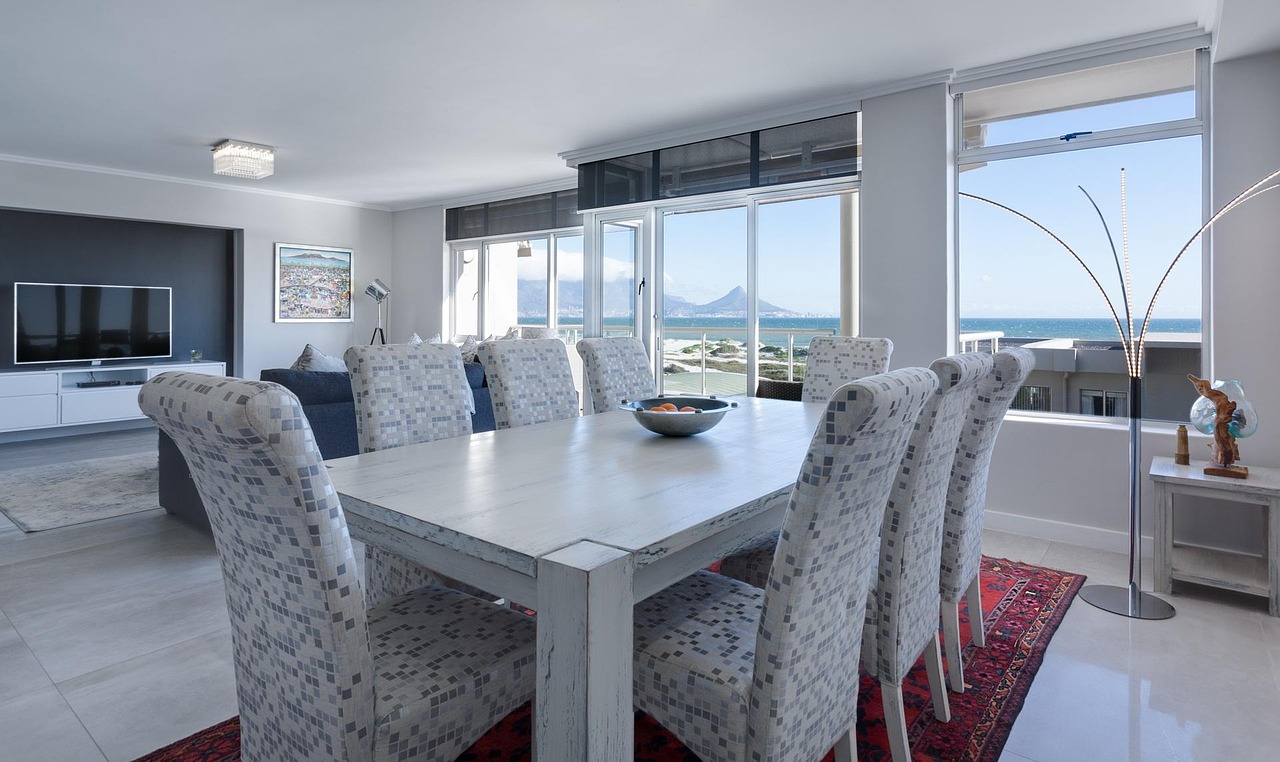
The biggest mistake homeowners make is trusting the "seats 12" label without measuring their actual room. A table that technically fits 12 people can still make a room feel cramped and dysfunctional. To find the right fit, you must look at the footprint of the table base versus the placement of the chairs.
A trestle base support is almost always superior for large gatherings. Because the support legs are set back from the corners, your guests won't have to "straddle" a table leg. If you prefer a round extendable dining table seats 12, a heavy pedestal base is the only way to ensure everyone has equal legroom.
Don't forget the 36-inch clearance rule. This is the minimum amount of space needed for a guest to push back their chair and walk behind someone else who is seated. If your room is 12 feet wide, a 42-inch wide table is the absolute maximum you should consider. Anything wider will turn your dinner party into an obstacle course.
FAQ
How long should a dining table be to seat 12 comfortably?
For a rectangular table, you generally need a length of at least 120 to 132 inches (10 to 11 feet) to seat 12 people without them feeling crowded. This allows for roughly 22 to 24 inches of width per person, which is the standard for comfortable dining. If the table is narrower than 40 inches, the ends may feel too tight for two people to sit across from one another comfortably.
Are extendable dining tables stable when fully extended?
Stability depends entirely on the engineering of the base and the quality of the rails. High-end tables with a trestle base or extra center support legs remain very stable. However, budget-friendly tables with thin legs at the corners often suffer from a "diving board" effect at the ends. Always check the load capacity ratings and look for telescoping rails made of heavy-duty metal to ensure the table doesn't flex.
What is the best type of base for a large extendable table?
A trestle base or a substantial pedestal is the best choice for a table seating 12. These designs centralize the weight and remove the four corner legs that often interfere with guest seating. Trestle bases, in particular, provide excellent longitudinal stability, which is vital when the table is stretched to its maximum length.
Where can you store extra table leaves when they are not in use?
If your table does not have internal leaf storage, you should store the leaves in a climate-controlled area, such as a closet or under a bed. Never store them in a damp basement or an uninsulated garage, as the humidity changes will cause the wood to warp, making it impossible to fit them back into the table later. Using a padded leaf storage bag is highly recommended to prevent scratches.
What is the difference between butterfly and removable leaf extensions?
A butterfly leaf is built into the table and folds away like the wings of a butterfly, meaning you never have to find a separate place to store it. Removable leaves are separate panels that you manually lift into place. While butterfly leaves are more convenient, removable leaves often allow for a larger total extension because you aren't limited by the physical space inside the table frame.
The Ultimate Family Investment
Buying an extendable dining table seats 12 is a significant commitment, both financially and spatially. To get it right, ignore the flashy trends and focus on the engineering. A table built with kiln-dried hardwood, secured with mortise-and-tenon joinery, and protected by a catalyzed lacquer finish isn't just a piece of furniture—it is the backdrop for decades of family memories.
Before you make your final choice, measure your room one last time, account for that 36-inch clearance, and don't be afraid to perform a stability test in the showroom. Your future self, and your holiday guests, will thank you for choosing a piece that stands firm.