In a world increasingly dominated by the transient and the mass-produced, 2024 has ushered in a profound shift toward what I like to call "intentional utility." We are seeing a remarkable 40% increase in market interest for 'Japandi' fusion storage solutions—a trend that prioritizes artisanal craftsmanship over disposable plastic. At the heart of this movement is the Japanese-designed Shaker box. Originally an American utilitarian staple, these boxes have been reimagined by Japanese masters like Masashi Ifuji and brands like AXCIS, blending 19th-century simplicity with modern East Asian refinement.
The 5 best storage uses for Japanese-designed Shaker boxes in 2024 are stylish tissue box holders, protective eyeglass cases, elegant wastebaskets with removable lids, two-tiered sewing boxes, and minimalist wooden cat beds. Characterized by their signature swallowtail joints, copper rivets, and warm cherry wood, these boxes are more than just containers; they are sculptural legacies designed to last a lifetime.
1. The Ultimate Tissue Box Holder: Concealing the Mundane
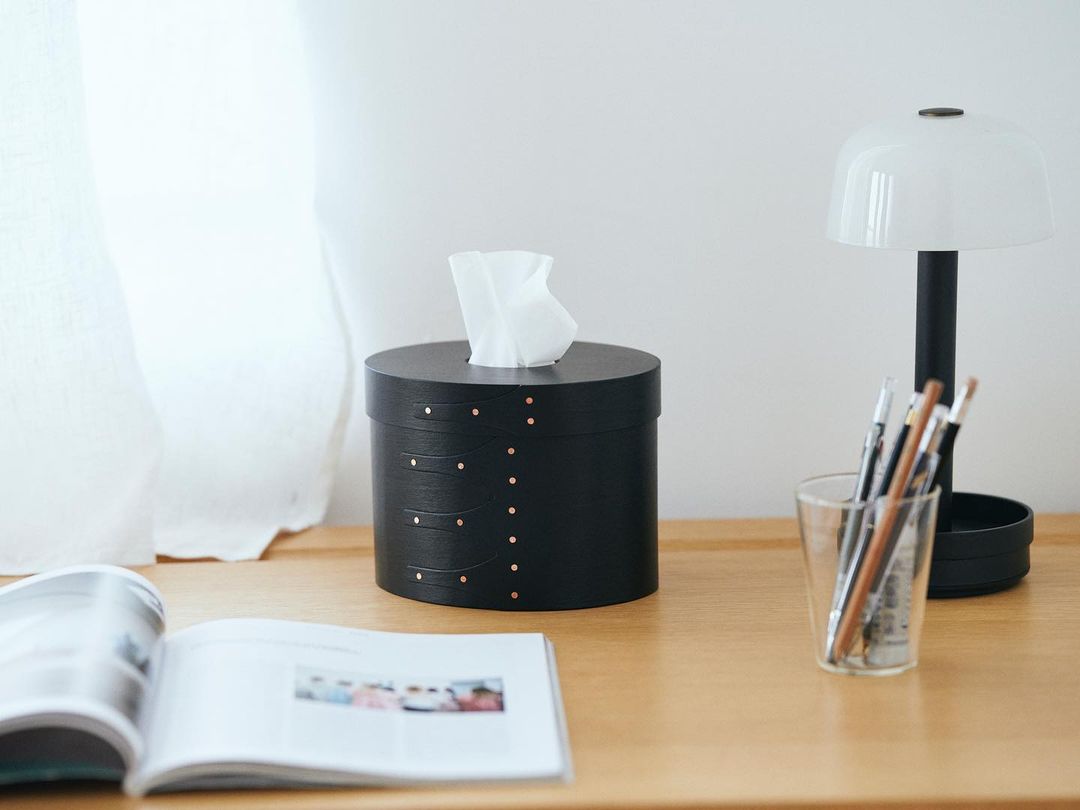
One of the most disruptive yet simple ways to elevate a room’s aesthetic is to hide the "visual noise" of everyday essentials. Standard cardboard tissue boxes are often the loudest eyesore in a minimalist room. The Japanese Shaker tissue box solves this by providing a structural, wooden shell that turns a mundane necessity into a piece of art.
In my styling sessions, I often categorize these into a 'High/Low' framework. Master artisan Masashi Ifuji offers high-end pieces often crafted from premium cherry or maple, while the design brand AXCIS provides high-quality, accessible alternatives. Both options utilize the traditional bending technique that gives the Shaker box its iconic oval or rectangular silhouette.
| Feature | Master Artisan (e.g., Masashi Ifuji) | Design Brand (e.g., AXCIS) |
|---|---|---|
| Material | Selection of premium Cherry, Maple, or Ash | Solid Cherry Wood |
| Finish | Hand-rubbed oil or beeswax | Natural or Sleek Black Lacquer |
| Price Range | $120.00 – $154.00 | $68.88 – $85.00 |
| Availability | Often limited editions/galleries | Widely available online |
Expert Tip: When choosing a tissue box holder, look for the "swing" of the wood grain. A high-quality Japanese Shaker box will have a grain that flows seamlessly around the curves, highlighting the artisan's skill in steaming and bending the wood.
2. Protective Eyeglass Cases: Artisanal Desktop Decor
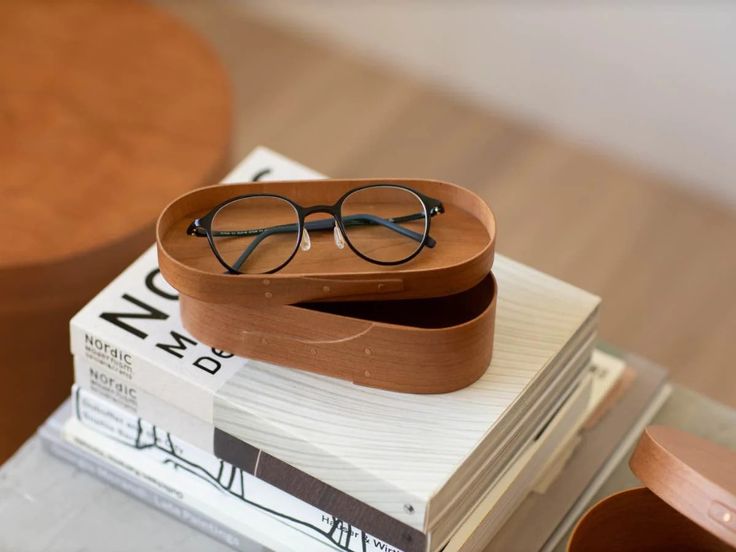
As we spend more time in curated home offices, the desktop has become a landscape for personal expression. A Japanese Shaker eyeglass case serves a dual purpose: it provides a hard, protective shell for delicate lenses and acts as a tactile desktop sculpture.
Priced at approximately ¥4,730 (roughly $30-$35), these cases are an entry-level luxury into the world of handmade wooden storage. The cherry wood is particularly suited for this use; it is lightweight yet incredibly sturdy, and as it ages, it develops a deep, honey-colored patina that reflects the history of your touch. The swallowtail joints are not merely decorative—they are a functional triumph of engineering that ensures the box remains tensioned and secure for decades.
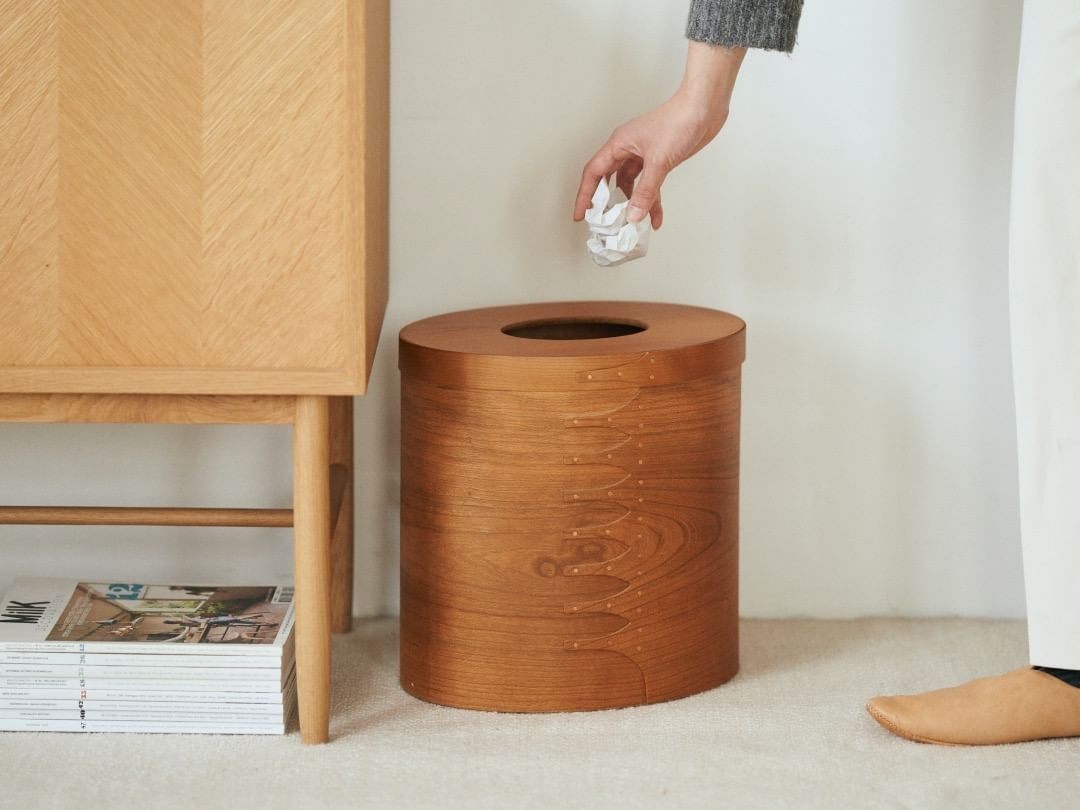
3. Elegant Wastebaskets with Removable Lids
Perhaps the most surprising evolution of the Shaker form in 2024 is the "Dust Box" or lidded wastebasket. In a minimalist home, even a trash bin should contribute to the sense of calm. These larger-scale boxes maintain the classic oval shape but include a precision-fitted removable lid.
- Concealment: The lid hides waste from view, making it ideal for home offices or bedside tables where traditional open bins might feel cluttered.
- Versatility: Many users are repurposing these as "entryway catch-alls" for umbrellas or yoga mats, utilizing the height and stability of the cherry wood.
- Finish Options: While the natural cherry is a fan favorite, the sleek black finish offered by AXCIS provides a more modern, architectural look that hides scuffs and wear.
4. Two-Tiered Sewing Boxes: The Professional's Choice
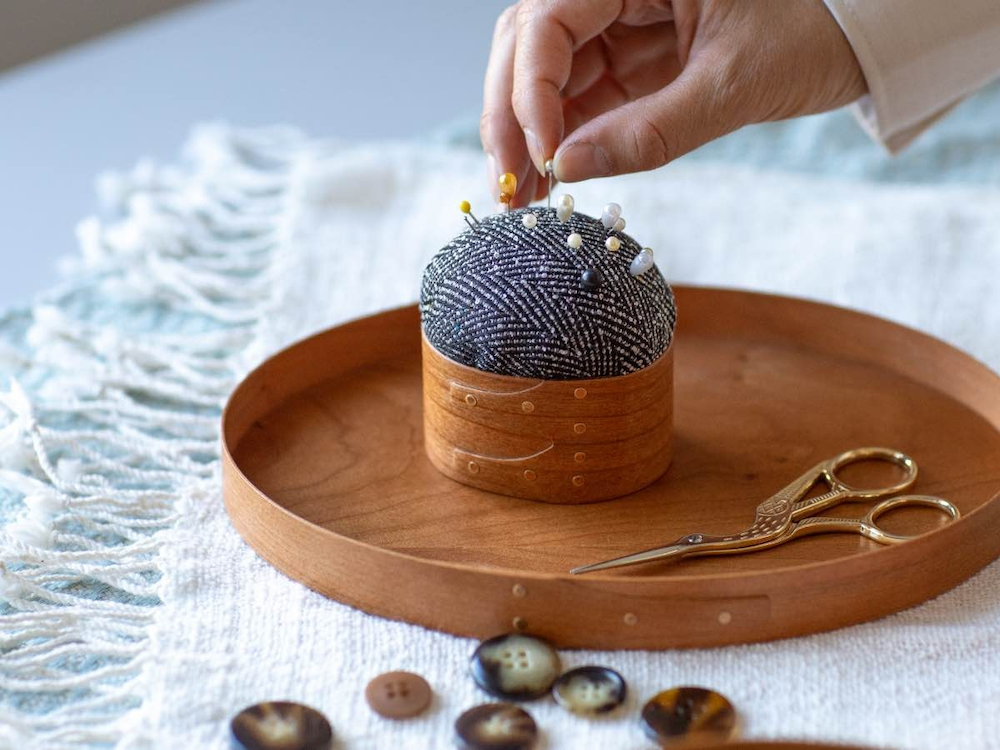
The Shaker sewing box is a masterclass in organizational layout. Traditionally used for needles and thread, the 2024 iteration has become the go-to solution for the "digital professional." The two-tiered depth allows for a sophisticated layering system.
I recommend using the top tray for frequently used items—think fountain pens, AirPods, or specialized stationery. The deeper bottom section is perfect for "hiding" the less attractive elements of modern life, such as tech cables, charging bricks, or external hard drives. To complete the set, many collectors pair these with the AXCIS pin cushion, which is designed to fit perfectly within the box's dimensions.
Expert Tip: "Don't limit these boxes to their traditional names. A 'sewing box' is simply a multi-level organizer. I use mine for a 'Morning Ritual' kit, containing my journal, fountain pen, and a tin of loose-leaf tea." — Rachel Rosenthal, Professional Organizer
5. Minimalist Wooden Cat Beds: Luxury for Aesthete Felines
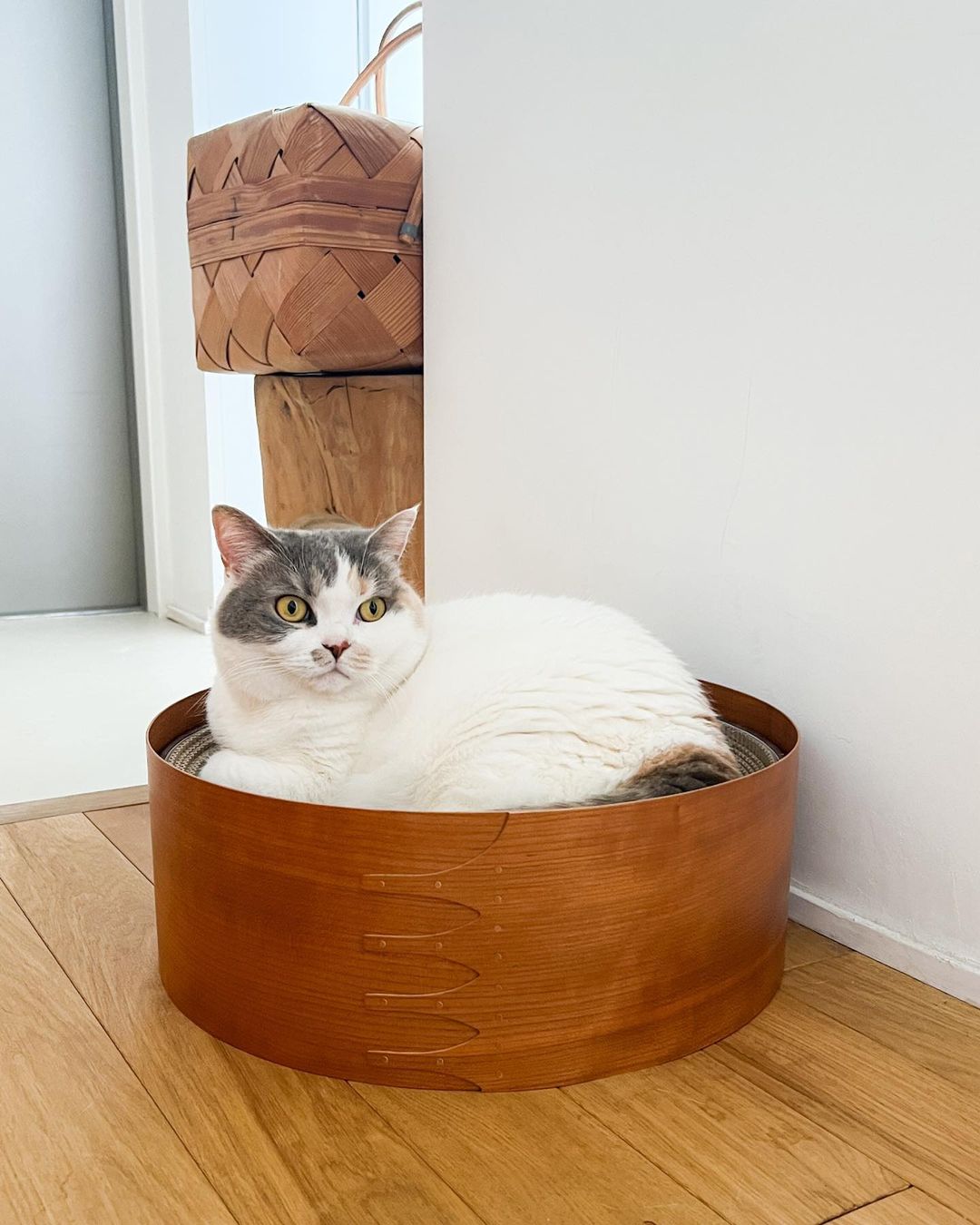
In an exciting cross-over between lifestyle design and pet care, the Orneko x AXCIS collaboration has introduced the Shaker-style cat bed. This is the pinnacle of the "pet furniture as decor" movement.
These beds are scaled perfectly for feline comfort, providing a shallow, protected oval that mimics a cat's natural nesting instinct. When paired with a simple round linen cushion, the bed integrates seamlessly into a minimalist living room. It’s a testament to the versatility of the Shaker design that a form intended for 19th-century kitchen utility can become a 21st-century luxury for pets.
Why Quality Matters: The 50-Year Lifespan of Handmade Cherry Wood
When you invest in a Japanese Shaker box, you are moving away from the "buy it and break it" cycle of mass-produced plastic. Statistics show that handmade cherry wood boxes utilizing traditional swallowtail joints are estimated to have a lifespan of over 50 years. This makes them roughly 5 times more durable than standard adhesive-based wooden organizers found in big-box stores.
The secret lies in the copper rivets and the tension-based assembly. As humidity changes throughout the seasons, the wood expands and contracts. Adhesives eventually fail under this stress, but the physical joinery of a Shaker box allows the piece to "breathe," ensuring it remains structural even as it develops its storied patina.
Styling Tips: Integrating Shaker Design into Your 2024 Home
The Shaker philosophy, famously preserved in the Canterbury Shaker Village, suggests that "no corner is too small for storage." In the modern home, this translates to utilizing vertical space and cohesive materials.
- The Gallery Wall Effect: Don't hide your boxes in cupboards. Use peg rails to hang lidded boxes of varying sizes. This creates a functional wall of art that keeps your surfaces clear.
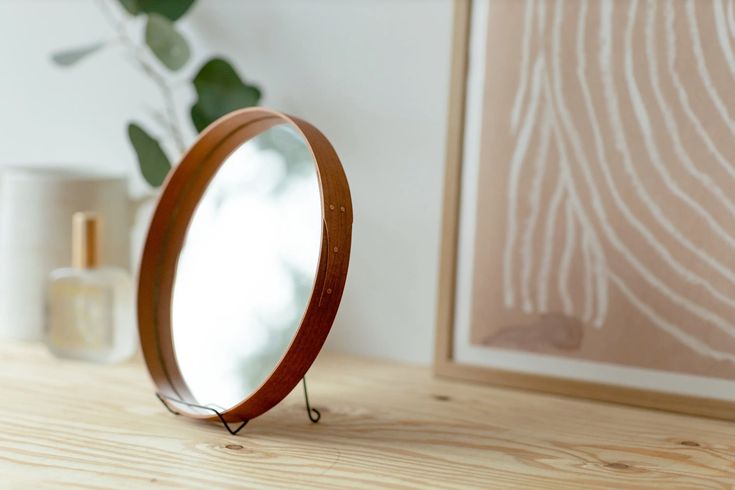
- Material Echoes: To create a cohesive environment, pair your storage boxes with other Shaker-inspired elements. A round Shaker mirror or a simple peg rail in the same cherry wood finish will tie the room together.
- Labeling with Care: If you have a stack of boxes, avoid plastic label makers. Use small, handwritten cardstock tags tied with linen twine to maintain the organic, artisanal feel.
FAQ
How do I clean and maintain my Japanese Shaker box? Avoid harsh chemicals. Simply wipe with a soft, dry cloth. Every year or two, you can apply a tiny amount of high-quality furniture wax or beeswax to the cherry wood to maintain its luster and protect the finish.
What is the difference between American and Japanese Shaker boxes? While the construction methods are identical (swallowtail joints, copper rivets), Japanese-designed boxes often feature slightly different proportions and finishes—such as the matte black lacquer—that cater to a modern "Japandi" aesthetic.
Why are they so much more expensive than other wooden boxes? You are paying for time and craftsmanship. Each box requires steaming, hand-bending, and precision riveting. Because they are designed to last 50+ years, the cost-per-year of use is actually much lower than cheaper alternatives.
Creating a calm, functional home is a journey of choosing quality over quantity. Whether it’s a small case for your glasses or a grand dust box for your office, these Japanese-designed Shaker boxes are a testament to the beauty of things that work well and age gracefully. Happy organizing!