Quick Facts
- Design Origin: Originally conceived by Pierre Paulin in 1964–65.
- Key Materials: Reissued using HiREK®, a 100% recycled industrial plastic waste polymer.
- Aesthetic: Iconic Space-Age "low-to-the-ground" silhouette with zero flat surfaces.
- Versatility: Suitable for both indoor and outdoor use due to UV-resistant materials.
- Cultural Legacy: Part of the permanent collection at MoMA; featured in Star Trek and influenced 2001: A Space Odyssey.
- Companion Pieces: Relaunched alongside the T877 Side Table in matching and complementary colorways.
Imagine a design so forward-thinking that it feels more relevant today than it did sixty years ago. In the mid-1960s, Pierre Paulin was busy dreaming of a future that looked like fluid sculpture—pieces that rejected the rigid angles of traditional furniture in favor of organic, sweeping lines. Today, GUBI brings that vision back into the spotlight with the 2025 reissue of the F300 Lounge Chair. This isn't just a tribute to the past; it is a sophisticated evolution. By replacing the original, environmentally taxing fiberglass with HiREK®—a sustainable, engineered polymer made from 100% industrial plastic waste—GUBI has managed to preserve the chair's signature high-gloss fluidity while meeting the rigorous environmental standards of the 21st century.
The Return of a Space-Age Icon
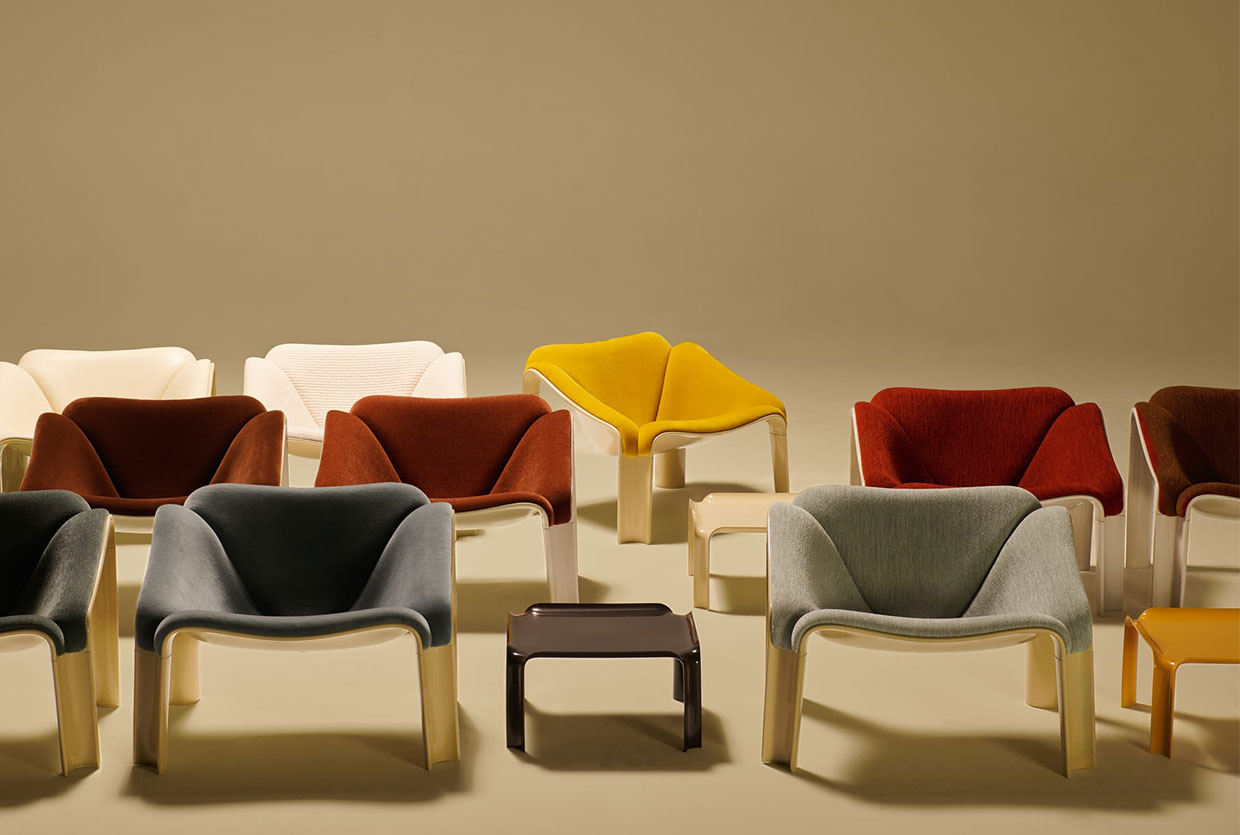
The F300 is often described as a design "beamed in from the future," and even after six decades, that sentiment holds true. When Pierre Paulin first developed the chair in 1964, he was experimenting with the possibilities of molded plastics, aiming to create a "low-to-the-ground" seating experience that felt more like an extension of the floor than a separate piece of furniture. The result was a chair that looked like a single, continuous wave—a piece that could be admired as much for its sculptural geometry as for its comfort.
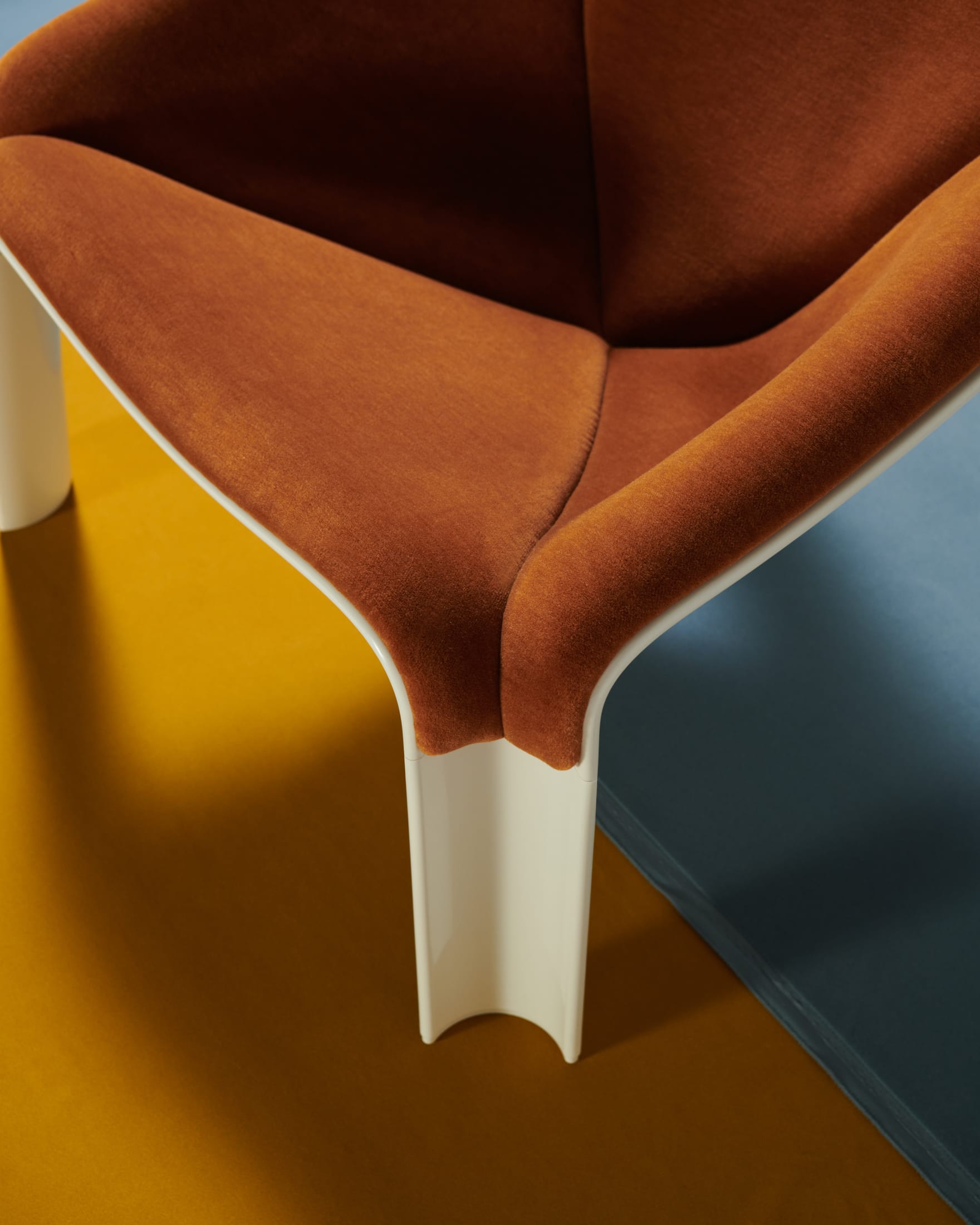
The 2025 reissue marks exactly 60 years since the F300’s initial development. What makes this reissue unique is GUBI’s commitment to "invisible" innovation. While the silhouette remains identical to the MoMA-honored original, the construction has been entirely reimagined. The new F300 replaces the 1960s fiberglass with HiREK®, maintaining the iconic high-gloss finish and complex, zero-flat-surface geometry while significantly reducing the carbon footprint associated with traditional plastic manufacturing.
"The F300 is a testament to Paulin’s ability to see ahead of his time. It’s not just a chair; it’s a piece of the future that we finally have the technology to produce sustainably." — Marie Kristine Schmidt, Chief Brand Officer at GUBI.
From Fiberglass to HiREK: The Sustainable Evolution
In the 1960s, fiberglass was the miracle material of the design world. It allowed for the fluid, pillowy curves that Paulin craved, but it came at an environmental cost and was notoriously difficult to recycle. For the 2025 reissue, GUBI’s primary challenge was replicating the F300's specific high-gloss sheen and structural integrity using a greener alternative.
The solution came in the form of HiREK®. This innovative, engineered polymer is composed of 100% industrial plastic waste. Through advanced 21st-century bespoke molding, GUBI has achieved a level of precision that was nearly impossible in 1964. The manufacturing process utilizes a specialized thermoforming technique that ensures the chair’s complex geometry—which features no flat surfaces—is perfectly consistent across every unit.
Material Comparison: 1964 vs. 2025
| Feature | Original 1964 Design | GUBI 2025 Reissue |
|---|---|---|
| Primary Material | Fiberglass / Polyurethane | HiREK® (Recycled Polymer) |
| Sustainability | Low (non-recyclable) | High (100% industrial waste) |
| Finish | Painted High-Gloss | Integral High-Gloss / UV Resistant |
| Weight | Relatively Heavy | Lightweight and Durable |
| Usage | Primarily Indoor | Indoor and Outdoor |
This material shift isn't just about ethics; it's about performance. The HiREK shell is exceptionally durable and UV-resistant, meaning the F300 can now transition seamlessly from a minimalist living room to a sun-drenched terrace without the risk of yellowing or structural degradation.
The Sculptural Comfort: Engineering the 'Low-to-the-Ground' Experience
One of the most remarkable aspects of Pierre Paulin’s work is how he balanced high-concept sculpture with genuine human-centric ergonomics. The F300 is designed to cradle the body, encouraging a relaxed, reclined posture that Paulin believed was the natural way to socialize and rest.
The "human aspect" of the F300 is further enhanced by its upholstery. GUBI has utilized advanced thermoforming upholstery techniques—a process often reserved for the interiors of luxury cars—to create cushions that snap perfectly into the shell's curves. This ensures that the aesthetic "uninterrupted fluidity" is never broken by sagging fabric or misplaced seams.
Key Design Features of the F300:
- Fluid Curves: Every angle of the chair is rounded, creating a sense of constant motion.
- Ergonomic Shell: The deep seat and angled backrest provide a "pillowy" support despite the rigid exterior.
- Lightweight Profile: Despite its visual weight, the HiREK construction makes the chair easy to move and reposition.
- Versatile Comfort: Available in a range of high-performance fabrics that withstand both heavy indoor use and outdoor elements.
A Holistic Environment: The T877 Side Table and Colorways
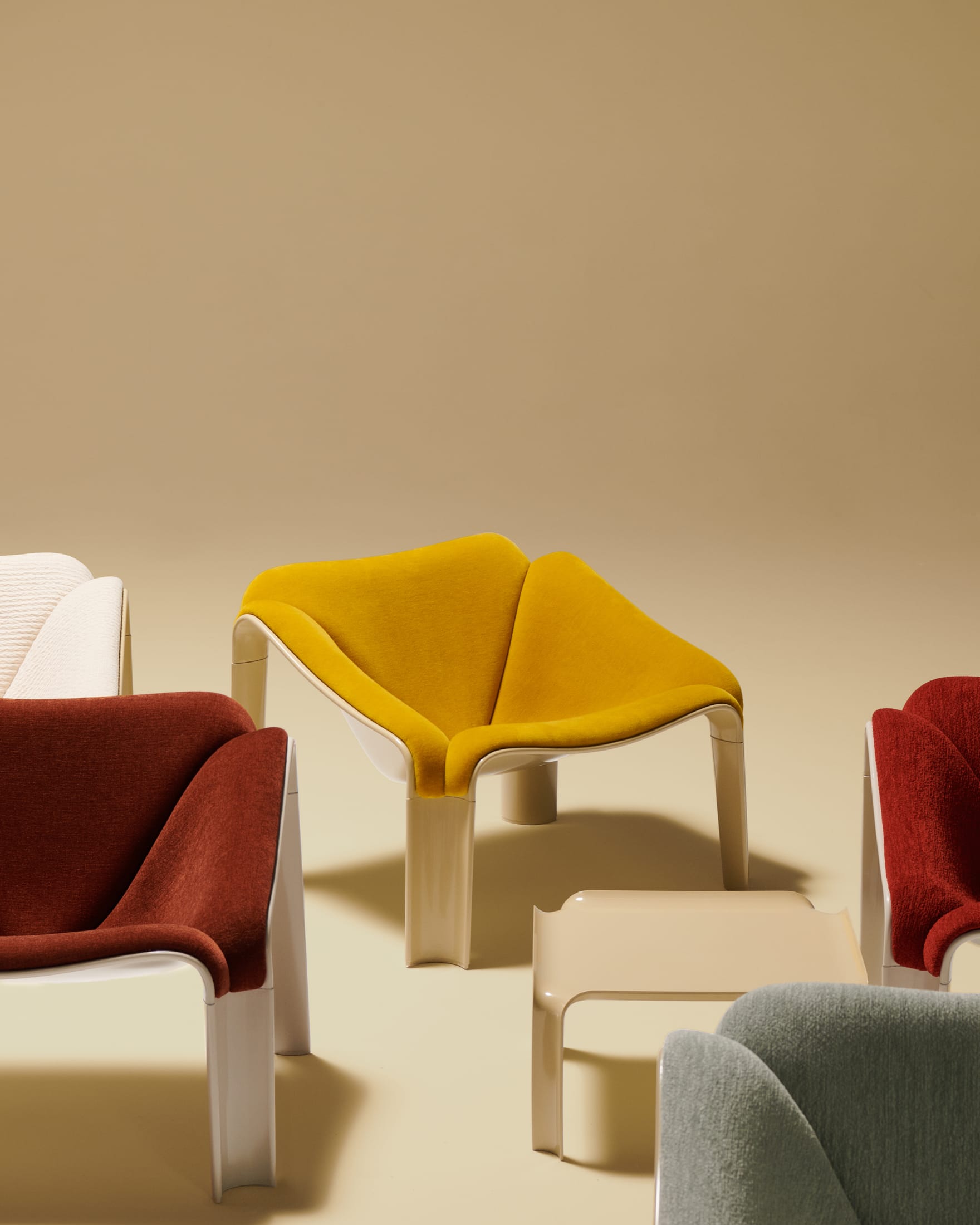
GUBI hasn't just brought back the chair; they’ve reintroduced the entire Paulin atmosphere. Alongside the F300 Lounge Chair, the brand has relaunched the T877 Side Table. Designed to be the natural architectural partner to the chair, the T877 follows the same philosophy of fluid, molded geometry.
The 2025 collection features a curated color palette that reflects both Paulin’s original vision and modern interior trends. The F300 frames are available in two core colors: Alabaster White and Pastel Green. However, the T877 Side Table expands this palette even further, offering high-gloss finishes in:
- Violet Ice: A soft, futuristic lavender.
- Honey Gold: A warm, mid-century amber.
- Molé: A sophisticated, grounding taupe.
- Alabaster White & Pastel Green: For those who prefer a monochromatic look.
By pairing the F300 with the T877, designers can create a "layered Paulin environment." The interplay between the different gloss levels and colors allows the furniture to act as a focal point in a minimalist room or as a complementary layer in a more eclectic, maximalist space.
Cultural Legacy: From MoMA to Star Trek
To understand the F300 is to understand the cultural zeitgeist of the 1960s. This was an era obsessed with the moon landing and the promise of a technological utopia. Paulin’s designs were so evocative of this "Space-Age" aesthetic that they became the visual shorthand for the future in popular culture.
The F300 famously appeared in episodes of Star Trek, where its sleek, alien-like silhouette fit perfectly within the high-tech interiors of the USS Enterprise. It also heavily influenced the set design of Stanley Kubrick’s 2001: A Space Odyssey. These appearances weren't just product placement; they were a recognition that Paulin had captured the "look" of the future.
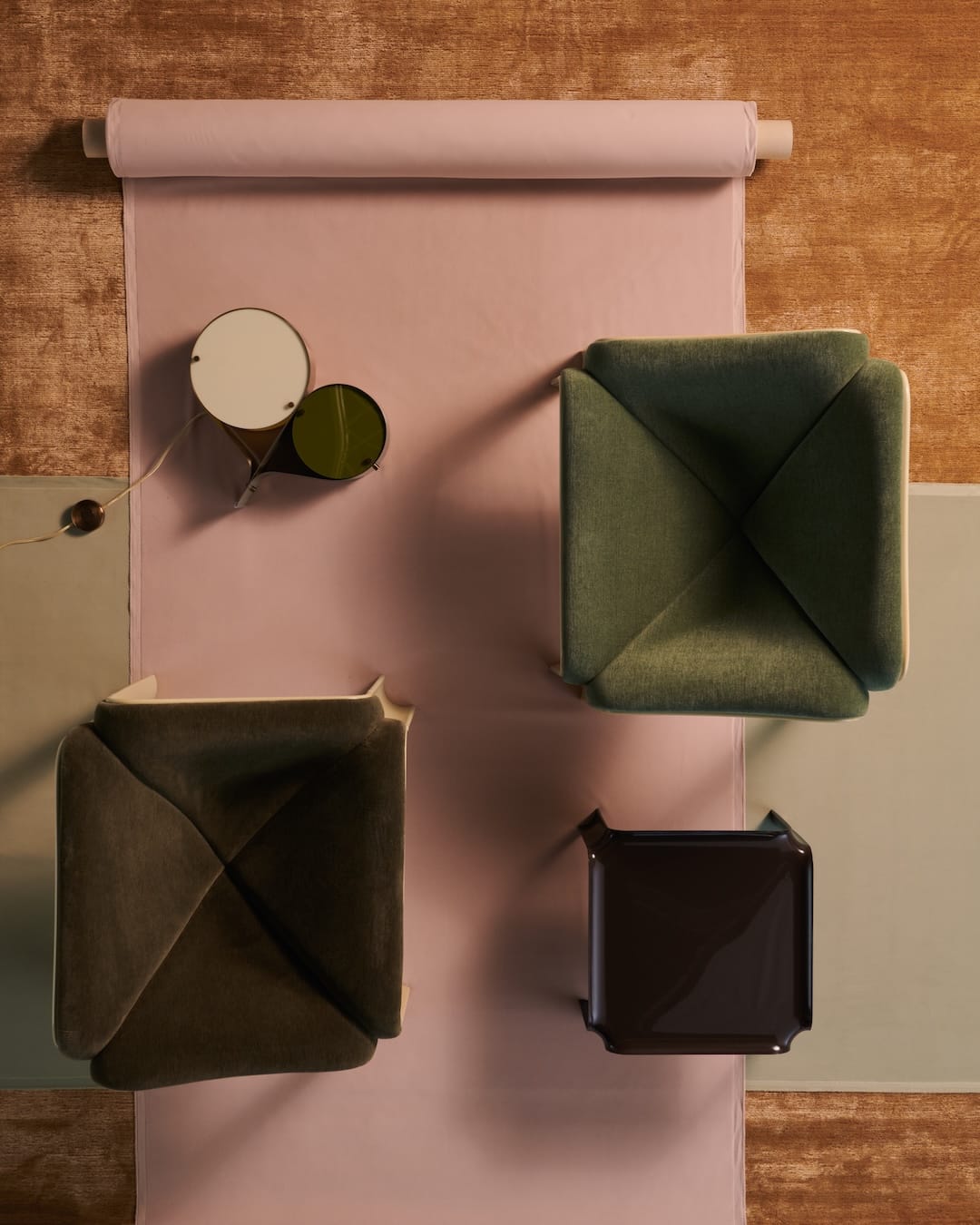
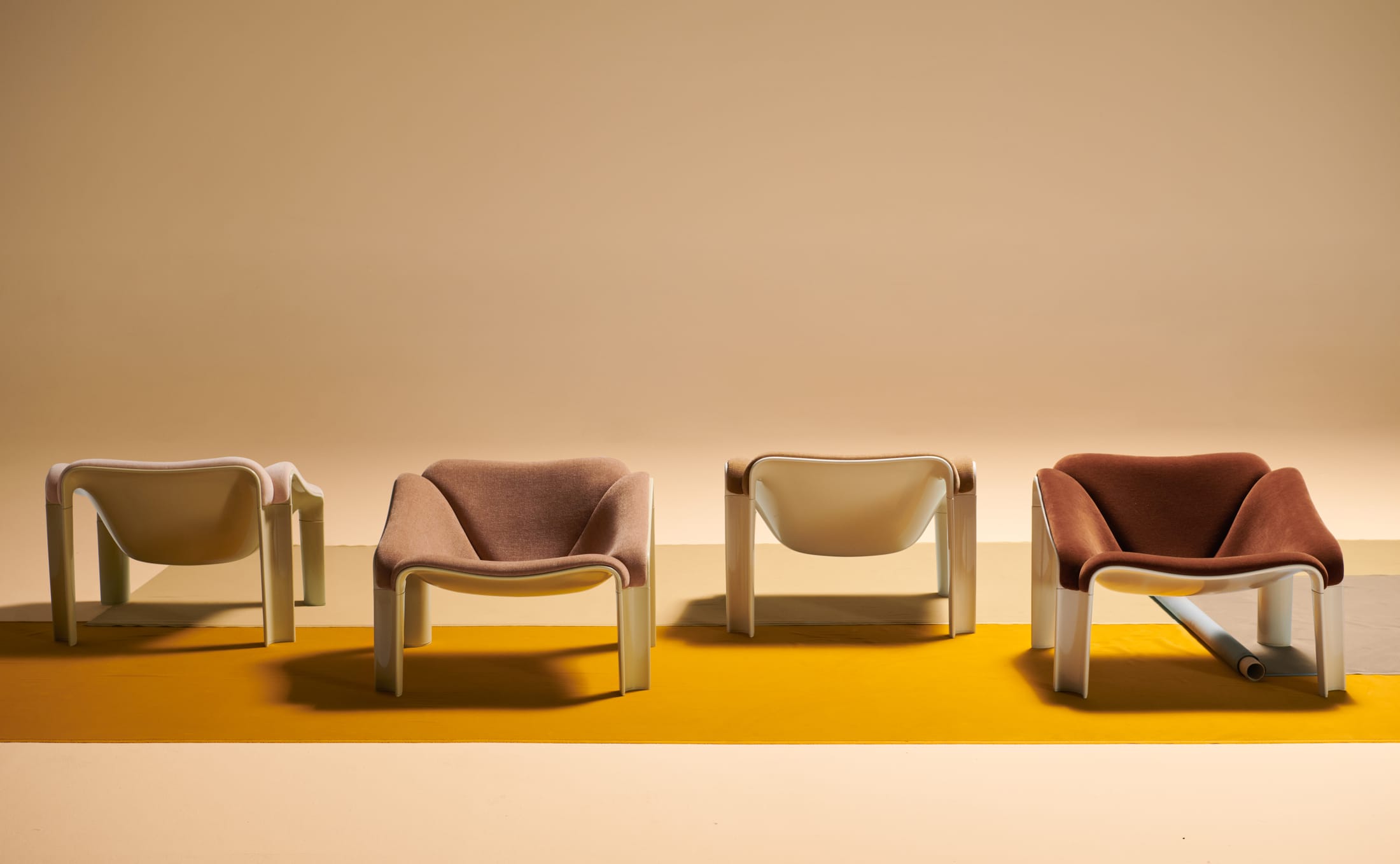
Beyond Hollywood, the F300 earned its place in art history. It remains a permanent fixture in the Museum of Modern Art (MoMA) collection, recognized as a masterpiece of industrial design. For the 2025 campaign, GUBI has chosen to honor this artistic heritage by using visuals inspired by the Bauhaus movement, specifically echoing the geometric rigor of Josef and Anni Albers. This creates a fascinating dialogue between the fluid curves of the French designer and the structured lines of German modernism.
Buying Guide: Availability and Styling Tips
The F300 is a statement piece, but it is surprisingly adaptable to various interior styles. Whether you are a dedicated mid-century modern enthusiast or a fan of contemporary minimalism, the F300 brings a sense of architectural gravitas to any room.
How to Style the F300 Lounge Chair
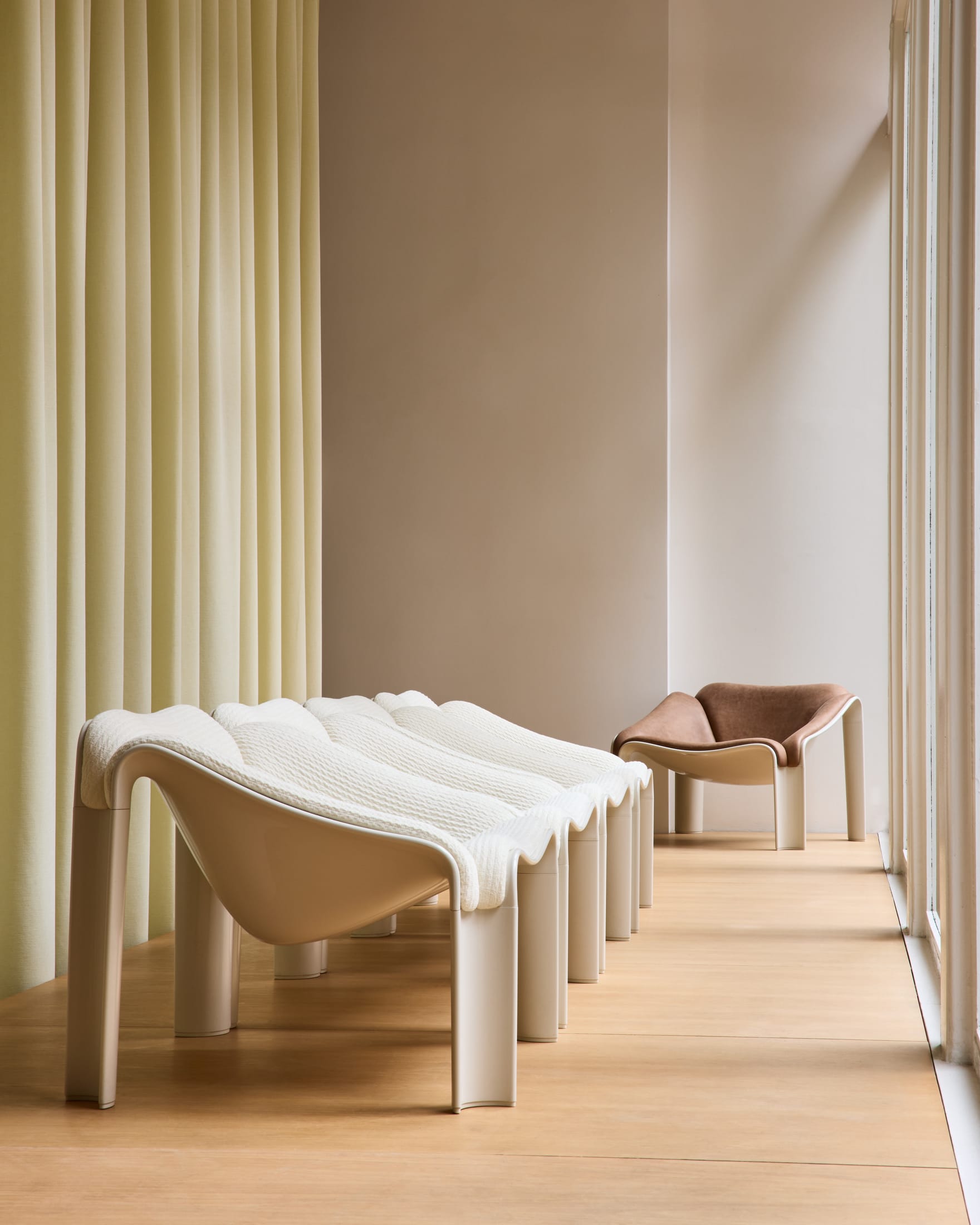
- The Contrast Play: Pair the high-gloss Alabaster White F300 with a plush, textured rug. The juxtaposition between the "hard" sheen of the HiREK shell and the "soft" pile of a wool rug creates a sophisticated tactile balance.
- The Paulin Suite: For a truly immersive experience, pair the F300 with GUBI’s other Paulin reissues, such as the Pacha Chair. The Pacha’s cloud-like, fully upholstered form offers a beautiful counterpoint to the F300’s exposed shell.
- Indoor-Outdoor Flow: Use the F300 to blur the lines between your living room and your garden. Because the material is UV-resistant, you can place it near large glass windows or directly on a patio to create a continuous design narrative.
Availability
The 2025 GUBI F300 and T877 collection is available globally through authorized retailers. In North America, you can find the collection at Design Within Reach (DWR), while Australian readers can source it through Cult Design. For global orders and specific upholstery customizations, GUBI.com remains the primary hub for the full range.
FAQ
1. Is the GUBI F300 comfortable for long periods of sitting? Yes. While the shell is made of a rigid polymer, the ergonomics were meticulously designed by Pierre Paulin to cradle the body. The addition of thermoformed upholstery provides significant cushioning, making it a functional lounge chair for reading or socializing.
2. How do I maintain the high-gloss finish of the HiREK® shell? The HiREK material is very durable and easy to clean. For regular maintenance, a soft, damp cloth is usually sufficient. Avoid abrasive cleaners that could scratch the gloss finish. Because the material is UV-resistant, it will not fade easily in sunlight.
3. Can the F300 be used outdoors year-round? While the F300 is made of UV-resistant and weather-hardy HiREK, the longevity of the piece depends on the choice of upholstery. If you plan to use it outdoors, ensure you select one of GUBI’s high-performance outdoor-rated fabrics.