Think about the last time you saw a child’s drawing of a house or a person. The lines were likely lopsided, the proportions were undeniably "wrong," and the colors might have bled outside the edges. Yet, there is an undeniable soul in that sketch—a purity of intent and a sense of joy that often vanishes the moment we begin to prioritize technical precision over raw feeling. In the world of high-end interior design, where the industry has long been obsessed with the cold, mathematical "perfection" of CAD-designed curves and geometric formulas, we are witnessing a refreshing rebellion.
Leading this charge is Sergei Lvov of Levantin Studio. His latest creation, the Tottolo table collection, is a series of sculptural furniture pieces that serves as a love letter to childhood spontaneity. Rather than adhering to rigid industrial standards, these tables embrace the intuitive and playful nature of creativity. The Tottolo collection isn't just furniture; it’s an invitation to stop measuring and start feeling.
The Intuitive Design Process: Hand-Carved Instinct
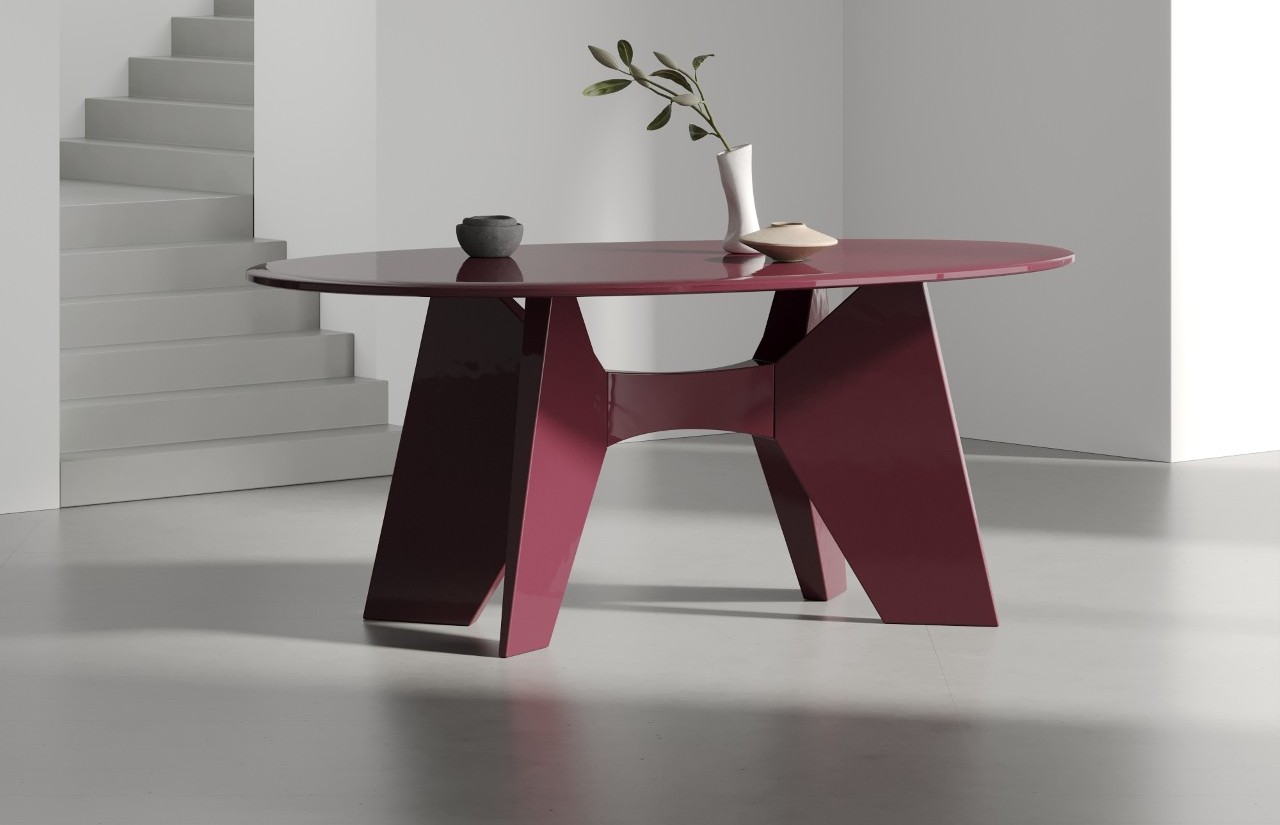
In an era where luxury dining tables often demand price tags ranging from $11,500 to $49,000 based purely on the rarity of the marble or the complexity of the engineering, Levantin Studio is shifting the value proposition toward "emotional craftsmanship." The Tottolo collection represents a 100% intuitive design process. This is a staggering departure from the norm; instead of relying on standardized geometric formulas to ensure symmetry, Lvov hand-carved the leg structures based on instinctual feeling.
This energy is embedded in the very form of the objects. When you look at a Tottolo table, your eye doesn't find a repeating pattern; it finds a gesture. The legs are thick, almost totemic, possessing an architectural presence that feels grounded yet whimsical. By moving away from the cold logic of traditional luxury tables, Lvov has created "sculptural anchors" that command attention not through their cost, but through their character.

"Inherent in the form of Tottolo is the memory of a first sketch. It’s about the confidence of a hand that doesn't yet know it's supposed to be 'perfect.'" — Ivy Chen
Materiality and Personality: Signature Specs
The collection is designed to be expressive, a far cry from the safe neutrals that have dominated minimalist interiors for the last decade. The Tottolo tables are available in four signature colorways, each curated to evoke a specific spirited personality:
- Ultramarine Blue: Deep, evocative, and intellectually stimulating.
- Vermilion Red: Bold, energetic, and undeniably the center of gravity in any room.
- Wine Plum: Sophisticated, moody, and perfect for intimate dining settings.
- Pearl White: Pure and sculptural, allowing the shadows of the hand-carved legs to do the talking.

The "material dialogue" of the collection allows for significant customization to fit various interior applications. Whether you are looking for a matte finish that absorbs light and feels organic to the touch, or a high-gloss lacquer that reflects the room like a polished gem, the options are thoughtfully structured.

Below is a breakdown of how the material choices change the "vibe" of the piece:
| Material Option | Visual Impact | Best Suited For... |
|---|---|---|
| MDF Top (Lacquer) | Monolithic, saturated color; looks like a single carved block. | High-energy, playful spaces or avant-garde dining rooms. |
| Glass Top | Transparent, airy; reveals the "musculature" of the base. | Smaller spaces where visual "breathability" is required. |
| Matte Finish | Contemporary, velvety, and soft to the eye. | Organic modernism and quiet luxury aesthetics. |
| High-Gloss Lacquer | Glamorous, reflective, and architectural. | High-end hospitality or ultra-modern penthouse living. |
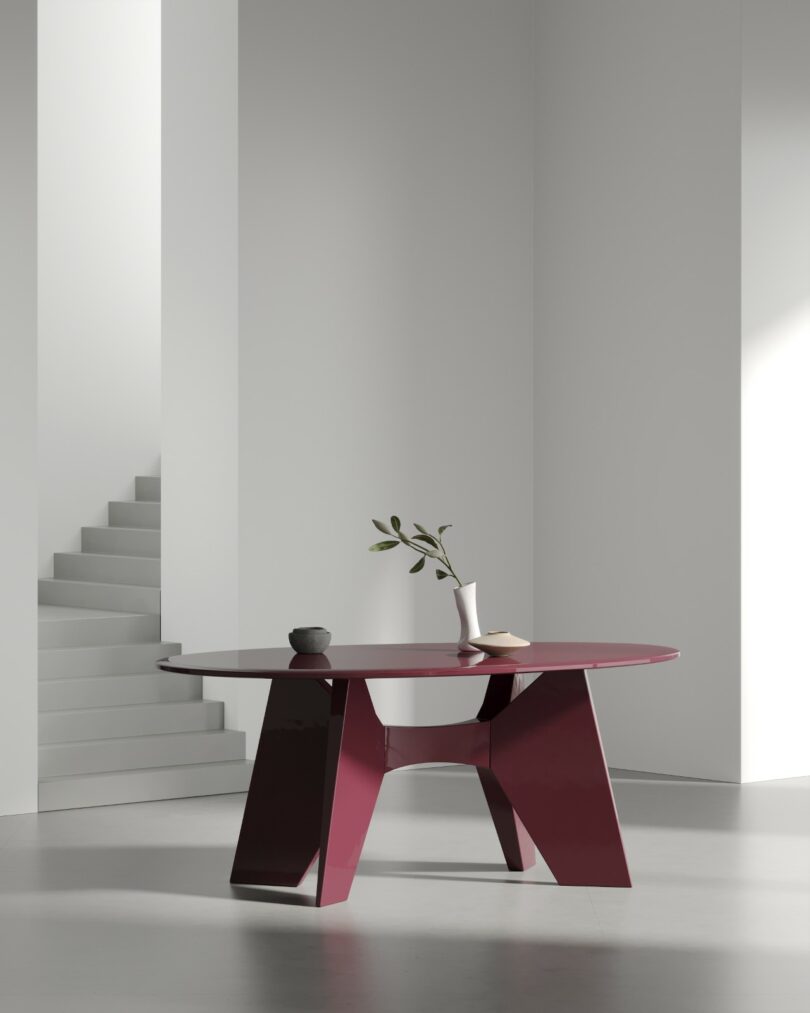
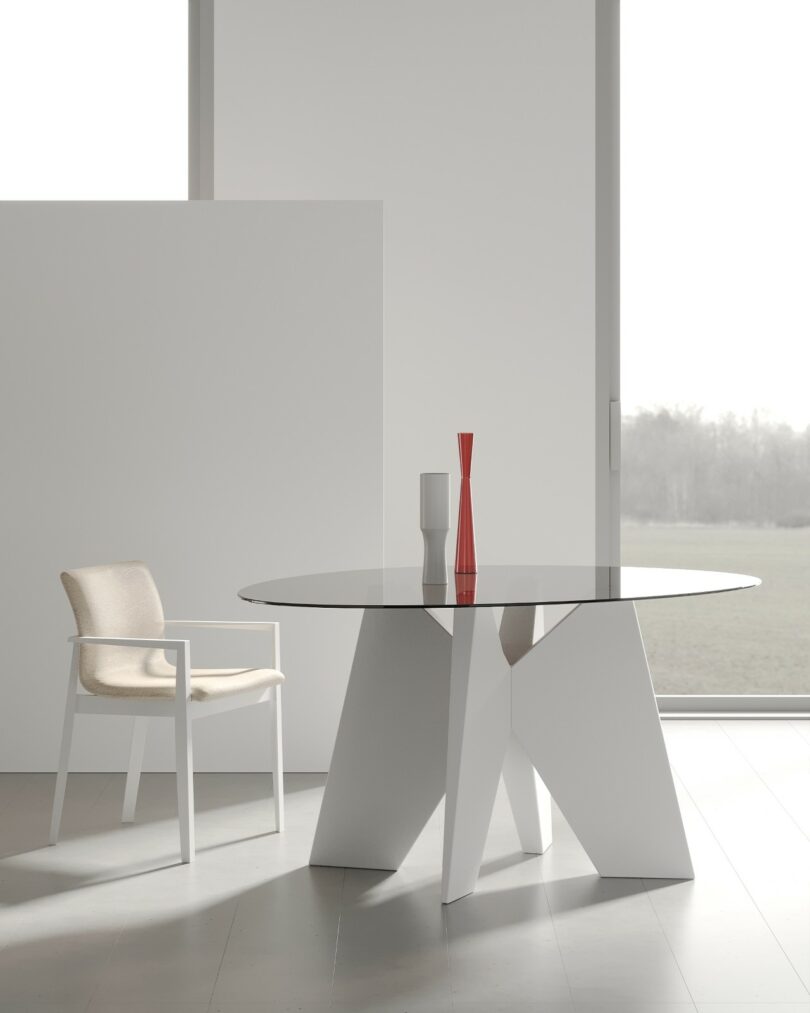
For those who opt for the glass-top version, the result is particularly striking. The transparency allows the intricate, hand-carved base to remain the undisputed focal point, turning a functional object into a piece of gallery-worthy art.
Tottolo in the Context of 2026 Luxury Trends
As we look toward the design landscape of 2026, the trend is moving away from "fast-furniture" and toward "legacy-pieces with a pulse." We are seeing a return to sculptural bases. The dining table is no longer just a surface to eat on; it is the "architectural heart" of the home.
The Tottolo collection by Levantin Studio (often associated with their "Uneven Objects" philosophy) bridges the gap between high-art and functional living. By choosing a Tottolo table, a homeowner isn't just buying furniture; they are investing in a shift in luxury values—from material scarcity to emotional resonance.
Styling the Tottolo: From Residential to Hospitality
Styling a piece this bold requires a delicate touch. Because the Tottolo base is so visually "heavy" and expressive, I recommend pairing it with minimalist seating. Think slim-profile chairs with clean lines that don’t compete with the table’s legs.
In a residential setting, use the Tottolo as a sculptural anchor in an open-concept living space. In a hospitality setting—like a boutique hotel lobby or a high-end lounge—the high-gloss finishes work wonders, catching the ambient light and creating a sense of dynamic movement.

Conclusion
Is perfection overrated? In the context of the Tottolo collection, the answer is a resounding yes. Sergei Lvov has reminded us that the things we cherish most are often those that feel the most human—flaws, instincts, and all. By choosing intuition over formulas, Levantin Studio has created a collection that doesn't just sit in a room; it lives in it.
FAQ
1. How do I maintain the high-gloss lacquer finish? High-gloss surfaces are stunning but require care. Use a soft micro-fiber cloth and specialized furniture polish. Avoid abrasive cleaners that could dull the shine over time. For the MDF tops, it’s best to use coasters to prevent heat rings or water damage to the lacquer.
2. Is custom sizing available for the Tottolo collection? While the signature collection comes in standardized dining and side table dimensions, Levantin Studio often works with designers for bespoke projects. It is best to contact the studio directly to discuss specific scale requirements for hospitality or large-scale residential projects.
3. Which is more durable: the glass top or the MDF top? Both are designed for longevity. The tempered glass top is excellent for resisting scratches and heat, whereas the lacquered MDF top offers a more cohesive, monolithic look. If you have a high-traffic household with children, the MDF top in a matte finish is often more forgiving for daily use.