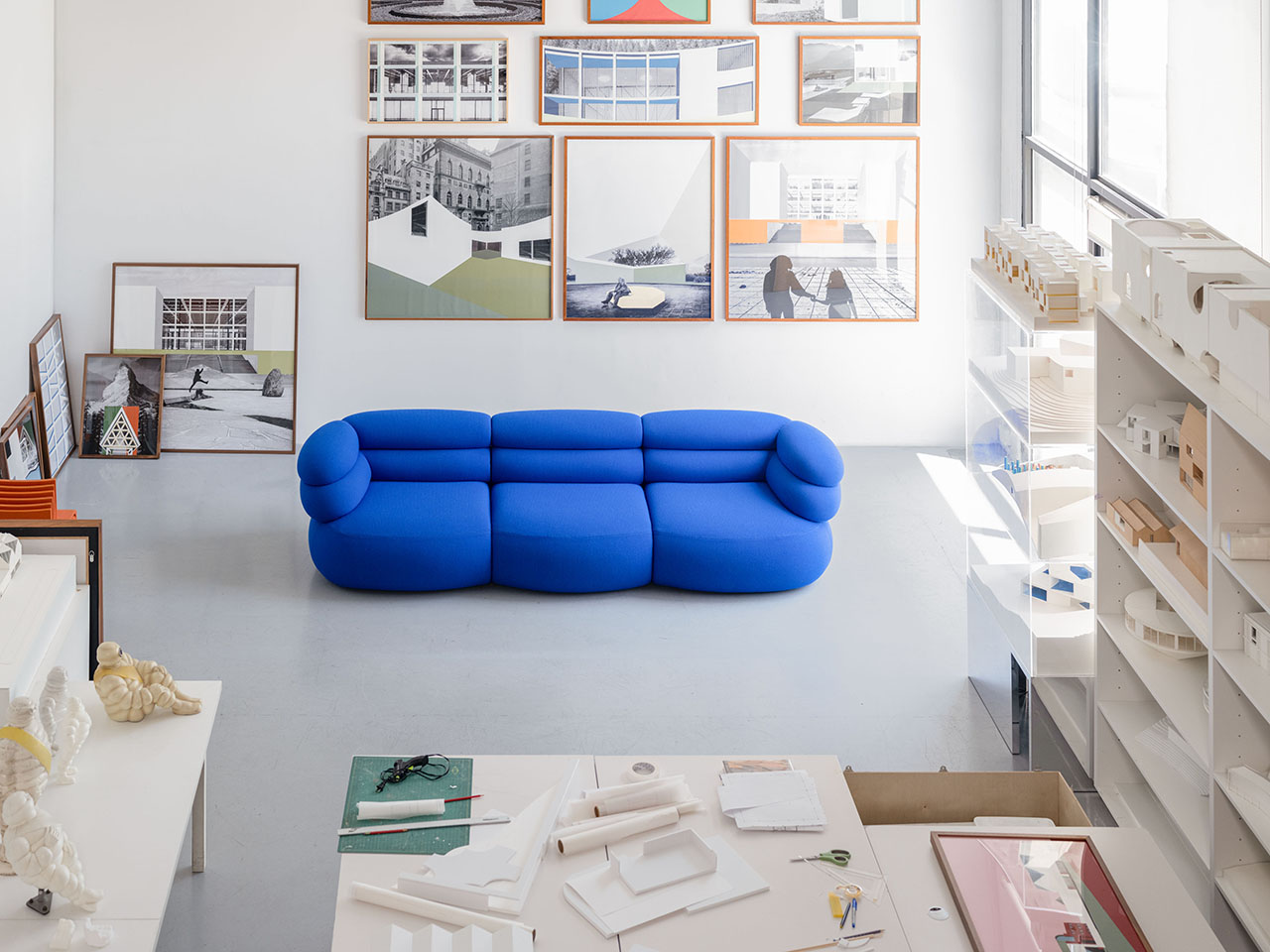
There is a specific kind of nostalgia that resides in the soft, rounded curves of our childhood memories. For many, that memory is personified by the "Michelin Man"—a figure of pure, inflated comfort and friendly resilience. In the world of high-end interior design, translating such a literal, almost cartoonish inspiration into a piece of sophisticated furniture is a daring tightrope walk. Yet, the Biboni Sofa by Knoll, designed by the visionary architects Sharon Johnston and Mark Lee of Johnston Marklee, manages to do exactly that. It captures a sense of "friendly envelopment" while maintaining the architectural rigor expected of a legacy brand like Knoll.
As we look toward the interior trends of 2025 and 2026, the Biboni Sofa emerges not just as a seating option, but as a statement on the future of domestic comfort. It is a piece that prioritizes the psychological need for security and warmth through its stacked capsule forms and symmetrical geometry.
The Intersection of Architecture and Childhood Nostalgia
The psychology of comfort has shifted. In previous decades, luxury was often synonymous with sharp lines and mid-century minimalism—beautiful to look at, but sometimes cold to inhabit. Today, we are seeing a pivot toward "soft power." The Biboni Sofa is at the forefront of this movement. By drawing inspiration from the iconic 'Michelin Man' forms, the design team at Johnston Marklee has tapped into a universal language of safety.
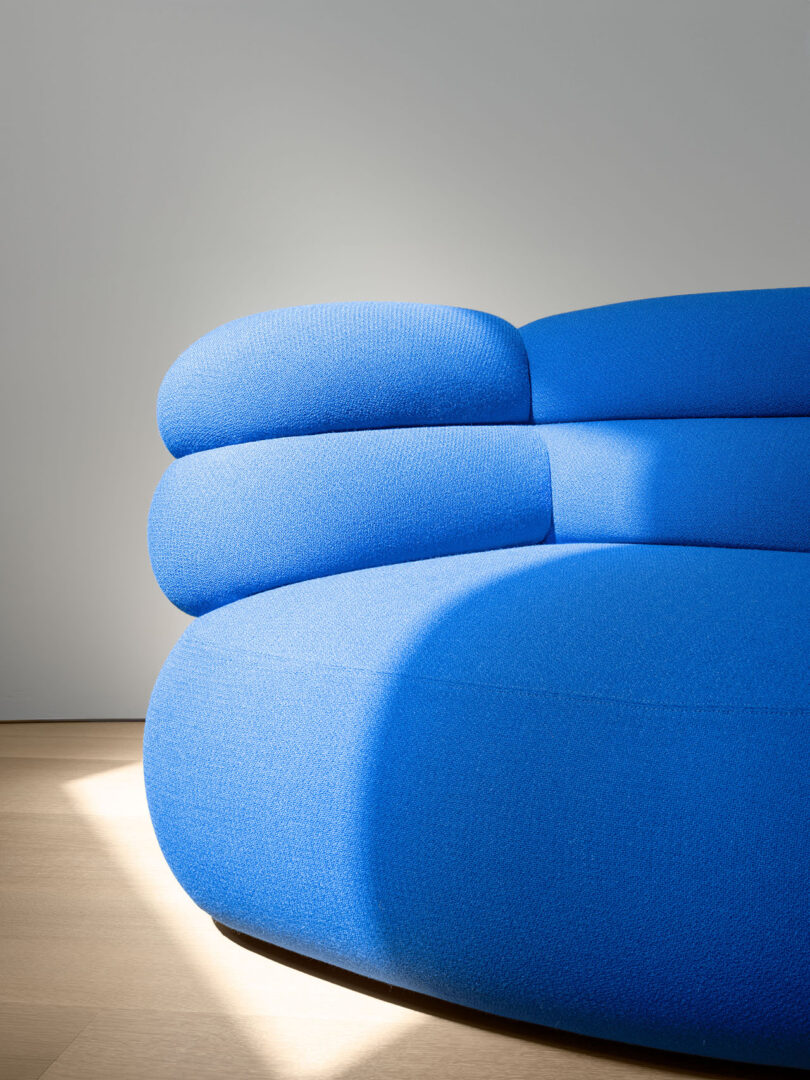
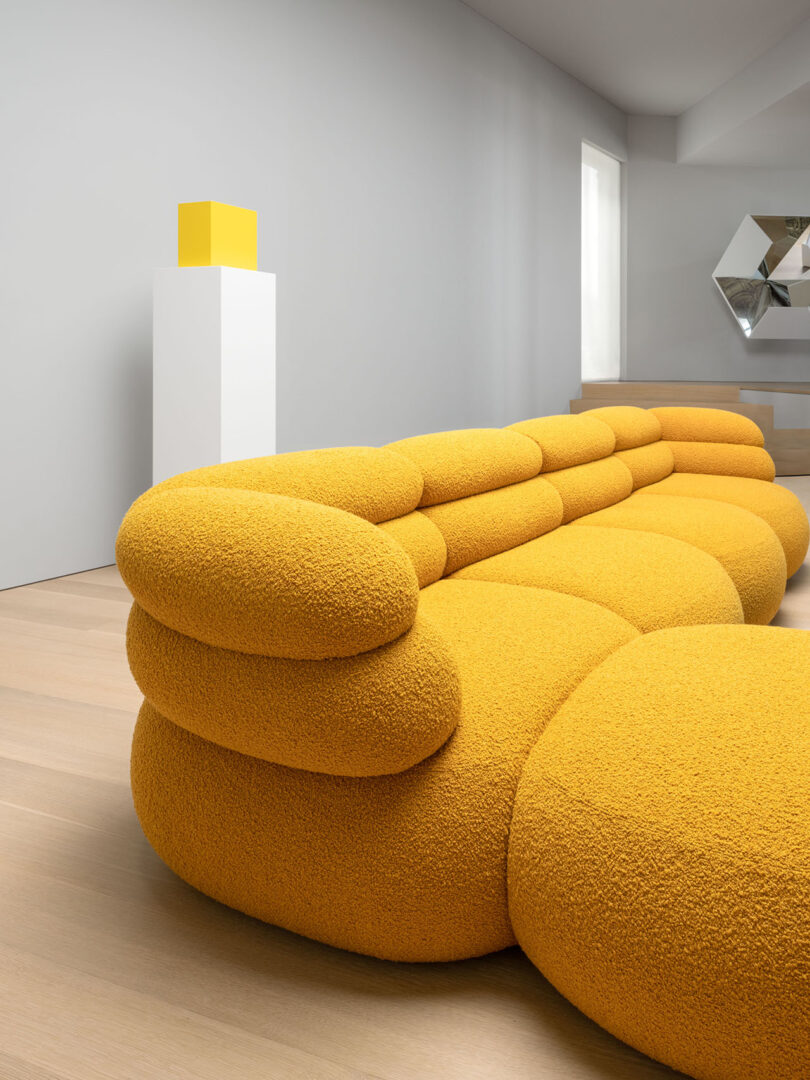
The sofa’s aesthetic is defined by perfectly symmetrical, stacked capsules. These are not merely cushions thrown onto a frame; they are structural volumes that create a rhythmic, repetitive pattern. This repetition provides a sense of visual order, while the "puffy" nature of the forms offers a tactile invitation to relax. It is this unique blend of architectural discipline and whimsical inspiration that makes the Biboni a standout in the realm of luxury sculptural sofas.
Meet the Creators: Johnston Marklee’s Vision for Knoll
To understand the Biboni, one must understand the minds behind it. Sharon Johnston and Mark Lee are the founding partners of the Los Angeles-based architecture firm Johnston Marklee. Known for their ability to blend contemporary coolness with historical awareness, their transition from large-scale buildings to a singular sofa for Knoll feels like a natural evolution of their "volume and void" philosophy.
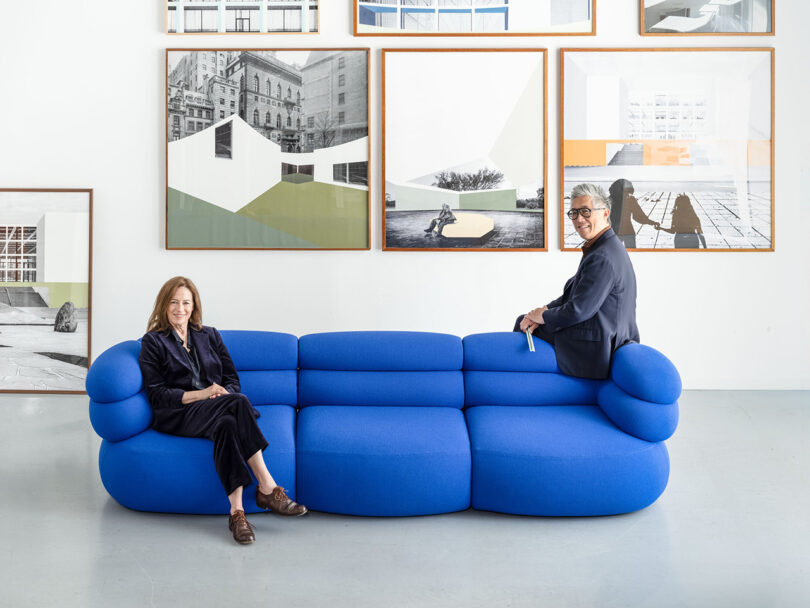
In collaborating with Knoll, Johnston Marklee sought to bring the permanence of architecture into the fluid environment of the living room. Their approach wasn't about decoration; it was about the manipulation of mass. By treating the sofa as a series of interconnected volumes, they’ve created a piece that looks as though it was carved from a single, soft block rather than assembled from parts.

Design Breakdown: More Than Just a "Michelin Man" Aesthetic
While the Michelin Man is the shorthand for its inspiration, the technical execution of the Biboni is where its sophistication lies. The "Scalloped Edge" detail is the sofa's signature. Each vertical segment creates a heavy yet simple visual rhythm that moves around the entire perimeter of the piece.
- Symmetrical Capsules: The top and bottom "tiers" of the sofa are perfectly aligned, creating a balanced silhouette that looks stunning from any angle—a 360-degree design principle.
- The "Cartoonish" Stance: There is a deliberate playfulness in its proportions. However, by using high-end textiles and precision tailoring, Knoll ensures the piece remains firmly in the category of "Modern Classic" rather than "Novelty."
- Volumetric Logic: Unlike traditional sofas that rely on a thin frame and thick cushions, the Biboni is all volume. The backrest and seat seem to share the same DNA, creating a unified, sculptural mass.

The Ergonomics of "Friendly Envelopment": Testing for Real Comfort
As an editor, I often see "sculptural" sofas that are gorgeous to photograph but agonizing to sit on. The Biboni is a rare exception. The "envelopment" promised by its form is backed by sophisticated internal engineering.
The lumbar curvature is subtly integrated into the capsule shapes. When you sit, the "puffy folds" (as Sharon Johnston describes them) compress just enough to contour to your body without losing their iconic shape. The joint angles between the seat and the backrest are wide enough to allow for a relaxed lounge posture, yet supportive enough for a formal conversation. It is a "deep-seated" design that manages to accommodate various body types by providing a broad, soft surface area that distributes weight evenly.
Versatility in Form: Sizes and 15+ Configurations
One of the most impressive aspects of the Biboni collection is its modularity. While it looks like a singular sculpture, it is highly adaptable. The collection includes 2-seater, 3-seater, and 4-seater sofas, along with two distinct sectional sizes—a standard chaise and a wide chaise—available in both left and right orientations.
When you integrate the five primary sizes with various orientations and Knoll's expansive high-performance upholstery options, you are looking at over 15 distinct structural configurations. This level of customization allows the Biboni to scale from a cozy apartment-sized 2-seater to a sprawling, multi-piece sectional for a coastal estate.
Biboni Sofa Configuration Guide
| Size/Type | Width (Approx) | Best For | Notable Feature |
|---|---|---|---|
| 2-Seater | 72" | Urban apartments | Compact but maintains the "hover" effect |
| 3-Seater | 94" | Standard living rooms | Perfectly balanced proportions |
| 4-Seater | 118" | Large open-plan spaces | A true statement piece |
| Standard Chaise | Varies | Media rooms | Left/Right orientation options |
| Wide Chaise | Varies | Luxury lounging | Extra depth for " Michelin-style" comfort |
2026 Trend Watch: Why the "Hovering" Effect is the Future of Luxury
A key trend identifying the luxury furniture landscape of 2025 and 2026 is the reduction of visual weight in large-scale seating. Despite its voluminous form, the Biboni Sofa incorporates a hidden foot design. This creates a signature 360-degree 'hovering' effect.
By recessing the base, the designers have ensured that the sofa appears to float just an inch or two above the floor. This is a critical design move for modern homes; it enhances spatial flow by allowing light to pass underneath the perimeter of the furniture, preventing the "heavy" look that often plagues oversized, upholstered sofas. Statistically, designers are moving toward these "floating" silhouettes to make large modular pieces feel integrated rather than intrusive in a room's architecture.
Color and Materiality: Beyond Traditional Upholstery
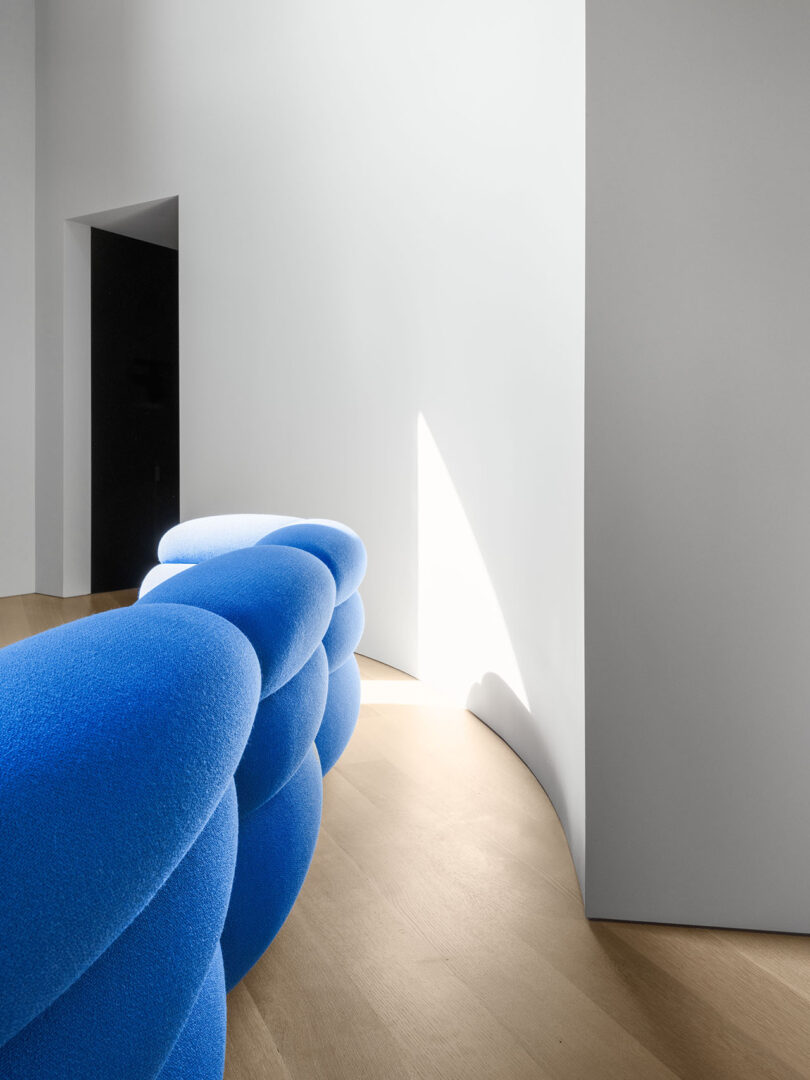
The choice of fabric can fundamentally change the Biboni's personality. While it looks stunning in classic neutrals, Knoll has introduced a palette of high-performance fabrics that push the boundaries of traditional interior coloring:
- Avocado: A lush, mid-century inspired green that highlights the "organic" feel of the capsules.
- Cobalt: A bold, electric blue that emphasizes the sofa’s status as a piece of "functional art."
- Onyx: For a more architectural, moody look, Onyx provides a deep silhouette where the shadows between the "rolls" become the focus.
These high-performance fabrics are not just about color; they are engineered for durability. In a household with pets or children, the Biboni's "friendly" nature extends to its maintenance, proving that luxury and livability can indeed coexist.
"The Biboni is about the interplay of soft edges and hard lines. We wanted to create a volume that felt as if it were breathing, a piece that has a palpable sense of life in the room." — Sharon Johnston
Conclusion: Redefining the Future of Home Lounging
Is the Biboni Sofa the future of comfort? If the future of design is about emotional resonance, architectural integrity, and modular flexibility, then the answer is a resounding yes. Johnston Marklee and Knoll have managed to take a whimsical childhood reference and transform it into a sophisticated anchor for the modern home. By mastering the "hovering" effect and offering a staggering 15+ configurations, they have ensured that the Biboni isn't just a trend for 2026—it’s a future classic.
For those looking to invest in a piece that balances "friendly envelopment" with museum-tier aesthetics, the Biboni is the ultimate Michelin-inspired embrace.
FAQs
What is the design inspiration for the Biboni Sofa?
The Biboni Sofa is inspired by the 'Michelin Man' forms, featuring stacked capsules and generous, symmetrical shapes. The goal was to create a feeling of "friendly envelopment" that balances sophisticated architectural volumes with a sense of nostalgic warmth.
Who designed the Biboni Sofa for Knoll?
The Biboni Sofa was designed by Sharon Johnston and Mark Lee, the founding partners of the Los Angeles-based architecture firm Johnston Marklee, in exclusive collaboration with Knoll.
What are the main configuration options for the Biboni?
The collection is highly modular, offering over 15 distinct configurations. This includes standard 2-seater, 3-seater, and 4-seater sofas, as well as various sectional arrangements including both standard and wide chaises in left or right orientations.