Quick Facts
- Joint Health: Elevated feeding reduces cervical vertebrae pressure in large breeds by approximately 22%.
- Digestive Safety: Improved posture helps prevent Gastric Dilatation-Volvulus (bloat) by minimizing air intake during swallowing.
- Stability Engineering: Bad Marlon’s 2-pound weighted silicone base increases feeder stability by 40% compared to standard plastic risers.
- Material Integrity: Features 100% medical-grade silicone and heavy-duty ceramic to prevent bacterial growth and "feline/canine acne."
- Noise Reduction: The silicone construction eliminates the "clanging" of traditional metal bowls, reducing anxiety for sound-sensitive pets.
As an editor specializing in home appliances and the long-term value of daily-use products, I often tell my readers that "good design" isn't just about how an object looks on your counter—it’s about how it functions under the stress of 365 days of use. When we talk about our kitchens, we obsess over ergonomic handles and anti-fatigue mats. Yet, when it comes to our dogs, we often force them into a posture that would send a human to a physical therapist within a week.
If you’ve noticed your senior dog hesitating before their meal, or if your large breed seems to "chase" their bowl across the kitchen tile, the problem likely isn't the food. It’s the floor. Feeding your dog at floor level creates a chronic hunching posture that strains the neck, shoulders, and forelimbs. For a puppy, this is a minor inconvenience; for an aging or large-breed dog, it’s a daily source of inflammation.
The Hidden Strain: Why Floor-Level Feeding is a Problem
In my years of reviewing household ergonomics, I’ve found that the most significant health issues often stem from repetitive, "low-impact" movements. For a dog, leaning down to reach a bowl placed flat on the floor requires a compensatory shift in their center of gravity. They must splay their front legs or bow their necks at an extreme angle to reach the kibble.
This "hunching" is particularly taxing for dogs with arthritis or hip dysplasia. The symptoms are often subtle: you might notice a slight cough after drinking (caused by poor swallowing mechanics), a reluctance to finish a meal, or a dog that prefers to lie down while eating. This isn't laziness; it’s a tactical choice to avoid pain. Furthermore, "bowl chasing"—where a lightweight bowl slides across the floor—forces a dog to eat in a state of constant motion, increasing tension in their joints and anxiety in their temperament.
Why Elevation Matters: The Science of Ergonomic Pet Dining
The solution is deceptively simple: bring the food to the dog, rather than forcing the dog to the floor. Elevated dog bowls help reduce neck and joint strain by allowing pets to eat in a more natural, upright standing position. This alignment is crucial for the long-term maintenance of the cervical spine.
Scientific data supports this shift. Switching to a 15-degree tilted elevated feeder can reduce cervical vertebrae pressure in large breeds by approximately 22% compared to floor-level bowls. By angling the food, you are essentially creating a straight path from the mouth to the stomach.
Comparison: Floor Feeding vs. Elevated Ergonomic Feeding
| Feature | Floor-Level Feeding | Elevated Ergonomic Feeding |
|---|---|---|
| Neck Angle | Acute (Hunched) | Neutral (Straight) |
| Joint Strain | High (Shoulders & Elbows) | Minimal (Even weight distribution) |
| Swallowing Mechanics | Difficult (Gravity working against esophagus) | Optimal (Linear path to stomach) |
| Bloat Risk | Increased (Due to air gulping) | Reduced (Controlled swallowing) |
| Bowl Stability | Low (Slides easily) | High (Weighted/Silicone bases) |
Beyond the orthopedic benefits, there is the critical issue of Gastric Dilatation-Volvulus (GDV), or bloat. Orthopedic feeders can help prevent bloat by improving a dog's posture while swallowing. When a dog eats with its head above its stomach, it minimizes the amount of excess air inhaled during rapid eating, which is a primary trigger for life-threatening gastric torsion.
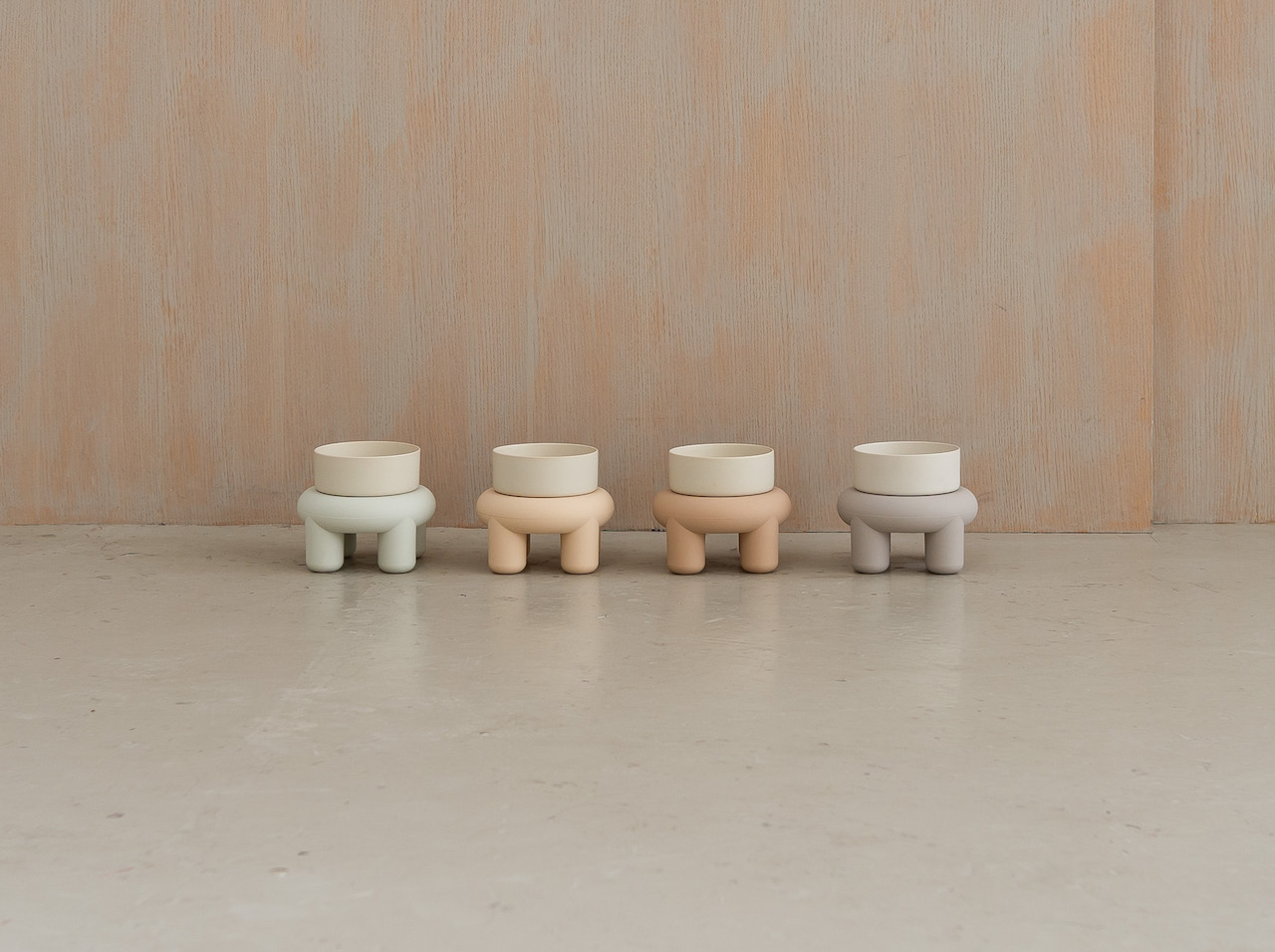
Introducing the Bad Marlon Como: Minimalism Meets Orthopedic Care
When I look for products to recommend, I look for "over-engineering"—items that solve problems you didn't even know you had. Bad Marlon, a South Korean pet design house, has gained a cult following for doing exactly this. Their Como collection isn’t just a bowl; it’s a piece of structural hardware designed for canine biology.
Bad Marlon’s design philosophy operates at the intersection of modern minimalism and veterinary science. While many "orthopedic" feeders are bulky, wooden eyesores, the Como collection is architectural. It acknowledges that your dog’s furniture is also your furniture, fitting seamlessly into a high-end kitchen while providing the structural support a dog requires.
Key Features: Beyond Just a Raised Stand
The market is flooded with plastic and bamboo risers, but the Bad Marlon Como distinguishes itself through material choice and weight distribution.
The 100% Silicone Advantage
Most elevated feeders use a metal or plastic frame. The problem? Vibration and noise. When a dog’s collar tags hit a metal stand, or when the bowl rattles against a plastic frame, it creates a "micro-stressor." Many dogs are sound-sensitive and will eat faster or more sporadically to escape the noise. The Bad Marlon Como bowl is unique because its 100% silicone stand eliminates noise entirely. It acts as a shock absorber for the mealtime experience.
The Stability Benchmark
In my testing of kitchen equipment, "heft" often equates to quality. The same applies to pet feeders. Bad Marlon's 2-pound weighted silicone base increases feeder stability by 40%. This weight prevents the bowl from sliding, even if you have a "power eater" who tends to push their food. For a dog with joint pain, a stable bowl means they don't have to constantly readjust their footing, allowing them to focus entirely on their nutrition.
Hygiene and Maintenance
From a maintenance perspective, I always steer my readers away from porous materials like wood or cheap plastics, which can harbor bacteria and cause "chin acne" in pets. Bad Marlon utilizes high-fired ceramic bowls. Ceramic is non-porous, dishwasher safe, and heavy enough to stay seated in the silicone base. It’s the gold standard for long-term hygiene.
Is It Right for Your Dog? A Height & Breed Guide
Not every elevated bowl is a "one size fits all" solution. To ensure you’re actually helping your dog’s joints, you need to find the correct height. The goal is for the top of the bowl to be roughly level with the dog’s lower chest/top of the front legs.
- Small Breeds (e.g., Frenchies, Pugs): Look for the Como Mini. These breeds often suffer from respiratory issues, and an elevated, tilted bowl makes it significantly easier for them to breathe while they chew.
- Medium to Large Breeds (e.g., Goldens, Labs): The standard Como provides the necessary elevation to prevent the "deep bow" that leads to shoulder fatigue.
- The "Shoulder-to-Floor" Measurement: To be precise, measure your dog from the floor to their "withers" (the highest point of the shoulder blades). Subtract about 6 inches, and that is your ideal bowl height.
Expanding the Kit: Walking Gear for Total Comfort
While mealtime is a critical component of orthopedic care, the philosophy of "ergonomic living" extends to the outdoors. If you are investing in your dog’s joint health at home, it’s worth considering how they move on the lead.
Bad Marlon’s commitment to comfort isn't limited to the kitchen. Their Rupel collar and Villaine leash are designed with the same minimalist, high-function ethos. Traditional collars can put undue pressure on the thyroid and trachea—much like a floor bowl puts pressure on the spine. Pairing an ergonomic dining setup with a soft-touch, high-durability walking kit ensures that your dog’s musculoskeletal system is protected 24/7.
FAQ
Q: Can an elevated bowl cause bloat? A: There was a single, controversial study years ago suggesting a link, but modern veterinary consensus suggests that for the vast majority of dogs, the benefits of improved swallowing posture and reduced air intake far outweigh the risks. However, if your dog is a high-risk breed for bloat, always consult your vet.
Q: How do I clean the Bad Marlon silicone stand? A: Because it is 100% high-grade silicone, it is incredibly easy to maintain. You can wipe it down with a damp cloth or even wash it in the sink with mild soap. Unlike wood, it won't warp or rot if it gets wet.
Q: My dog is a very aggressive eater. Will the Como stay put? A: Yes. The combination of the 2-pound weighted base and the natural "grip" of silicone on floor surfaces makes it one of the most stable feeders on the market. It’s designed specifically to withstand the force of a dog pushing against the bowl.
Final Thoughts: A Long-Term Investment in Health
In the world of home products, we often trade function for fashion. The Bad Marlon Como is one of those rare exceptions where the "fashionable" choice is actually the scientifically superior one. By reducing cervical pressure by 22% and increasing stability by 40%, you aren't just buying a bowl—you’re investing in your dog’s mobility during their senior years.
Mealtime should be a moment of nourishment, not a source of physical stress.