The workspace is undergoing a quiet but profound revolution. For years, the office was a static environment—fixed desks, unyielding partitions, and heavy lounge furniture that remained exactly where it was placed on move-in day. But as the boundaries between work, life, and hospitality blur, our environments must become as agile as our schedules. According to the American Society of Interior Designers (ASID), 90% of employees report that office design directly affects their daily productivity. When the space fails to adapt, the work suffers.
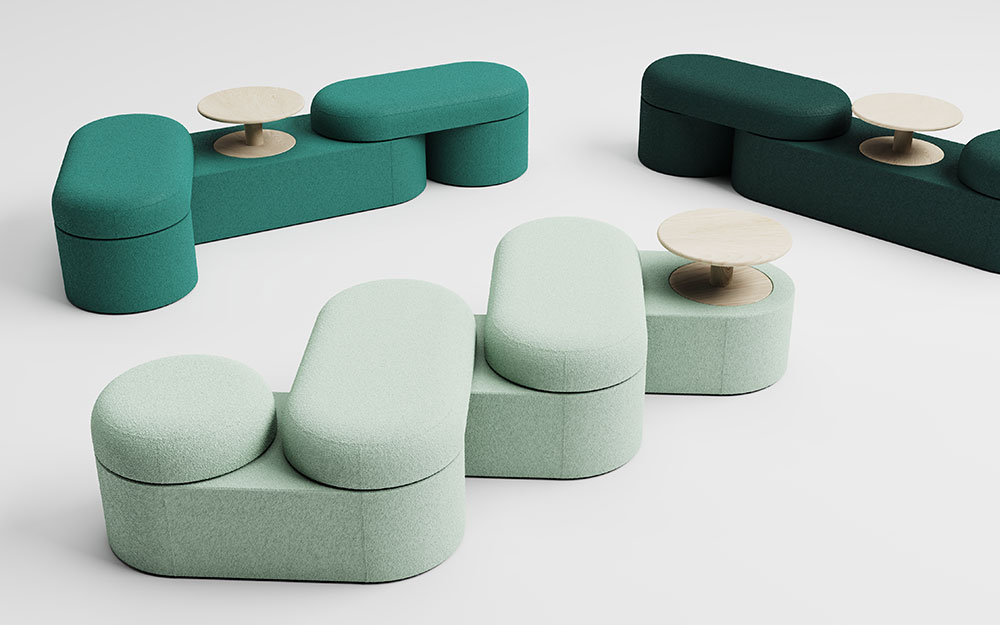
Enter the Tate Modular Seating system by Here Now. Recently crowned a NYCxDESIGN Award winner, Tate isn't just another sofa; it is a responsive architectural tool. At its core, Tate is a modular seating system featuring a patent-pending pivot connector that allows for tool-free, rapid reconfiguration in various public and commercial spaces. Whether you are designing a high-traffic university lounge or a collaborative corporate hub, Tate offers a level of fluidity that traditional contract furniture simply cannot match.
The High Line Inspiration: Balancing Connection and Privacy
The soul of Tate lies in the urban geography of New York City. When Justin Champaign, the founder of Here Now, began conceptualizing the system, he looked to Manhattan’s High Line park for ergonomic cues. The High Line is a masterclass in "social choreography"—it provides spaces where people can be "alone together," offering paths for movement alongside niches for rest.
The Tate system is inspired by New York’s High Line park, offering ergonomic configurations that balance social connection with personal comfort and emotional security. This is particularly relevant in a post-pandemic world where the psychology of space has shifted. We crave connection, but we also require "emotional security"—the feeling that our personal space is protected even in a public setting. Tate achieves this through its varying back heights and curved modules that create natural boundaries without the need for cold, clinical partitions.
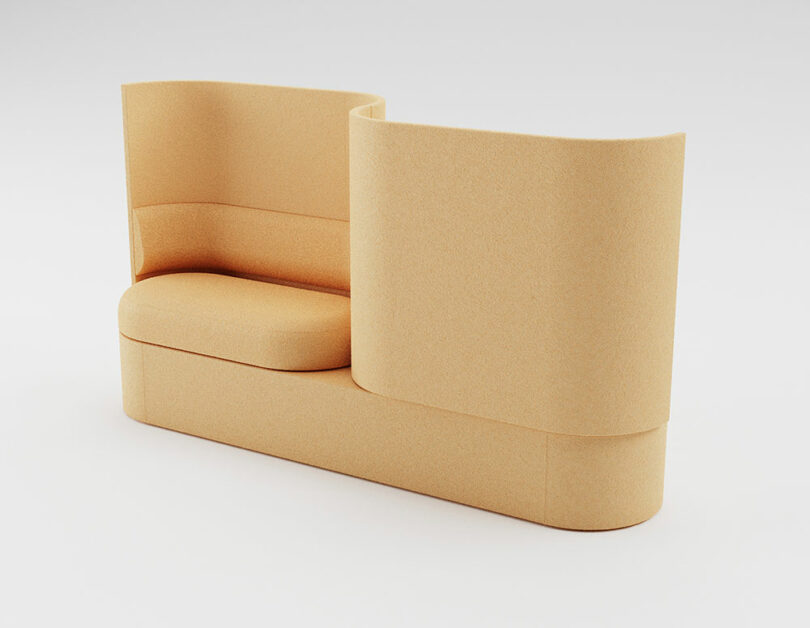
By utilizing high-back modules, designers can create "hubs" that mimic the feeling of a private alcove. Conversely, the low-back and backless versions encourage peripheral awareness and spontaneous interaction. It is a system that understands that human needs fluctuate throughout the day—from the focused "deep work" of the morning to the social "decompression" of the afternoon.
A Designer’s Kit of Parts: The Technical Edge
What sets Tate apart from the sea of modular sofas on the market is its "Designer’s Kit of Parts." Rather than offering a few static pieces, Here Now provides over 10 distinct modules, including high-back, low-back, and backless styles, to fit any architectural footprint. This allows the furniture to wrap around columns, snake through narrow corridors, or form expansive circular islands in the center of a lobby.
The true "secret sauce," however, is the patent-pending pivot connector. In traditional contract furniture, changing a layout often requires a maintenance crew, a set of Allen wrenches, and several hours of downtime. With Tate, the assembly is "no-tool." The modules connect via a pivot point that allows them to be rotated and locked into place by the design team—or even the end-users themselves—within minutes.
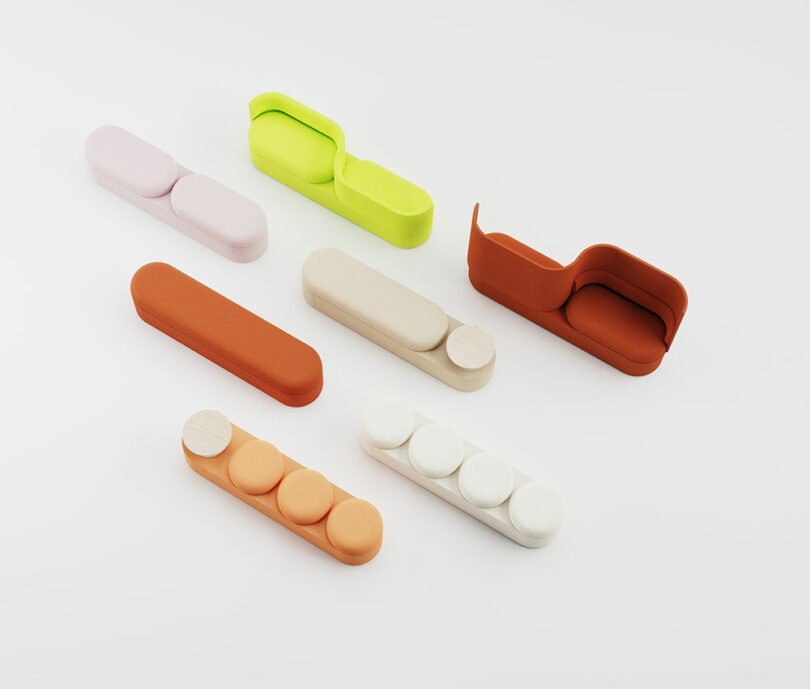
To better understand how Tate disrupts the traditional furniture model, let’s look at how it compares to standard office lounge systems:
| Feature | Traditional Office Lounges | Tate Modular System |
|---|---|---|
| Assembly Time | 4–8 hours (Requires tools) | < 30 minutes (Tool-free) |
| Flexibility | Fixed or linear configurations | 360-degree reconfigurable pivot |
| Component Diversity | Standard sofa/chair modules | 10+ modules (High, Low, Backless) |
| Sustainability | Mixed materials; difficult to recycle | Fully recyclable plastic & foam frame |
| Architectural Fit | Struggles with curves/obstacles | Seamlessly navigates columns & corners |
Sustainability and Material Integrity
In the world of interior design, "sustainable modular sofas 2026" is more than just a search term; it is a mandate. As we look toward the next decade, the industry is moving away from "fast furniture" toward circularity. Tate is a frontrunner in this movement.
Designed for sustainability, Tate utilizes a plastic frame and foam components that are fully recyclable and easy to disassemble, supporting eco-friendly office initiatives. Many modular systems hide a multitude of sins—glues, staples, and mixed-material composites—under their upholstery, making them impossible to recycle at the end of their life cycle. Tate, by contrast, is engineered for disassembly. Every component can be stripped down, ensuring that the materials enter a circular loop rather than a landfill.
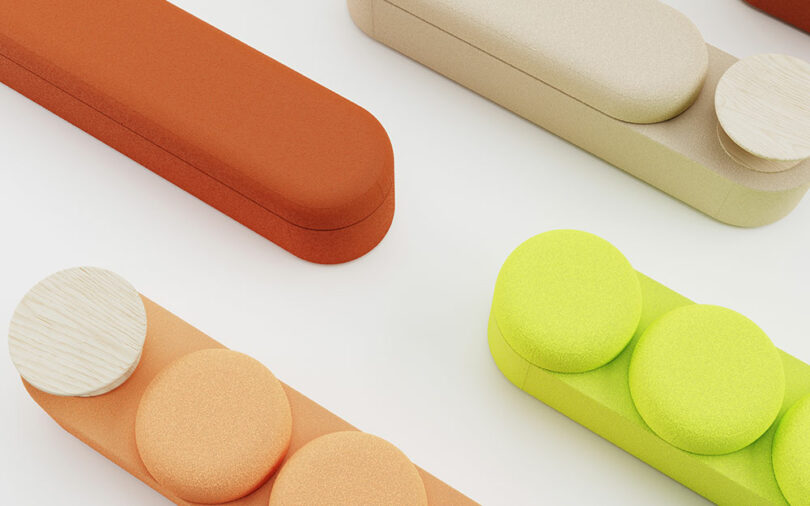
Furthermore, Here Now’s partnership with textile giants like Kvadrat ensures that the aesthetic beauty of the system is matched by its durability. These high-performance fabrics are designed to withstand the rigors of high-traffic contract environments while maintaining a soft, residential feel. This "Resimercial" (Residential + Commercial) approach is exactly what modern employees are looking for: the comfort of home with the functionality of a professional lab.
Aesthetic Impact: Creating 'Moments of Delight'
While the technical specs are impressive, Tate wins on pure aesthetic charisma. I first saw the system at ICFF (the International Contemporary Furniture Fair), where it debuted in a daring yellow faux fur. It was a bold move that signaled Tate wasn’t just about "utility"—it was about personality.
"The goal of modern furniture isn't just to provide a place to sit; it's to create 'moments of delight' that make a person feel seen and supported by their environment." — Justin Champaign, Founder of Here Now
The system's soft, rounded curves are a welcome departure from the harsh, angular lines of 20th-century modernism. These curves serve a functional purpose as well: they allow the system to navigate around architectural obstacles like load-bearing columns. Instead of a column being a "dead zone" in a room, Tate turns it into an anchor for a circular seating hub.
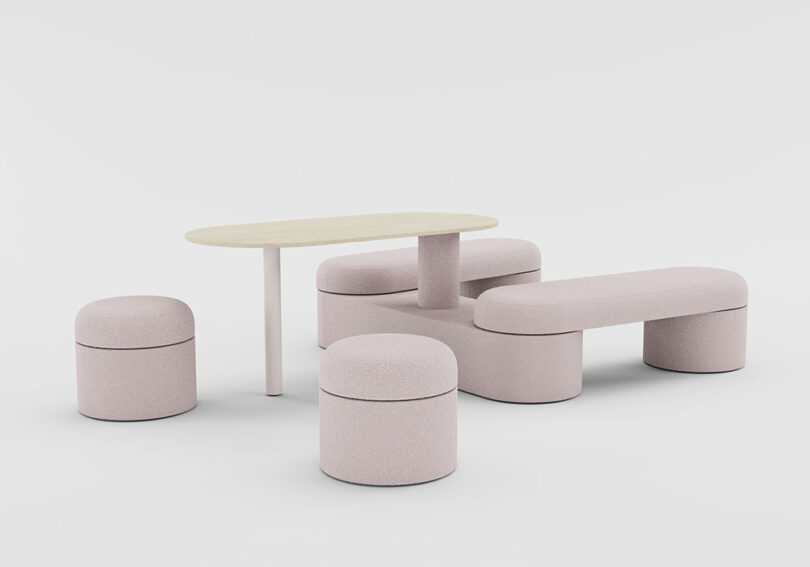
Visual transparency is another key element of the design. By strategically mixing high-back modules for privacy with lower divider heights, Tate ensures that users feel emotionally secure without feeling isolated. You can see the room around you, maintaining a sense of safety and community, even while tucked into a private high-back corner.
Buying Guide: Is Tate Right for Your Project?
Choosing a seating system for a public or commercial space is a high-stakes decision. You need something that is durable enough for a student union but sophisticated enough for a law firm’s lobby.
Tate is the ideal choice if:
- You have architectural challenges: If your space is filled with awkward angles, columns, or narrow pathways, Tate’s reconfigurable nature and compact footprints are a lifesaver.
- You prioritize "Day Two" flexibility: If you know the needs of your office will change in six months, Tate allows you to move and re-group modules without hiring a contractor.
- You are pursuing LEED or WELL certification: The system’s commitment to fully recyclable materials and "no-glue" assembly makes it a strong candidate for green-building projects.
- You need to maximize square footage: Tate’s back-to-back configurations allow for double-sided seating in half the footprint of traditional back-to-back sofas.
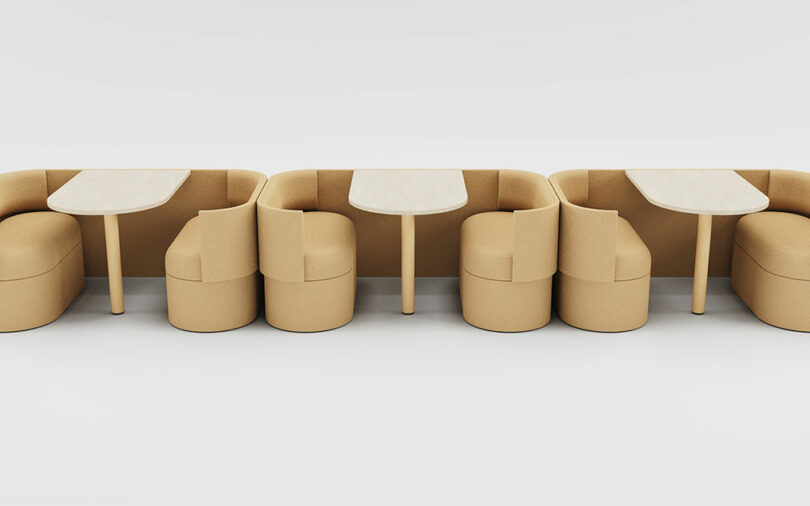
However, if your project requires ultra-plush, "deep-sink" residential lounge furniture for a private living room, Tate’s contract-grade firmness might be more structured than you desire. It is designed for "active lounging"—comfortable for an hour-long meeting or a laptop session, but built with the supportive foam density required for public use.
FAQ
Can Tate modules be added later? Absolutely. One of the primary benefits of the "Kit of Parts" approach is that you can start with a small configuration and purchase additional modules or connectors as your team or budget grows.
Is the upholstery replaceable? Yes. Because the system is designed for disassembly, the fabric covers can be removed and replaced if they become damaged or if you decide to refresh the color palette of your space.
How does the pivot connector stay secure? The patent-pending connector uses a friction-lock mechanism. Once you have pivoted the modules into your desired shape, the connector holds them firmly in place, preventing the "sofa creep" often seen with modular units that aren't properly linked.
Conclusion
The Tate Modular Seating system is a rare example of a product that satisfies both the left-brain requirements of an architect (durability, sustainability, technical specs) and the right-brain desires of an interior stylist (beauty, rhythm, emotional impact). By looking to the High Line for inspiration, Here Now has created a system that feels inherently human.
In an era where the only constant is change, Tate provides the foundation for a responsive workspace. It invites us to stop thinking of furniture as a static object and start seeing it as a living part of our daily choreography. If you are looking to redefine a modern public space, Tate isn't just a design choice—it's a future-proof investment.