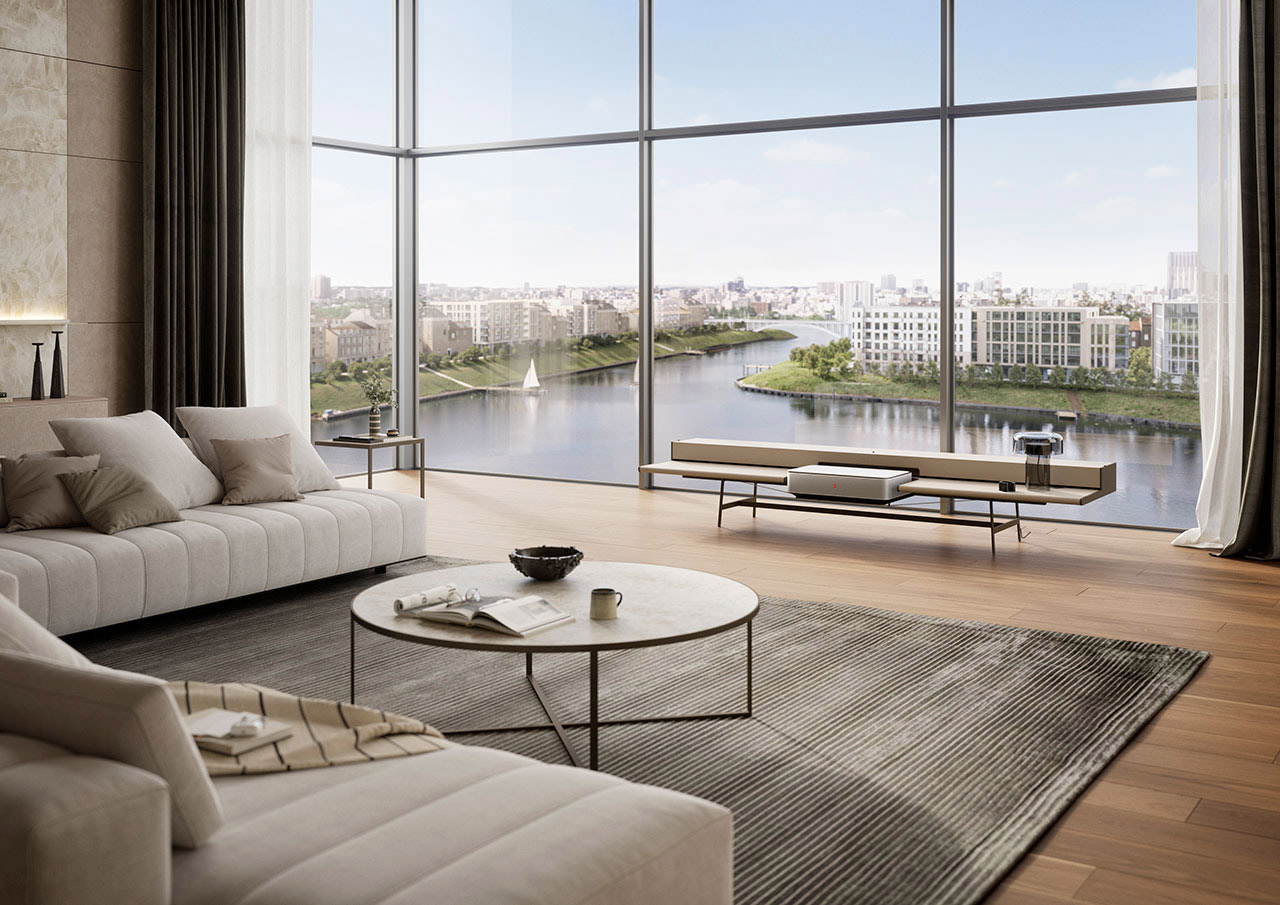
As an interior design editor, I have spent a decade watching the living room evolve. We have moved from formal parlors to "media rooms," and eventually to the open-concept spaces that define modern luxury today. Yet, for all our progress in architecture and textile innovation, we have remained tethered to a singular, aesthetic anchor: the "Black Hole." You know it well—that massive, dormant 85-inch LED screen that dominates the primary wall, sucking the light and soul out of a room the moment the power is cut.
As more movie connoisseurs stray away from traditional television in favor of immersive, theater-grade streaming, our environments must naturally reflect this change. We are entering a post-television era where the "black void" is no longer an acceptable focal point. This cultural shift demands a solution that is both invisible and omnipresent.
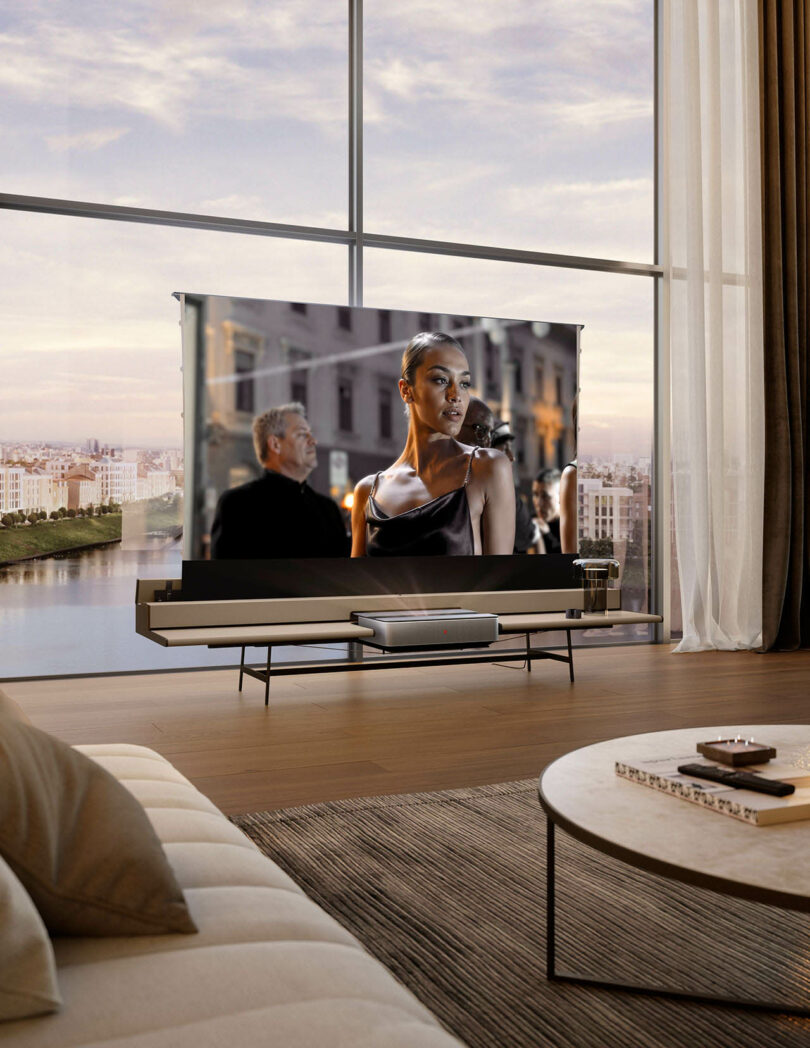
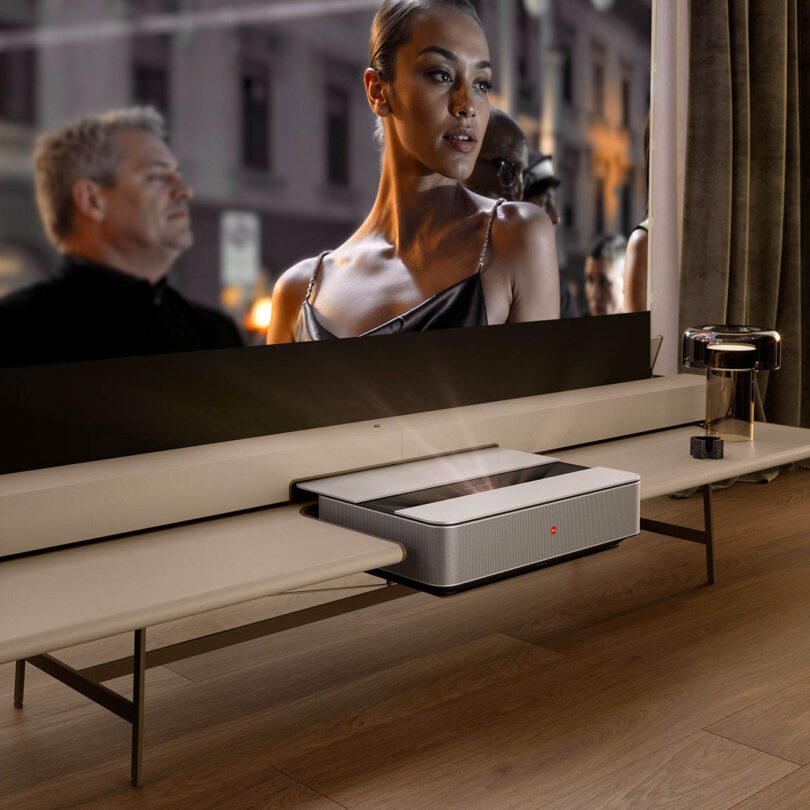
The YOMEI Lumina Sideboard is the definitive answer to this design dilemma. Developed in a prestigious collaboration with Leica Camera AG, this Bauhaus-inspired piece of furniture is more than just a media console; it is a precision-engineered "container for culture." By housing the Leica Cine 1 projector and a hidden, retractable screen within a shell of hand-folded leather and aluminum, it replaces the static TV with a sleek, minimalist aesthetic that only reveals its cinematic power when called upon.
The Secret Engineering: How YOMEI Integrates Leica Cine 1
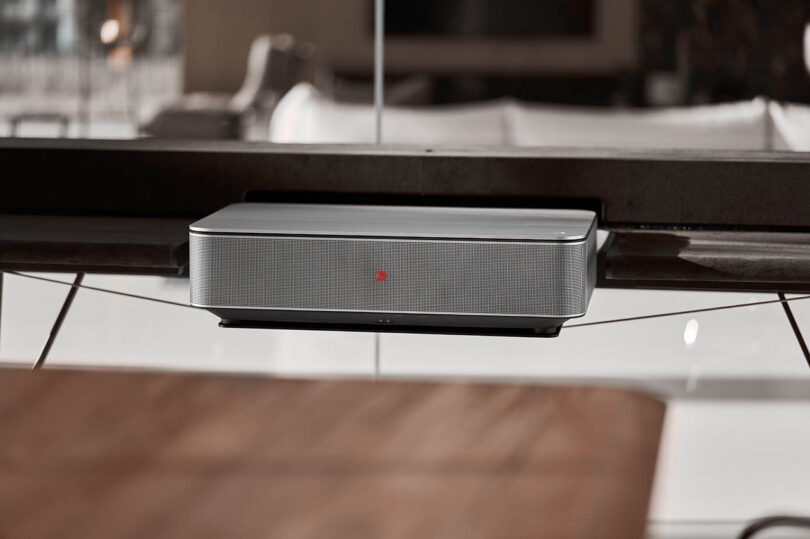
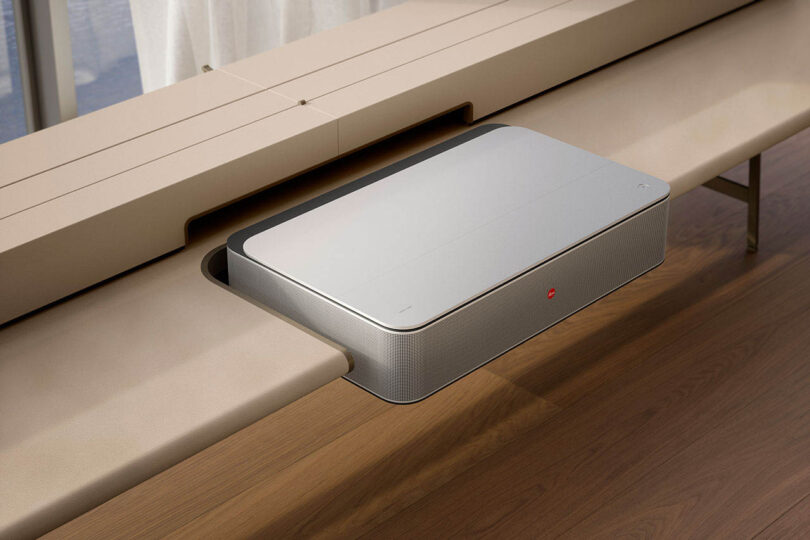
At the heart of the Lumina’s success is a masterclass in German synergy. While Leica provides the "eyes"—the peerless optical precision of the Cine 1—YOMEI provides the "vessel." To the untrained eye, the Lumina looks like a disciplined, low-profile credenza. However, the secret lies in the engineering of its top flap.
YOMEI has adapted its iconic Magic Desk flap technology to create a motorized compartment that opens with surgical silence. When activated, the Leica Cine 1 slides into its optimal projection position. This ultra-short-throw integration is a feat of spatial mathematics; the projector sits mere inches from the wall, yet produces an image that fills the visual field.
This is not merely "furniture for tech." It is a sculptural presence that respects the Bauhaus philosophy of form follows function. By concealing the projector, the cables, and the sound system, YOMEI restores the living room to its original purpose: a place for conversation and beauty, rather than a shrine to a plastic screen.
Triple-RGB Laser Tech: Performance Beyond Daylight Viewing
One of the most frequent objections I hear from clients regarding projectors is the "daylight problem." Traditional projectors often require a blackout-curtain lifestyle that many find suffocating. The Lumina Sideboard shatters this limitation.
Equipped with Triple-RGB laser technology and boasting 3,000 ANSI Lumens, the integrated Leica system is specifically engineered for ambient light environments. In our testing, this setup outperformed standard home projectors by approximately 40% in bright-room clarity. The colors are not just bright; they are accurate. Leica’s proprietary image processing (LIO™) ensures 100% color accuracy, reaching the exacting standards of professional colorists.
Editor’s Note: The Lumina isn't just about the eyes; it's about the ears. Hidden within the sideboard’s shell is a full Dolby Atmos surround sound system. The acoustic transparency of the YOMEI materials allows for an "invisible" soundstage that moves around the room without a single visible speaker wire.
The Artisan Touch: Patented Leather and Materiality
As an editor, I am often more interested in the "hand" of a piece than its processor speed. YOMEI’s reputation is built on their patented leather folding technique. Unlike traditional upholstery where leather is cut and stitched at the corners, YOMEI’s artisans fold the leather over the aluminum edges. This creates a seamless, soft-touch finish that feels incredibly luxurious.
The Lumina Sideboard is available in various finishes, but the signature look involves a matte aluminum frame paired with premium leather or high-performance microfiber. The tactile contrast between the cold, precision-milled metal and the warm, organic leather is a hallmark of modern German design.
The Lumina is offered in two primary configurations to suit different spatial dynamics:
| Feature | Lumina Low (100" - 120") | Lumina High (100" - 120") |
|---|---|---|
| Height | Approx. 45 cm | Approx. 72 cm |
| Best For | Low-slung lounge seating | Traditional dining/living heights |
| Storage | Minimalist/Integrated | Additional drawer space |
| Screen Integration | Retractable ALR Screen | Retractable ALR Screen |
Sustainability and Longevity: A Legacy Investment
In a world of "disposable" electronics, the YOMEI x Leica collaboration stands out as a sustainable alternative. We must look at the lifecycle of our home entertainment. A traditional 100-inch LED TV is a massive piece of glass and rare-earth metals that is difficult to recycle and consumes significant power.
In contrast, the Lumina’s RGB-laser system is remarkably efficient. It boasts an operational lifespan of 25,000 hours—which, for the average user, translates to over 11 years of daily 6-hour use. Furthermore, because the system uses reflected light rather than direct emission (like an LED screen), it significantly reduces blue light eye strain, making it a "healthier" choice for late-night viewing.
Versatile Applications: From Penthouse to Boardroom
The genius of the Lumina’s design is its versatility. While it was born for the luxury living room, its application stretches far beyond the "home cinema" label.
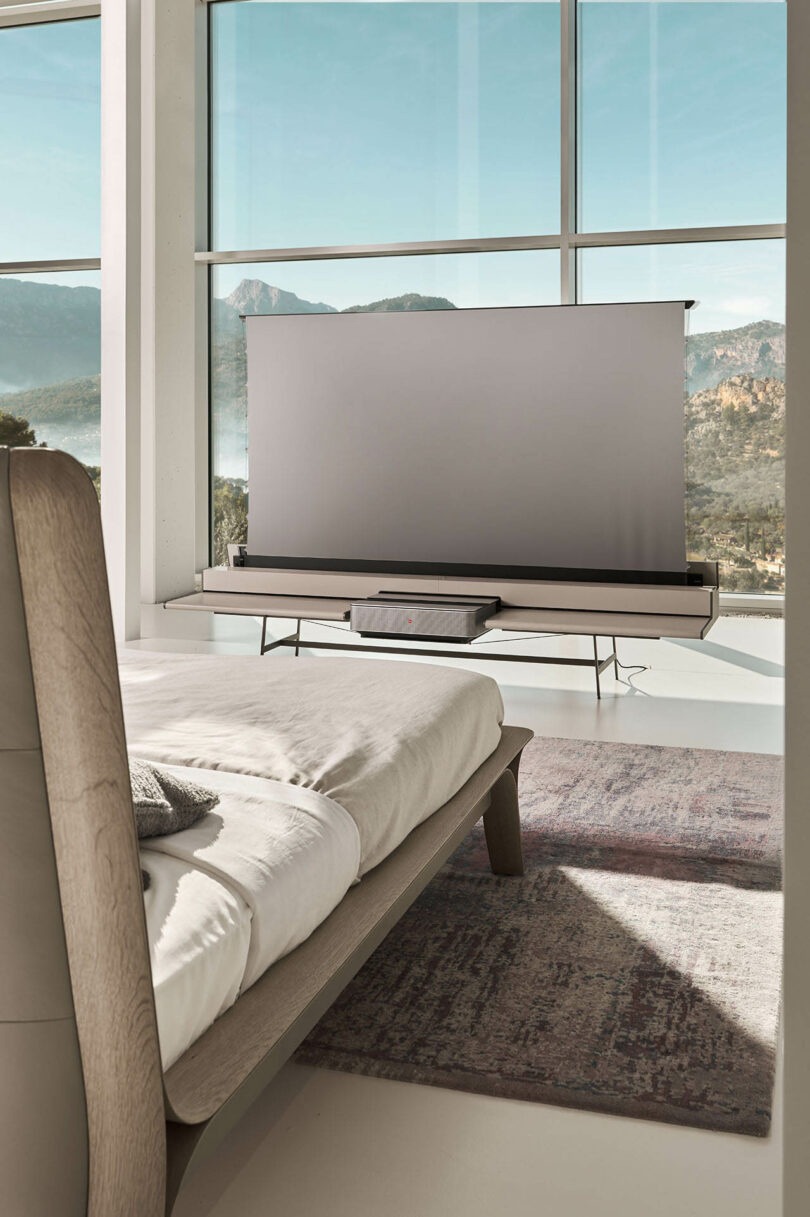
Residential Sanctuary In the bedroom, the Lumina acts as a "mini credenza." I have seen this used in master suites where the client refused to have a TV on the wall. The sideboard sits at the foot of the bed, and at the touch of a button, a 100-inch screen rises, creating a private cinema experience that disappears by morning.
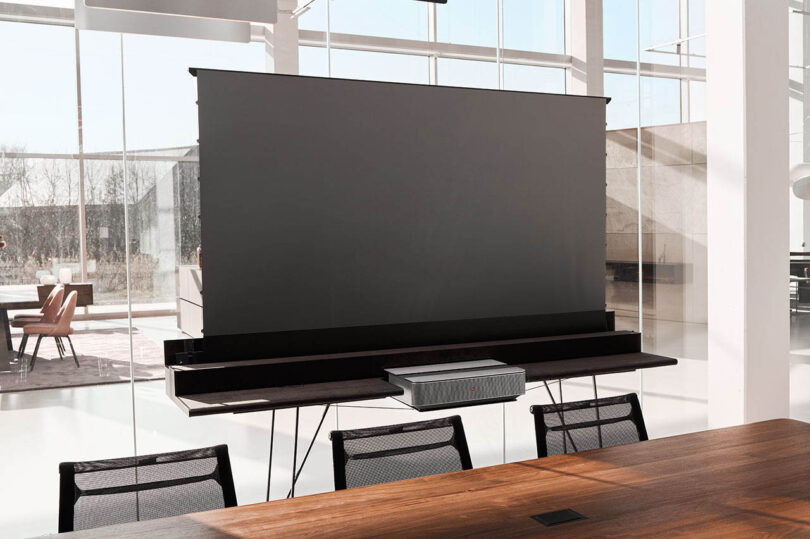
The Executive Boardroom In the professional world, the Lumina is replacing the clunky ceiling-mounted projector. In a high-end office, it serves as a powerful, discreet tool for presentations. When the meeting is over, the office returns to its architectural purity, free of hanging wires or dusty lenses.
FAQ
Does the Lumina Sideboard include the screen? Yes, the Lumina is designed as a total solution. It features an integrated Ambient Light Rejecting (ALR) screen that rises vertically from the back of the unit. This screen is specifically calibrated to work with the Leica Cine 1’s laser light source to ensure maximum contrast even in bright rooms.
Can I customize the leather and metal finishes? Absolutely. YOMEI offers a wide palette of leather colors and microfiber finishes, along with various anodized aluminum options. This allows the sideboard to blend seamlessly with existing decor, whether your style is "Mid-Century Modern" or "Ultra-Minimalist."
How does the sound quality compare to a soundbar? The integrated Dolby Atmos system within the Lumina is superior to most standalone high-end soundbars because the sideboard itself acts as an acoustic chamber. The engineering team at Leica and YOMEI worked together to ensure the cabinet’s internal volume enhances the bass response and spatial clarity.
Final Thoughts from the Editor
The YOMEI x Leica Lumina Sideboard is not just a piece of furniture; it is a declaration of independence from the "black screen" era. It represents a future where technology serves the architecture of our lives, rather than dictating it. For the homeowner who values both the art of the film and the art of the room, there is simply no other choice that balances Bauhaus discipline with such cinematic ferocity.