Quick Facts
- Collections Featured: TAMO RODD (Wall-mounted), LIGO (Freestanding), and NOKI (Architectural).
- Key Philosophy: Reduction of "visual noise" through seamless transitions and hardware-free aesthetics.
- Standout Innovation: Tool-free reconfiguration for the RODD system and 15% higher load-bearing efficiency for the LIGO collection.
- Materiality: High-grade solid oak, powder-coated steel, and natural lacquer finishes.
- 2026 Trend Forecast: A shift toward "warm minimalism" and "modular cocooning" to combat urban clutter.
As we look toward the interior landscape of 2026, the definition of minimalism is undergoing a profound metamorphosis. We are moving away from the sterile, gallery-like "stark minimalism" that dominated the last decade and into an era I like to call "warm, textured cocooning." It’s a movement that prioritizes the soul of a space—the tactile grain of wood, the play of light through open structures, and, most importantly, the elimination of what designers call "visual noise." In a world that feels increasingly loud, our homes must become the ultimate acoustic and visual dampers.
The home organization market is currently feeling this shift acutely, with projections suggesting it will reach a staggering $17.67 billion by 2032. But for the discerning homeowner, it’s not just about finding a place to hide things; it’s about finding storage that feels like an architectural extension of the room. This brings us to the latest offerings from TAMO. Their new modular systems, specifically the RODD and LIGO collections, are not just furniture—they are a masterclass in how to manage life’s clutter while maintaining a poetic, minimalist aesthetic.
The Minimalist’s Dilemma: Why Modular Wins
Why are we seeing such a massive pivot toward modularity? Market analysis indicates a 40% increase in demand for "tool-free" modular furniture among urban apartment dwellers for the 2025-2026 season. The reason is simple: our lives are no longer static. We move, we downsize, we upsize, and our collections of "things"—from oversized art books to vintage ceramics—are constantly in flux. Traditional, fixed shelving is a relic of a slower era.
At the heart of TAMO’s appeal is its ability to reduce visual noise. In design, visual noise refers to the chaotic energy created by exposed hardware, cluttered lines, and mismatched heights. The RODD and LIGO systems solve this through seamless transitions and hidden engineering. When you invest in these pieces, you’re practicing what I call the 70/30 Investment Rule. This is a strategic budgeting framework where you allocate 70% of your furniture budget to high-quality, modular "foundation pieces" that grow with you, leaving 30% for rotating seasonal decor and personal touches.
Investing in solid oak modular systems isn't just an aesthetic choice; it’s a sustainable one. In 2026, the "disposable furniture" era is officially over. We are looking for pieces that offer flexible longevity, and TAMO’s use of durable materials combined with adaptable designs ensures that these pieces remain relevant whether you’re in a compact studio or a sprawling loft.
The RODD Collection: Ultimate Flexibility for Shifting Lives
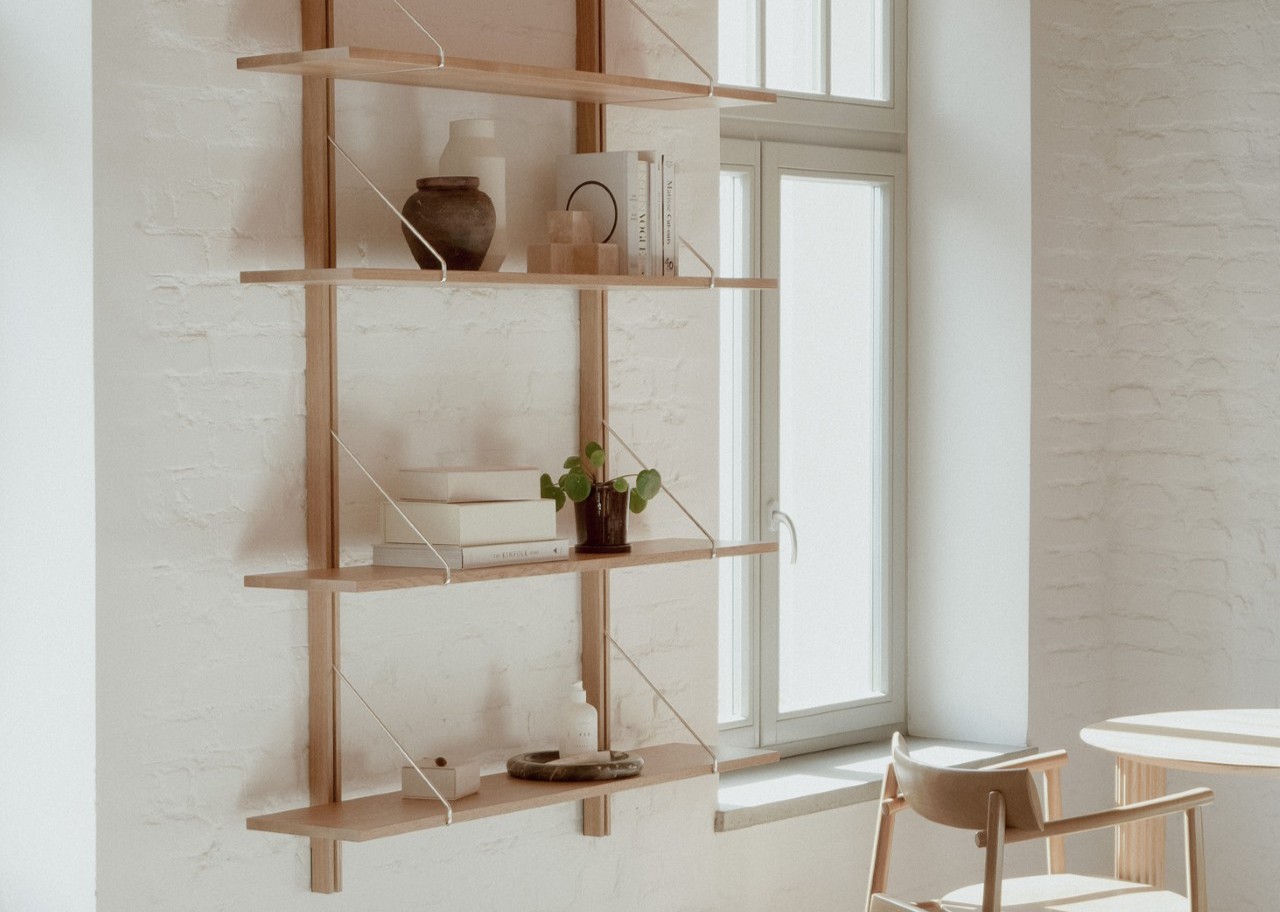
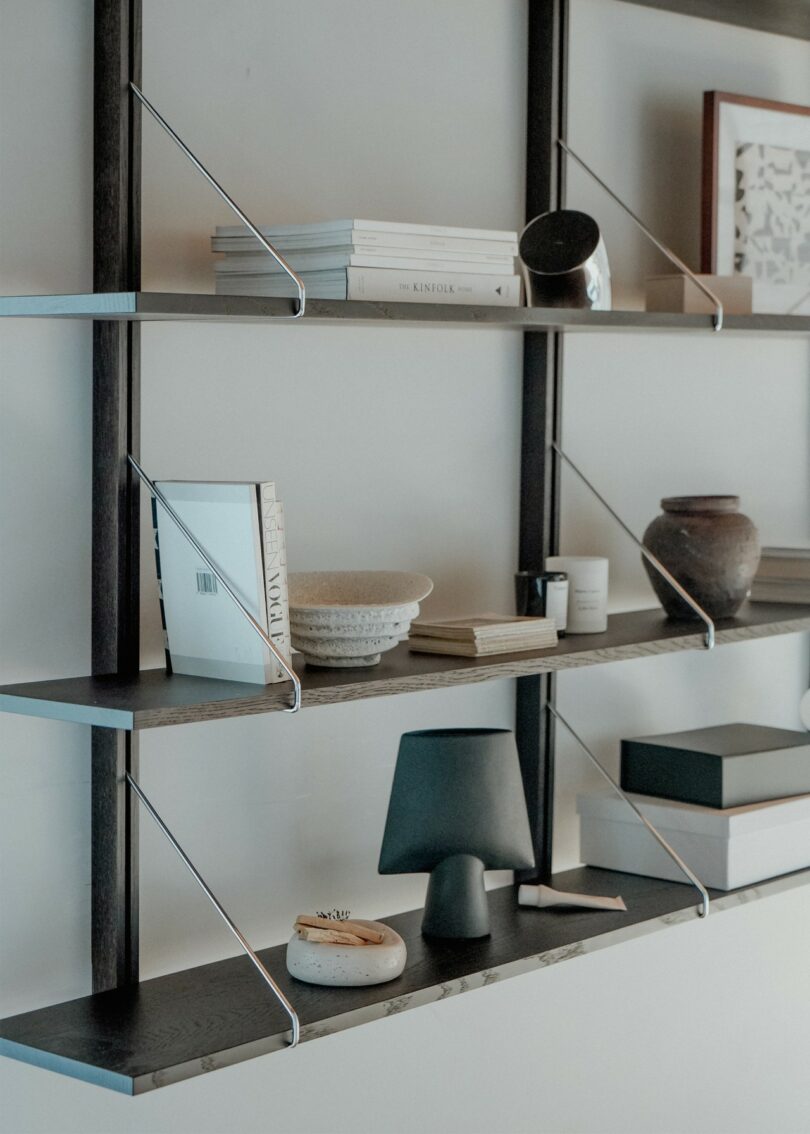
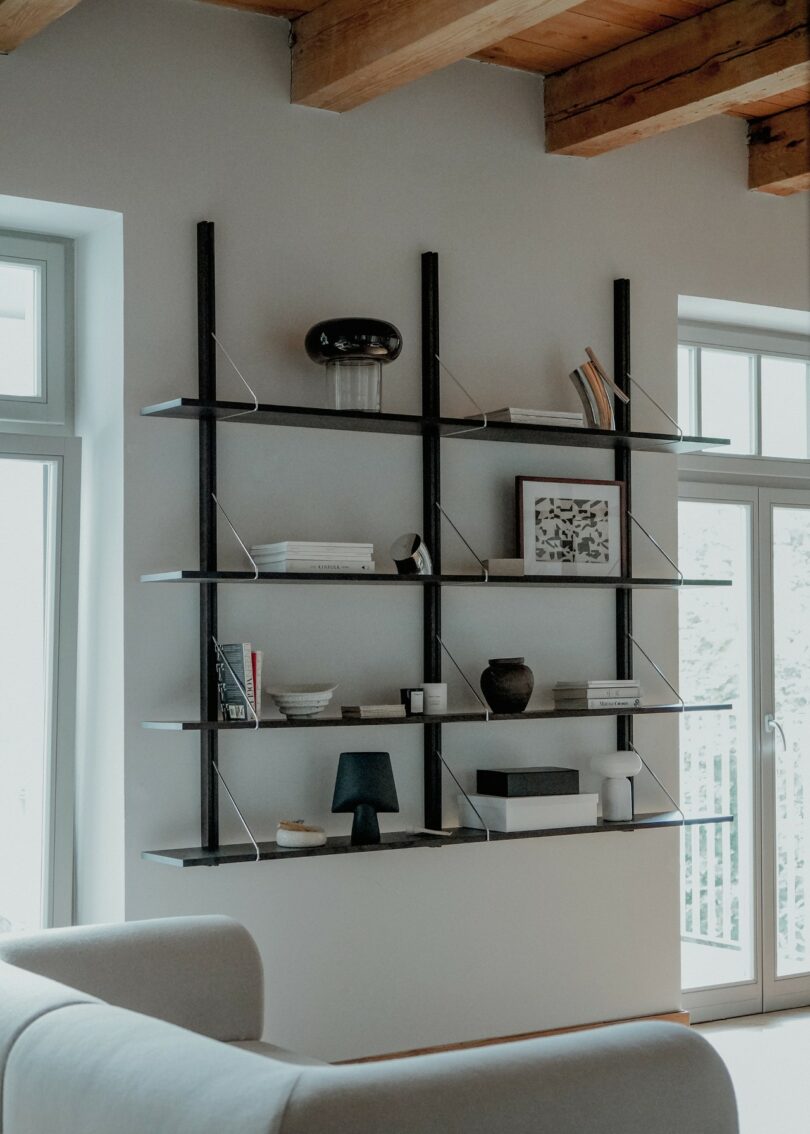
Designed by the visionary Max Voytenko, the RODD collection is perhaps the most versatile wall-mounted shelving system I’ve encountered this season. It addresses the core need for "instant reconfiguration." Most modular systems require a toolbox and an afternoon of frustration to change a single shelf height. RODD changes the game by using slender, profiled steel rods and solid oak boards that allow for tool-free adjustments.
The beauty of RODD lies in its "slot-and-stay" mechanism. The steel rods act as a rhythmic backbone against the wall, while the oak boards can be moved in seconds. This is particularly vital for those of us who treat our shelving as an "ever-changing canvas." One month you might need a tall clearance for a sculptural vase; the next, you might need tightly packed rows for a growing vinyl collection.
"The RODD system isn't just about storage; it's about the rhythm of the wall. By using slender steel supports, it creates a sense of levity that makes even the smallest rooms feel airy." — Ivy Chen
From a styling perspective, the RODD system is a dream. The contrast between the industrial feel of the steel rods and the organic warmth of the oak boards creates a balanced tension that fits perfectly into a modern living space. It’s an ideal solution for high-traffic living rooms where the need for accessibility meets the desire for a clean, curated look.
The LIGO Bookcase: Where Engineering Meets Poetry
If RODD is about the rhythm of the wall, LIGO is about the poetry of connection. The name itself is derived from the Latin word for "I connect," and the engineering behind it is nothing short of revolutionary for the minimalist market.
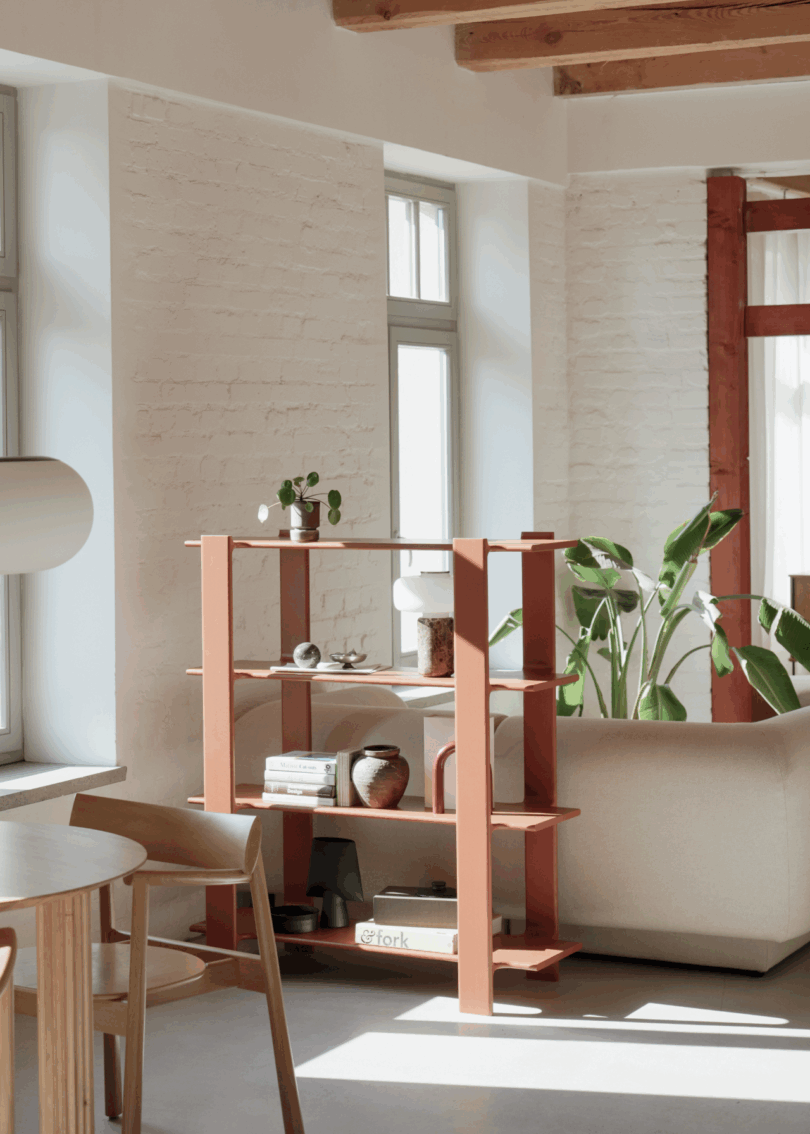
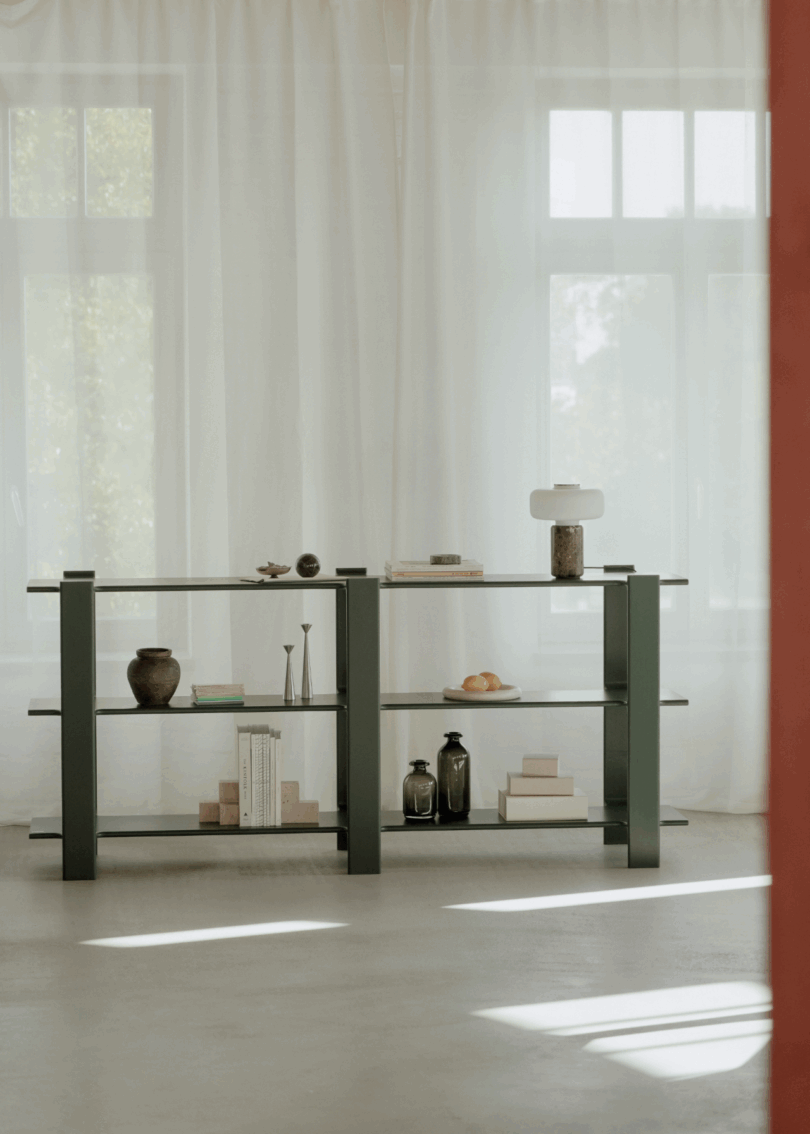
Traditional bookcases rely on visible brackets, screws, or heavy-duty joinery that breaks the visual flow. LIGO, however, utilizes a "soft transition" method. In this design, the solid oak vertical legs flow seamlessly into the horizontal shelves without any visible hardware. The result is a sculptural frame that looks as if it were carved from a single piece of wood.
But don’t let the delicate aesthetics fool you. This seamless joint engineering isn't just for show; it provides a 15% higher load-bearing efficiency per shelf compared to traditional minimalist bookcases using external hardware. This makes LIGO the ultimate choice for heavy-duty storage—think extensive home libraries or heavy ceramic collections—that still requires a lightweight, hardware-free silhouette.
LIGO is a standing bookcase, which means it serves as an excellent room divider. Because there is no "back" to the unit, it allows light to pass through, maintaining the architectural integrity of an open-plan living space. It’s a piece that doesn't just hold your belongings; it frames them.
Architectural Simplicity: The NOKI System by Keiji Ashizawa
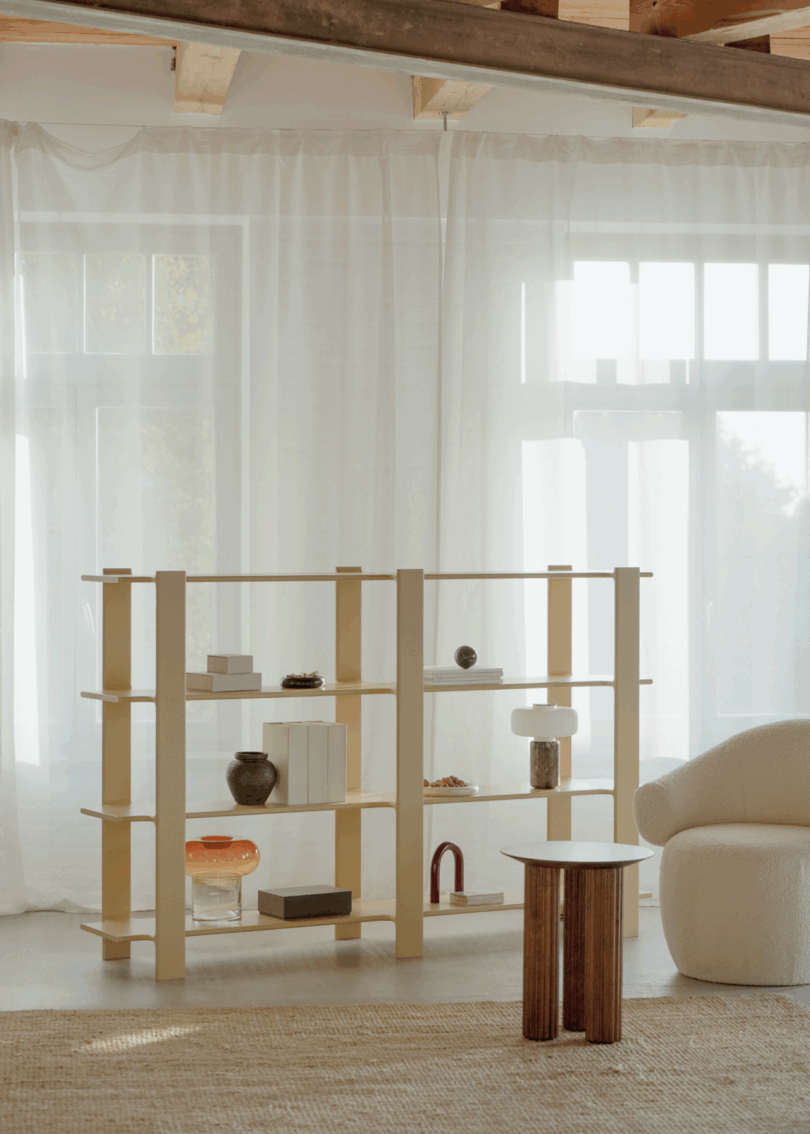
Rounding out the 2026 lineup is the NOKI system, designed by the renowned Keiji Ashizawa. Inspired by the Japanese concept of "Noki" (traditional eaves), this system brings a rhythmic, architectural structure to the home. Ashizawa is known for his "honest design" approach, where the function of a piece is celebrated through its form.
The NOKI system features an 80cm shelf width, crafted from premium oak with a subtle lacquer finish that protects the wood while allowing its natural texture to shine. The design mimics the eaves of a Japanese house, providing a sense of shelter and order. This rhythmic structure is incredibly effective in compact urban spaces where horizontal lines can help "stretch" the perceived width of a room.
Technically, the NOKI system is designed for those who appreciate the intersection of Japanese craft and modern functionality. Its minimalist footprint makes it an excellent choice for hallways, home offices, or as a bedside storage solution that doesn't overwhelm the sleeping area.
Planning Your 2026 Living Space
When integrating modular storage like TAMO into your home, the most important tool in your kit isn't a screwdriver—it’s your eye for negative space. In 2026, the most luxurious thing you can own is "empty area."
Here is how I recommend planning your layout:
- Map Your Sight Lines: Stand at the entrance of your room. Where does your eye naturally land? This is where your most sculptural piece (like the LIGO) should live.
- The 70/30 Rule in Practice: Ensure that 70% of your storage is dedicated to high-quality, open modular systems that showcase your personality, while 30% (like lower cabinets or closed boxes) is used to hide tech clutter, cables, and daily essentials that don't fit the aesthetic.
- Balance the Weight: If you have a heavy, dark-colored sofa, balance it with the airy, light-oak finish of a RODD wall unit.
- Consider the "Breathability": Leave at least one shelf partially empty. This creates a "breath" in the visual narrative of the room, preventing it from feeling like a storage unit.
Modern living is about flexibility. By choosing pieces that allow for reconfiguration, you aren't just buying furniture; you’re buying the freedom to change your mind. Whether it's the tool-free ease of RODD or the sculptural elegance of LIGO, TAMO has successfully bridged the gap between structural engineering and poetic design.
Collection Comparison
| Feature | RODD Collection | LIGO Collection | NOKI System |
|---|---|---|---|
| Type | Wall-mounted | Freestanding / Divider | Compact Wall/Floor |
| Best Use Case | High-traffic living rooms | Home libraries / Open plans | Home offices / Hallways |
| Modularity Level | Extreme (Tool-free) | Structural / Fixed | Rhythmic / Modular |
| Primary Material | Oak & Steel | Solid Oak | Oak with Lacquer |
| Design Vibe | Industrial Minimalist | Sculptural & Poetic | Architectural Japanese |
FAQ
Q: Is the RODD system difficult to install on my own? A: Not at all. While the initial wall rails require standard mounting, the actual "modular" part—the steel rods and oak boards—is completely tool-free. You can rearrange your entire layout in under five minutes.
Q: Can the LIGO bookcase really handle heavy art books? A: Yes. Thanks to the "soft transition" joinery, LIGO offers 15% more load-bearing efficiency than standard minimalist shelves. It’s designed to remain stable and sag-free even under significant weight.
Q: How do I maintain the solid oak finish? A: TAMO uses high-quality finishes, but as with all solid wood, we recommend a simple dusting with a soft, dry cloth. Avoid harsh chemicals. Every few years, a light application of natural wood wax will keep the grain looking vibrant for decades.
Conclusion
The shift toward modular, high-quality storage is more than just a trend; it's a response to how we live today. By choosing pieces like TAMO’s RODD or LIGO, you are investing in the long-term "calm" of your home. These systems provide the structural integrity required for modern life while delivering the visual serenity we all crave. As we move into 2026, let your storage be a reflection of your lifestyle—flexible, intentional, and undeniably beautiful.