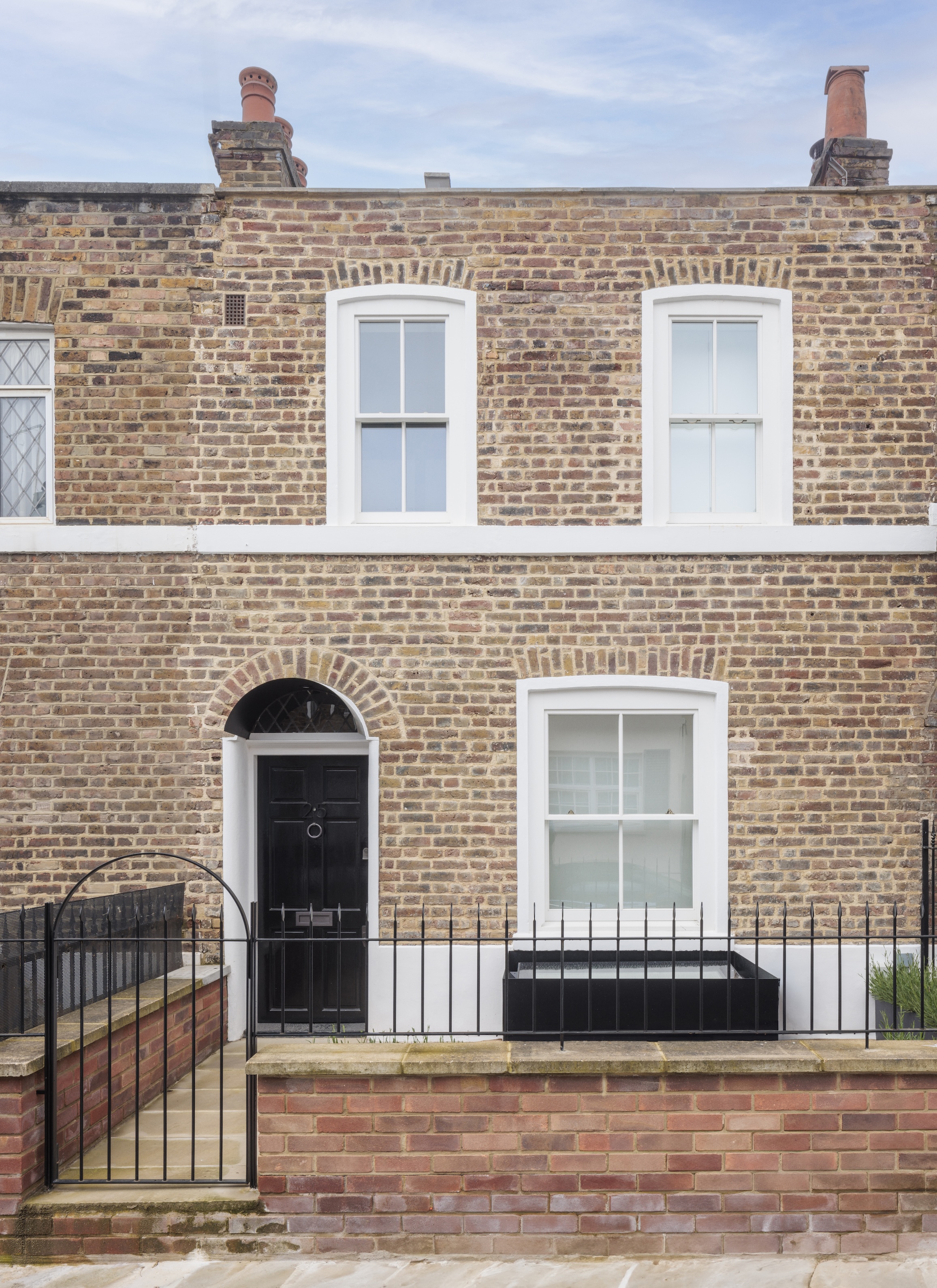
Imagine, for a moment, stepping off the humming pavements of Brompton Road, leaving the high-octane glamour of Harrods and the parade of supercars behind. You turn into a quiet mews, approach a weathered Victorian façade, and push through a massive, silent pivot door. Suddenly, the city vanishes. What remains isn't just a house, but a sensory palate cleanser—a "monastery-like" sanctuary that prioritizes the soul over the display.
In the world of high-end London real estate, the trend has long been about "more": more marble, more basement levels, more gold-leafed moldings. But as we look toward the design landscape of 2026, a new definition of luxury is emerging. It’s a movement we’re calling "Urban Serenity," and this Knightsbridge renovation by Tuckey Design Studio is its definitive manifesto. By stripping a water-damaged Victorian townhouse to its bare bones and reimagining it through the lens of Japanese minimalism, the architects haven’t just renovated a building; they’ve sculpted a refuge for the modern global traveler.
Stripping Back to the 'Bare Bones': The Architectural Philosophy
The transformation of this Knightsbridge home began with an act of architectural bravery: the removal of almost every internal partition. In most London renovations, developers fight to squeeze in extra bedrooms to boost "paper value." Here, the goal was the opposite—maximizing "psychological space."
By stripping the structure down to its original timber floor joists and roof trusses, Tuckey Design Studio optimized 100% of the building’s vertical height. We often talk about square footage, but in 2026, the luxury market is pivoting toward cubic volume. The result is a home that feels significantly larger than its physical footprint.
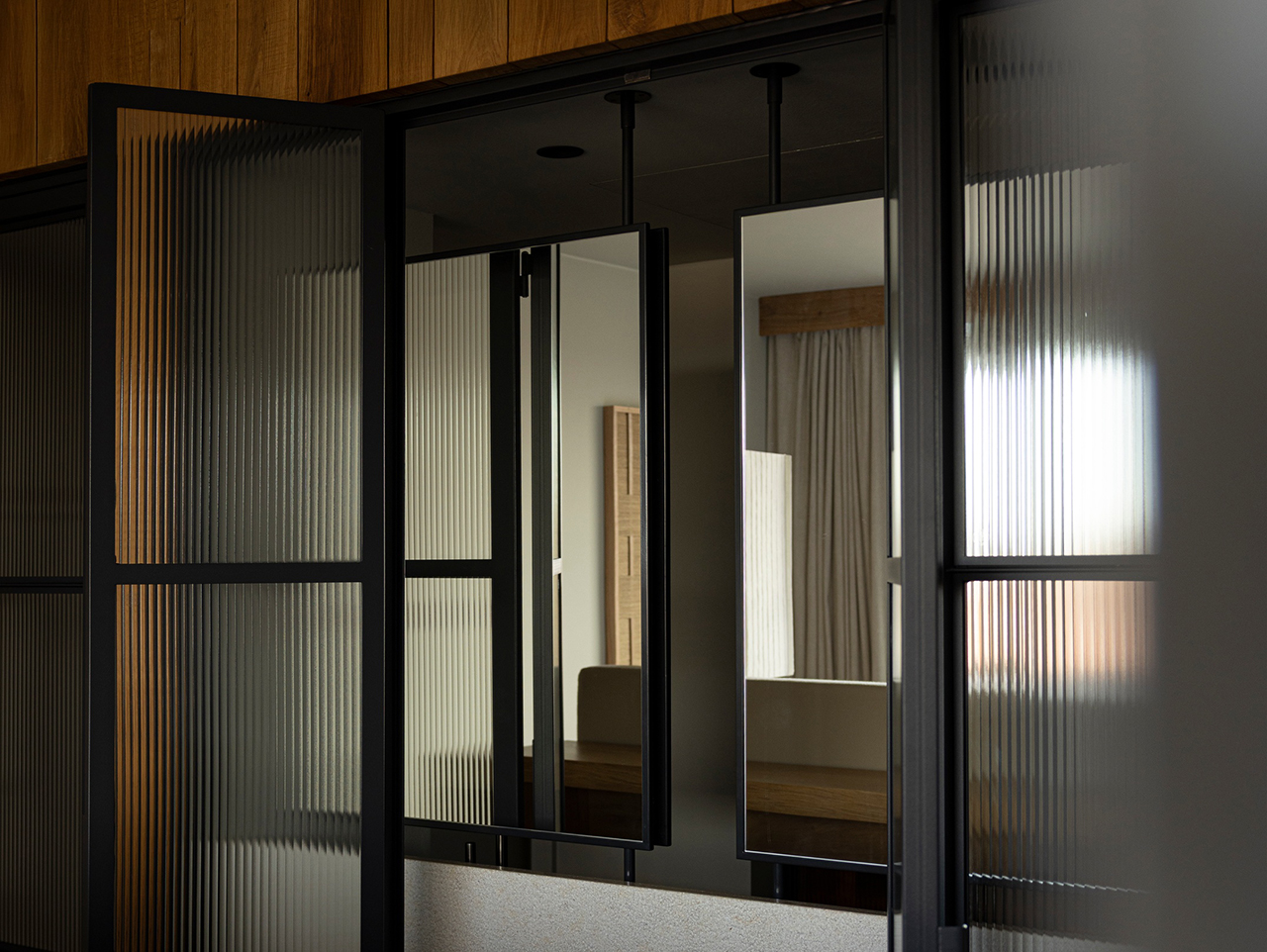
The core philosophy draws heavily from the 17th-century Katsura Imperial Villa in Kyoto. Like that historic masterpiece, this home uses structural honesty as its primary ornament. We see "gap shadow walls" and strategically placed mirrors that blur the boundaries of the rooms, creating an ethereal quality where light seems to emanate from the architecture itself rather than from fixtures.
The Timber Skeleton: A 2024 Wood Award Shortlist Masterpiece
One cannot discuss this home without addressing the extraordinary timber "skeleton" that now defines its interior. This isn't merely decorative paneling; it is a complex, load-bearing work of art that earned the project a prestigious spot on the 2024 Wood Award shortlist.
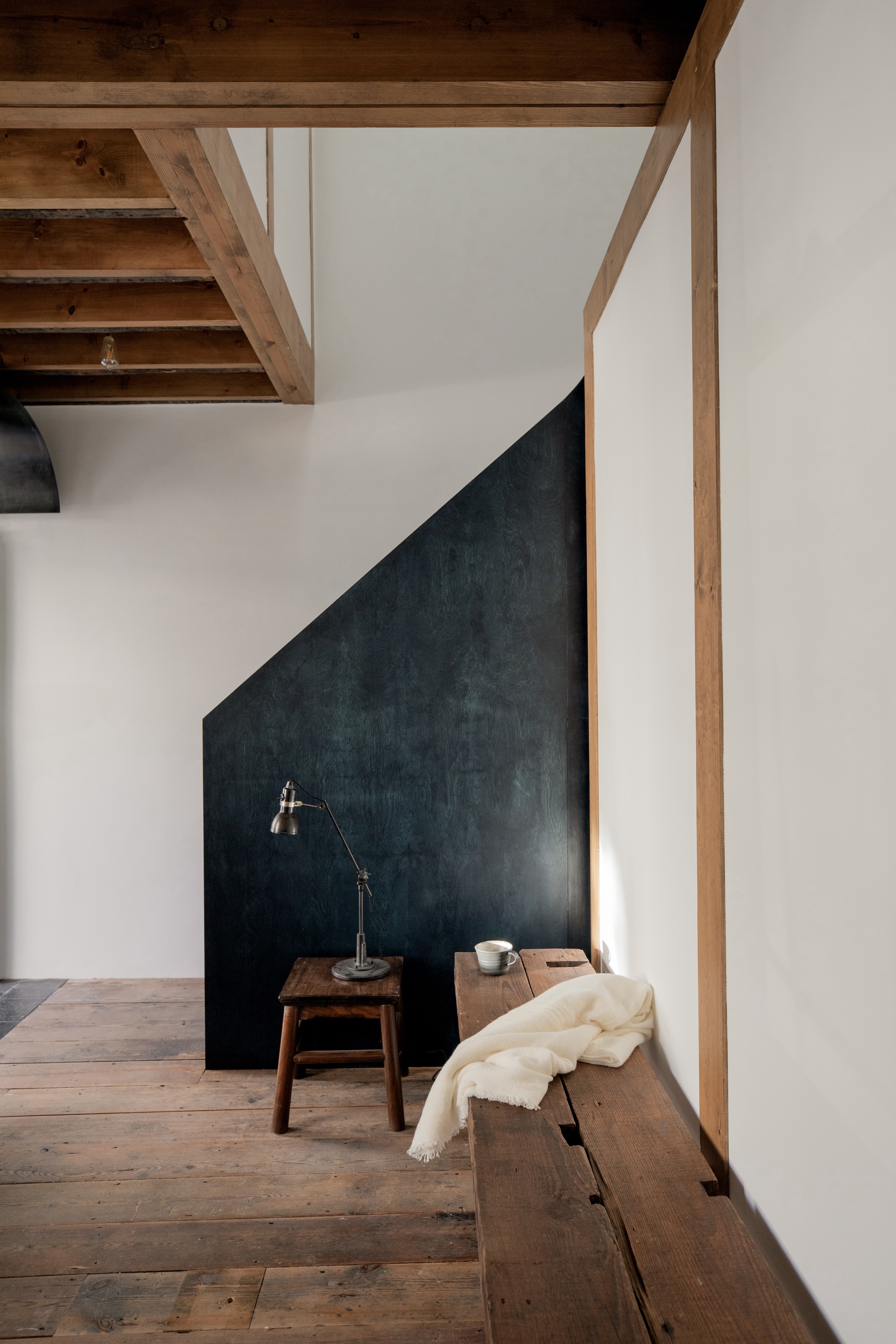
The design utilizes a "Trunk and Canopy" concept. A singular, gnarled timber post on the ground floor acts as a structural anchor, stemming upward into a dramatic plywood canopy that unfolds across the top-floor ceiling. It is a stunning marriage of heritage timber and modern plywood engineering.
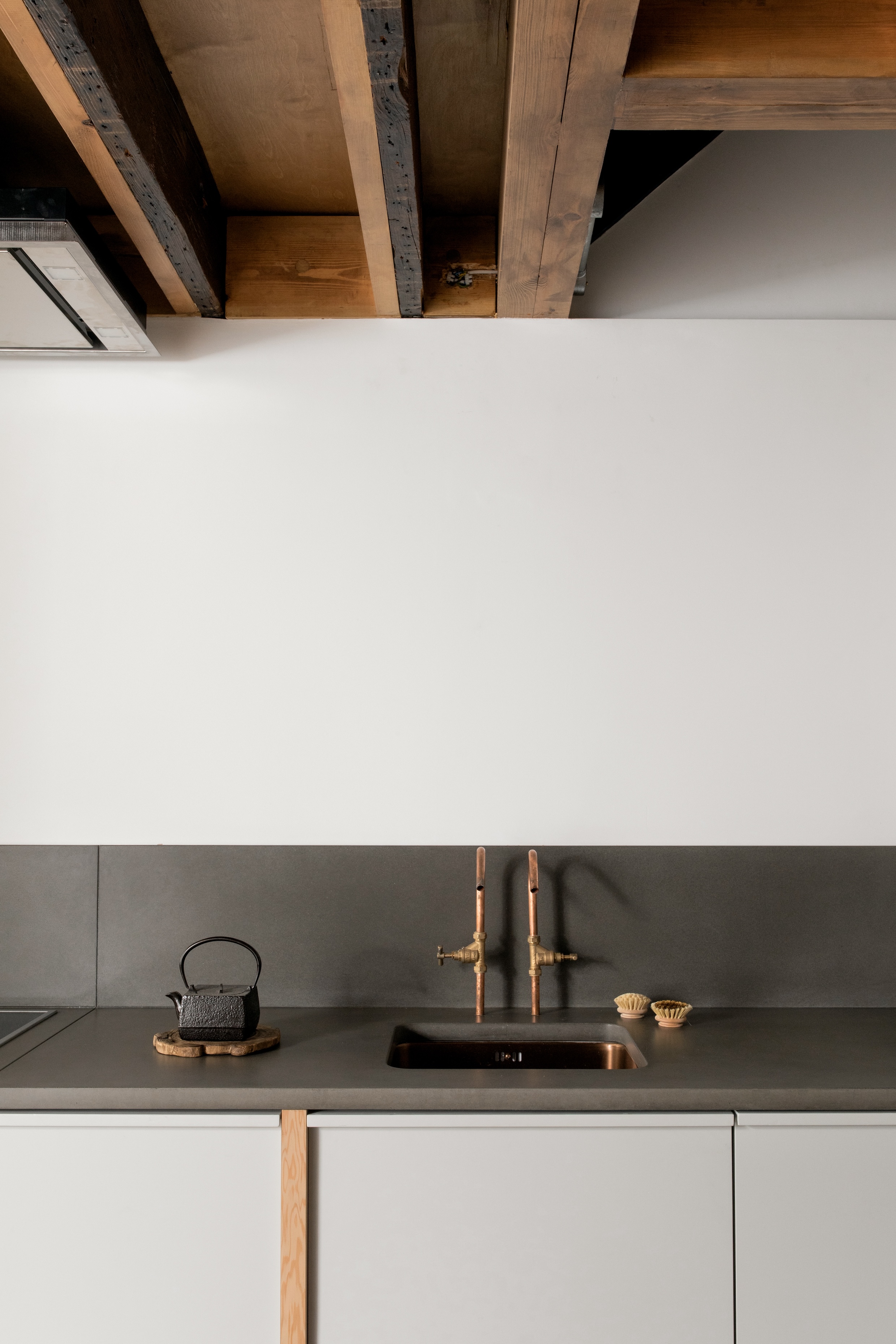
This focus on sustainable timber architecture isn't just an aesthetic choice; it’s a future-proofing strategy. As we move into 2026, wood has become the gold standard for luxury builds, valued for its carbon-sequestering properties and its ability to provide a "tactile character" that cold stone or plaster simply cannot replicate. The exposed copper piping and industrial-inflected faucets serve as the perfect "jewelry" against this organic backdrop.
The Return of 'Broken-Plan' Living
For the last decade, "open-concept" was the industry buzzword. However, we are seeing a significant shift. The 2026 home is moving toward "broken-plan" living—a layout that preserves the visual flow of an open space while using subtle dividers and level changes to create distinct functional zones.
In this Knightsbridge residence, the broken-plan approach restores a sense of intimacy that is often lost in cavernous open rooms.
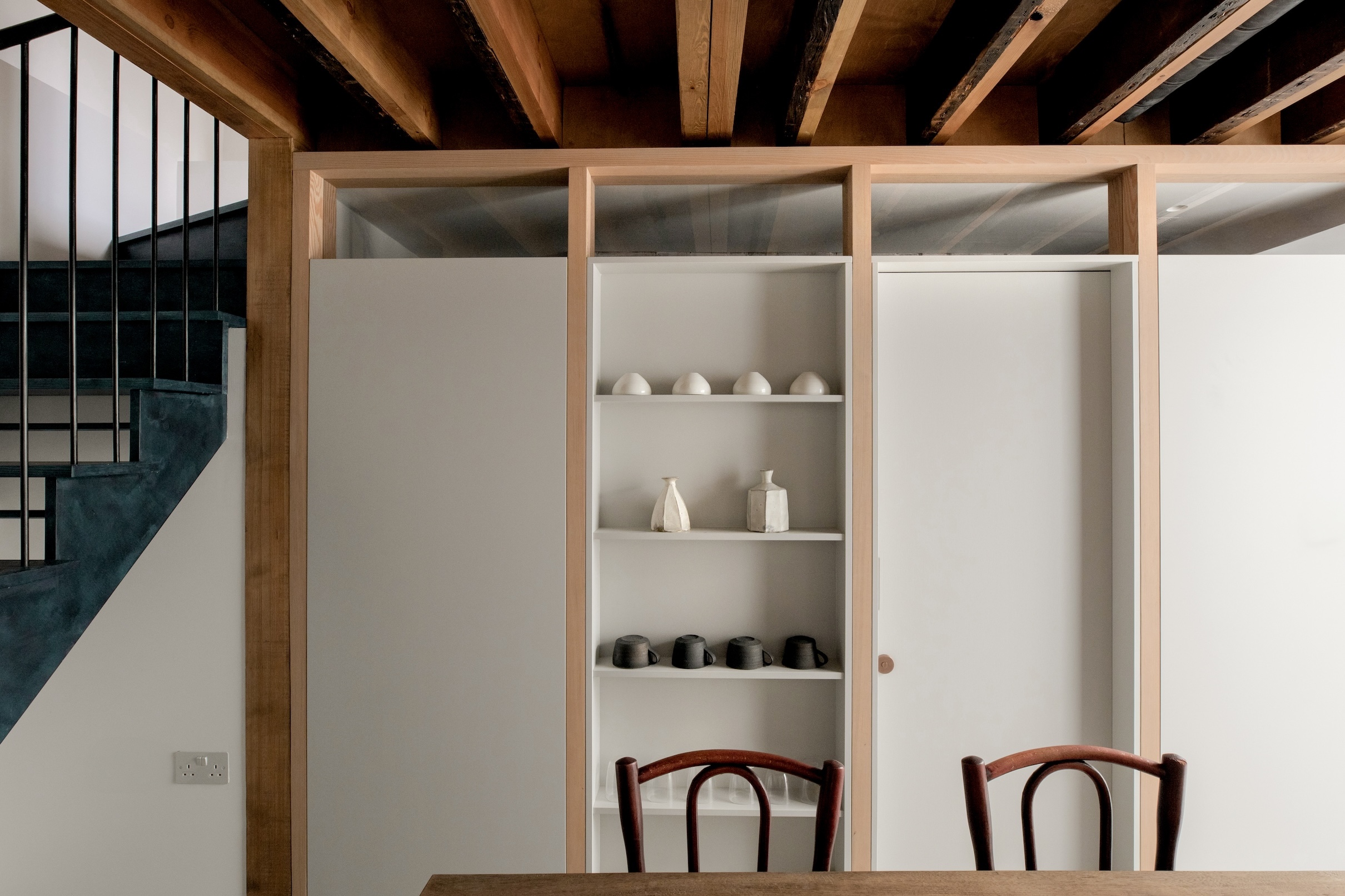
- Subtle Dividers: Instead of solid walls, the home uses built-in shelving and timber lattices to suggest boundaries.
- Level Changes: Slight shifts in floor height signal a transition from the social "public" zones to the quiet "private" nooks.
- Acoustic Intimacy: The use of soft timber and lime-based plasters helps dampen sound, ensuring that even in an open-plan environment, a conversation in the kitchen doesn't disrupt someone reading in the study.
Materiality and Textures: The Palette of Urban Serenity
In my years as an editor, I’ve found that true minimalism is never about the absence of things; it’s about the presence of the right things. This home eschews sterile, "gallery white" walls in favor of a rich, tactile palette.
- Limewash Walls: The chimney breasts are finished in soft limewash, providing a velvety texture that catches the afternoon sun.
- Aggregate Concrete: The lower floors utilize polished aggregate concrete, grounded and cooling underfoot.
- Reclaimed Wood: Every floorboard tells a story, grounding the new intervention in the history of the Victorian shell.
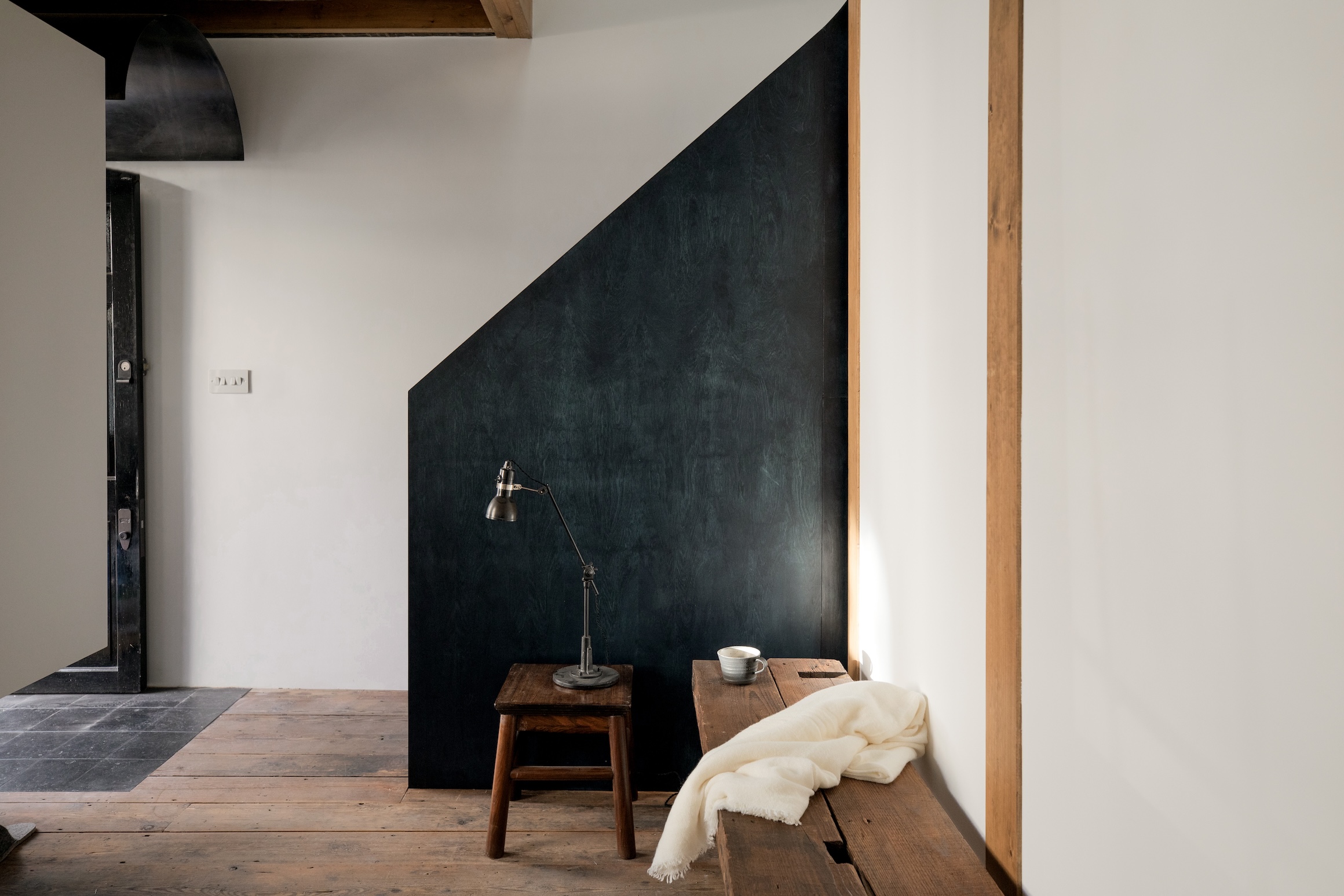
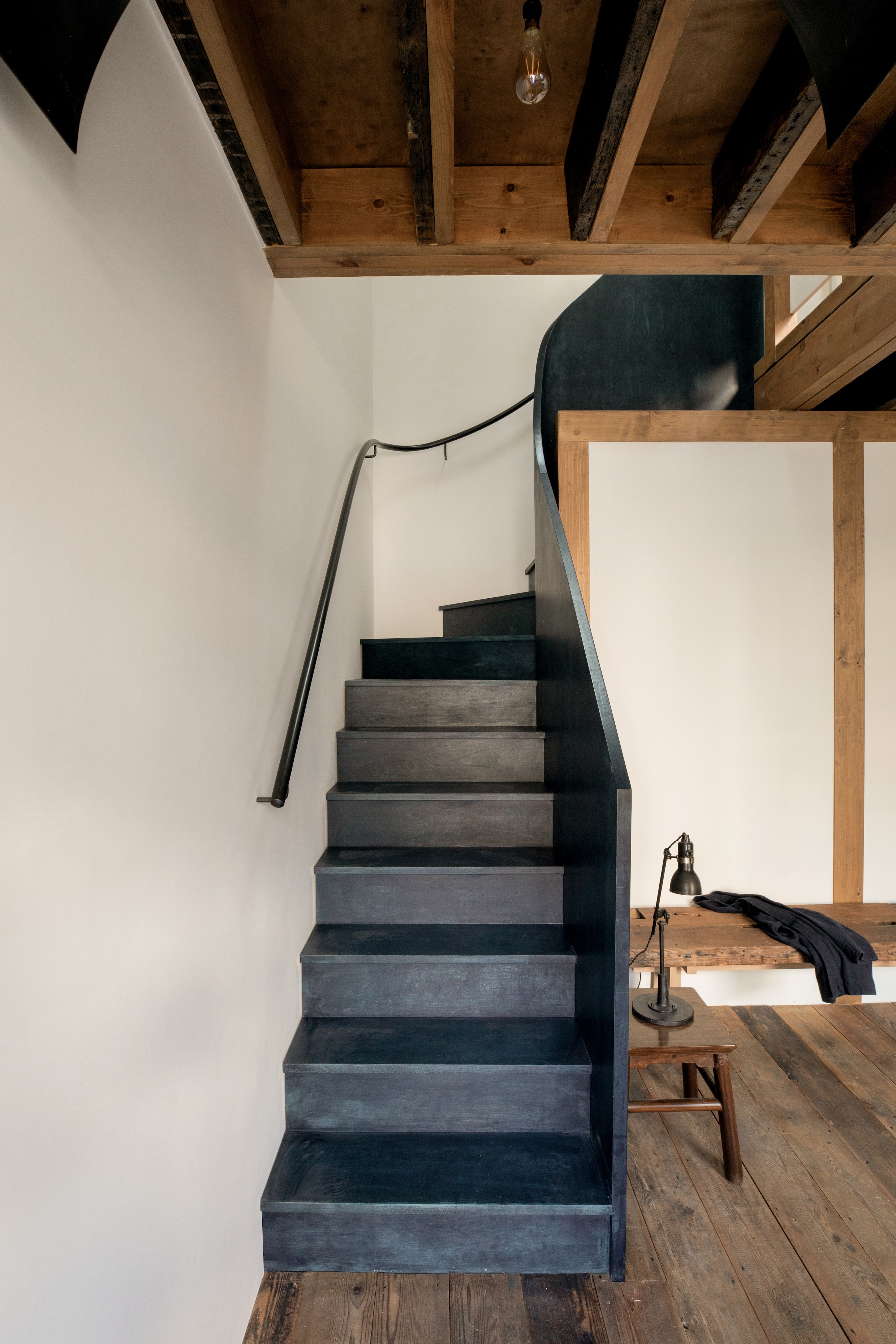
One of the most breathtaking features is the midnight blue sculptural staircase. To achieve the precision required for its hand-folded plywood form, the architects collaborated with specialist shipbuilders. The result is a staircase that appears to levitate, acting as a functional piece of art that anchors the home’s vertical axis.
The Wellness Sanctuary: Japanese Influence in the Primary Suite
The primary suite in this home is designed as a self-contained destination—a place to decompress after a long-haul flight. The bed is set on a low timber platform, following the Japanese tradition of being closer to the earth to encourage "visual silence."
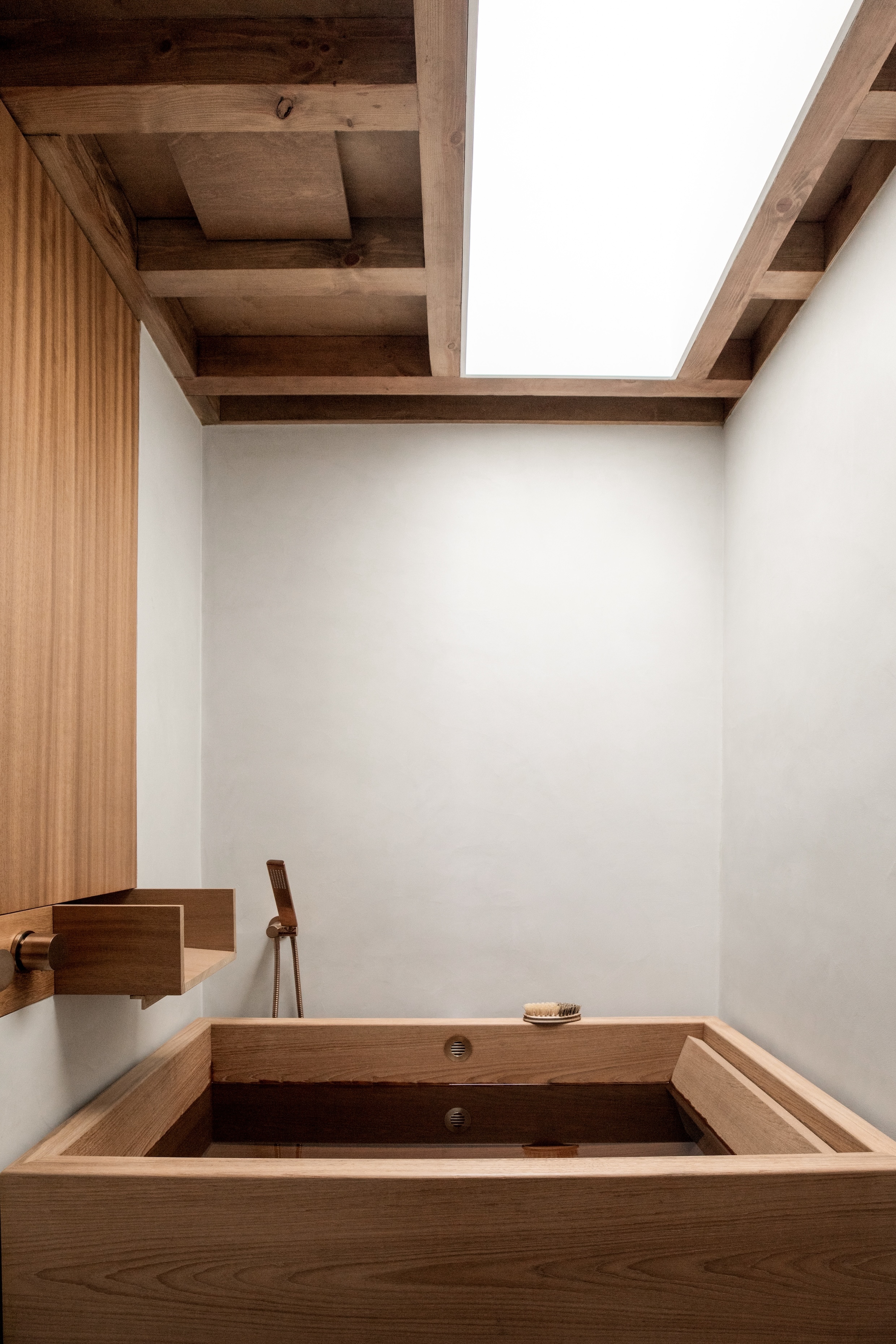
The bathroom, however, is the true piece de resistance. It features a custom-built Japanese soaking tub (ofuro), complete with a raw iroko wood spout. Positioned under a strategic skylight, it allows the inhabitant to bathe in natural light while remaining completely shielded from the prying eyes of neighboring London townhouses. This is biophilic design at its most sophisticated: using natural resins, light circulation, and organic materials to enhance psychological well-being.
Future-Proofing for 2026: Technology and Sustainability
How do you bring a Victorian structure into the mid-2020s without losing its soul? The answer lies in "Invisible Intelligence." In this home, the technology is felt but not seen.
- Climate & Lighting: Circadian lighting systems are integrated behind timber beams, mimicking the natural movement of the sun to regulate the owner’s sleep-wake cycle.
- Energy Efficiency: Despite its heritage status, the home features high-performance insulation and double-glazed wooden sash windows that maintain the historic aesthetic while drastically reducing the carbon footprint.
Ivy's Design Tip: When renovating a heritage property, don't try to hide the age. Use it as a frame for the new. The contrast between a 150-year-old brick wall and a precision-engineered plywood ceiling creates a tension that is the hallmark of modern luxury.
Conclusion: Why Intentional Design is the Ultimate Luxury
This Knightsbridge home redefines urban serenity by proving that the ultimate luxury isn't about "having more"—it’s about making room for what matters. By choosing a monastery-like austerity over traditional opulence, the owners have created a space that offers something far more valuable than a prestigious address: peace of mind.
As the real estate market continues to evolve toward 2026, we expect to see more of this "intentional design." Whether you are renovating a townhouse or styling a studio, the lessons here remain the same: strip away the noise, celebrate raw materials, and prioritize the light. In the end, the most beautiful homes aren't those that shout for attention, but those that allow us to finally hear ourselves think.
FAQ: Minimalist Urban Design
1. How can I achieve a 'monastery-like' feel in a standard apartment? Focus on "visual silence." This means decluttering until only the essentials remain and using a monochromatic palette of natural textures (linen, wood, stone) rather than bold colors. Focus on one "hero" material, like a reclaimed wood coffee table, to anchor the room.
2. Is a 'broken-plan' layout more expensive than an open-plan one? Not necessarily. While it requires more thoughtful planning, "soft divides" can be achieved through furniture placement, rugs, or even open shelving units rather than expensive structural changes.
3. Why is timber becoming so popular in luxury renovations? Beyond its sustainability, timber provides an organic warmth that balances the high-tech, digital nature of modern life. In 2026, the "tactile home" is a direct response to our increasingly screen-focused world.