Quick Facts: The Brutalist Office Revival
- Project Lead: Float Studio (NoMad Financial HQ) & SODA Studio (123 Victoria Street)
- Key Philosophy: "As Found"—preserving the raw, honest expression of building materials.
- Core Feature: 100% retention of original 1970s concrete waffle slabs.
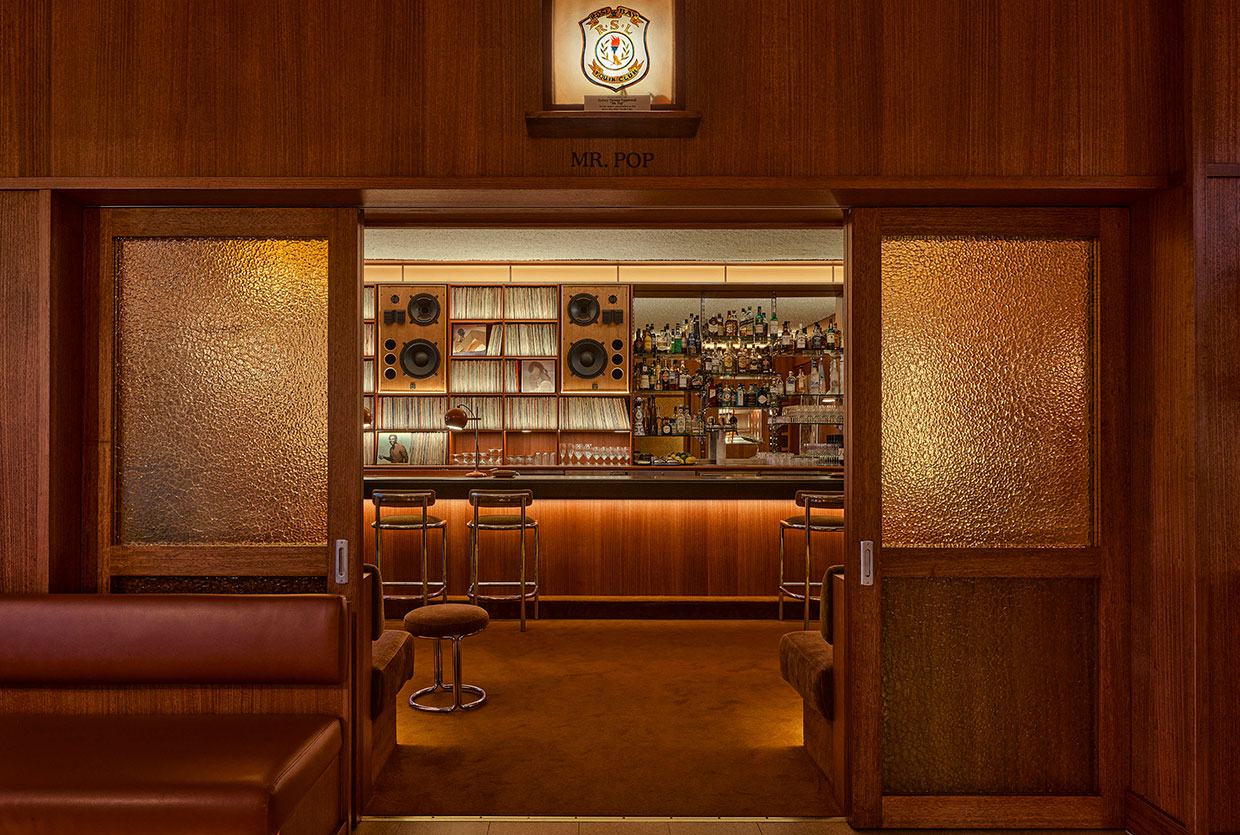
- Key Materials: Exposed concrete, eucalyptus wood, hand-fired tiles, and "butter-soft" leather.
- Primary Challenges: Thermal performance, waterproofing, and acoustic management in high-ceilinged spaces.
- Modern Innovation: Rhombus-shaped boardroom tables designed specifically for virtual meeting sightlines.
For decades, the architectural legacy of the 1970s was often dismissed as a period of "concrete monsters"—monolithic, imposing structures that felt more like fortresses than functional workspaces. However, as we move deeper into the 2020s, a profound shift is occurring. Design enthusiasts and commercial developers alike are rediscovering the tectonic beauty of Brutalism. Rather than tearing these structures down, the trend has shifted toward adaptive reuse. Modernizing 1970s Brutalist buildings for office use involves a delicate dance: embracing original features like concrete waffle slabs while upgrading thermal performance with internal insulation and integrating bespoke, sculptural furniture to soften the industrial aesthetic. This approach not only preserves architectural heritage but maintains commercial viability by utilizing the high thermal mass of concrete—a natural regulator of temperature that modern glass towers often lack.
Case Study: Float Studio's NoMad Masterpiece
The Cooper-Bregstein Building in New York’s NoMad district is a prime example of this "Concrete Renaissance." When a high-end financial firm approached Float Studio to design their headquarters, the mission was clear: create a space that felt both authoritative and intimate, without erasing the building's 1970s DNA. The project spans a massive 930 square metres, a footprint that could easily feel cavernous and cold if handled poorly.
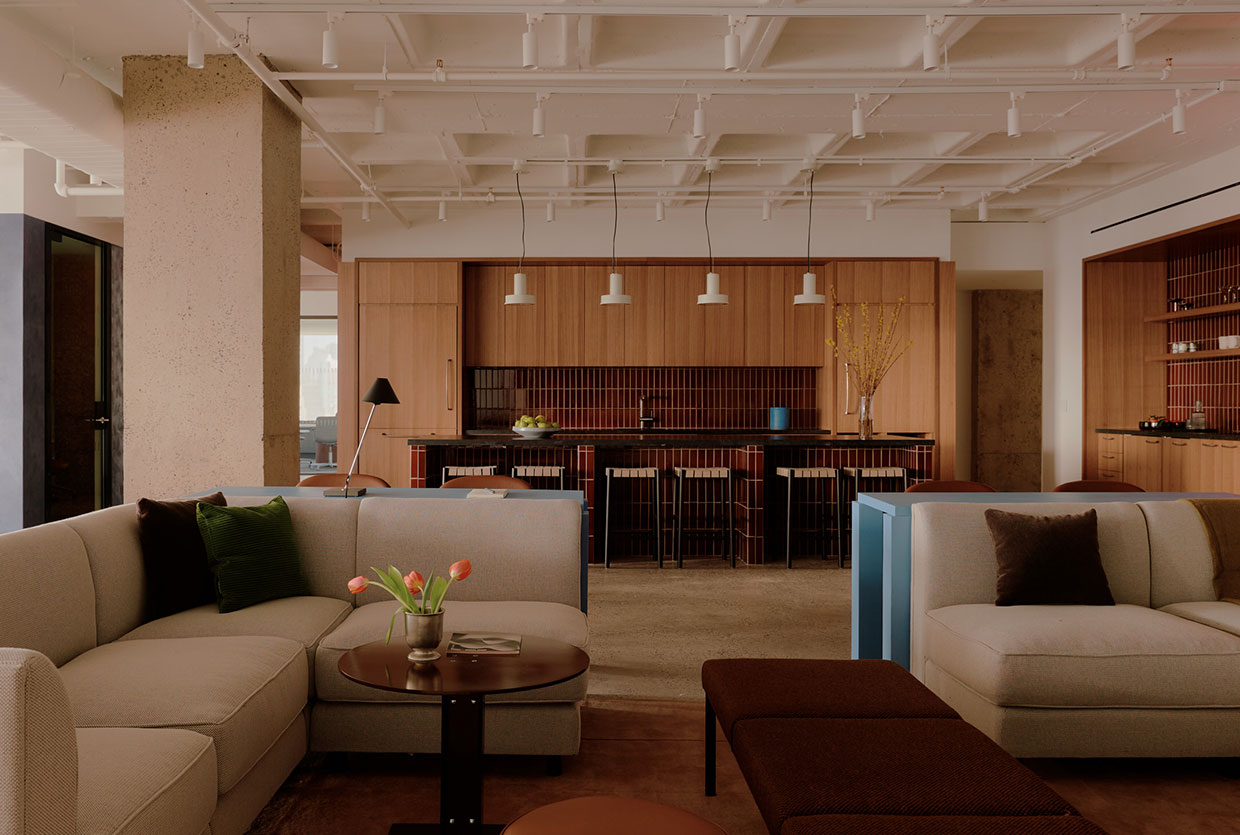
The hallmark of the renovation is the ceiling. Float Studio made the bold decision to integrate 100% of the original 1970s concrete waffle slab ceiling across the entire floor plate. By stripping away decades of drop ceilings and fluorescent lighting, they revealed a geometric masterpiece that provides both structural rhythm and an unexpected sense of height. This isn't just about aesthetics; the waffle slab’s deep pockets offer natural acoustic dampening, which Float Studio further enhanced with strategic lighting and soft furnishings.
The layout of the NoMad HQ is designed to facilitate both high-stakes financial trading and collaborative strategy. The transition from the elevator lobby to the main workspace is managed through a series of "compression and release" zones, a classic architectural technique that makes the grand scale of the office feel approachable.
Designing for Structural Honesty: The 'As Found' Approach
To design within a Brutalist shell, one must adopt what architects Alison and Peter Smithson called the "As Found" philosophy. This means accepting the building for what it is—raw, honest, and unapologetic. However, for a modern financial headquarters, "raw" must be balanced with "refined."
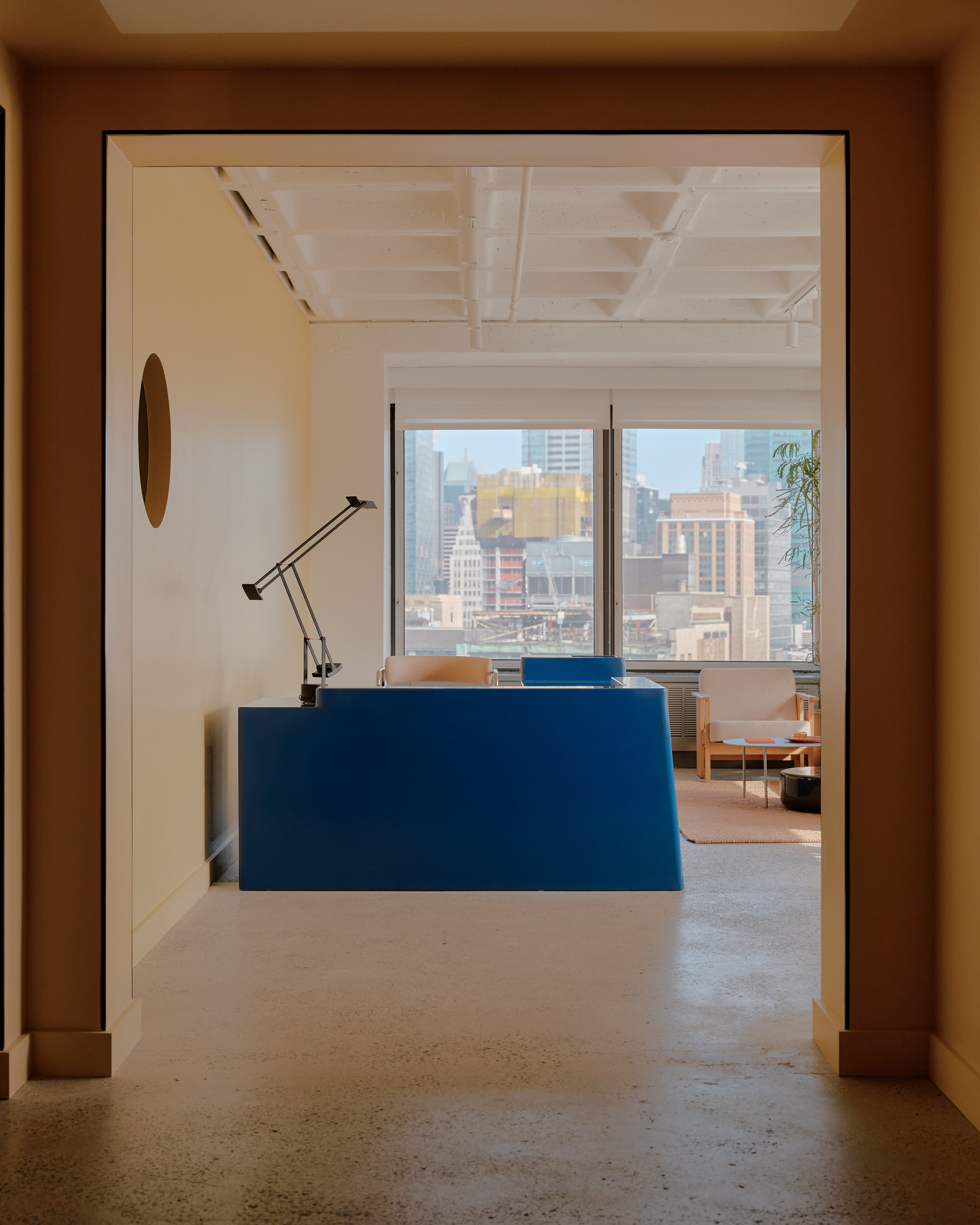
Float Studio achieved this through a masterclass in material contrast. To offset the gray, matte texture of the concrete, they introduced vibrant, sculptural elements. The reception area features a custom-built desk in a deep, electric blue. Inspired by the work of Italian designer Vittorio Introini, the desk's curved, fluid lines provide a stark visual counterpoint to the rigid grid of the ceiling above.
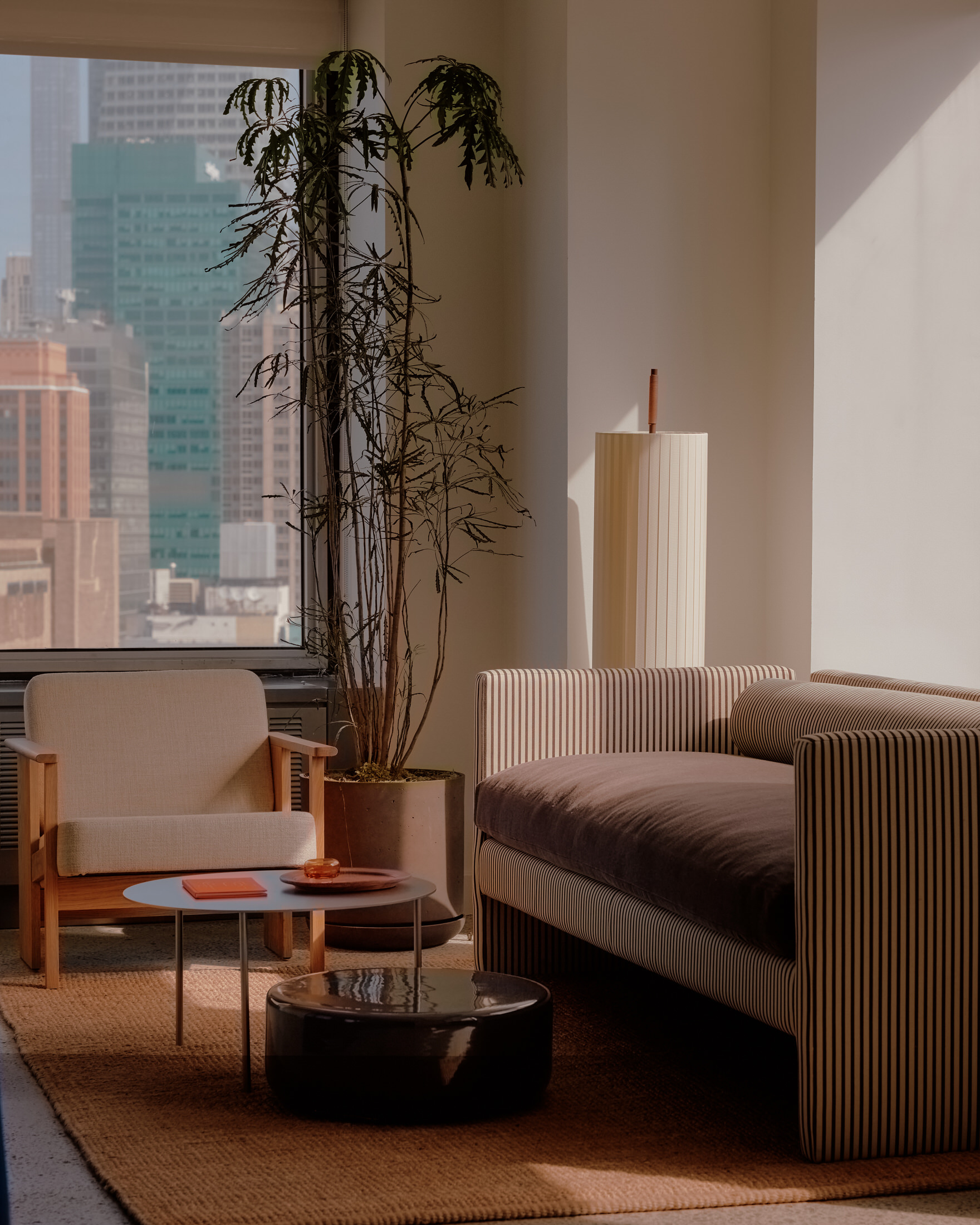
Ivy’s Style Tip: When working with concrete, don't try to hide it. Instead, treat it as a neutral canvas. Use "warm" materials—think rich woods or jewel-toned fabrics—to prevent the space from feeling like a basement. The goal is a dialogue between the "heavy" architecture and "light" interior interventions.
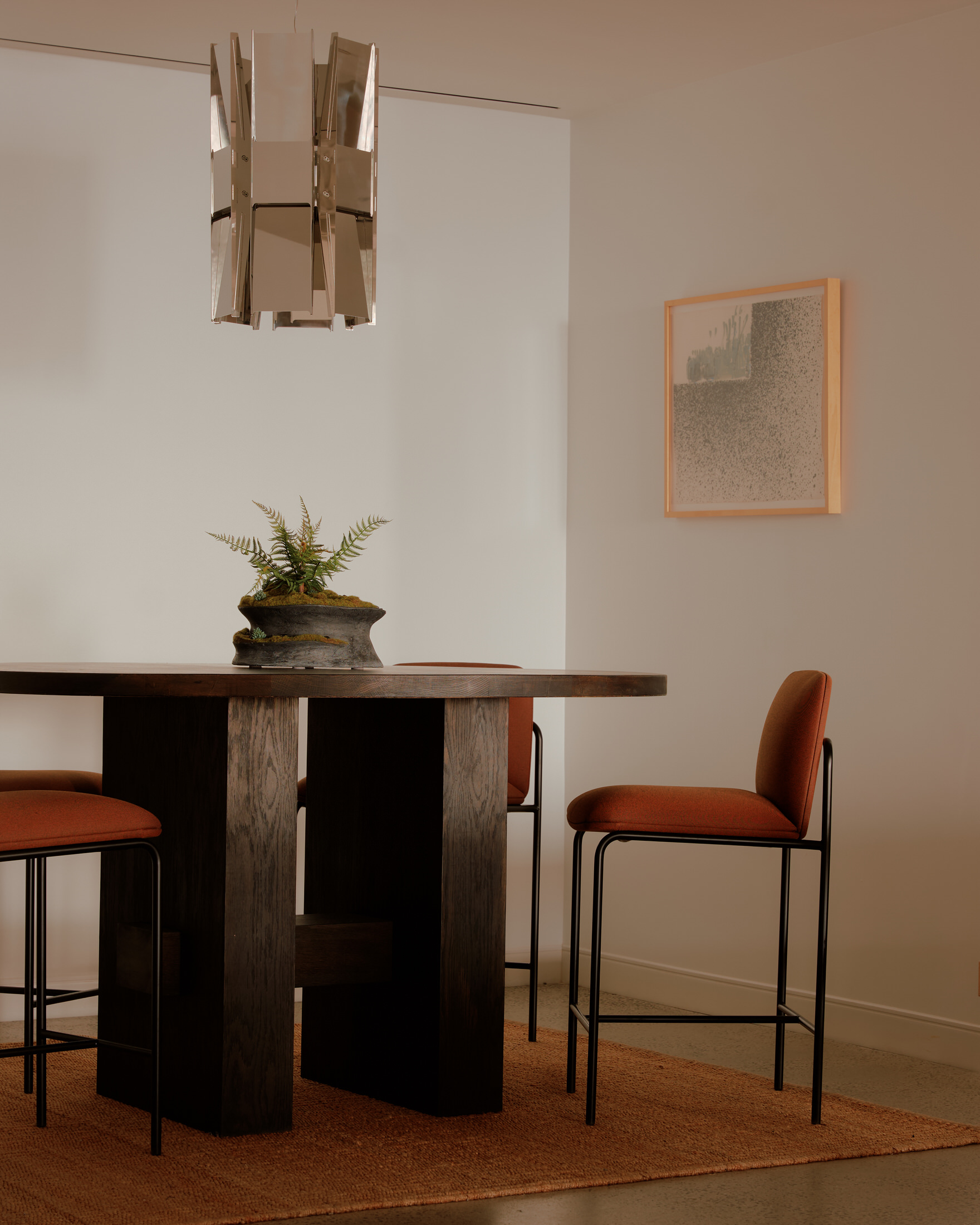
In addition to Introini, the furniture selection draws heavily from Brazilian Modernism, specifically the works of Sergio Rodrigues. The use of low-slung, "chunky" wooden seating mirrors the weight of the Brutalist structure while providing a tactile, organic warmth.
Engineering the Modern Workspace
The transformation of a 1970s relic isn't just a matter of "paint and polish." It requires significant engineering to meet 21st-century standards. Brutalist buildings are notorious for two things: poor thermal performance and historical waterproofing issues.
Modernization requires:
- Internal Insulation: To preserve the exterior concrete facade, high-performance internal insulation is often applied to perimeter walls, which are then finished with eucalyptus wood paneling or hand-fired tiles.
- Advanced Sealants: Using modern silane-siloxane sealants allows architects to protect the concrete from water ingress without changing its distinctive matte appearance.
- Integrated Tech: The most impressive feat in the NoMad office is the tech integration. In an era of hybrid work, the boardroom table was reimagined as a rhombus. This custom-engineered shape ensures that every person in the room—and those appearing on screen—has a clear sightline, eliminating the awkward "Brady Bunch" grid view of traditional rectangular tables.
Beyond NoMad: Successful Brutalist Renovations Worldwide
While Float Studio is making waves in New York, the trend is global. In London, SODA Studio tackled a similar challenge with the renovation of 123 Victoria Street. This 1970s block was once seen as a blight on the neighborhood, but through a clever adaptive reuse strategy, it has become one of the city's most sought-after flexible workspaces (MYO).
SODA Studio created 40,000 square feet of high-end workspace by maintaining the original structural grid while inserting "pod-like" meeting rooms and open-plan lounges. Like the NoMad project, the London renovation relied on the high thermal mass of the existing structure to improve energy efficiency, proving that sustainability and heritage preservation can go hand-in-hand.
| Feature | Float Studio (NoMad, NY) | SODA Studio (Victoria St, London) |
|---|---|---|
| Size | 930 sq m | 40,000 sq ft |
| Ceiling Treatment | Exposed Waffle Slab | Exposed Concrete Beam Grid |
| Primary Wood | Eucalyptus | Oak & Plywood |
| Key Furniture | Introini & Rodrigues | Custom Modular Pods |
| Vibe | Sleek Financial HQ | Flexible Creative Hub |
Practical Guide: Materials and Palettes for Brutalist Interiors
If you're inspired by the "Brutalist Makeover" but aren't designing a 10,000-square-foot office, you can still apply these principles to smaller studios or even home offices. The secret lies in the palette.
1. Contrast Strategies: The Soft vs. The Hard
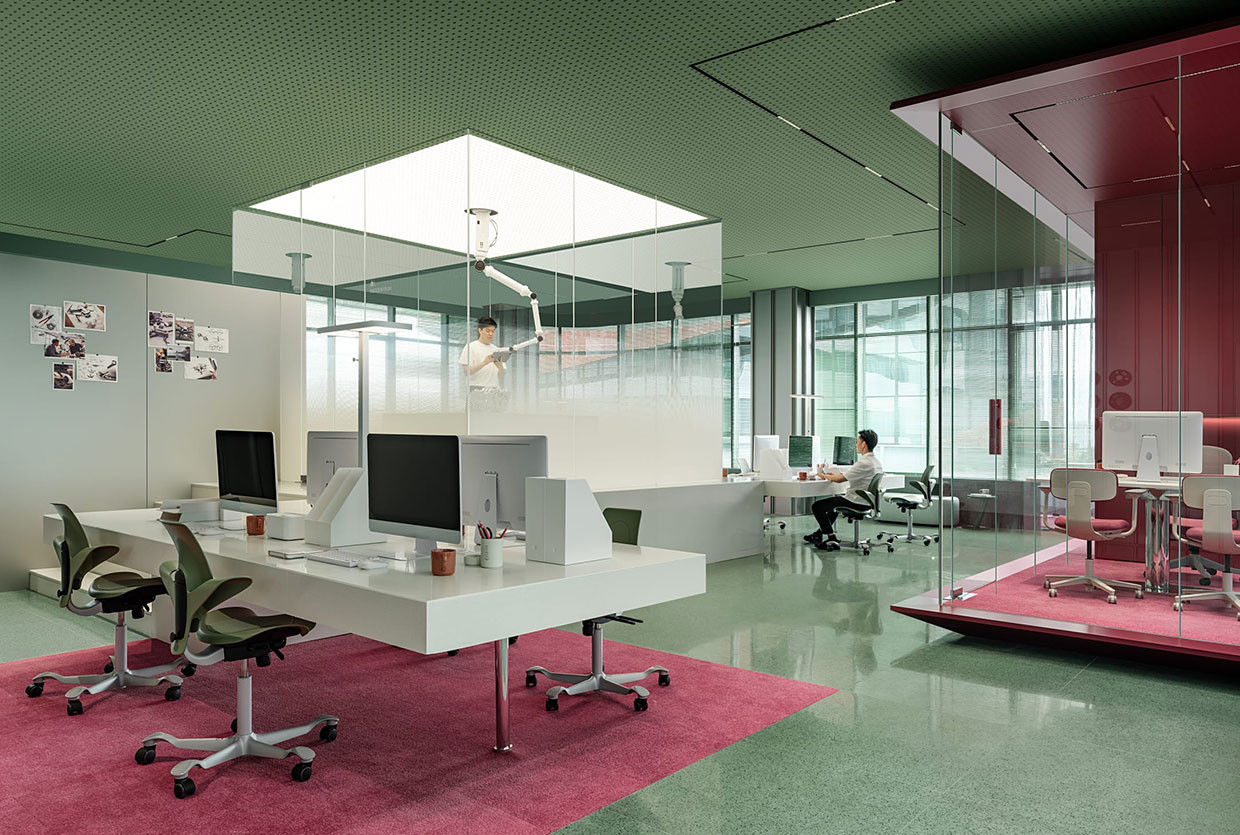
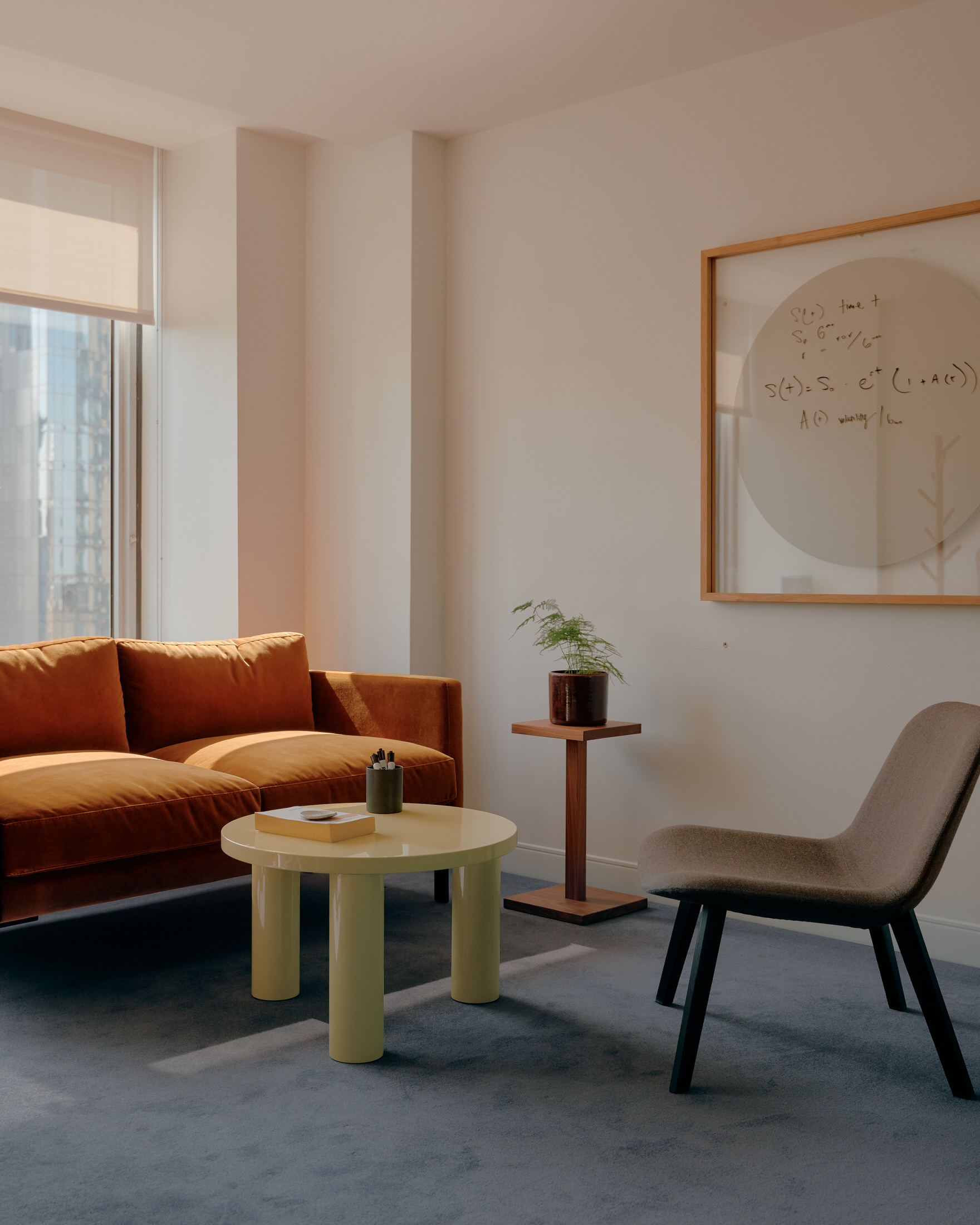
The most successful Brutalist interiors play with tension. Pair a cold, gray concrete wall with a vibrant purple-blue carpet or a "butter-soft" leather sofa. These textures speak to the senses in a way that glass and drywall cannot. The deep saturation of the carpet grounds the room, making the soaring concrete ceilings feel protective rather than overwhelming.
2. Wood Selections: Grounding the Industrial
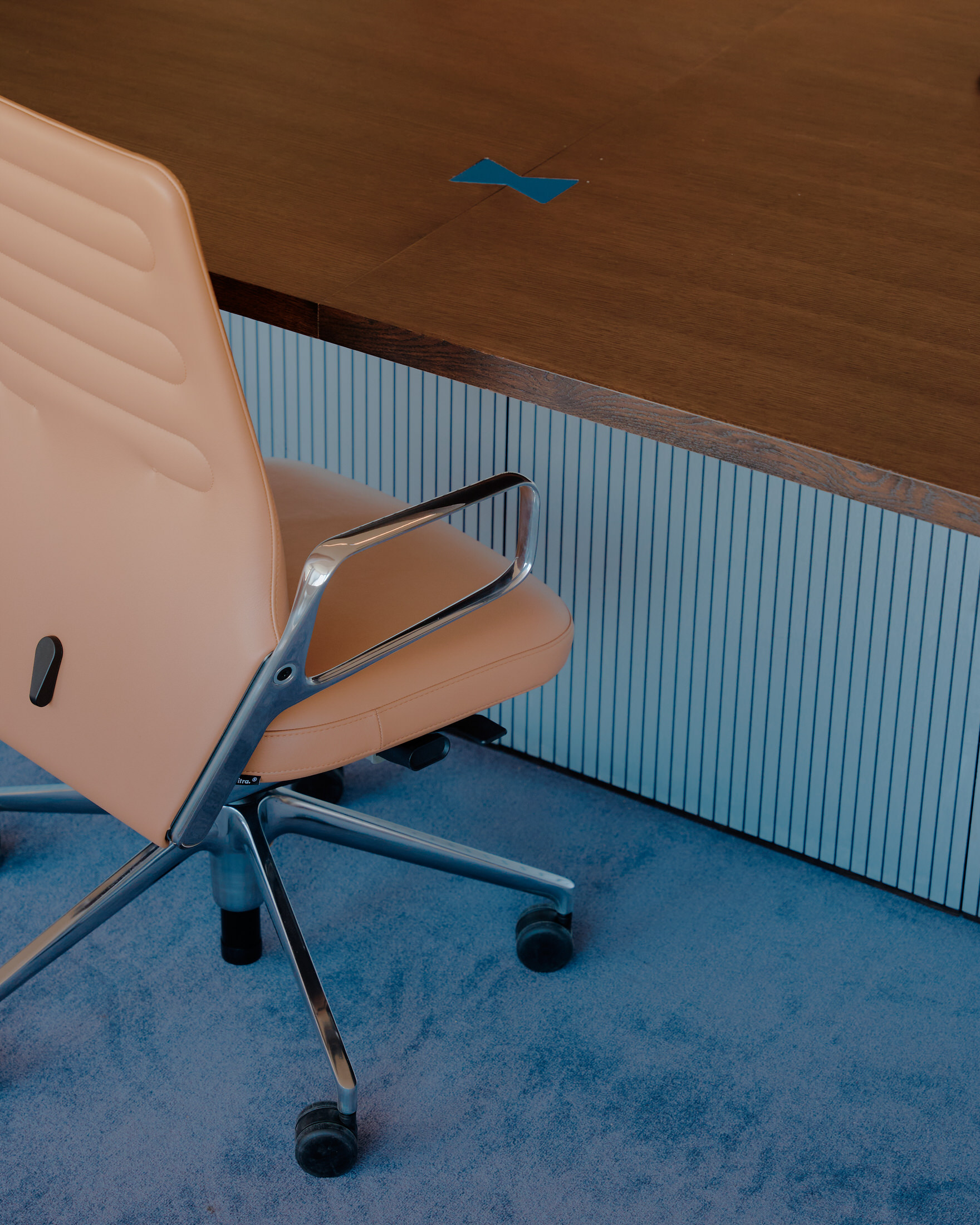
Wood is the essential bridge in any Brutalist renovation. Eucalyptus is a favorite for its tight grain and warm, slightly honeyed tone. It provides a natural rhythm when used as cabinetry or wall cladding, breaking up the monolithic expanses of concrete.
3. Lighting as Sculpture
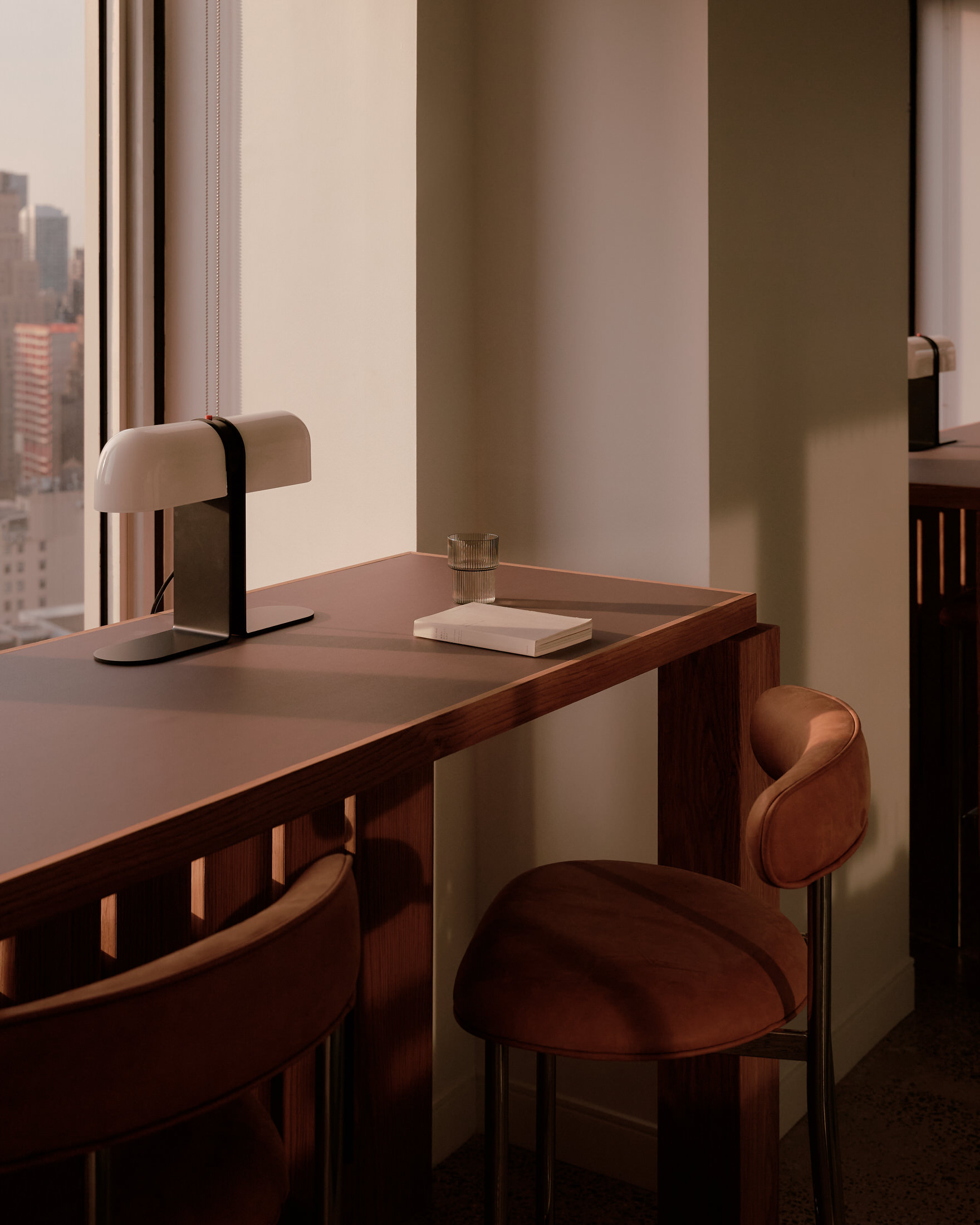
In a space with exposed concrete, lighting should never be an afterthought. Use sculptural pieces from brands like Santa & Cole or Artek. Oversized pendants can act as "anchors" in a room with waffle slab ceilings, drawing the eye down to eye level and creating intimate pools of light in an otherwise expansive industrial shell.
FAQ
Q: Is it expensive to renovate a Brutalist building? A: While the initial cost of stripping back layers and repairing concrete can be higher than a standard fit-out, the long-term value is significant. You are gaining a unique architectural identity that is impossible to replicate in new builds. Additionally, the thermal mass of the concrete can lead to lower HVAC costs over time.
Q: How do you handle acoustics in an office with all that concrete? A: Acoustics are the biggest challenge. Beyond the natural diffusers in a waffle slab, you should use high-pile rugs, upholstered wall panels (often hidden behind wood slats), and acoustic "clouds" or baffles that can be tucked into the ceiling pockets without obscuring the architecture.
Q: Can these principles work for a small residential space? A: Absolutely. The "As Found" philosophy is perfect for lofts or converted industrial spaces. Start by exposing one structural element (like a column or a section of the ceiling) and balance it with warm wood flooring and soft, textured fabrics like velvet or bouclé.
The transformation of 1970s office buildings from "relics" to "sleek HQs" is more than just a trend; it's a testament to the enduring power of honest materials. By embracing the weight of the past and infusing it with the technology and softness of the present, designers like Float Studio are showing us that even the most "brutal" buildings have a soul worth saving.