In the landscape of 2026 London property, the "gut renovation" has been superseded by something far more sophisticated: the deep retrofit. For homeowners looking at an Edwardian house renovation London represents a unique challenge where heritage preservation must collide with radical energy efficiency. We are moving away from the era of drafty corridors and heat-leaking single glazing toward a future of thermal mastery and low-carbon architecture. A high-performing sustainable home retrofit is no longer just about lowering bills; it is about future-proofing one of London’s most beloved architectural archetypes against an increasingly volatile climate and energy market.
Modernizing these period properties requires a departure from 20th-century construction habits. Instead of sealing a house in plastic and synthetic foams, the 2026 standard prioritizes "breathability"—ensuring that the original Edwardian brickwork can manage moisture while maintaining a constant, comfortable internal temperature. For a typical semi-detached house in boroughs like Muswell Hill or Dulwich, achieving this balance requires a strategic investment. Currently, a full Edwardian house renovation London at a mid-range to high-end specification typically costs between £140,000 and £280,000, depending on the complexity of the structural changes and the level of sustainable technology integrated.
The 2026 Friction Map: Planning, Costs, and Timelines
Navigating a low carbon architecture project in London requires a realistic understanding of local constraints. Whether you are dealing with the conservation officers of Richmond or the planning committees of Islington, the 2026 "friction map" remains dominated by three factors: heritage compliance, material lead times, and the 15-20% 'age premium' often associated with Edwardian structures.
Planning timelines in London currently fluctuate between 8 and 13 weeks. However, projects that utilize low carbon deep retrofit for period properties—such as those targeting PassivHaus EnerPHit standards—often receive a more favorable reception from forward-thinking councils. When budgeting, it is essential to anchor your expectations in the current market. Beyond the structural shell, the integration of heat pumps and high-performance glazing accounts for a significant portion of the upfront cost, though the ROI is reflected in the property's long-term valuation and drastically reduced carbon footprint.
| Project Scope | Estimated Cost (2026) | Typical London ROI |
|---|---|---|
| Basic Cosmetic Refresh | £60,000 - £90,000 | 5-8% |
| Ground Floor Extension (Standard) | £80,000 - £120,000 | 10% and 15% |
| Deep Retrofit & Modern Extension | £140,000 - £280,000 | 15-18% |
| Sustainable Loft Conversion | £75,000 - £110,000 | up to 21% |
Layer 1: Stabilize & Breathe—The Deep Retrofit Strategy
The core of any Edwardian house renovation London must be the "fabric first" approach. Traditional Edwardian homes were built to breathe; their lime-bonded bricks were designed to absorb and release moisture. Problems arise when modern renovations introduce non-permeable materials like gypsum plaster or cement renders, which trap moisture and lead to damp.
To execute a low carbon deep retrofit for period properties, we now turn to wood fiber insulation for internal wall retrofitting. Unlike synthetic PIR boards, wood fiber is hygroscopic, meaning it manages moisture in harmony with the original masonry. When paired with high-performance timber-framed triple glazing, the thermal efficiency of the home is transformed without compromising the character of the facade.
Material & Spec Breakdown:
- Internal Insulation: Steico Therm wood fiber boards -> High thermal mass and vapor permeability.
- Wall Finish: Solo Onecoat lime plaster -> Eliminates the need for multiple coats, reducing labor costs while ensuring breathable walls.
- Heating: Air-source heat pump installation -> Replaces traditional gas boilers to provide low-carbon, consistent warmth.
- Ventilation: Mechanical Ventilation with Heat Recovery (MVHR) -> Ensures fresh air circulation without losing heat, a staple of PassivHaus design.
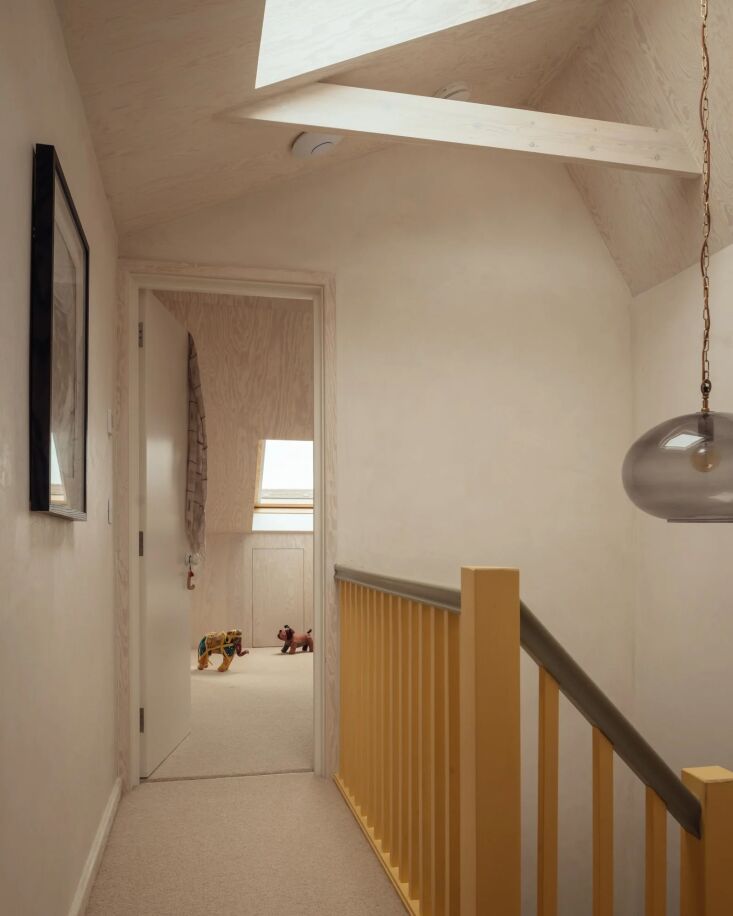
One of the most significant benefits of lime plaster in old house renovations is its ability to regulate humidity. In the damp London climate, this prevents the growth of mold and creates a significantly healthier indoor environment. By using natural materials, you aren't just saving energy; you are creating a home that feels fundamentally different—quieter, fresher, and more grounded.
Layer 2: The 'Twin Pitches' Extension—Spatial Flow & Natural Light
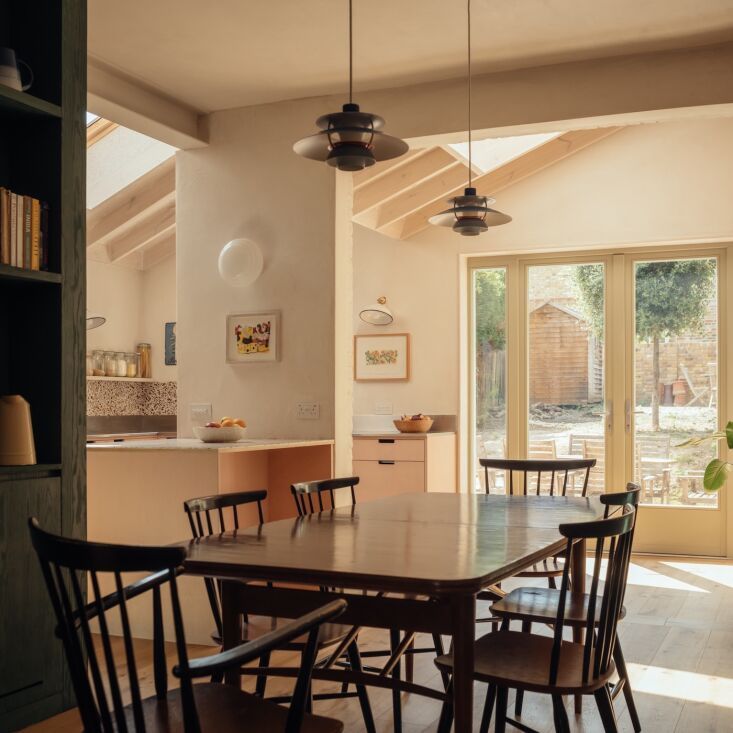
When considering how to modernize an Edwardian semi-detached house, the ground-floor extension is often the focal point. However, the "glass box" extensions of the 2010s have given way to more contextual, masonry-led designs. A prime example is the 'Twin Pitches' concept, which uses a sawtooth roofline to echo the original geometry of Edwardian outriggers while flooding the interior with north-facing light.
The environmental impact of an eco-friendly house extension starts from the ground up. Traditional concrete foundations are carbon-intensive and disruptive. In 2026, we are seeing a surge in eco-friendly alternatives to concrete foundations for extensions, specifically the use of screw piles. These large steel screws are driven deep into the ground, providing immediate structural integrity with a fraction of the carbon footprint of cement.
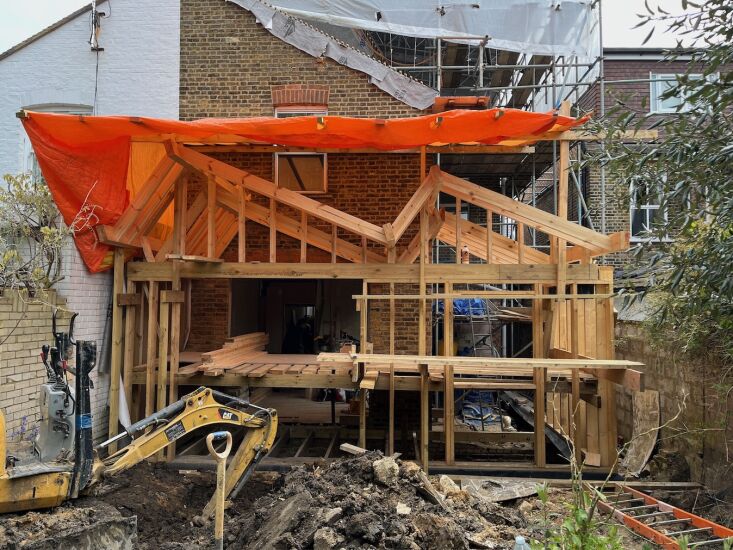
By using natural materials in a modern home extension, such as a timber frame clad in lime render or reclaimed brick, the new addition feels like a natural evolution of the original house. The sawtooth roofline serves a dual purpose: it creates a dramatic interior volume and provides the perfect pitch for integrated solar PV panels, further enhancing the home's energy independence.
Layer 3: The Expressive Interior—Plywood, Terrazzo, and Linseed
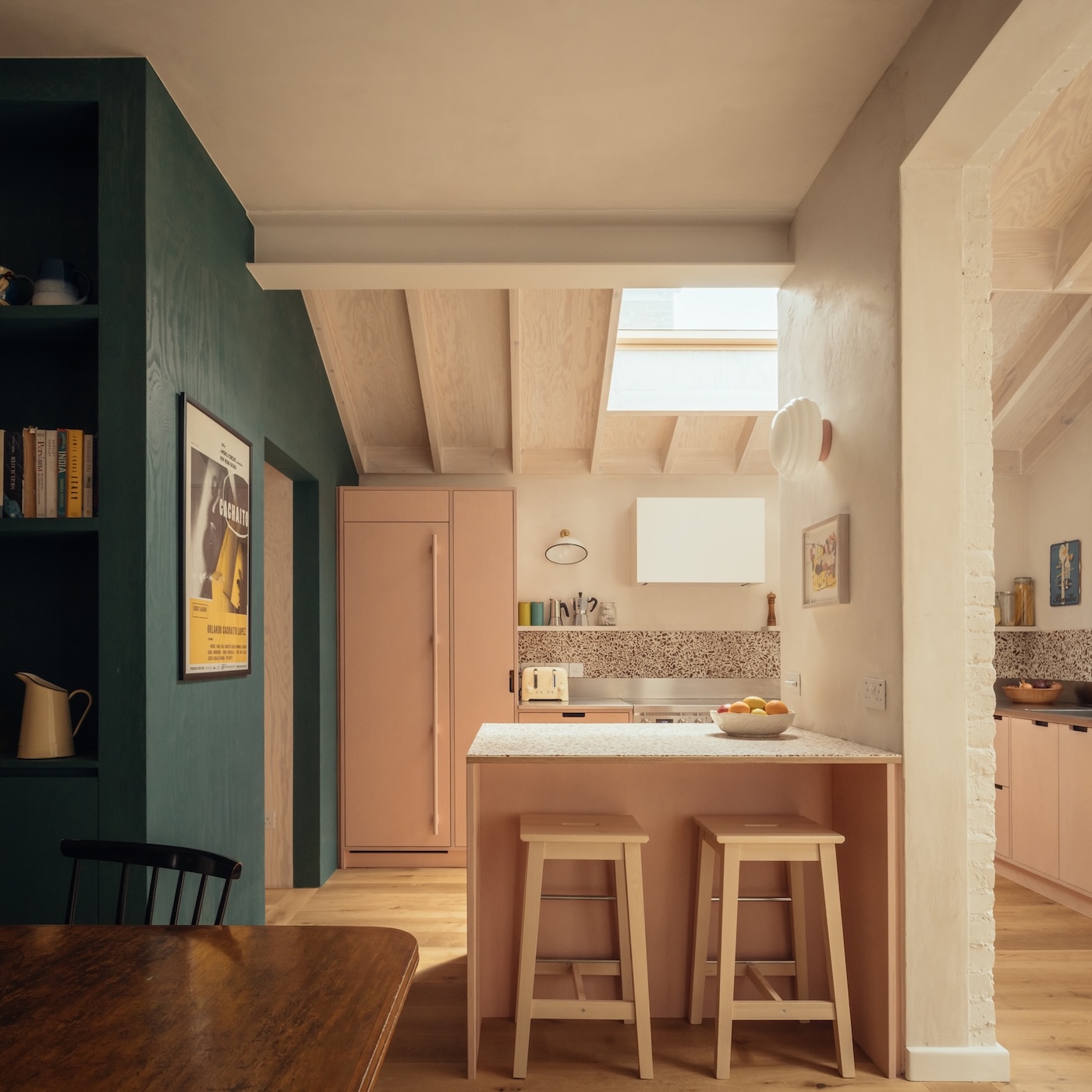
The final layer of a sustainable home retrofit is the interior finish. The 2026 aesthetic is "Heritage Maximalism" meets "Eco-Minimalism." We are seeing a move away from toxic VOC-heavy paints and towards traditional finishes like linseed oil paint, which is incredibly durable and allows wood to breathe.
Sustainable interior design now celebrates the raw beauty of natural materials. FSC-certified European pine plywood is frequently used for custom cabinetry and wall paneling, providing a warm, tactile alternative to MDF. To add a contemporary edge, designers are incorporating timber terrazzo—a beautiful, durable surface made from recycled wood chips and bio-based resins.
Key Interior Specifications:
- Cabinetry: FSC-certified Birch or Pine Plywood -> Renewable, durable, and carbon-sequestering.
- Floor Finishes: Reclaimed timber or cork -> Natural insulators that are soft underfoot.
- Surfaces: Timber terrazzo -> Utilizing waste streams to create high-end design features.
- Color Palette: Linseed-based pigments -> Deep, rich colors that don't off-gas harmful chemicals.
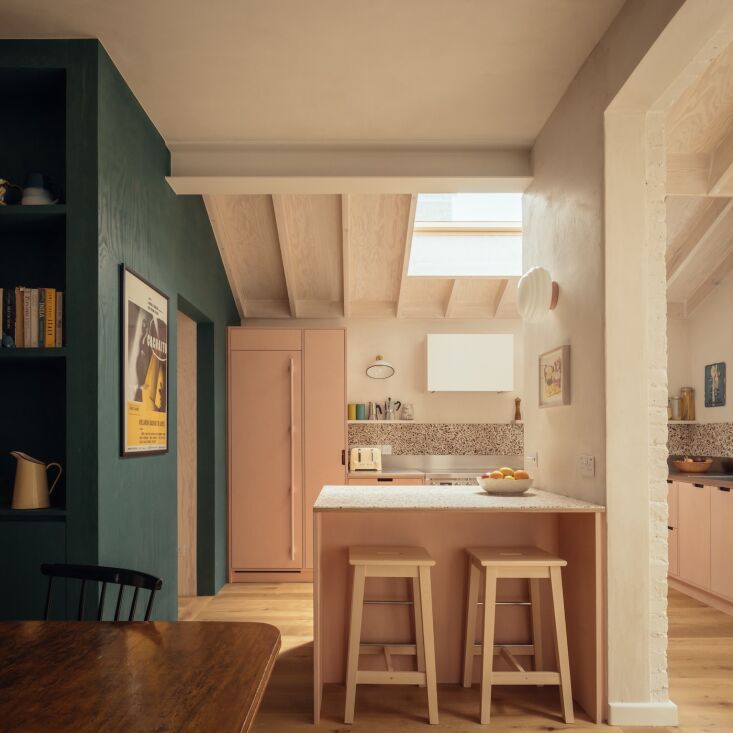
This approach to restoring original Edwardian features with modern sustainability ensures that the soul of the house remains intact. The tactile nature of these materials—the grain of the plywood, the cooling effect of lime render, the soft sheen of linseed oil—creates a sensory experience that standard modern renovations simply cannot match.
FAQ
Does an Edwardian renovation require full planning permission in London?
While many internal retrofits and small rear extensions fall under Permitted Development (PD), significant changes to the roofline or extensions in Conservation Areas usually require full planning permission. It is essential to consult with a RIBA architect early to navigate borough-specific restrictions, especially regarding heat pump placement and window replacements.
Can I install underfloor heating in an old Edwardian house?
Yes, but it is most effective when the floor is properly insulated first. In a deep retrofit, we often remove the old floorboards, excavate, and install a limecrete floor with integrated underfloor heating. This provides a consistent thermal mass that works perfectly with the lower flow temperatures of an air-source heat pump.
How much value does a sustainable retrofit add to a London home?
Beyond the immediate energy savings, a high-quality extension can add between 10% and 15% to your property's value. In high-demand areas like Muswell Hill or Richmond, a well-executed loft conversion can increase the market value by up to 21%. Increasingly, "Green Premiums" are also being seen as buyers prioritize homes with high EPC ratings and low operational costs.
Conclusion: The Long-Term Value of Low-Carbon Living
The journey of an Edwardian house renovation London is one of stewardship. By choosing a sustainable home retrofit, you are not just updating a building for your own comfort; you are preserving a piece of London’s history for the next century. The shift toward low carbon architecture is a response to the reality of the 2026 energy landscape, where efficiency is the ultimate luxury.
From the structural innovation of screw piles to the breathable beauty of lime plaster, every decision made in a deep retrofit contributes to a healthier, more resilient home. While the initial investment of £140,000 to £280,000 is significant, the dividends—both financial and environmental—are substantial. You gain a home that is thermally stable, architecturally significant, and fundamentally aligned with a low-carbon future. As we look toward the 2030s, these modernized Edwardian homes will stand as benchmarks for how we can honor the past while embracing the urgent necessities of the present.