Quick Facts
- Project Name: The Willow Play Cafe
- Location: Toronto Junction, Canada
- Concept: A sophisticated "third space" blending upscale hospitality with a STEM-based educational play environment.
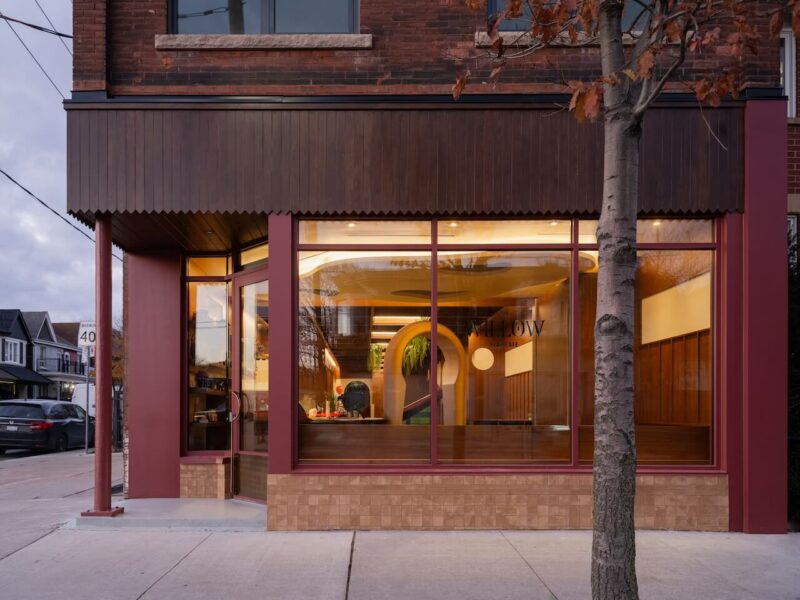
- Design Narrative: A transformation from a traditional neighborhood dive bar into an Alice in Wonderland-inspired "Wonderland."
- Key Design Features: Keyhole-shaped portals, interactive wood paneling, Reggio Emilia-inspired play zones, and day-to-night flexibility.
- Collaborators: Denizens of Design (Interior Design) and DS Studio (Architecture).
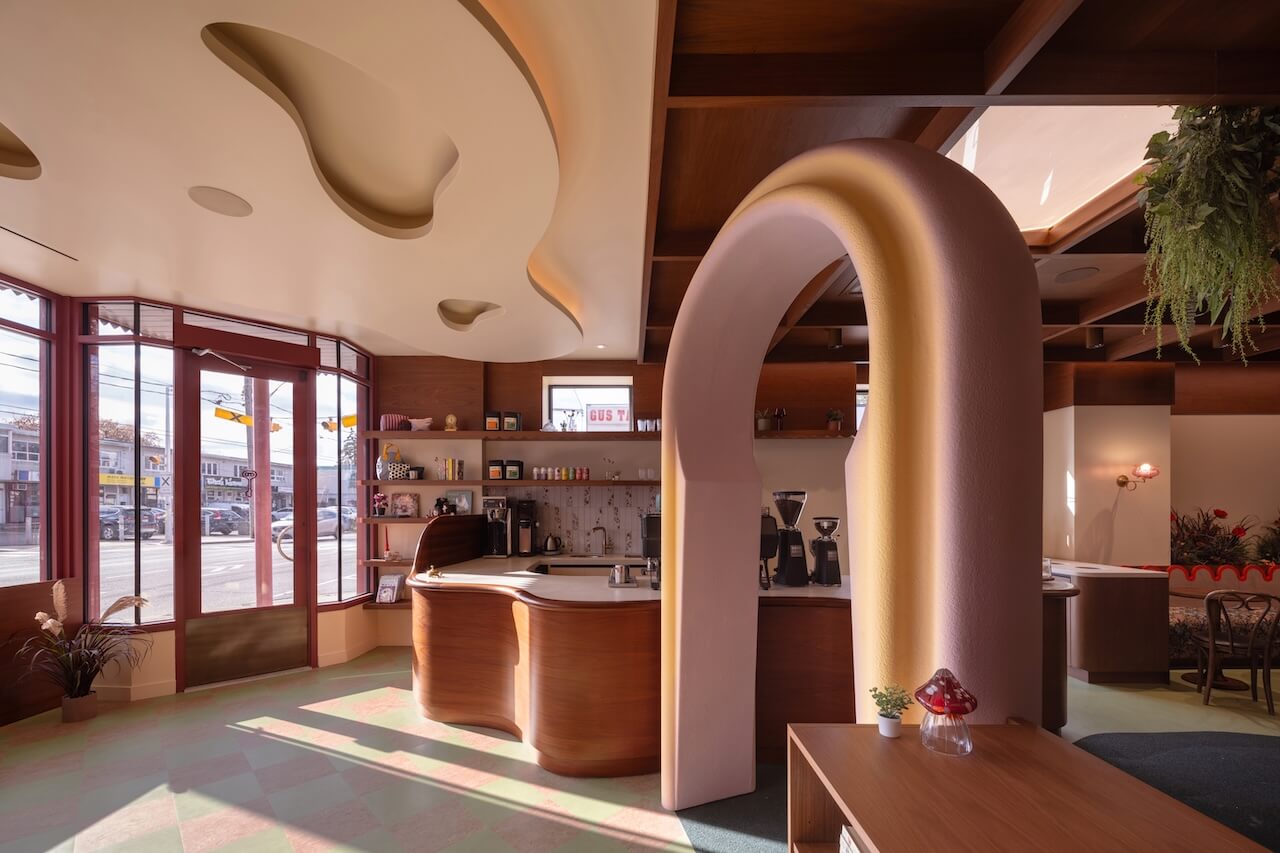
Imagine, for a moment, the classic Toronto "dive bar"—the dim lighting, the worn surfaces, the lingering scent of late nights. Now, strip it all away. In its place in the Toronto Junction, something extraordinary has emerged. The Willow Play Cafe is not just a neighborhood transformation; it is a masterclass in modern commercial interior design. It represents the rise of the "third space"—that vital social anchor between home and work—that acknowledges parents are people too. By balancing adult sophistication—featuring exquisite wood paneling and vintage bentwood chairs—with a whimsical, Alice in Wonderland-inspired play zone accessed through a literal keyhole portal, The Willow has redefined what a "kids' cafe" can be.
Recent data shows that design-led third spaces in urban centers like the Junction have seen a 45% increase in community engagement by offering these modular, family-centric environments. The Willow doesn't just invite families in; it invites them to stay, to learn, and to breathe.
Sophistication Meets Whimsy: The Front-of-House Design
As an editor, I often see "family-friendly" spaces fall into one of two traps: either they are primary-colored plastic nightmares that parents can’t wait to leave, or they are so minimalist and "precious" that children feel unwelcome. The Willow escapes both.
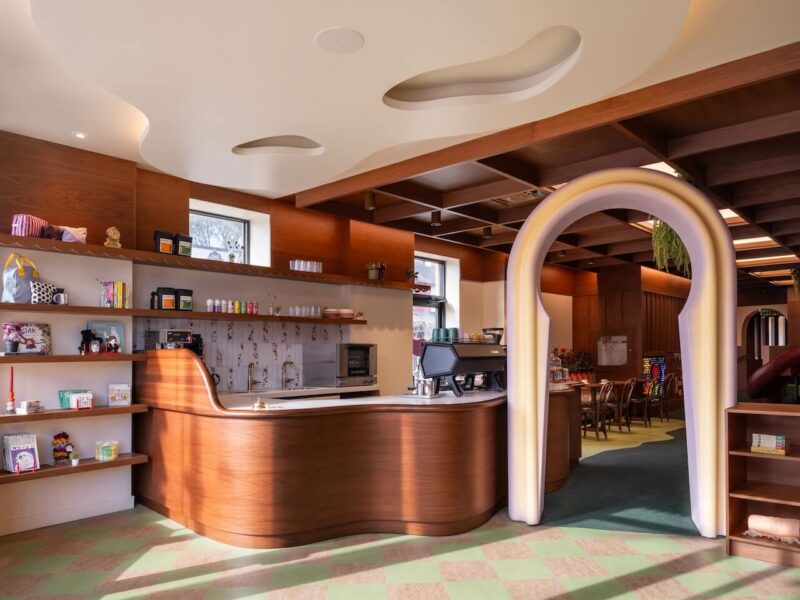
The front-of-house area is a sanctuary of "Grown-Up" aesthetics. The palette is a masterclass in neutrality—creams, soft beiges, and the natural honey-gold of white oak. The design team utilized coffered ceilings to provide architectural rhythm and acoustic dampening, while vintage bentwood chairs offer a nod to classic European cafe culture. This isn't just a place to watch your kids; it's a place to have a high-quality espresso, catch up on emails, or meet a friend in an environment that feels restorative.
The lighting here is intentional—soft and diffused, moving away from the harsh fluorescents common in commercial play centers. It creates a "hospitality-first" atmosphere where the design language speaks of quality and calm.
"The challenge was to create a space that felt truly bifurcated but harmonious. We wanted the transition to feel like a discovery, not a compromise." — Design Philosophy Note
Through the Keyhole: Entering the Play Zone
The true genius of The Willow lies in its transition. Rather than a standard door or a velvet rope, the architects at DS Studio and the team at Denizens of Design utilized the motif of the "keyhole." This architectural portal serves as a symbolic and literal transition point, signaling to both parent and child that they are crossing the threshold from the "rational" world of the cafe into the "wonderland" of play.
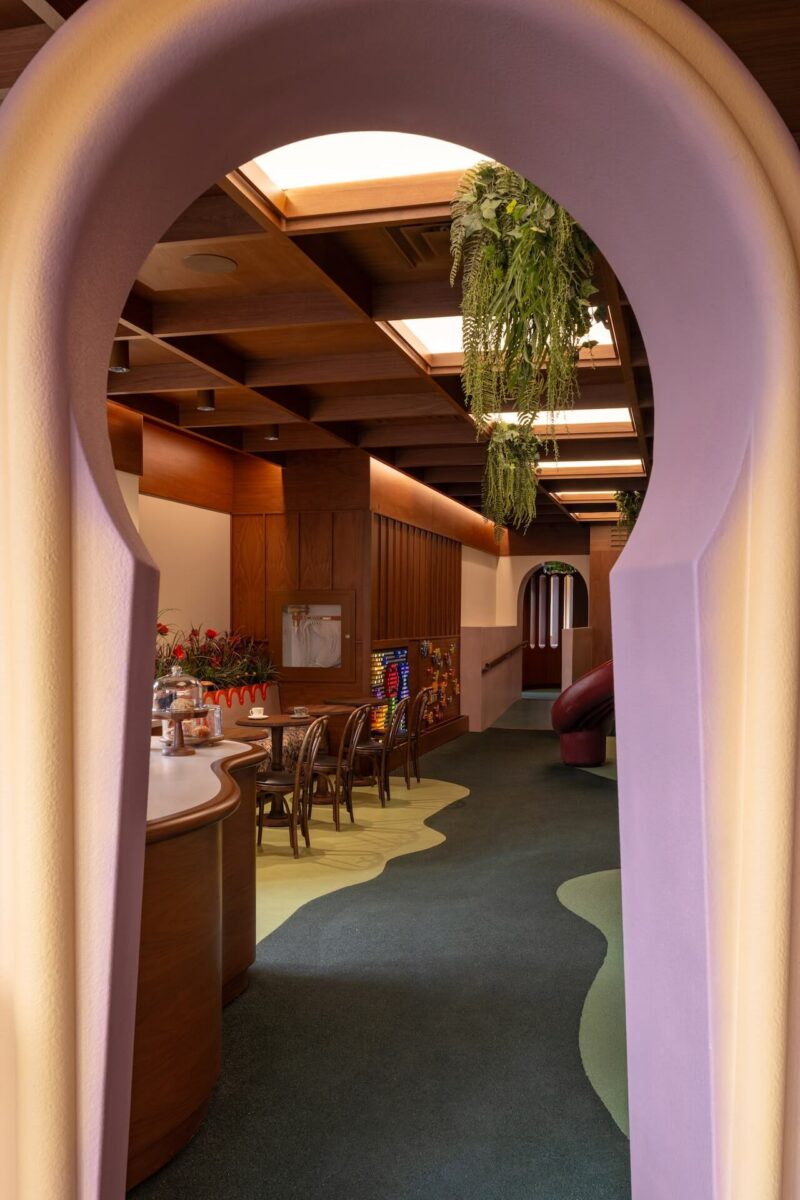
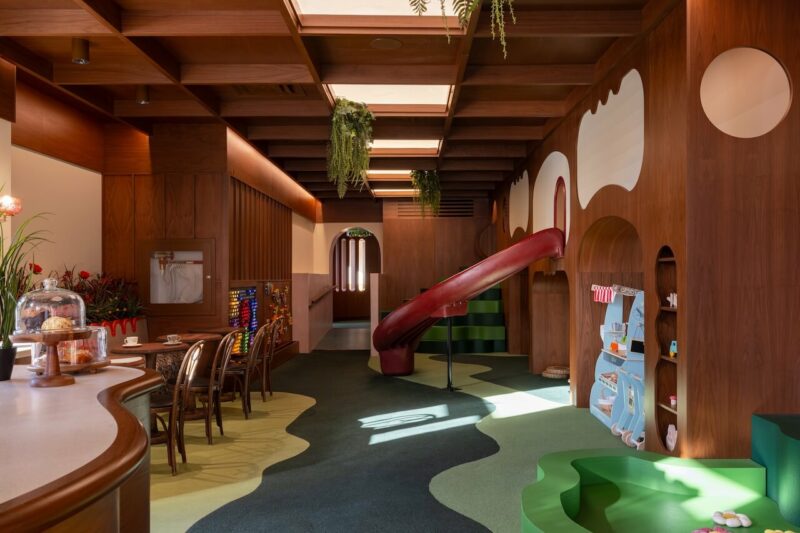
What I find most compelling as a design editor is how the cafe's infrastructure itself becomes the play equipment. In many ways, the millwork is the "hero" of this project. The wood paneling from the cafe doesn't just stop; it flows into the play area, morphing into steps, cubbies, and climbing structures.
- The Willow Tree Motif: A central structural element that mirrors the cafe’s namesake, providing a sense of verticality and organic form.
- Vibrant Accents: While the cafe is neutral, the play zone introduces pops of energy—cherry-red slides and sage-green foam steps.
- Tactile Variety: The use of felt, wood, and mesh creates a sensory-rich environment that encourages exploration without overwhelming the visual senses.
More Than Play: STEM and Reggio Emilia Integration
At the heart of The Willow’s design strategy is a commitment to the Reggio Emilia philosophy—an educational approach that views the environment as the "third teacher." Unlike traditional play centers that rely on passive entertainment, The Willow integrates STEM-based play directly into its architecture.
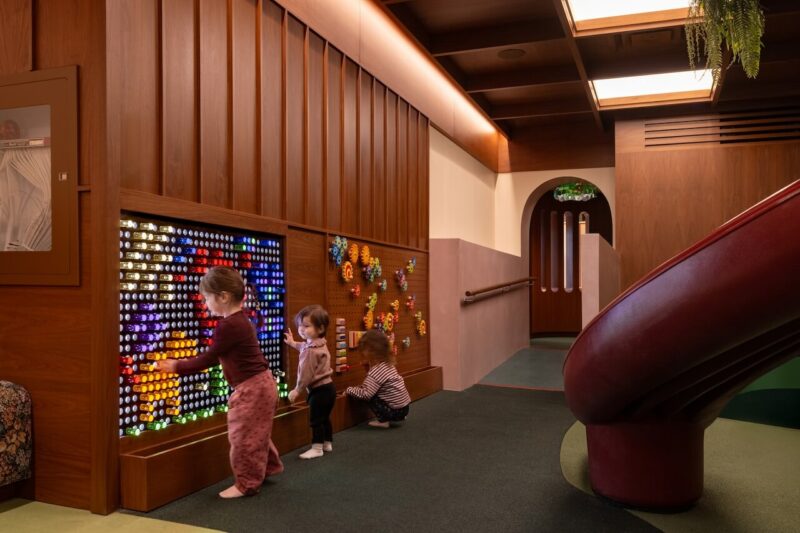
The walls are not just boundaries; they are interactive tools. The design features "Lite Brite" style peg walls and interactive wood paneling that foster fine motor skills and spatial reasoning. This intentionality has a measurable impact: incorporating educational philosophies into commercial interior design has been shown to increase average dwell time for families by over 60% compared to traditional cafes.
Design Principles in Practice:
- Curiosity-Led Architecture: No "correct" way to play; the space invites open-ended exploration.
- Safety Through Visibility: Use of "peek-a-boo" mesh cutouts allows parents to maintain a line of sight from the cafe while giving children a sense of independent adventure.
- Material Integrity: Eschewing cheap plastics for durable, natural materials that age gracefully and feel better to the touch.
2026 Design Trends in Action: Flexible and Immersive Layouts
Looking ahead to the design trends of 2026, The Willow is a pioneer in "Day-to-Night" flexibility and immersive biophilia. While it serves as a morning coffee spot and an afternoon educational hub, the modularity of the furniture and the sophisticated lighting allow the space to potentially host community workshops, parenting seminars, or evening events.
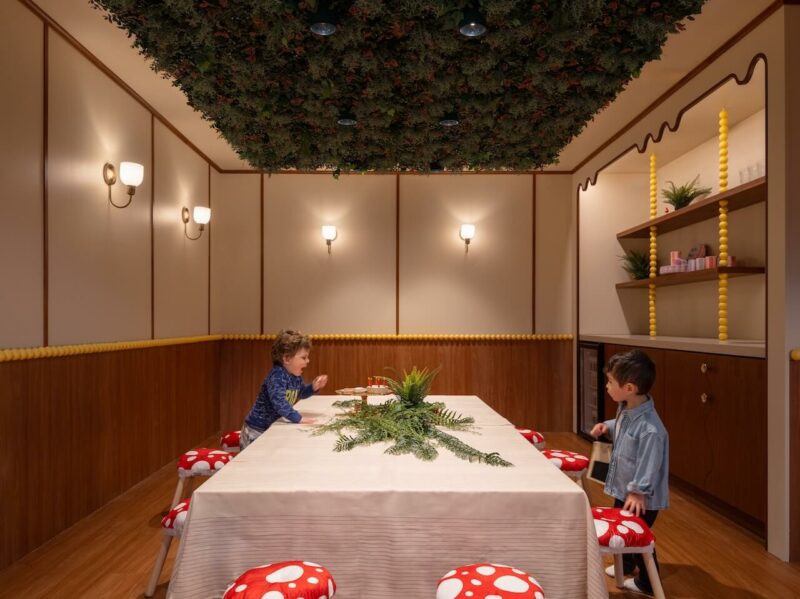
The use of biophilic elements—natural wood, organic shapes, and a palette inspired by the forest floor—speaks to our growing need for nature-integrated spaces in dense urban environments like the Toronto Junction. Even the smallest details, like mushroom-shaped stools, contribute to a sense of immersive storytelling.
| Feature | Traditional Play Cafe | The Willow Play Cafe |
|---|---|---|
| Materiality | Primary colored plastics & laminate | White oak, felt, rubber, and mesh |
| Parent Experience | Peripheral, often uncomfortable | Central, hospitality-focused |
| Educational Base | Passive entertainment | STEM & Reggio Emilia (The "Third Teacher") |
| Design Motif | Generic "Play" | Alice in Wonderland / The Keyhole |
| Lighting | Commercial Fluorescent | Layered architectural lighting |
Community Impact in the Toronto Junction
The transformation of a dive bar into a community beacon is a powerful narrative for the Toronto Junction. It showcases the resilience of local commercial spaces and the power of collaboration between firms like Denizens of Design and DS Studio.
By creating an environment that is "resilient, curious, and gentle," The Willow provides a blueprint for future urban developments. It proves that we don't have to sacrifice high-end design for family functionality. Instead, by using design as a bridge, we can create spaces where every member of the community—regardless of age—feels seen and inspired.
FAQ
What makes The Willow different from a standard indoor playground? The Willow is designed as a "third space" that prioritizes both the parent and child experience. It uses high-end hospitality design (wood millwork, designer furniture) alongside STEM-based educational features, whereas most playgrounds focus solely on child-centric, plastic-heavy environments.
Is The Willow suitable for all ages? While the play zone is specifically engineered for curious young minds (toddlers through early elementary), the front-of-house cafe is designed to be a sophisticated workspace and social hub for adults.
Who were the designers behind the transformation? The project was a collaboration between Denizens of Design, who handled the interior styling and conceptual direction, and DS Studio, who oversaw the architectural elements and structural transformation of the former dive bar space.
As an editor, I find The Willow to be a breath of fresh air. It reminds us that our environments shape our behavior; when we build with beauty and intention, we invite our community to act with the same grace. Whether you are there for the STEM-based play or the perfect latte, you are participating in a new era of Toronto design.