In the bustling urban fabric of Melbourne, where the morning coffee is less a habit and more a hallowed ritual, space is a precious commodity. For interior designers and business owners alike, the challenge is often how to distill a brand’s essence into a tiny footprint without losing the sense of hospitality. Dion Hall, a designer known for his tectonic precision and soulful restraint, has provided a masterclass in this with Standing Room Carlton.
Small cafe interior design is about more than aesthetics; it is a spatial instrument. Dion Hall’s Standing Room in Carlton demonstrates how minimalist cafe interior design can transform a compact volume through spatial rhythm and tactile materials like Victorian ash. By shedding the traditional expectations of cafe seating, Hall invites patrons into a choreographed experience that celebrates the very act of the order.
Quick Facts
- Location: Grattan Street, Carlton, Melbourne.
- Lead Designer: Dion Hall.
- Core Material Palette: Victorian ash, Brushbox, and industrial fiberglass.
- Service Model: Standing-only service to prioritize the coffee ritual.
- Spatial Highlight: Sculptural vertical poles and an L-shaped plan.
Minimalist small cafe interior design focuses on spatial rhythm and high-quality materials to maximize compact volumes. Key elements include bespoke joinery, such as rotational shelving and sculptural vertical poles, which provide functionality without visual clutter. Using a restrained palette of tactile materials like Victorian ash and industrial fiberglass creates a warm, sensory environment that maintains structural clarity within a limited floor plan.
Spatial Rhythm: The L-Shaped Floor Plan Strategy
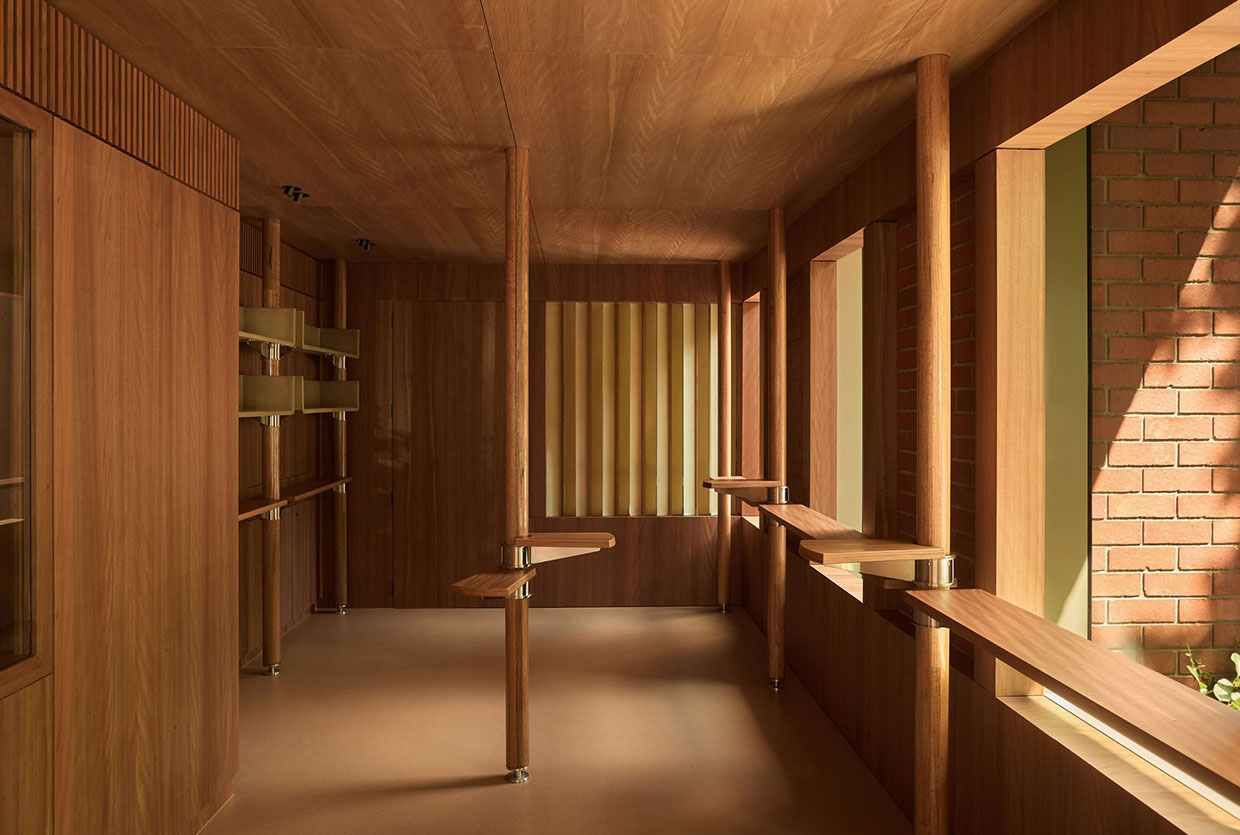
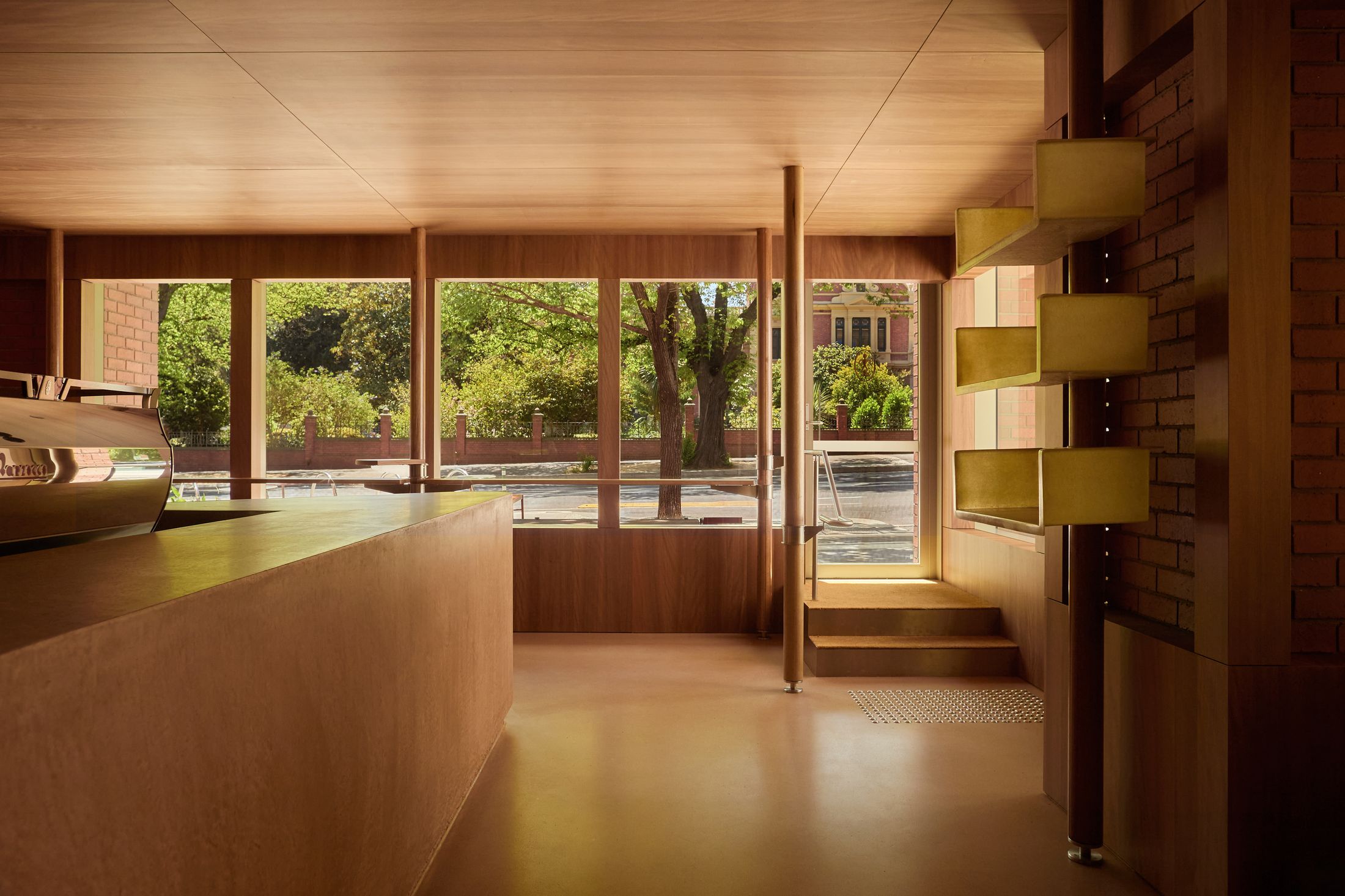
The brilliance of Standing Room Carlton lies in its refusal to crowd the room. Situated in a high-traffic university precinct, the project is situated on Grattan Street and specifically oriented to face the University of Melbourne’s historic 1888 Building, utilizing a north-facing orientation to draw in natural light. In such a small cafe design plan, every millimeter must justify its existence.
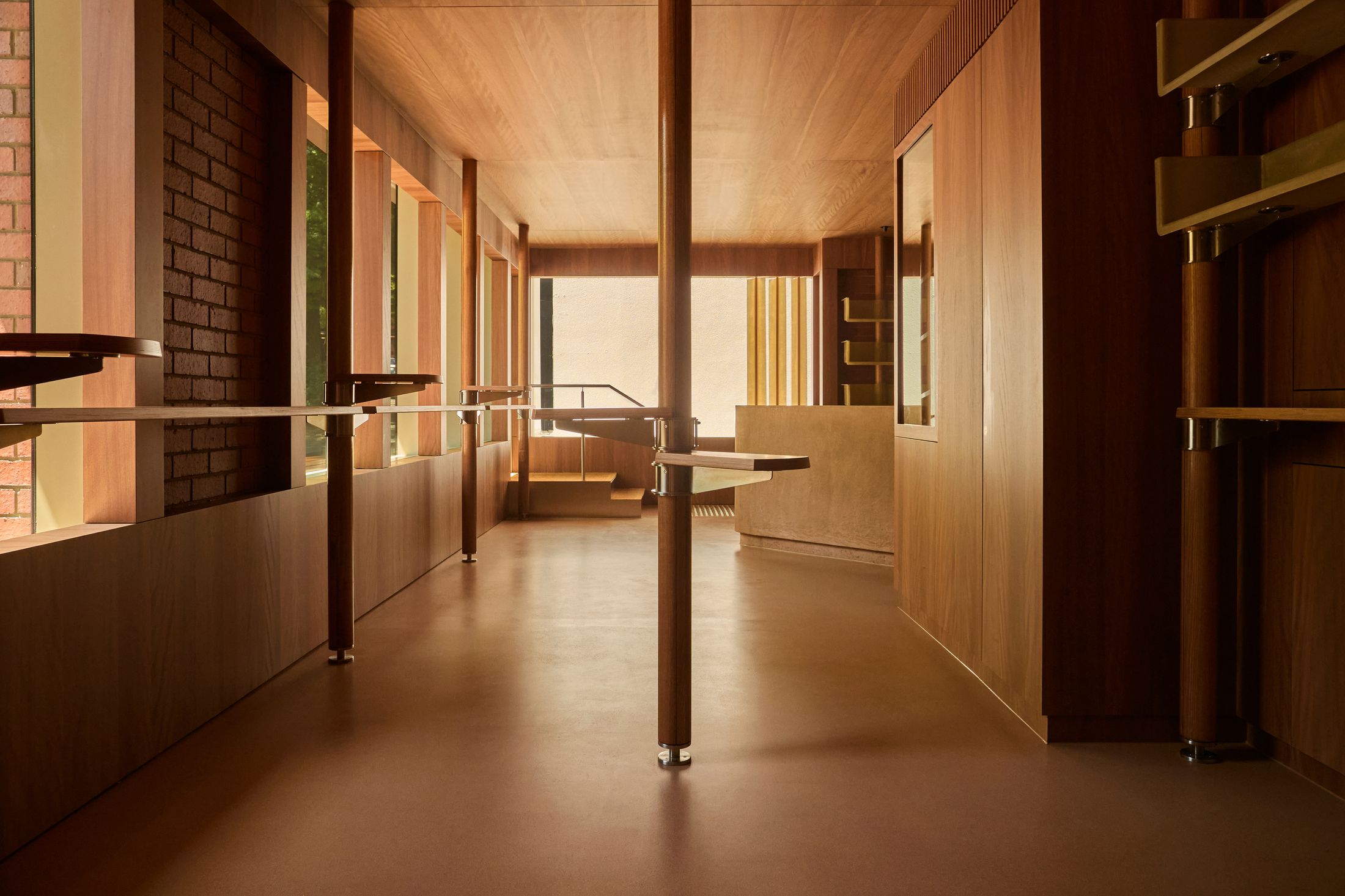
Dion Hall chose an L-shaped floor plan to manage the flow of students, academics, and commuters. This geometry allows the barista station to remain central and operational while carving out a clear path for movement. By implementing a standing-only model, the design removes the visual noise of furniture. Dion Hall’s design for Standing Room Coffee in Carlton redefines the espresso bar experience through this model, which eliminates seating to focus entirely on the ritual of ordering and drinking coffee.
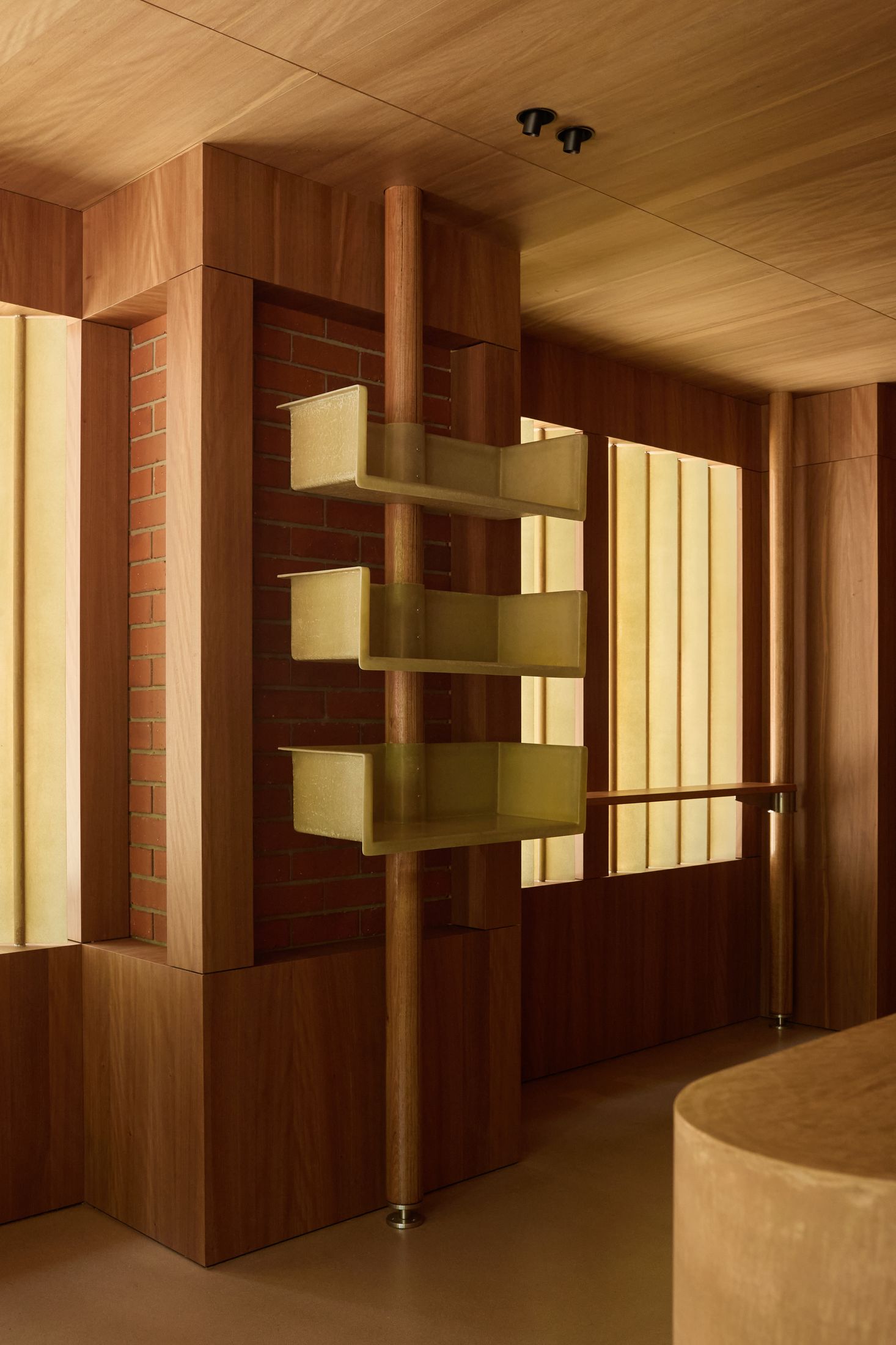
To prevent the space from feeling like a mere hallway, Hall used sculptural vertical poles as rhythmic anchors. These poles are not just structural; they act as spatial markers that define the standing room espresso bar design layout. They provide a place for a patron to lean or linger momentarily, creating a sense of "urban respite" amidst the academic rush.
Materiality and Sensory Order: Victorian Ash & Fiberglass
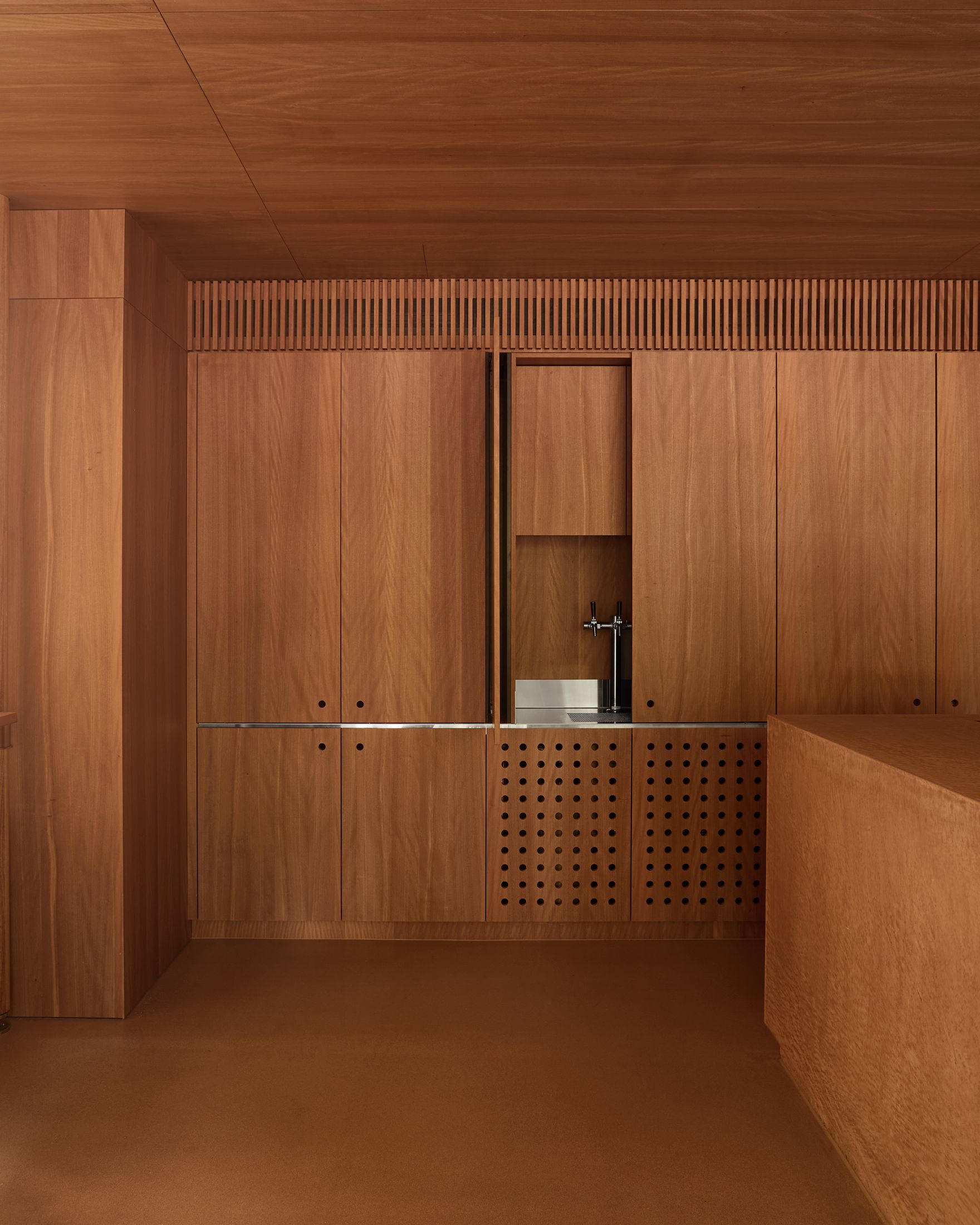
When working with a compact volume, the choice of materials dictates the atmosphere more than any decorative flourish could. In this small cafe interior design, the palette is intentionally restrained but deeply sensory. The interior of Standing Room Carlton utilizes a material palette of Brushbox timber, Victorian ash, and plywood, which brings a grounded, organic warmth to the industrial context.
The use of tactile timber materials for cafe design serves a dual purpose: it offers durability in a high-use environment and provides a soft, human-centric touchpoint. Hall integrates these timbers with industrial fiberglass louvres, which filter the northern light and add a contemporary, almost translucent edge to the space.
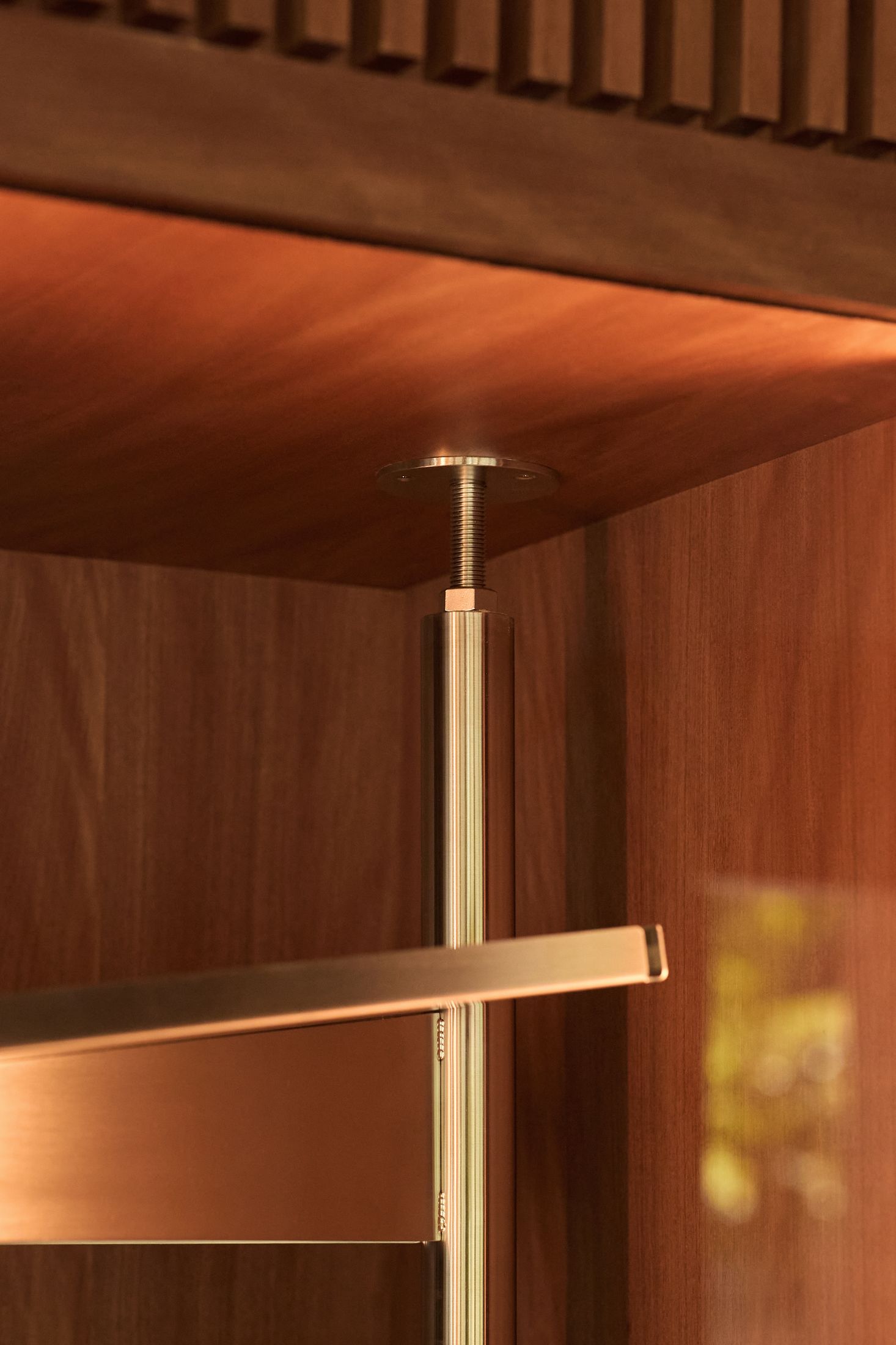
Bespoke joinery is the secret weapon here. Instead of standard cabinetry, Hall employed rotational shelving and custom steel brackets. This allows the cafe to store its essentials in plain sight while maintaining a sense of structural clarity. The result is a sensory order where the grain of the wood meets the sleekness of the fiberglass, offering a sophisticated take on small modern cafe interior design.
Operational Excellence: Small Cafe Barista Station Optimization
For any hospitality fitout, especially one without seating, the service counter is the heart of the home. Dion Hall prioritized small cafe barista station optimization to ensure that the workflow remains fluid even during the morning peak. This is often referred to as a "Minimum-Step Workflow," where the barista can access everything—from the espresso machine to the rotational shelving—with minimal movement.
Lighting techniques to expand small cafe spaces were also key to the design's success. By capturing the natural light from the north and reflecting it off polished surfaces and the warm tones of the timber, the room feels larger than its physical dimensions suggest. The threshold orchestration, the way a customer enters from the street and is greeted by the L-shaped counter, creates a sense of arrival that is both professional and welcoming.
The integration of brushed brass details and custom steel elements provides a final layer of refinement. These materials don't just look good; they reflect a commitment to quality that mirrors the artisanal coffee being served. It is a reminder that in small cafe interior design ideas, the details are the design.
Designing for the Ritual
Standing Room Carlton proves that you do not need a large footprint to create a significant architectural impact. By focusing on the choreography of service and the tactility of the environment, Dion Hall has created a space that honors the Melbourne coffee culture. It is a lesson in restraint, showing that when we remove the unnecessary, we make room for what truly matters: the ritual, the material, and the moment.
For those looking to apply these principles to their own projects, consider the L-shaped floor plan as a way to direct sightlines and the use of Victorian ash to bring warmth to industrial textures. Whether you are a business owner or a design enthusiast, the success of this project lies in its structural clarity and its unwavering focus on the customer experience.
FAQ
What colors work best in a small café?
In a compact hospitality space, a palette of neutrals and warm, natural tones works best. Utilizing light-colored timbers like Victorian ash or plywood helps to reflect natural light, making the room feel more expansive. Earthy tones, soft greys, and whites provide a clean backdrop that allows the coffee equipment and the customers to be the focus without overwhelming the visual field.
What are the three F's of interior design?
In the context of hospitality and small cafe interior design, the three F's are Form, Function, and Feeling. Form refers to the architectural shape and aesthetic of the space; Function ensures that the barista station and customer flow are optimized for efficiency; and Feeling describes the sensory and emotional response a patron has when they enter the room, often dictated by lighting and materiality.
What sells well in a café?
Beyond high-quality espresso and specialty brews, a cafe’s atmosphere and convenience are its biggest "products." In a standing-only model like Standing Room, the speed of service and the professional aesthetic of the environment are what keep customers returning. High-margin grab-and-go items that complement the coffee ritual, such as artisanal pastries, also perform well in high-traffic urban precincts.
What is the 3-5-7 rule in interior design?
The 3-5-7 rule is a styling principle suggesting that objects arranged in odd numbers are more visually appealing and memorable than even-numbered groupings. In a minimalist cafe interior design, this might apply to the arrangement of pendant lights above a counter, the placement of sculptural vertical poles, or the display of retail products on bespoke joinery to create a sense of balance and rhythm.