Step into a professional Michelin-starred kitchen during service, and you will witness what many culinary writers call a "choreographed dance." Every reach is calculated, every turn is efficient, and the tools seem to find the chef’s hand before they even look. In contrast, the typical home kitchen often feels more like a wrestling match. We stoop over low counters, strain our wrists with dull or poorly balanced knives, and engage in a frantic search for the cumin while the onions scorch.
Kitchen ergonomics isn’t just about comfort; it is the science of fitting the environment to the cook rather than forcing the cook to adapt to the environment. The cumulative toll of "Kitchen Fatigue"—manifesting as chronic lower back pain, repetitive wrist strain, and neck tension—is often the result of minor architectural oversights. By adopting a few professional-grade tweaks, you can transform your kitchen into a pain-free sanctuary that supports your body as much as your culinary ambitions.
1. The 'Plus-One' Rule for Countertop Height
The industry standard for residential kitchen countertops is 36 inches. This height was established decades ago based on average height statistics that no longer reflect the modern population. For many home cooks, this height is fundamentally too low, forcing a perpetual lean that places immense pressure on the L4 and L5 vertebrae.
What is the best kitchen counter height for back pain? Professional chefs and ergonomic experts recommend the "Plus-One" rule: adding at least one extra inch to your preparation surface. Aiming for a height of 37 to 39 inches allows the cook to stand upright with a neutral spine. If a full renovation isn't in the budget, you can achieve this by using thick, professional-grade butcher blocks (2-4 inches thick) as permanent stations on top of your existing counters. This minor elevation ensures that your elbows remain at a comfortable 90-degree angle during prep, significantly easing strain on the lower back.
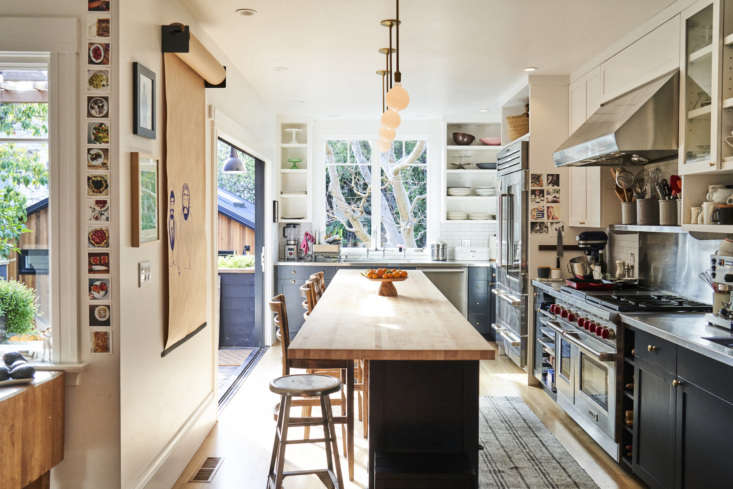
Chef’s Tip: The Elbow Test Stand at your counter and bend your elbows at a 90-degree angle. Your hands should rest comfortably on your cutting board. If you have to lean forward even slightly to reach the board, your surface is too low.
2. Implement the 'Like-with-Like' Zoning Strategy
Professional kitchen efficiency at home begins with how you organize your tools. The "Iron Rule of Storage" is simple: store each item exactly where it is first used. This reduces unnecessary steps and the repetitive reaching that leads to shoulder fatigue.
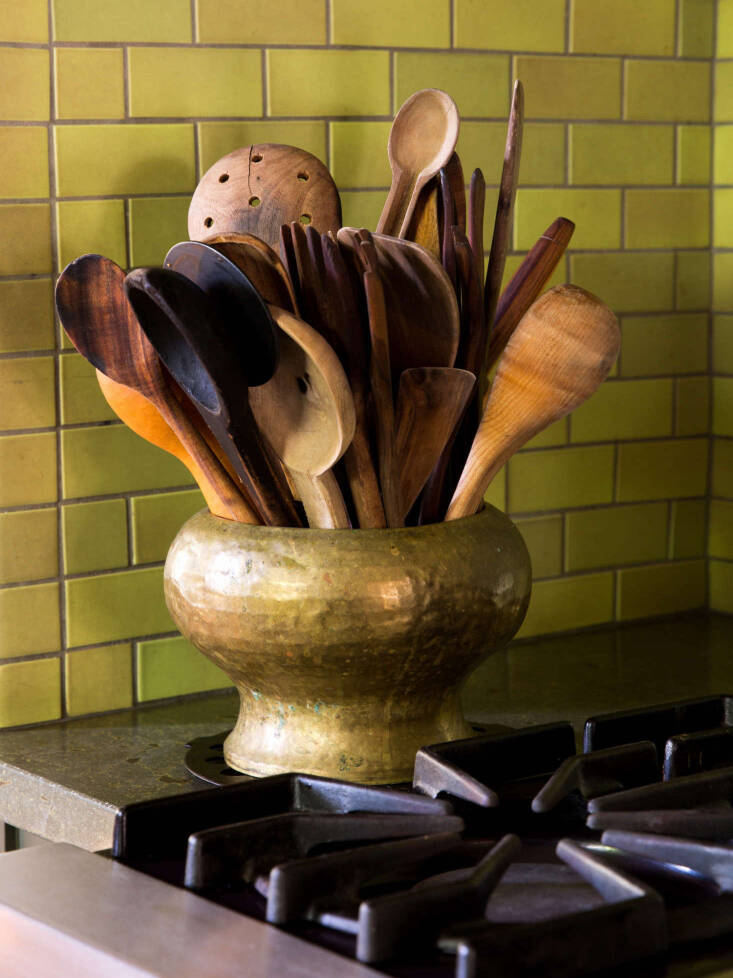
How can I organize my kitchen like a professional chef? Chefs recommend a "like-with-like" strategy. Instead of a "junk drawer" or a single crowded utensil crock, separate your tools by material and function. Alice Waters, the pioneer of California cuisine, famously organizes her kitchen with such precision that every movement is minimized. By grouping all wooden spoons in one vessel and all metal tongs in another, your brain develops muscle memory, allowing you to grab the tool you need without looking away from the stove.
3. Swap Basic Tools for Swivel & Cushioned Grips
The tools we use most frequently—peelers, whisks, and graters—are often the primary culprits for hand and wrist fatigue. Standard tools with thin, hard plastic or metal handles require a "death grip" to maintain control, leading to repetitive strain injuries over time.
Which kitchen tools are best for reducing hand fatigue? Ergonomic tools designed with swivel heads and cushioned, non-slip grips are the gold standard. A prime example is the premium swivel vegetable peeler. Data indicates that these ergonomic models maintain a 4.8/5 star satisfaction rating among over 43,000 users, specifically highlighting their effectiveness in reducing prep fatigue. The swivel head adapts to the contours of the produce, requiring less force from the wrist to achieve a clean peel.
| Tool Type | Standard Feature | Ergonomic Upgrade | Benefit |
|---|---|---|---|
| Vegetable Peeler | Fixed blade, thin handle | Swivel head, cushioned grip | Reduces wrist torque and grip tension |
| Kitchen Knives | Straight bolster | Tapered bolster (pinch grip) | Improves balance and control |
| Mixing Spoons | Flat handle | Contoured, silicone-coated | Prevents hand cramping during long stirs |
| Can Opener | Manual small twist | Oversized, soft-turn knob | Minimizes pressure on thumb joints |
4. The Stainless Steel Cleanup Advantage
In a high-pressure kitchen, "clean as you go" is a survival tactic. However, at home, we often struggle with porous surfaces like granite, marble, or tile grout that catch bacteria and require vigorous scrubbing. This repetitive scrubbing is an ergonomic nightmare for the shoulders and elbows.
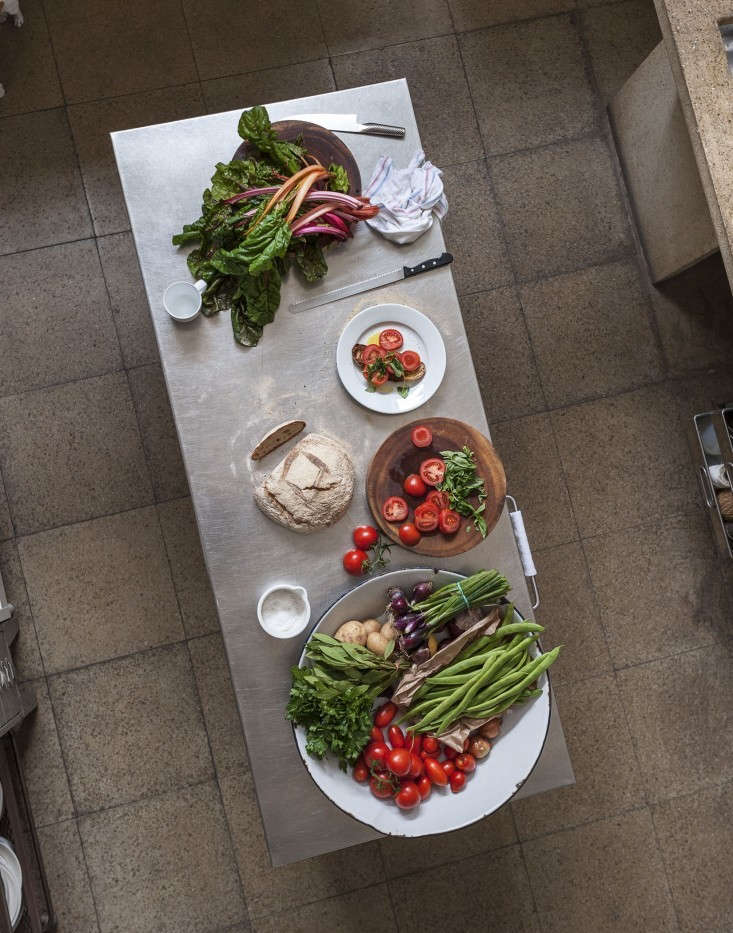
Implementing industrial-inspired elements like stainless steel worktops can be a game-changer. Statistical data shows that stainless steel surfaces can reduce cleanup time by up to 30% compared to traditional porous surfaces. Because stainless steel is non-porous and heat-resistant, you can move directly from prep to sanitizing with a single swipe, improving overall kitchen ergonomics by reducing the time spent in awkward cleaning postures.
5. Visual Efficiency: The 'Upside-Down' & Labeling Hack
The mental load of cooking often leads to physical strain. When we search through a dark pantry for a specific spice, we tend to crane our necks and hold awkward poses. Chefs solve this through "Visual Efficiency"—the ability to identify any ingredient in less than two seconds.
One of the most effective methods, championed by chef David Tanis, is storing spices upside-down. By placing jars in a drawer with the labels on the bottom (or writing on the base), you can see the contents immediately without having to lift and rotate every bottle.

Furthermore, adopting the "Noma style" of labeling—using clear, uniform containers with bold chalk-marked labels—ensures that you never second-guess your ingredients. This reduces the time spent stooping over low cabinets and keeps your workflow fluid.

6. Sinks & Strainers: Stopping the 'Classical' Dishwasher Hunch
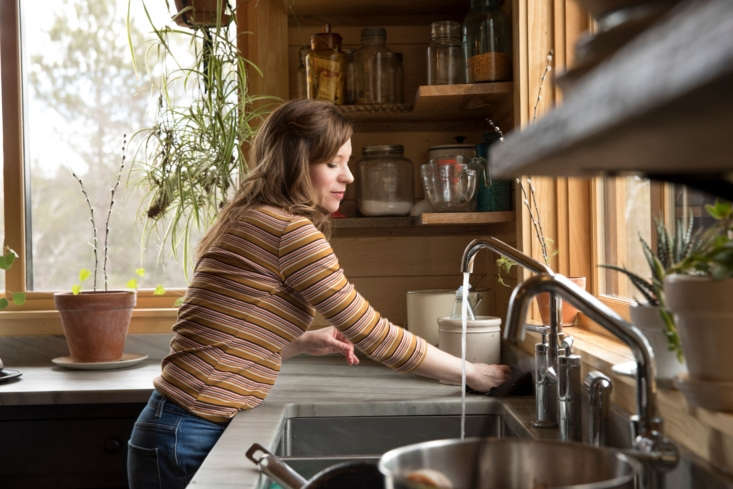
The most common site of kitchen-related injury isn't the stove; it's the sink. Most residential sinks are too shallow, forcing the user to hunch forward while washing large pots. This is known as the "Dishwasher Hunch," and it is a leading cause of mid-back pain.
Professional cooks favor extra-deep, triple-basin sinks or large farmhouse-style troughs. These allow you to soak oversized equipment without having to hold it at an angle. To further improve sink ergonomics, utilize "Snap N' Strain" gadgets or over-the-sink colanders. These tools allow you to drain pasta or wash vegetables without having to lift heavy, boiling pots over the side of the sink, protecting your wrists and back from sudden heavy loads.
7. Anti-Fatigue Foundations: Lighting & Mats
The final pillar of a pain-free kitchen is the floor you stand on and the light you work by. Visual ergonomics are often overlooked, but eye strain leads to poor posture. As we age, our light requirements increase dramatically; data shows that cooks over 50 require 100% more light than those in their 20s to perform the same task safely. Under-cabinet LED strips are not a luxury—they are a postural necessity.
Similarly, standing on tile or hardwood for hours causes "static loading" in the legs and lower back. High-density anti-fatigue mats are essential. These mats encourage micro-movements in the calf and foot muscles, which promotes blood flow and prevents the joint compression that leads to post-cooking soreness.
FAQ Section
How do I measure my ideal counter height? The most accurate way to find your ideal height is to measure the distance from the floor to the underside of your elbow while standing in your usual cooking shoes. Subtract 4 inches from that measurement—this is your optimal working surface height. For most people, this will be slightly higher than the 36-inch standard.
Are anti-fatigue mats really worth the investment? Absolutely. Unlike standard rugs, anti-fatigue mats are engineered to provide a specific level of "give." This forces your muscles to make subtle, involuntary contractions, which keeps blood circulating and prevents the pooling that causes leg fatigue and lower back pain during long prep sessions.
What is the most important ergonomic zone in a small kitchen? If space is limited, focus on the "Prep Zone"—the area between your sink and your stove. This is where 70% of kitchen work happens. Prioritize a raised cutting surface and high-quality lighting in this specific area to get the most "ergonomic bang for your buck."
The Long-Term Value of an Ergonomic Kitchen
Designing a kitchen for longevity means acknowledging that our bodies change even if our love for cooking does not. These seven tweaks are not about aesthetic trends; they are about maintaining the mechanical integrity of your body. By raising your work surfaces, optimizing your tool choice, and streamlining your workflow, you ensure that the "choreographed dance" of your kitchen remains a joy, not a chore, for decades to come.
For more guides on high-performance kitchen equipment and household efficiency, subscribe to our newsletter and join our community of home culinary experts.