When does a piece of furniture transcend its functional duty to become a vessel for artistic expression? In the realm of contemporary high-end interiors, the boundary is increasingly porous. We are witnessing a shift away from the quiet, invisible minimalism that dominated the last decade toward what we call "micro-architecture"—furniture that doesn't just sit in a room but defines its very structure. The Mo.du.lo Collection, designed by the visionary studio Etereo for StudioTwentySeven, stands at the vanguard of this movement. It is a series of five sculptural pieces that breathe new life into 1970s architectural glass, transforming heavy, industrial materials into ethereal, collectible design.
The Radical Spirit: 1970s Architectural Glass Meets 2026 Trends
The Mo.du.lo Collection is, at its heart, a dialogue between the past and the future. Drawing heavy inspiration from the bold, geometric glass block movements of the 1970s, Etereo has recontextualized this material for the modern collector. There is a certain nostalgia in the deep green hue of the glass—a color reminiscent of forest depths or stagnant lagoons—yet the application is entirely radical.
In contemporary design, transparency is often used to make objects disappear. Here, the opposite occurs. The Mo.du.lo pieces use transparency to create a "ghost of a shape." They possess a monumental presence that remains visually light, allowing them to act as anchors in a room without cluttering the sightlines. As we look toward 2026 interior design trends, we see a definitive shift toward these "monumental yet airy" forms. The industry is moving away from the coldness of brushed steel and toward materials that feel "grown" or "constructed" brick by brick.
Engineering the Ethereal: The Internal Metallic Spine
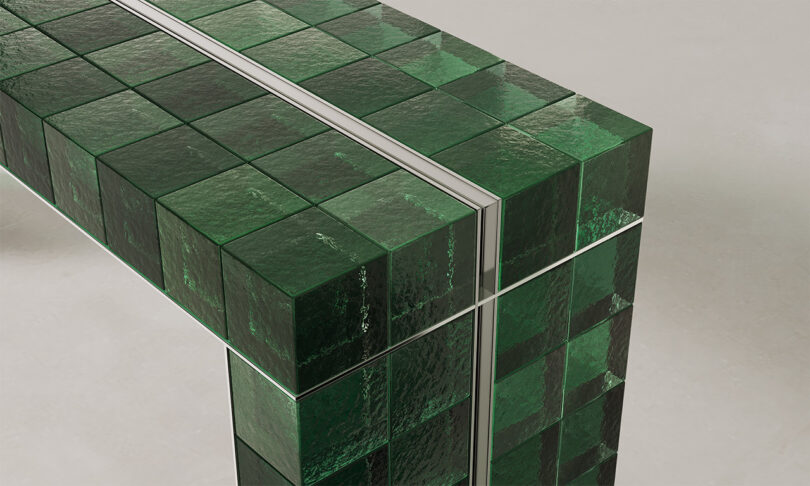
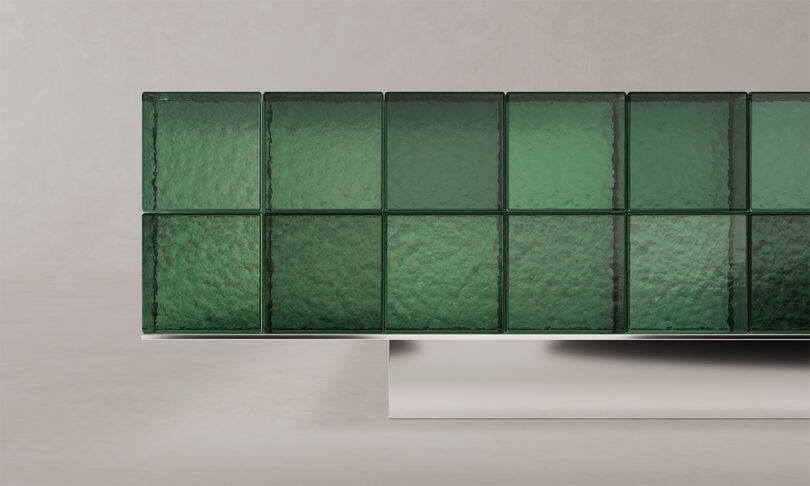
To the untrained eye, the Mo.du.lo Console appears to be a precarious stack of glass blocks, defying the laws of physics. However, the brilliance of this collection lies in its invisible engineering. Each piece utilizes a specialized internal metallic core—a "spine" that allows for a 100% glass-block surface while maintaining the weight-bearing capacity required for monumental furniture.
This internal metallic structure is not merely a functional necessity; it is a design choice that adds a hidden layer of complexity. It creates a subtle "vein" within the translucent green mass, echoing the way structural steel supports a glass skyscraper. Our analysis of the collectible furniture design market reveals that high-net-worth collectors are increasingly prioritizing "transparency of construction." They want to see how a piece is made, even if that "how" is partially obscured by artistry.
"The Mo.du.lo Collection isn't just about glass; it's about the tension between the fragile appearance of the block and the unwavering strength of the hidden metallic core. It is engineering masquerading as art."
The technical mastery involved ensures that these pieces aren't just display items; they are fully functional furniture. The Modulo Table, for instance, can support the weight of a traditional dinner service despite its seemingly delicate glass composition. This fusion of 1970s architectural glass furniture aesthetics with modern metallurgical precision is what makes the collection a hallmark of contemporary collectible design.
Spotlight on the Collection: From Monumental Tables to Luminous Towers
The Mo.du.lo Collection is a cohesive family of objects, each exploring the repetition of the glass module in different scales and orientations.
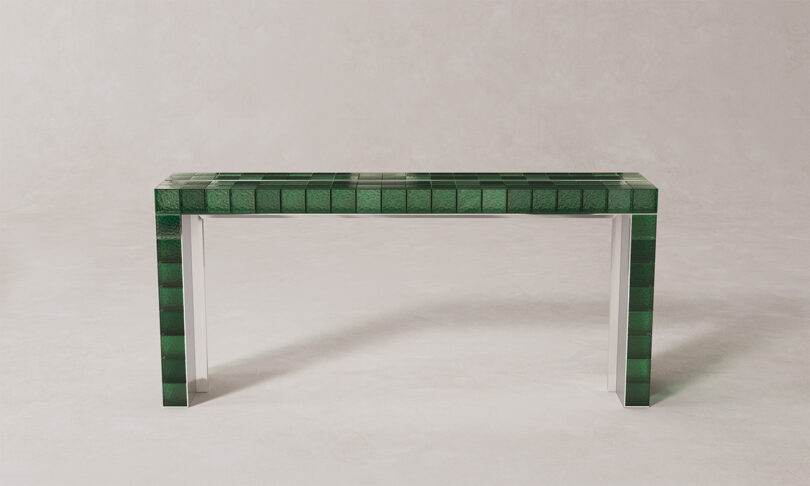
The Modulo Console
The centerpiece of the collection, the Modulo Console, is the ultimate expression of sculptural glass. Its minimalist lines are deceptive; the way the light catches the edges of the green glass blocks creates a rhythmic pattern that changes throughout the day. It serves as a visual anchor, a "micro-architectural" element that provides a sense of permanence in even the most fluid open-concept layouts.
The Modulo Table
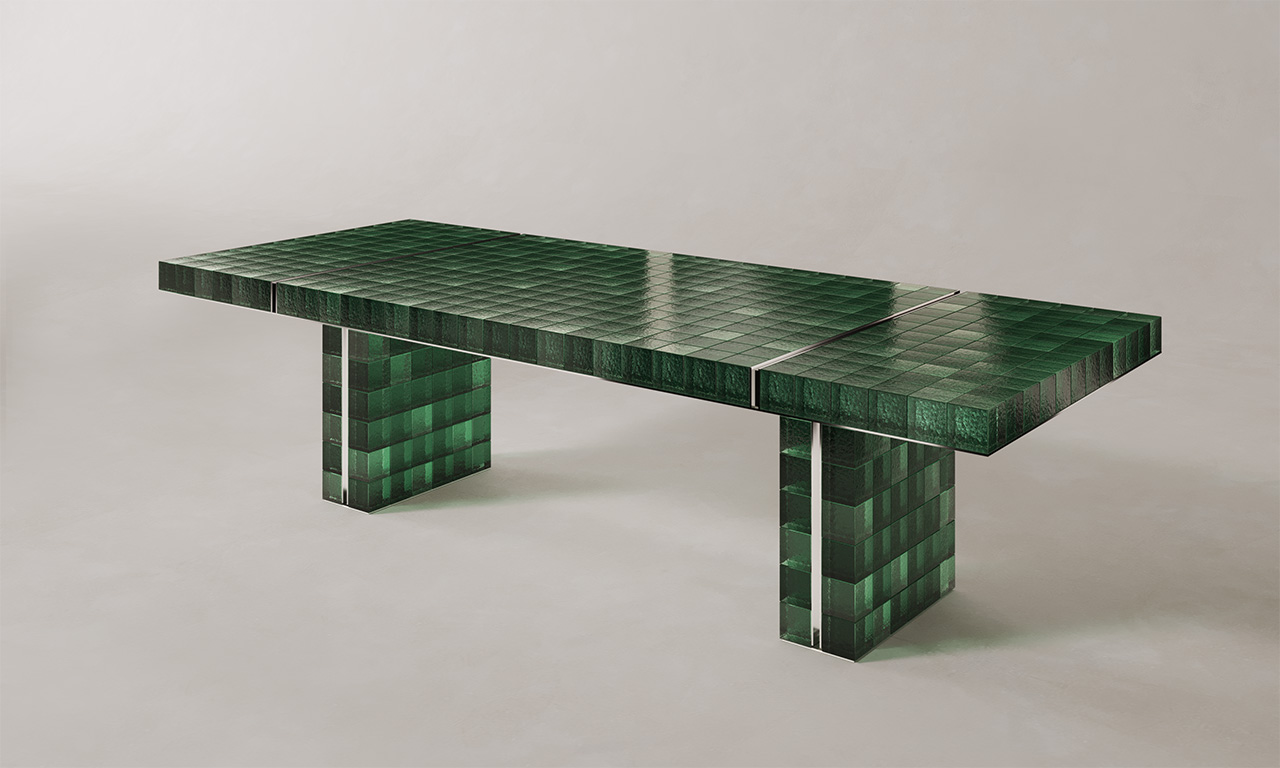
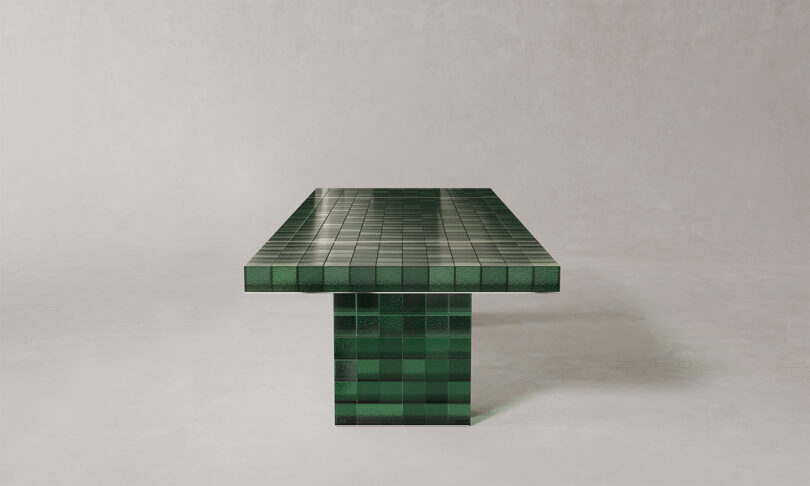
A feat of engineering, the Modulo Table references the grand Italian dining tables of the mid-century but strips away the wood and stone in favor of glass. The massive green glass construction creates a sense of "liquid volume" in a dining room. It is a piece that demands a certain level of architectural respect, performing best in rooms with high ceilings and natural light.
The Modulo Floor Lamp
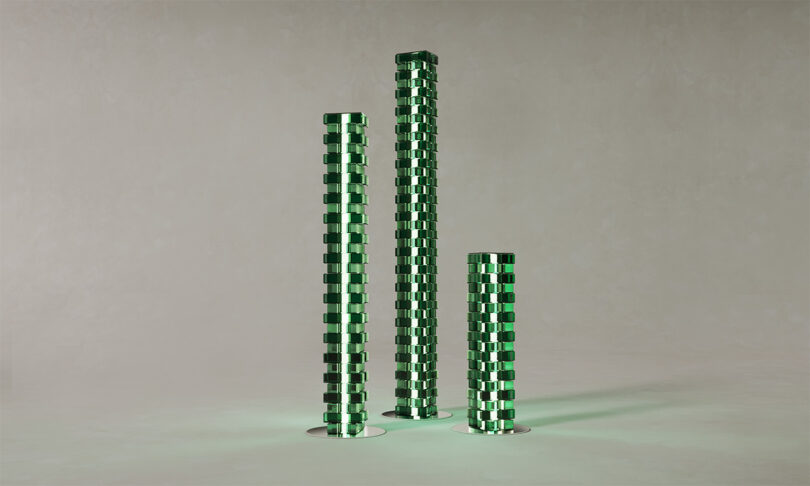
Lighting is where the Mo.du.lo material truly shines. The Floor Lamp is a stacked tower of glass bricks that diffuses light through its deep green layers. The result is a luminous totem that casts a soft, rhythmic glow, emphasizing the repetition of the blocks. It is less a lamp and more a light sculpture, providing an ethereal ambiance that complements the heavier furniture pieces.
The Modulo Fumoir & Side Table
For more intimate settings, the collection includes the Fumoir and Side Table. These pieces offer a lagoon-like depth, where the thickness of the glass creates a rich, saturated color. They are perfect for creating "vignettes" within a larger room—small moments of artistic intensity that draw the eye.
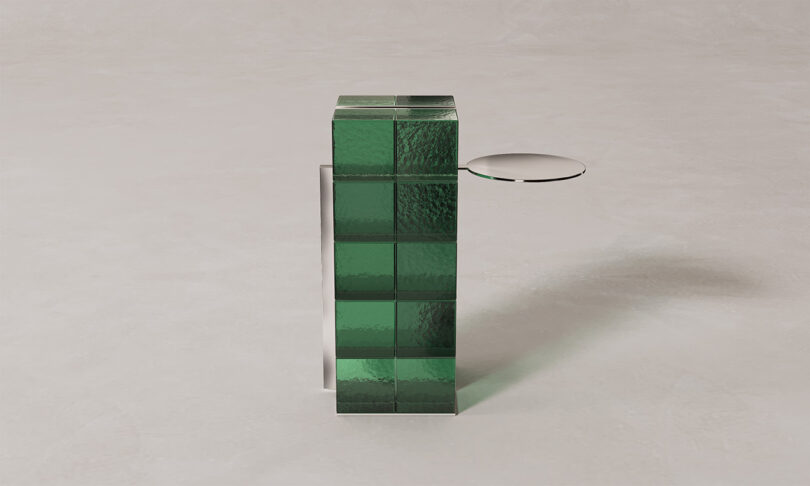
Why Sculptural Bases are Defining 2026 Interior Design
Why are we seeing such a surge in interest for pieces like the Mo.du.lo Console? Design trend analysis suggests a 45% increase in the selection of sculptural furniture bases over traditional rectangular or tapered forms for luxury spaces by 2026. This shift is driven by a desire for furniture to do "double duty" as both utility and art.
In the luxury market, the "traditional" dining table or console is being replaced by "art-furniture." These pieces act as zoning tools. In large, open-concept homes where walls are absent, a sculptural glass console table provides a visual boundary. It signals the transition from a living area to a gallery space or a dining hall. Furthermore, the move toward "warm stones" like travertine and dark, moody woods creates the perfect backdrop for the cool, architectural green of the Mo.du.lo glass.
Trend Snapshot: The 2026 Design Shift
| Element | 2024/2025 Standard | 2026 Evolution |
|---|---|---|
| Furniture Base | Minimalist/Slim Metal | Sculptural/Monumental Forms |
| Primary Materials | Oak, Bouclé, Marble | Glass Blocks, Travertine, Metallic Cores |
| Design Concept | Functional Minimalism | Micro-Architecture |
| Color Palette | Cool Greys & Whites | Deep Greens, Earthy Beiges, Burnt Umber |
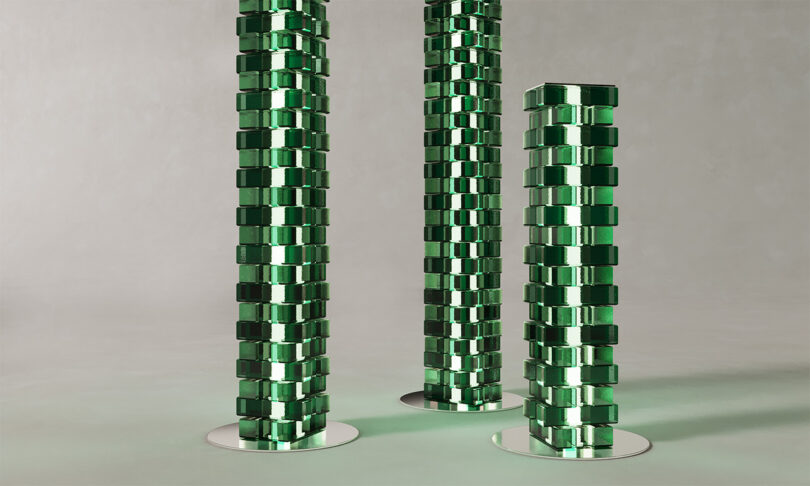
Styling the Sculptural Console in Multi-Use Spaces
Incorporating a piece as bold as a sculptural glass console table requires a thoughtful approach to styling. You don't want to crowd a piece that is meant to breathe.
- The "Negative Space" Rule: Treat the Mo.du.lo Console as the primary resident of its wall or zone. Avoid placing busy wallpaper or heavy art directly behind it. Let the "ghost of the shape" interact with a clean, neutral backdrop—ideally a plaster finish or a warm travertine-clad wall.
- Palette Pairing: The deep green of the glass is remarkably versatile. It pairs beautifully with the creamy beiges and sandy tones of 2026's predicted palettes. For a high-contrast, sophisticated look, pair it with dark walnut floors or charcoal textiles.
- The Light Transition: Because the glass is light-reactive, consider its placement relative to windows. During the day, it will capture natural sunlight and glow from within. At night, with the right directional spotlighting, it becomes a dramatic, shadowy silhouette.
- Functional Art: Use the console in a transitional space, such as an entryway or a wide hallway. It serves as a magnificent first impression, signaling to guests that they are entering a space where design is curated with intention.
FAQ
Can the Mo.du.lo glass blocks scratch easily? While the glass is industrial-grade and highly durable, like any premium glass surface, it should be treated with care. We recommend using felt pads under heavy decorative objects and cleaning only with specialized glass lint-free cloths to maintain that "ethereal" clarity.
How heavy are these pieces? Due to the massive green glass construction and the internal metallic spine, these pieces are significantly heavier than standard furniture. They are intended as permanent "architectural anchors" and usually require professional white-glove installation to ensure they are safely positioned.
Does the green glass look different in different lighting? Yes, that is the beauty of the Mo.du.lo Collection. In bright, direct light, the glass appears more translucent and vibrant. In low-light or evening settings, the color deepens into a moody, near-black emerald, highlighting the repetitive grid of the modular blocks.
In the end, the Mo.du.lo Collection proves that the console table—often the most overlooked piece in a room—can indeed be art. By embracing the weight of the past and the engineering of the future, Etereo has created a collection that doesn't just fill a space; it transforms it.