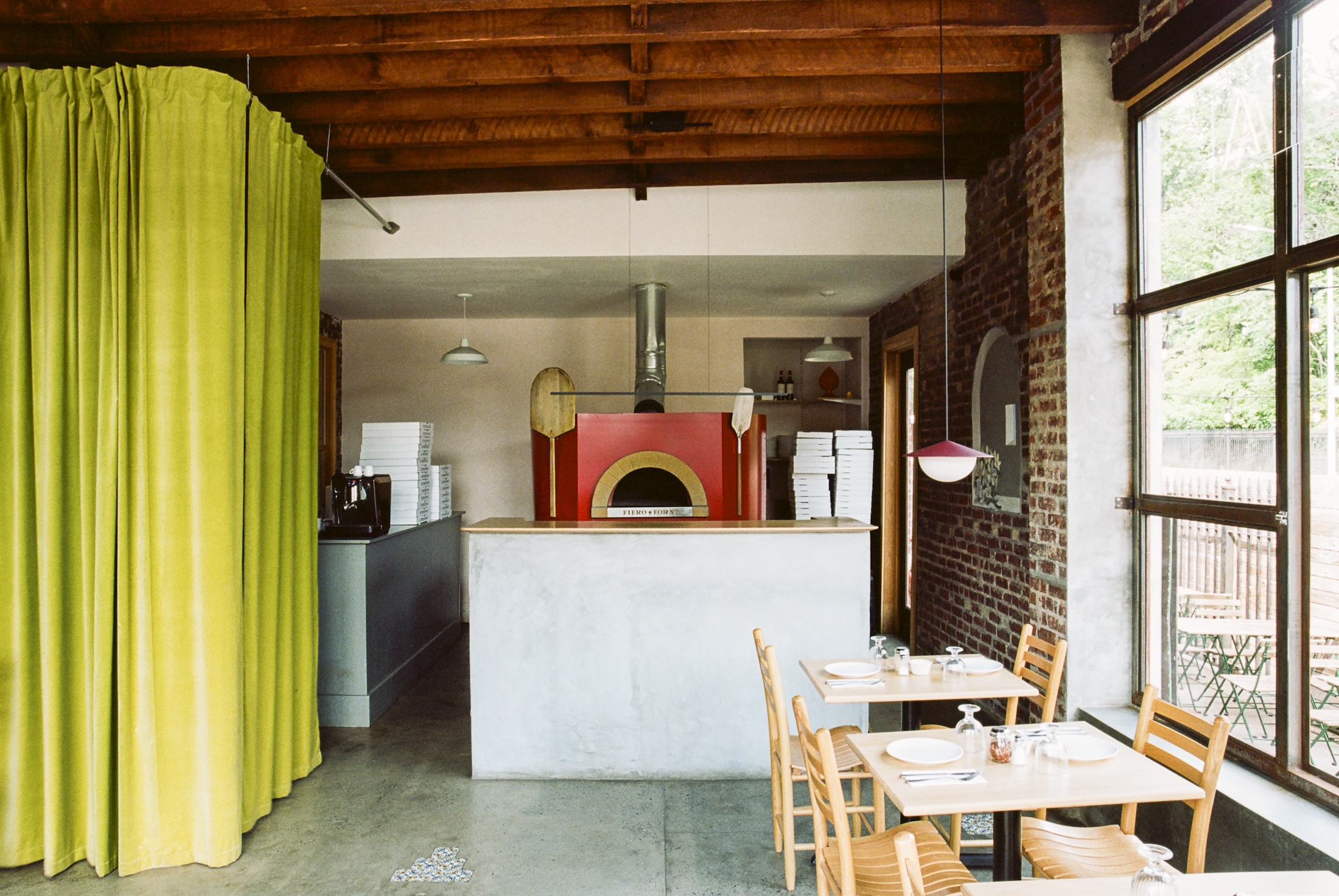
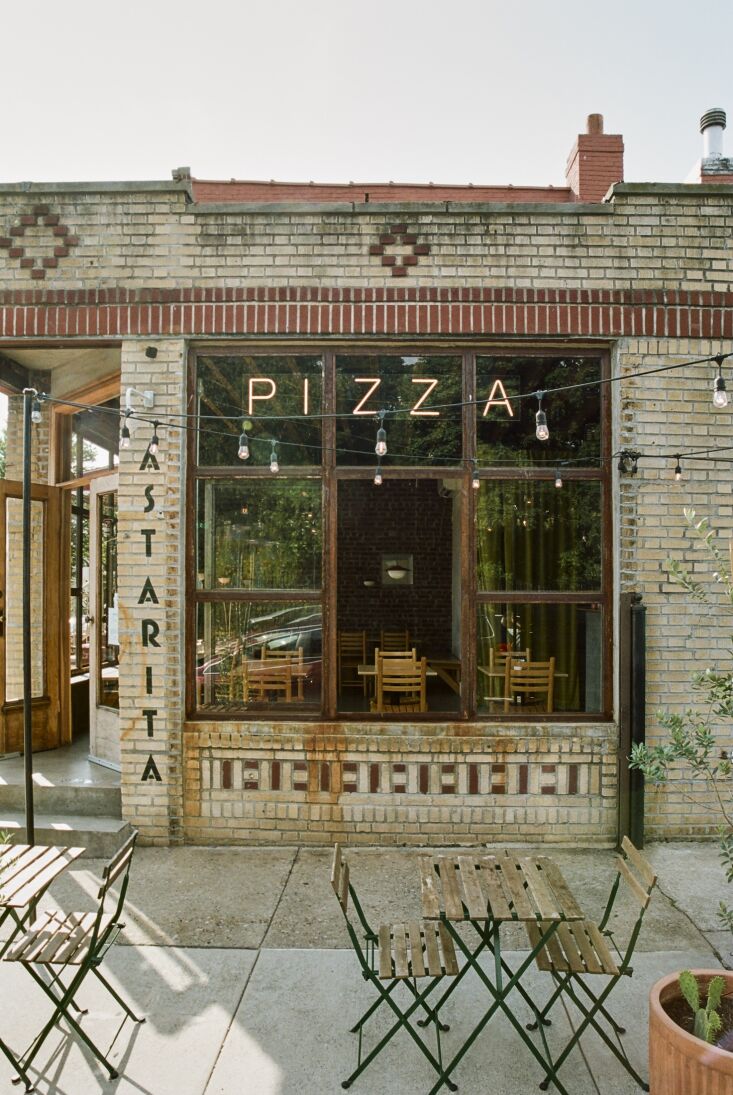
There is something inherently romantic about a corner building that has watched a neighborhood evolve for nearly a century. In the Greenwood Heights section of Brooklyn, a modest 1931 yellow brick structure once stood as a quiet witness to the city’s shifting tides—first as a corner store, then an office, and eventually an unoccupied shell. Today, however, it has found a second life as Astarita Pizzeria.
When owners Carmine and Tina Casale envisioned a Neapolitan-style pizzeria, they didn't look toward a sterile new build. Instead, they collaborated with the architecture firm TBo to breathe life back into this historic fragment. The result is a masterclass in "authentic luxury," where high-end architectural interventions meet budget-conscious, humble materials. It is a space that proves you don’t need a bottomless bank account to create a room with soul; you simply need the right strategy for adaptive reuse.
What are the Benefits of Adaptive Reuse in Modern Restaurant Design?
At its core, adaptive reuse is the process of repurposing an existing building for a use other than which it was originally designed. For the modern restaurateur and interior lover alike, this approach offers several distinct advantages over new construction.
Firstly, it is a sustainable choice. By preserving the "embodied carbon" already present in the 1931 brickwork and steel, TBo significantly reduced the environmental footprint of the renovation. Beyond the green credentials, adaptive reuse provides an "authentic" edge that new builds often struggle to replicate. The patina of aged masonry, the height of original ceilings, and the unique quirks of a pre-war footprint offer a tactile sense of history that makes a dining experience feel grounded and permanent.
In a world of "cookie-cutter" commercial spaces, Astarita Pizzeria stands out precisely because it embraces the imperfections of its historic shell. The design doesn't hide the building's age; it celebrates it, using the 1931 yellow brick as a warm, textured backdrop for a new, contemporary narrative.
Where is Astarita Pizzeria Located?
You can find Astarita Pizzeria at 797 Fifth Avenue, anchoring a prominent corner in the Greenwood Heights neighborhood of Brooklyn. This pocket of the borough, nestled between South Slope and Sunset Park, retains a distinct residential charm.
The location was pivotal to the design's success. As a community-centered pizzeria, the building needed to feel accessible yet elevated. The architects recognized that the 1931 building was a landmark of the neighborhood's vernacular history. By choosing this site, the Casales ensured that their restaurant wasn't just another business—it became a revitalized piece of the neighborhood's fabric.
5 Affordable Renovation Ideas to Steal from TBo
The genius of TBo’s work at Astarita lies in the "high-low" mix. They spent money where it mattered most—on the "bones" and the light—and saved money on the furnishings. Here is how you can apply their logic to your own projects.
1. Mix Custom Steel with Off-the-Shelf Supplies
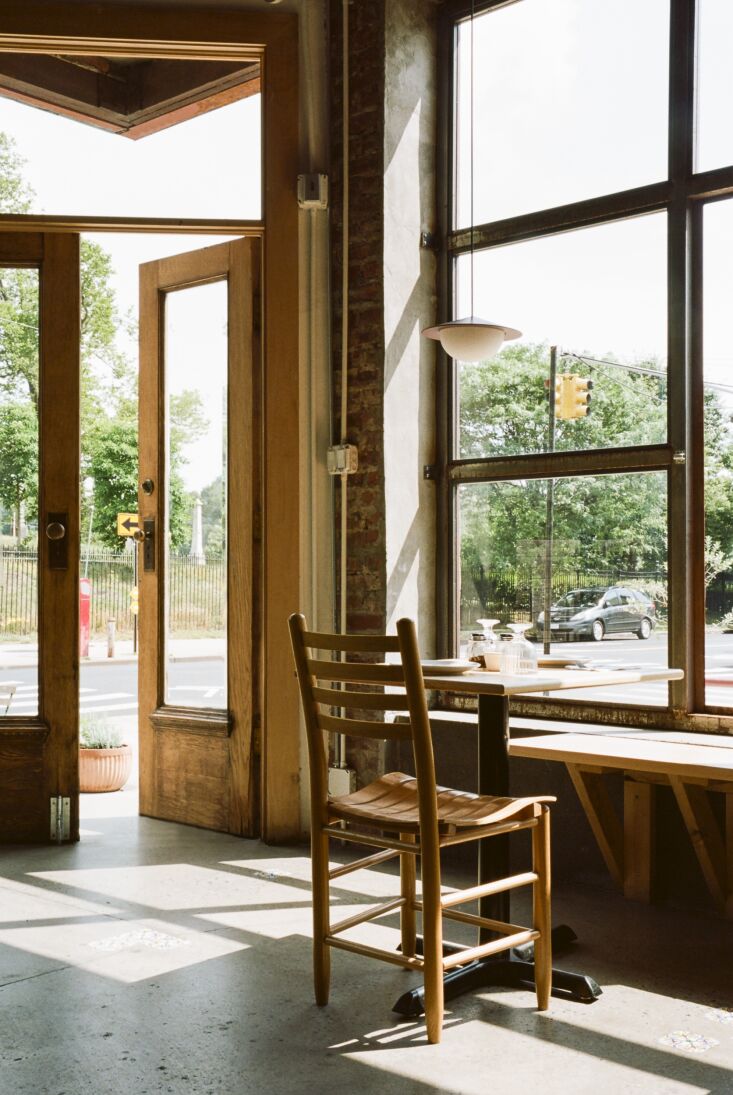
One of the most impactful moves in the renovation was the decision to splurge on the "apertures." The architects commissioned custom cold-rolled steel windows by Arista Steel. These high-end fixtures provide a clean, industrial silhouette that contrasts beautifully with the rugged brick.
However, to balance this significant investment, the team turned to surprising, budget-friendly sources for the rest of the exterior. For example, the sidewalk dining area is populated with IKEA Tärnö bistro sets, which retail for a modest $79. By pairing bespoke steelwork with off-the-rack furniture, the project achieves an "architectural" look without the commercial furniture price tag.
2. Swap Permanent Walls for Flexible Partitions
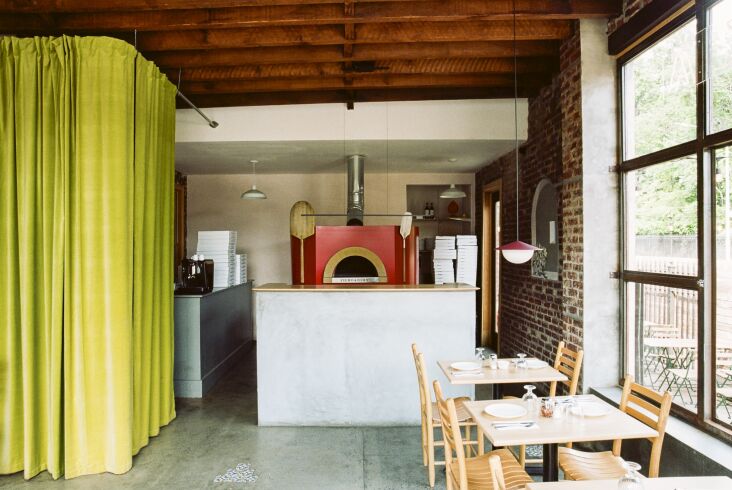
In a compact restaurant, every square inch counts. Traditional masonry or drywall partitions for areas like the bathroom vestibule can feel heavy and restrictive. Instead, TBo opted for a much more fluid solution: floor-to-ceiling custom velvet curtains.
Using Robert Kaufman velveteen in "Bonsai Green," the architects created a soft, tactile boundary that provides necessary privacy while maintaining a sense of openness. This choice wasn't just about aesthetics; it was a spatial strategy. Data from the project shows that using flexible curtain partitions instead of fixed walls increased usable circulation space by approximately 12% in the dining area. For a small business, that 12% can mean the difference between a cramped hallway and a comfortable flow for staff and patrons.
3. 'Honest' Materials and Repointed Brick
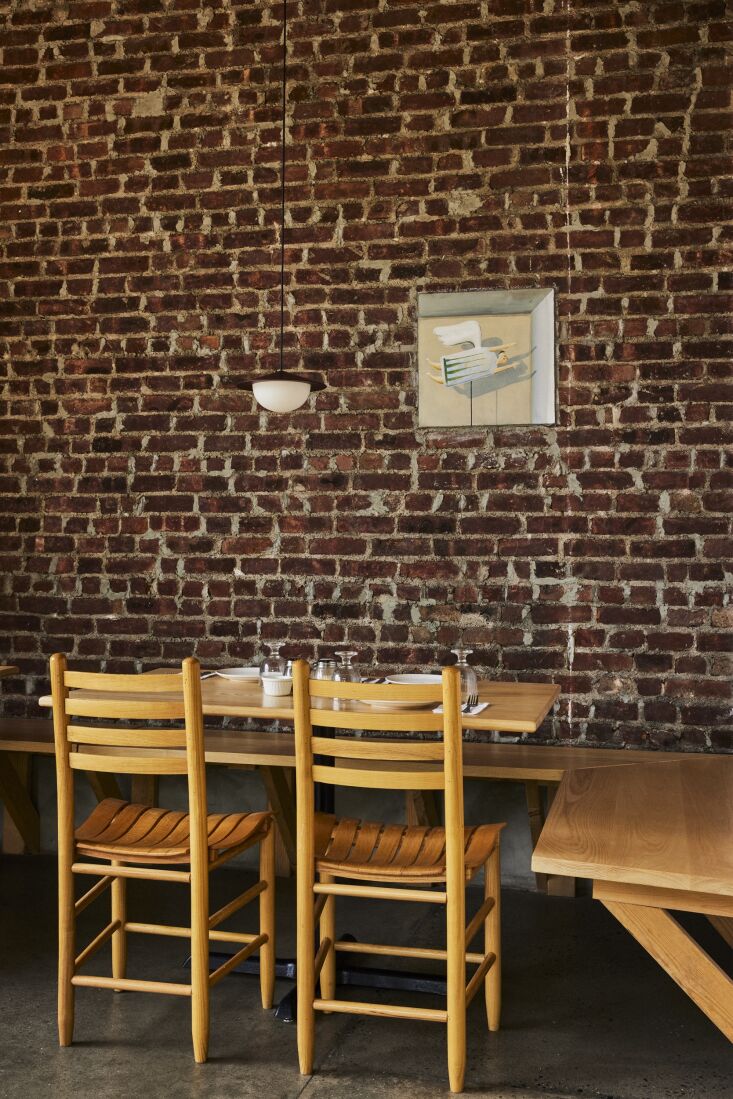
There is a certain "honesty" in TBo's material palette. Rather than covering the interior walls with expensive finishes, they chose to leave the original brick bare. The walls were carefully repointed to ensure structural integrity and a clean look, allowing the natural variation of the clay to provide the room’s primary color and texture.
This approach was mirrored on the floor, where a simple poured concrete slab was used. Concrete is a high-traffic, low-cost solution that feels modern and industrial. When paired with the warmth of the brick and the softness of the velvet, it creates a balanced, "lo-fi" luxury that feels lived-in rather than staged.
4. Architectural Interventions through Mural Art
Decorating large wall surfaces can often lead to "art-buying fatigue" or excessive spending on frames and prints. TBo took a more integrated approach by commissioning artist Will Karlen to create small, taped-off murals directly on the masonry.
These "architectural interventions" feature whimsical motifs: flying angels, Italian sparrows, and plumeria sprigs. Because they are painted directly onto the existing shell, they feel like a discovered part of the building's history rather than an afterthought. This is a brilliant tip for any renovator: use paint to create focal points rather than relying on expensive wall decor.
5. Inlaid Tile as Functional Art
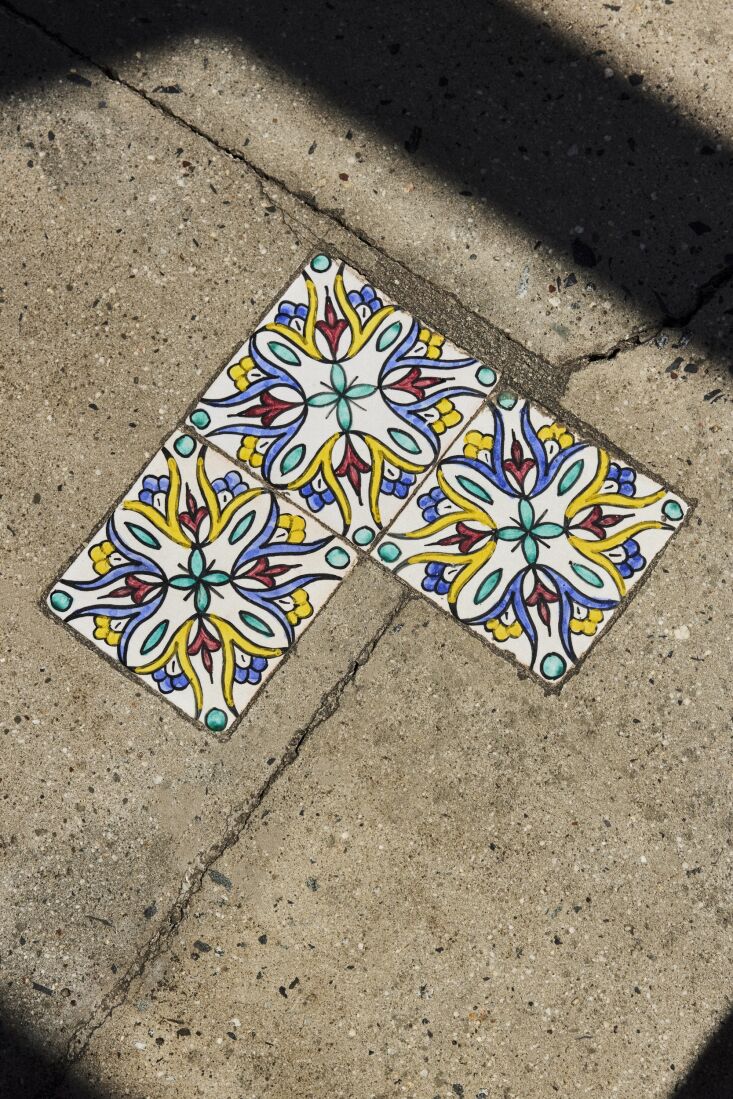
Tile work can be incredibly expensive, especially if you are tiling an entire floor or wall. To achieve a "designer" look on a budget, TBo used Mosaic House hand-painted ceramic tiles sparingly.
Instead of a full tile installation, they selectively set small clusters of these beautiful tiles into the wet concrete of the floor as it was being poured. This creates a "mosaic" effect that acts as functional art underfoot. It draws the eye and adds a pop of Mediterranean color without the labor and material costs of a fully tiled surface.
How to Stay Within a Tight Restaurant Renovation Budget?
The Astarita Pizzeria project serves as a blueprint for strategic spending. The key is knowing where to "anchor" the budget.
Ivy's Pro-Tip: Spend your budget on the things people touch and the things that control the light. A custom door handle or a beautifully framed window (the "splurge") will elevate everything around it, even if the chairs are from a discount supplier (the "save").
TBo also utilized salvaged materials to add character. They sourced glazed wooden doors from 'New York Old Iron', giving the entrance a sense of historic weight that a new, aluminum-framed door simply couldn't match. Meanwhile, the table settings use basic, durable items from Restaurant Depot, proving that elegance is often found in simplicity.
| Element | The "Splurge" (Custom) | The "Save" (Off-the-Shelf/Salvaged) | Design Impact |
|---|---|---|---|
| Windows & Doors | Arista Steel Custom Windows | IKEA Tärnö Bistro Sets ($79) | High-end silhouette with approachable seating. |
| Walls & Privacy | Custom Steel Framing (Minimal) | Robert Kaufman Velvet Curtains | Maximizes space; adds softness to hard surfaces. |
| Flooring | Mosaic House Ceramic Tiles | Poured Concrete & Bare Brick | Inlaid art without the price of wall-to-wall tiling. |
The Result: Sustainable Design and Neighborhood Impact
The transformation of 797 Fifth Avenue is more than just a renovation; it is a gift to the Greenwood Heights community. By choosing adaptive reuse, TBo and the Casales have preserved a piece of Brooklyn’s architectural history while creating a space that feels entirely fresh and contemporary.
The environmental benefits of preserving the building's original materials, combined with the clever use of "humble" supplies, resulted in a restaurant that feels both authentic and sustainable. It is a reminder that in the world of interior design, the most interesting spaces aren't necessarily the ones with the highest budgets—they are the ones with the most thoughtful stories.
FAQ
1. What is the most cost-effective way to add "architectural character" to a plain room? As seen in Astarita Pizzeria, using "honest" materials like bare brick or poured concrete is a great start. Additionally, consider small-scale mural art or using textiles (like velvet curtains) instead of building new walls to create texture and depth without high construction costs.
2. Is adaptive reuse more expensive than new construction? Not necessarily. While historic buildings can present unexpected challenges, adaptive reuse often saves money on raw materials (like the foundation and shell). The key is to work with the building’s existing features rather than trying to force a modern layout that requires extensive structural changes.
3. How can I recreate the "high-low" look at home? Invest in one or two "hero" pieces—perhaps a high-quality light fixture or a custom-made window treatment—and pair them with affordable, classic pieces from retailers like IKEA or salvaged finds from antique shops. The contrast between the bespoke and the basic creates a sophisticated, curated feel.
Are you ready to transform your own space with a "high-low" mix? Start by looking at what you can preserve before you decide what to buy.