In the narrow, winding streets of Madrid’s Tetuán neighborhood, where the architecture often whispers stories of a 1920s working-class past, one particular structure was on the verge of silence. Casa Cometa was once a ruin—a structurally failing building with a roof leaning dangerously toward collapse. Today, however, it stands as a masterclass in architectural resurrection.
Designed by Bardo Arquitectura, Casa Cometa is a 63-square-metre residential renovation that proves even the most fragile "bones" can be taught to fly. By transforming a decaying footprint into a weightless, multi-level retreat, architects Emiliano Domingo and engineer Manuel Ocaña have created a space that feels less like a grounded house and more like a sanctuary suspended in mid-air.
Engineering Levitation: The Tubular 'Suture'
When dealing with a historic ruin, the instinct is often to demolish and rebuild. But Bardo Arquitectura chose a more poetic path: "suturing" the old with the new. The primary challenge was the building’s structural instability. To prevent a total collapse, the design team collaborated with renowned engineer Manuel Ocaña to develop a structural solution that felt almost invisible.
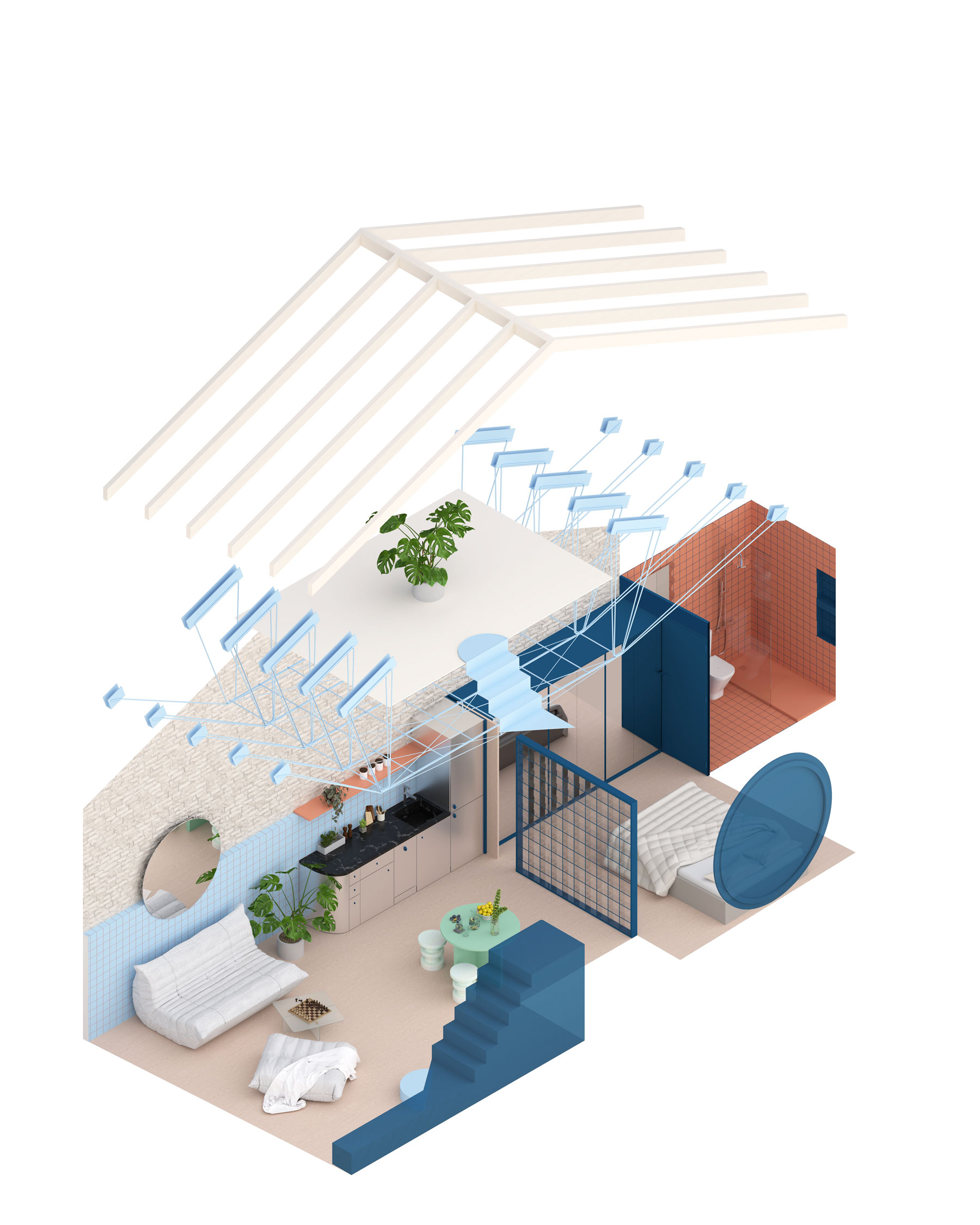
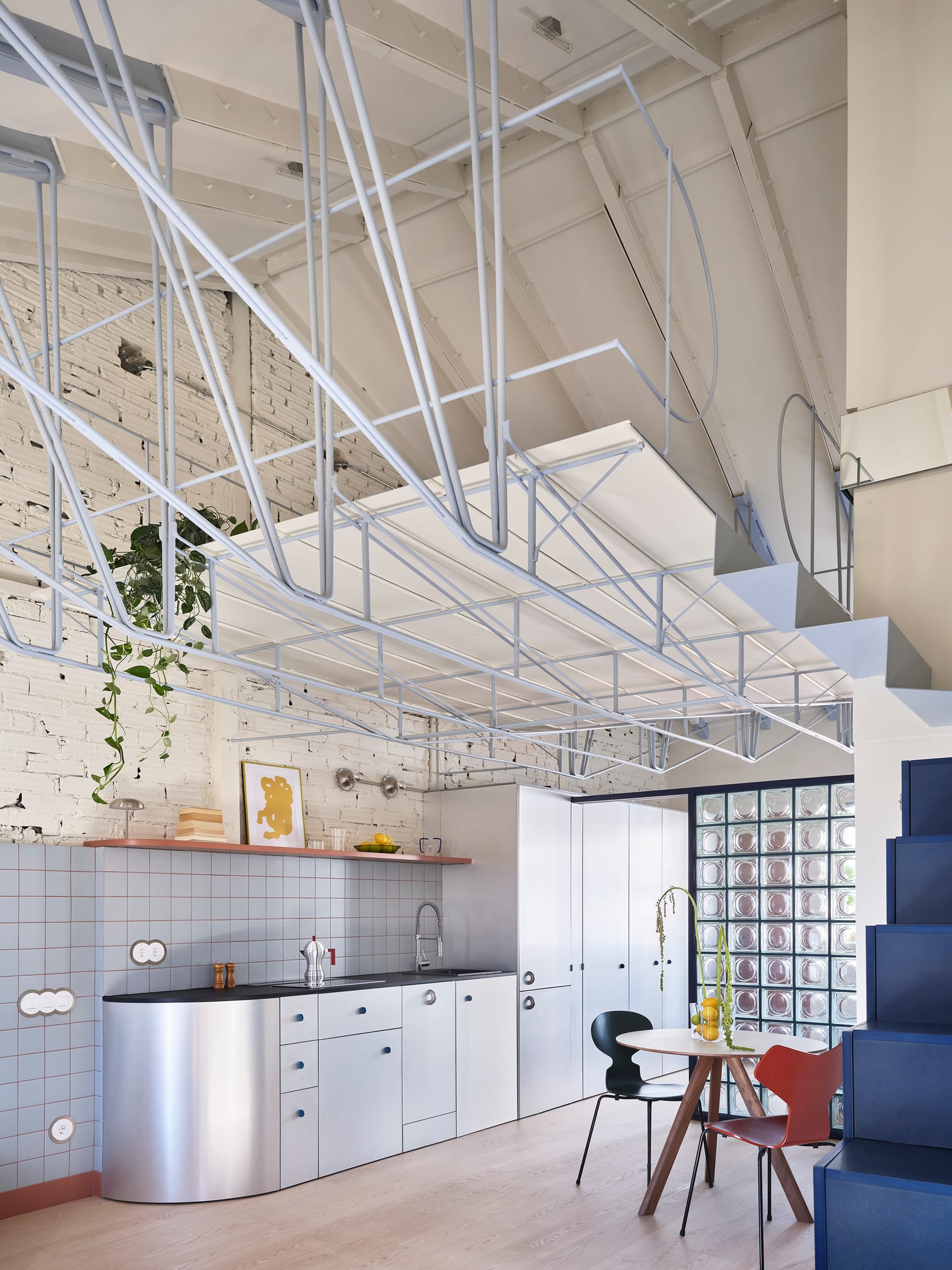
The structural collapse of Casa Cometa was prevented through a lightweight tubular structure. Rather than relying on heavy, traditional beams that would have added more stress to the fragile 1920s foundation, the team utilized anchor points distributed across the building’s surface. This "atomized" approach gained rigidity without stress concentrations, essentially creating a steel cage that holds the old walls in a gentle, firm embrace.
"In architecture, we often talk about weight as a necessity. At Casa Cometa, weight became the enemy. We had to rethink how a home supports itself—not by pushing down, but by distributing energy like a web." — Ivy's Perspective on the Bardo Philosophy.
Technical Breakdown: The Suture System
| Feature | Implementation | Benefit |
|---|---|---|
| Material | Lightweight tubular steel | Minimizes load on 1920s foundation |
| Anchoring | Distributed surface points | Prevents stress concentrations and cracking |
| Function | Integrated Mezzanine Support | Allows for 15sqm of extra living space |
| Aesthetic | Slender blue profiles | Contributes to the 'weightless' visual theme |
The 'Kite' Concept: Designing for Weightlessness
The project’s name, "Cometa" (Spanish for Kite), is not merely a whimsical title; it is the home’s defining identity. A kite is an object that finds its form through tension and air, and Bardo Arquitectura translated this ethereal concept into physical materials.
The design revolves around the idea of a "floating" interior. By using slender steel profiles and repeating rhythmic patterns, the architects managed to strip away the visual heaviness usually associated with urban renovations. The home doesn’t feel like a series of rooms; it feels like a sequence of interconnected planes that catch the light.
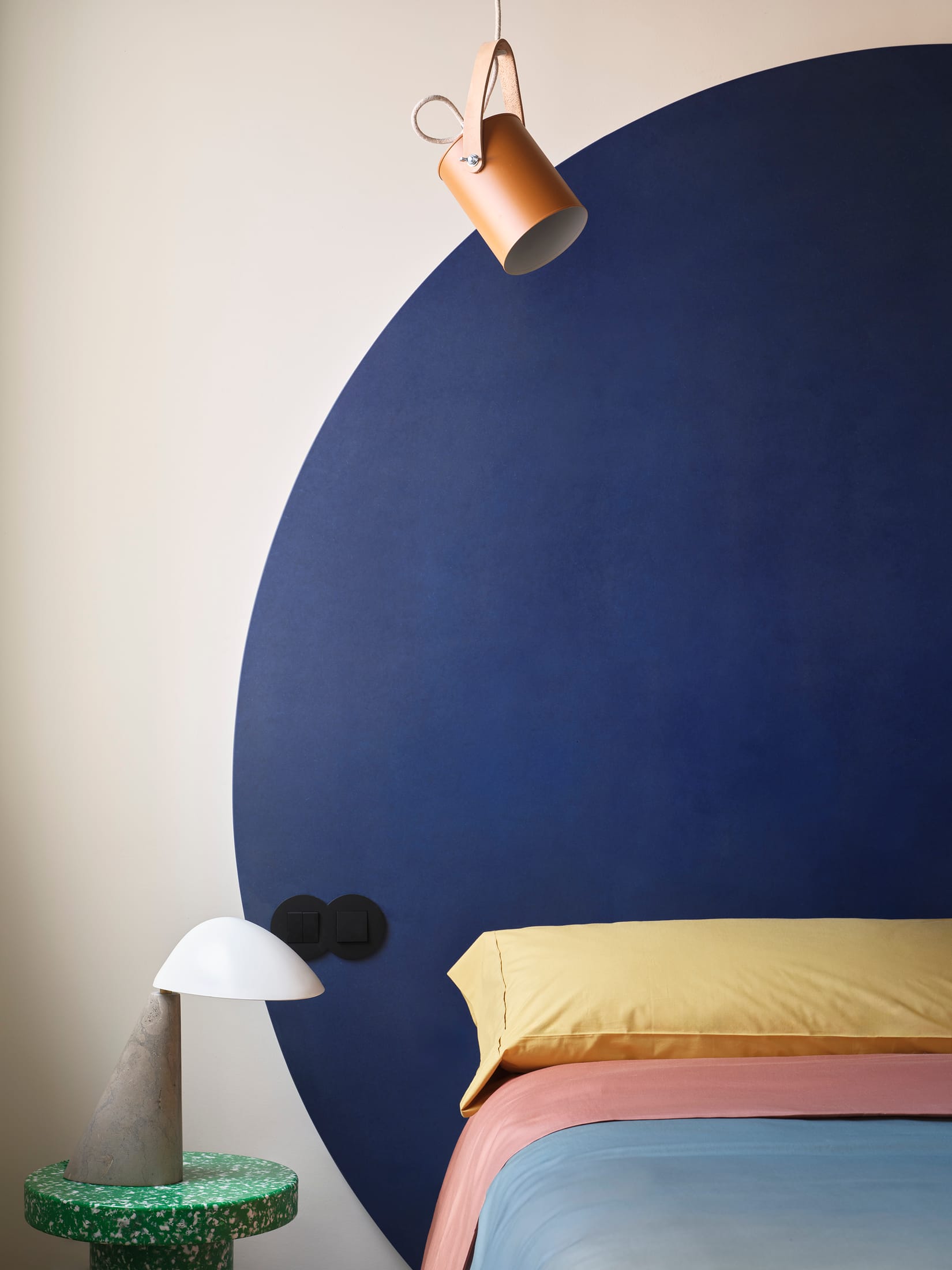
The design concept of Casa Cometa is 'weightlessness,' inspired by the physics of a kite. This is achieved through a deliberate color gradient that guides the eye upward, moving from dark, grounded terracotta on the ground floor to sky blues and luminous creams on the mezzanine level. This vertical journey mimics the sensation of looking from the earth toward the clouds.
Spatial Innovation: Gaining 31% More Living Space
How do you make a 48-square-metre footprint feel like a sprawling villa? You stop thinking about floors and start thinking about volume. By inserting the tubular steel structure, the renovation project increased the property's total liveable area by approximately 31%, adding a 15-square-metre mezzanine to the original footprint.
This mezzanine serves as the "floating" private zone of the house. It is a space for rest and reflection, perched above the communal living areas. To ensure this new level didn't make the ground floor feel claustrophobic, the architects employed several "expansion" tricks:
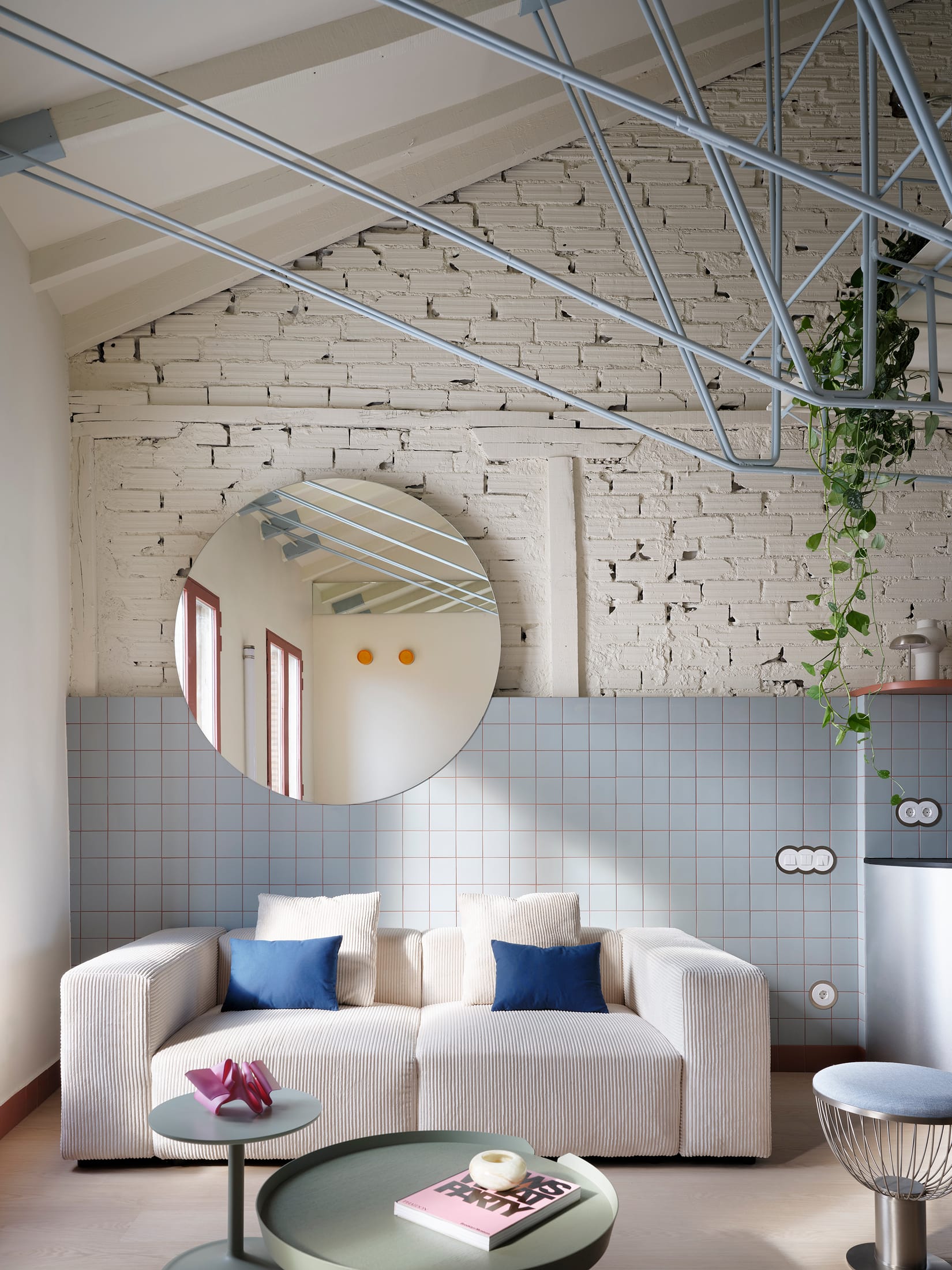
- Glass Bricks: Used to solve lighting issues in the dense urban fabric of Tetuán, glass bricks allow soft, diffused light to penetrate deep into the home without sacrificing privacy.
- Mirrors and Steel: Strategic mirror placements double the visual depth of the narrow rooms, while the thinness of the steel frames ensures that sightlines remain uninterrupted.
- The Void: A portion of the ground floor is left open to the full height of the roof, creating a double-height volume that breathes.
The Color Stratification Technique
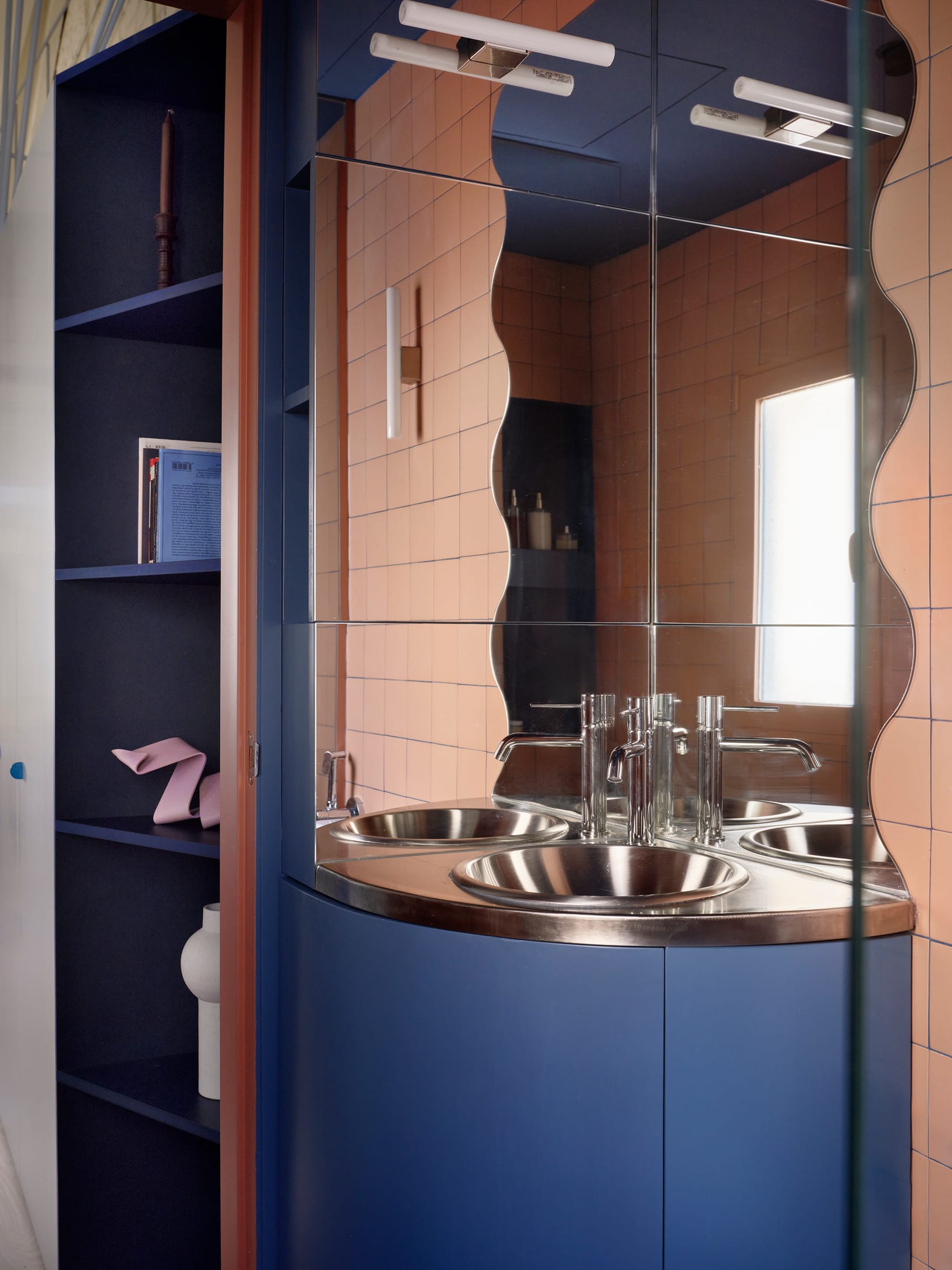
Color in Casa Cometa is used as a structural tool, not just an aesthetic one. Bardo Arquitectura utilized a strategic color stratification technique, dedicating 100% of the upper-level palette to light-reflective sky-blue and cream tones. This choice maximizes the sensation of architectural levitation, making the ceiling seem to recede into infinity.
As you move through the home, the palette shifts:
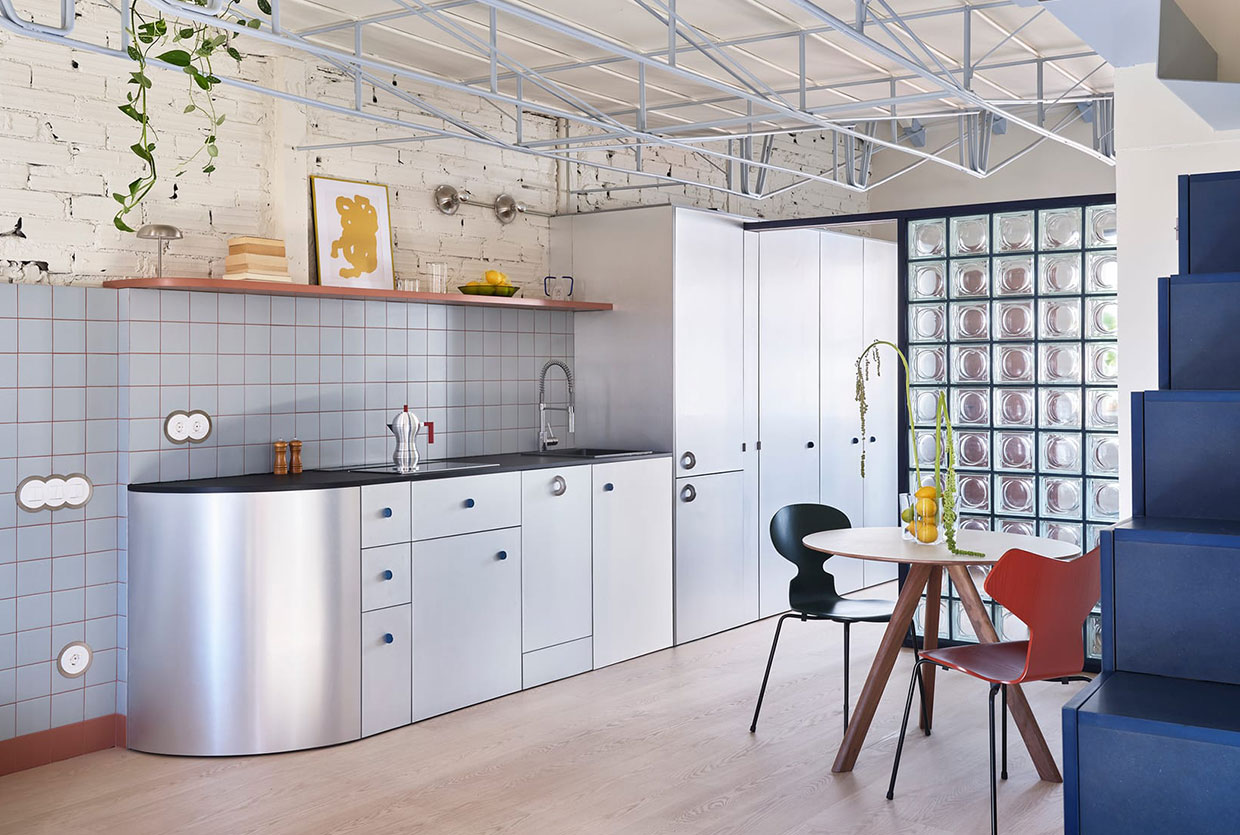
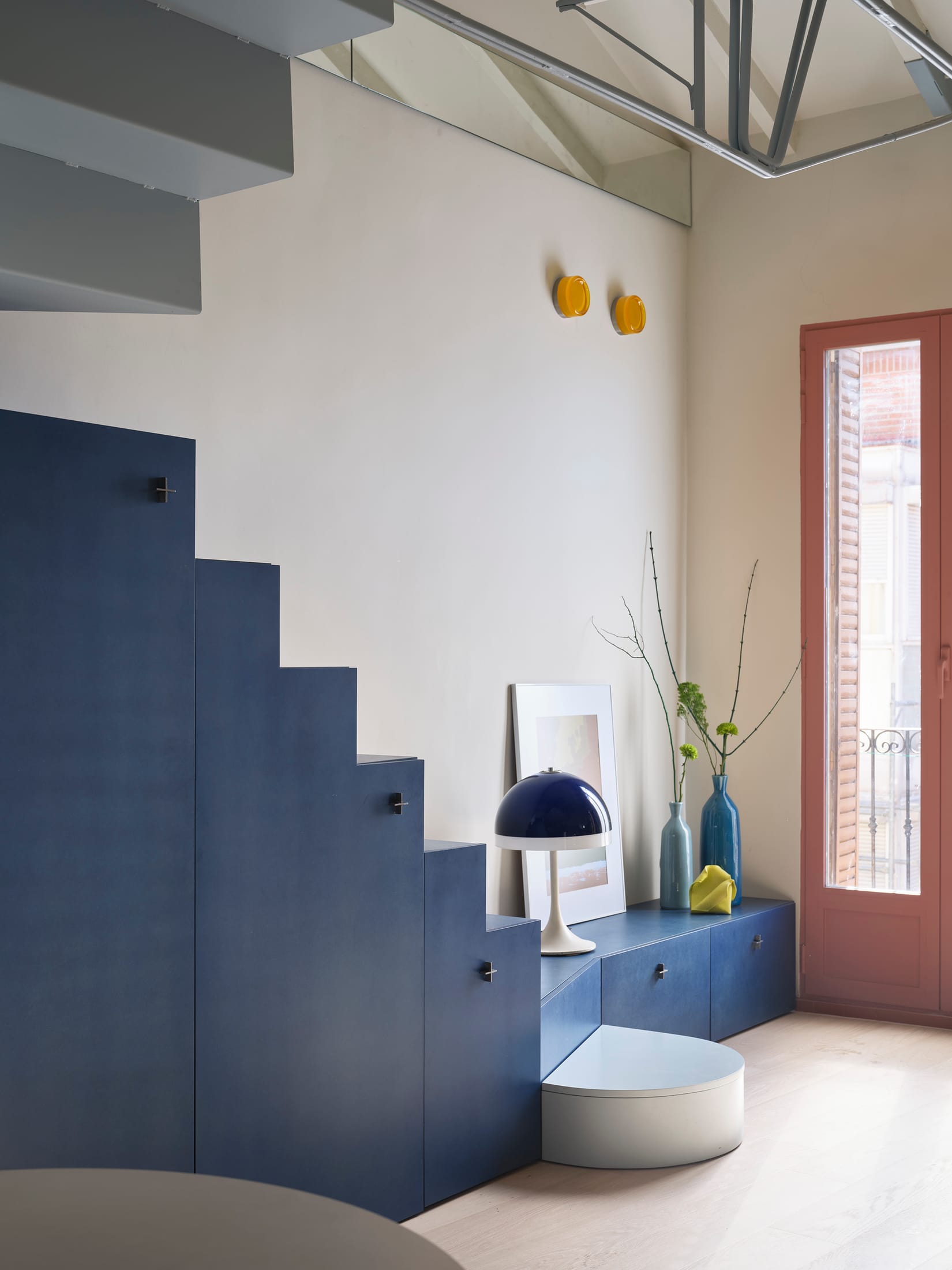
- The Base: The ground floor is "anchored" with deeper tones—dark blue cabinetry, warm timber floors, and terracotta accents. This creates a sense of security and domesticity.
- The Ascent: As you move toward the stairs, the blue lightens. The steel railings are painted a soft, atmospheric azure.
- The Sky: On the mezzanine, the world turns cream and pale blue. The reflection from the glass bricks bounces off these surfaces, filling the bedroom with a soft, celestial glow.
Interior Curation: Furniture that Floats
As an editor, I often see beautiful architecture ruined by "heavy" furniture. Casa Cometa avoids this pitfall by selecting pieces that support the weightless aesthetic. The curation, sourced largely from Espacio Betty, focuses on slender silhouettes and iconic designs that don’t block the flow of the room.
The furniture selection includes:
- HAY CP20 Dining Table: A minimalist staple that provides a clean, functional surface without visual bulk.
- Fritz Hansen Ant and Grand Prix Chairs: Their organic, spindly legs mirror the tubular structure of the house itself.
- Muuto Coffee Tables: Low-profile and airy, these pieces allow the ground-floor terracotta and timber to shine.
To balance this ethereal atmosphere, the home incorporates sculptures by artist Iria Martínez. These pieces provide what I call "artistic weight"—small, tactile moments that ground the airy architecture and remind the inhabitant that this is, after all, a place to live.
The Ivy Edit: Lessons from Casa Cometa
What can we take away from this Madrid masterpiece for our own homes?
- Verticality is Volume: If you lack floor space, look up. A mezzanine, even a small one, can change the entire psychology of a studio apartment.
- Color as a Gradient: Don't paint a small room a single color. Use a darker shade for the lower third of the walls to anchor the room, and a lighter shade for the top to lift the ceiling.
- The Power of Glass Bricks: They are making a massive comeback for a reason. They offer the perfect balance of light and privacy for urban dwellers.
Casa Cometa is more than just a renovation; it’s a reminder that even when things seem to be falling apart, with the right "suture" and a bit of poetic vision, they can be made to fly.
FAQ
How did the architects increase the living space in such a small building? The footprint of the original building was 48 square metres. By installing a lightweight tubular steel structure that could support a second level without the need for thick, space-consuming walls, the architects added a 15-square-metre mezzanine, increasing the total liveable area to 63 square metres—a 31% increase.
What is the 'Kite' concept in Casa Cometa? The 'Kite' (Cometa) concept refers to the structural and visual lightness of the home. Architecturally, it is realized through slender steel profiles and a weight-distributing 'suture' system. Visually, it is expressed through a color gradient that moves from 'earth' (terracotta) to 'sky' (pale blues and creams).
Is Casa Cometa a historic building? Yes, the original structure dates back to the 1920s and is located in Madrid's Tetuán neighborhood. The renovation was a "recovery" project that saved the building from structural collapse while introducing modern innovations.