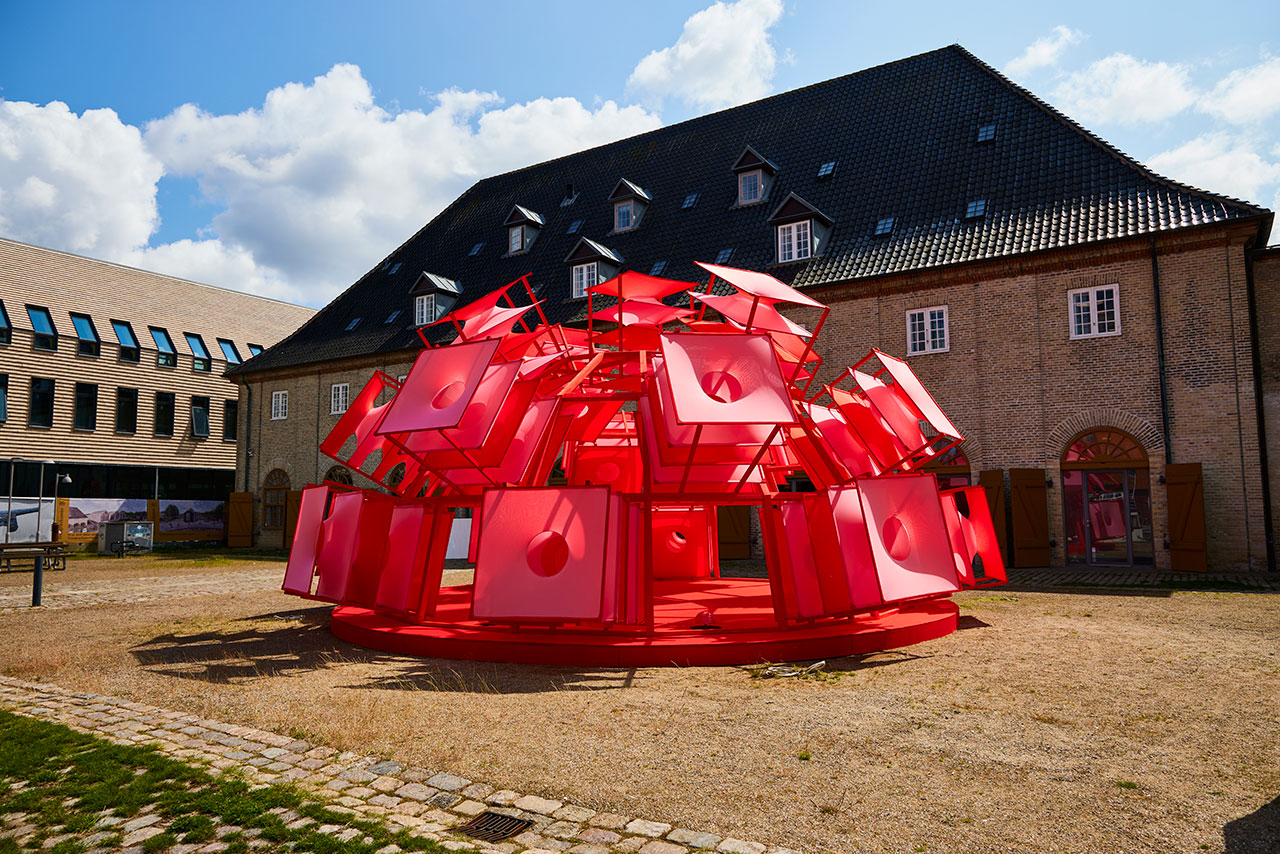
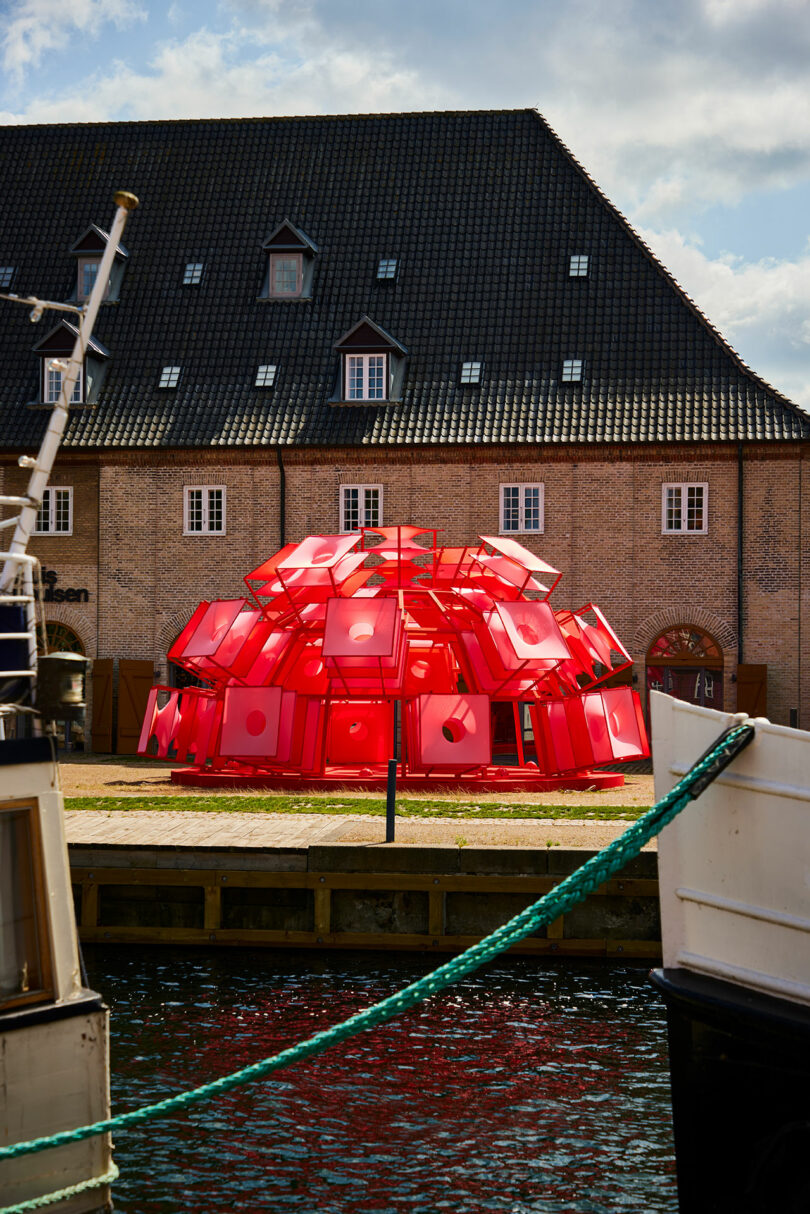
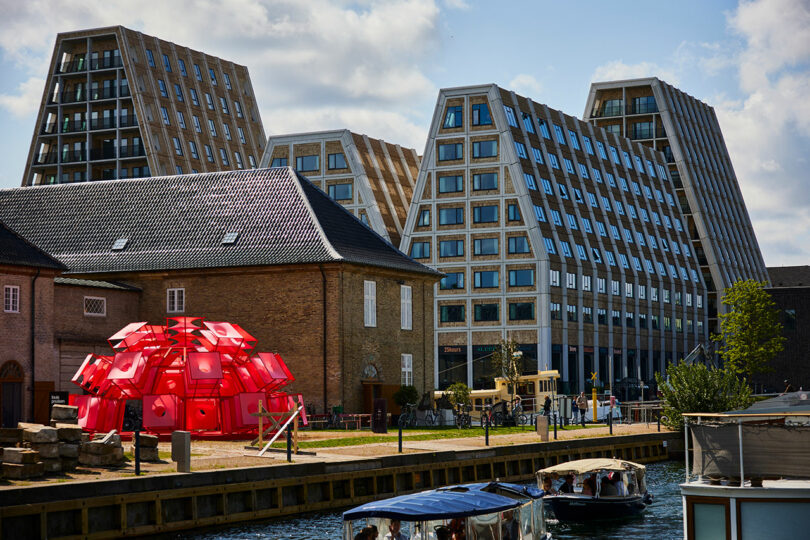
In the heart of Copenhagen, where the cool Baltic breeze meets the city’s historic harbor, a striking architectural apparition in "hot-rod red" recently stopped design enthusiasts in their tracks. This was the debut of Circle Dome Square, a monumental collaboration between the legendary lighting house Louis Poulsen and the avant-garde fashion designer Henrik Vibskov. Unveiled during the 3daysofdesign 2025 festival, the installation serves as a surrealist tribute to one of the most beloved silhouettes in mid-century modern history: Verner Panton’s 1971 Panthella lamp.
The Debut of a Surrealist Vision at 3daysofdesign 2025
Walking through Copenhagen during 3daysofdesign is always a sensory feast, but the Circle Dome Square installation offered something fundamentally different—a bridge between the functional past and an immersive future. Commissioned by Louis Poulsen, Henrik Vibskov created an expansive, textile-clad environment that essentially invites the public to step inside the geometry of a lamp.
What is 'Circle Dome Square'? It is an immersive red textile installation created for Louis Poulsen that debuted at 3daysofdesign 2025 in Copenhagen. Designed by multidisciplinary artist Henrik Vibskov, the structure pays homage to Verner Panton’s 1971 Panthella lamp by translating its iconic curves and negative space into a large-scale architectural experience.
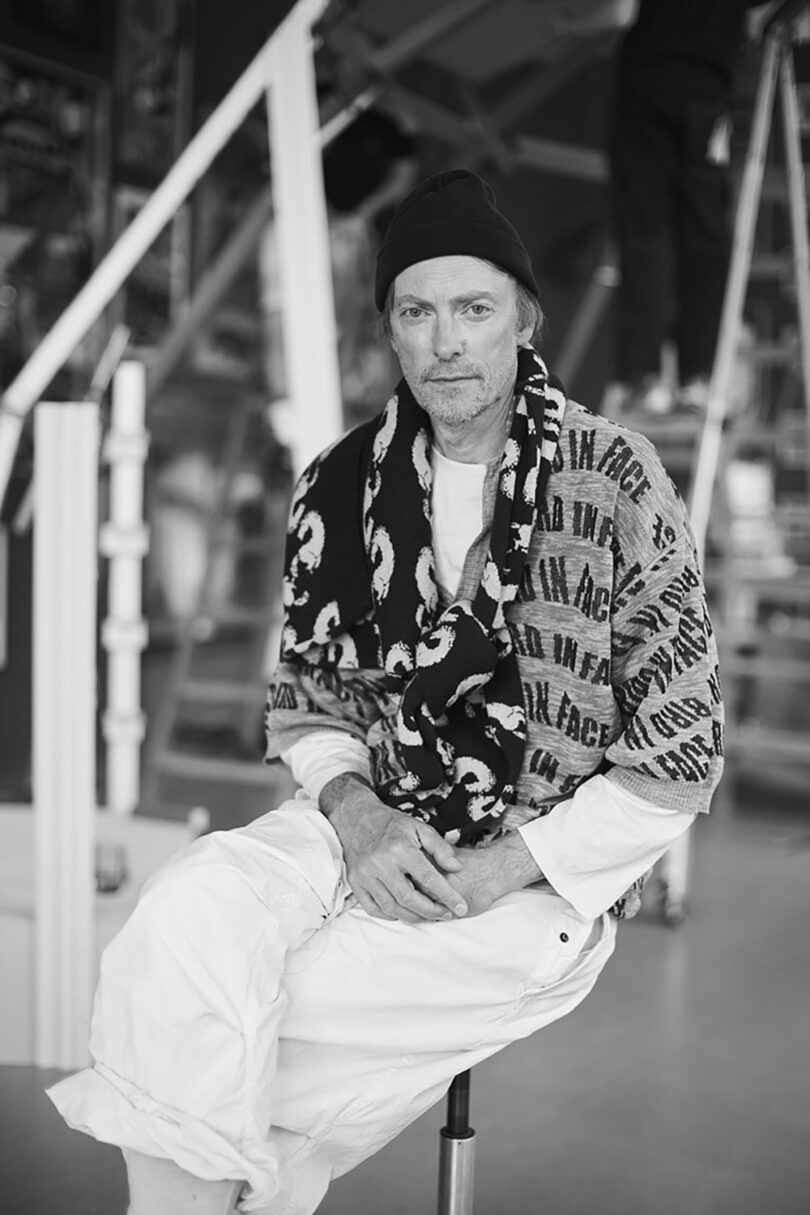
This collaboration marks a significant moment for Louis Poulsen. Known for their technical precision and "design to shape light" philosophy, the brand chose Vibskov—a designer whose work spans fashion, music, and performance art—to deconstruct their heritage. The result is not just a display of products, but a cultural dialogue. Vibskov’s vision transforms the Panthella from a tabletop accessory into a physical landscape, proving that iconic design is fluid enough to inhabit any scale.
Reinterpreting the Panthella Silhouette: From Negative Space to Architecture
How do you take a lamp that has defined "organic minimalism" for over 50 years and make it feel new? Vibskov’s approach was to look at what wasn't there. Instead of focusing on the solid mushroom shape of the Panthella, he focused on the negative space—the air around the stem and the glow beneath the shade.
How did Henrik Vibskov reimagine the Panthella lamp? Vibskov translated the lamp's iconic silhouette and negative space into a large-scale architectural structure inspired by the internal mechanics of vintage cameras and high-energy hot-rod red textiles. He broke down the lamp into its core geometric components—the circle, the dome, and the square—and layered them to create a sense of depth and movement.
"I wanted to capture the 'eternal explosion' of light," Vibskov remarked during the opening. "By looking through the lens of vintage cameras, you see how light is framed and captured. We applied that same logic to the Panthella’s form, using textiles to create a soft, breathing structure that mimics the way the lamp diffuses light in a room."
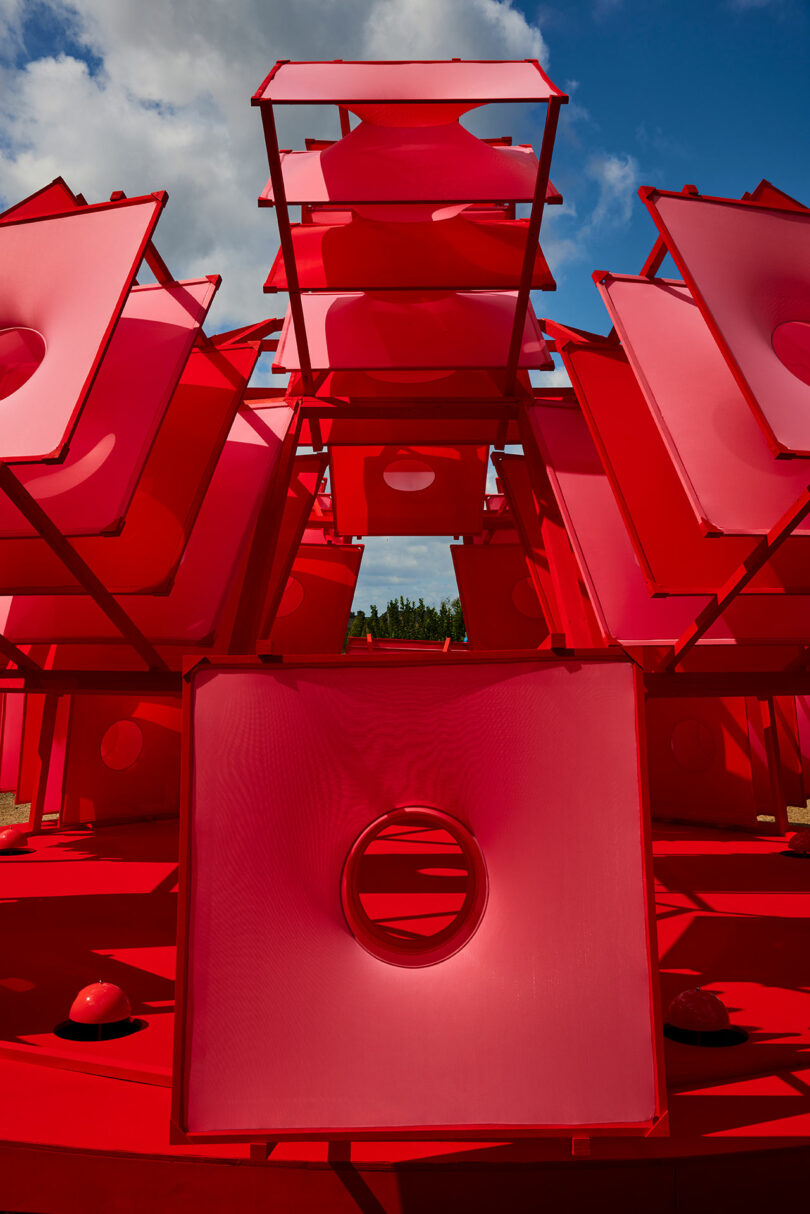
The choice of "hot-rod red" was a masterstroke of contrast. Against the muted greys and blues of the Danish waterfront, the vibrant textile structure feels like a pulse of energy. It’s a nod to Verner Panton’s own love for daring, saturated colors, but reimagined through Vibskov’s lens of high-fashion materiality.
A Sensory Sanctuary: The Intersection of Fashion and Light
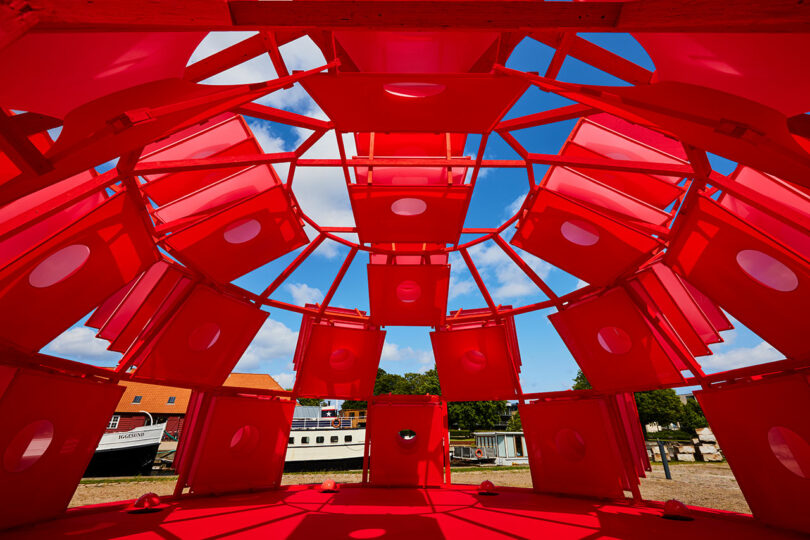
Once inside the Circle Dome Square, the bustle of the design festival fades away. The installation acts as an "igloo-like" sanctuary, where the red fabric filters the natural light to create a warm, monochromatic glow. This is where the multidisciplinary nature of the collaboration truly shines.
The theme of the Louis Poulsen and Henrik Vibskov collaboration is the fusion of designer lighting with multidisciplinary art. It focuses on the intersection of fashion, textile, and light to create a surrealist, sensory-rich environment that challenges the traditional boundaries of interior design.
| Feature | Panthella Lamp (1971) | Circle Dome Square (2025) |
|---|---|---|
| Primary Material | Acrylic / Steel | Recycled Textiles |
| Context | Residential Interior | Public Urban Installation |
| Color Palette | Historically White/Opal | High-Energy Hot-Rod Red |
| User Experience | Visual / Ambient | Immersive / Sensory |
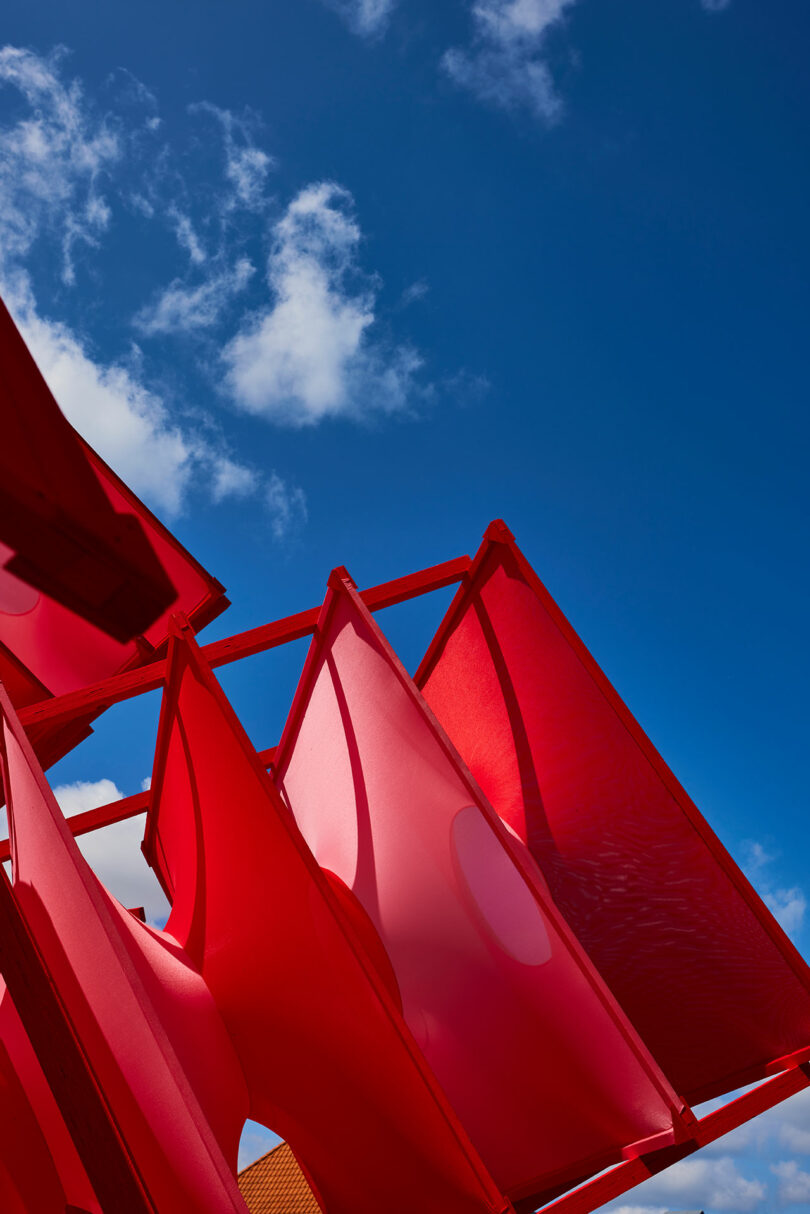
By using textiles instead of hard plastics or metals, Vibskov softens the architectural experience. The walls of the installation ripple slightly in the wind, making the space feel alive. It invites visitors to linger, reflect, and experience "light" as a physical volume rather than just a source of illumination. It is a rare moment in modern design where fashion’s tactile sensitivity meets the rigid principles of lighting engineering.
Beyond the Installation: The Rise of Sculptural Minimalism in 2026
While Circle Dome Square is a temporary installation, its impact points toward a significant shift in how we will design our homes in the coming years. We are moving away from "invisible" lighting and toward pieces that demand to be seen as art.
According to the 2026 Luxury Lighting & Design Forecast, a staggering 85% of high-end interiors are trending toward 'sculptural minimalism.' In this trend, light fixtures are no longer just functional utilities; they serve as primary artistic focal points, often dictating the entire aesthetic of a room.
The Panthella, with its perfectly balanced proportions, is the forefather of this movement. However, the Circle Dome Square represents the first large-scale public architectural translation of the Panthella lamp's silhouette since its original debut in 1971. This transition from "object" to "environment" signals a future where our living spaces are curated around emotional and sensory experiences rather than just furniture arrangements.
- Emotional Lighting: The focus is on how light makes us feel, using warmer tones and diffused textures.
- Material Softness: Expect to see more fabric-wrapped lighting and soft-touch surfaces in 2026.
- Architectural Integration: Lighting is becoming part of the room's very bones, much like Vibskov’s pavilion.
Why This Collaboration Defines the Future of Public Art
The success of Henrik Vibskov and Louis Poulsen’s partnership lies in their shared creative spirit. Both the late Verner Panton and Vibskov are known for their refusal to be "boxed in" by a single discipline. Panton was an architect who revolutionized furniture; Vibskov is a fashion designer who builds worlds.
This installation proves that the future of public art and interior design is increasingly "boundary-less." By taking a design icon out of the living room and placing it in the public square, Louis Poulsen has democratized the sensory experience of high-end design. It encourages a discussion on how sensory-rich environments can improve urban wellbeing, providing a "moment of red" in an otherwise grey world.
As we look toward 2026, the legacy of the Panthella remains stronger than ever. Whether it’s a small lamp on a bedside table or a massive red pavilion in Copenhagen, the goal remains the same: to shape light in a way that moves the soul.
FAQ
Is the 'Circle Dome Square' installation a permanent structure?
No, the Circle Dome Square was a temporary architectural installation created specifically for the 3daysofdesign festival in Copenhagen in 2025. However, the design principles and the "hot-rod red" aesthetic have influenced new limited editions and design directions for Louis Poulsen's future collections.
Can I buy a red Panthella lamp like the one inspired by the installation?
Following the collaboration, Louis Poulsen often releases special editions. While the installation was a unique architectural piece, the trend toward bold colors like "hot-rod red" is reflected in the expanding color palette of the Panthella 160 Portable and Panthella Mini series.
What makes the Panthella lamp so iconic in design history?
Designed by Verner Panton in 1971, the Panthella is iconic because both the base and the shade serve as reflectors. Its organic, mushroom-like shape was revolutionary for its time, utilizing new plastic molding techniques to create a glare-free, soft light that remains a staple of modern Scandinavian design.