Walking through the narrow, sun-drenched lanes of Surry Hills or Darlinghurst, one cannot help but admire the rhythmic beauty of the Sydney terrace house. These Victorian-era dwellings are the backbone of the city’s urban identity, yet they often present a formidable challenge for modern living. They are notoriously "old bones"—dark, damp, and characterized by a constricted footprint that barely allows for the breath of contemporary life.
However, the Sydney-based architectural firm Retallack Thompson, led by Jemima Retallack and Mitchell Thompson, has pioneered a transformative approach to these heritage structures. Their work doesn't just "renovate"; it reimagines. By utilizing the industrial honesty of galvanised steel—often in plates as slim as 8mm—they create structural interventions that maximize internal space while maintaining a crystalline distinction between heritage fabric and contemporary additions. Their projects, such as the acclaimed Rows End and Steel House/Stone House, serve as a blueprint for how we might preserve our past without sacrificing the functionality of our future.
The Case for Galvanised Steel: Rows End in Surry Hills
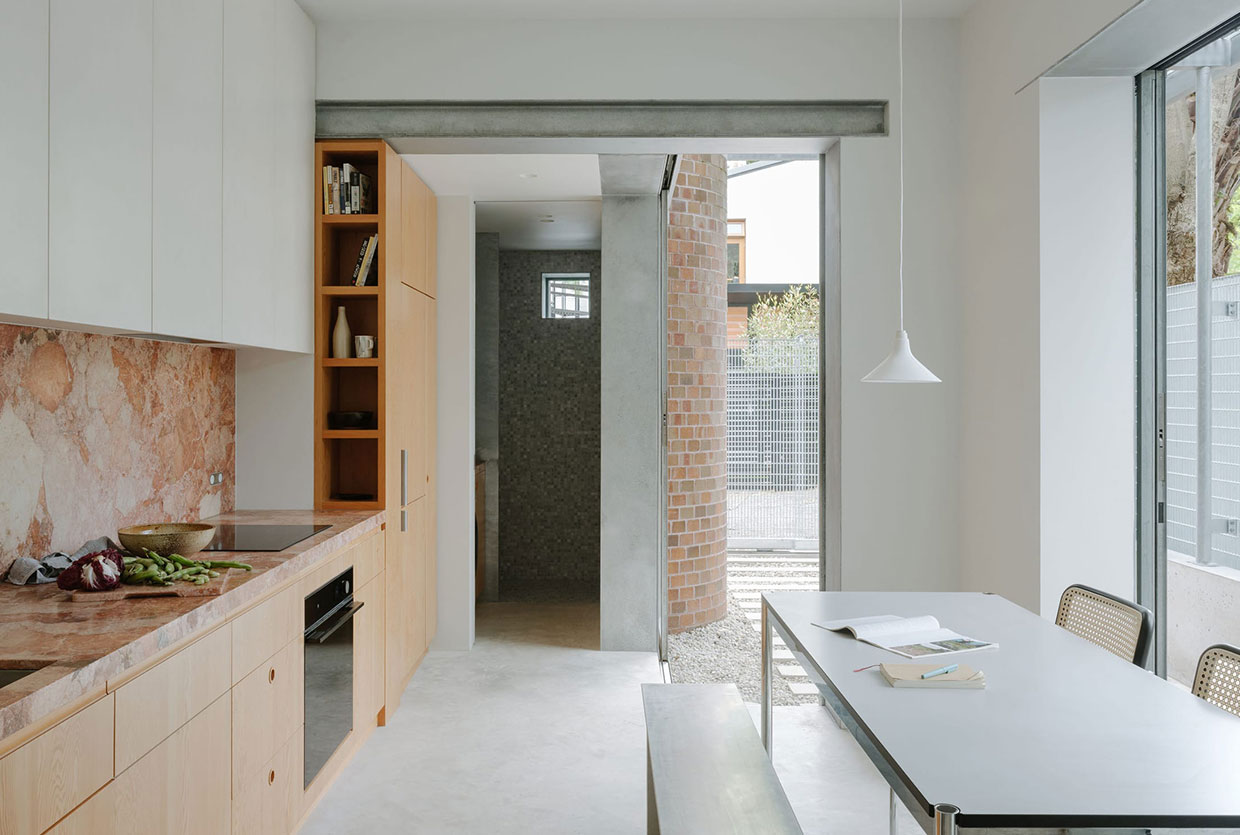
In the heart of Surry Hills, the Rows End project stands as a testament to the firm’s pragmatic yet atmospheric design philosophy. Traditional terrace renovations often lean toward timber or masonry extensions, but Retallack Thompson argues that these materials can sometimes feel heavy or cumbersome in tight urban quarters. Instead, they turned to galvanised steel.
The choice was born out of necessity. The original structure suffered from severe water ingress and root damage—common ailments for century-old masonry. By replacing failing traditional materials with steel, the architects addressed these structural repairs with a material that is inherently durable and weather-resistant.
How does Retallack Thompson use steel in terrace renovations? They utilize thin-plate galvanised steel as a primary structural and aesthetic tool. Unlike thick timber beams or chunky brickwork, steel offers immense strength with a minimal profile. This allows them to create "clean delineations"—where you can see exactly where the Victorian brick ends and the 21st-century intervention begins. It is a dialogue between the rugged, textured history of the site and the sharp, luminous precision of the new work.
"Our approach is often about making with less. We look for the most direct way to solve a problem, whether that's a structural failure or a lack of light, and we use materials that feel honest to that purpose." — Retallack Thompson
Structural Precision: The 8mm Space-Saving Secret
When you are working within a terrace that might only be 3.5 to 4 meters wide, every millimeter is a luxury. Traditional wall thicknesses can eat up precious internal floor area. This is where Retallack Thompson’s technical mastery of steel becomes a game-changer for the Sydney homeowner.
By utilizing steel plates as thin as 8mm, the firm is able to create structural partitions, stairs, and shelving that take up virtually no visual or physical volume. This "thin-plate" strategy allows for:
- Maximized Internal Width: Gaining back 10-15cm of living space that would otherwise be lost to standard stud walls.
- Visual Transparency: The slim profiles allow sightlines to remain open, making a small house feel expansive.
- Integrated Joinery: In many of their projects, the structural steel also acts as the finished surface for shelving and seating, reducing the need for additional bulky furniture.
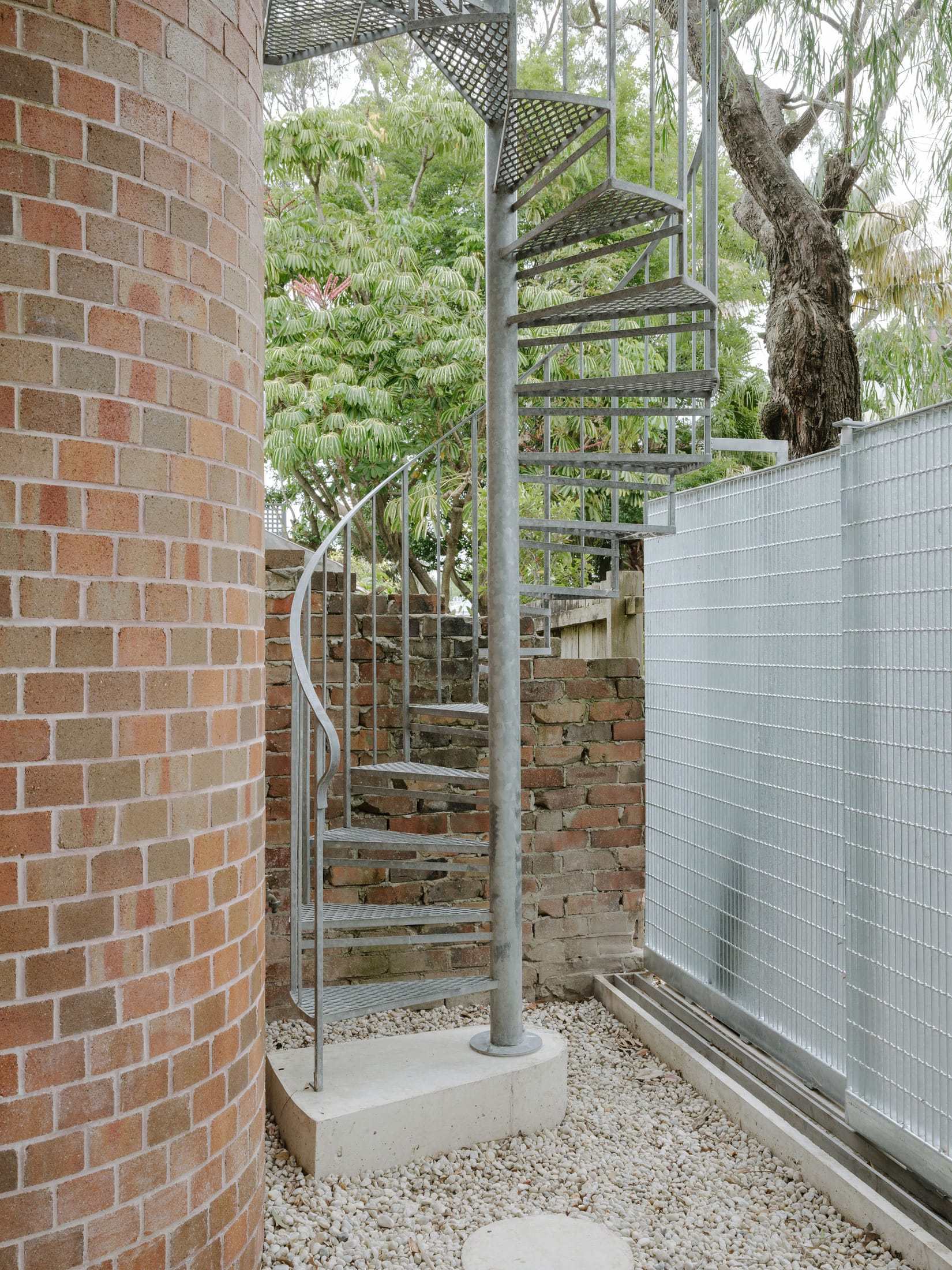
This precision is particularly evident in their intervention for the Steel House. Here, the use of sectional steel wasn't just about support; it was about light. By using steel gratings and thin-framed windows, they managed to filter light deep into the belly of the house, a feat nearly impossible with traditional construction methods.
The Elevated Deck: Filtering Light through Metal
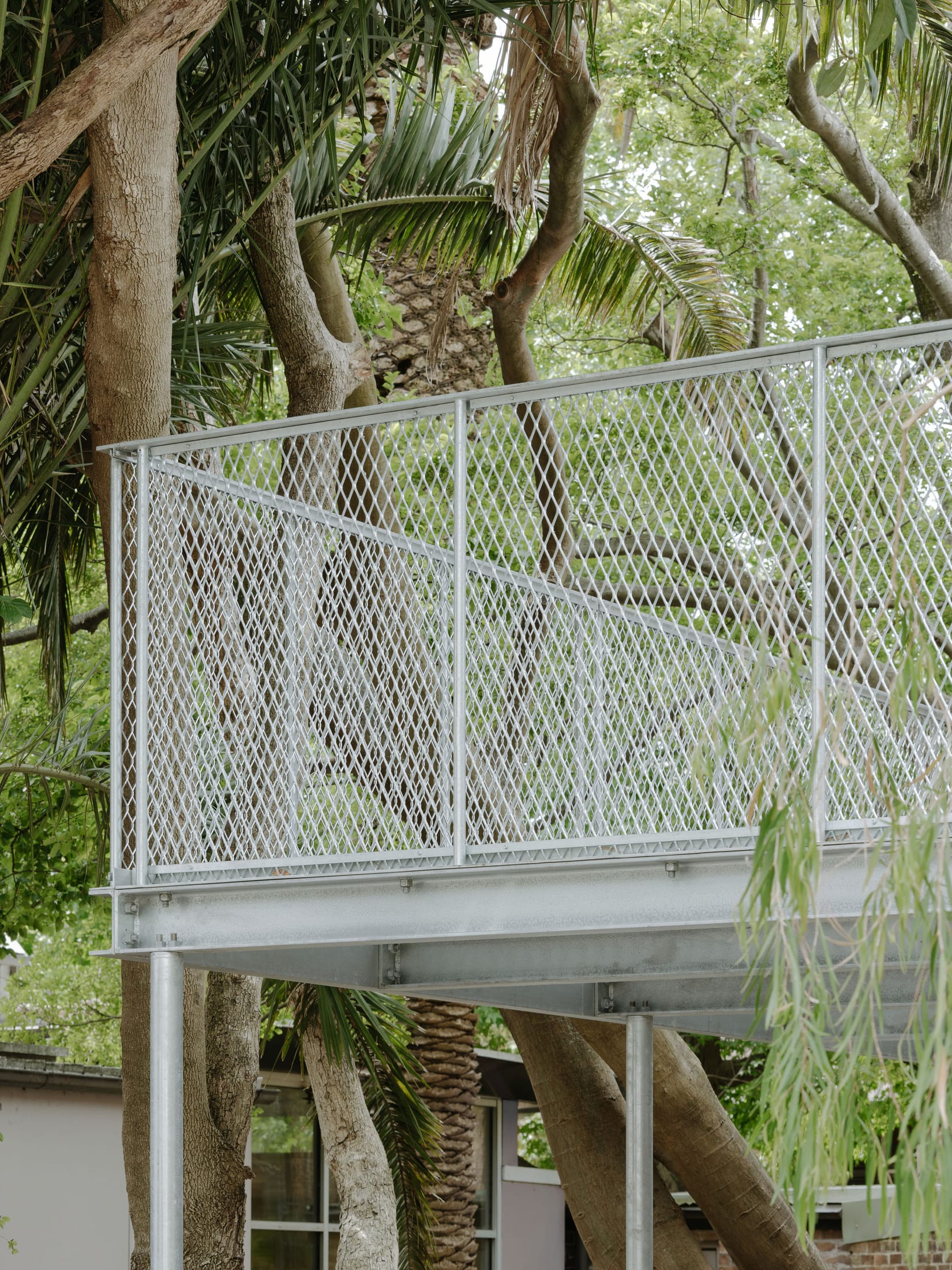
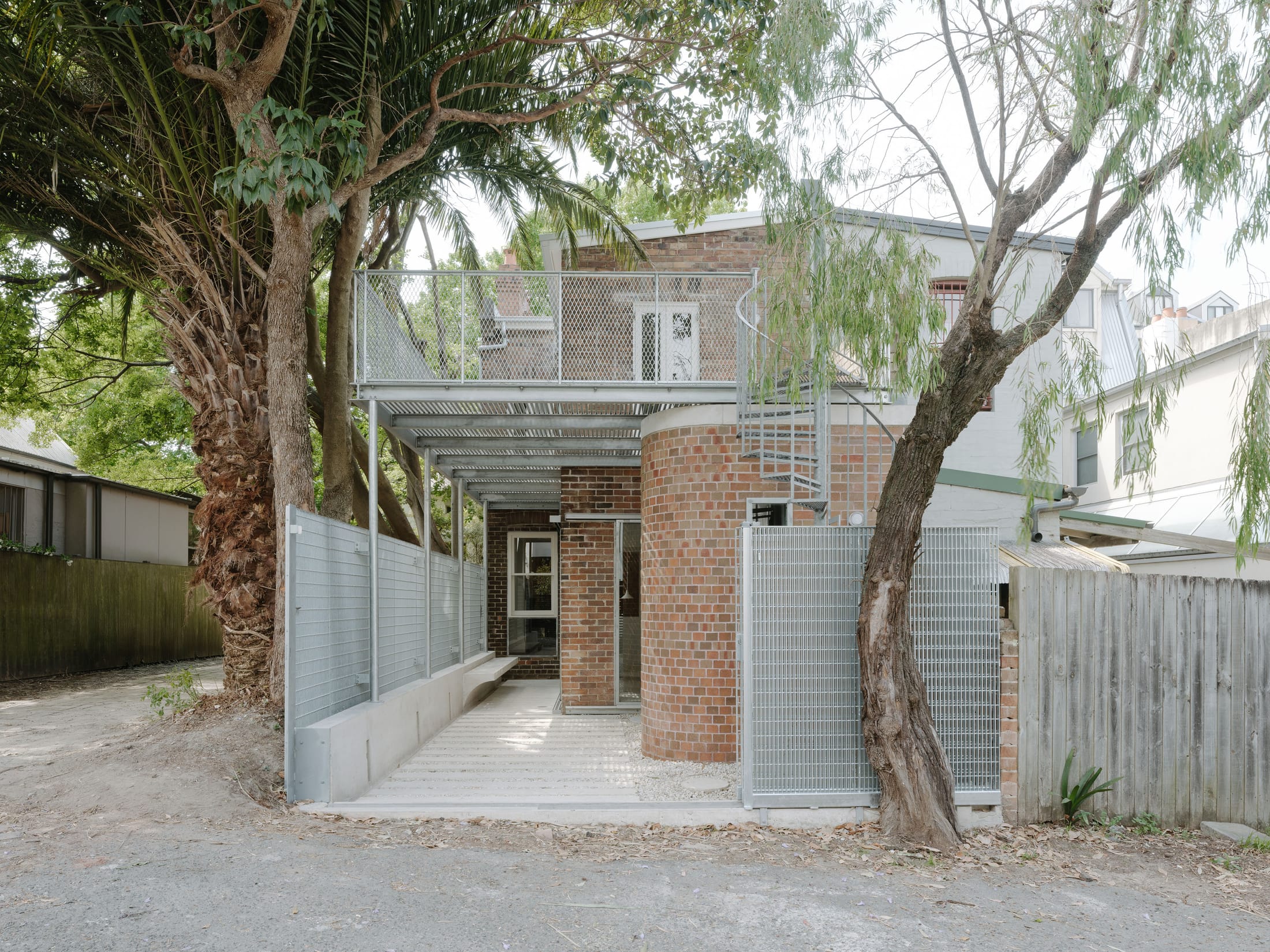
One of the most poetic elements of a Retallack Thompson renovation is the way they handle the transition between indoors and out. In many Sydney terraces, the rear courtyard is a dark, forgotten space. The architects often introduce elevated decks or walkways constructed from galvanised steel mesh.
This choice is both functional and atmospheric. The mesh provides a stable walking surface but remains permeable to both water and light. As the sun moves across the Sydney sky, it passes through the steel sections, casting a "dappled light" effect into the living spaces below. It transforms a harsh industrial material into something that feels almost like a forest canopy, softening the transition between the built environment and the garden.
Reimagining Heritage for Multi-Generational Living
As Sydney’s property market becomes increasingly inaccessible, the demand for multi-generational living has surged. However, fitting two families into a single heritage terrace often feels like a spatial puzzle with no solution. Retallack Thompson’s Steel House/Stone House project in Darlinghurst provides a masterclass in how to achieve this.
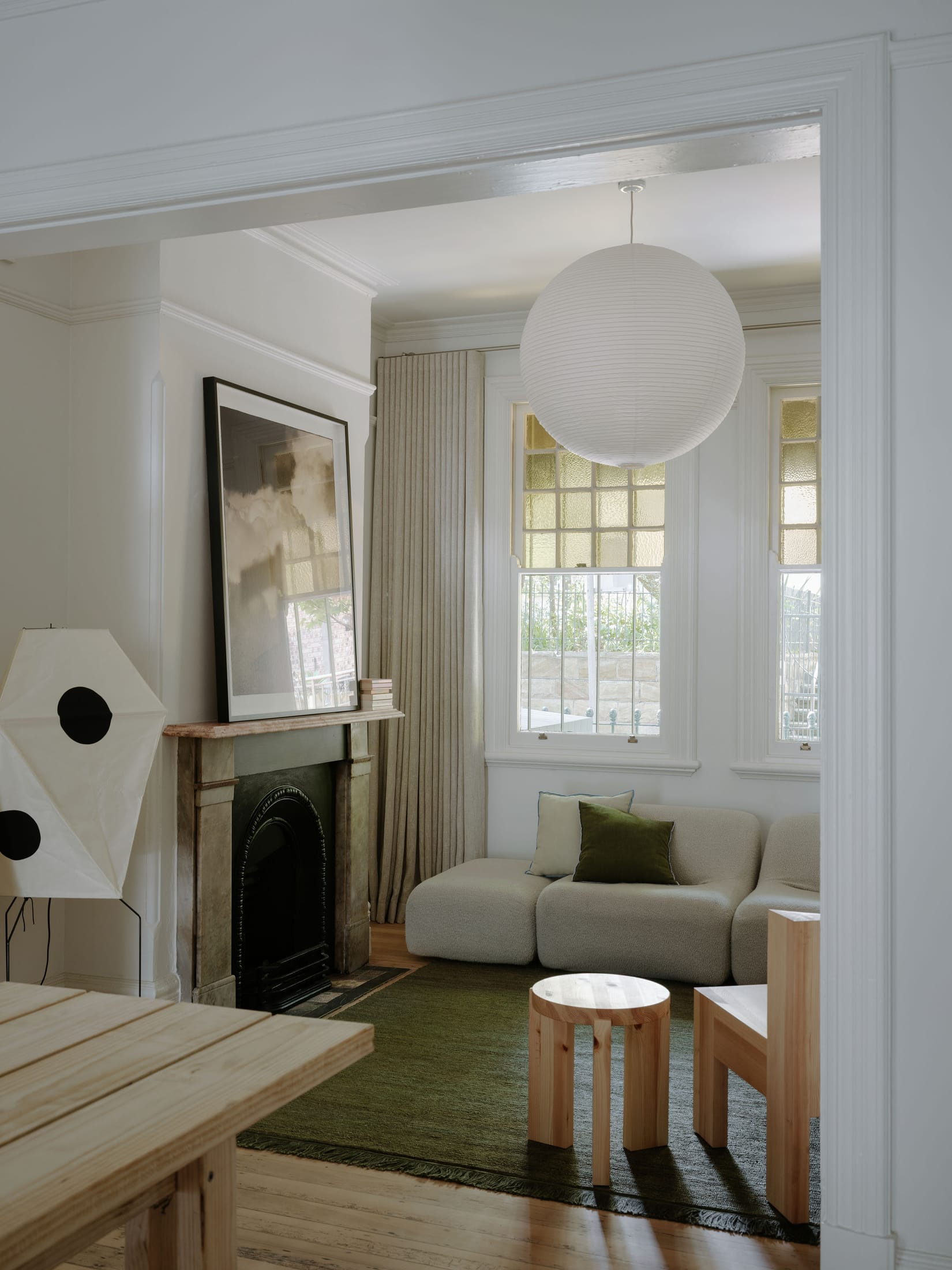
Can heritage terraces support multi-generational living? Yes, by reimagining the site as a "village" rather than a single monolithic home. In the Darlinghurst project, the architects integrated two separate dwellings on a single site that featured an original sandstone structure dating back to the 1830s.
The "Village" Concept Breakdown
| Feature | Stone House (Heritage) | Steel House (Contemporary) |
|---|---|---|
| Occupancy | Primary family residence | Secondary dwelling/Studio |
| Materiality | Original 1830s Sandstone | Galvanised Steel & Glass |
| Atmosphere | Grounded, thermal mass, historical | Light, airy, permeable |
| Connection | Shared central courtyard | Private roof retreats |
The genius of this layout lies in the "shared gathering spaces." By placing a courtyard between the two structures, the families have a place to meet, yet each dwelling retains its own private entrance and distinct character. The steel addition doesn't try to mimic the sandstone; instead, it acts as a lightweight "shadow" of the original, providing all the modern amenities (like open-plan kitchens and sun-lit bedrooms) that the heavy stone walls of the 1830s couldn't offer.

Design Philosophy: Australian Regionalism and Making with Less
Retallack Thompson’s work is deeply rooted in a sense of place. Their use of galvanised steel isn't just an aesthetic whim; it’s a nod to Australian regionalism. Steel is a material synonymous with the Australian shed and the industrial history of our ports. By bringing it into the domestic sphere of the Sydney terrace, they create homes that feel rugged yet refined.
A key part of their process involves collaborating with local fabricators. In fact, Mitchell Thompson’s father is a skilled steel fabricator, which allowed for a level of experimentation with the "Atmospheric Mesh" and 8mm plate details that most architects wouldn't dare. This focus on local "making" ensures that the houses are not just designed, but crafted.
The "Atmospheric Mesh" serves three primary purposes:
- Privacy: From certain angles, the mesh is opaque, shielding residents from neighbors in dense Surry Hills.
- Permeability: It allows for natural cross-ventilation, reducing the need for air conditioning.
- Luminosity: The galvanised finish reflects the sky, changing color from a cool grey on cloudy days to a brilliant silver in the afternoon sun.
This sustainable mindset—focusing on repair, refurbishment, and the clever use of materials to extend the life of a building—is what sets their work apart. They advocate for a "less is more" approach that values the historical narrative of the site just as much as the new architectural intervention.
The Future of Urban Heritage
The work of Retallack Thompson suggests that the future of Sydney’s heritage doesn't lie in preservation through stagnation, but through bold, material-led innovation. By embracing the strength and slimness of galvanised steel, they have found a way to make the terrace house breathe again.
Whether it’s solving the practical issues of water ingress at Rows End or facilitating a new way of living for multiple generations in Darlinghurst, their projects prove that we don't have to choose between history and modern comfort. We can have both—provided we are willing to let a little light, and a little steel, into our lives.
FAQ
Why is galvanised steel better than stainless steel for these renovations? While both are durable, galvanised steel has a unique textured, "spangled" finish that weathers beautifully over time, developing a dull grey patina that complements old sandstone and brick. It is also generally more cost-effective for large-scale structural work while offering superior corrosion resistance for the Sydney climate.
Is an 8mm steel plate really strong enough for a house? Yes, when engineered correctly. Steel has incredibly high tensile strength. Retallack Thompson uses it in specific structural applications where the plate can be braced or tensioned, allowing them to replace much thicker traditional materials without compromising safety.
How do these steel additions affect the temperature of the house? While steel is a conductor, Retallack Thompson uses it strategically. By combining steel frames with high-performance glazing and creating "permeable" mesh zones for airflow, they actually improve the thermal regulation of the house compared to the original, poorly-ventilated Victorian layout.