The air around the kiln site doesn't just feel hot; it vibrates. It is a shimmering, visceral weight that settles in your lungs and clings to your skin. For those standing on the front lines of a high-heat ceramic burn, the world shrinks down to the glow of a firebox and the rhythmic, grueling demands of a 48-hour cycle. This isn't the sterilized, push-button world of modern manufacturing. This is wood firing—a primitive, beautiful, and punishing process where earth, wood, and human endurance collide to create art that no machine could ever replicate.
At its core, wood firing is a ceramic method dating back to the 5th century that utilizes firewood and extreme heat—often exceeding 2,000°F (1,100°C)—to vitrify clay. Unlike electric or gas kilns, where the atmosphere is controlled and predictable, a wood kiln is a living thing. The unique surface textures and natural glazes are born from the chaotic interaction between the roaring flames and the wood ash itself. Over the course of a traditional 48-hour continuous cycle, a dedicated team must hand-feed the kiln every few minutes, maintaining a delicate balance between oxygen and fuel to ensure the clay matures and the ash melts into glass.
What is Wood Firing in Ceramics?
To the uninitiated, the process might look like chaos, but it is a highly calculated dance with the elements. In a world of digital perfection, wood-fired ceramics represent a return to the organic. While modern electric kilns rely on pre-applied chemical glazes and internal heating elements, wood firing is a "primitive" process in the most elevated sense of the word.
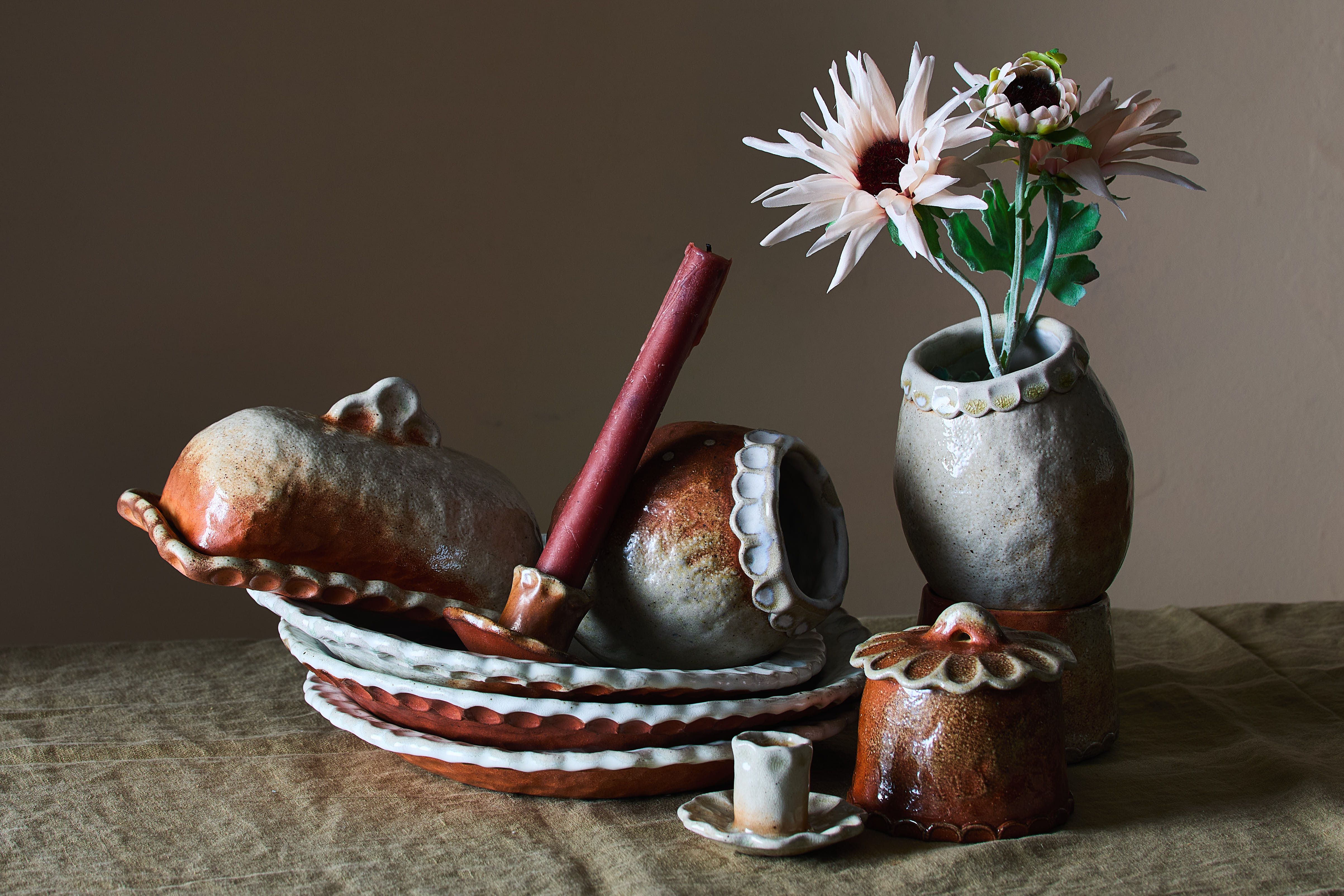
The distinction lies in the fuel. In a wood kiln, the wood is both the heat source and the decorator. As the wood burns, it releases ash—fine particles of minerals like calcium, potassium, and magnesium. At temperatures exceeding 2,000 degrees Fahrenheit, this ash becomes airborne, traveling through the kiln on the "path of the flames." When it lands on the bare clay surfaces of the pottery, it acts as a flux, melting and fusing with the silica in the clay to create a natural ash glaze. The result is a vitreous, glass-like finish that ranges from mossy greens to scorched umbers, all created organically without a single drop of liquid glaze being applied by hand.
The Anagama Legacy: 1,500 Years of History
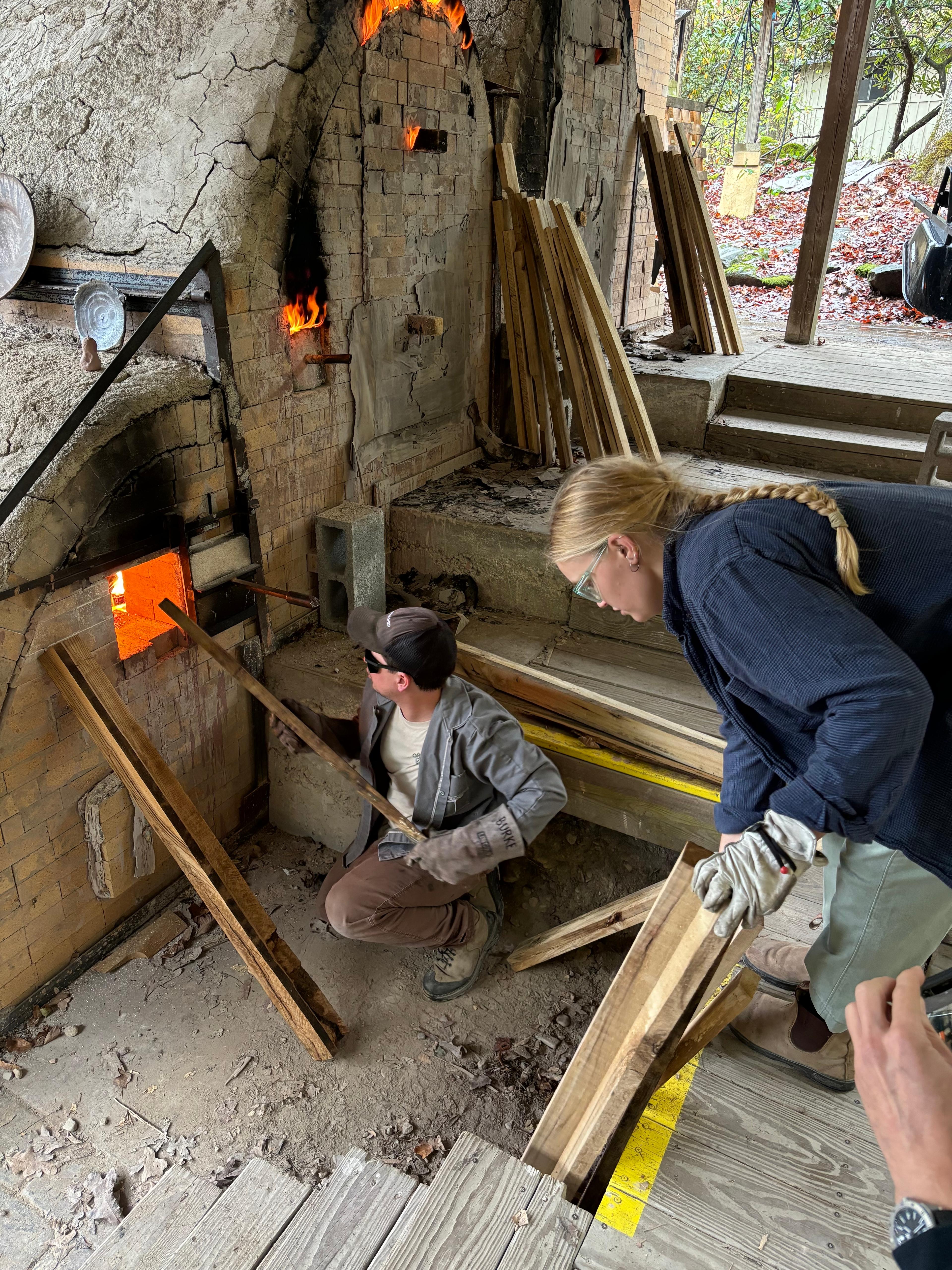
The most primitive and revered structure used in this process today is the Anagama kiln. The term literally translates to "hole kiln" or "cave kiln," a nod to its origins in the 5th century. Emerging from the Kudara region of the Korean peninsula and eventually finding its spiritual home in the Shigaraki and Iga regions of Japan, the Anagama has a history spanning over 1,500 years.
The structure is deceptively simple: a long, sloping tunnel built into a hillside or constructed from thousands of pounds of refractory brick. It consists of a single chamber that acts as both the firebox and the ware-chamber. This design is essential for the draft; as hot air rises up the slope toward the chimney, it draws oxygen in through the front, creating a literal river of fire that flows over the pottery. Because there are no internal walls to separate the pots from the fuel, the pieces are subjected to the full force of the embers and ash, resulting in the rugged, masculine charm that defines this ancient style.
The 48-Hour Marathon: The Firing Process
A wood firing is not a solo endeavor; it is a community ritual. Because the kiln must be hand-fed with wood every few minutes for 48 consecutive hours, it requires a "firing crew" working in shifts. The process begins long before the first match is struck.
The Art of the Load
Loading an Anagama is a strategic puzzle that can take several days. Artists must consider the "flame path"—the way the fire will weave through the stacks of pots. Pieces placed near the front (the firebox) will be heavily encrusted with ash and scorched by direct flame, while those in the back may receive a lighter, more delicate "flashing" of color. To prevent the pots from fusing to the kiln shelves or to each other as the ash melts, each piece is set on "wads"—small balls of clay mixed with alumina hydrate that act as sacrificial spacers.
The Cycle of Heat
Once the kiln is sealed, the "candle" phase begins, slowly warming the bricks to drive out moisture. As the temperature climbs, the intensity increases. By the 24-hour mark, the crew is often stoking several hundred pounds of wood per hour.
Expert Insight: The most critical phase is the "Soaking" stage. During the final hours, the team maintains the peak temperature (over 2,000°F) without letting it drop. This allows the heat to penetrate the thick clay walls and gives the melted ash time to flow and "mature" across the surfaces, ensuring a durable, vitreous finish.
The Human Element
As the 36-hour mark passes, exhaustion sets in. The roar of the kiln becomes a constant hum, and the air is thick with the scent of pine and oak smoke. There is a primal connection formed here—stoking the fire is a rhythmic, almost meditative act. You are no longer just an artist; you are a guardian of the flame, ensuring that the 1,500-year-old tradition continues for one more night.
The Chemistry of Chaos: Natural Ash Glazes and Flame Marks
What makes wood-fired pottery truly unique is that the "finish" is a record of the fire's movement. Unlike a factory-made mug with a uniform color, a wood-fired vessel tells a story of where it sat in the kiln, how the wind blew during the second night, and which type of wood was used for fuel.
The visual language of wood firing is rich with specific phenomena. Because the process is organic, Japanese terminology is often used to describe the "effects" that occur when the chemistry of the wood ash interacts with the minerals in the clay.
| Term | Description | Visual Character |
|---|---|---|
| Bi-doro | "Dragon Tears"; glassy green drips caused by heavy ash accumulation. | Thick, translucent beads of emerald or olive glass. |
| Koge | "Scorched"; surfaces encrusted with carbon and heavy ash from being buried in embers. | Rough, dark, and matte textures with a metallic sheen. |
| Hi-iro | "Fire Color"; orange or red flashing marks where the flame licked the clay. | Vibrant, warm blushes on the unglazed clay body. |
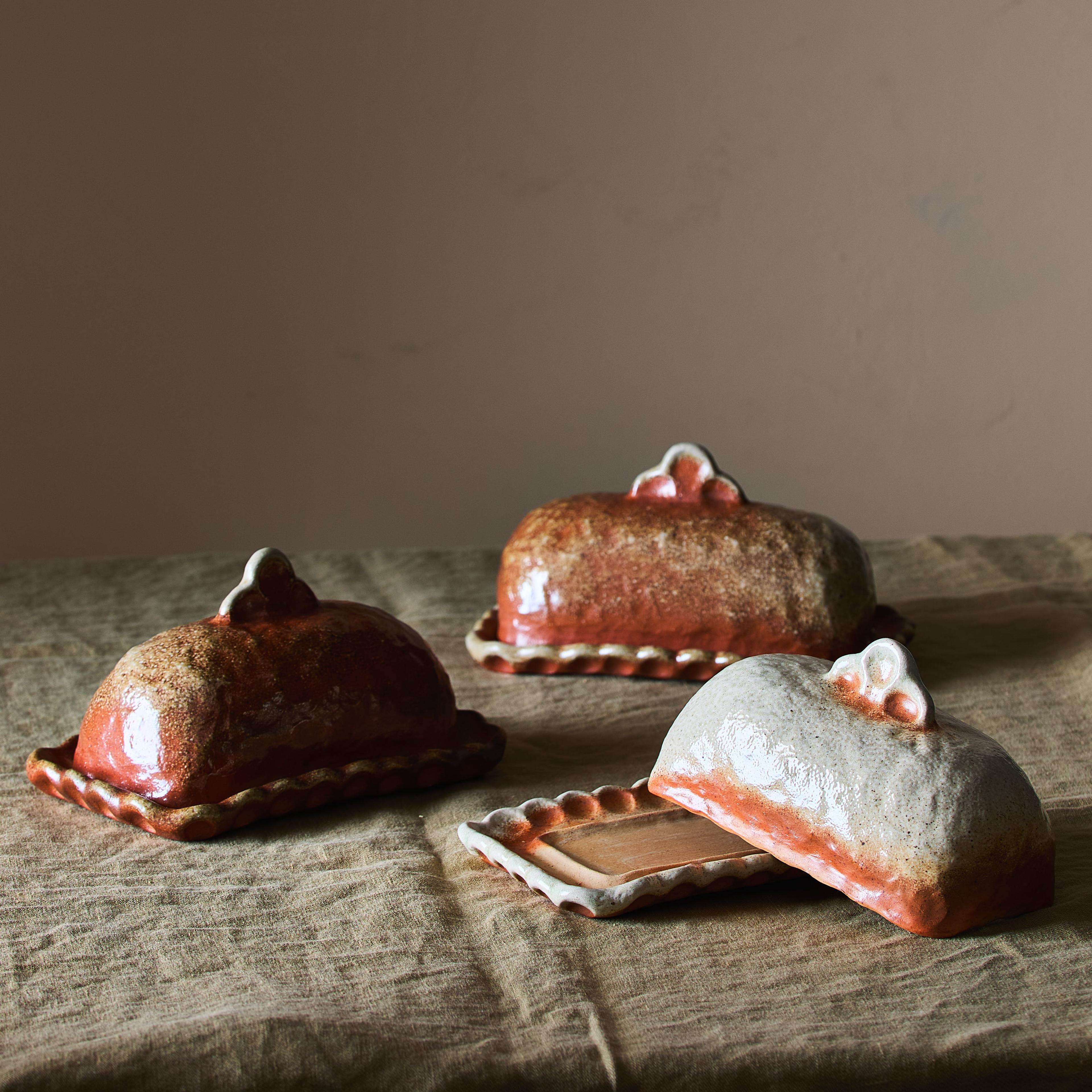
The "Bi-doro" effect is particularly sought after. It occurs when the temperature is high enough and the duration long enough that the ash accumulates into a liquid pool and begins to run down the side of the pot, freezing in time as the kiln cools. These "tears" are the fingerprints of the fire, impossible to recreate in any other environment.
Safety and Mastery: The Risks of the Ancient Way
Operating a 2,000-degree furnace for two days is not without its perils. A traditional Anagama can be constructed from upwards of 5,000 pounds of brick, and the sheer thermal mass means the kiln stays dangerously hot for days after the firing ends. Physical hazards—from flying sparks to the sheer exhaustion of lifting heavy wood—are constant companions.
Mastery of this ancient way requires more than just technical knowledge; it requires "patience, practice, and experience." An artist must learn to "read" the fire by the color of the light inside the kiln—moving from a dull cherry red to a blinding, incandescent white. They must understand how different woods (pine for heat, oak for ash) affect the final outcome. It is a lifelong pursuit where the kiln often has the final say.
FAQ
Q: Why does a wood firing take 48 hours when an electric kiln can fire in 12? A: The 48-hour duration isn't just about reaching a temperature; it’s about the accumulation of ash. It takes time for enough wood to burn and for that ash to travel through the kiln and melt into a thick, natural glaze. Shortening the process would result in a thin, "starved" surface rather than the rich, glassy textures wood firing is known for.
Q: Are wood-fired ceramics food-safe? A: Yes. Because the temperatures exceed 2,000°F, the clay becomes fully vitrified (non-porous), and the natural ash glaze is essentially a form of glass. As long as the artist has ensured a mature melt, these pieces are as functional and safe as any modern dinnerware, though they should generally be hand-washed to preserve their unique textures.
Q: Can any type of wood be used? A: Most wood-fire artists prefer softwoods like pine for the bulk of the firing because they burn hot and fast, creating long flames that reach the back of the kiln. Hardwoods like oak or ash are often introduced later to provide a different quality of ash and to build up the ember bed.
Conclusion
The 48-hour burn is more than a technical process; it is a bridge to our ancestors. In the glow of the Anagama, we see the same light that potters saw 1,500 years ago. Every piece that emerges from the cooling kiln—whether it bears the emerald drip of a Bi-doro or the scorched depth of a Koge—is a testament to the "Chemistry of Chaos." It is a reminder that in our world of instant gratification, there is still immense value in the slow, the difficult, and the primitive. When you hold a wood-fired bowl, you aren't just holding clay; you are holding 48 hours of human spirit, thousands of pounds of wood, and the immortal signature of the fire.