Imagine, for a moment, that your home’s plumbing simply didn’t matter. No more worrying about the "Boil Water" notices from the city, no more lugging 40-pound cases of bottled water from the trunk of your car, and no more squinting at your local water quality report trying to decipher what "acceptable levels" of lead actually mean for your family. What if you could literally harvest pristine drinking water out of thin air?
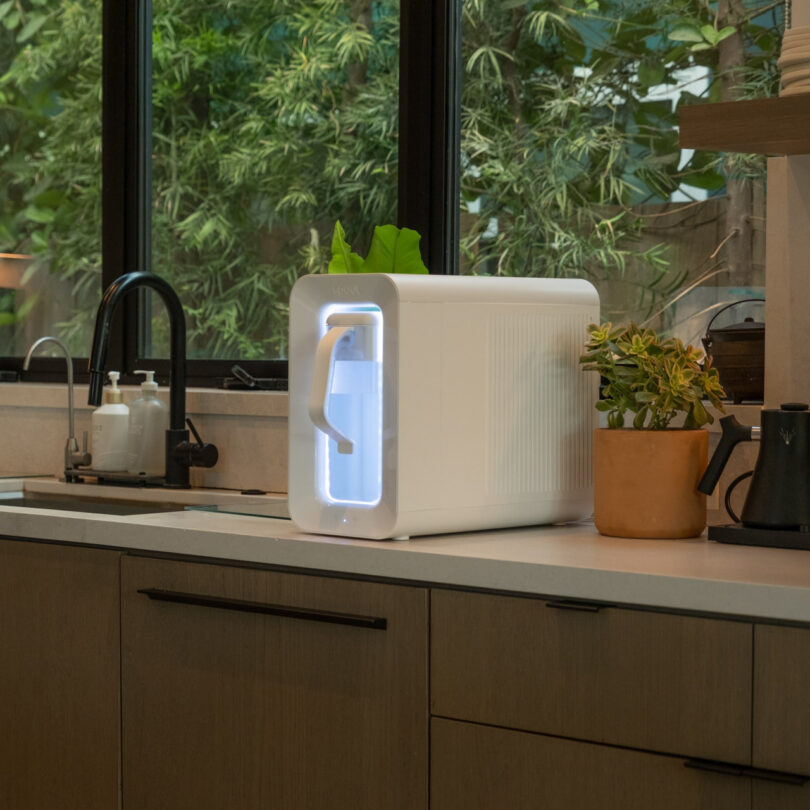
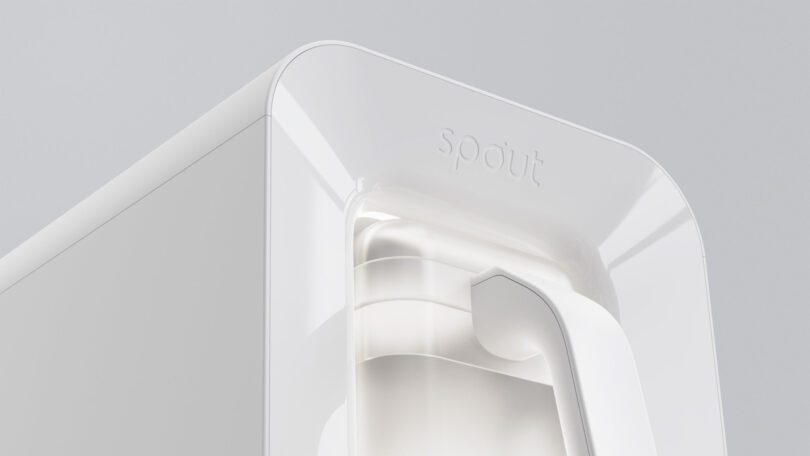
This isn’t a scene from a sci-fi novel set on a desert planet; it’s the reality of Atmospheric Water Generation (AWG). As an editor who spends his days dissecting the performance and longevity of home appliances, I’ve seen my share of "disruptive" kitchen gadgets. Most are mere iterations of existing tech. However, the Spout water system represents a fundamental shift in how we think about home utilities. It promises total water independence by turning the humidity in your living room into high-quality H2O. But the question that lands in my inbox most often isn't "Does it work?"—it’s "Is it actually safe?"
Is Air-Generated Water Safe to Drink?
To answer the most pressing question upfront: Yes, water generated from the Spout system is not only safe, but it is often significantly purer than what comes out of a standard American tap.
While municipal water systems are a marvel of 20th-century engineering, they are showing their age. Between aging lead pipes and the "forever chemicals" known as PFAS that are increasingly detected in groundwater, the "purity" of tap water is often a moving target. Spout bypasses this infrastructure entirely. By extracting moisture from the air, you are essentially starting with a blank slate.
Recent testing by third-party laboratory SimpleLab provides a tangible "Purity Score" that is hard to ignore. On a scale of 1 to 99—where a higher score indicates fewer contaminants—average U.S. tap water often hovers around a 42. In contrast, water produced by the Spout system regularly hits a 98. This process yields water that is 99% free of lead, microplastics, and the chemical runoff typically found in municipal supplies.
Ethan’s Pro Tip: When evaluating any water system, don't just look for "filtration." Look for "source independence." Spout is safe because it doesn't just clean dirty water; it creates new water from a source (the air) that is free from the heavy metal leaching common in home plumbing.
The Science: How Spout Turns Humidity into Hydration
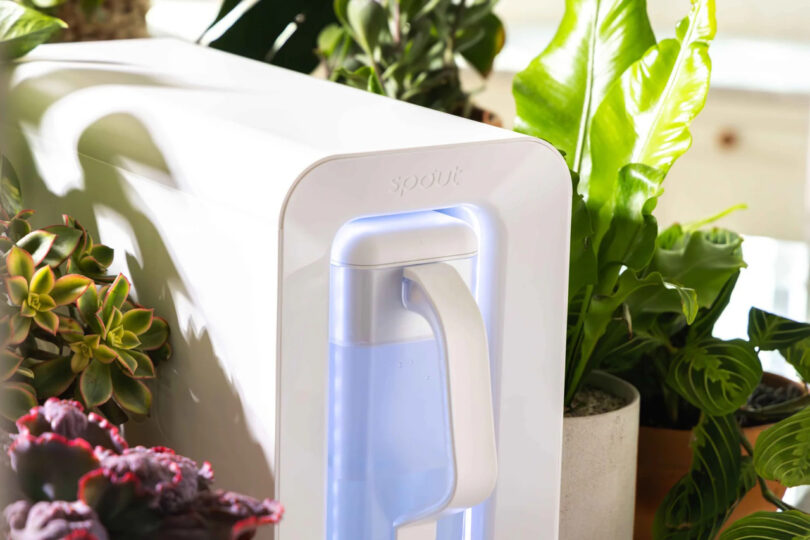
Understanding the safety of this system requires a peek under the hood at the physics involved. The Spout system doesn't just "catch rain"; it utilizes a sophisticated thermodynamic process centered around a patented desiccant wheel.
The "Sponge" Effect
The core of the technology is a ceramic honeycomb structure coated in zeolites—minerals that act like a molecular sponge. As room air is pulled into the unit, these zeolites trap water molecules while allowing other gasses to pass through. This is a crucial first step in safety because it’s a selective process; the system isn't just sucking in "dirty air" and turning it into liquid; it is specifically capturing H2O at the molecular level.
Condensation and Heat
Once the desiccant wheel is saturated, the system uses a controlled internal heating element to release the moisture as concentrated vapor. This vapor is then cooled, causing it to condense into liquid droplets. Think of it as a highly refined version of the morning dew on a leaf, but captured in a sterile, clinical environment.
NASA-Inspired Filtration
Once the air becomes liquid, it passes through a multi-stage filtration stack. Spout uses a custom nanoceramic filter that employs electropositive adsorption. Originally researched by NASA for use on the International Space Station, this technology doesn't just block particles based on size—it uses an electrical charge to "trap" contaminants like viruses and bacteria that are too small for standard mechanical filters to catch.
Beyond Filtration: Continuous Purification and Air Quality
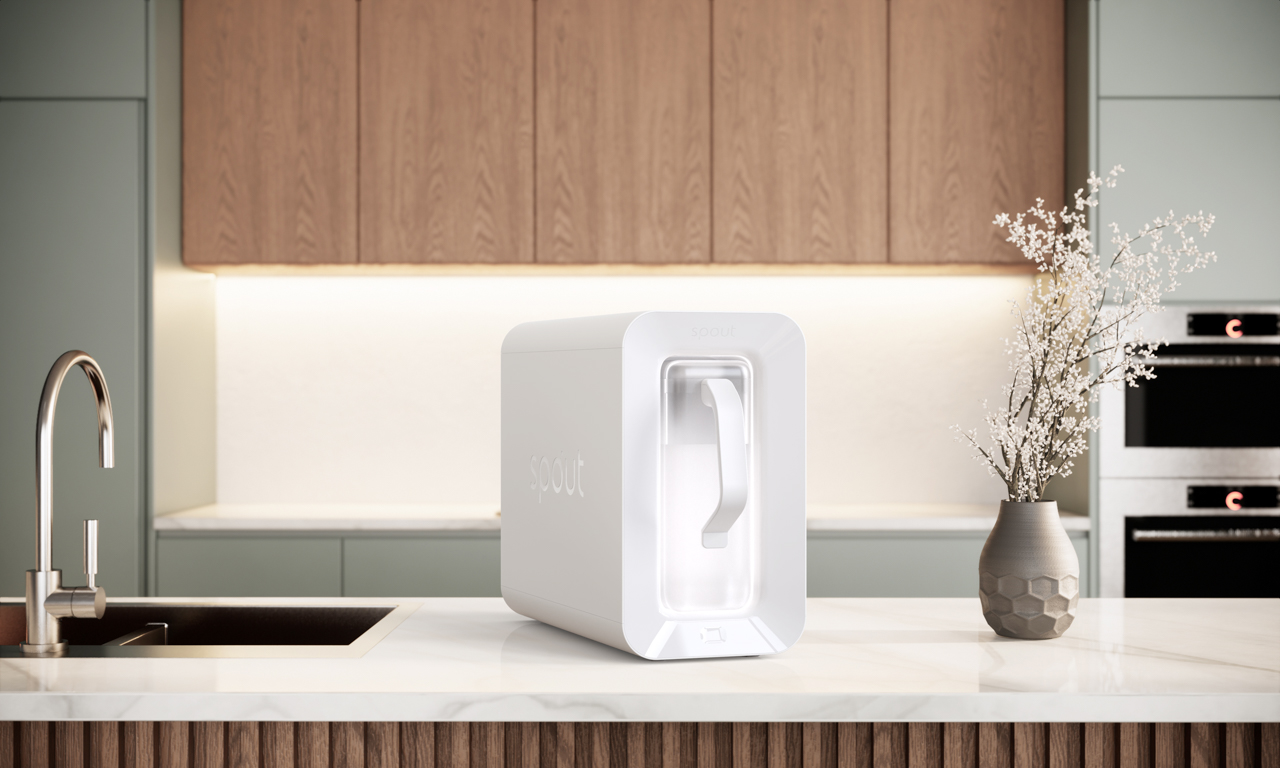
One of the common critiques of countertop water filters (like basic pitchers) is that water can sit stagnant, becoming a breeding ground for bacteria. Spout addresses this through a "Blue Glow" system that isn't just for aesthetics.
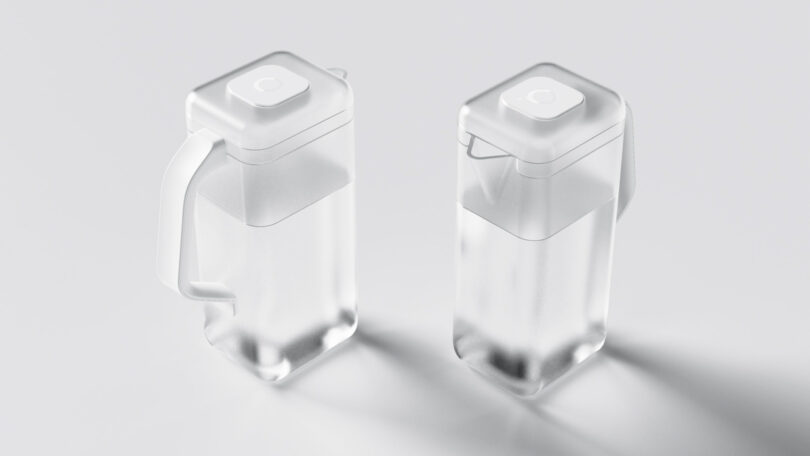
The system utilizes an internal UV-C purification light that treats the water 24/7. This ultraviolet light disrupts the DNA of any potential microorganisms, ensuring the water remains sterile from the moment it’s generated until it hits your glass.
A Two-in-One Appliance
Because the Spout system has to process a significant volume of air to extract moisture, it serves a secondary, often overlooked function: Air Purification.
- MERV Filtration: Before air even reaches the desiccant wheel, it passes through a bilayer air filter designed to catch dust, pollen, and pet dander.
- VOC Reduction: The process inherently reduces volatile organic compounds in your immediate environment, effectively cleaning the air you breathe while filling your glass.
This holistic approach is what I look for in modern appliances—systems that solve multiple problems simultaneously without increasing the "clutter footprint" of your kitchen.
Performance in Real-World Conditions
As a reviewer, I have to be realistic: this isn't a "magic" machine that works everywhere with zero input. Its performance is tied directly to your environment.
| Metric | Specification |
|---|---|
| Daily Water Output | Up to 2.5 Gallons (7.5 Liters) |
| Energy Consumption | 300 - 600 Watts (approx. 5-10 cents per gallon) |
| Humidity Range | Best at 40%+; operational down to 20% |
| Purity Level | 99% free of PFAS, Lead, and Microplastics |
The 2.5-gallon daily output is the "sweet spot" for a small household. It’s enough for two people to stay hydrated, brew a morning pot of coffee, and perhaps have enough left over for cooking pasta. However, if you live in an extremely arid climate—think a mid-summer afternoon in Phoenix, Arizona—the output will drop as the system works harder to find moisture. That said, even at 20% humidity, Spout will still produce water, albeit at a slower rate than in a humid coastal environment.
Value and Sustainability: Is It Worth the $799 Investment?
When you look at the $799 price tag, it’s easy to experience a bit of sticker shock. But from a maintenance and long-term value perspective, the math begins to shift in Spout's favor quite quickly.
The True Cost of Bottled Water
The average American household spends hundreds of dollars a year on bottled water or expensive under-sink RO (Reverse Osmosis) systems that waste up to 3 gallons of water for every 1 gallon they produce. Spout, conversely, has a 1:1 efficiency ratio. It creates water where there was none.
Maintenance and Longevity
In my experience with appliances, the "hidden cost" is usually the filters. Spout’s filters typically need replacement every 6 to 12 months, depending on your air quality. The desiccant wheel itself is designed for a multi-year lifespan, making the "cost per glass" significantly lower over a five-year period than purchasing premium bottled water.
Furthermore, the environmental impact is massive. One Spout unit can effectively replace the 50 billion plastic bottles that Americans throw away annually. For the eco-conscious homeowner, that’s a "win-win" that goes beyond just the chemistry of the water.
FAQ
Is air-generated water alkaline? Spout water typically has a neutral to slightly alkaline pH. The system includes a mineralization stage that adds trace amounts of calcium and magnesium back into the water after it is condensed. This not only improves the health profile but also gives the water a "crisp," refreshing taste similar to high-end spring water.
Does the Spout system work in dry climates like Arizona? Yes, but with reduced efficiency. While Spout thrives in 40-60% humidity, it is engineered to function down to 20% humidity. In very dry conditions, it may take longer to fill the 2.5-gallon reservoir, but the purity of the water remains unchanged.
How often do the filters need to be changed? The external air filters and internal water filters generally need replacing every 6 months for optimal performance. The machine features an automated notification system to let you know exactly when the "scrubbing" power of the filters has diminished.
What happens to the water during a power outage? The Spout system requires electricity (300-600W) to extract moisture. If the power goes out, the machine will stop producing new water. However, the water already stored in the UV-sterilized pitcher remains safe to drink. Because it uses standard AC power, many users in disaster-prone areas pair their Spout with a portable solar generator for total off-grid independence.
Conclusion
The Spout system is more than just another countertop appliance; it’s a high-tech solution to an increasingly common problem. By merging desiccant technology with NASA-grade filtration, it provides a level of purity that traditional tap-based filters simply can't match.
If you are tired of the "plastic bottle cycle" and want to ensure your family's hydration is free from the contaminants of aging infrastructure, the science is clear: air-generated water isn't just safe—it’s the gold standard for home hydration.