Quick Facts
- Location: Deep Cove, British Columbia, Canada (20 minutes from Vancouver).
- Project Name: Coveside Carriage House.
- Designers: Earth to People.
- Size: 525 Square Feet.
- History: Originally a 1920s lumberjack residence.
- Sustainable Highlight: Interior clad in Douglas fir salvaged from a 1960s elementary school.
- Availability: Open for booking via Airbnb.
In an era where "luxury" is increasingly defined by the absence of noise rather than the presence of excess, the Coveside Carriage House stands as a manifesto for the mindful life. Perched at the edge of a glacial fjord in British Columbia, this 525-square-foot sanctuary proves that a home doesn’t need a massive footprint to leave a lasting impression.
Originally built in the 1920s to house local lumberjacks, the structure spent a century weathering the coastal elements before being reimagined by the design duo at Earth to People. What was once a humble hut is now a masterclass in circular design, blending historical provenance with a rugged, West Coast minimalism that feels both ancient and contemporary.
The Design Philosophy: Beauty in the Reclaimed
As an editor focused on sustainable living, I often see "green" projects that lean too heavily on high-tech gadgets while ignoring the most sustainable resource we have: what already exists. The Coveside Carriage House takes the opposite approach. Its sustainability isn't just about efficiency ratings; it’s about the radical preservation of materials.
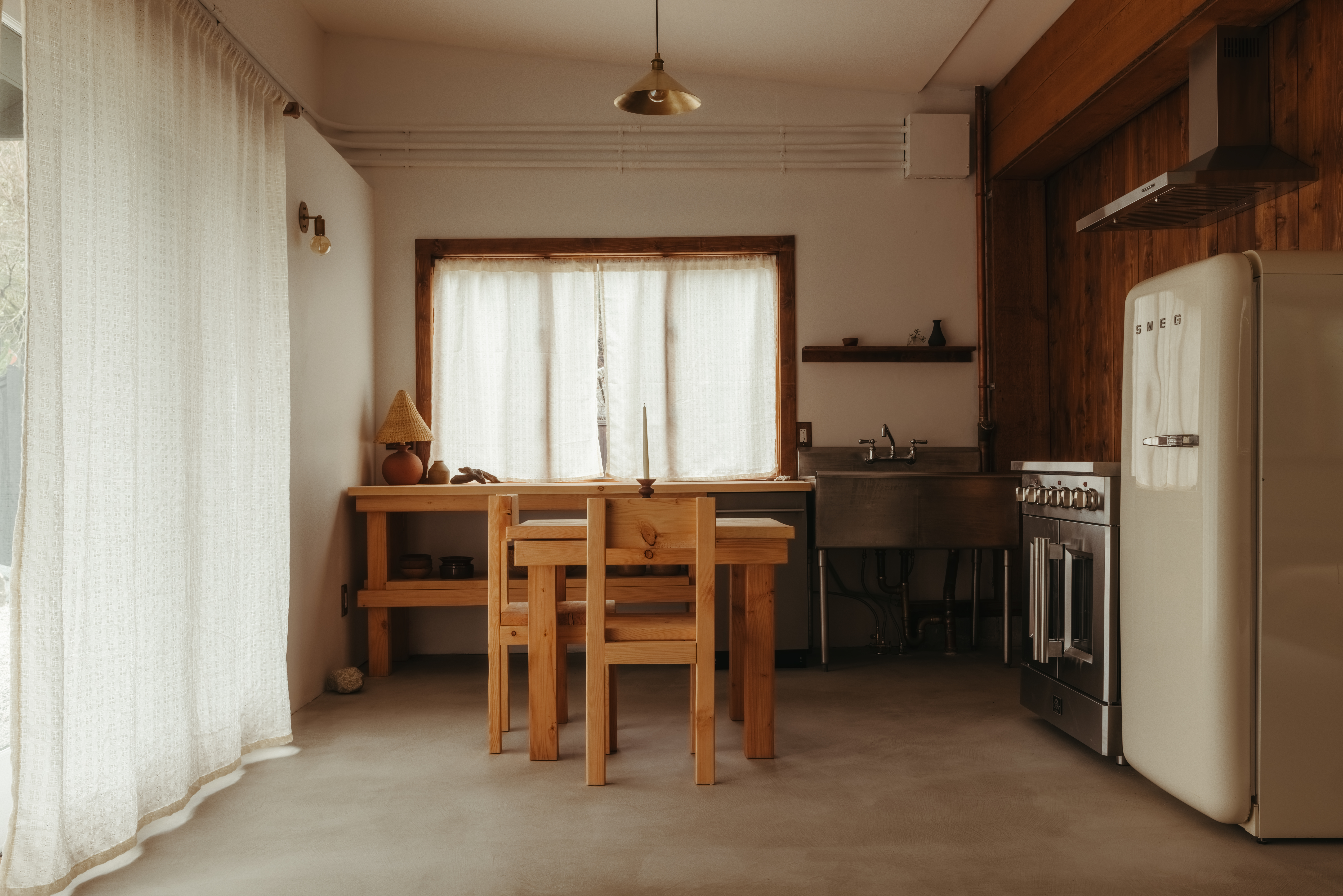
The centerpiece of the renovation is the use of salvaged Douglas fir. The Earth to People team sourced this wood from a local elementary school built in the 1960s that was slated for demolition. Instead of letting these old-growth boards head to a landfill, they were painstakingly repurposed to create the cabin’s custom interior cladding, shelving, and furniture.
To achieve the deep, honeyed warmth of the interior, the designers avoided toxic chemical finishes. Instead, they experimented with homemade batches of coffee stains—a DIY approach that highlights the grain of the fir while keeping the indoor air quality pristine. The result is a space that literally smells of the forest and the morning brew, grounding the inhabitant in a multisensory experience.
Lucas’s Eco-Tip: When working with reclaimed wood, always inquire about the "denailing" process. Reclaimed Douglas fir is incredibly dense and durable, but it requires a careful hand to preserve its history without damaging modern tools. Using natural stains like coffee or tea is a fantastic way to age new wood to match historical pieces without introducing VOCs (Volatile Organic Compounds) into your sleeping environment.
Industrial Meets Rustic: A Raw Aesthetic
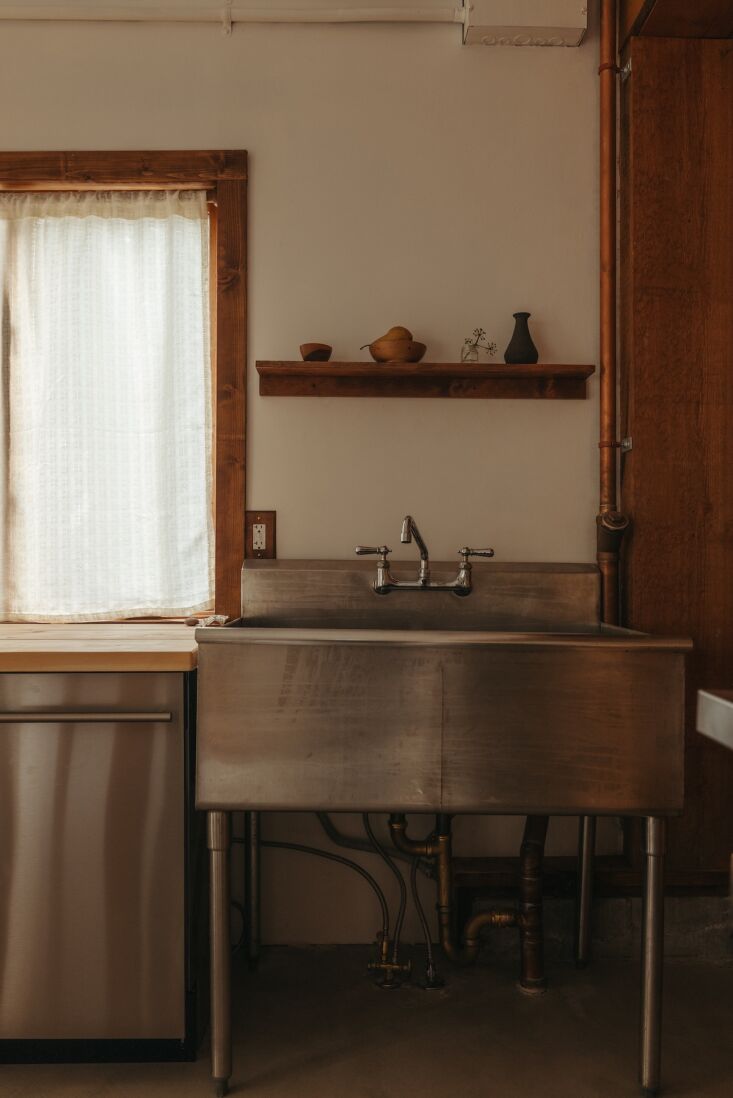
While the wood provides the soul, the cabin's functional elements draw inspiration from urban loft living. Rather than hiding the guts of the home behind drywall, the designers chose to keep the plumbing and electrical systems exposed. Surface-mounted copper pipes and galvanized conduits run along the walls like a nervous system, celebrating the cabin's utility.
This isn't just an aesthetic choice; it’s a practical one. In remote locations, accessible infrastructure is a godsend for maintenance. It also reduces the need for additional building materials, adhering to the "less is more" philosophy that governs this 525-square-foot design.
A Tour of the Coveside Carriage House
Walking through this cabin is a lesson in intentionality. Every object has a story, and every corner serves a purpose.
The Simple Kitchen
The kitchen eschews the "chef’s kitchen" trend for something far more honest. It features industrial stainless steel sinks—chosen for their longevity and recyclability—paired with the aforementioned custom fir shelving. There are no upper cabinets to truncate the space; instead, the open shelving allows the reclaimed wood walls to take center stage, making the small footprint feel airy and expansive.
The Living Area: A Lesson in Curated Vintage
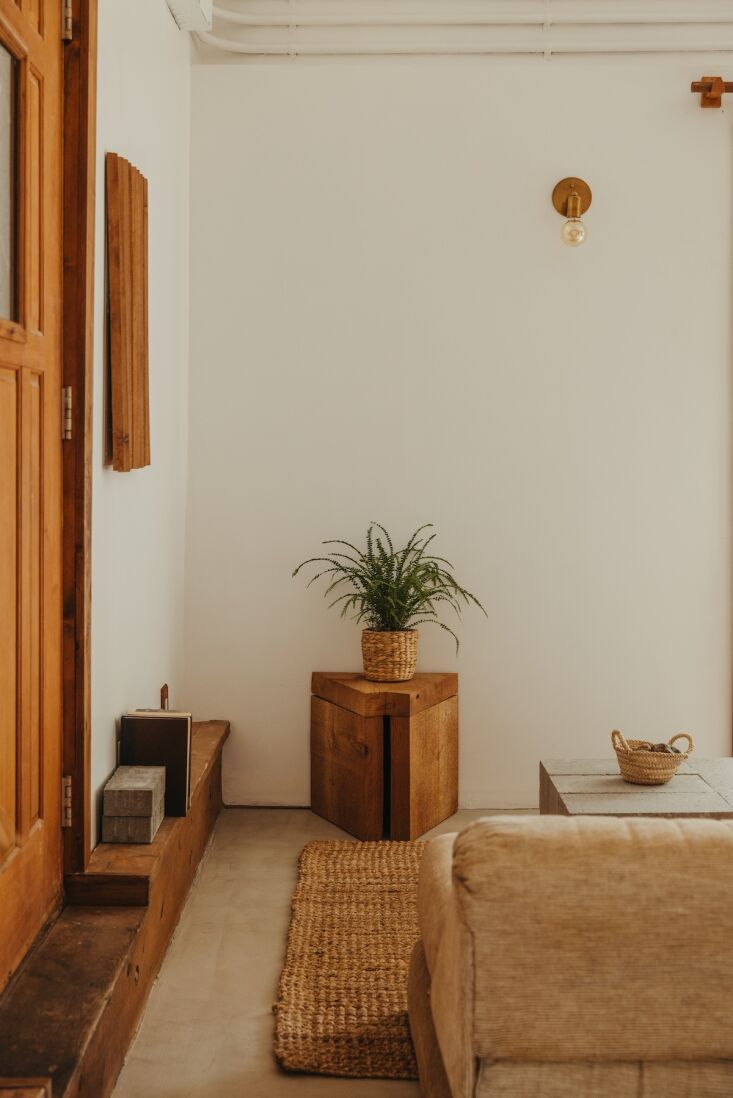
In the living room, the furniture selection reinforces the theme of circularity. The primary seating is a vintage 1980s Roche Bobois sofa, sourced from within the community. This choice reflects a growing movement in sustainable interior design: the "neighborhood economy," where high-quality vintage pieces are kept in circulation rather than being replaced by "fast furniture."
Complementing the designer sofa are Earth to People’s own creations, including cinderblock coffee tables and hand-carved cedar sculptures. The juxtaposition of heavy industrial blocks with organic, hand-shaped wood creates a tension that is quintessentially West Coast.
The Sleeping Quarters: Sightlines to the Peaks
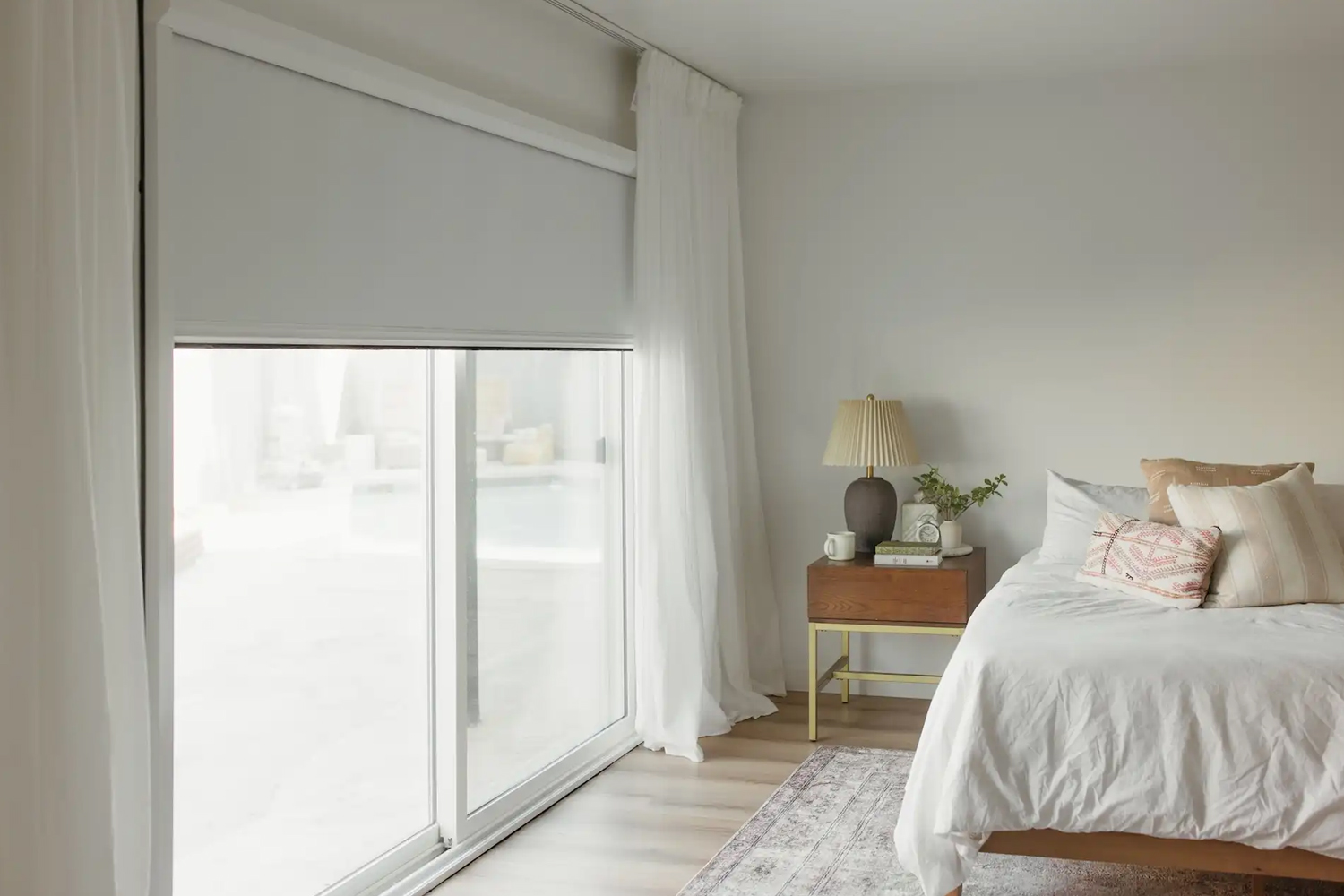
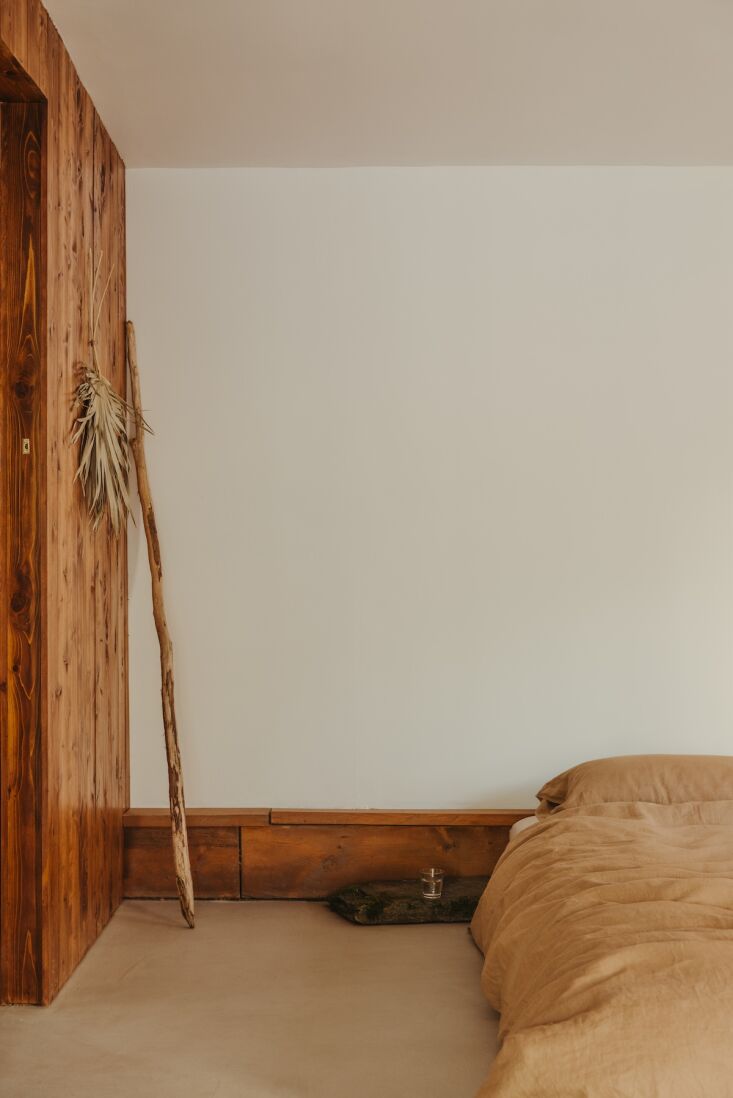
The bedroom is where the "mindful" aspect of the escape truly shines. You’ll notice the bed is set remarkably low to the ground. This wasn't a random stylistic choice. By lowering the sleeping platform, the designers perfectly aligned the inhabitant's eye level with the base of the windows. When you wake up, your first view isn't of a television or a closet door, but of the whitecapped waters of the fjord and the rugged mountain peaks beyond.
The Bathroom: Stone and Steel
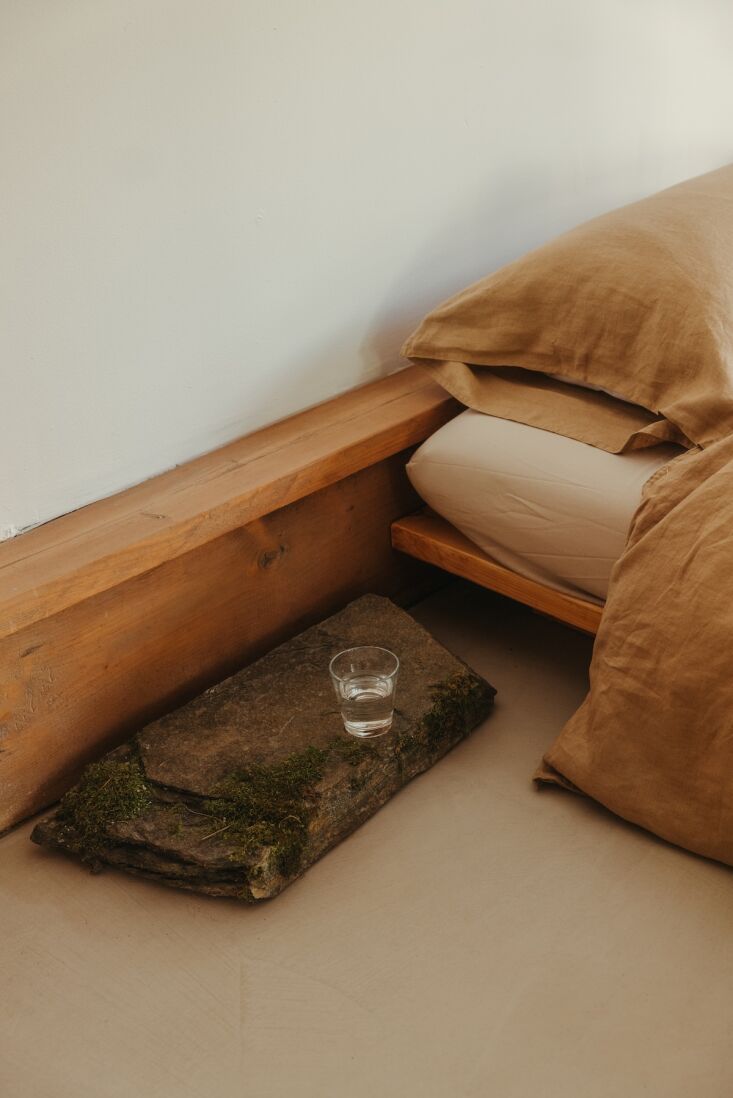
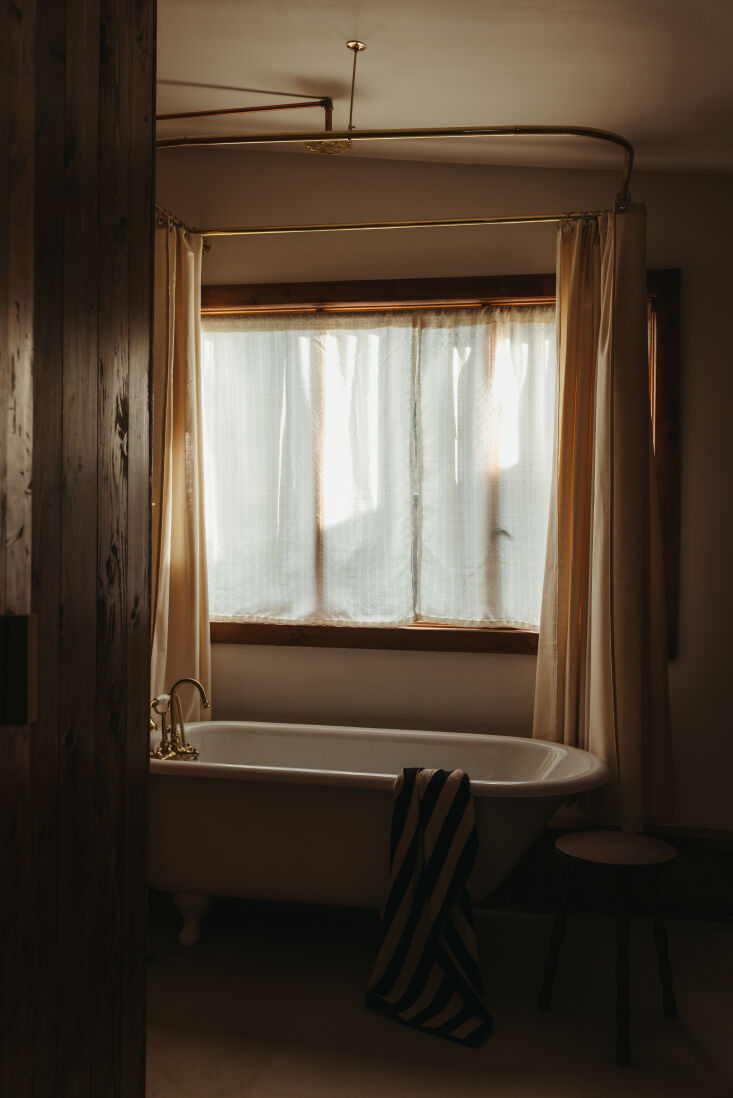
The bathroom continues the narrative of the reclaimed. The centerpiece is a 100-year-old cast iron tub, salvaged from a rural farm and meticulously restored. Beside it, a bedside table made from a moss-covered stone found on the property serves as a reminder of the cabin's literal connection to the earth.
Location and Accessibility: Close to the City, Far from the Chaos
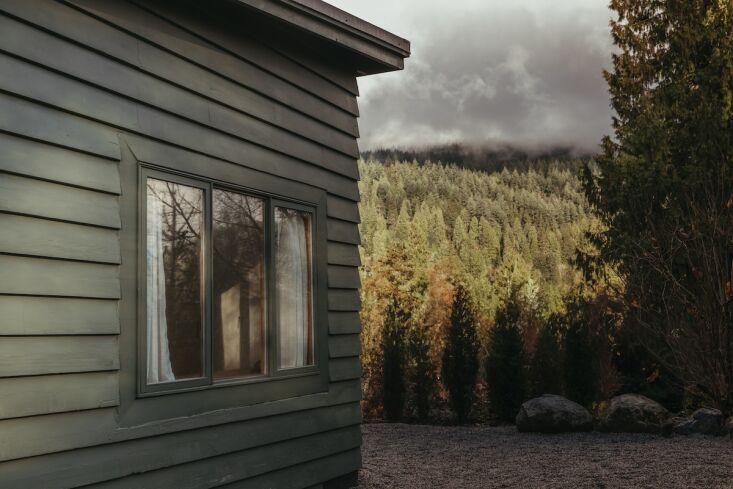
The Coveside Carriage House is located in Deep Cove, an idyllic seaside village. What makes it particularly unique is its proximity to Vancouver—just a 20-minute drive. Yet, once you navigate the unmarked road leading to the property, the city feels like a distant memory.
This "accessible remoteness" is a key factor in its appeal as a mindful escape. It allows for a digital detox without the logistical stress of a ten-hour trek into the wilderness. It is an "unplugged" destination for the modern professional who needs to recharge their internal battery without losing a weekend to travel.
| Feature | Coveside Carriage House | Typical Modern Modular (e.g., Koda) |
|---|---|---|
| Primary Material | Reclaimed Douglas Fir | Cross-Laminated Timber / Concrete |
| History | 100-year-old structure | New Build |
| Design Vibe | Rustic-Industrial Patina | Minimalist Futurism |
| Sustainability | Resource Circularity (Salvage) | Energy Efficiency (Passive House) |
| Emotional Feel | Grounded & Wabi-Sabi | High-Tech & Efficient |
Why Small Living is the 2026 Mindful Standard
As we look toward the future of housing, the 525-square-foot model of the Coveside Carriage House is becoming the gold standard for more than just vacation rentals. By 2026, I predict we will see a massive shift toward "Architecture in Motion" and self-sufficient living modules.
Why? Because small living solves two crises at once:
- The Environmental Crisis: Smaller homes require significantly less energy to heat and cool. The thermal mass of the Coveside’s thick timber walls provides natural insulation, reducing the carbon footprint of the stay.
- The Mental Health Crisis: A smaller space forces a curation of belongings. In the Coveside, there is no room for clutter. Every item must be functional or beautiful (ideally both). This reduction in "visual noise" has been scientifically linked to lower cortisol levels and higher states of mindfulness.
While modern modular units like the Koda Loft or the EcoCapsule offer incredible energy efficiency, they often lack the "soul" found in reclaimed spaces. The Coveside Carriage House proves that we can have the best of both worlds: a low-impact lifestyle that is deeply rooted in local history.
How to Replicate the Sustainable Cabin Aesthetic
You don’t have to move to a British Columbia fjord to capture this sense of mindful living. Here is how you can integrate the Earth to People aesthetic into your own space:
- Source Reclaimed Wood Locally: Check with local demolition crews or specialized salvage yards. Douglas fir, Cedar, and Oak are excellent for interior accents.
- The Power of Natural Stains: Skip the polyurethane. Experiment with coffee, black tea, or even vinegar and steel wool to create a natural grey patina on new wood.
- Embrace "Found" Furniture: Look for items with a story. A mossy stone from your garden can become a side table; a vintage industrial sink can replace a generic porcelain one.
- Focus on Sightlines: Arrange your furniture not around the TV, but around the best natural light source in the room. Low-profile furniture can make small rooms feel significantly larger by keeping the horizon line open.
FAQ
Can I actually stay at the Coveside Carriage House? Yes! The property is managed by Earth to People and is available for booking via Airbnb. It is located in Deep Cove, BC.
How does the cabin stay warm in the Canadian winter? The cabin utilizes the natural insulating properties of its thick timber walls, supplemented by modern heating systems. The small 525-square-foot footprint makes it incredibly efficient to heat.
Where did the designers find the reclaimed wood? The Douglas fir was salvaged from an elementary school in British Columbia that was built in the 1960s. The Earth to People team processed the wood themselves to ensure quality.
The Coveside Carriage House is more than just a place to sleep; it’s a reminder that our homes should be reflections of our values. By choosing salvaged materials over new, and silence over space, Earth to People has created the ultimate mindful escape. Whether you are a renter looking for a weekend detox or a homeowner looking for design inspiration, the lesson here is clear: the most sustainable thing we can do is give new life to the old.