For many artists, a mid-life diagnosis of Autism and ADHD might feel like a disruption. For Katherine Duclos, it was the key that finally unlocked the door to her own creative house. At age 42, the Vancouver-based artist underwent a profound reframing of her life, transforming what she had long perceived as personal "failings"—an inability to follow instructions, sensory overwhelm, and unconventional focus—into the very fuel for a radical creative process.
By leaning into her neurodivergent traits, Duclos has moved beyond the traditional boundaries of fine art. Her practice is no longer just about the final image; it is an act of "neuro-affirming" regulation. She utilizes pattern recognition and sensory processing to bridge the gap between her internal world and the external environment, employing materials that are as functional as they are aesthetic. From massive LEGO sculptures to hundreds of ritualized latte portraits, Duclos’s work serves as a testament to the power of a brain that sees the world in high-definition textures and infinite patterns.
The 'Aha' Moment: Parallel Play and the LEGO Breakthrough
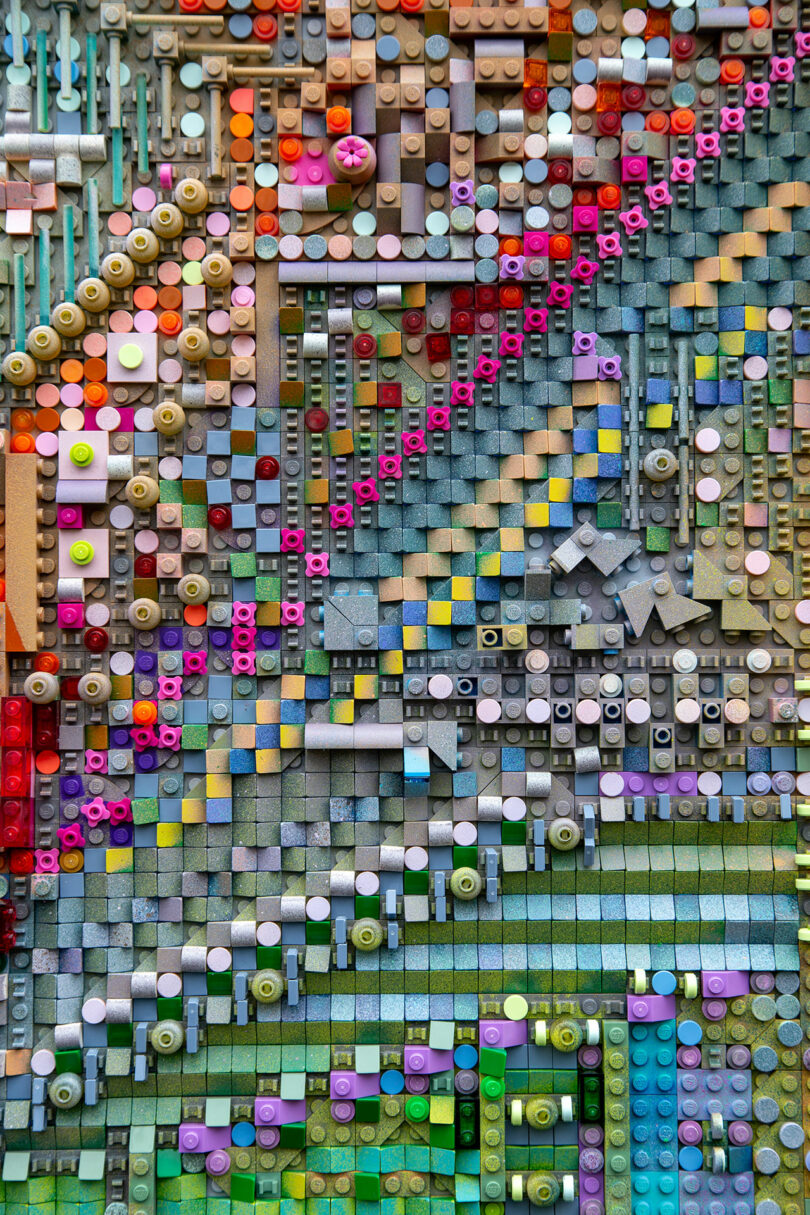
The shift from a traditional fine arts background (educated at the prestigious Pratt Institute) to her current practice began at home, through the lens of motherhood. Duclos found herself engaging in "parallel play" with her son, Augie, whose own special interest in LEGO became a bridge for her creativity. While many see LEGO as a toy with a manual, Duclos saw it as "modular color."
Interestingly, Duclos admits to significant challenges with spatial reasoning when it comes to following 2D instructions to create a 3D object—a common trait in certain neurodivergent profiles. By abandoning the instruction booklets, she liberated the medium. She became a "LEGO purist" in a different sense: using the bricks as raw pigment to build complex, abstract constructions that help her regulate the daily sensory overload of the world. For Duclos, clicking bricks together isn't just building; it’s a tactile method of organizing the chaos of her environment into a structured, predictable grid.
Regulatory Materials: The Tactile Language of Neurodivergence
Duclos’s choice of materials is never accidental. She selects objects that resonate with her sensory needs—materials that offer specific tactile or visual feedback, often referred to as "stimming" (self-stimulatory behavior). Her work invites the viewer to understand the world through touch, weight, and repetition.
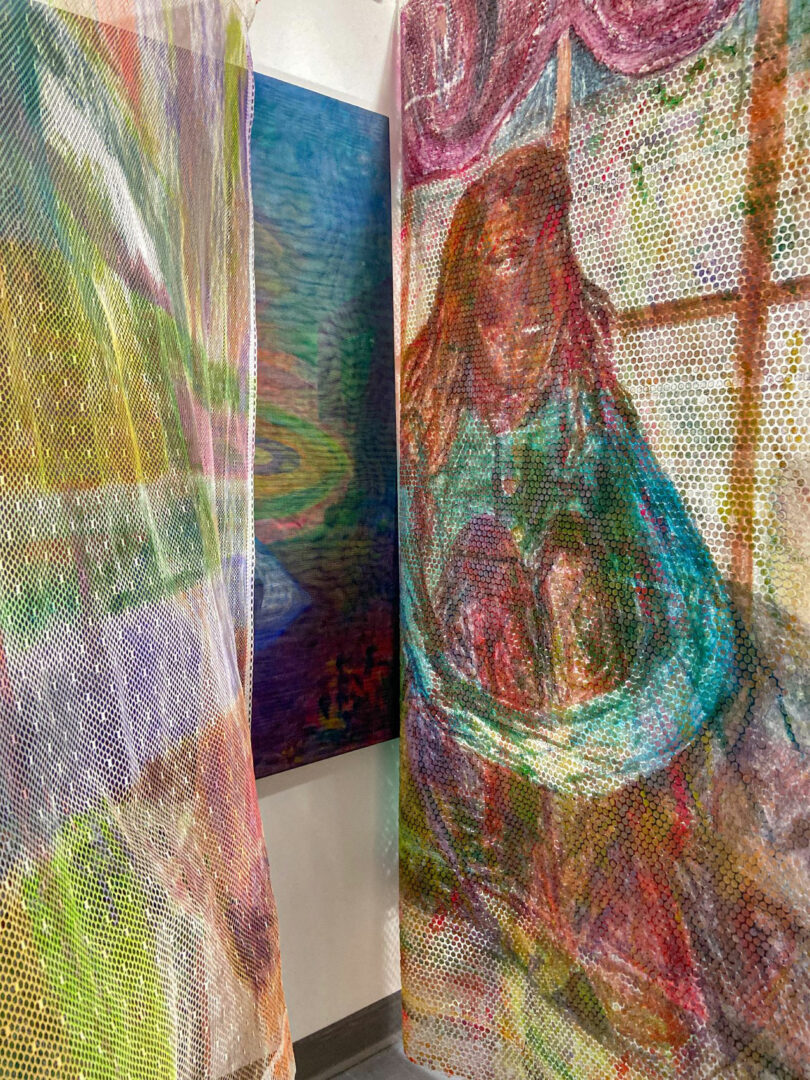
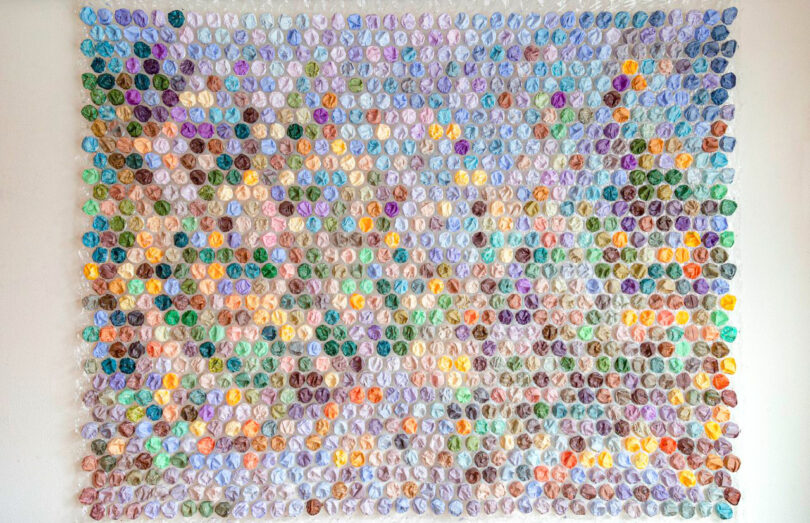
- Recycled Bubble Wrap: A nod to childhood ASMR and a sophisticated replacement for modern fidget poppers. Duclos uses the texture of bubble wrap to create layered, translucent surfaces that catch the light in ways that soothe the nervous system.
- Window Screens: These materials allow her to incorporate "eye-stimming" habits from her youth. By layering mesh and screens, she creates moiré patterns and visual depths that mirror the way she perceives light and shadow.
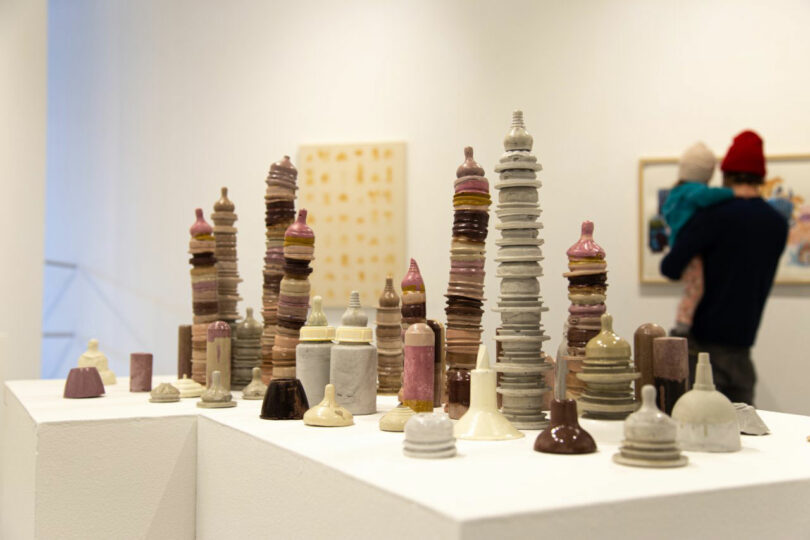
- Cement and Weight: Representing the "un-glamorous" and often heavy burdens of motherhood and domestic life. These mundane, heavy materials ground her work, providing a literal and metaphorical weight to her explorations of identity.
- Found Plastic and Grid Systems: Using discarded items to create "order from chaos," Duclos utilizes grids to satisfy the neurodivergent brain’s affinity for pattern recognition and categorization.
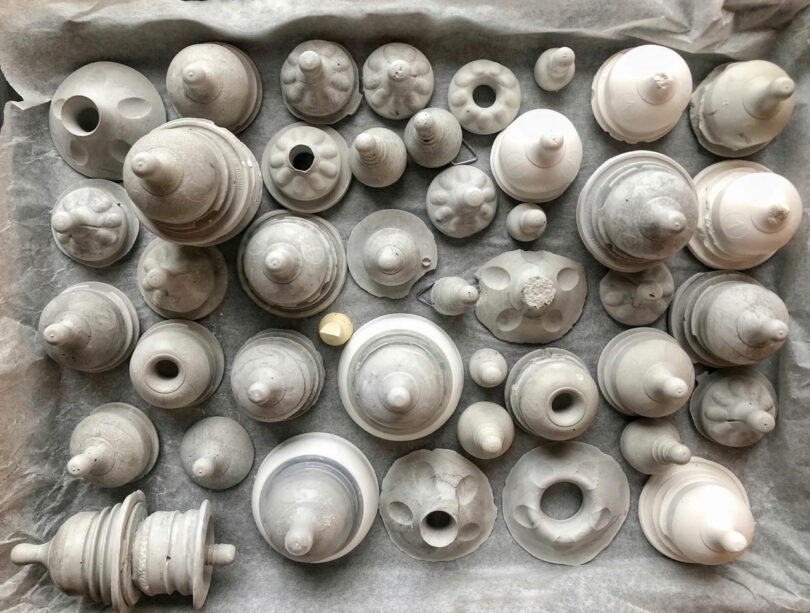
"Sometimes, the asymmetry is so subtle it’s subversive. My brain seeks the pattern, but my hands look for the break in it—that's where the art happens."
Temporal Technology: Art as a Nervous System Regulator
Duclos describes her creative practice as a "temporal technology." For a neurodivergent person, the conventional timing of the world—the rapid-fire demands of social interaction and the rigid structures of the 9-to-5—can feel agonizingly fast. Her art acts as a tool to pause time, regulate her heart rate, and reconnect with her body.
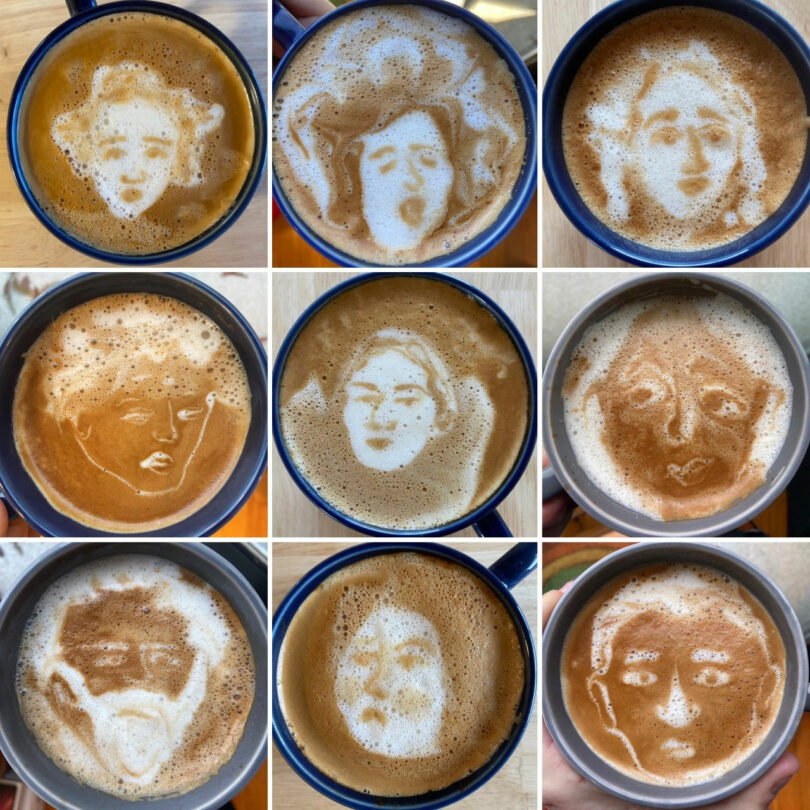
This is most evident in her ritualized practices. Katherine Duclos has produced over 700 individual latte portraits as part of a daily practice to manage sensory processing. This repetition isn't just about the coffee; it’s about the ritual of the foam, the ephemeral nature of the image, and the grounding effect of a repeated action. It is a daily reset button for a brain that rarely stops.
The scale of her commitment is equally visible in her large-scale pieces. Major works in her portfolio, such as 'Upstate NY 2013' and 'Squirrels have Squirrels,' require over 100 hours of labor each. This is hyperfocus in its most productive form. While the neurotypical world might see this as "obsessive," for Duclos, it is a flow state that allows her to filter out the noise of the world and find peace in the micro-details of a 10,000-piece construction.
Breaking the 'Museum Barrier': Why Art Must Be Touched
One of the most radical aspects of Duclos’s work is her mission to dismantle the "Do Not Touch" culture of traditional galleries. For many neurodivergent individuals, especially sensory-seekers, the inability to interact with an object’s texture creates a barrier to engagement.
Duclos champions the "Tactile Memory" theory: the idea that our brains fire specific neurons when we see materials we recognize from touch. By creating "touchable" exhibitions, she makes fine art accessible to those who experience the world through their hands. This approach was famously showcased during her partnerships with LEGO, taking her from a small Vancouver studio to the global stage of Miami Art Week.
Her installations often feature repetitive, grid-based patterns that invite viewers to run their fingers over the surfaces. This accessibility isn't just a kindness; it's a statement that neurodivergent ways of being are valid in the highest circles of the art world.
The Softened Edge of Identity
The journey from a late diagnosis to a thriving, neuro-positive art practice has allowed Katherine Duclos to move from a life of "masking"—the exhausting process of pretending to be neurotypical—to a state of secure vulnerability. She refers to this as moving from "armor" to a "softer skin."
Her work does more than just decorate walls; it provides a roadmap for the next generation of neurodivergent thinkers. By validating her own sensory needs, she has created a form of art therapy that doesn't seek to "fix" the person but rather to celebrate the unique way their nervous system interacts with the world.
FAQ
How does Katherine Duclos use LEGO in her fine art? Duclos views LEGO as "modular color" rather than a building toy. She ignores the instructions to create abstract, geometric sculptures that focus on texture and color theory. This process helps her manage spatial reasoning challenges and provides a grounding, repetitive task for her ADHD.
What is 'eye-stimming' in the context of her art? Eye-stimming refers to visual self-stimulatory behaviors, such as staring at repetitive patterns or light through meshes. Duclos incorporates these habits into her work by using window screens and layered grids, turning a personal neurodivergent trait into a sophisticated visual language.
Why is touch important in her exhibitions? Duclos believes that the traditional "hands-off" rule in museums is an accessibility barrier for neurodivergent people. By creating touchable art, she engages "tactile memory" and allows sensory-seekers to fully experience the work, making art galleries more inclusive for all types of brains.