Quick Facts
- Designer: Laszlo Tompa, the Hungarian master of geometric woodcraft.
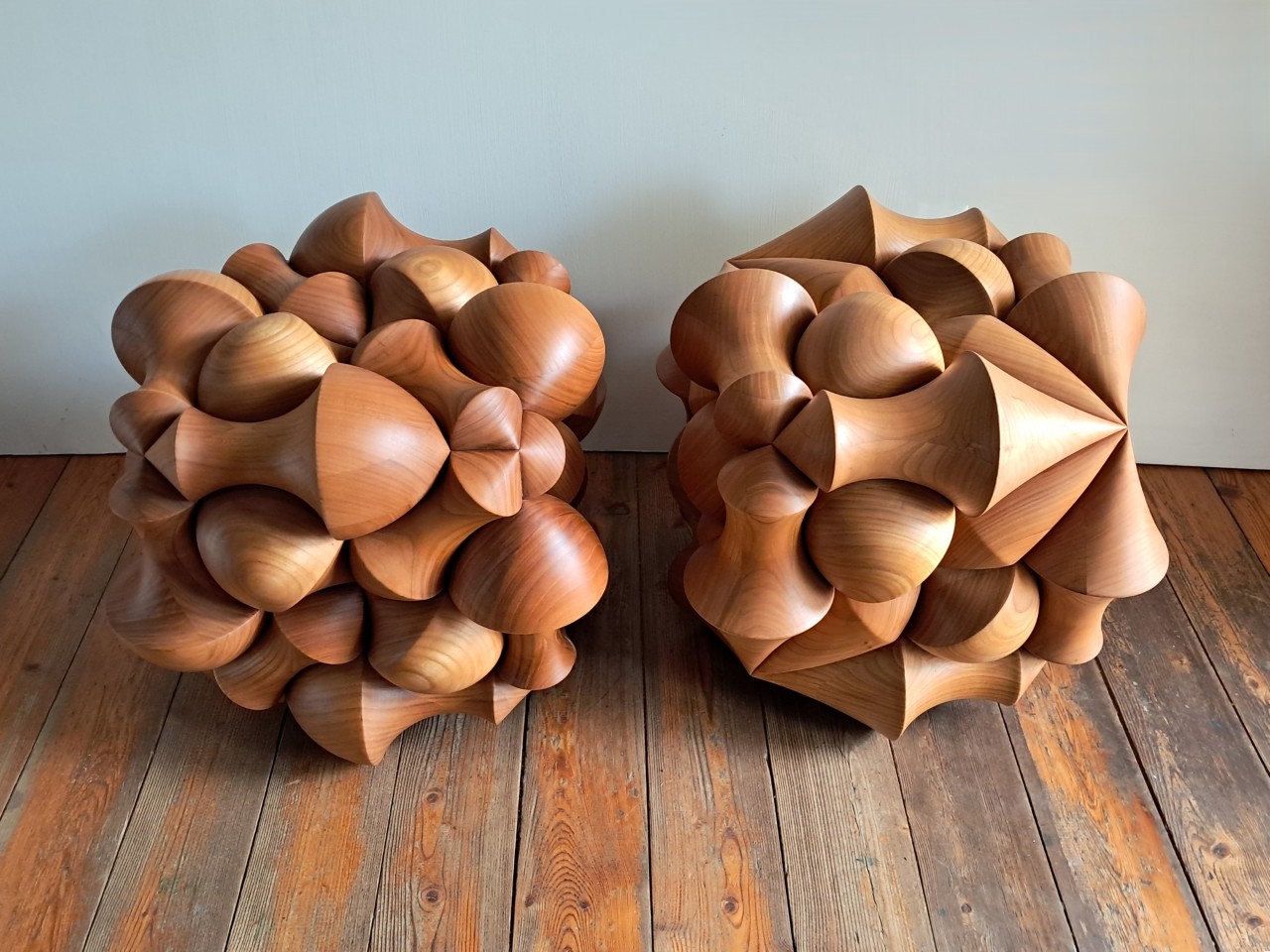
- The Piece: The Illusion Box, a sculptural storage unit that challenges the boundary between object and art.
- Materiality: Crafted from premium cherry wood, chosen for its structural stability and warm patina.
- Engineering: Comprised of 36 interlocking elements designed using the mathematical principles of the sphericon.
- 2026 Trend: A definitive shift toward "Investment-Grade Functional Art," with market valuations for such pieces ranging from $2,794 to over $27,273.
- Core Feature: A hidden internal compartment concealed within a seamless, high-precision geometric grid.
The 2026 Pivot: From Utility to Investment-Grade Art
As we look toward the interior landscapes of 2026, the conversation around furniture is undergoing a radical transformation. We are moving away from the era of "disposable decor" and entering a period defined by the acquisition of cultural artifacts. For the modern homeowner, a storage unit is no longer just a place to hide clutter; it is a statement of intellectual and aesthetic values. This evolution sees contemporary furniture transitioning into curated gallery pieces—functional objects imbued with what I like to call "artistic gravitas."
The primary furniture trend for the upcoming seasons is the rise of investment-grade sculptural art. Discerning buyers are increasingly seeking pieces that serve a dual purpose: providing utility while functioning as a focal point that could comfortably sit in a museum wing. This shift reflects a deeper cultural movement toward slow living and intentional curation. In the 2026 contemporary design market, these investment-grade sculptural furniture pieces are currently valued in a wide range from approximately $2,794 to over $27,273, depending on the complexity of the geometry and the rarity of the craftsmanship.
When we invest in these pieces, we aren't just buying a box; we are buying a designer’s obsession with form. We are moving toward "Material Alchemy," where the raw material—in this case, wood—is elevated through mathematical precision and hand-finishing to become something transcendental.
Spotlight on the Illusion Box: A Masterclass in Perception
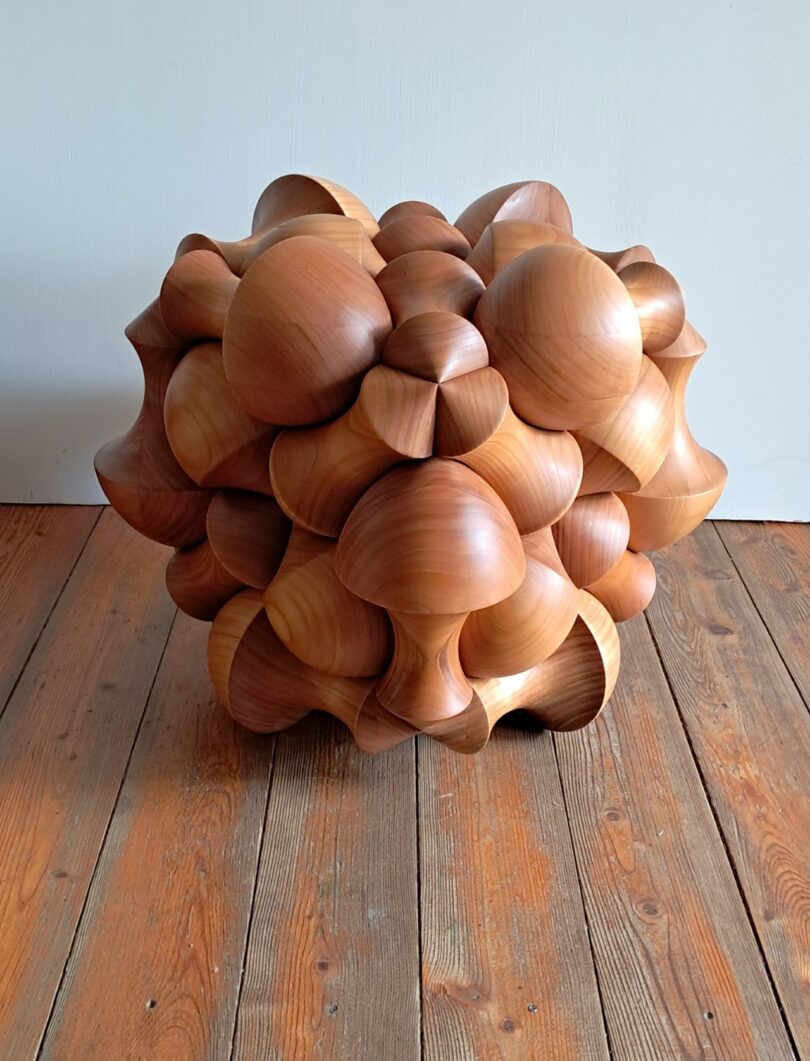
At first glance, Laszlo Tompa’s Illusion Box appears to be a solid, impenetrable sculpture. It sits in a room like a silent sentinel of geometry, its surface a complex dance of light and shadow. However, Tompa, a visionary Hungarian designer, thrives on the "look closer" narrative. His work is a masterclass in perception, designed to trick the eye into seeing a seamless solid object while concealing a functional secret.
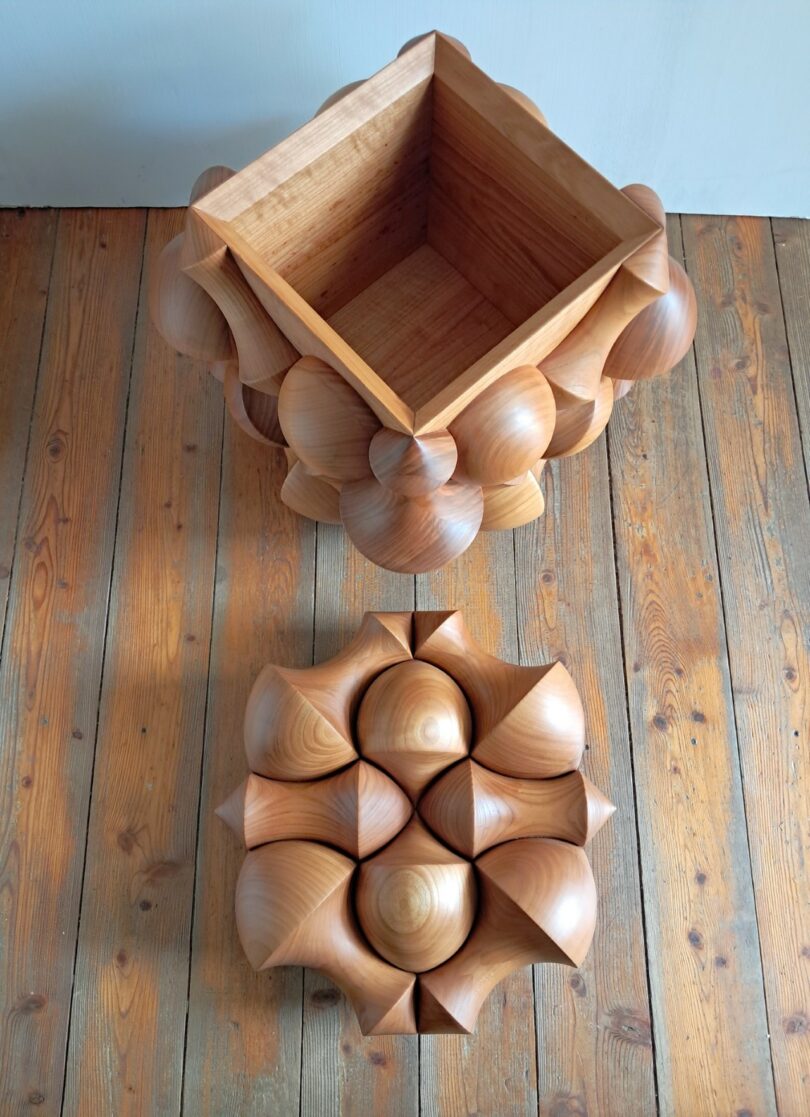
The Illusion Box is a sculptural storage piece that utilizes a complex geometric grid to hide an internal compartment. This "hidden utility" is what makes it a cornerstone of the 2026 functional art movement. It challenges the user to interact with the object, to discover the break in the pattern, and to engage with the wood on a tactile level.
"True luxury in the modern home isn't about how much space you have, but how intelligently you use it. Tompa’s work proves that storage can be a performance, a ritual of discovery that elevates the mundane act of 'putting things away' into an artistic experience." — Ivy Chen
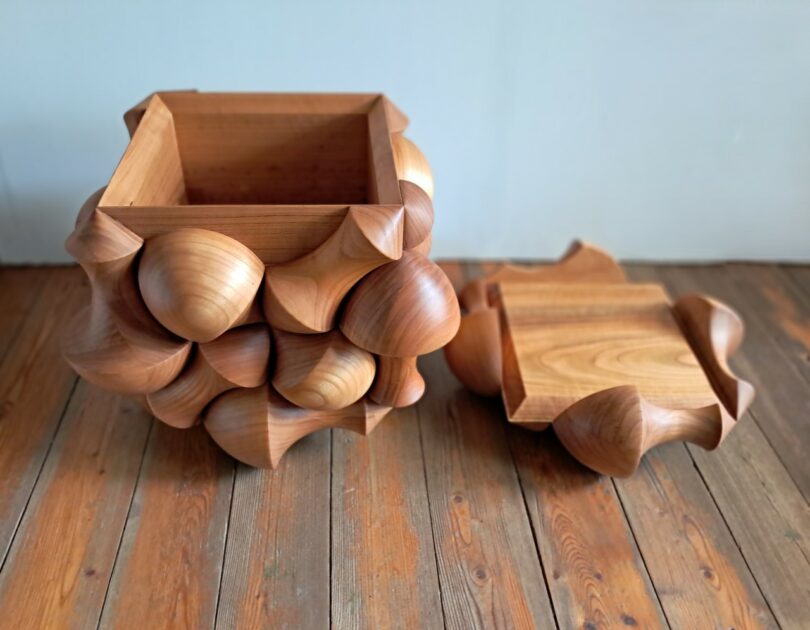
The brilliance of the Illusion Box lies in its ability to disappear into itself. The lines are so precise, the joints so tight, that the opening mechanism is virtually invisible to the untrained eye. This blurring of the line between sculpture and storage is precisely what collectors are looking for: a piece that maintains its "art status" even when it is performing a domestic task.
The Science of the Sphericon: Technical Execution
To understand the beauty of the Illusion Box, one must first understand the mathematics that govern its form. Tompa has successfully transitioned the precision often found in ceramics into the challenging medium of wood. The foundation of the Illusion Box lies in the principles of the sphericon—a solid that has a single continuous surface, allowing it to roll in a unique, wobbling motion.
The construction of the Illusion Box is a feat of modern engineering met with traditional craftsmanship. Here are the technical specifications that define its creation:
- Multi-element Body: The box is meticulously assembled from 36 precision-turned cherry wood elements.
- Mathematical Mirroring: Each element is designed to mirror its counterpart at 180-degree rotations, ensuring that the geometric grid remains consistent from every angle.
- Precision Tooling: To achieve this level of accuracy, Tompa utilizes CNC-cut templates for the initial shaping.
- The Human Touch: Following the CNC process, a copy lathe is used to refine the elements, followed by intensive hand-fitting to ensure the "rhythmic geometry" of the interlocking joints.
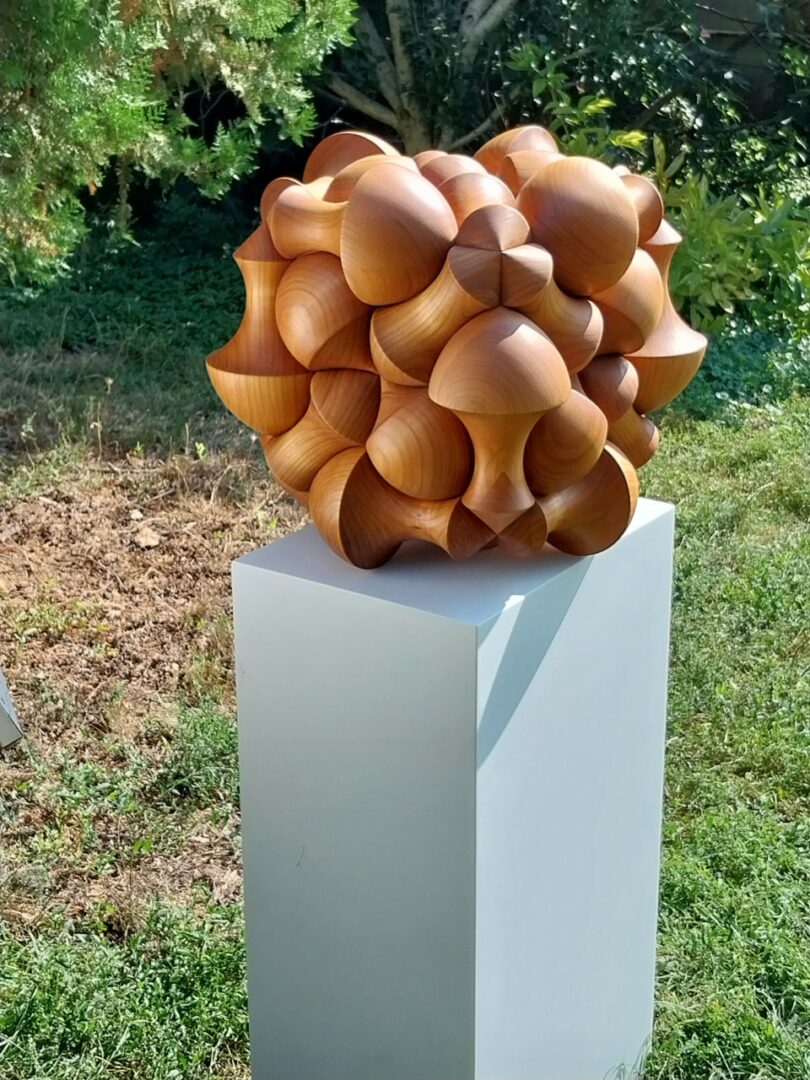
This blend of high-tech manufacturing and artisanal finishing is essential. The CNC ensures the mathematical integrity of the sphericon principle, while the manual lathe work and assembly provide the soul and warmth that machine-only products lack. This technical narrative—the journey from a digital template to a hand-fitted cherry wood masterpiece—is what justifies its status as an investment piece.
Material Alchemy: Why Cherry Wood Matters
In the world of high-end furniture design, the choice of material is never arbitrary. For the Illusion Box, cherry wood was the only logical choice. In 2026, "Collector’s Furniture" demands materials that offer both longevity and aesthetic depth.
Cherry wood provides a specific kind of "Material Alchemy." It is dense enough to hold the sharp, unforgiving edges of Tompa’s geometric grid, yet warm enough to feel inviting in a residential setting. Over time, cherry wood develops a rich, deep patina, meaning the Illusion Box will actually gain visual character as it ages—a key requirement for any investment-grade object.
| Feature | Cherry Wood Benefit | Impact on Illusion Box |
|---|---|---|
| Grain Density | Allows for high-precision CNC cutting without splintering. | Ensures the "seamless" look of the 36 interlocking parts. |
| Stability | Minimal warping or shrinking over time. | Keeps the hidden compartment perfectly aligned for decades. |
| Aesthetic | Naturally warm tones that darken with light exposure. | Creates a "living" sculpture that evolves with the home. |
| Workability | Responds beautifully to hand-polishing and copy lathes. | Results in a soft, tactile finish that invites touch. |
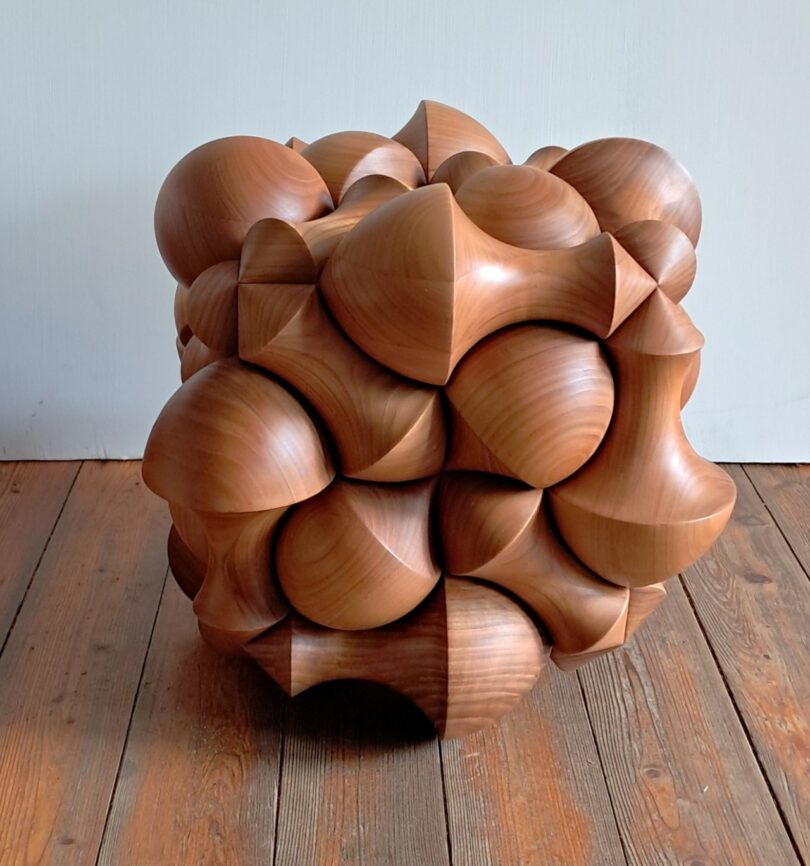
The dialogue between positive and negative space in the Illusion Box is highlighted by the wood's natural grain. As light hits the 36 elements, the shadows define the "rhythmic geometry," making the piece feel kinetic even when stationary.
Curating the Future: How to Integrate Sculptural Storage
Integrating a piece as bold as the Illusion Box into a modern home requires a thoughtful approach to interior styling. These pieces are not meant to blend in; they are meant to lead.
1. The Power of Negative Space
When styling functional art, "breathing room" is your most valuable asset. Place the Illusion Box in a minimalist setting where its complex geometry can contrast with clean, expansive surfaces. Avoid placing it near busy patterns or cluttered shelves. It should ideally sit on a low plinth or a sleek sideboard to elevate its status.
2. Pairing with Icons
To create a sophisticated 2026 interior, I recommend pairing contemporary geometric pieces with vintage mid-century icons. The organic curves of an Eames lounge chair or the brutalist lines of a 1970s coffee table provide a historical context that makes Tompa’s futuristic math feel grounded and timeless.
3. Lighting as a Narrative Tool
Since the Illusion Box relies on shadow to define its form, lighting is crucial. Use directional spotlights or soft, low-angle ambient lighting to emphasize the "illusion." As the sun moves through the room during the day, the geometric shadows will shift, making the box appear to change shape—a true hallmark of functional art.
4. Financial Outlook
From an investment perspective, limited-run sculptural wooden boxes like Tompa's are seeing a steady appreciation. As mass-market furniture loses value the moment it leaves the showroom, these artisan-crafted pieces behave more like fine art, often retaining or increasing their value in the secondary collector's market.
FAQ
How do I clean a complex geometric piece like the Illusion Box? Because of the many interlocking elements, dust can settle in the crevices. I recommend using a soft, natural-bristle brush (like a high-quality makeup brush or a specialized computer brush) to gently clear the grid. Avoid liquid cleaners; a lightly dampened microfiber cloth followed by a dry one is all the cherry wood needs to maintain its luster.
Is the Illusion Box actually practical for daily storage? While it is functional, I view the Illusion Box as "ceremonial storage." It is perfect for items you cherish but don't need every five minutes—think heirloom jewelry, a watch collection, or private letters. The act of opening the box is part of the pleasure, so use it for objects that deserve a grand reveal.
Why is there such a wide price range for this type of furniture? The valuation ($2,794 to $27,273+) depends on several factors: the rarity of the wood, the number of interlocking elements (36 is highly complex), and the designer's current standing in the international art world. A piece like the Illusion Box sits at the higher end of this spectrum due to the labor-intensive hand-fitting required after the CNC process.
Final Thoughts from Ivy: Mastering geometric storage isn't just about finding a place for your things; it’s about choosing objects that challenge your perspective. Laszlo Tompa’s Illusion Box is a reminder that in the homes of the future, the most beautiful things will be those that keep us guessing. Whether you’re a seasoned collector or just beginning to curate your space for 2026, remember: look closer. The most profound utility is often hidden in plain sight.