Why This Recipe Works Roasting delicata squash is the ultimate exercise in culinary efficiency. Unlike its cousins, the butternut or acorn squash, the delicata requires zero peeling, drastically reducing prep time and food waste. By slicing the squash into 1/2-inch half-moons, we increase the surface area for caramelization by roughly 40%, ensuring every bite is a balance of a creamy, sweet-potato-like interior and a crisp, savory edge. This recipe prioritizes high heat (400°F–425°F) to achieve a "flash-caramelization" that keeps the kitchen energy-efficient and your dinner on the table in under 30 minutes.
Quick Facts
- Prep Time: 5–10 minutes
- Cook Time: 20–25 minutes
- Peak Season: A narrow 4-week window starting in early September.
- Key Benefit: Edible skin (no peeling required), high fiber, and rich in Beta-carotene.
- Energy Tip: Roasting at a higher temperature for a shorter duration uses less total energy than slow-roasting denser gourds.
As the morning air begins to carry that distinct, crisp edge and the shadows lengthen across the garden, our kitchens naturally pivot toward the oven. For those of us committed to sustainable living, autumn isn't just a change in temperature; it is a shift in the rhythm of our consumption. Mindful seasonal eating is about more than just "buying local"—it’s about choosing ingredients that offer the highest nutritional density with the lowest environmental impact. Enter the delicata squash.
Often overshadowed by the ubiquitous pumpkin or the hardy butternut, the delicata is the "sweet potato" of the gourd world. It represents a more gentle, efficient way of cooking. Because its skin is thin and perfectly edible, you aren't fighting with a vegetable peeler or discarding a third of your produce into the compost bin. It is a zero-waste advocate’s dream, and today, I’m going to show you how to master the art of roasting it to perfection.
What is Delicata Squash? (The ‘Sweet Potato’ of the Gourd World)
Delicata squash (Cucurbita pepo) is an heirloom variety that feels like a bridge between summer and winter. Its flavor profile is a sophisticated blend of creamy, sweet, and nutty—often drawing comparisons to sweet potatoes or buttered corn. Its physical appearance is equally charming, characterized by an oblong shape and creamy yellow skin accented with vibrant forest-green or orange stripes that run along its natural ridges.
One thing the casual shopper often misses is the brevity of its peak season. While many gourds are cured to last through the entire winter, the peak harvest for premium delicata squash is concentrated in a narrow four-week window beginning in early September. While you can find them later in the year, those harvested in this early autumn window possess a higher sugar content and a more tender skin. From a sustainability perspective, eating delicata during this window means you are getting produce at the height of its nutritional power, often traveling fewer miles from a local farm to your table.
To Peel or Not to Peel? The Sustainable Advantage
One of the most frequent questions I receive during my workshops is: Do you need to peel delicata squash? The answer is a resounding no. In fact, peeling a delicata squash is a disservice to both your palate and the planet.
The skin of the delicata is thin and delicate (hence the name). When subjected to the high heat of a roasting pan, the skin softens significantly, becoming nearly indistinguishable in texture from the flesh, while providing a structural "snap" that prevents the squash from turning into mush.
From a health and sustainability standpoint, consuming the skin is a "culinary win":
- Nutrient Density: Most of the fiber and a significant portion of the minerals are housed in and just under the skin.
- Waste Reduction: By keeping the skin, you reduce food waste by approximately 15-20% compared to peeled squash varieties.
- Time and Energy: You save 10 minutes of labor and the energy required to process food waste, making it a "low-impact" meal component.
How to Select and Store Your Squash
To ensure your roasted squash reaches that legendary status, you must start with the right specimen. Unlike a butternut, which can be massive, a "perfect" delicata should be relatively small—usually around one pound.
- Weight and Feel: The squash should feel heavy for its size. This indicates a high moisture and sugar content. Avoid any that feel "hollow" or light.
- The Skin Check: Look for vibrant green or deep orange striations. The background color should be a warm cream, not a pale white. Avoid squash with soft spots, mold near the stem, or deep bruising, as these can indicate the interior has begun to ferment.
- Storage: Store your squash in a cool, dry place with plenty of air circulation. Because their skins are thin, they do not have the 6-month shelf life of a Hubbard or Kabocha squash. Try to enjoy them within two to three weeks of purchase.
Preparation 101: Slicing for Success
Preparation is where the science of roasting begins. Because we are eating the skin, a thorough scrub is essential. Use a natural fiber vegetable brush to clean the ridges where soil can sometimes hide.
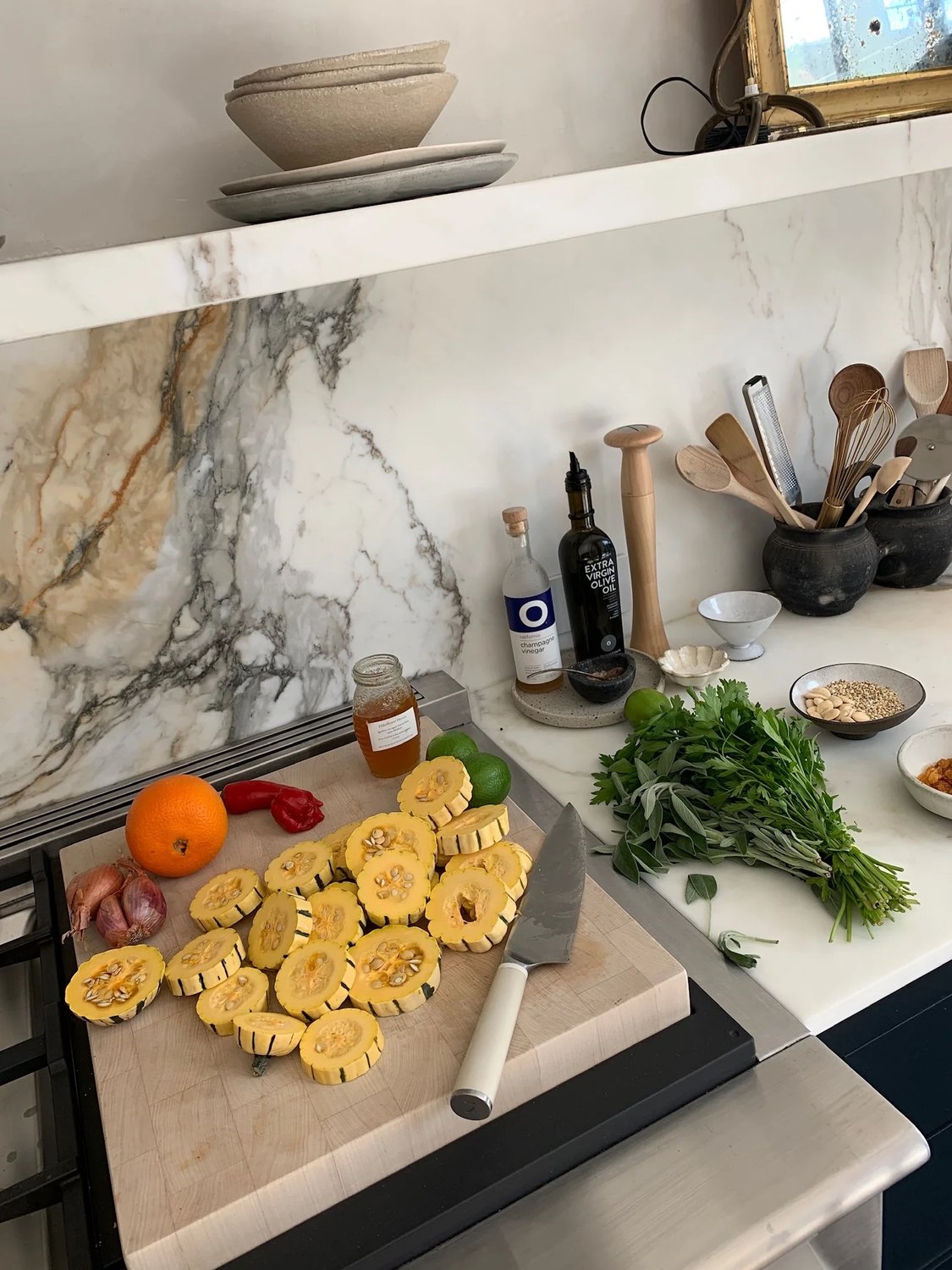
Once clean, slice the squash in half lengthwise and use a sturdy spoon to scrape out the seeds. (Save those seeds! We’ll talk about roasting them in the FAQ). Now, let’s talk about the geometry of the cut.
What is the best way to slice delicata squash? For the most consistent results, cut the squash into 1/2-inch thick half-moon rounds.
This specific thickness isn't arbitrary. Slicing into 1/2-inch rounds increases the caramelization surface area by approximately 40% compared to roasting in larger halves or thick wedges. This allows the natural sugars to make direct contact with the hot roasting pan, creating those coveted "maillard reaction" brown spots while the interior remains pillowy and soft.
The Master Recipe: Roasting for Maximum Caramelization
To achieve the perfect roast, we need to balance temperature, fat choice, and spacing.
1. Temperature and Timing
You want the oven hot. I recommend 400°F to 425°F (205°C to 220°C). At this temperature, delicata squash typically takes 20 to 25 minutes to become golden brown. Higher heat is necessary because the squash is relatively low in starch compared to a potato; if you roast it at a lower temperature for longer, it will steam rather than crisp.
2. The Fat Debate: Butter vs. Olive Oil
There is a lively debate among chefs regarding the best fat for roasting.
- Olive Oil: Provides the best crispness and a clean flavor. It’s the sustainable, plant-based choice that most of us reach for daily.
- Melted Butter: Serious Eats often champions butter for its ability to brown alongside the squash, adding a nutty, toasted flavor that complements the delicata’s natural sweetness.
- The Compromise: Use a high-quality, cold-pressed avocado oil for its high smoke point, or a drizzle of brown butter at the very end of roasting for the best of both worlds.
3. Step-by-Step Instructions
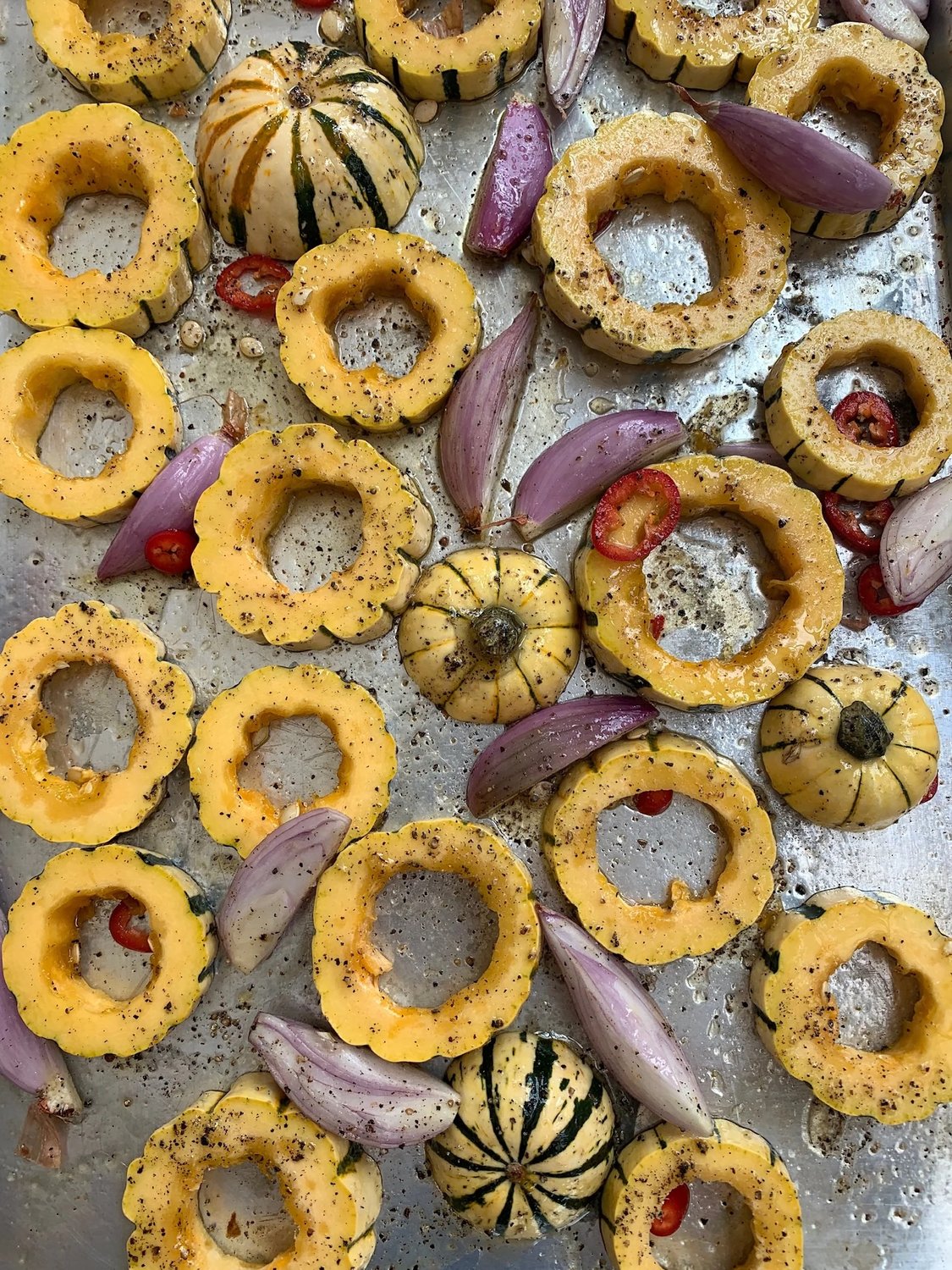
- Preheat: Set your oven to 425°F. Place your roasting pan inside while it preheats. A hot pan ensures the squash starts searing the moment it touches the surface.
- Toss: In a large bowl, toss your 1/2-inch half-moons with 2 tablespoons of oil, a generous pinch of sea salt, and cracked black pepper.
- Arrange: Carefully remove the hot pan and spread the squash in a single layer. Crucial Tip: Do not crowd the pan. If the slices are touching, they will release steam and become soggy. Leave at least a half-inch of space between each crescent.
- Roast & Flip: Roast for 12 minutes, then use a thin metal spatula to flip each piece. This ensures both sides get that deep caramel color. Roast for another 8-12 minutes.
Mindful Pairings: Elevating Your Side Dish
While roasted delicata squash is a triumph with just salt and pepper, its "sweet potato" profile makes it an incredible canvas for more complex flavor profiles.
The Agrodolce Approach
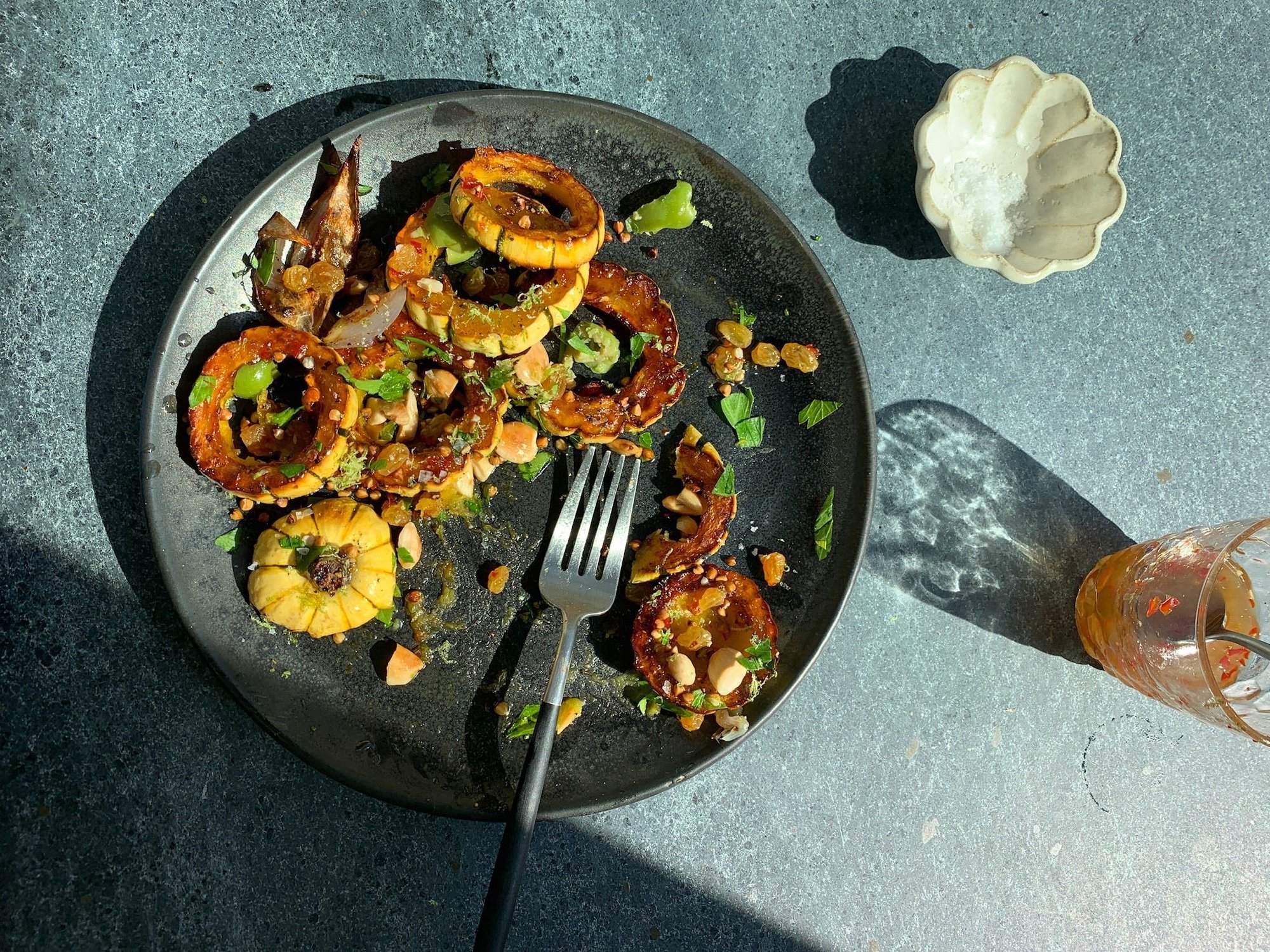
"Agrodolce" is Italian for "sour-sweet." Because delicata is naturally sugary, it pairs beautifully with acidity. Try tossing your roasted squash in a quick glaze of:
- 1 tbsp Apple Cider Vinegar
- 1 tsp Local Honey or Maple Syrup
- A pinch of red chili flakes
- Freshly torn mint or parsley
The Harvest Bowl
Transform this side dish into a mindful main event by combining it with other seasonal heavyweights. I love a base of massaged kale, tossed with roasted delicata, sliced crisp apples, toasted pepitas (pumpkin seeds), and a lemon-tahini dressing. It’s a nutrient-dense, plant-forward meal that celebrates the intersection of health and flavor.
Simple Seasoning Variations
- The Savory Route: Sage and thyme are the classic "Thanksgiving" herbs that work wonders here.
- The Warm Route: A dusting of cinnamon and nutmeg leans into the squash's dessert-like qualities.
- The Umami Route: A sprinkle of nutritional yeast or finely grated Parmesan creates a savory crust that is hard to resist.
Conclusion: Making Autumn Healthier and Simpler
Embracing the delicata squash is a small but meaningful step toward a more mindful kitchen. It teaches us that we don't always need to "work" our food—peeling, heavy processing, and long cook times aren't always necessary for a high-quality result. By respecting the seasonality of the harvest and using efficient roasting techniques, we can enjoy a dish that is as kind to the environment as it is to our bodies.
This autumn, when you see those striped crescents at the farmer's market, remember that you aren't just buying a vegetable; you're buying a 25-minute ticket to a more sustainable, delicious way of living.
FAQ Section
Can you freeze roasted delicata squash? While you can freeze it, the texture will change significantly upon thawing, becoming much softer. If you have leftovers you can't finish, I recommend freezing them to be blended into a seasonal squash soup later rather than serving them as a side dish.
Are the seeds edible? Absolutely! Just like pumpkin seeds, delicata seeds are highly nutritious. Toss them with a little oil and salt and roast them at 350°F for 10-15 minutes until they pop. They make an excellent zero-waste snack or a crunchy topper for your salad.
How do I reheat leftovers without them getting mushy? Avoid the microwave if possible, as it will make the skin rubbery. Instead, reheat them in a toaster oven or on a sheet pan at 350°F for about 5-8 minutes. This will revive the caramelized edges and keep the interior creamy.
Ready to transform your autumn kitchen? Join our community for more sustainable living tips and seasonal recipes that save you time, money, and energy.