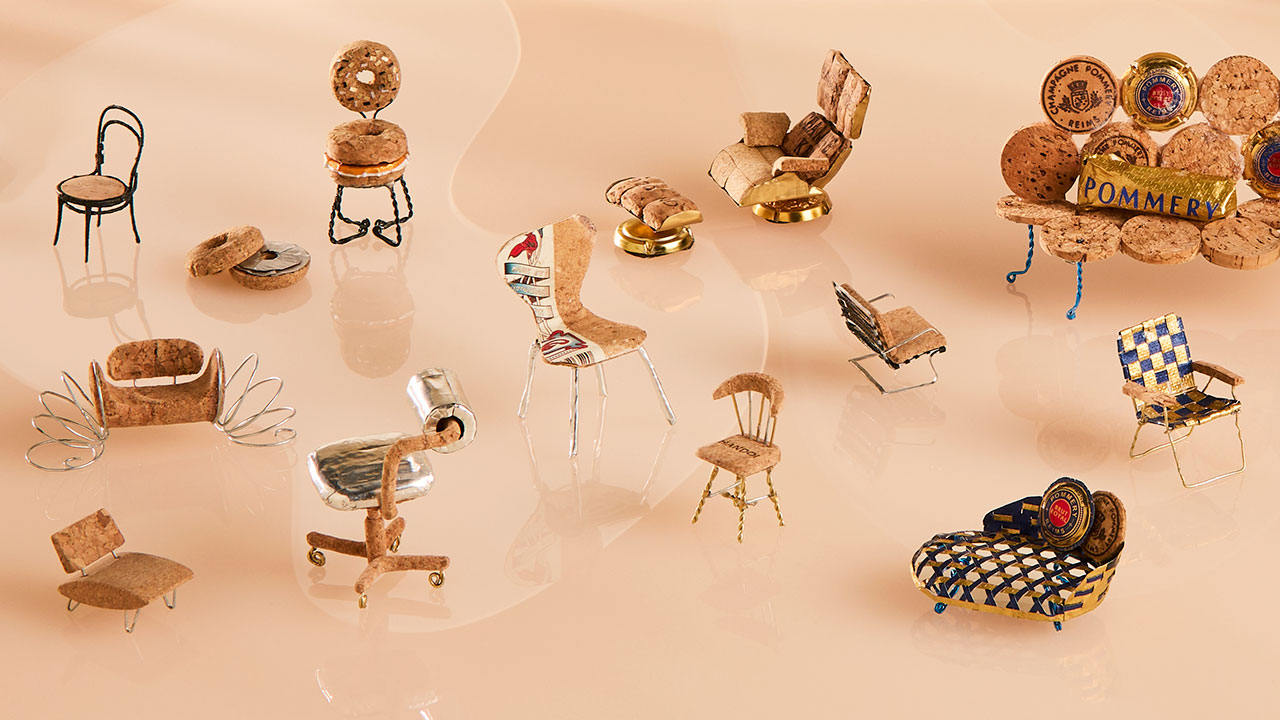
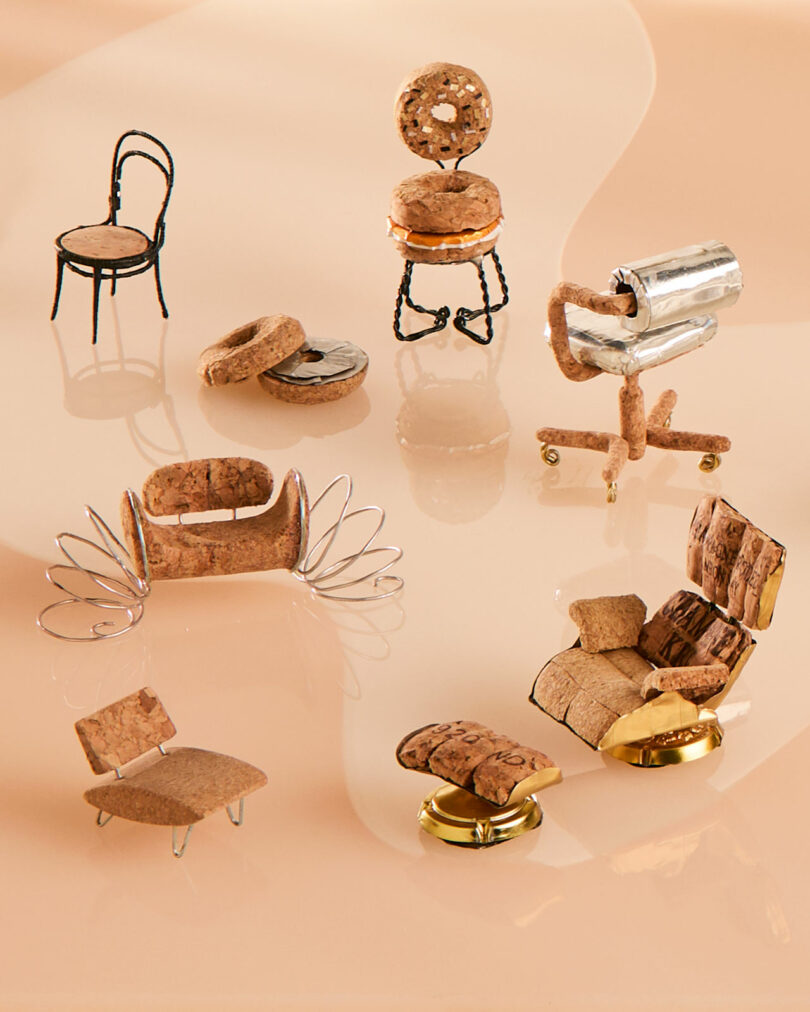
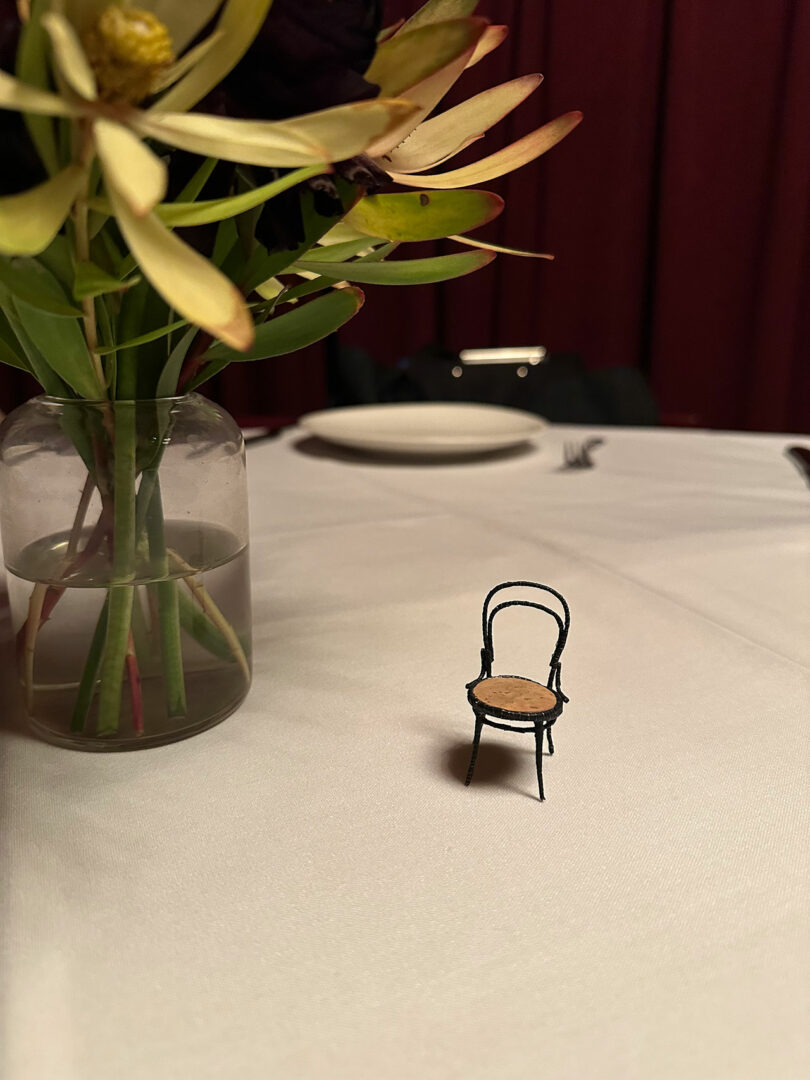
There is a certain magic that happens when the festive pop of a champagne cork transitions from a celebration’s end to a designer’s beginning. For twenty-one years, Design Within Reach (DWR) has invited the creative community to transform the ephemeral remnants of a toast—cork, wire, foil, and labels—into miniature seating masterpieces. As an interior design editor, I’ve always been fascinated by how constraints fuel creativity. There is no greater constraint than a 4-inch box and the scraps of a single bottle of Pommery.
The 2025 DWR Champagne Chair Contest has once again proven that "small" can be synonymous with "spectacular." This year’s iteration marks more than two decades of this "alchemic" process, where mundane materials are reimagined into articulated designs that mirror the sophistication of the modern furniture we live with every day.
Quick Facts: The 2025 DWR Champagne Chair Contest
| Category | Winner | Entry Name |
|---|---|---|
| Best Craftsmanship | Rob Metzgar | 'Brut Royal Daybed' |
| Most Original | Monte A. | 'Infinity Lounge Chair' |
| Best Likeness | Ann T. Dinh | 'La Chaise' |
| Competition Iteration | 21st Anniversary (2025) | |
| Strict Constraints | Materials from max 2 bottles; must fit in 4"x4"x4" space | |
| Grand Prize | $2,000 DWR Gift Card |
The Rules of the Game: Art Within a 4-Inch Box
What makes this contest a perennial favorite in the design world is its deceptive simplicity. To the uninitiated, it looks like a craft project; to a designer, it is a high-stakes exercise in structural integrity and aesthetic restraint. The rules, established by DWR founder Rob Forbes in the late 1990s, remain strictly enforced to ensure a level playing field.
The primary challenge lies in the material and the volume. Participants are permitted to use the components of no more than two champagne bottles. This includes the cork (natural or synthetic), the wire cage (muselet), the foil wrapper, and the paper labels. Glue is the only "outside" additive allowed, used sparingly to bind the champagne-sourced parts together.
Perhaps the most daunting rule is the size limitation. Every entry must fit within a 4x4x4 inch volume once fully assembled. This 64-cubic-inch limit forces designers to think about scale and proportion with the same intensity as they would for a full-sized lounge chair. It is about distilling the essence of a design into its most concentrated form.
Celebrating the 2025 Winners: Miniature Excellence
The 2025 judging panel had the unenviable task of sorting through hundreds of entries that pushed the limits of what foil and cork can do. This year’s winners demonstrated a profound understanding of texture and form, bridging the gap between discarded waste and fine art.
Best Likeness: Ann T. Dinh’s 'La Chaise'
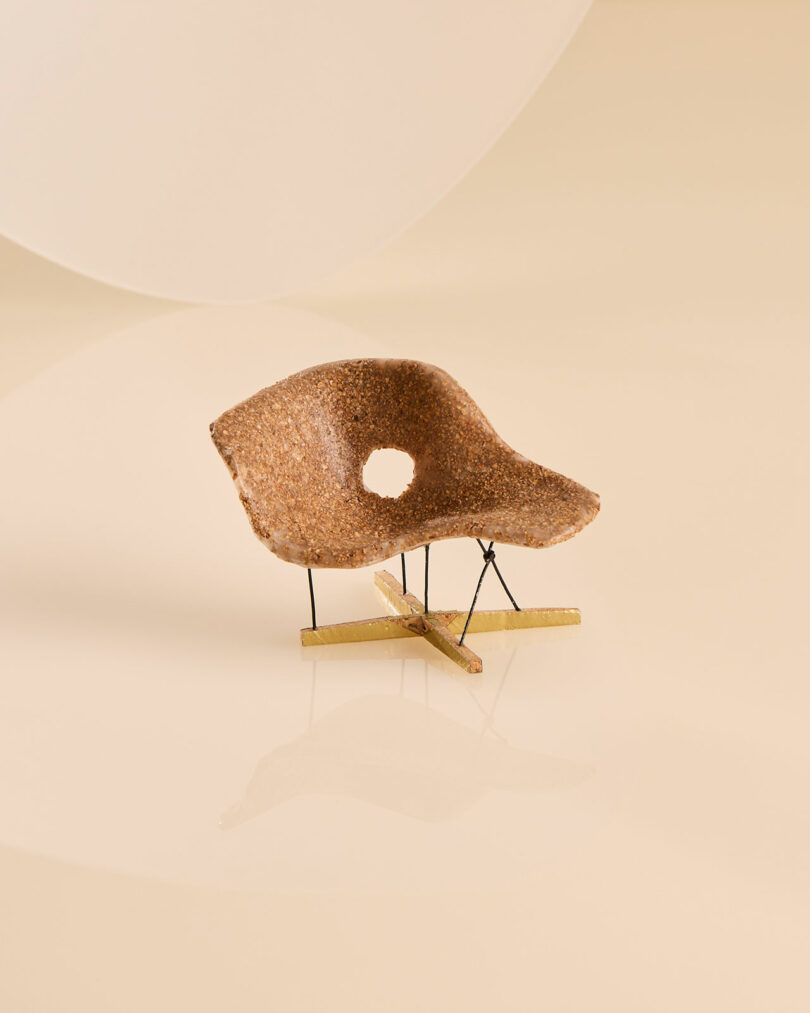
For those of us who worship at the altar of Mid-Century Modernism, Ann T. Dinh’s miniature 'La Chaise'—inspired by the iconic 1948 design by Charles and Ray Eames—was a triumph of mimetic skill. Capturing the fluid, organic curves of the original fiberglass shell using only champagne cork and foil is no small feat. Dinh managed to replicate the "floating" quality of the Eames classic, turning the rigid muselet wire into a sophisticated supporting base.
"The 'Best Likeness' category is a love letter to design history. Ann’s ability to translate the sweeping, sculptural language of the Eameses into the humble medium of a Pommery cork is nothing short of breathtaking." — Ivy Chen
Most Original: Monte A.’s 'Infinity Lounge Chair'
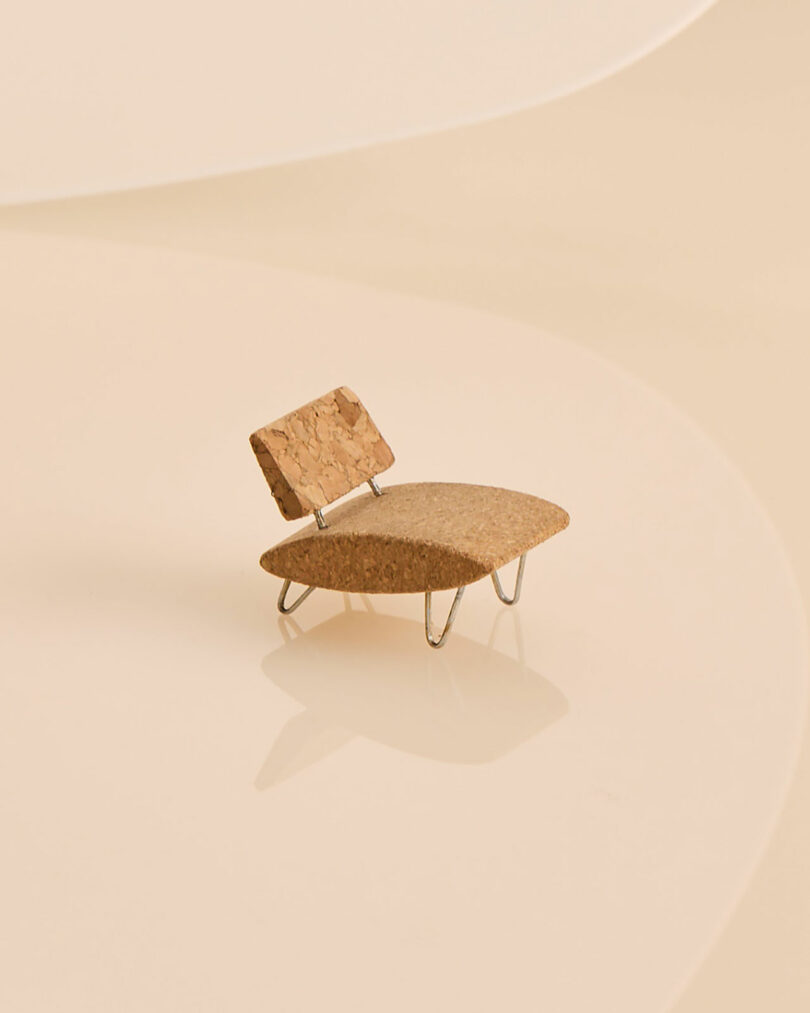
While some seek to replicate history, others seek to write it. Monte A.’s 'Infinity Lounge Chair' took the "Most Original" title by reimagining the very concept of a chair. Eschewing traditional legs and backs, this piece utilized the wire cage in a continuous, looping motion that felt both futuristic and ergonomically intuitive. It was a masterclass in tension and flow, proving that champagne materials can be used to create entirely new design vocabularies.
Best Craftsmanship: Rob Metzgar’s 'Brut Royal Daybed'
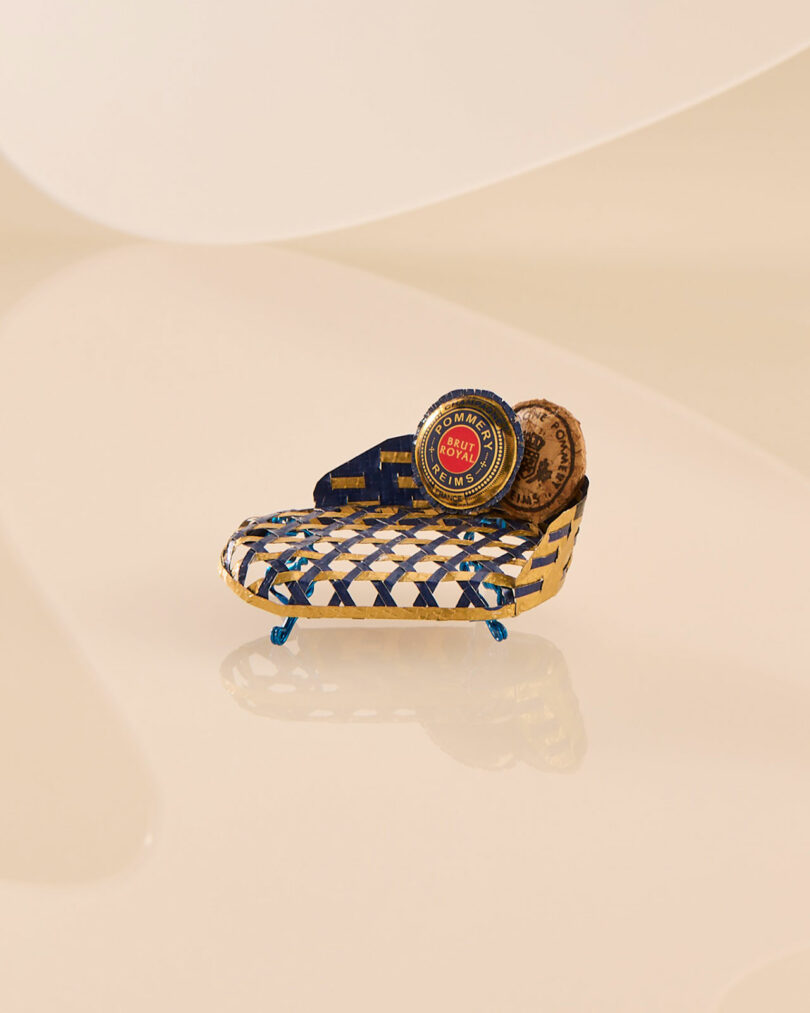
Craftsmanship is often found in the details that a casual observer might miss. Rob Metzgar’s 'Brut Royal Daybed' won its category through sheer technical precision. The "upholstery" of the daybed, fashioned from finely sliced cork and meticulously folded foil, looked as though it could actually support weight. The joinery was invisible, and the proportions were so perfect that, if photographed without context, you might mistake it for a full-sized piece from a luxury showroom.
The History and Heart Behind the Contest
While we celebrate the aesthetic beauty of these winners, it’s important to remember the emotional foundation of the Champagne Chair Contest. It was founded by Rob Forbes as a memorial to his friend, Wayne, a design enthusiast who found joy in the small things. What began as a personal tribute has evolved over 21 iterations into a global platform for creativity.
Furthermore, the contest serves a larger purpose. By partnering with organizations like Docomomo (which works to preserve modern architecture and design) and the MillerKnoll Foundation, DWR ensures that this celebration of "small design" has a big impact. The proceeds from the auction of the winning chairs and related events often go toward preserving the design legacy that inspires these miniatures in the first place.
Getting Creative: How to Make Your Own Miniature Masterpiece
You don’t need to be an award-winning architect to enjoy the art of the champagne chair. In fact, many of my favorite interior styling moments come from these small, personal touches. A miniature chair placed on a bookshelf or under a glass cloche on a coffee table adds a layer of wit and design-savviness to a room.
If you’re feeling inspired by the "Rosé Corner" leftovers from your last dinner party, here’s how to start:
- The Toolkit: You’ll need a set of needle-nose pliers for manipulating the wire, a sharp X-acto knife for carving the cork, and a high-quality, clear-drying glue.
- The Prep: Carefully soak the labels off the bottle if you intend to use them for "fabric" or detailing. Soften the cork by steaming it slightly if it’s too brittle to carve.
- The Vision: Don't just think about the chair; think about the lifestyle of the chair. Is it a cozy reading nook piece or a sleek office chair?
- The Finish: Use the foil to create metallic accents or "piping" along the edges of your cork cushions.
Looking Ahead: The 2026 DWR Champagne Chair Contest
As we toast the 2025 winners, it’s never too early to start thinking about the 2026 iteration. The competition typically opens for entries in the late fall or early winter, with winners announced in the spring.
The stakes remain high, with the Grand Prize typically including a $2,000 DWR Gift Card—enough to bring a full-sized design masterpiece into your own home. Whether you are a professional designer or a passionate hobbyist, the contest is an open invitation to see the world (and your champagne bottle) through a more creative lens.
Keep an eye on the official DWR website for submission deadlines and updated themes for 2026. Remember, the best designs often come from the most unexpected places—or in this case, the most unexpected scraps.
FAQ
Can I use materials from any brand of champagne? While the contest is a partnership with Pommery, the rules generally allow the use of materials from any two champagne or sparkling wine bottles. However, always check the specific year's official rules for any brand-specific requirements.
Do I have to be a professional designer to enter? Absolutely not! The contest is open to everyone—students, design professionals, and DIY enthusiasts alike. The judges look for creativity, craftsmanship, and originality regardless of the entrant's background.
What is the best way to adhere the materials together? Most successful entrants use a combination of wire-twisting (using the muselet) and small amounts of super glue or hot glue. The key is to keep the glue invisible so it doesn't distract from the "alchemic" look of the recycled materials.
How is the volume measured? The chair must fit entirely inside a 4"x4"x4" cube. If any part of the chair—be it a leg or an artistic flourish—extends beyond those dimensions, it is typically disqualified from the judging process.