Quick Facts
- Location: Bucharest, Romania (former Socialist-era apartment block).
- Original Structure: Part of the first locally designed socialist residential complex, dating back to 1958.
- Architectural Visionaries: Designed by Anda Zota in collaboration with Muromuro Studio.
- Core Innovation: A "room within a room" timber frame system for superior acoustic isolation.
- Structural Preservation: 100% of the four original structural concrete columns were preserved and integrated into the layout.
- Key Materials: Oiled birch plywood, raw stainless steel, textured marble mosaic, and exposed original concrete.
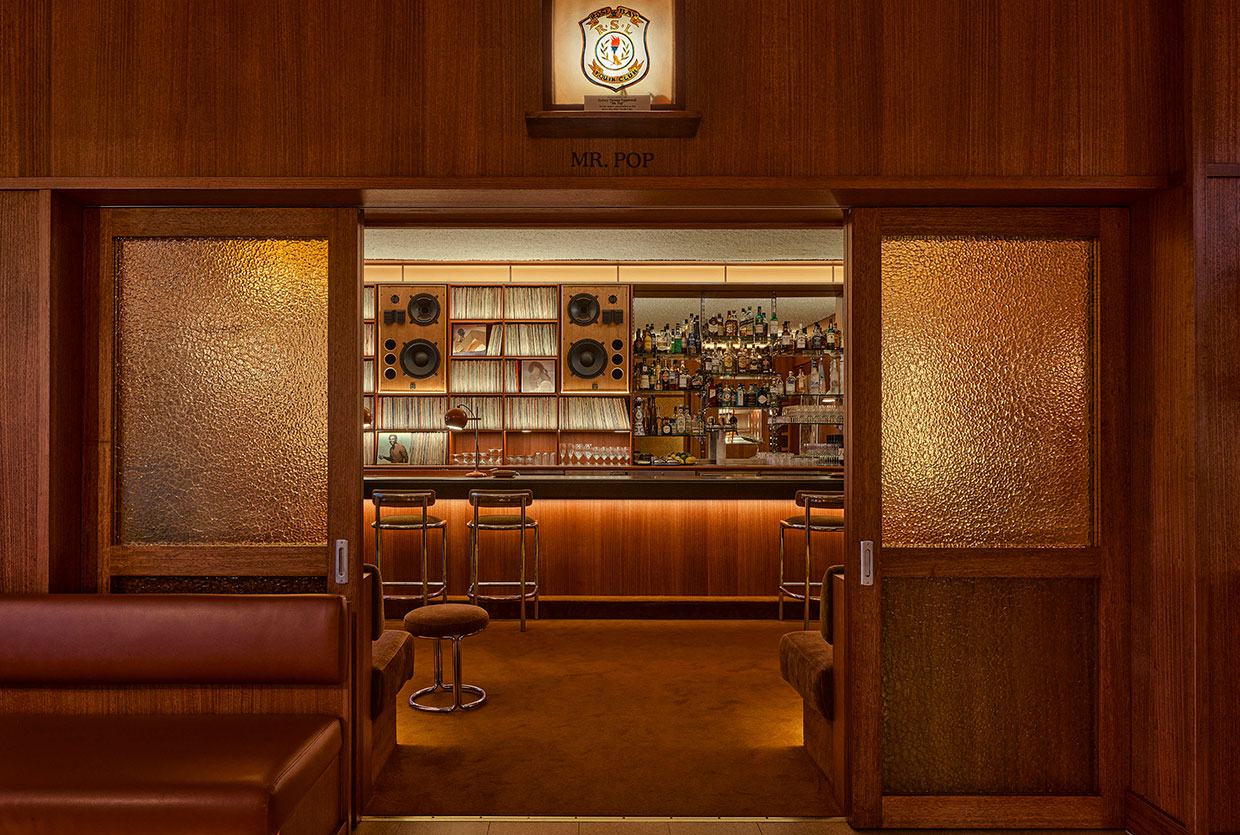
In the heart of Bucharest, where the echoes of a communist past still linger in the rigid geometry of the streets, a new kind of sanctuary has emerged. Bar Ton is not merely a venue for cocktails; it is a meticulously engineered "listening bar" that breathes new life into a 1950s socialist block. How does one modernize such a heavy, historically charged structure? The transformation was achieved through a radical yet respectful architectural intervention: replacing the stagnant facade with a mechanical glass front and inserting a decoupled "room within a room" timber frame. This design isolates high-fidelity sound from the building’s 65-year-old concrete bones, seamlessly blending socialist heritage with a sophisticated palette of birch plywood and industrial stainless steel.
The Historical Canvas: A 1950s Socialist Landmark
To understand the soul of Bar Ton, one must first understand its skeleton. The bar is housed within a building that represents a pivotal moment in Romanian history. Constructed in 1958, this was the nation’s first locally designed socialist apartment complex. It stands as a testament to the transition from "Socialist Realism"—a style often characterized by its heavy, somber proportions—to a more nuanced era of urban planning.
For over six decades, this structure has witnessed the evolution of Bucharest. By choosing this location, the design team didn't just find a space; they inherited a legacy. The project represents a sophisticated shift in adaptive reuse, moving away from the typical "gut and remodel" approach toward a more thoughtful "cultural curation." By maintaining the original structural integrity, the architects have proven that communist heritage can serve as a robust foundation for modern cultural hubs.
"The challenge was not to erase the history of the 1950s block, but to use its raw, unapologetic strength as a backdrop for a high-fidelity sensory experience." — Ivy Chen, Design Insight
The interior layout is a masterclass in structural honesty. Instead of fighting against the building's original four structural concrete columns, the architects utilized them as natural spatial dividers. By preserving 100% of these historical elements, they created a layout that feels both open and grounded, a sanctuary where the weight of the past supports the lightness of the present.
Structural Honesty: Embracing the Communist Past
The design philosophy spearheaded by Anda Zota and Muromuro Studio was rooted in "working with, not against." In many socialist-era renovations, designers attempt to hide the "clunky" concrete elements behind layers of drywall. At Bar Ton, the opposite is true. The raw, textured surfaces of the 1958 columns are left exposed, serving as a tactile reminder of the building’s origins.
This "open chapel" layout allows for a fluid movement of both people and sound. The space is divided not by walls, but by these historical pillars and the clever placement of furniture. This transparency reflects a modern democratic value—an openness that contrasts sharply with the era in which the building was conceived.
- Spatial Dividers: The columns act as anchors for the bar and seating areas.
- Visual Continuity: Exposed ceilings reveal the building's original plumbing and structural veins.
- Historical Echoes: The choice to keep the columns raw connects the interior to the external architecture of the neighborhood.
Acoustic Engineering: The 'Room Within a Room' Concept
For a listening bar, the greatest enemy is vibration. The original concrete structure of a 1950s block is a perfect conductor for low-frequency sound, which could disturb residents above or muddy the audio quality within. To solve this, the designers implemented a "room within a room" strategy. This technical feat involves building a secondary timber frame that is physically decoupled from the building's original walls and floor.
This timber skeleton is the heart of the "sound sanctuary." By isolating the listening area, the team ensured that the high-fidelity audio equipment can perform at its peak without interference. It’s a specialized construction that transforms a rigid concrete box into a warm, resonant instrument.
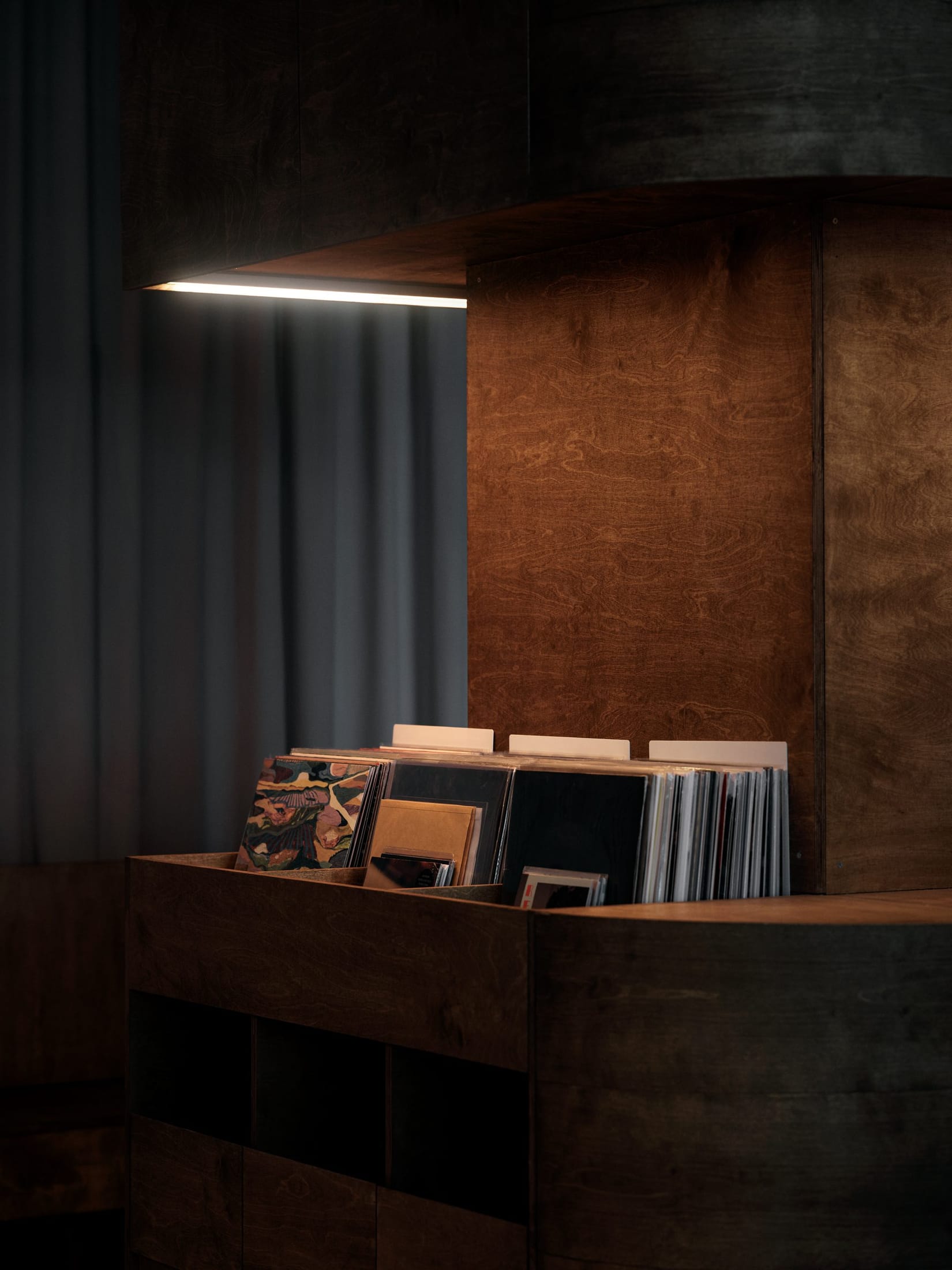
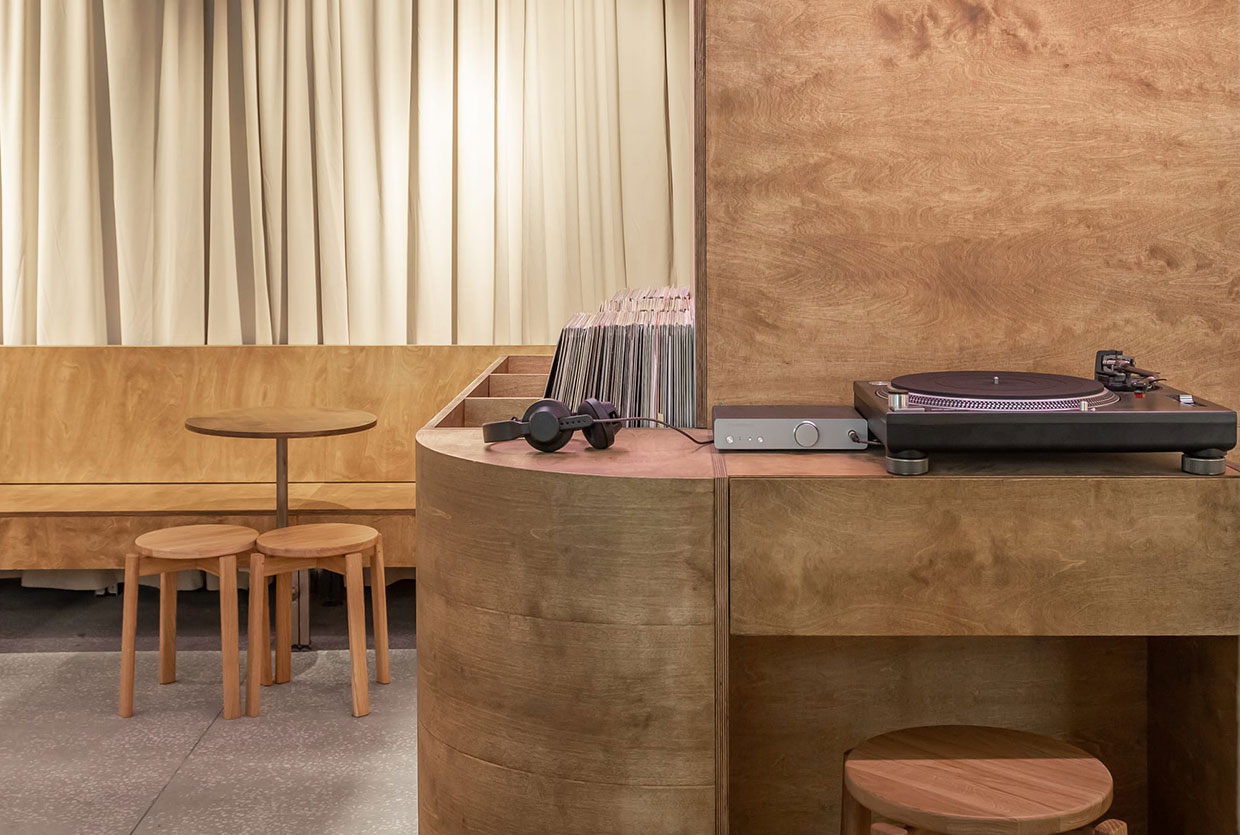
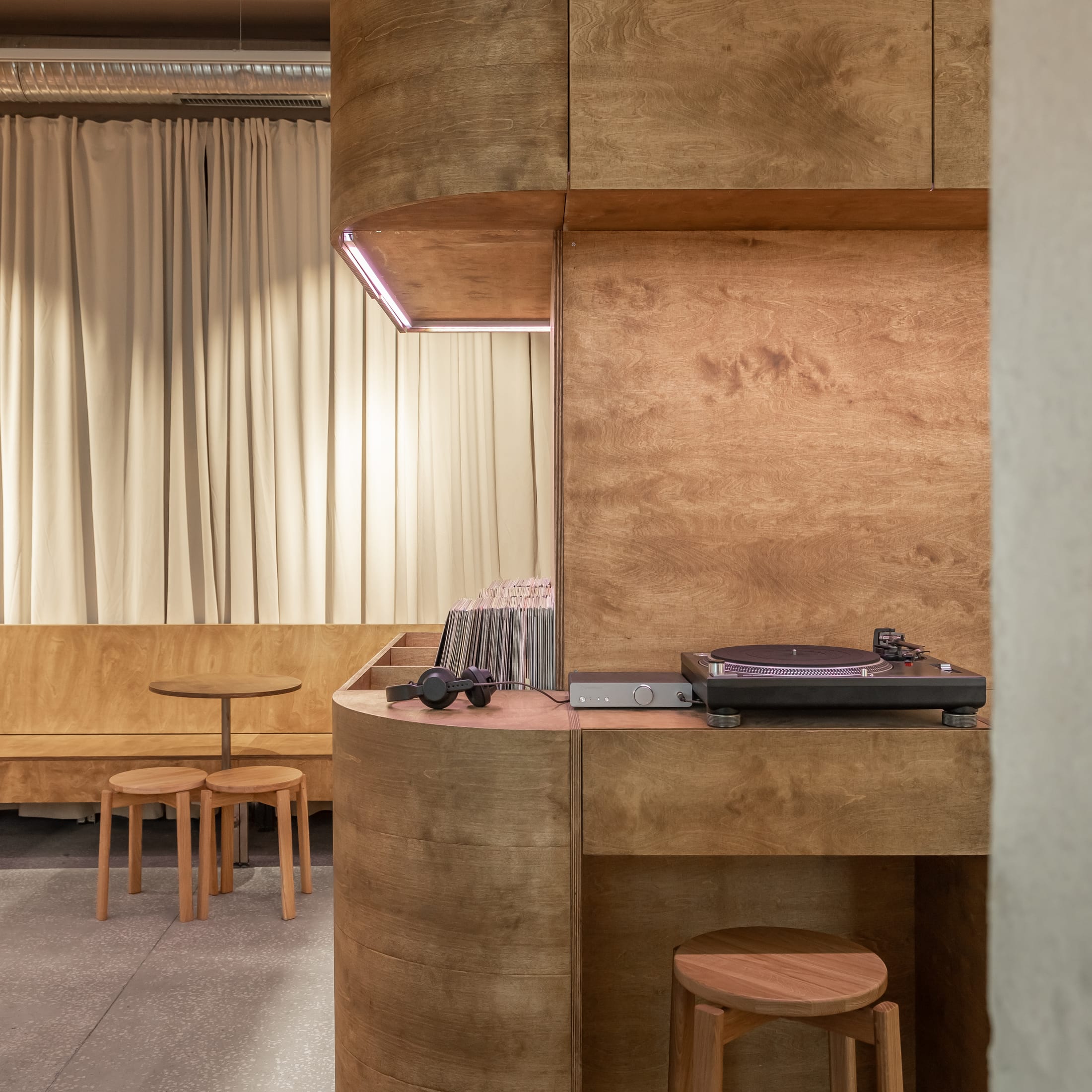
To complement this engineering, heavy drapes were introduced. These aren't just for aesthetics; they hide the bulky acoustic gear and wiring while providing essential sound absorption. The result is a space that feels cozy and intimate, yet performs with the precision of a recording studio.
Furthermore, the collaboration with Greentek Lighting adds another layer to the environment. The lighting system features transition modes that shift from a bright, airy daytime "gallery" feel to a moody, focused evening "sanctuary," ensuring the acoustics and visuals are always in sync.
Technical Acoustic Features at a Glance:
- Decoupled Timber Frame: Prevents sound energy from transferring to the main structure.
- Sound-Absorbent Drapes: Manages reverberation and hides technical infrastructure.
- Zoned Audio: Precision-placed speakers that utilize the column-divided space for optimal sound distribution.
- Vibration Damping: Specialized floor treatments to isolate the high-end turntables from foot traffic.
Materiality and Finish: Raw Meets Polished
In my years of editing, I’ve found that the most successful interiors are those that play with contrast. Bar Ton is a textbook example of this principle. The material palette is a curated tension between the "found" and the "fabricated."
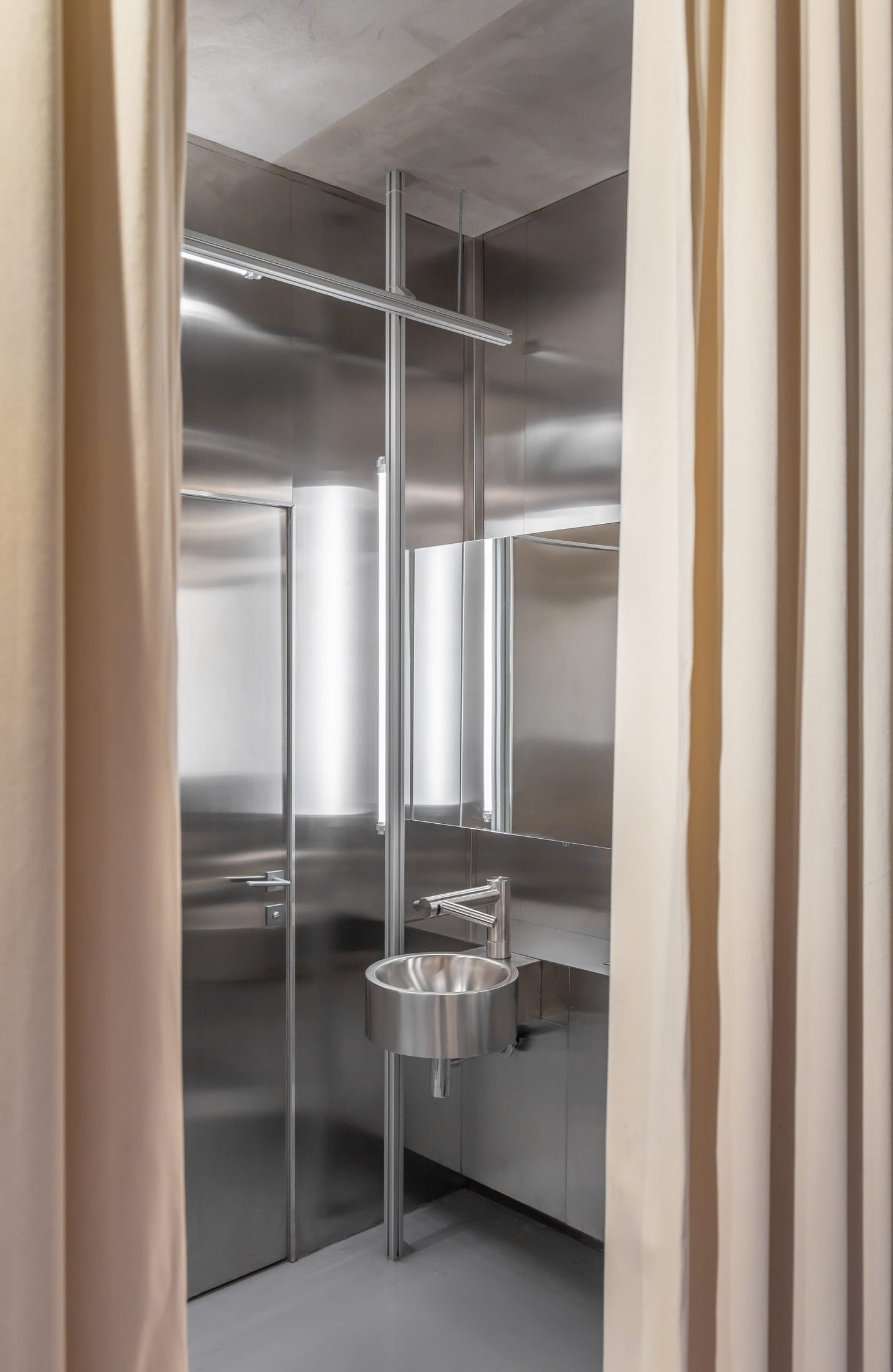
The rough, unfinished concrete of the ceiling and columns is juxtaposed against the precision of oiled birch plywood and the sterile gleam of stainless steel. This creates a sensory experience that feels both industrial and incredibly warm. The floor, a textured marble mosaic, provides a sophisticated foundation that ties the disparate materials together.
Materials at a Glance
| Material | Application | Role in Design |
|---|---|---|
| Original Concrete | Structural Columns / Ceiling | Historical context & raw texture |
| Oiled Birch Plywood | Wall Panels / Furniture | Acoustic warmth & Scandinavian influence |
| Stainless Steel | Bar Counter / Details | Industrial precision & modern hygiene |
| Marble Mosaic | Flooring | Tactile grounding & classic elegance |
| Heavy Drapes | Walls / Sound Booths | Acoustic absorption & visual softness |
Connecting with the Street: The Mechanical Glass Front
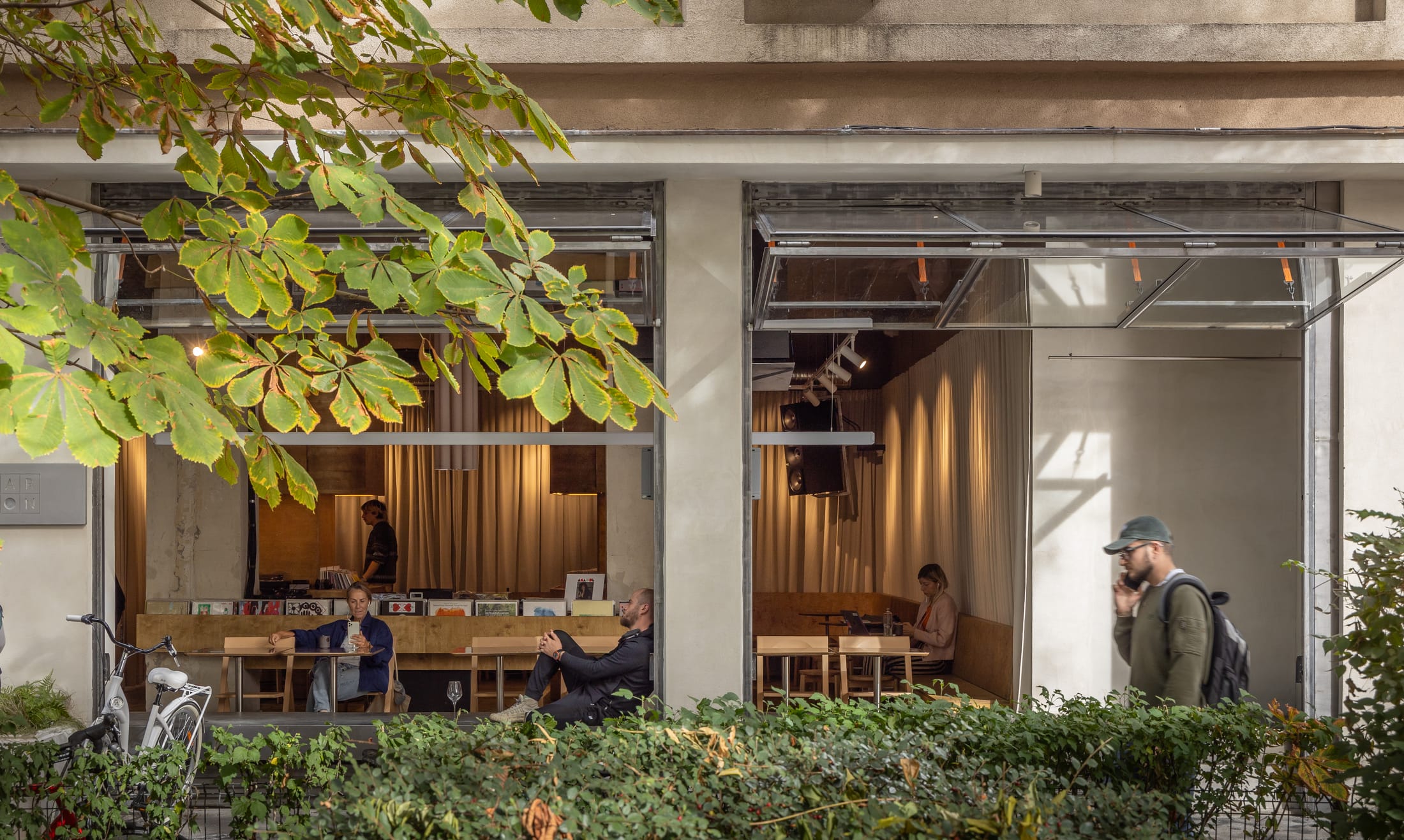
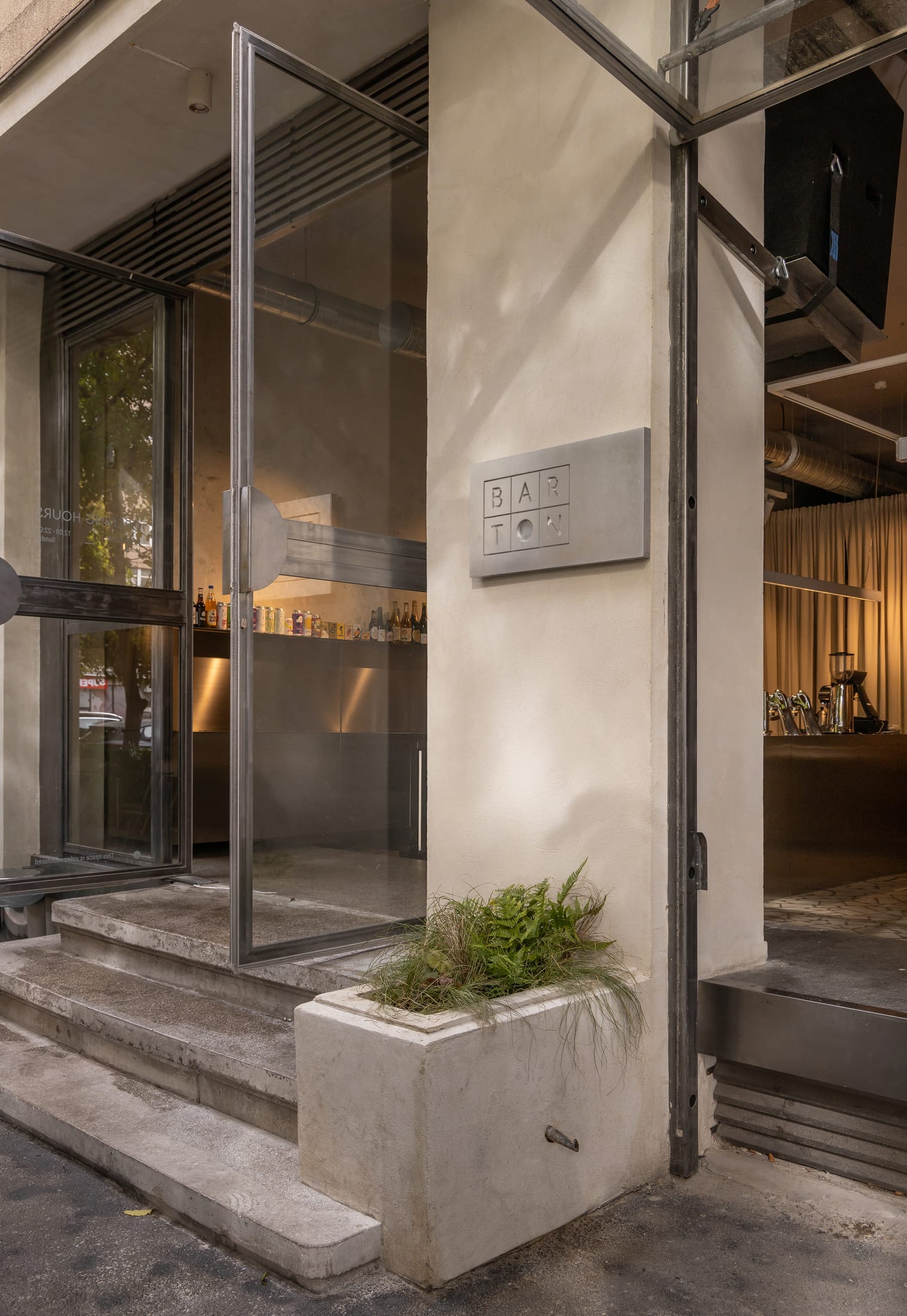
One of the most transformative elements of the Bar Ton project is the facade. The architects removed the original, static shopfront and replaced it with raw metal frames and a mechanical glass system. This isn't just about curb appeal; it’s about urban integration.
The mechanical windows can be fully opened, blurring the line between the private interior and the public sidewalk. An integrated indoor-outdoor bench allows patrons to sit right at the threshold, fostering an instant connection with the Bucharest streetscape. It turns the bar into a "third space" that breathes with the city, a stark contrast to the insular, closed-off nature of socialist-era commercial spaces.
Conclusion: Turning Infrastructure into Cultural Curation
Bar Ton is more than just a successful renovation; it is a blueprint for how we should approach the aging infrastructure of the 20th century. By respecting the 65-year evolution of the 1958 socialist block while introducing cutting-edge acoustic engineering and a modern material palette, Anda Zota and Muromuro Studio have created something truly unique.
They have transformed a symbol of rigid urban planning into a vibrant, open "chapel of sound." For the design-conscious traveler or the local music lover, Bar Ton offers a rare chance to experience the history of Bucharest not through a museum glass, but through the tactile reality of a space that honors its past while looking firmly toward the future.
FAQ
Why is Bar Ton called a "listening bar"? A listening bar is a concept originating from Japan (Jazu Kissa) where the primary focus is on high-fidelity audio and the appreciation of music, often played on vinyl. Bar Ton adopts this by prioritizing acoustic design and high-end sound systems over loud, distracting background noise.
What are the main challenges of renovating socialist-era buildings? The main challenges include dealing with rigid structural elements like thick concrete columns, outdated electrical and plumbing systems, and the "Socialist Realist" aesthetic which can feel heavy. Bar Ton overcomes this by using "adaptive reuse" principles that highlight rather than hide these features.
Can I visit Bar Ton if I'm not a serious audiophile? Absolutely. While the sound system is world-class, the bar functions as a social space. The design, particularly the mechanical glass front and indoor-outdoor seating, is intended to make it an inviting "third space" for anyone looking to enjoy a cocktail in a beautifully designed architectural setting.