Quick Facts: Maison Bernard at a Glance
- Location: Maisons-Laffitte, France (30 minutes from Paris by train).
- Architect (Original): Edith Schreiber-Aujame (1959).
- Restoration Architects: RREEL (Léa Cottreel and Rosalie Robert).
- Total Area: 260 square meters across three levels.
- Style: Brutalist/Modernist residential architecture.
- Key Materials: Cast concrete, marble stonework, Artigo rubber, Winckelmans tiles, exotic wood cabinetry.
- Preservation Highlights: 100% restoration of original marble and 1950s built-in furniture.
To step into Maison Bernard is to traverse a bridge between the radical idealism of the late 1950s and the sophisticated rigor of contemporary Parisian design. Located in the verdant, forested enclave of Maisons-Laffitte, this 260-square-meter villa is a masterclass in Brutalist residential architecture. Designed in 1959 by Edith Schreiber-Aujame—a woman whose architectural pedigree traces back to the very founders of Modernism—the house recently underwent a meticulous restoration led by Léa Cottreel and Rosalie Robert of the Parisian studio RREEL. Rather than a mere renovation, RREEL’s intervention serves as a scholarly dialogue with the past, proving that "historic" doesn't have to mean "untouchable."
The Architect’s Lineage: From Gropius to Le Corbusier
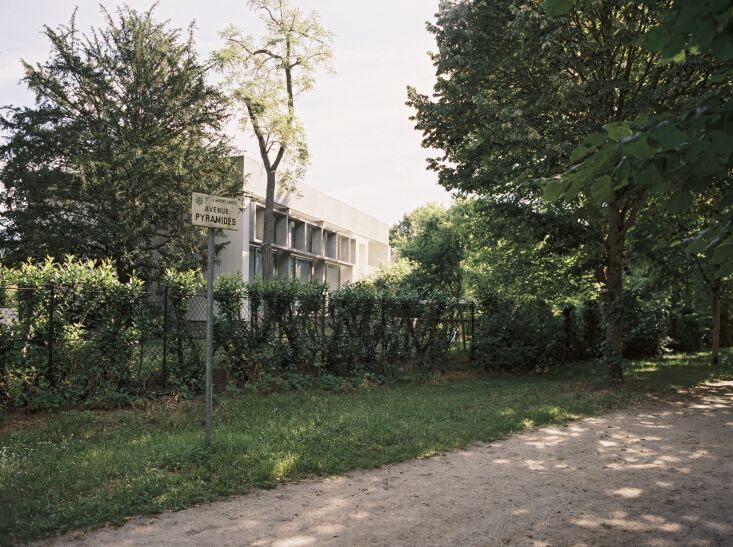
The provenance of Maison Bernard is as compelling as its concrete facade. Edith Schreiber-Aujame was no ordinary architect; she was a practitioner who studied under Walter Gropius at Harvard and later honed her craft alongside the legendary Charlotte Perriand. This lineage is palpable in every tectonic shift of the villa. The house represents a unique synthesis: it carries the organic, sculptural influence of Le Corbusier’s later works while maintaining the domestic warmth required for mid-century family life.
Situated just a 30-minute train ride from the bustle of Paris, the villa serves as a testament to the suburban avant-garde. In the 1950s, Maisons-Laffitte became a playground for architectural experimentation, and Schreiber-Aujame utilized this freedom to create a home that was both a fortress of privacy and a pavilion of light. The "DNA" of the building is rooted in the belief that material honesty—the raw expression of concrete, wood, and stone—could elevate the human experience.
The Research-Led Approach: Archival Detective Work
When RREEL took on the project, they didn't reach for the sledgehammer. Instead, they reached for the archives. This "research-first" philosophy is what separates RREEL from the studio du jour focused solely on aesthetics. Architects Léa Cottreel and Rosalie Robert operated as detectives, unearthing original sketches and historical documents to understand Schreiber-Aujame’s initial vision before a single tile was laid.
"Our role was not to reinvent, but to reveal," says Léa Cottreel. "The house had a voice; it had just been muffled by decades of minor, insensitive changes. By returning to the archives, we were able to reconstruct the 'detective' trail of the original design."
This archival deep-dive allowed the team to phase the restoration strategically. For the young family who now calls Maison Bernard home, the project was a lesson in patience. RREEL prioritized the restoration of the original kitchen, the monumental fireplace, and the intricate built-in furniture—elements that had been partially lost or obscured over time.
Structural Brutalism: The Exterior Restoration
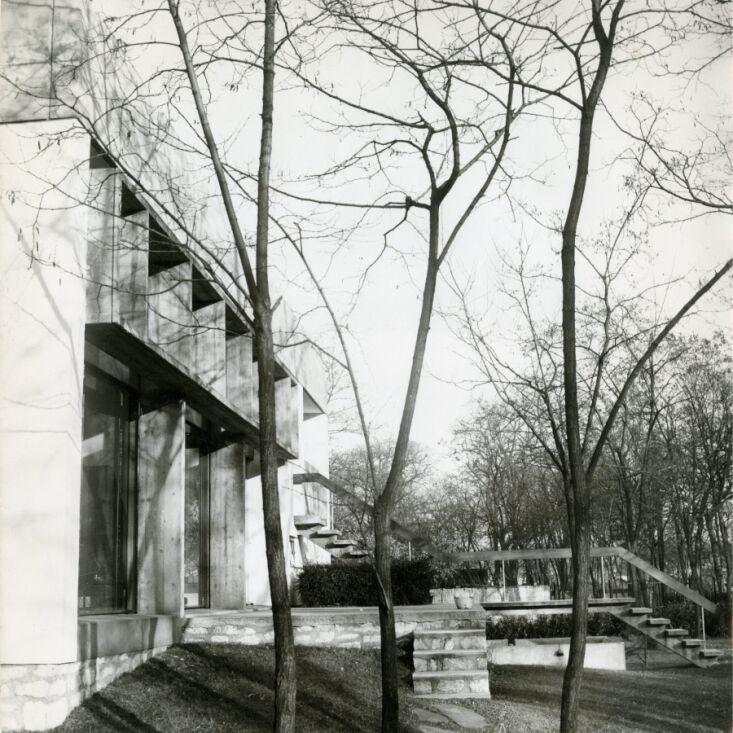
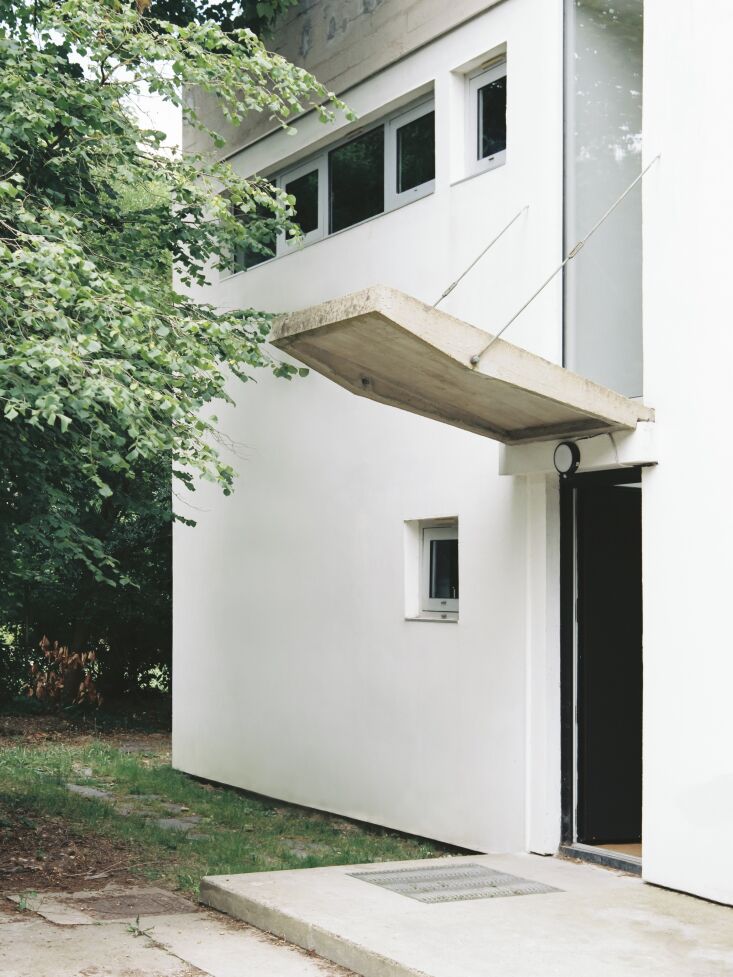
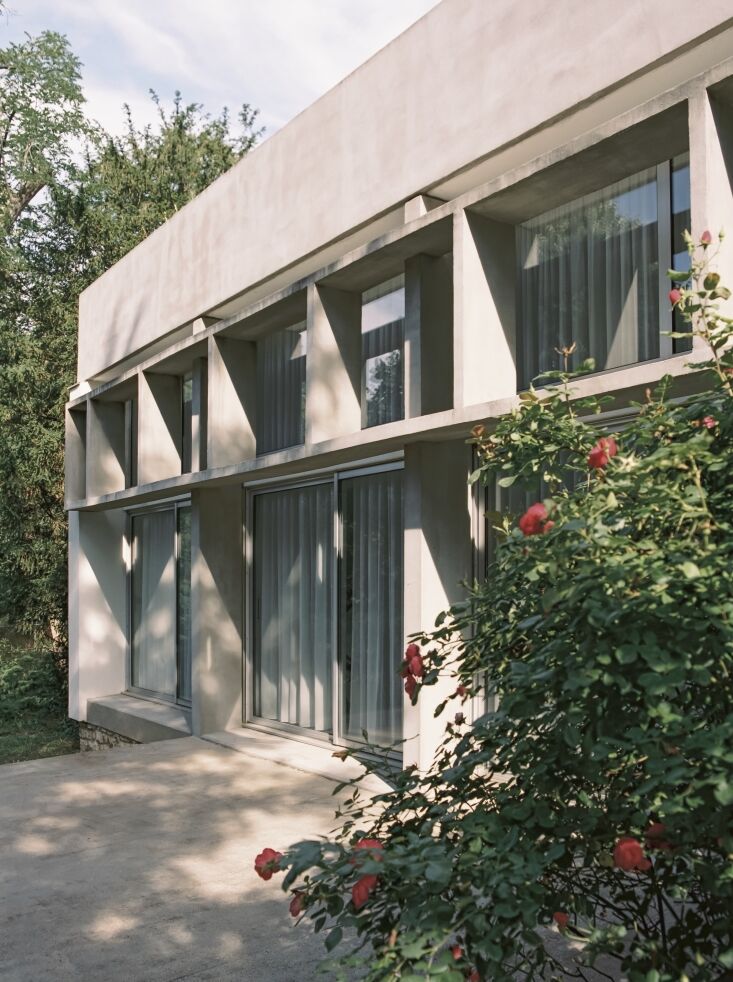
The exterior of Maison Bernard is a study in "Quiet Luxury" before the term became a marketing cliché. It is defined by its Brutalist period details: cast concrete sunbreakers (brise-soleil) that modulate the French sun, and a suspended entrance cap that defies gravity with a sculptural grace.
RREEL’s work on the facade was an exercise in restraint. The goal was to preserve the integrity of the cast concrete while updating the building’s thermal performance—a common challenge in Modernist heritage restoration. The sunbreakers were cleaned and stabilized, ensuring that the interplay of light and shadow across the 260-square-meter footprint remained as dramatic as it was in 1959. To balance this "hard" architecture, the architects integrated floor-to-ceiling curtains, providing a soft, tactile counterpoint to the concrete and glass.
Interior Interventions: Kitchen, Hearth, and Stone
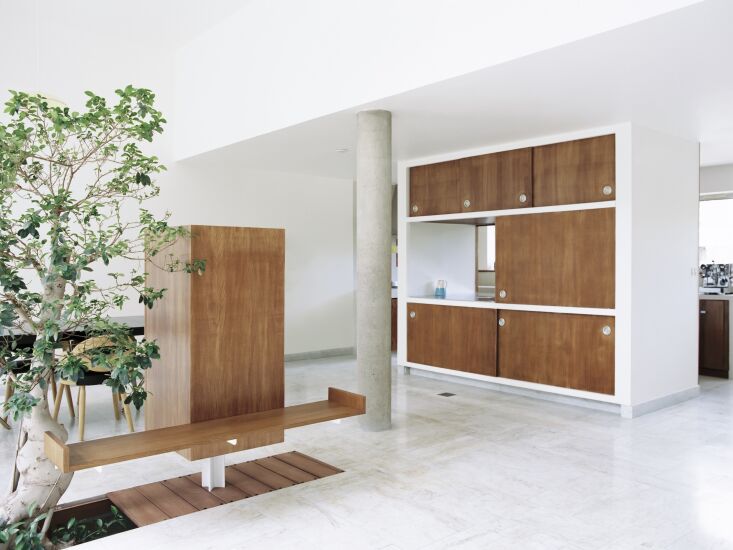
The interior restoration of Maison Bernard is where RREEL’s technical precision truly shines. One of the most significant triumphs was the restoration of the passe-plat, or serving hatch. In the original 1959 design, this element served as a social and functional bridge between the kitchen and the dining area. RREEL reimagined this feature to suit contemporary open-plan living without sacrificing its historical silhouette.
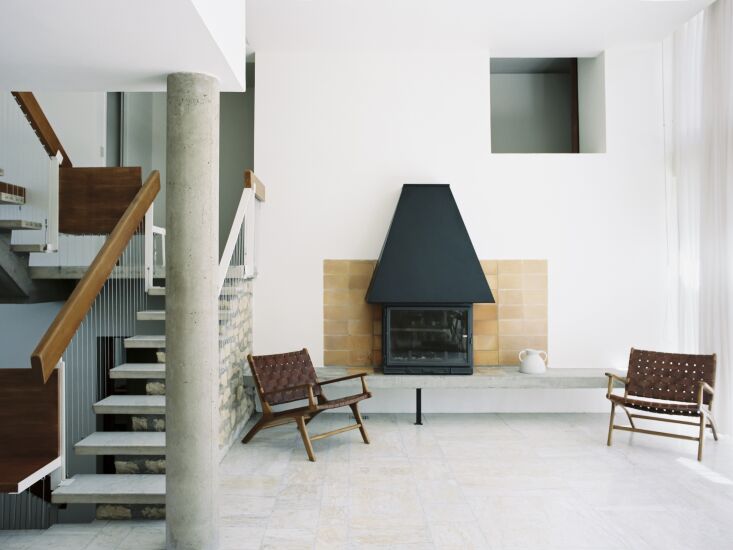
The restoration project successfully preserved and polished 100% of the original marble stonework throughout the property. These floors, cold to the touch but visually warm with their natural veining, reflect the influence of both Le Corbusier and Charlotte Perriand.
Key Interior Highlights:
- The Hearth: The central fireplace, a Brutalist monument in its own right, was restored using original sketches. RREEL even went so far as to custom-fabricate a range hood for the kitchen that was inspired by the fireplace's original geometry.
- Built-in Cabinetry: 100% of the 1950s built-in cabinetry was salvaged. The "exotic wood" finishes were meticulously sanded and refinished to restore their deep, honey-toned luster.
- The 'Passe-Plat': Merging original architectural intent with the flow of a modern family home.
Materiality and the Perriand Connection
The choice of materials in Maison Bernard is a curated dialogue between the mid-century and the modern. To complement the original marble and concrete, RREEL specified high-end, period-appropriate materials that offer durability for a modern family.
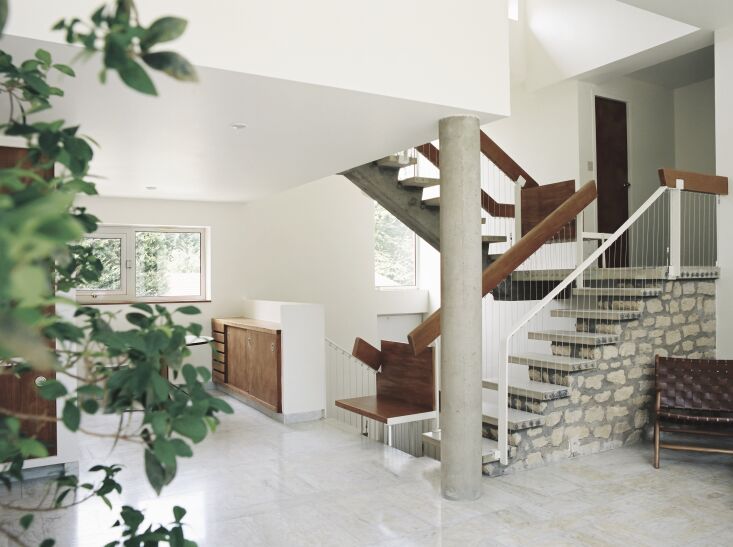
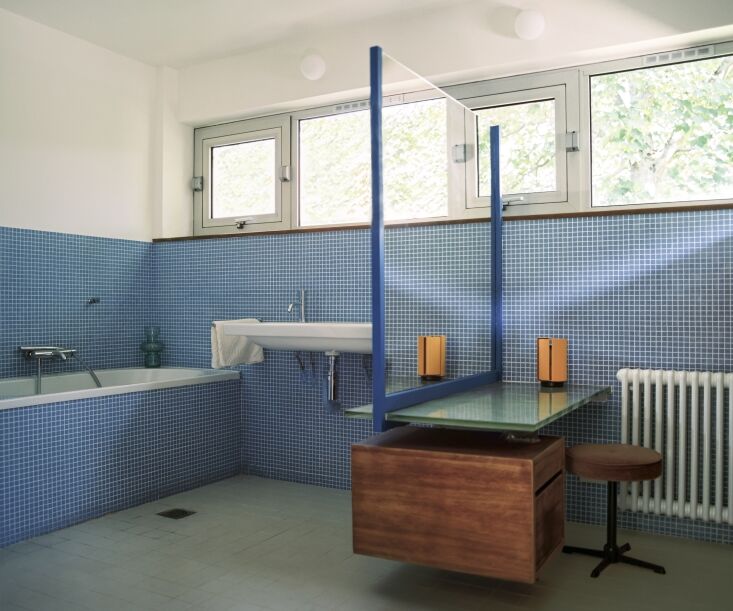
In the high-traffic areas and bathrooms, the architects used Winckelmans tiles, known for their historic use in French architecture, and Artigo rubber flooring. These choices aren't just aesthetic; they are an homage to the "industrial chic" of the 1950s. The vertical spine of the house—a stunning three-floor staircase—features a complex mix of stone, concrete, and metal railings that RREEL meticulously refurbished to ensure safety without losing the original patina.
The influence of Charlotte Perriand is most visible in the lighting and furniture selection. The presence of Pivotante À Poser lamps and Aalto Stool 60s creates an environment that feels collected, not decorated. It is a space where the furniture is as much a part of the architecture as the walls themselves.
Material Specification Sidebar
Element Material/Product Used Flooring (Wet Areas) Artigo Rubber Flooring (Grey/Black) Tiles Winckelmans Porcelain Stoneware Lighting Pivotante À Poser by Charlotte Perriand (Nemo Lighting) Seating Artek Stool 60 by Alvar Aalto Cabinetry Restored Original Exotic Wood / Custom Fabrication by RREEL Paint Mineral-based paints to allow concrete "breathing"
Conclusion: The Ethics of Heritage Conservation
The restoration of Maison Bernard by RREEL is more than a design project; it is a statement on the ethics of heritage conservation in the 21st century. By choosing archival research over trend-driven renovation, Léa Cottreel and Rosalie Robert have proved that Modernist homes can be adapted for modern life without losing their soul.
Achieving this balance—between a functional family home and a historical monument—requires a deep understanding of architectural history and a commitment to material integrity. As we look to the future of 20th-century residential preservation in France, Maison Bernard stands as a lighthouse, guiding the way for how we might live in our history rather than just looking at it.
FAQ
Q: Can Maison Bernard be visited by the public? A: Currently, Maison Bernard is a private residence. However, it is recognized as a significant site of 20th-century architectural heritage in the Île-de-France region, and it is occasionally featured in architectural tours and heritage publications.
Q: What was the most challenging aspect of the restoration? A: According to RREEL, the most difficult task was integrating modern thermal insulation and electrical systems without disturbing the original cast concrete surfaces and marble floors. This required "detective work" to find hidden pathways within the original structure.
Q: How does the design reflect Edith Schreiber-Aujame’s specific style? A: Her style is characterized by a "humanized Brutalism." While she used raw materials like concrete, she focused heavily on built-in furniture and the "passe-plat" to ensure the home remained intimate and functional, reflecting her time with Charlotte Perriand.