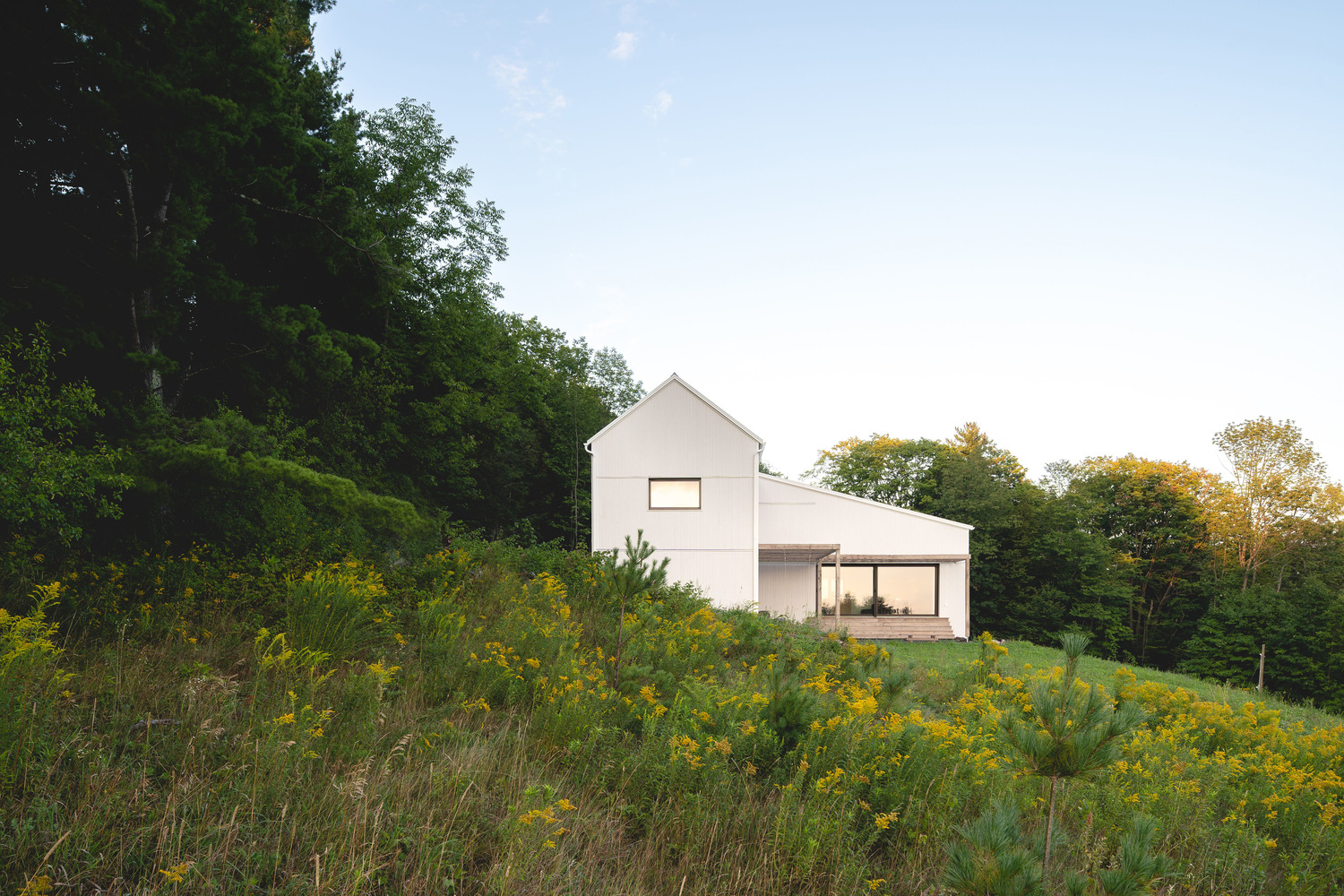
For centuries, the Saltbox silhouette has been a fixture of the North American landscape, particularly in the rural stretches of Québec’s Eastern Townships. Originally designed to dodge colonial taxes or provide simple shelter against unforgiving winters, the traditional Saltbox—with its iconic long, slanting roofline—is now undergoing a radical transformation. In the foothills of Bromont, a new architectural movement is proving that heritage forms don’t just have to look the part; they can set the gold standard for 21st-century energy performance.
The Saltbox Passive House is more than a nod to the past; it is a meticulously engineered response to the climate crisis. As we look toward the residential design trends of 2026, the focus has shifted from "green-washing" aesthetics to the "Quiet Luxury" of high-performance backbones. This approach demystifies complex engineering by grounding it in a recognizable vernacular, achieving what many thought impossible: a home that is both ultra-modern in efficiency and deeply rooted in its geographical context.
What Defines a High-Performance Saltbox in 2026?
A high-performance Saltbox is a modern adaptation of traditional regional architecture that achieves both Passive House (PHIUS) and LEED Platinum certifications. In Québec, this means the structure must be capable of maintaining a stable internal temperature during a -30°C winter night using approximately the same amount of energy it takes to run a hair dryer.
The 3,100-square-foot residence in Bromont serves as a primary case study for this evolution. It is only the third residence in the entire province of Québec to receive the rigorous Passive House certification from PHIUS. To reach this milestone, the design team utilized an integrated approach, choosing materials that are often available at local hardware stores but assembling them with surgical precision. This proves that high-performance living doesn't require exotic, unattainable tech—it requires better engineering and a commitment to the building envelope.
The core characteristics of this new architectural standard include:
- Airtight Construction: Reducing air leakage to nearly zero to prevent heat loss.
- Superior Insulation: Using thick layers of recycled cellulose to "blanket" the home.
- Thermal Bridge-Free Design: Ensuring no structural elements act as "highways" for cold to enter the home.
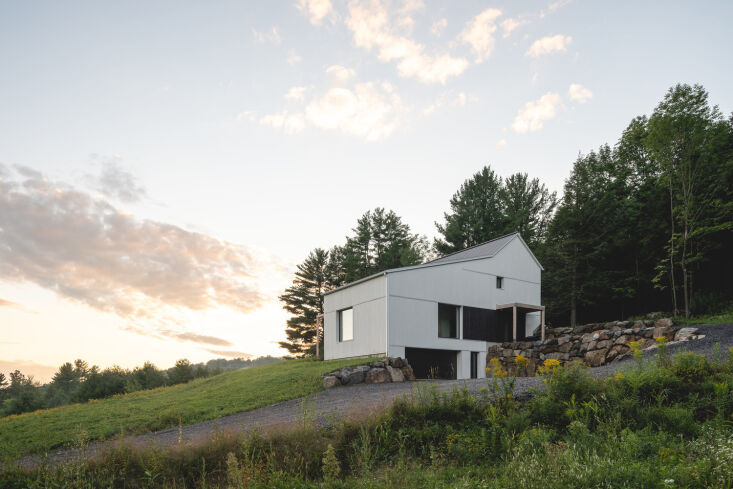
- Regional Respect: Utilizing the Saltbox's asymmetrical roof to manage snow and solar gain simultaneously.
Engineering for the Cold: How Passive House Standards Thrive in Québec
In the harsh climate of Québec, "standard" building codes often fall short of providing true comfort. High-performance architecture relies on the principles of an airtight envelope to thrive. For the Saltbox in Bromont, this began with double-stud walls. By creating two separate wall frames, builders can pack a massive amount of insulation—in this case, recycled cellulose—while eliminating thermal bridging through the wooden studs.
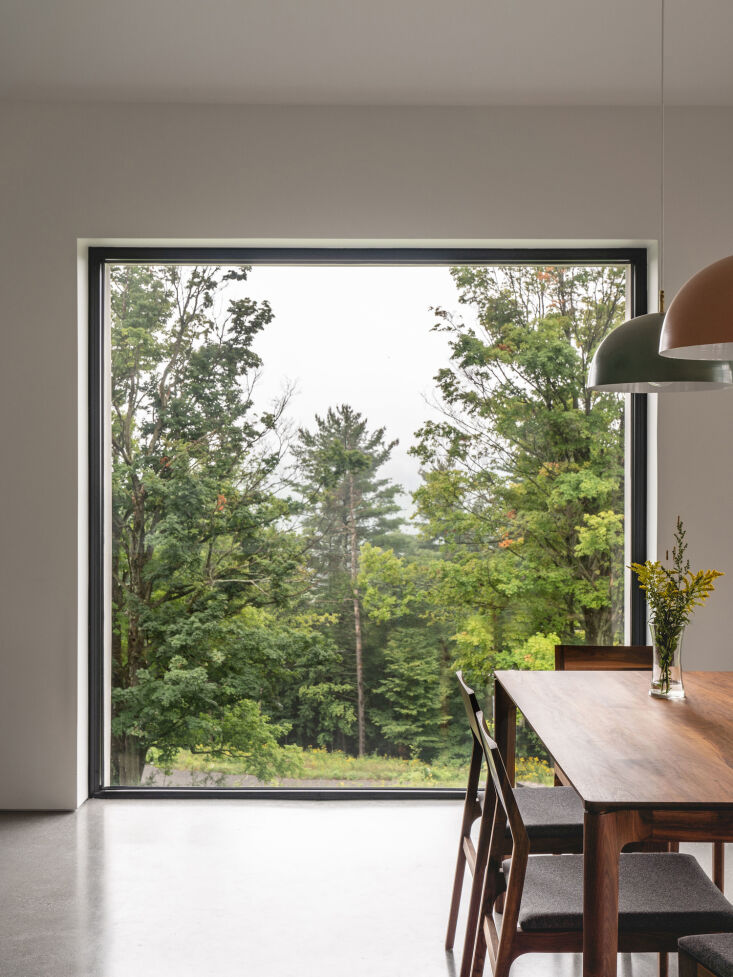
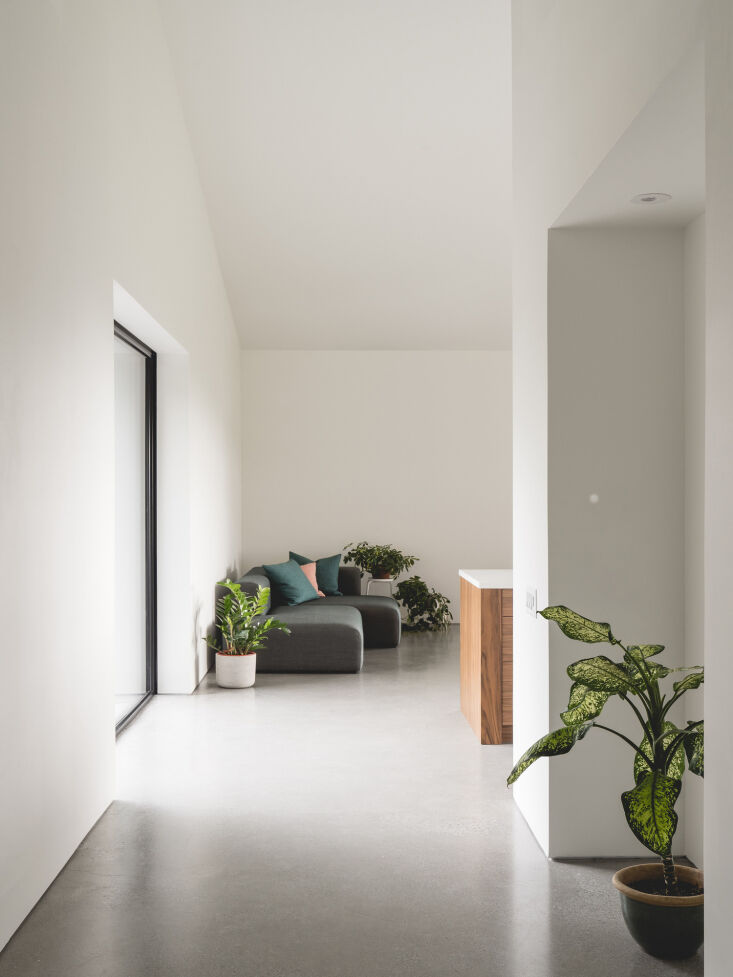
The orientation of the building is equally critical. The home is positioned to maximize its south-facing exposure. During the winter, the low-lying sun penetrates deep into the living spaces, naturally heating the concrete floors. Conversely, the roof overhangs are calculated to shade the interior during the peak of summer, preventing overheating.
The Pillars of High-Performance Engineering:
- Energy Recovery Ventilation (ERV): This system ensures a constant supply of fresh, filtered air while recovering up to 80% of the heat from the outgoing stale air.
- Continuous Air Barrier: A specialized membrane that wraps the entire structure, tested via "blower door tests" to ensure absolute airtightness.
- Passive Solar Gain: Strategic window placement that turns the sun into the home's primary furnace.
Comparison: Traditional vs. High-Performance Saltbox
| Feature | Traditional Saltbox (18th Century) | High-Performance Saltbox (2026) |
|---|---|---|
| Insulation | Minimal or none (horsehair/brick) | 16-inch thick Recycled Cellulose |
| Windows | Single-pane wood frames | Triple-glazed Hybrid (Alu/PVC) |
| Air Sealing | Naturally "drafty" | Airtight (< 0.6 ACH@50Pa) |
| Primary Heating | Central hearth/wood stove | Passive Solar + Integrated Heat Pump |
| Comfort | Drafty near windows, cold floors | Uniform temperature, no drafts |
Material Innovation: 2026 Trends in Sustainable Residential Design
Sustainability in 2026 is moving away from the "eco-look" toward materials that offer durability and high performance without sacrificing elegance. In Québec, we are seeing a resurgence of natural sidings that are treated for longevity.
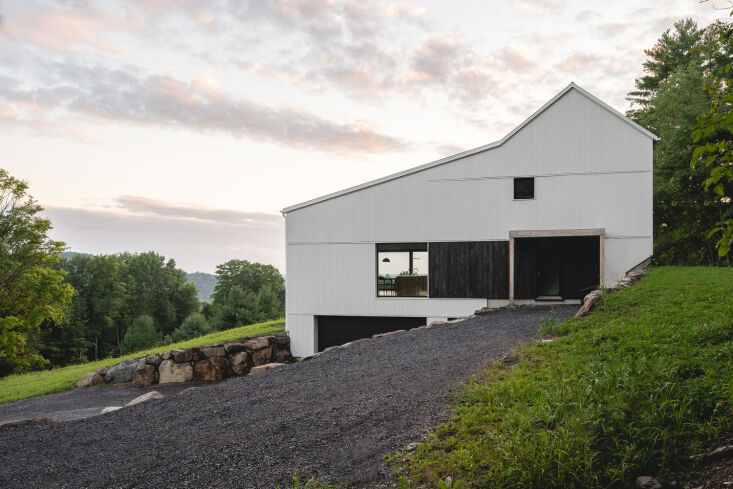
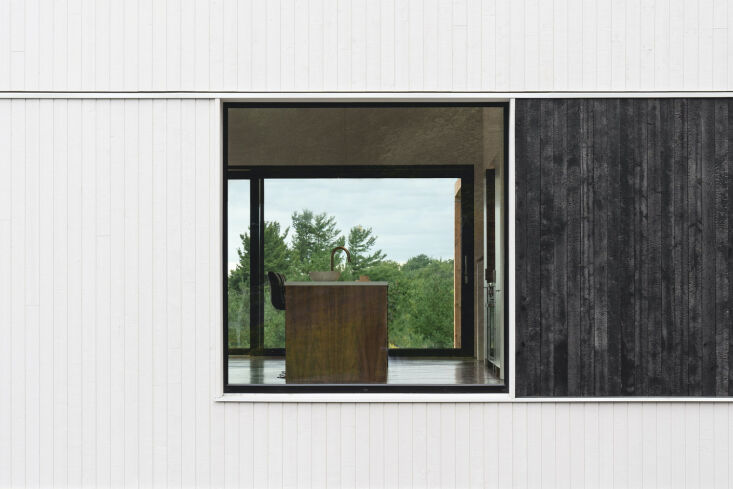
A standout material in the Bromont project is shou sugi ban (burnt cedar). This ancient Japanese technique involves charring the wood to create a carbonized layer that is naturally resistant to fire, rot, and insects. When paired with traditional painted spruce, it creates a monochromatic, textured exterior that feels both contemporary and timeless.
Furthermore, the windows themselves have become high-tech components. The trend is moving toward hybrid windows—combining an aluminum exterior for weather resistance with a PVC interior for superior thermal insulation. These triple-glazed units feature Low-E coatings that allow light in while reflecting heat back into the room.
Interior Synergy: Wellness, Biophilia, and Functional Spaces
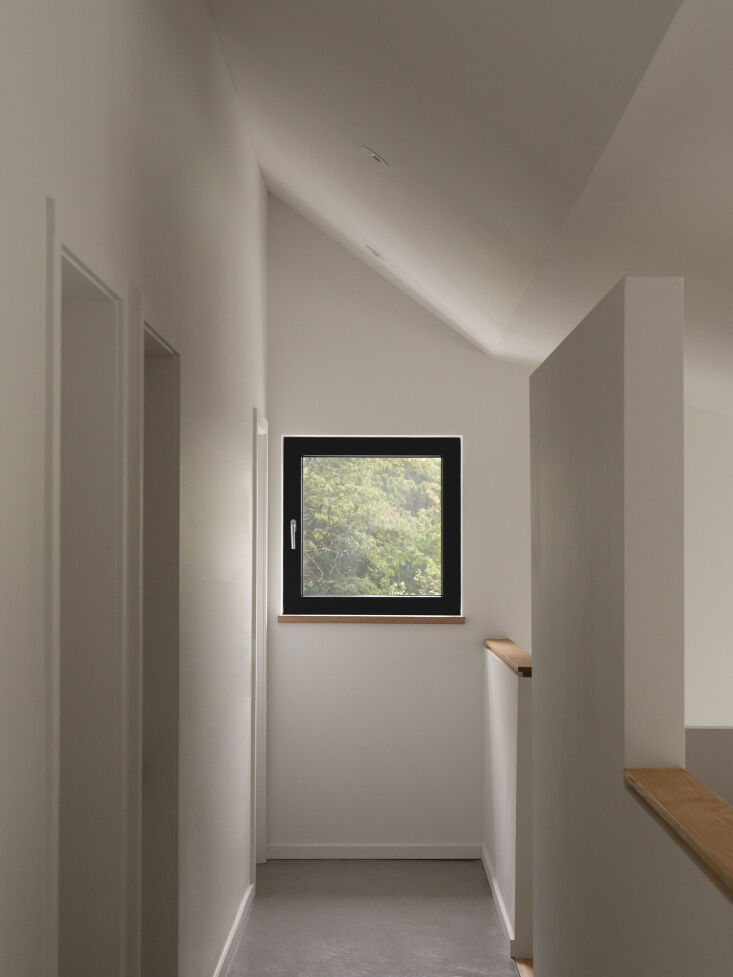
The interior of a high-performance home should reflect the same efficiency as its exterior. The Bromont Saltbox utilizes an "L" shaped layout, which serves two purposes: it creates a private courtyard sheltered from the wind and allows for a central, double-height "heart" of the home.
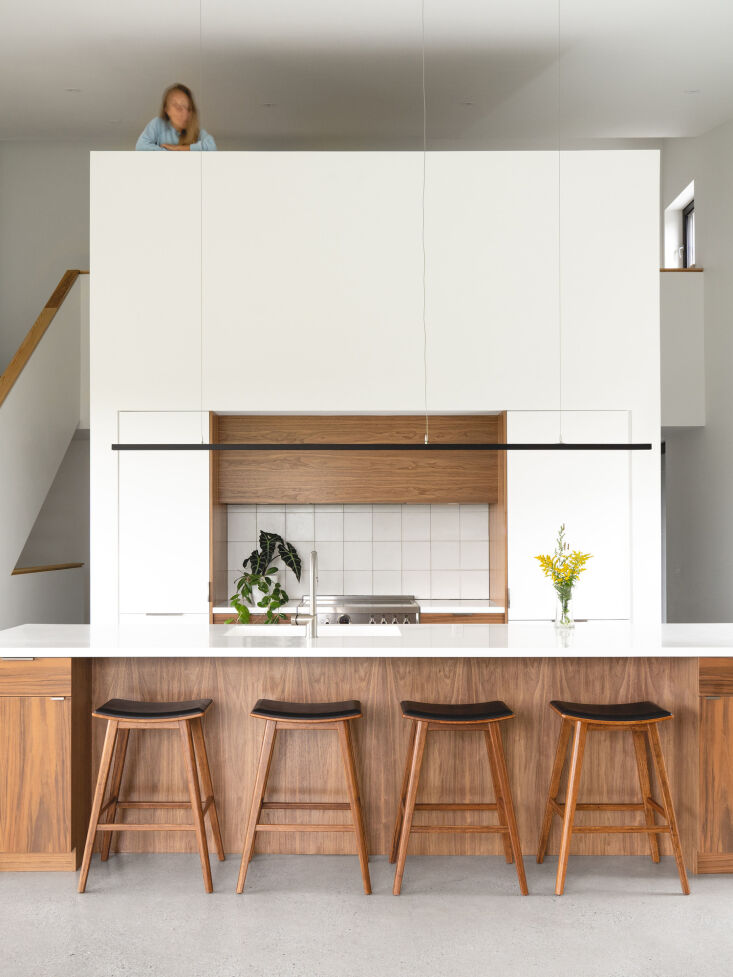
This double-height space connects the kitchen, dining, and living areas, fostering a sense of openness and communal living. By utilizing a mezzanine, the architects have created a versatile floor plan that caters to the remote-work era without increasing the overall footprint of the home.
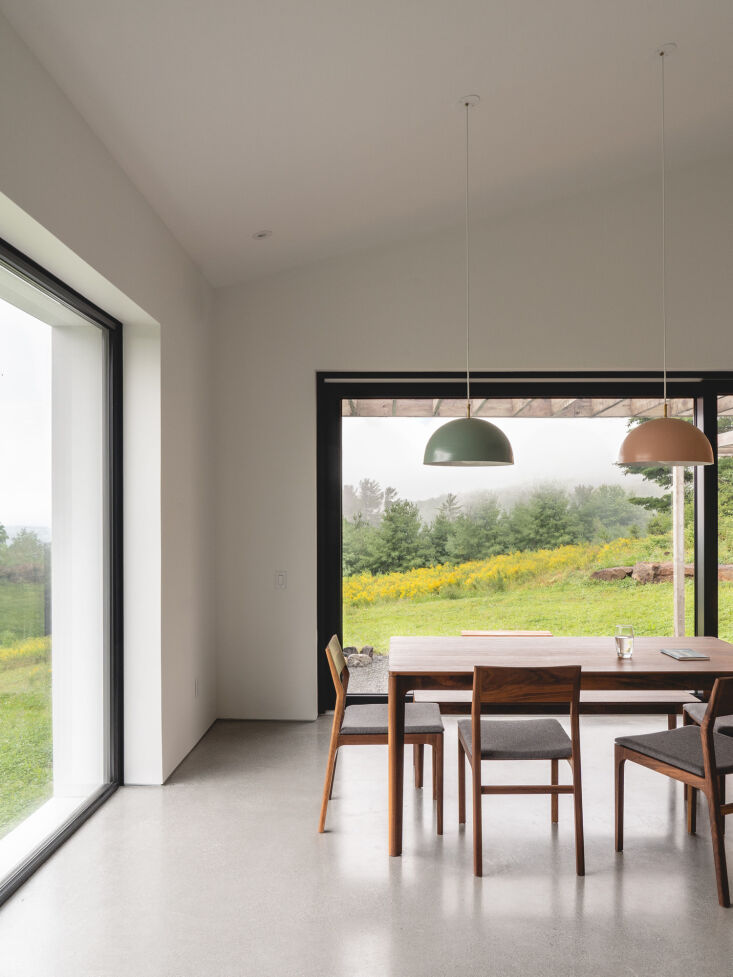
Biophilic design—the practice of connecting occupants to the natural environment—is woven into the very fabric of the home. Massive south-facing windows don't just provide heat; they frame the surrounding forest like living artwork. By limiting openings on the north side to reduce heat loss, the home creates a "cocoon" effect, focusing the occupants' attention on the sun-drenched views of the mountainside.
The mezzanine is more than an architectural flourish; it is a functional hub. In an era where the lines between work and home have blurred, having a dedicated space that feels connected to the rest of the house—yet remains physically distinct—is essential for mental well-being. This sun-drenched hub serves as both an office and a homework station, benefiting from the home's superior acoustics and constant fresh air.
The Future of Residential Design in Québec
As we look toward the future, the "luxury" of a home will no longer be measured solely by square footage or expensive finishes, but by its performance and resilience. Net-zero architecture is rapidly becoming the baseline for new builds in the province.
The success of the Bromont Saltbox demonstrates that we can achieve the highest levels of sustainability (LEED Platinum and PHIUS) by balancing high-tech mechanical systems, like Heat Recovery Ventilation (HRV), with low-tech solutions like site orientation and local materials. Heated concrete floors, for instance, provide a thermal mass that holds onto heat, ensuring that even if the power goes out during a winter storm, the home remains habitable for days.
Editor’s Tip: When planning a sustainable build, prioritize the "fabric-first" approach. Spend your budget on the highest quality insulation and windows first; these are elements you cannot easily upgrade later. Interior finishes can always be updated, but the building envelope is the soul of your home's efficiency.
FAQ
Does a Passive House require special maintenance? Not significantly more than a traditional home. The most important task is changing the filters in your Energy Recovery Ventilator (ERV) every 3-6 months to ensure optimal air quality and efficiency. Because the home is so airtight, these filters do the heavy lifting of keeping your indoor air pristine.
Is it much more expensive to build a LEED Platinum Saltbox? While the upfront costs for high-performance windows and insulation can be 5-10% higher than standard construction, the long-term savings are massive. With utility bills reduced by up to 90%, the "payback period" is shorter than most homeowners realize, especially as energy costs continue to rise in Canada.
Can I convert an existing Saltbox into a high-performance home? Retrofitting is more challenging than building new, but it is possible. It usually involves "outsulation"—adding a thick layer of insulation to the exterior of the home—and replacing all windows with triple-glazed units. It’s a significant investment that drastically improves comfort and value.
The re-imagined Saltbox in Québec proves that we do not have to choose between our heritage and our future. By embracing high-performance standards, we can live in homes that honor the landscape while protecting the climate that makes that landscape so beautiful in the first place. For the modern homeowner, this is the ultimate peace of mind.