Quick Facts
- Location: Dronningens Tværgade 45, 1302 Copenhagen, Denmark.
- Architect: Kay Fisker (original design completed in 1943).
- Restoration & Operation: &Tradition.
- Capacity: 40 boutique guest rooms across approximately 1,550 square meters.
- Design Philosophy: Danish Functionalism meets contemporary lifestyle; a "living archive" of historic and modern design.
- Key Features: Original terrazzo flooring, machine-moulded brickwork, brass fittings, and curated furniture from &Tradition’s permanent collection.
To walk through the streets of Copenhagen’s Frederiksstaden district is to navigate a living museum of architectural history. But at Dronningens Tværgade 45, a new chapter has been written that feels less like a sterile gallery and more like a warm invitation home. Hotel Petra, the latest venture from the renowned Danish design brand &Tradition, is more than just a 40-room boutique hotel. It is a meticulous restoration of Kay Fisker’s 1943 masterpiece, the Dronningegården complex. By breathing new life into this landmark Functionalist structure, &Tradition has created a "living archive"—a space where guests don't just observe design history, they sleep, dine, and converse within it.
The New Living Archive of Danish Design
For years, design enthusiasts have flocked to Lille Petra, the hidden courtyard cafe known for its cozy atmosphere and the eponymous Viggo Boesen lounge chairs. The opening of Hotel Petra marks a natural, albeit ambitious, expansion of this hospitality vision. Occupying the space of the former Guest House Christian IV, the hotel serves as the ultimate showcase for &Tradition’s ethos: honoring heritage while bridging the gap to modern living.
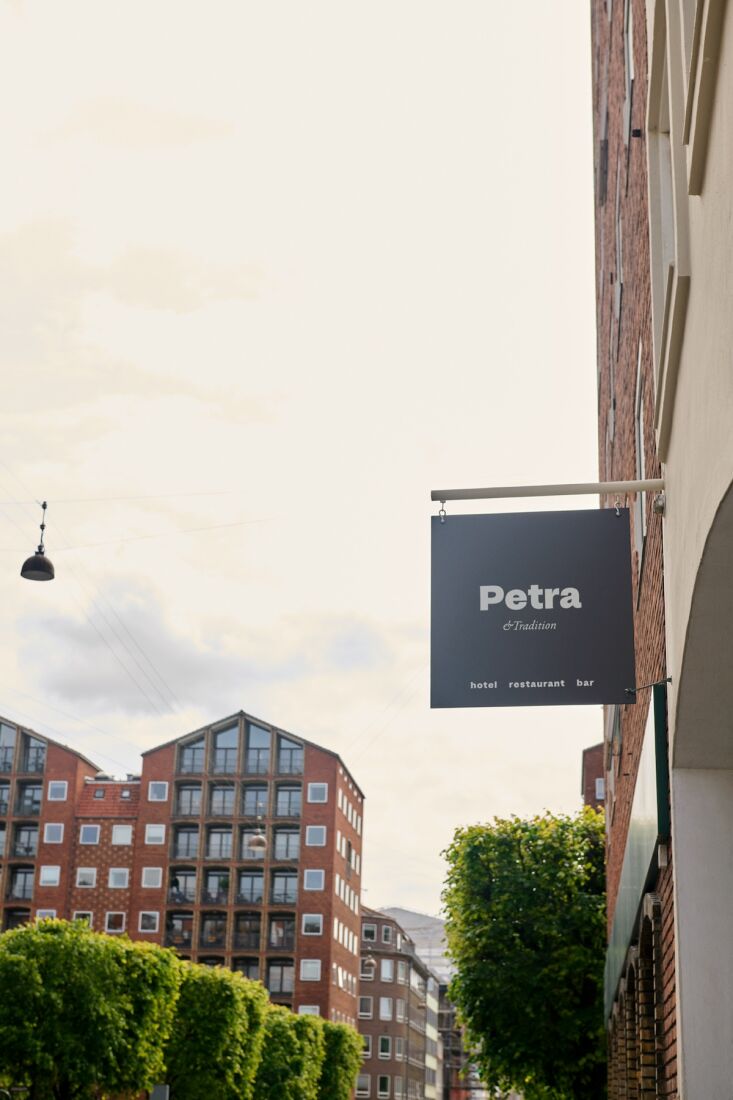
The hotel is nestled within the Dronningegården complex, an architectural icon that has stood for over 80 years. For &Tradition, the project wasn’t merely about interior decoration; it was about stewardship. As a brand that reissues mid-century icons alongside contemporary designs, the move into hospitality allows them to demonstrate how these pieces function in a real-world, high-traffic environment.
"Design is not just about the object; it is about the space the object creates and the history it carries," a philosophy that resonates through every corridor of Petra.
Kay Fisker and the Soul of Dronningegården
To understand Hotel Petra, one must first understand Kay Fisker. A titan of Danish architecture, Fisker was a proponent of "Functionalism with a human face." Completed during the height of World War II in 1943, Dronningegården (The Queen’s Court) was a revolutionary social housing project. It consisted of four L-shaped buildings surrounding a public square, designed to bring light, air, and dignity to urban living.
The "Moral of Functionalism," as Fisker often described it, was rooted in honesty—honesty of materials and honesty of purpose. This is most visible in the building’s signature red and yellow machine-moulded brickwork. The bricks are laid in a syncopated, rhythmic pattern that gives the massive structure a sense of texture and warmth, a far cry from the cold concrete often associated with later modernist movements.
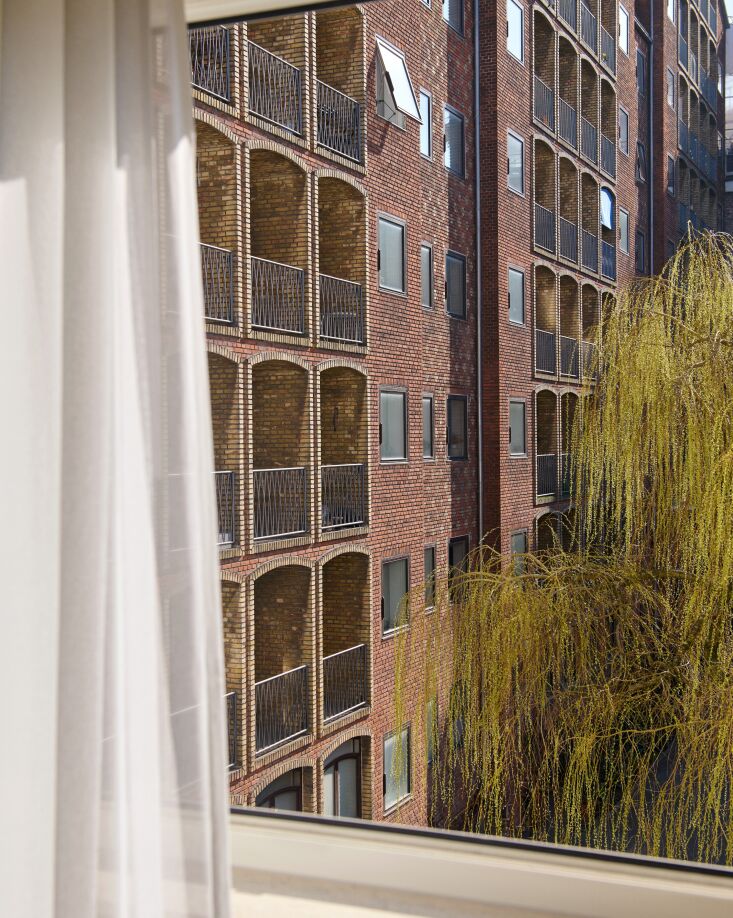
Fisker’s vision provided the "Freespace"—a structural generosity—that allowed &Tradition to transition the building from a historic guest house into a luxury sanctuary. The restoration respects the L-shaped geometry and the communal spirit Fisker intended, maintaining the hotel’s role as a cornerstone of the Frederiksstaden community.
Meticulous Restoration: Preserving 1,550 Square Meters of History
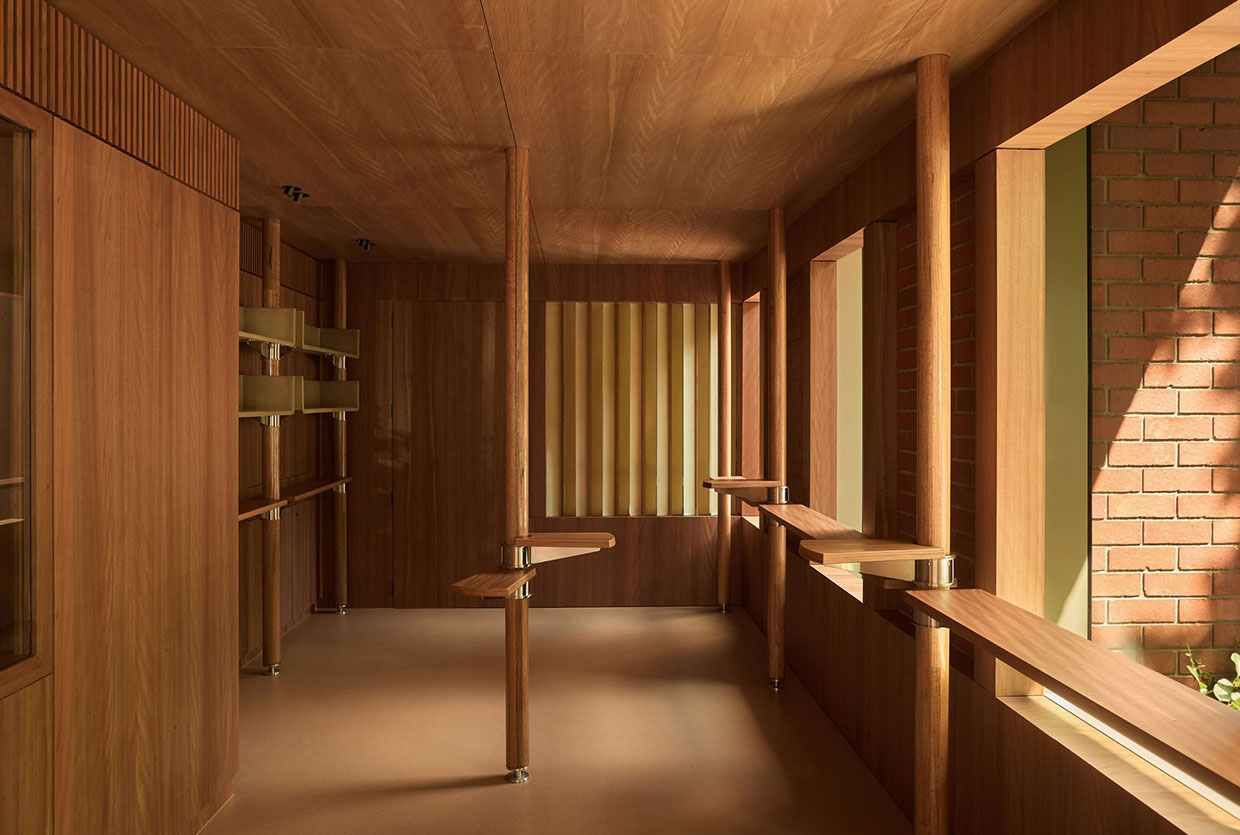
The transformation of the 1,550-square-meter space was a masterclass in architectural restraint. Rather than stripping the interior to create a "white cube," the design team focused on uncovering and highlighting the craftsmanship of the 1940s. This required a deep dive into the building's original blueprints and a commitment to using materials that age gracefully.
Architectural Elements Preserved & Revived:
| Element | Restoration Detail |
|---|---|
| Terrazzo Flooring | Original stone-chip flooring in the stairwells was polished to restore its 1943 luster. |
| Stair Bannisters | Handcrafted timber railings were carefully sanded and refinished to highlight the wood grain. |
| Brass Fittings | Original hardware was either restored or replaced with period-accurate brass that will patina over time. |
| Brick Facade | Specialist masons ensured the red and yellow machine-moulded bricks were cleaned and repointed where necessary. |
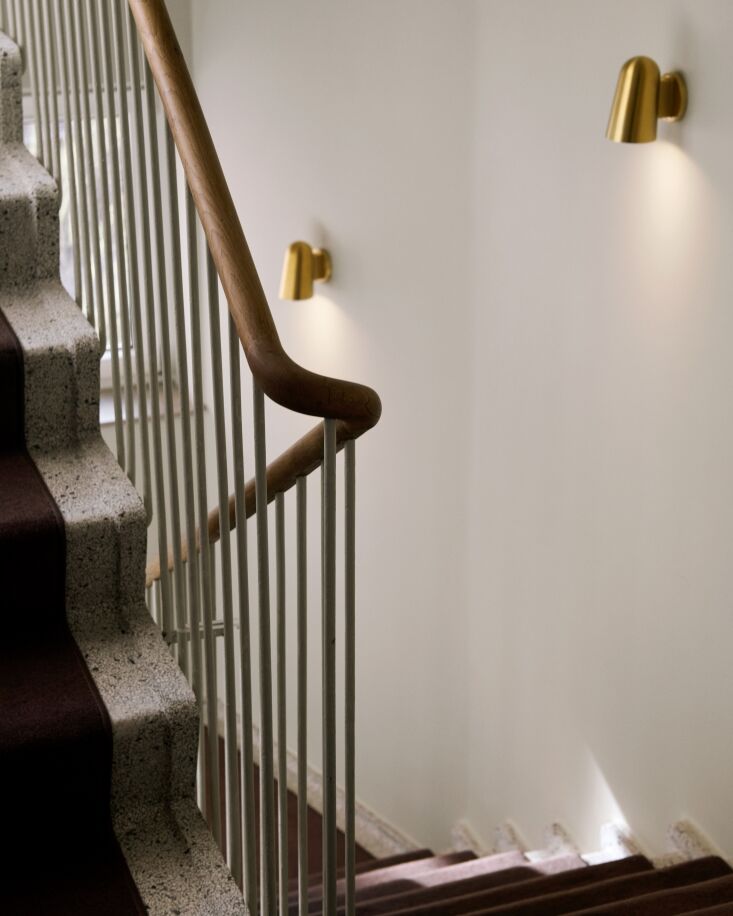
The restoration doesn't just look back; it integrates modern comfort through high-performance acoustics and environmental systems hidden behind the historic envelope. It is this balance of "then and now" that defines the interior narrative.
Interior Narrative: Where Heritage Meets Contemporary Collection
Inside the 40 ensuite rooms, the design language shifts from the monumental scale of the exterior to the intimate scale of a private residence. The rooms are divided into three categories: Small Double, Double, and Superior Suites. Each serves as a curated vignette of &Tradition’s catalog.
One cannot mention "Petra" without the Little Petra Lounge Chair. Designed by Viggo Boesen in 1938, the chair’s organic, soft form provides a tactile contrast to the linear architectural lines of Fisker’s building. In the hotel, these chairs are often upholstered in Sahara sheepskin or custom blue wool, offering a sensory retreat for weary travelers.
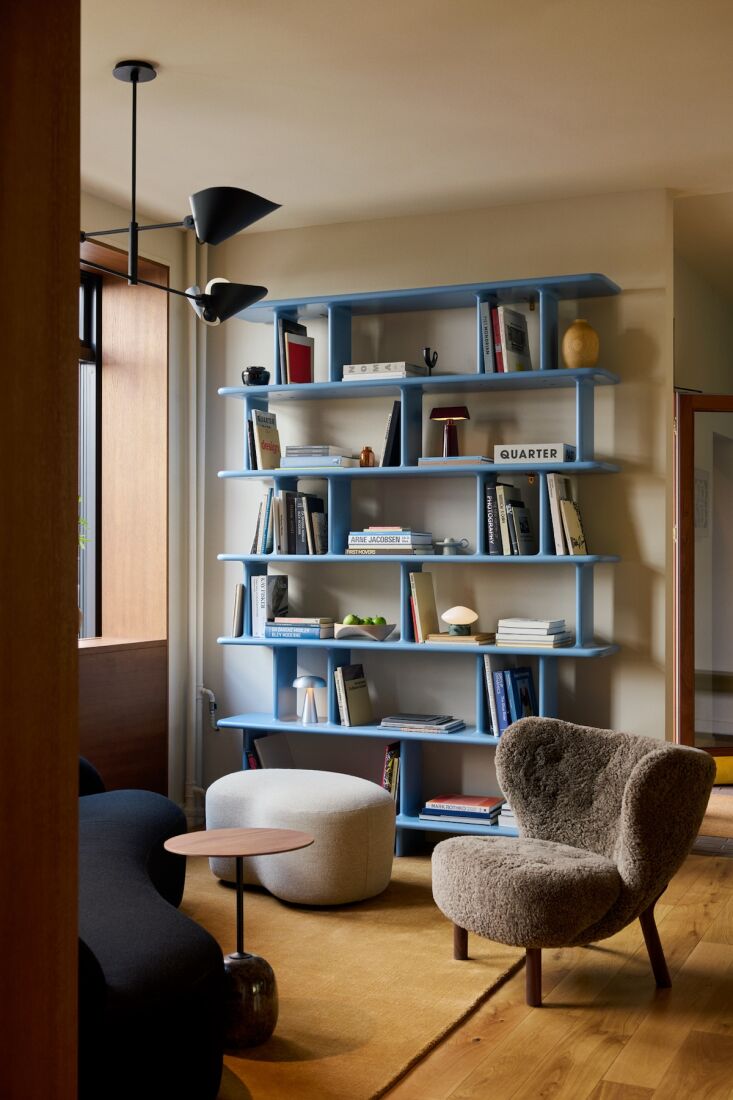
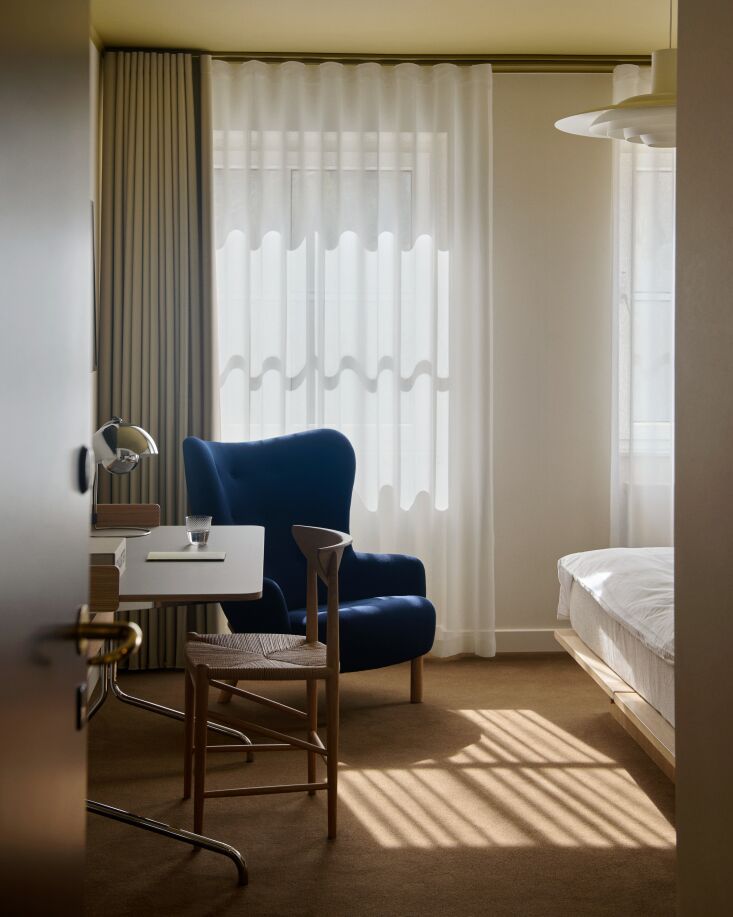
The guest rooms are a testament to "Understated Luxury." You won't find flashy technology here; instead, you find the luxury of quality materials.
- Custom Elements: Many rooms feature bespoke beds designed by OEO Studio and custom-woven wool carpeting that dampens sound.
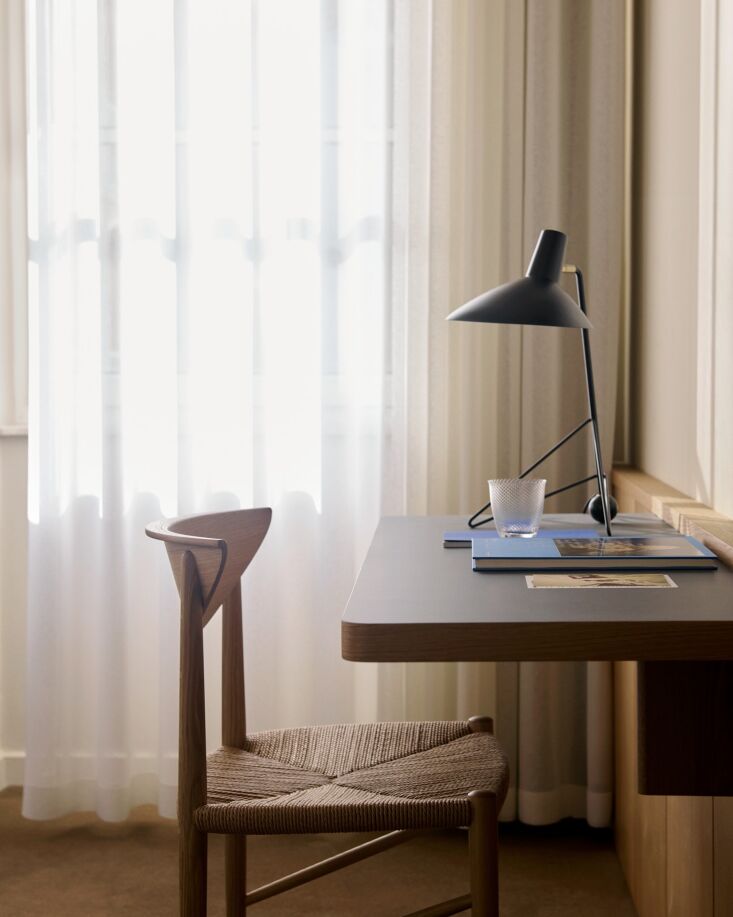
- Lighting: The iconic Flowerpot lamps by Verner Panton provide pops of color, while the Tripod Table Lamp by Hvidt & Mølgaard offers focused light for reading.
For those needing to balance leisure with a bit of work, the rooms incorporate the Pavilion Desk by Anderssen & Voll. Its airy, light structure ensures the room feels spacious even in the more compact "Small Double" configurations.
Beyond the Rooms: Petra Bar & Restaurant
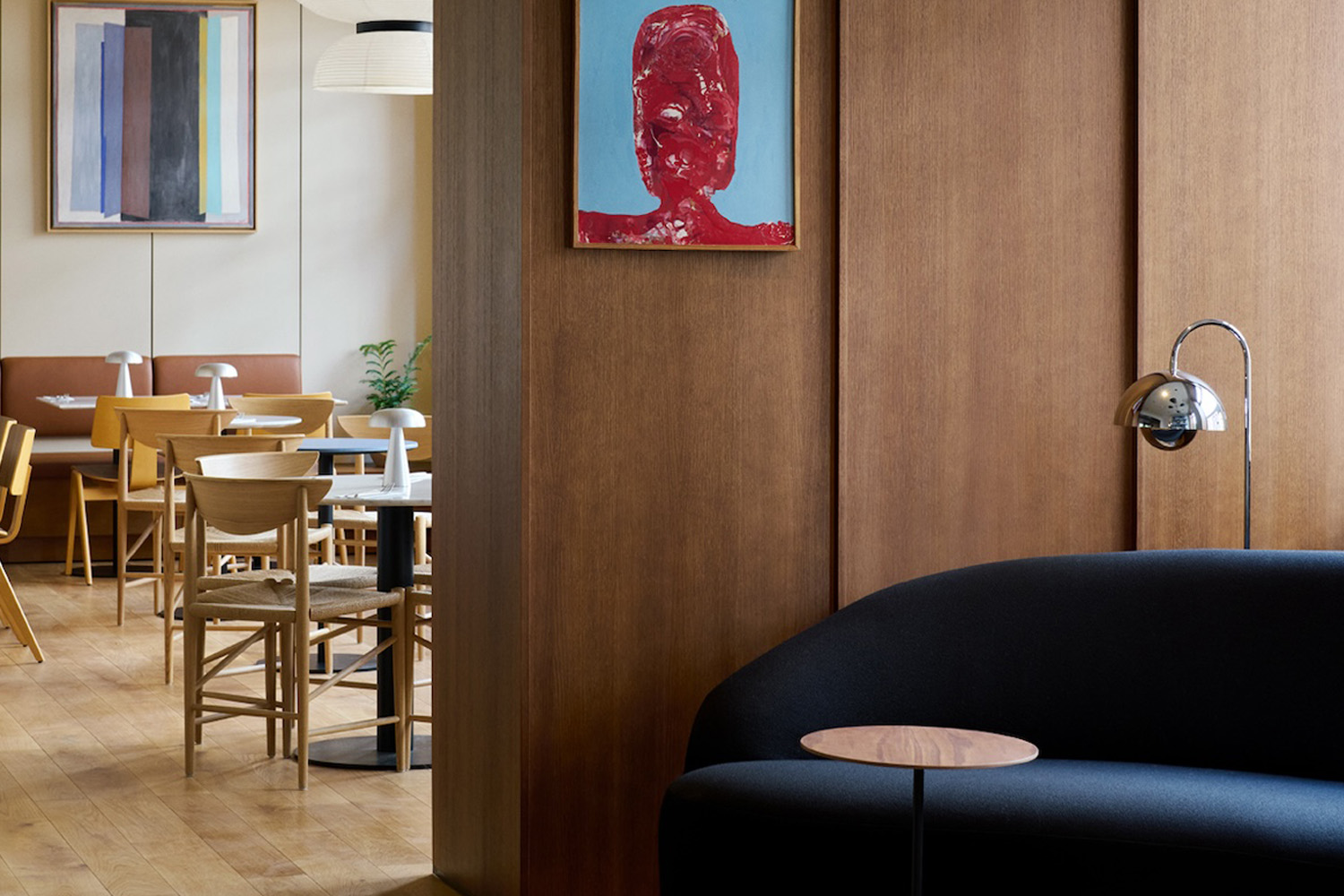
The social heart of the hotel is the lobby and the adjoining Petra Bar & Restaurant. This is where the restoration takes its most modern turn. The reception counter is a standout piece of design, finished in ExCinere tiles—a volcanic ash-glazed tile designed by the Italian studio Formafantasma. These tiles, combined with stained oak veneer, create a moody, sophisticated entry point that signals the hotel's contemporary relevance.
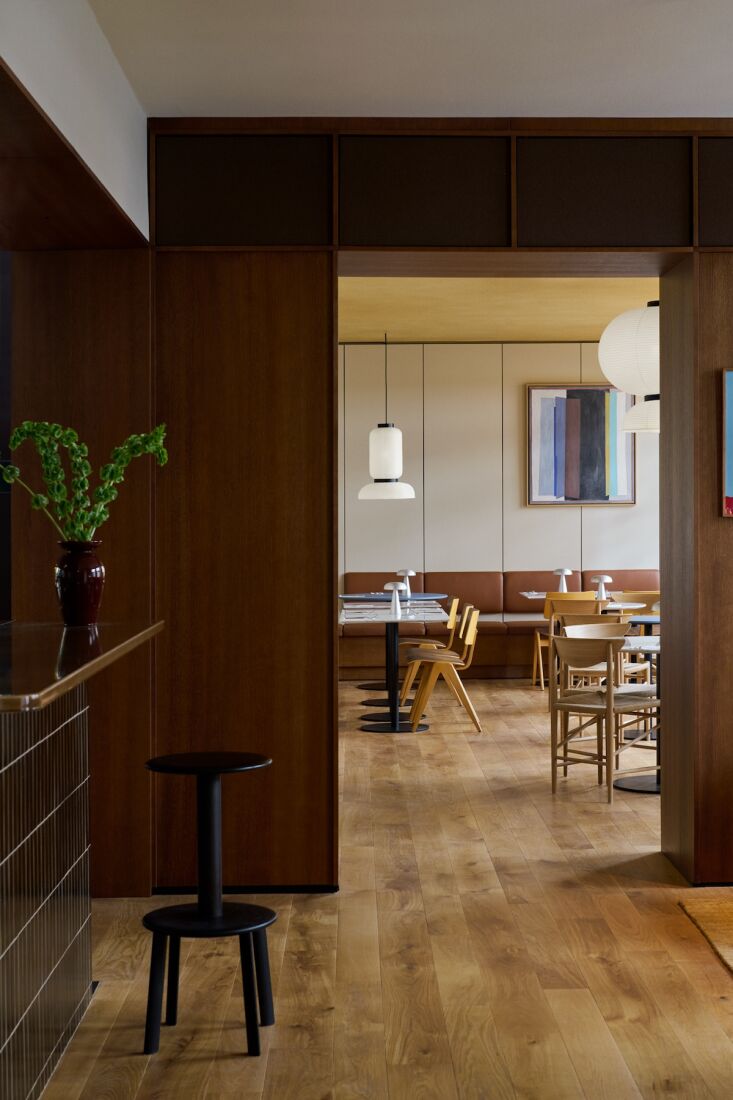
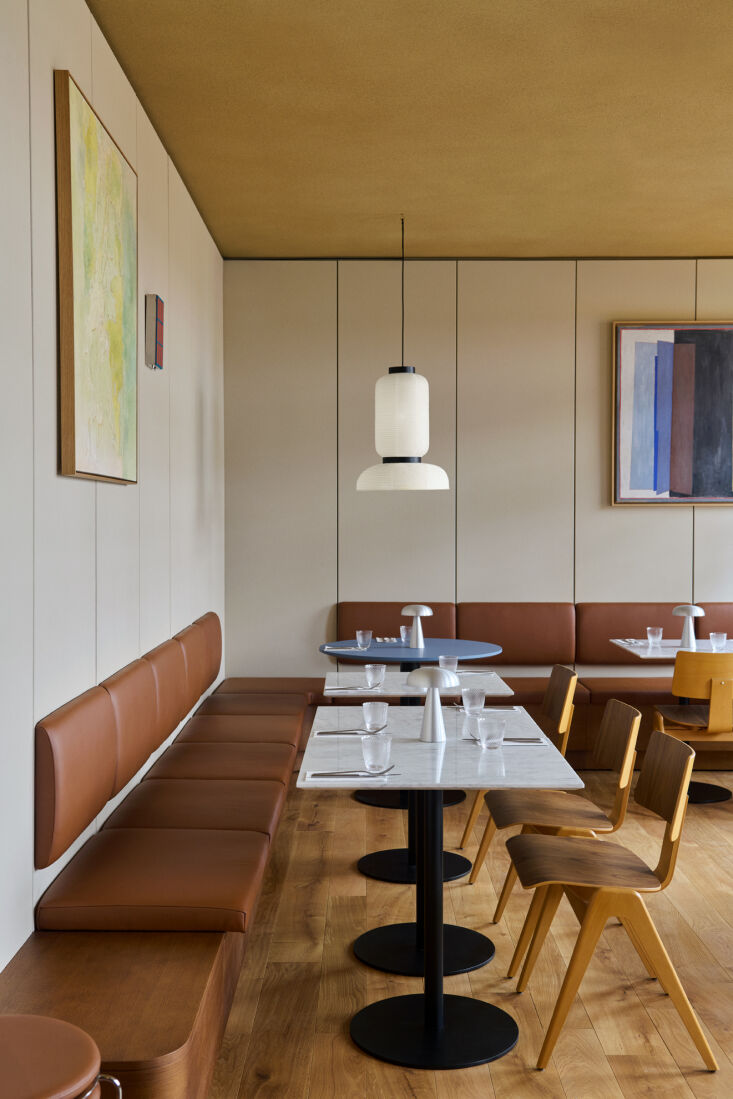
The restaurant serves as a communal hub where the boundary between "guest" and "local" blurs. The space is illuminated by Formakami paper pendants by Jaime Hayon, which hang like glowing lanterns over Sami Kallio tables and Robin Day chairs. The choice of materials here—oak, paper, wool, and brass—echoes the functionalist belief that beauty comes from the inherent properties of the materials themselves.
Conclusion: A New Landmark in Frederiksstaden
Hotel Petra is a rare example of a commercial project that feels deeply personal. By restoring Kay Fisker’s architectural legacy, &Tradition has done more than open a hotel; they have preserved a piece of the Danish soul. For the modern traveler, it offers a chance to live within a masterpiece of Functionalism, surrounded by the very best of Danish furniture design. Whether you are sipping a coffee in the courtyard or working at a Pavilion desk in your suite, the message is clear: great design is timeless, and heritage is best experienced when it is lived in.
FAQ
Who was the original architect of the building where Hotel Petra is located?
The building is part of the Dronningegården complex, designed by the famous Danish architect Kay Fisker and completed in 1943. He is renowned for his "Functionalist" style which emphasizes light, air, and the honest use of materials like brick.
Can I visit the hotel even if I am not staying there?
Yes! The Petra Bar & Restaurant and the nearby Lille Petra cafe are open to the public. They serve as social hubs for the Frederiksstaden community and are excellent places to experience &Tradition’s design collection firsthand.
What specific &Tradition furniture pieces can I expect to see?
The hotel features a wide range of icons, including the Little Petra Lounge Chair (Viggo Boesen), the Flowerpot lamp (Verner Panton), the Pavilion Desk (Anderssen & Voll), and contemporary additions like the Formakami pendants by Jaime Hayon.