In the heart of Melbourne’s bustling retail precinct, a heritage building with serious literary pedigree has found its most spectacular incarnation yet. For those of us who have long admired the architectural "bones" of our city, the unveiling of the MECCA Melbourne flagship at 299 Bourke Street feels less like a store opening and more like a homecoming. It is a spatial layering of Melbourne’s architectural narrative told through light, material, and movement—a 4,000-square-metre masterclass in how we can honor the past while designing for a wellness-conscious future.
The architectural significance of the MECCA Bourke Street store lies in its meticulous restoration of the original E.W. Cole building, designed by the legendary Harry Norris in the 1930s. As one of the premier examples of Art Deco restoration in the Southern Hemisphere, the project blends heritage faience tiling and decorative plasterwork with a cutting-edge retail experience. This isn't just a beauty destination; it is a revival of the "Commercial Gothic" spirit that once defined Melbourne’s skyline.
The Visionary: Harry Norris and the 1930s Art Deco Era
To understand the beauty of the new flagship, we must first look back at the man who gave the building its soul. Harry Norris was a pioneer of Melbourne’s commercial architecture, a figure who defined the city's aesthetic across a career spanning four decades (1925–1965). Norris was known for his frequent travels to the United States, bringing back the vibrant, Jazz-inspired ornamentation of New York and Chicago to the streets of Melbourne.
The E.W. Cole building was originally part of the famous Cole’s Book Arcade, a democratic space where fashion, culture, and literature were made accessible to the public. Norris’s design for the 1930s structure introduced a sense of "Commercial Gothic" grandeur—a style characterized by verticality, arched windows, and intricate detailing.
The Architect’s Legacy Harry Norris completed over 20 notable commercial buildings in Melbourne. His work is characterized by a "democratic" approach to design—creating spaces that felt grand yet welcoming to the everyday Melburnian. At 299 Bourke Street, his use of the arched window was not just an aesthetic choice, but a way to flood the deep floorplates with natural light.
The Restoration: Peeling Back Decades of History
The transformation of this landmark was no small feat. It required a symbiotic collaboration between the MECCA in-house design team, Sydney-based interior design firm Studio McQualter, and heritage specialists RBA Architects. The process was akin to an archaeological dig; for years, the building’s original 1930s structural narrative had been smothered under layers of 1980s and 90s retail interventions—think dropped ceilings, plasterboard partitions, and generic linoleum.
Studio McQualter, led by the visionary Don McQualter, took an "archeological reveal" approach. By peeling back these modern alterations, the team uncovered a wealth of historical treasures that had been hidden from public view for over half a century.
"We wanted the building to speak for itself," the design team noted during the reveal. This meant working closely with the Traditional Restoration Company to ensure every salvaged tile and every inch of terrazzo was treated with the reverence it deserved. The result is a space where the transition between 1930s heritage and 2020s luxury is almost seamless.
Heritage Highlights: Materials that Define the Space
The "material storytelling" at the Bourke Street flagship is what truly sets it apart. As an editor, I am often struck by how a single material choice can change the temperature of a room. Here, the palette is a romantic nod to the 1930s, anchored by textures that feel both historic and incredibly fresh.
The Revival of the Aztec Ceiling
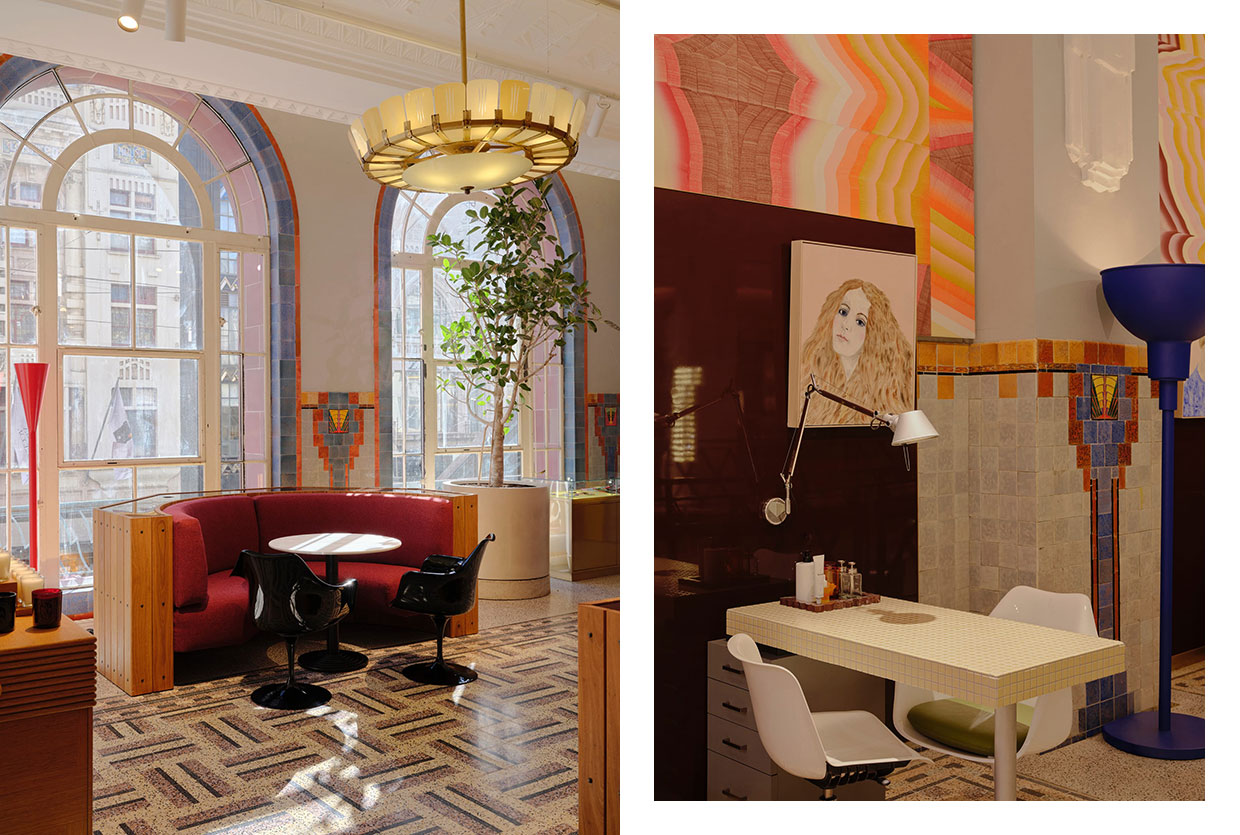
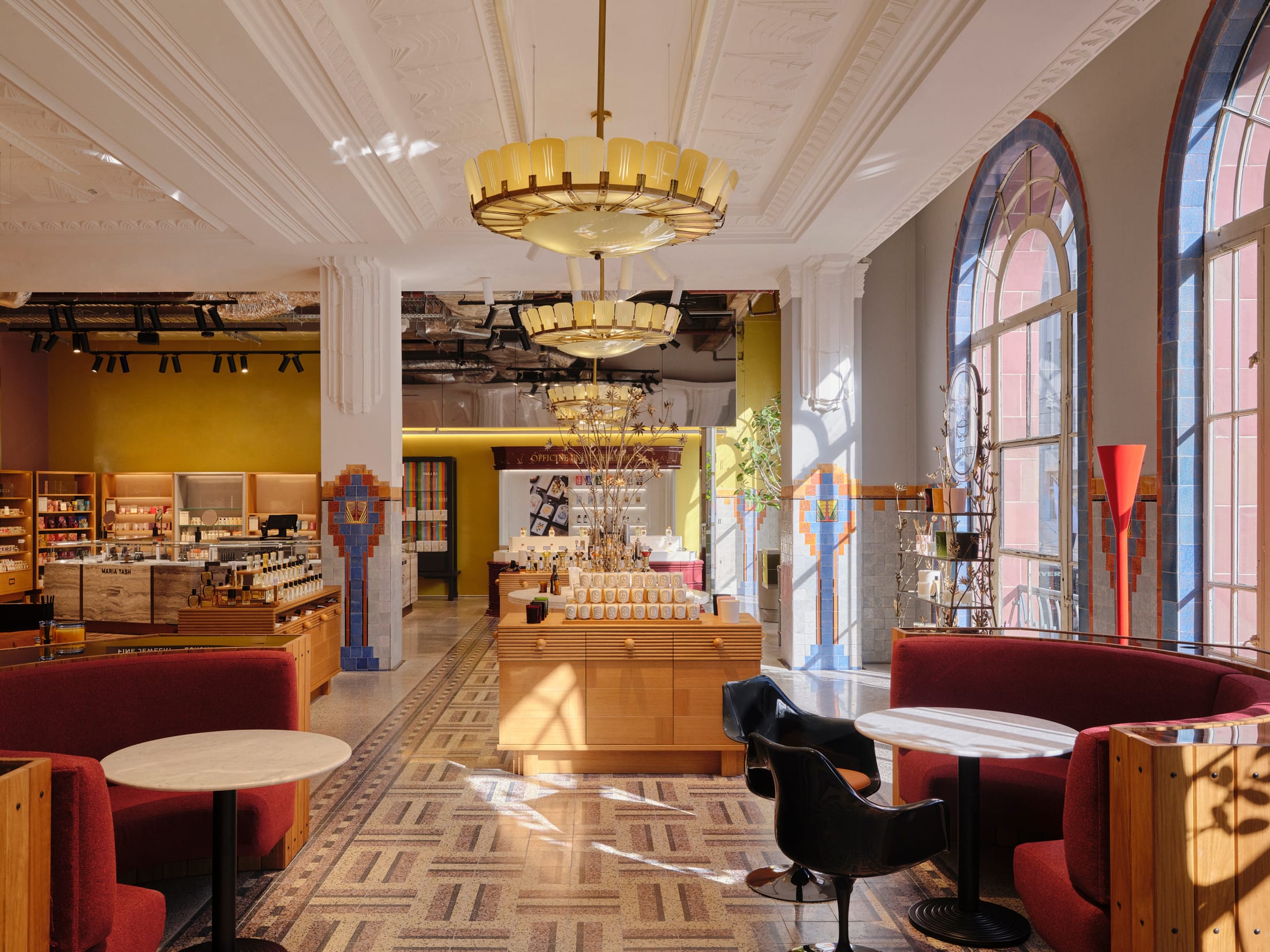
One of the most breathtaking moments in the store is the restoration of the decorative plaster ceilings. These feature intricate Aztec-inspired geometric patterns—a hallmark of the Art Deco era’s obsession with global motifs. By restoring these patterns and integrating them with modern, discreet lighting, the design team has ensured that the "fifth wall" of the store remains a focal point.
Faience and Terrazzo: A Tactile Journey
The materiality of the facade and the ground floor is a love letter to Victorian manufacturing.
- Faience Tiling: The restoration involved salvaging and replicating the original 1920s rose-mauve faience tiles. These were originally manufactured in Sunshine, Victoria, and their soft, iridescent glow provides a warm welcome to shoppers entering from the bluestone pavements of Bourke Street.
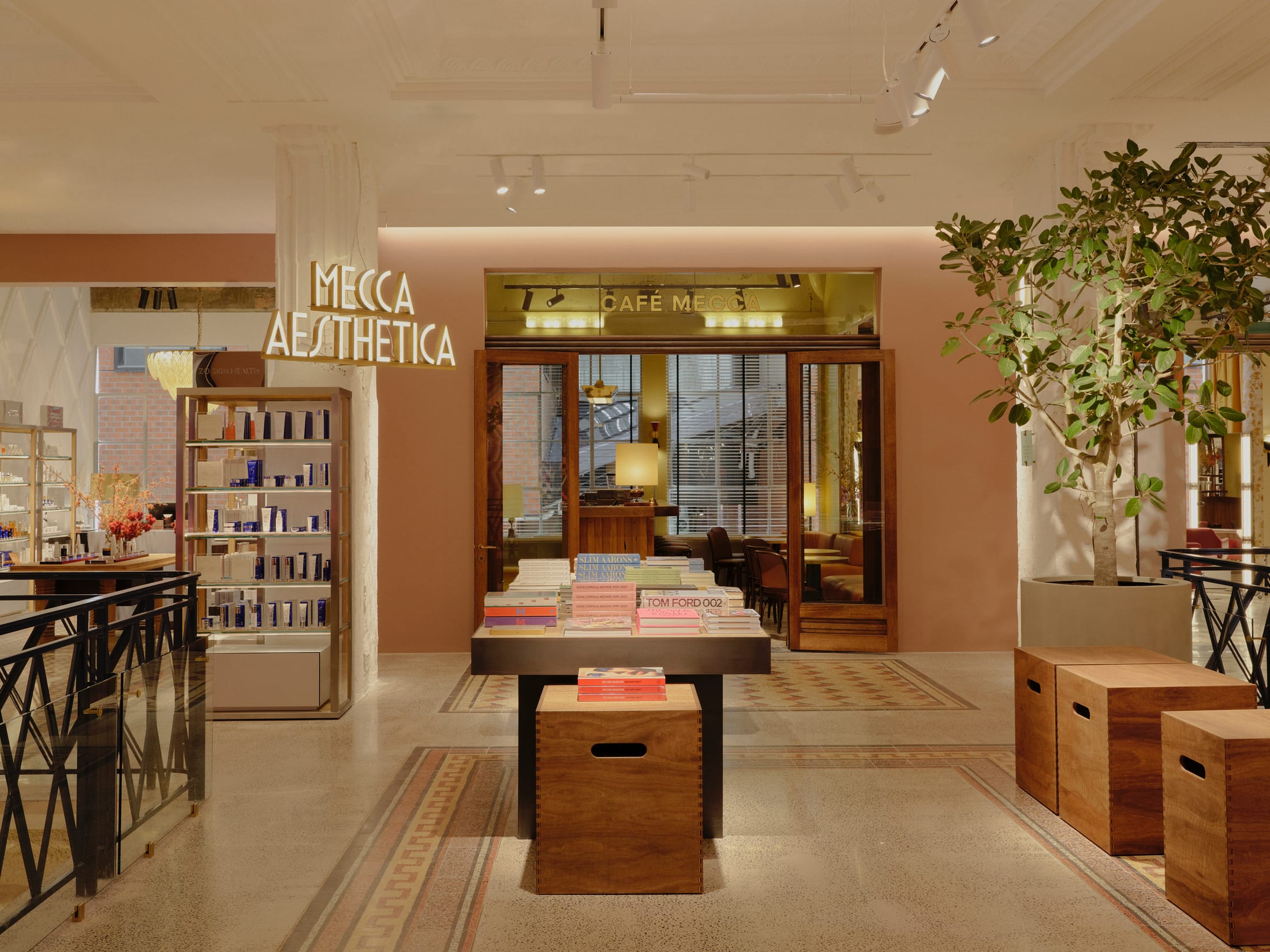
- Terrazzo Flooring: Underneath old carpets, the team discovered sections of heritage terrazzo. Rather than replacing it with something "perfect," they chose to restore it, celebrating the patina of age.
- Arched Windows: The signature arched windows on the upper levels have been meticulously restored, offering framed views of the city that connect the interior experience with the urban landscape.
| Material | Origin/History | Application in MECCA Flagship |
|---|---|---|
| Rose-Mauve Faience | Sunshine, Victoria (1920s) | Exterior facade and entryway columns |
| Geometric Plaster | Harry Norris Original (1930s) | Main retail ceilings and decorative cornices |
| Heritage Terrazzo | Salvaged from E.W. Cole build | Ground floor flooring and accent thresholds |
| Yellow Marble | Selected by Studio McQualter | Café MECCA counters and service points |
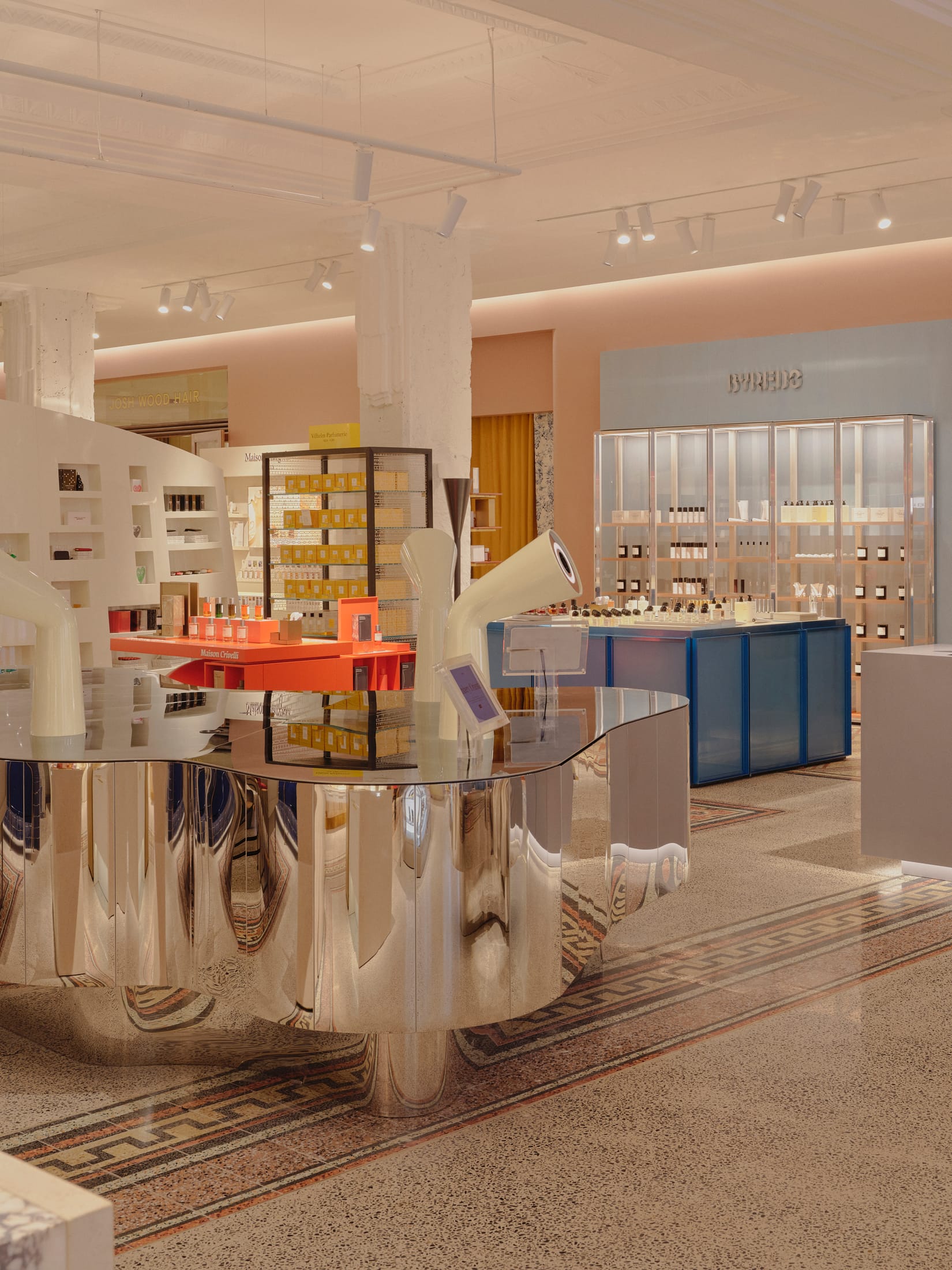
The Modern Interior: Studio McQualter’s 'Store-in-Store' Concept
While the heritage elements provide the framework, Studio McQualter’s interior layout brings the building into the modern day. Spanning three massive levels, the store is organized into distinct "zones" that cater to different moods and needs.
The ground floor is a high-energy "discovery" space—a bustling marketplace of beauty. However, as you ascend the grand staircase (or take the elegantly refurbished elevators), the pace slows down. The upper levels are dedicated to luxury, services, and community.
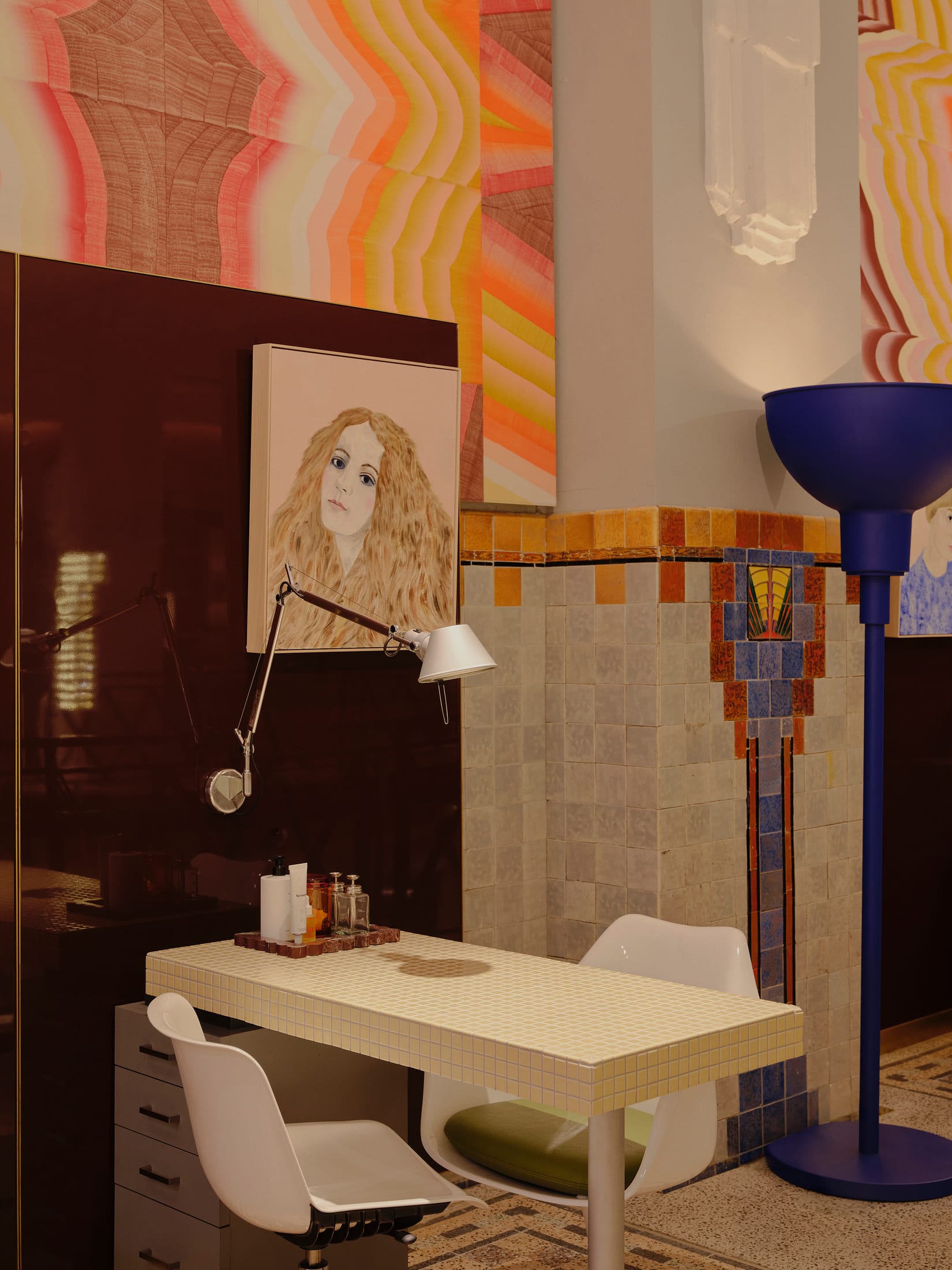
The Aesthetica Lounge
This is perhaps my favorite corner of the flagship. The Aesthetica Lounge moves away from the traditional retail counter and toward a "salon" atmosphere. It features a curated collection of Australian women’s art, plush mid-century inspired furniture, and ambient lighting that makes you want to linger. It feels like a private residence, reflecting the current trend in interior design where retail spaces are becoming "third places"—hybrids of home, work, and social life.
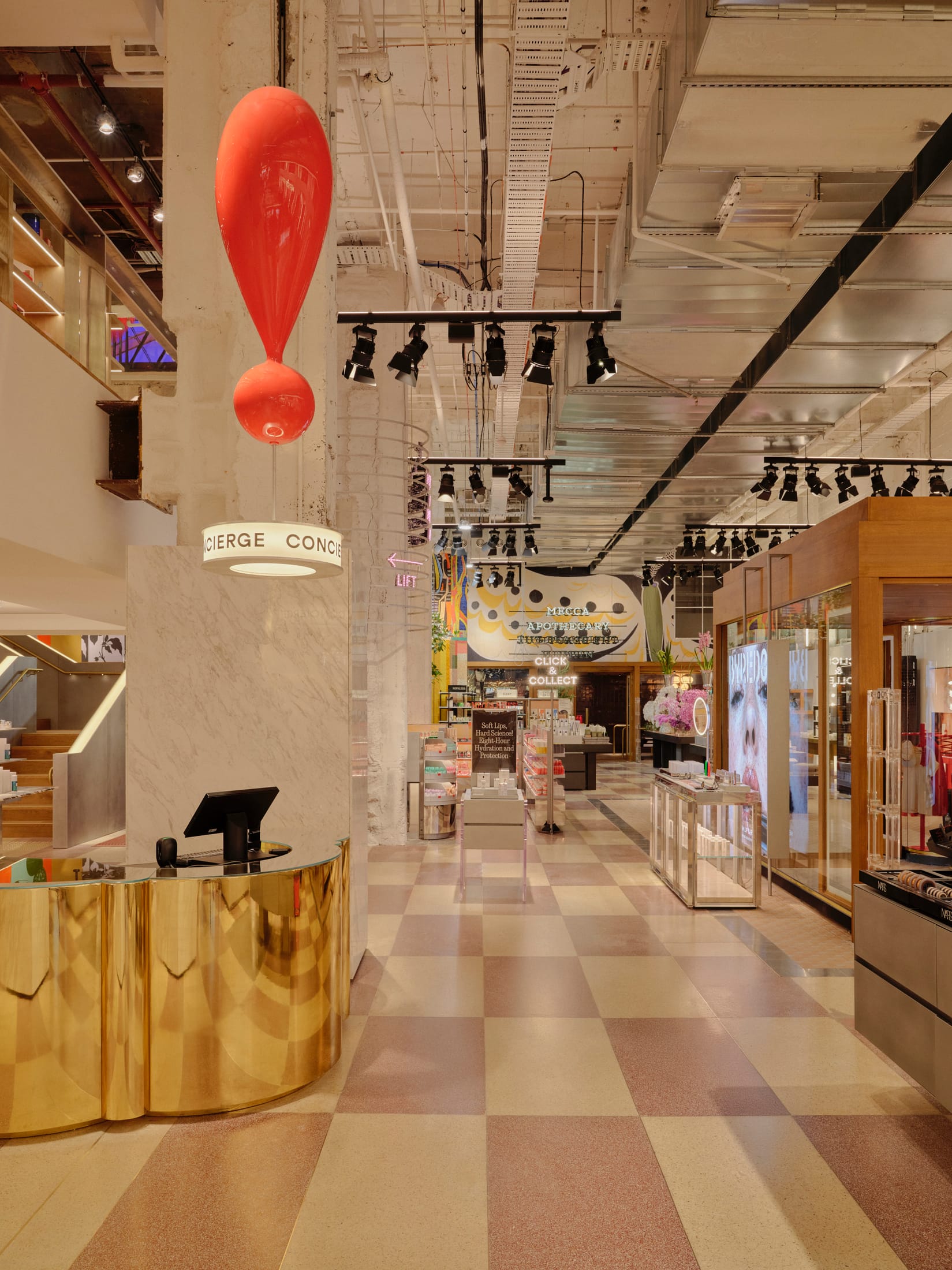
Café MECCA
In a brilliant move that merges hospitality with heritage, the store includes an in-house café. Featuring rich marble surfaces and views over the retail floor, it allows shoppers to pause and digest the architectural splendor around them. It’s a nod to the old department store culture where a day of shopping was an "event" to be savored.
Future-Proofing: Wellness and WELL Pre-Certification
Beyond the aesthetic revival, the MECCA flagship is a pioneer in sustainable and wellness-focused retail design. The project has achieved WELL Pre-certification, a rigorous standard that measures how a building’s environment affects the health and well-being of its occupants.
The integration of circadian lighting—which mimics the natural progression of daylight—helps regulate the internal clocks of both staff and customers. Furthermore, the building features enhanced air and water quality systems, ensuring that the 4,000-square-metre space feels as fresh as it looks.
Inclusivity was also at the forefront of the design. The flagship includes:
- Dedicated parenting rooms and gender-neutral facilities.
- Quiet spaces for mental health breaks.
- Accessible pathways that ensure the heritage architecture can be enjoyed by everyone, regardless of mobility.
A Legacy Continued
The MECCA Melbourne flagship is more than just a place to buy lipstick; it is a gift to the city's architectural heritage. By trusting Studio McQualter and RBA Architects to "listen" to the building, MECCA has preserved a vital piece of Harry Norris’s legacy. It serves as a reminder that in our rush to build the "new," there is profound value in peeling back the layers and finding the beauty that was there all along.
Whether you’re a design professional or simply a lover of beautiful spaces, I encourage you to look up the next time you’re on Bourke Street. The rose-mauve tiles and the geometric ceilings are waiting to tell you a story that started in the 1930s and is only just beginning its next chapter.
FAQ
Who was the original architect of the MECCA Melbourne flagship building? The building was originally designed by Harry Norris, a prominent Melbourne architect who pioneered the Art Deco and "Commercial Gothic" styles between 1925 and 1965.
What is the "Store-in-Store" concept used by Studio McQualter? This concept involves creating distinct, specialized zones within the large 4,000sqm space. Each zone has its own atmosphere—from the fast-paced discovery of the ground floor to the residential-style "Aesthetica Lounge" on the upper levels—to provide a more intimate and curated shopping experience.
What heritage elements were saved during the renovation? Key elements preserved include the 1920s rose-mauve faience tiling from Sunshine, original heritage terrazzo flooring, decorative Aztec-patterned plaster ceilings, and the building's iconic arched windows.