There is a common misconception that to live in a Bauhaus home is to live in a monochromatic museum—a cold, sterile environment where "form follows function" at the expense of comfort. But tucked within the leafy streets of Budapest, a 1932 villa is challenging this narrative. This isn’t just a renovation; it is a vibrant, living homage to a family legacy that proves modernism can be both historic and deeply spirited.
When we talk about "Living Design History," we aren't suggesting we should live in the past. Instead, it’s about treating a 1930s structure as a flexible framework for 21st-century life. For a modern family of three, the challenge was clear: how to honor the rigid architectural principles of a Bauhaus villa while injecting the warmth, light, and personality required for a contemporary home. The result is a 970-square-foot apartment that feels twice its size, bridging the gap between a century of heritage and the vibrancy of today.
Restoring the Exterior: 100% Architectural Integrity
The first rule of a prestige renovation is knowing when to stay out of the way. In this project, the exterior facade was treated with the reverence of a masterpiece. The renovation successfully preserved 100% of the 1932 exterior architectural integrity, restoring the crisp white lines and geometric rhythm that define the Bauhaus movement.
Design Guide: Preserving History while Modernizing To modernize a 1930s Bauhaus villa while preserving its history, you must focus on meticulously restoring the exterior facade to its original 1932 state. Simultaneously, reimagine the internal layouts through an open-plan concept that prioritizes natural light and functional flow, ensuring the "shell" remains historic while the "core" becomes contemporary.
Respecting the "Bauhaus wall"—the physical and philosophical boundary of the structure—required a surgical approach. While the outside remains a tribute to the era of Walter Gropius, the inside was completely stripped of its outdated, fragmented partitions to make way for a more fluid existence.
Reimagining the Flow: From Fragmented to Open-Plan
The original 970-square-foot layout was a maze of small, dark rooms—a common feature of 1930s apartments that prioritized privacy over shared space. To transform this into a unified modern home, designer Sarolta Huttl removed non-load-bearing walls to create a central social hub.
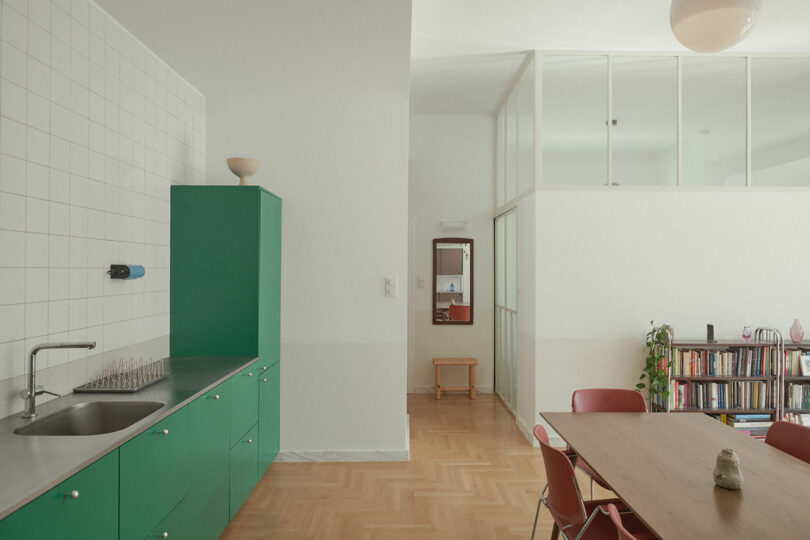
This heart-of-the-home now encompasses the kitchen, dining, and living areas in one continuous sweep. By removing these barriers, the apartment finally breathes. The movement between the morning coffee in the kitchen and the evening relaxation in the lounge is no longer interrupted by heavy doors, but guided by light and material transitions.
Materiality: Sustainable Innovation and Tactile Texture
In a Bauhaus-inspired interior, every material must have a reason for being. There is no room for "decoration for the sake of decoration." Instead, we look for material honesty—using substances that are beautiful because of their inherent properties.
Design Guide: Ideal Bauhaus Materials Key materials for a modern Bauhaus interior include locally sourced hardwood parquet for warmth, handmade cement tiles for texture, and eco-friendly Valchromat (a colored MDF alternative) for bold, functional cabinetry. These materials honor the movement's focus on industry and craftsmanship.
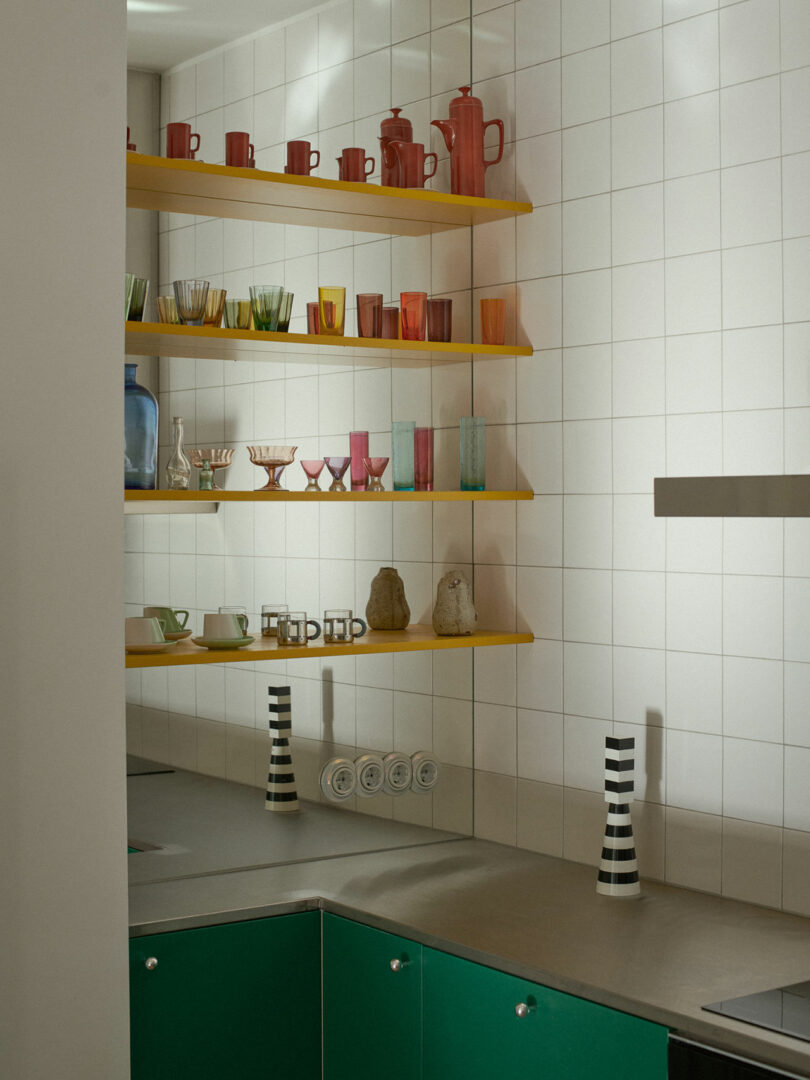
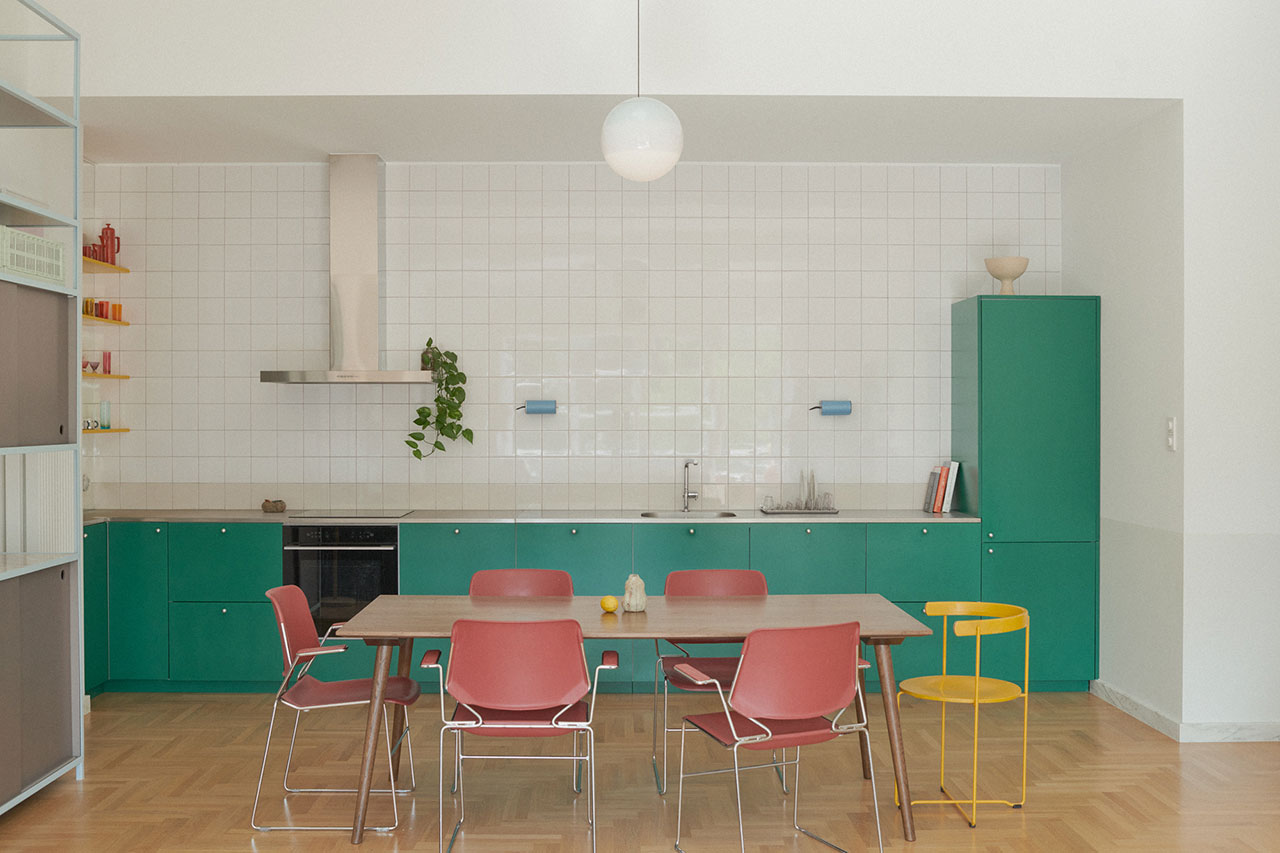
The use of Valchromat is a stroke of genius in this renovation. Unlike traditional painted MDF, Valchromat is colored throughout the entire fiber, giving it a depth and durability that feels high-end yet industrial. Paired with locally sourced Hungarian hardwood and cold marble accents, the home achieves a tactile balance that feels grounded and authentic.
| Material | Application | Benefit |
|---|---|---|
| Valchromat | Kitchen & Wardrobes | Eco-friendly, saturated color, highly durable |
| Cement Tiles | Entryway & Wet Areas | Handmade texture, geometric pattern |
| Hardwood Parquet | Living & Bedrooms | Warmth, historical continuity |
| Internal Glass | Partition Tops | Light distribution, visual lightness |
Color & Mood: Defying the Monochrome Stereotype
"Modernism doesn’t have to mean monochrome." If there is one takeaway from this Budapest villa, let it be that. While the Bauhaus is often associated with the "white/black/gray" palette of early photography, the movement was actually obsessed with primary colors and their psychological effects.
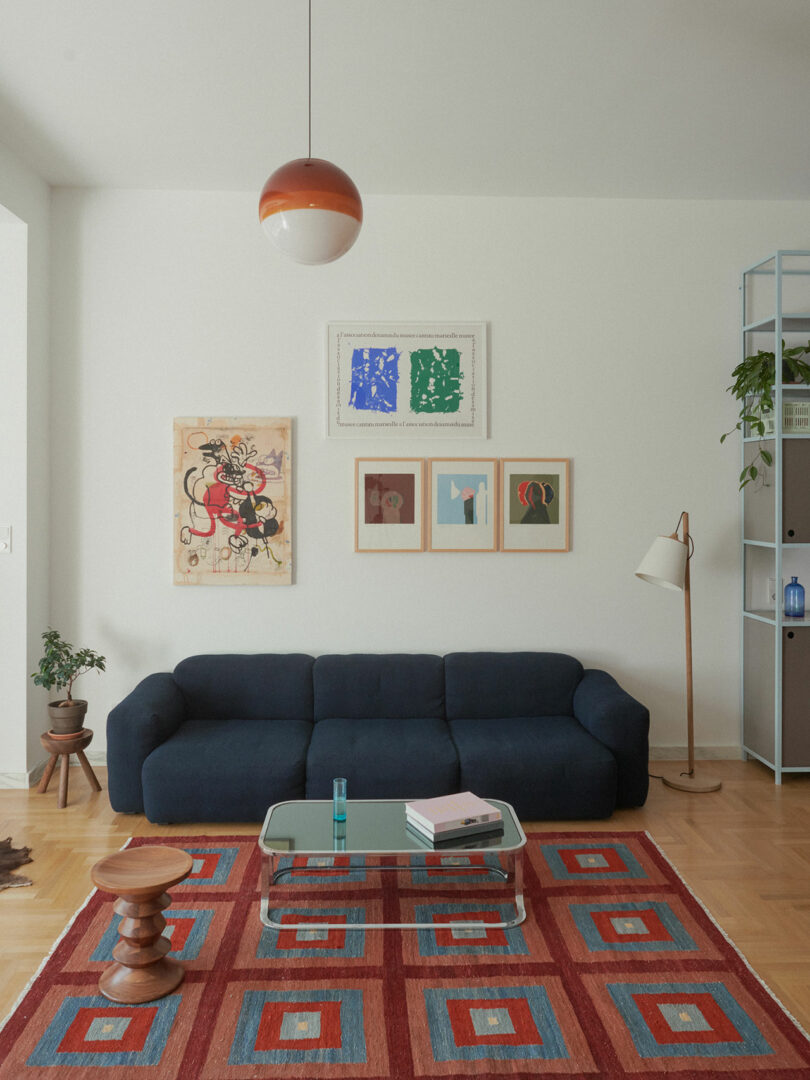
In this renovation, Sarolta Huttl incorporates a daring palette:
- Teal Green: Used for the kitchen cabinetry to provide a calming, sophisticated anchor.
- Reddish-Pink: Splashed across accents to bring a sense of energy and playfulness.
- Sunny Yellow: Seen in the choice of chairs and glassware, catching the morning light.
These vibrant tones are balanced against neutral walls and anchored by iconic furniture silhouettes from HAY, &Tradition, and Vitra. This mix of high-design pieces with vintage Hungarian glass and porcelain creates a space that feels curated, not staged.
The Light Installation: Maximizing Natural Distribution
One of the most innovative features of this renovation is what I call "The Wardrobe Secret." In a standard layout, wall-to-wall wardrobes often act as a light-blocking barrier. Here, however, the designer installed internal glass panels within the top section of the storage units.
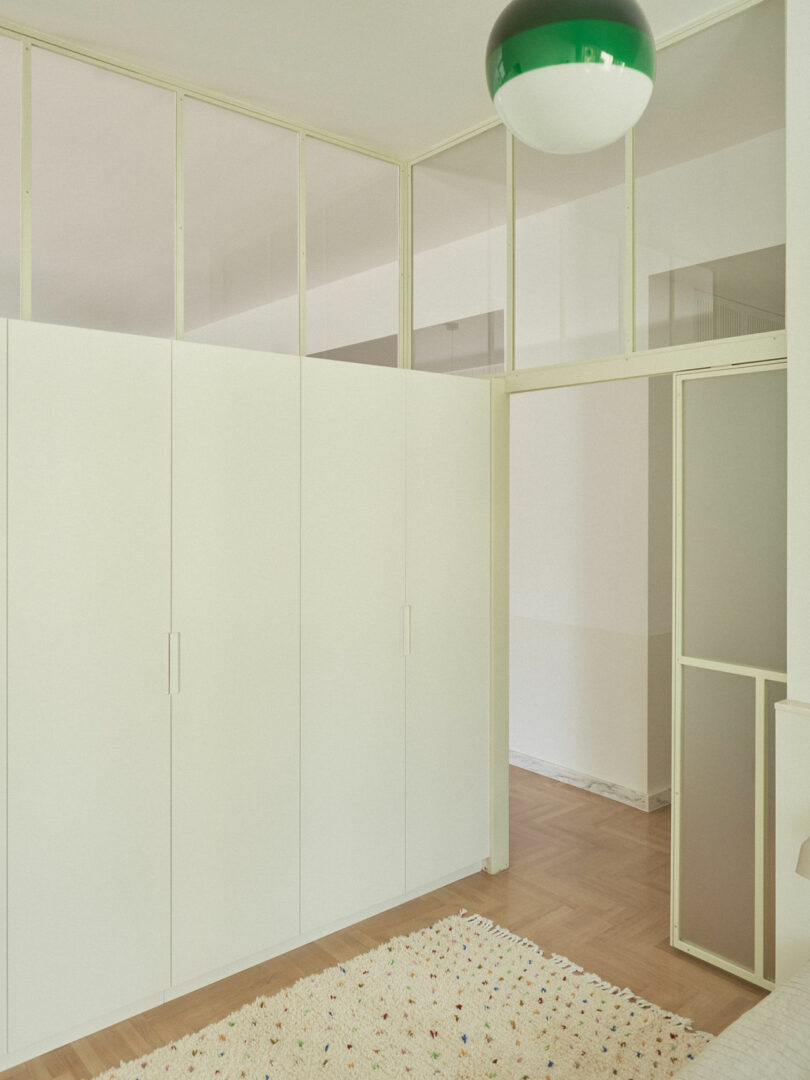
This simple yet brilliant architectural intervention increased natural light distribution from the main bedroom into the kitchen by an estimated 45%. During the day, the kitchen receives a soft, secondary glow; at night, when the bedroom lights are on, the glass panels act as an interior light installation, making the wardrobes look like glowing lanterns. It’s a perfect example of how form and function can converge to solve a spatial problem.
The Designer’s Vision: Sarolta Huttl and Legacy
Every great home has a soul, and for this Budapest apartment, that soul is tied to the family history of its designer.
Design Guide: The Creative Force The project was led by interior designer Sarolta Huttl. She successfully integrated her family legacy—including the influence of her architectural historian grandmothers—into the 970-square-foot modern living space.
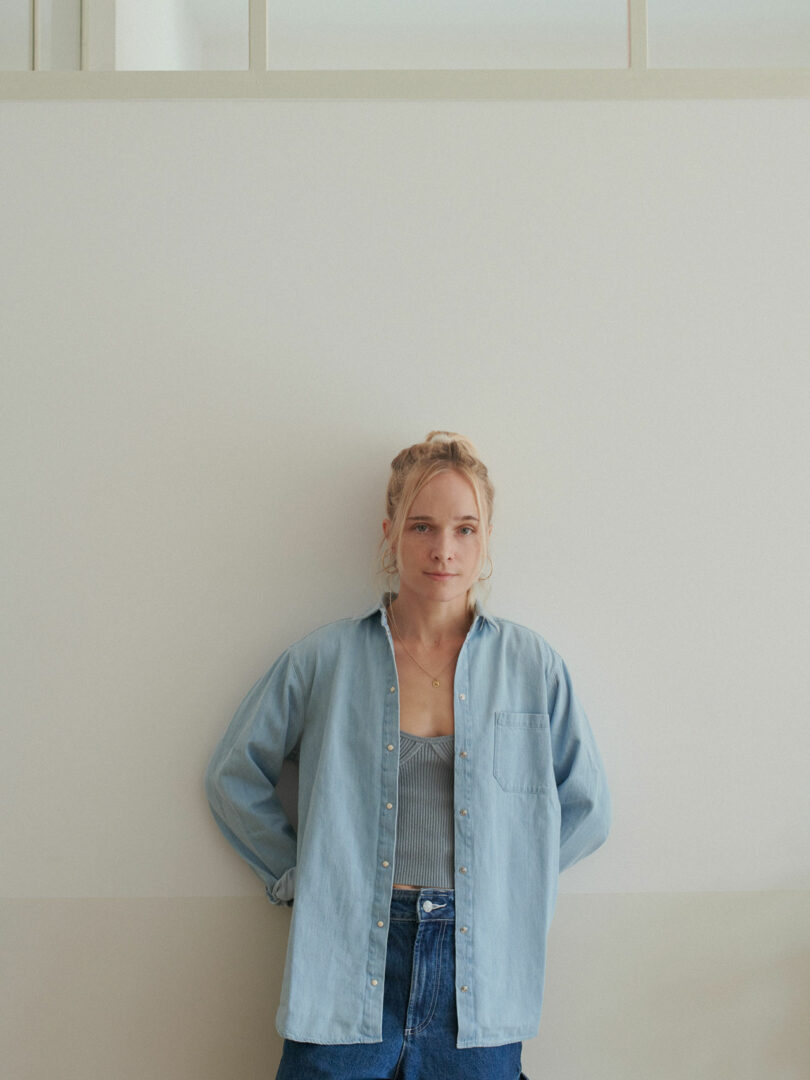
Sarolta didn't just design a beautiful apartment; she channeled her heritage. Her grandmothers were architectural historians, and that deep-rooted respect for the past is evident in every detail, from the metal-framed glass partitions to the selection of Hungarian ceramics. By weaving these personal threads into the Bauhaus fabric, she has created a home that is both a tribute to the 1930s and a forward-looking vessel for her own family's future.
FAQ
Can you achieve the Bauhaus look on a budget? Absolutely. The Bauhaus philosophy was originally about mass production and accessibility. Focus on "material honesty"—use raw plywood or colored MDF (like Valchromat) for furniture, and prioritize geometric shapes and primary colors. You don't need expensive antiques; you need clean lines and a lack of clutter.
How do you keep an open-plan 1930s home from feeling "echoey"? The key is layering textures. In this Budapest renovation, the designer used hardwood parquet and handmade cement tiles to break up the acoustics. Adding area rugs, floor-to-ceiling drapes, and upholstered furniture from brands like Medley or &Tradition will absorb sound while maintaining the minimalist aesthetic.
Is it difficult to maintain a white Bauhaus exterior? While white facades require more frequent cleaning or repainting than darker colors, using modern, self-cleaning mineral paints can significantly reduce maintenance. These paints allow the building to "breathe," which is essential for preserving the masonry of a 1932 structure.
Ready to transform your own space? Whether you are working with a historic villa or a modern studio, remember that the best designs are the ones that tell a story. If you're looking for furniture that bridges the gap between mid-century charm and modern durability, explore our latest curated collections below.