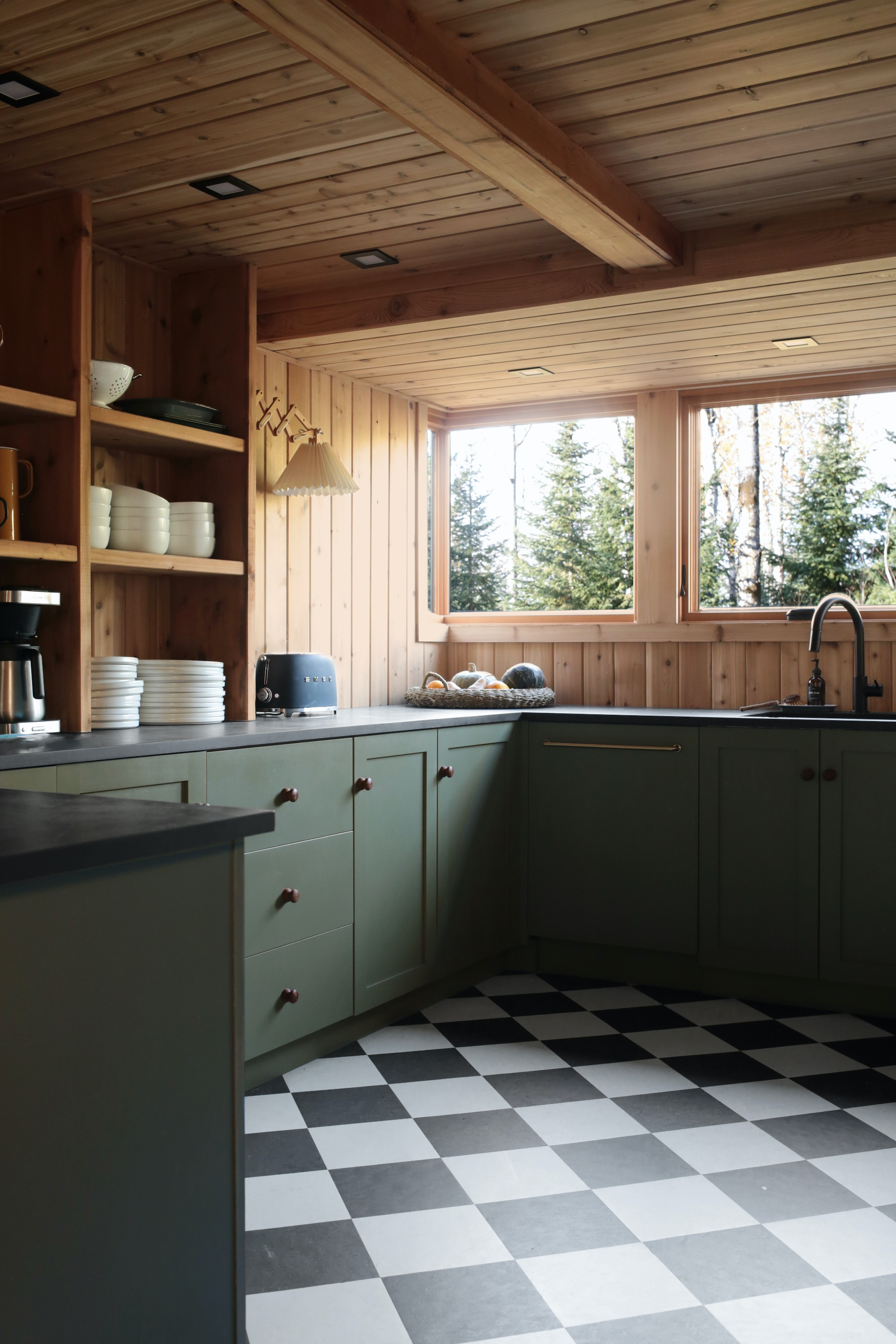
Imagine standing in a 1970s A-frame chalet in the heart of northern Minnesota. The air is crisp, the pines are whispering, but the kitchen—well, the kitchen was a cramped time capsule that couldn't keep up with the guest list. This was the starting point for Melissa Coleman, the creative force behind The Faux Martha, as she embarked on the renovation of "Minne Stuga."
The journey to transform this lakeside retreat was not an overnight makeover; it was a deliberate, two-year labor of love shaped by global supply chain hurdles and a meticulous "high-low" design philosophy. The result is a kitchen that feels both high-end and profoundly approachable—a "not too precious" space where the steam from a morning coffee rolls off the counter differently. By pairing budget-friendly IKEA base cabinets with custom Semihandmade fronts and eco-conscious materials like Richlite and Marmoleum, Melissa proved that a soulful, designer kitchen doesn’t require a custom-cabinetry price tag.
Quick Facts: The Minne Stuga Remodel
- Project Duration: 2 years from conception to completion.
- Design Strategy: "High-Low" (IKEA SEKTION bases + Semihandmade custom fronts).
- Cabinet Color: A custom green (Trailing Vines by Benjamin Moore).
- Countertops: Richlite (matte black paper composite).
- Flooring: Marmoleum checkered tiles (Black, Barbados, and Stardust).
- The "Big Change": A 4-foot footprint expansion to align seating with the cabin’s 8-person sleeping capacity.
The Tipping Point: Why the Footprint Had to Change
Every great renovation has a "tipping point"—that moment where you realize cosmetic updates simply won't suffice. For Minne Stuga, it was a numbers game. The cabin was designed to sleep eight people, yet the original kitchen and dining area barely accommodated four. To bridge this gap, Melissa made the bold decision to "bump out" the kitchen by four feet.
This structural shift wasn't just about adding square footage; it was about creating a social hub. The extra space allowed for a generous island with counter seating, ensuring that the person cooking remained part of the conversation. To ground the new space in its lakeside surroundings, the original cedar-clad walls were meticulously preserved and extended, and the old, drafty windows were replaced with expansive Marvin units.
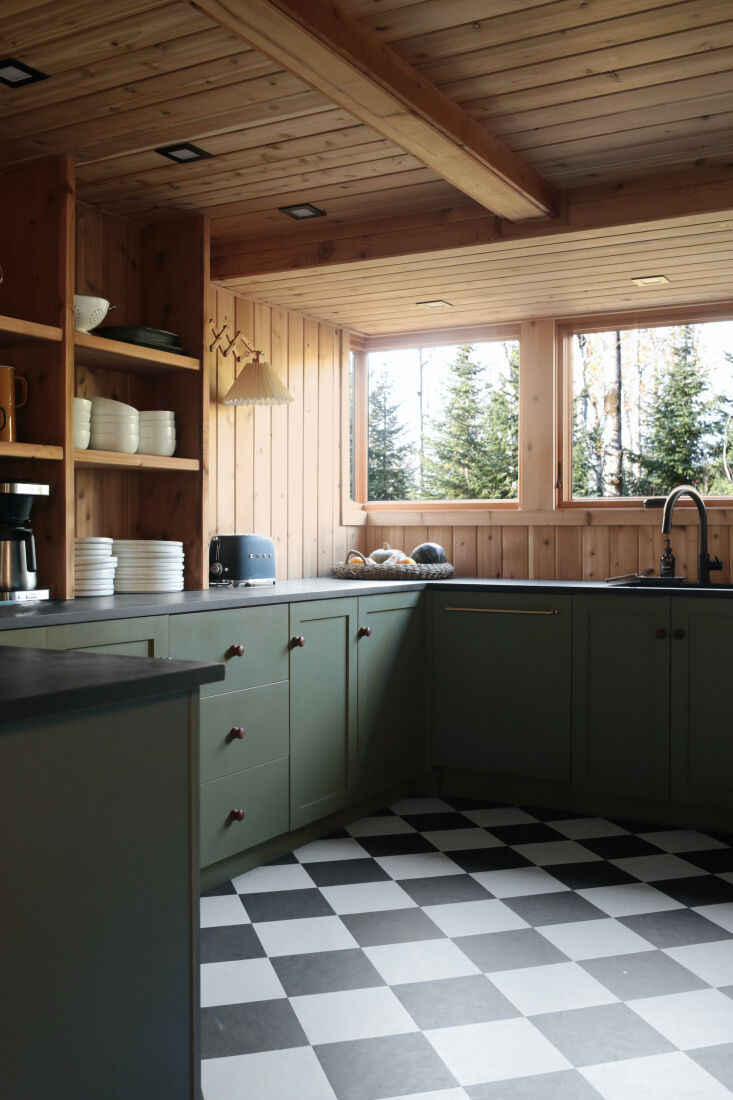
These windows do more than just let in light; they frame the evergreen forest like living art. By keeping the cedar walls, the kitchen retains that authentic "cabin" soul, preventing the modern updates from feeling sterile or out of place in the woods.
Cabinetry Strategy: IKEA Meets Custom Craftsmanship
One of the most frequent questions I receive as an editor is: How do I get a custom look without the $50,000 cabinetry bill? The Minne Stuga kitchen provides the perfect blueprint. Melissa utilized the IKEA SEKTION system for the internal cabinet boxes—known for their functional storage solutions—and paired them with Semihandmade DIY fronts.
This "high-low" approach is a designer favorite because it allows you to allocate your budget toward high-impact touchpoints (like hardware and appliances) while saving on the structural "bones."
| Component | Choice | Why It Works |
|---|---|---|
| Base Cabinets | IKEA SEKTION | Affordable, modular, and highly functional. |
| Door Fronts | Semihandmade DIY Shaker | Classic texture that leans into the "Grandma’s Cabin" vibe. |
| Drawer Fronts | Semihandmade DIY Slab | A clean, modern contrast to the Shaker doors. |
| Hardware | Brass Pulls | Adds a warm, jewelry-like finish to the matte cabinetry. |
The Quest for the Perfect Green
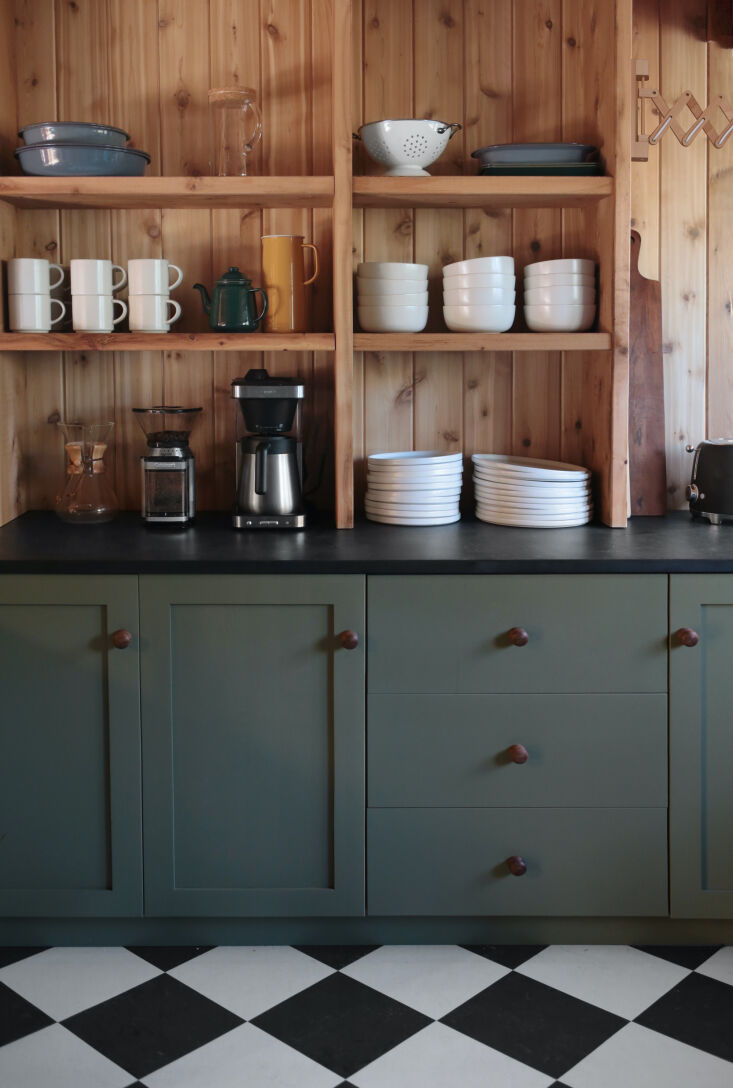
Choosing a cabinet color for a cabin is deceptively difficult. It needs to feel organic, not neon; moody, but not depressing. Melissa evaluated a staggering 50 different shades of green before landing on the winner: Trailing Vines by Benjamin Moore. It’s a sophisticated, earthy hue that mimics the pine needles outside the window. By using the DIY fronts from Semihandmade, she was able to have them professionally spray-painted in this exact custom shade, achieving a finish that looks far more expensive than a standard out-of-the-box option.
The Materials Palette: Sustainable, Durable, and Moody
In a rental cabin, materials have to work twice as hard. They need to be aesthetically pleasing for the "gram," but rugged enough to withstand snowy boots and heavy cast-iron cooking.
Countertops: The Case for Richlite
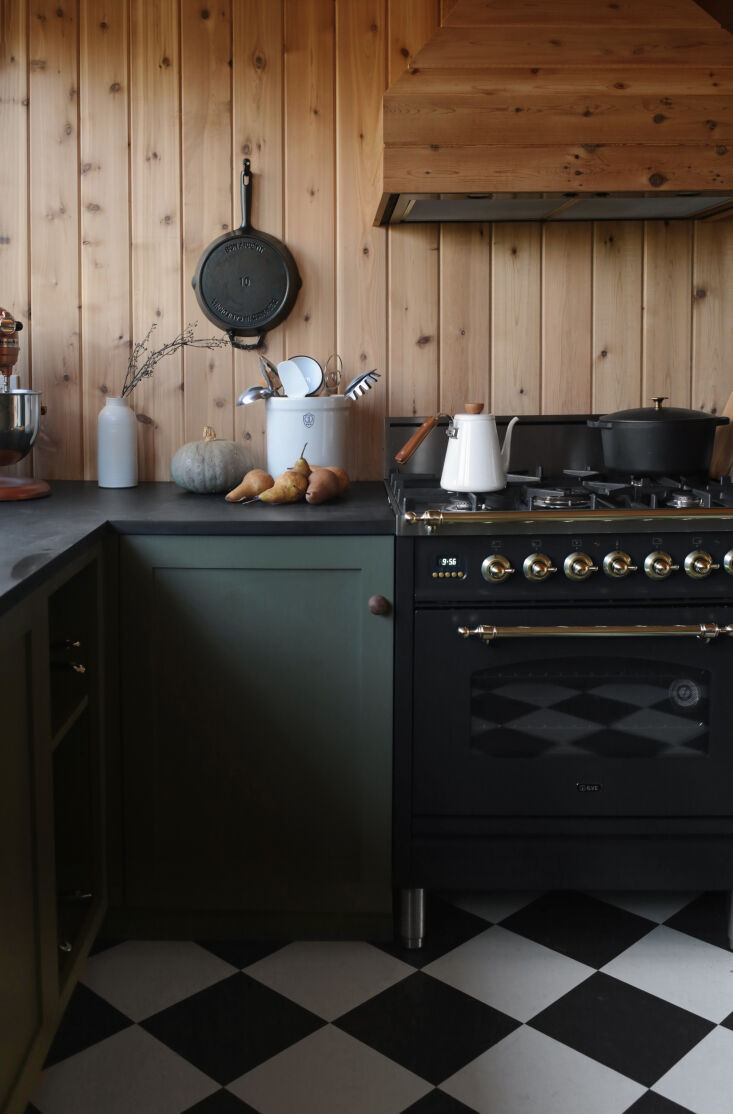
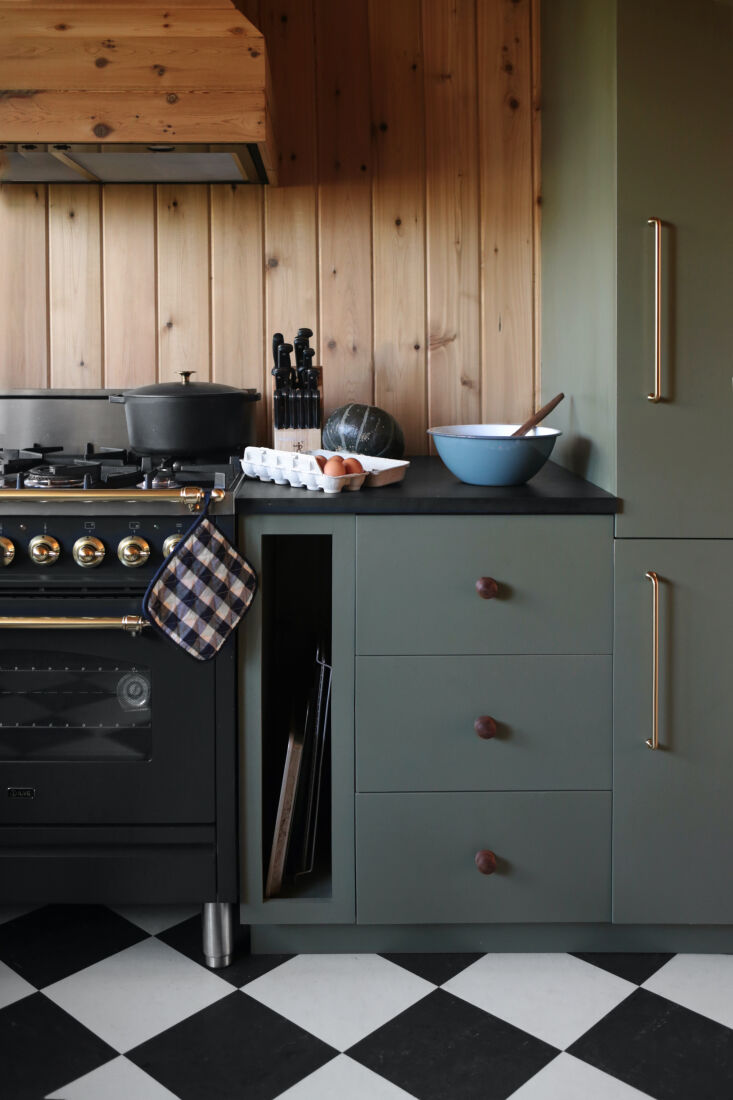
While many homeowners default to soapstone or marble, Melissa opted for Richlite in a matte black finish. Richlite is an eco-friendly paper composite that feels incredibly warm to the touch—unlike the cold shock of stone. Over time, it develops a beautiful patina, much like a well-loved leather jacket. It’s heat-resistant and incredibly durable, making it the perfect surface for a high-traffic kitchen.
Flooring: Checkered Classics
For the floors, the design leaned into a nostalgic, checkered pattern using Marmoleum tiles. This isn't your grandmother’s linoleum; Marmoleum is a sustainable material made from linseed oil, wood flour, and rosin. Melissa used a trio of colors—Black, Barbados, and Stardust—to create a graphic, playful floor that hides dirt effortlessly.
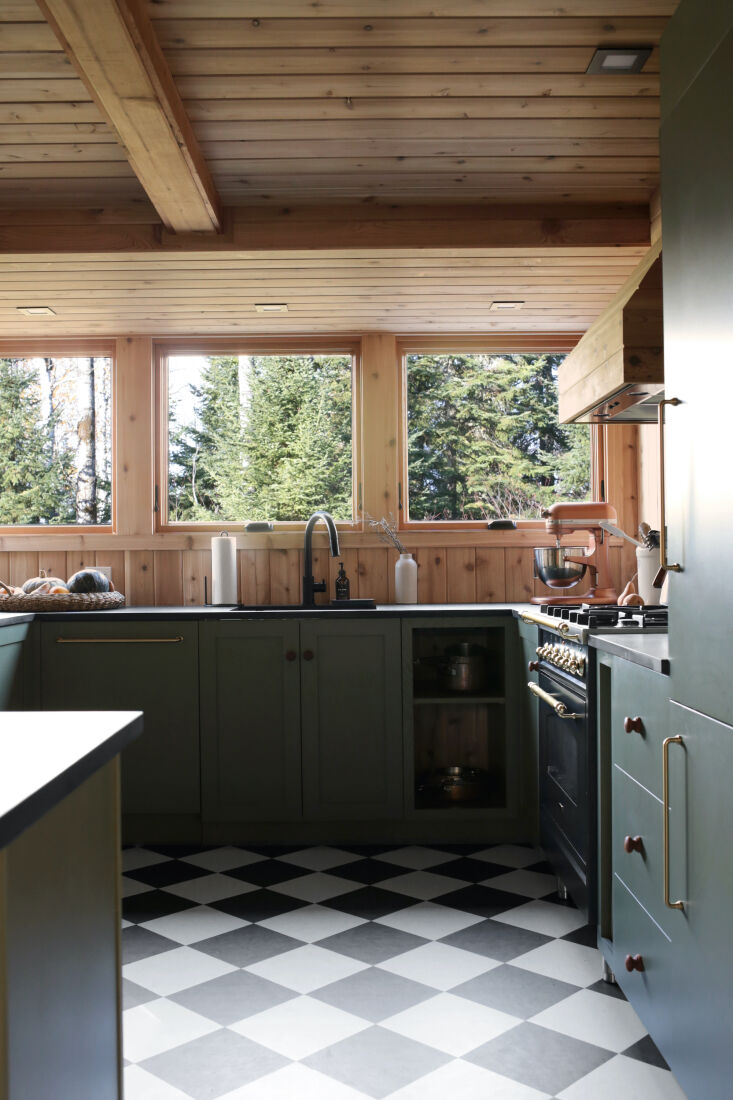
Ivy’s Style Tip: When using a bold checkered floor, keep the rest of your palette tonal. The green cabinets and black counters allow the floor to be the "pattern" without overwhelming the small footprint.
Design Details: Modern Meets 'Grandma’s Cabin'
What makes the Minne Stuga kitchen feel so soulful are the "layers" added through styling. Melissa describes the aesthetic as "Modern Grandma's Cabin"—a blend of clean lines and nostalgic comforts.
- The Focal Point: The Ilve Nostalgie range in matte graphite. This Italian-made beauty acts as the anchor of the kitchen. Its vintage styling bridges the gap between the modern cabinetry and the rustic cedar walls.
- The Cafe Curtain: Below the beverage station, a custom cafe curtain hides food storage. This is a classic "Grandma" touch that adds softness and texture to a room full of hard surfaces.
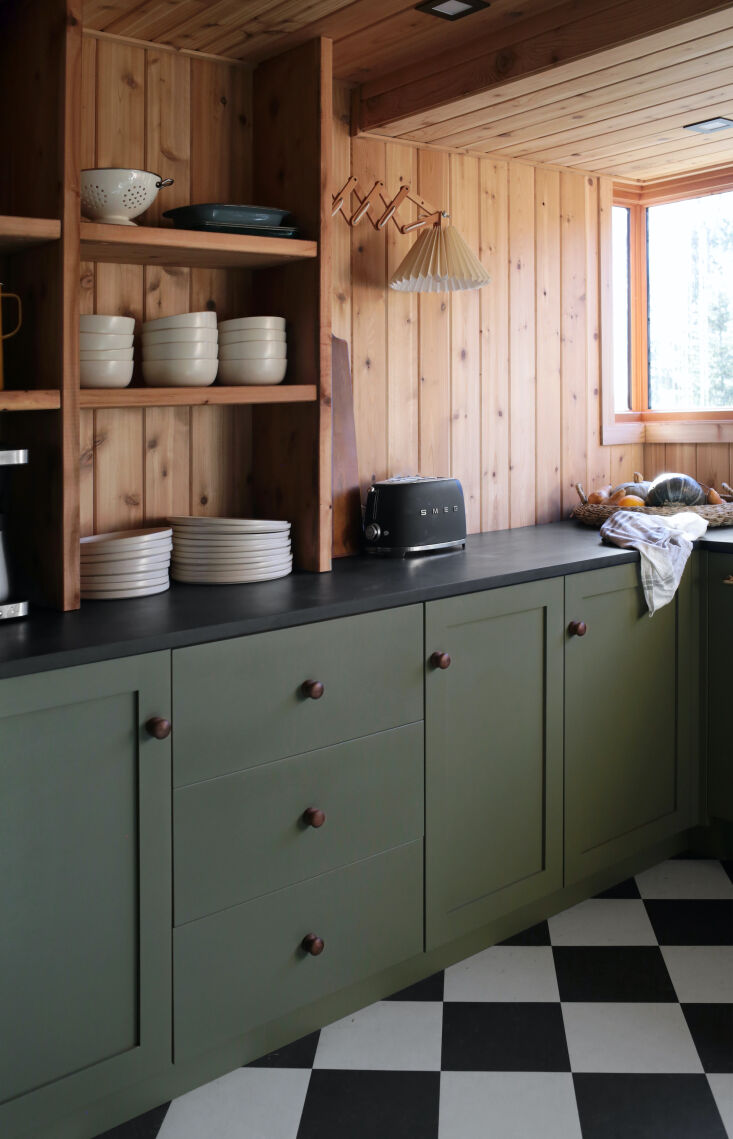
- Open Shelving: Instead of upper cabinets, which would have felt heavy against the cedar, Melissa used open shelves. It’s a polarizing choice for some, but in a cabin, it allows guests to easily find what they need and serves as a display for beautiful, utilitarian stoneware.
Lighting as Architecture
Lighting in a cabin is about creating a "layered glow." Melissa incorporated a mix of sources:
- Etsy Accordion Lights: These offer a vintage, industrial feel and can be adjusted for task lighting.
- Brass Sconces: Placed above the open shelving to highlight the wood grain of the cedar.
- Natural Light: Maximized by the Marvin windows, ensuring the dark green and black palette never feels "cave-like."
Aligning with 2026 Kitchen Trends
As we look toward 2026, the Minne Stuga kitchen is remarkably ahead of the curve. The design world is moving away from the sterile "All-White" kitchen and toward High-Textured, Moody Sanctuaries.
We are seeing a resurgence in:
- Rich Wood Tones: Moving beyond flooring to walls and ceilings (like the cedar cladding here).
- Saturated Earth Tones: Deep greens, muddy terracottas, and charcoal blues.
- Purpose-Driven Zoning: Small kitchens are being designed with specific "zones"—a prep zone, a social zone, and a coffee zone—rather than just a generic triangle.
FAQ: Remodeling Your Own Cabin Kitchen
Q: Is the IKEA/Semihandmade route really DIY-friendly? A: Yes and no. While the IKEA system is designed for assembly, getting the custom fronts to align perfectly requires patience and a good level. If you aren't comfortable with a drill and a level, I recommend hiring a "finish carpenter" specifically for the cabinet installation.
Q: How does Richlite hold up compared to Quartz? A: Richlite is very durable but it is a "living" material. It will scratch and develop a patina over time. If you want a countertop that looks exactly the same on day 1,000 as it did on day 1, Quartz is better. If you want a material with soul and warmth, Richlite is the winner.
Q: Why choose green for a cabin? A: Green acts as a "neutral" in nature. It blurs the line between the indoors and the outdoors. In a lakeside or wooded setting, green cabinetry makes the room feel like an extension of the forest rather than a box dropped into it.
Conclusion: Lessons from Minne Stuga
The transformation of the Minne Stuga kitchen is a masterclass in intentionality. It reminds us that good design isn't about the fastest timeline or the most expensive materials—it’s about solving problems (like the 4-foot bump out) and choosing materials that tell a story.
Whether you are remodeling a lakeside chalet or a suburban kitchen, remember Melissa Coleman’s "high-low" strategy. Invest in the things you touch—the handles, the range, the countertops—and find clever ways to save on the rest. The result will be a space that isn't just "new," but truly "special."