There is a specific kind of architectural "noise" that defined the 1990s—a cacophony of tiered ornamental cornices, fragmented geometries, and high-gloss finishes that often felt disconnected from their natural surroundings. In Seattle’s lush Denny Blaine neighborhood, one such postmodern residence stood as a relic of that era, clad in a loud red that competed with the surrounding canopy rather than complement it.
The transformation of this structure into the Alder House is a masterclass in architectural restraint. Reimagined by the visionaries at SHED Architecture & Design, this 2,820-square-foot renovation is a profound shift from the "loud" 90s aesthetic to a calm, nature-focused sanctuary. By stripping away the ornamental excesses and reorienting the home toward its environment, the design team has created a residence that exemplifies "Quiet Luxury" for 2026—a space where high-performance sustainability meets a serene, tactile interior.
The Architectural North Star: Sea Ranch Inspiration
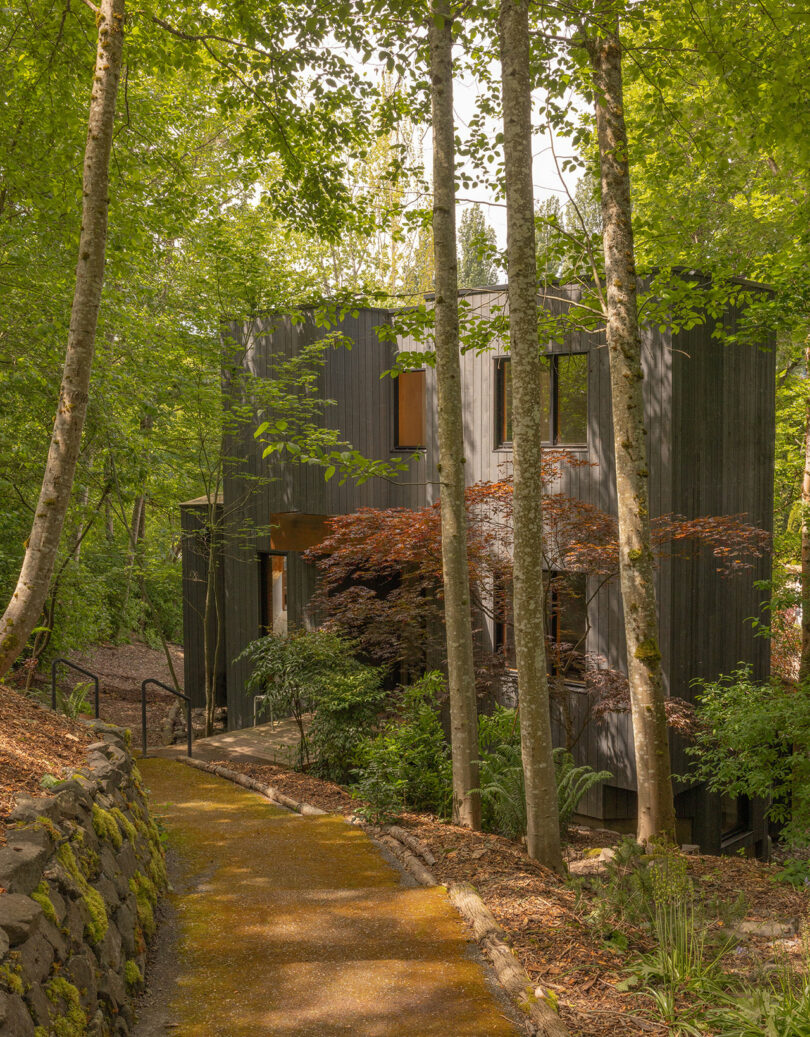
When we look at the evolution of modern Pacific Northwest design, we often look south toward Northern California’s iconic Sea Ranch community. The Alder House renovation draws heavily from this ethos—the idea that architecture should weather alongside its environment, appearing as though it has emerged from the site rather than being placed upon it.
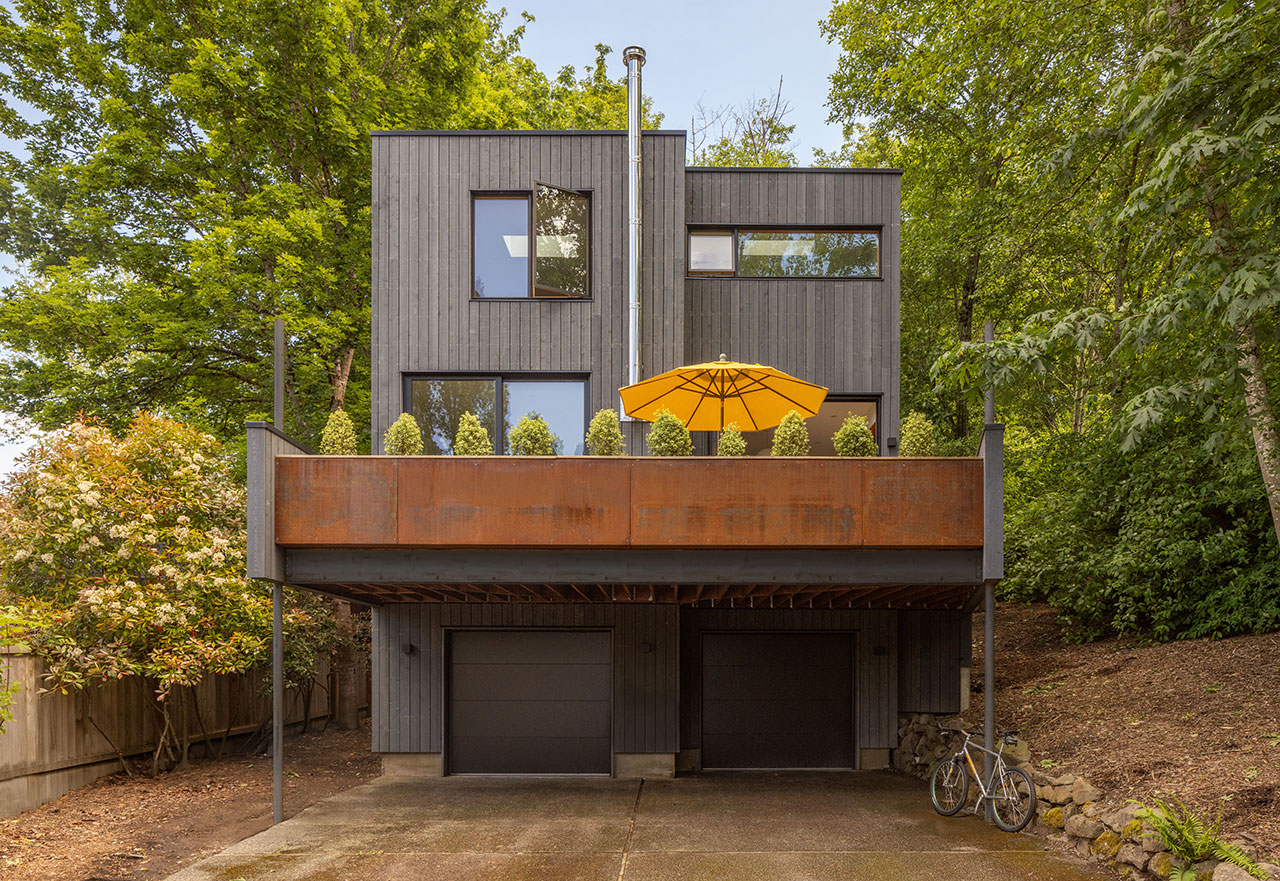
The most striking change is the home’s facade. Gone are the high-maintenance ornamental cornices and the aggressive red cladding. In their place, SHED utilized open-gap cedar siding finished in a deep, semi-transparent navy stain. This choice allows the wood’s natural grain to remain visible while helping the volume of the house recede into the shadows of the surrounding trees.
Key Materials of the Exterior Transformation:
- Open-Gap Cedar Siding: Provides a rhythmic, vertical texture that echoes the trunks of the nearby poplars.
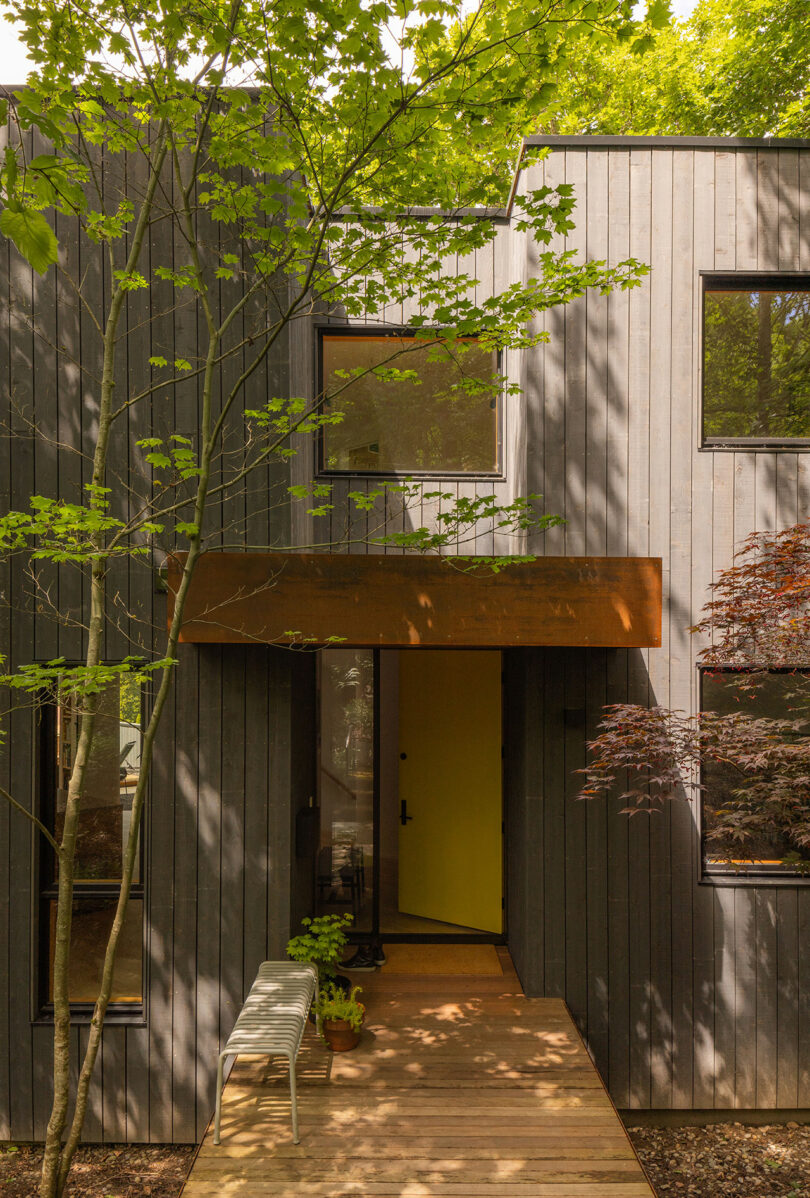
- Weathering Steel (A606): Used for site walls and accents, creating a rugged, earthy patina over time.
- Navy Semi-Transparent Stain: A sophisticated alternative to black, offering depth and coolness that harmonizes with the Seattle sky.
By moving through the landscape via a series of tiered decks and pathways, the transition from the street to the front door becomes a ritual of decompression. You aren't just arriving at a house; you are entering a sanctuary.
The Social Anchor: Reimagining the Multi-Level Layout
In the 1990s, floor plans were often fragmented into specialized, isolated rooms—a formal dining room, a breakfast nook, a redundant den. For a modern family, these boundaries often create friction rather than flow. The renovation of the Alder House focused on dissolving these barriers to optimize both natural light and social connection.
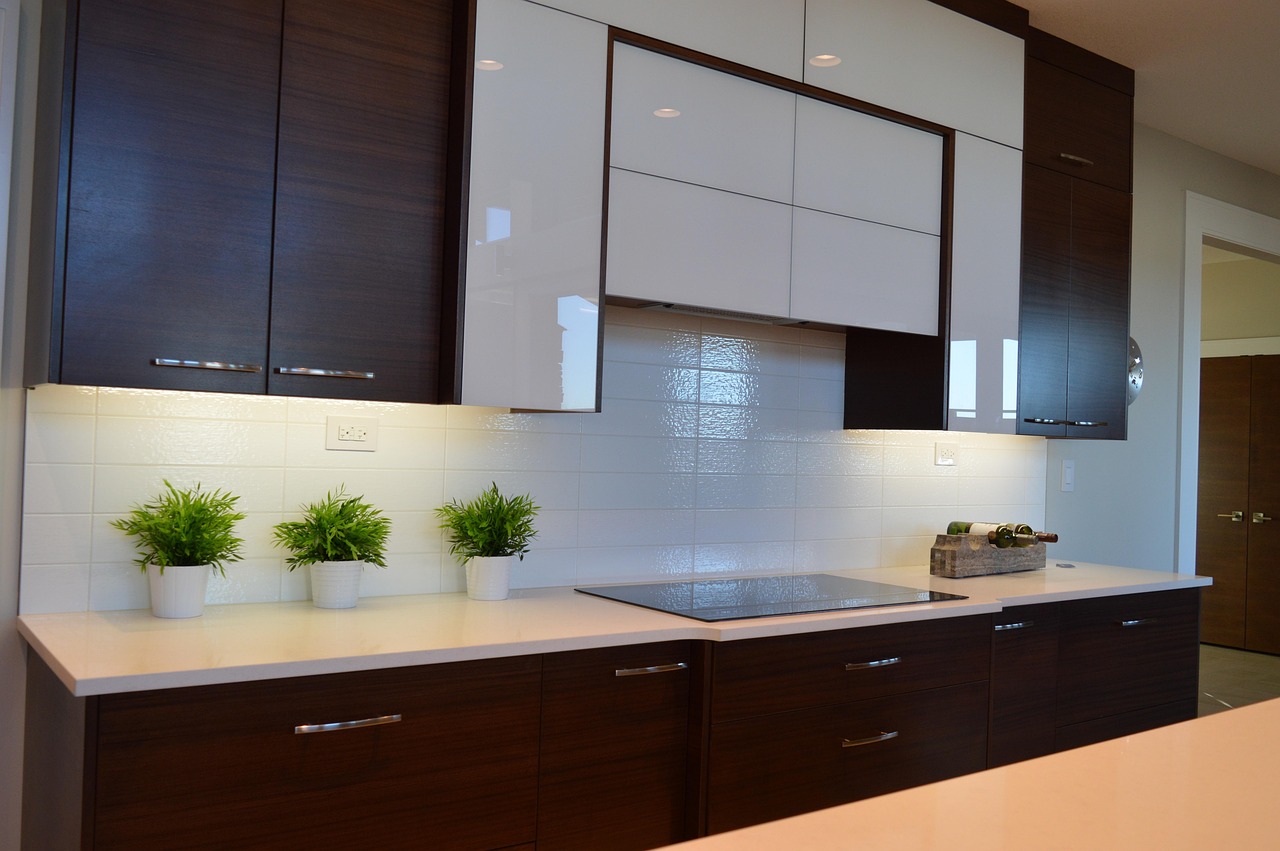
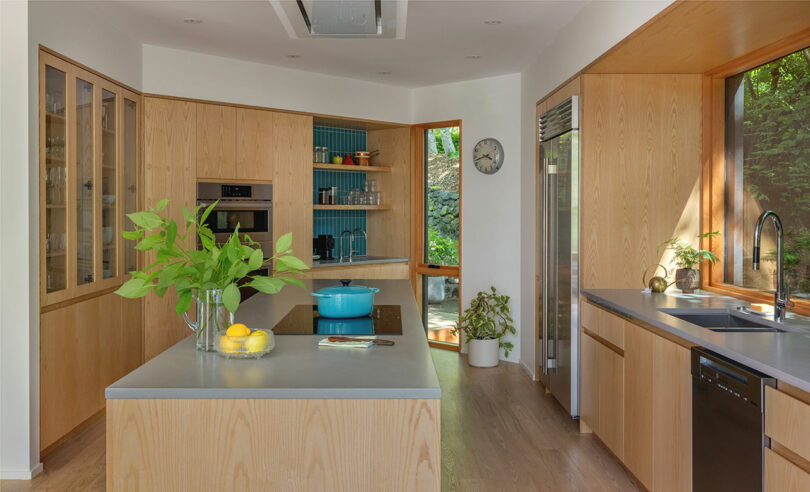
The most significant move was repositioning the kitchen. In the original layout, the kitchen was tucked away, isolated from the primary living areas. We often see this in older homes where the kitchen was treated as a service area. SHED moved the kitchen to the heart of the plan, making it the home’s primary social hub.
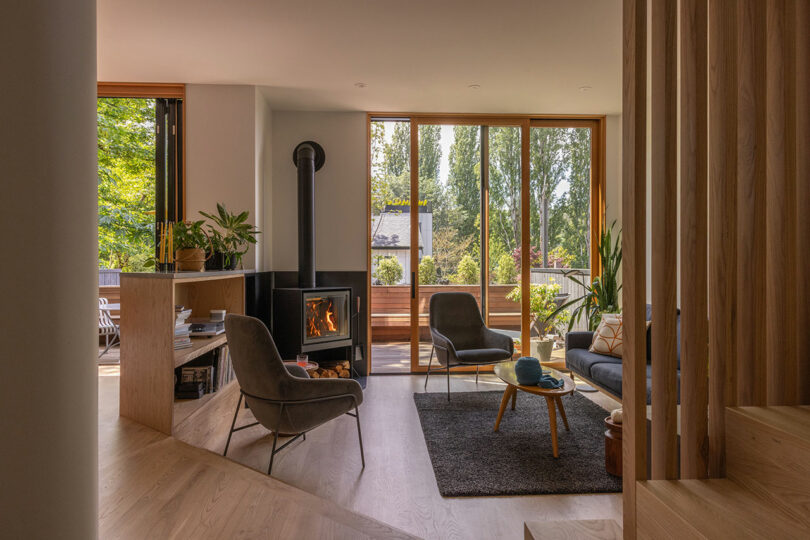
By eliminating a redundant den on the main level, the design team was able to open up the floor plan from east to west. This allows light to wash through the space throughout the day and provides a direct visual connection to the forest deck through large-format sliding and folding doors.
"The true luxury of a modern home isn't found in square footage, but in the quality of the light and the ease of the movement between spaces." — Ivy Chen
Quiet Luxury Interiors: The 2026 Aesthetic
As we look toward the interior trends of 2026, we see a definitive move away from "cool" minimalism toward a "warm" serenity. This is the essence of Quiet Luxury. At Alder House, this is achieved through a meticulous selection of materials that prioritize the sense of touch.
The primary wood used throughout the interior is Ash. Lighter than the ubiquitous white oak but warmer than maple, Ash provides a consistent, honeyed glow that makes even the grayest Seattle afternoon feel bright. Custom built-in casework in Ash flows from the kitchen into the living areas, providing hidden storage that eliminates visual clutter—a prerequisite for a "calm" home.
The 2026 Material Palette:
| Element | Material Choice | Visual/Tactile Impact |
|---|---|---|
| Cabinetry | Custom Ash Wood | Warm, consistent grain; brightens the space. |
| Flooring | Matte-finished Hardwood | Soft underfoot; avoids the "plastic" look of high-gloss. |
| Countertops | Honed Stone | A soft, velvet-like texture that resists glare. |
| Textiles | Linen and Wool Blends | Introduces organic "imperfections" and acoustic softening. |
By replacing the high-gloss surfaces of the 90s with matte finishes and organic textures, the interior environment becomes a grounding force.
The Primary Suite: A Treehouse Retreat
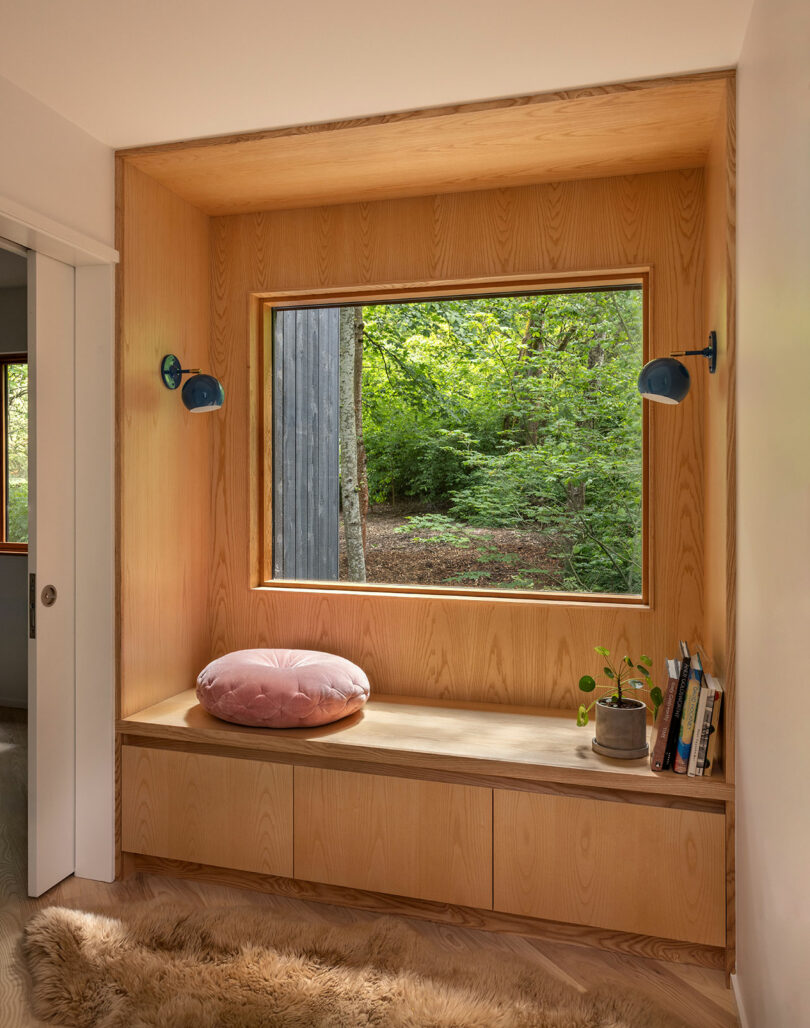
The upper level of the Alder House serves as the private quarters, and here, the design focuses on the concept of the "treehouse." The primary suite was completely reoriented to take full advantage of the poplar canopy that surrounds the property.
A strategic window seat was built into the casework, creating a dedicated space for reflection. This is a design principle I always advocate for: creating "pockets of peace" within a room. The suite uses a palette of soft blues and grays, mirroring the Seattle atmosphere, while skylights ensure that even on overcast days, the space feels airy and expansive.
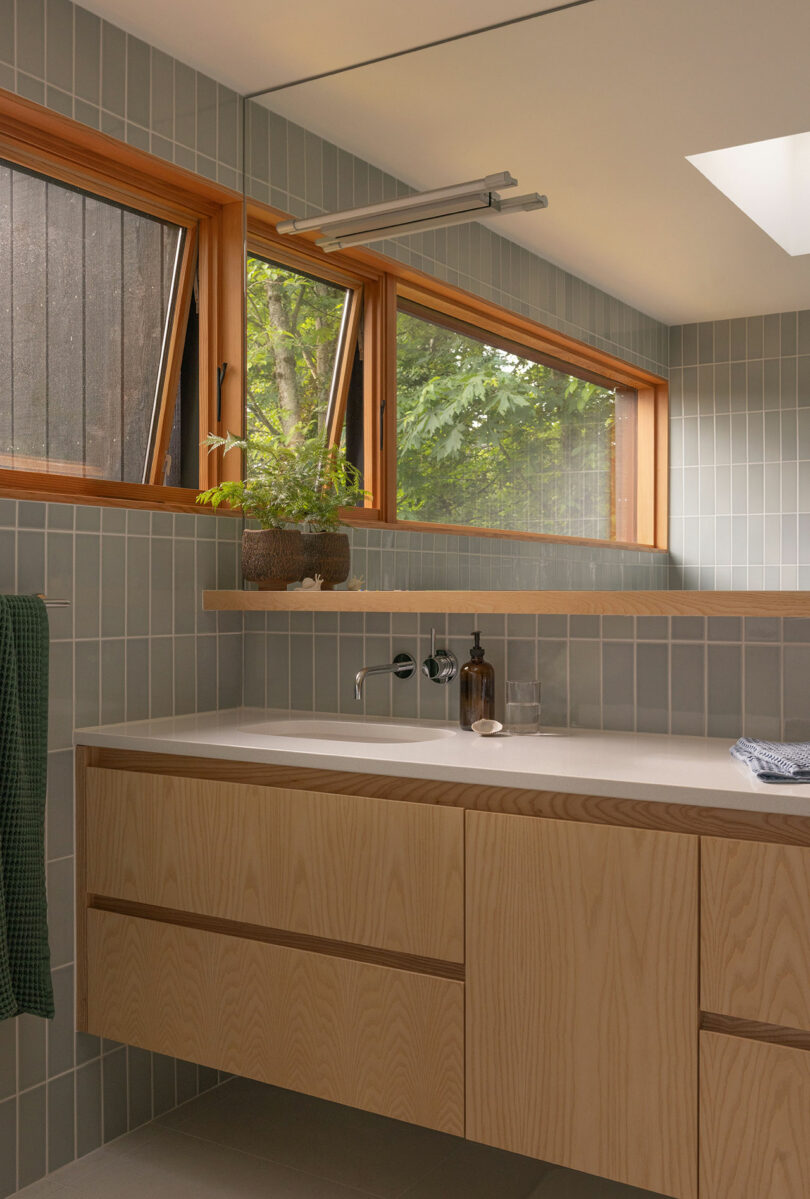
The primary bath continues this spa-like narrative. Vertical green tiles in the shower mimic the forest outside, while privacy glass allows for an abundance of natural light without sacrificing the feeling of a secluded sanctuary.
Invisible Performance: Passive House Strategies
While the aesthetic transformation of the Alder House is undeniable, its true sophistication lies in its "invisible" performance. A common critique of 90s homes is their poor insulation and inefficient energy systems. In this renovation, luxury is defined by thermal comfort.
The project integrated several Passive House strategies to ensure the home remains comfortable year-round with minimal energy input. This isn't just about being "green"—it's about the feeling of a home that has no drafts, no cold spots, and superior air quality.
Sustainability by the Numbers:
- 9-Kilowatt Solar Array: Discreetly installed on the roof to offset energy consumption.
- Whole-House Electrification: Moving away from fossil fuels for a cleaner carbon footprint.
- High-Efficiency Insulation: Upgraded thermal envelopes that significantly reduce heating and cooling loads.
- Streamlined Facade: By removing the ornamental cornices, the team reduced the number of "thermal bridges" (areas where heat escapes), improving overall efficiency.
Exterior Refinement: Stripping Back the Noise
The final step in the Alder House’s journey was the refinement of its silhouette. The original 90s design featured "tiered cornices" that added visual weight and maintenance headaches. By stripping these back to a streamlined, modernist volume, the house feels more balanced and grounded.
The use of "weathering" materials—like the A606 steel and the semi-transparent cedar—means the house will only get better with age. In the Pacific Northwest, where moisture and moss are part of the landscape, choosing materials that embrace the elements is a sign of architectural maturity.
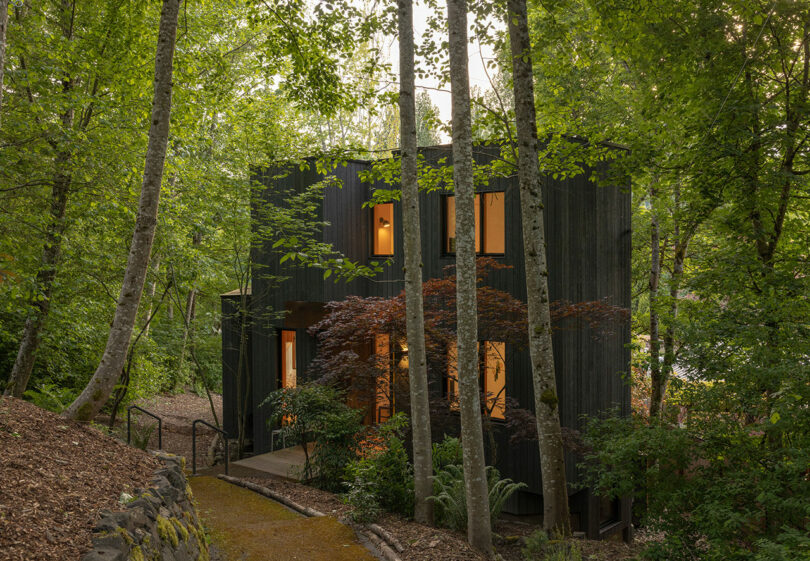
As the sun sets over Seattle, the Alder House transforms into a glowing lantern within the trees. It stands as a testament to the idea that we don't always need to build new to achieve perfection. Sometimes, the most beautiful sanctuary is already there, waiting to be revealed by stripping away the noise.
FAQ: Renovating 90s Homes for the Modern Era
How do I know if my 90s home is a good candidate for a modern renovation? Most 90s homes have excellent "bones"—the structural framing is often sound, and the square footage is generous. Look for homes with high ceilings and interesting multi-level layouts, as these provide the best canvas for the open-flow designs popular in 2026.
What is the most cost-effective way to achieve 'Quiet Luxury' on a budget? Focus on the "tactile touchpoints." You don't need to redo every wall. Invest in high-quality matte hardware, replace glossy floor finishes with wire-brushed or matte alternatives, and use a consistent wood species (like Ash or White Oak) for any new built-ins to create visual continuity.
Why is Passive House technology considered a luxury feature? Beyond the environmental benefits, Passive House strategies provide a superior living experience. The airtight construction and high-performance windows mean the home is incredibly quiet (blocking out street noise) and maintains a perfectly consistent temperature, which is the ultimate form of domestic comfort.