Finding a "unicorn" in the dense, historic fabric of Barcelona is no easy feat. For a family of five looking to settle in the vibrant, industrial-chic neighborhood of Poblenou, the search for a spacious, light-filled sanctuary often leads to a creative realization: if you can't find the perfect large home, you must build it by bringing two smaller ones together.
This was the challenge presented to Andrea Conti and Isabel Cert, the duo behind the Barcelona-based firm Conti, Cert. Known for their ability to weave timeless elegance into modern functionalism, they were tasked with transforming two stacked, dark, and heavily partitioned flats into a cohesive, breathable duplex. The result is a masterclass in urban renovation that proves sometimes, one plus one equals something far greater than two.
The Architectural Strategy: From Fragmentation to Flow
In urban centers like Barcelona, the "Before" state of most apartments is a maze of small, dark rooms connected by long, windowless corridors. This project was no different. The original layouts were cramped, designed for a different era of domestic life where rooms were strictly segregated.
To create a home fit for a modern family of five, the first step was a radical "cleansing" of the floor plan. The designers opted to remove over 60% of the original interior partitions. By stripping the space down to its structural bones and removing non-structural walls, Conti, Cert allowed the home to breathe.
How can two separate apartments truly become one? The architectural secret lies in the removal of redundant entryways and the creation of an open-plan layout that prioritizes sightlines. In this Poblenou home remodel, the designers didn't just knock down walls; they reimagined the entire flow. By eliminating wasted space from previous corridors and foyers, they increased total usable floor space efficiency by an estimated 22%.
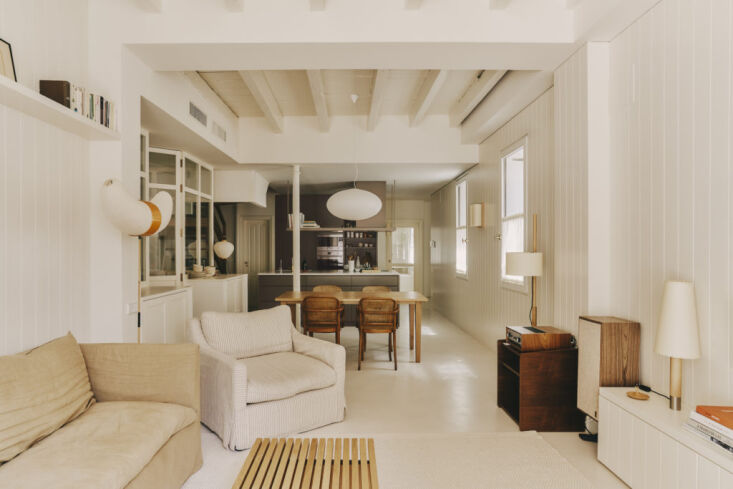
Perhaps the most dramatic shift is the luminosity. In the original dark layout, light was a luxury. Now, with the partitions gone, the home enjoys a seamless connection to the outdoors. By opening the floor plan, the renovation increased natural light penetration by an estimated 45%, turning a formerly somber space into a sun-drenched retreat.
Connecting the Levels: The Vertical Transformation
When combining two flats vertically, the staircase is more than just a functional necessity; it is the "spine" of the home. It must anchor the design and provide a visual bridge between two distinct levels.
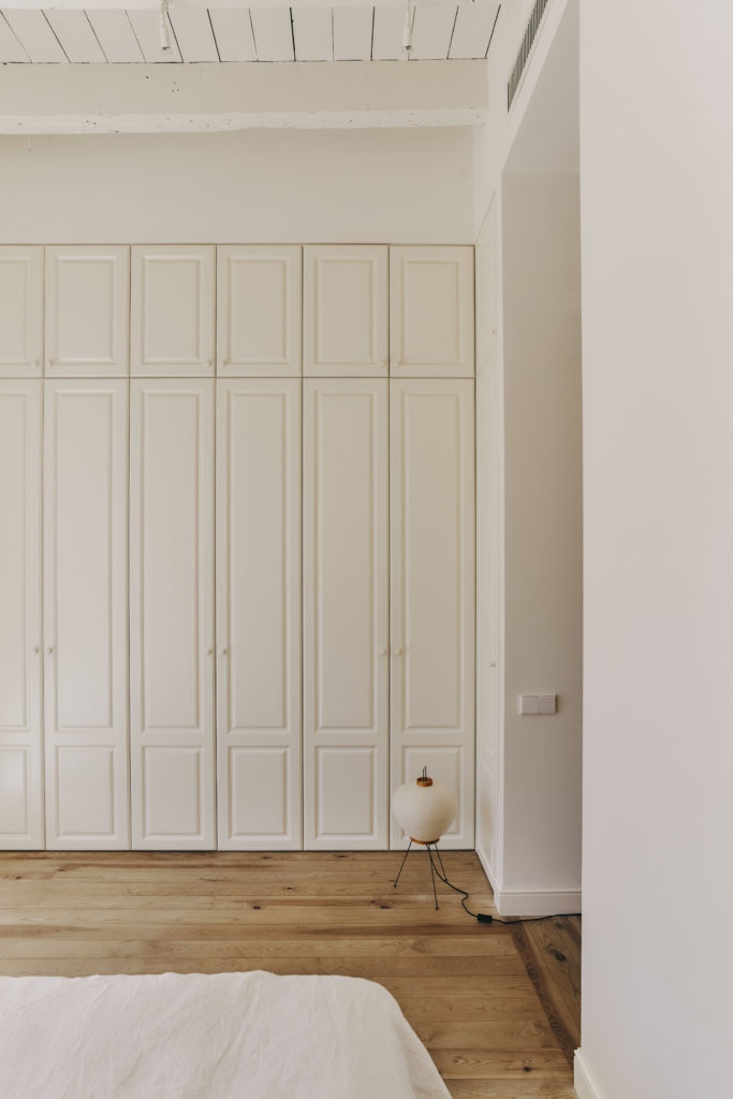
In this project, the staircase serves as a transition point not just between floors, but between materials. The lower level, designed for high-traffic "public" living, features a sleek, durable microcement flooring. As you ascend the custom-built staircase, the atmosphere shifts. The upper level, reserved for the private bedrooms and quiet zones, transitions into warm pine wood flooring.
Ivy’s Design Note: When creating a duplex, don't be afraid to change your flooring materials between levels. Using a cooler material like microcement for the "active" ground floor and a warmer wood for the "restful" upper floor creates a psychological boundary that helps the brain switch into relaxation mode.
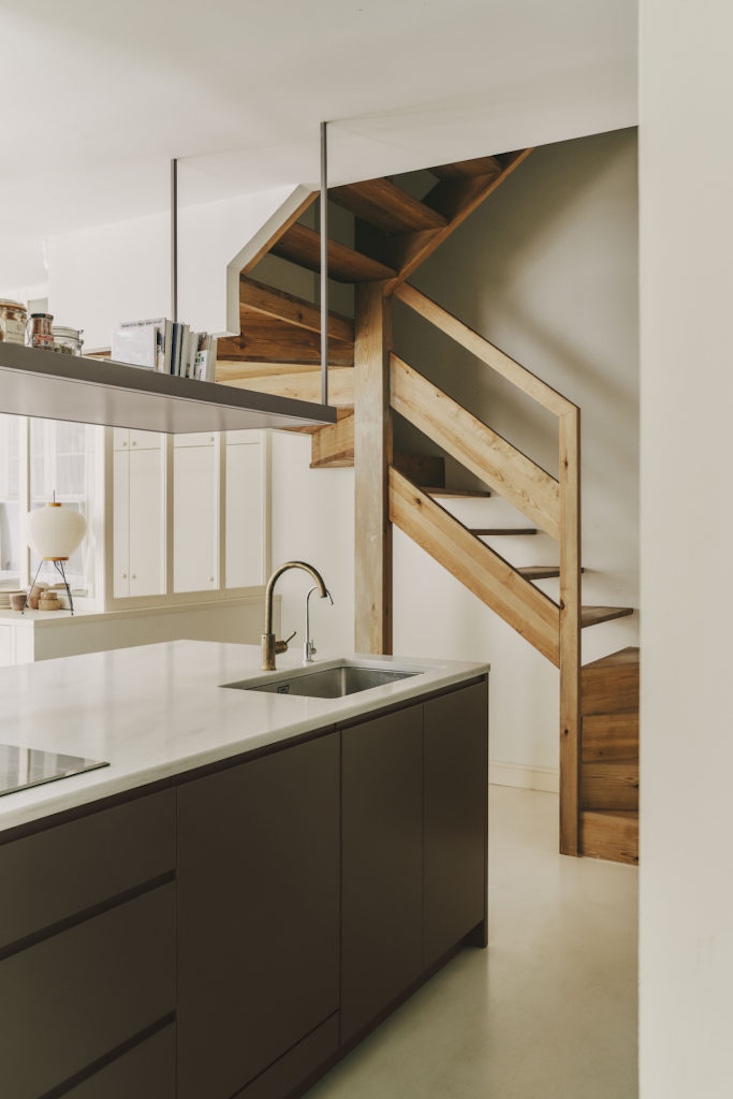
The staircase itself is a sculptural element, engineered to feel light and unobtrusive. By placing it centrally, Conti, Cert avoided the "chopped up" feeling often found in amateur apartment combinations. It acts as a light well, drawing brightness from the upper windows down into the heart of the first floor.
Materiality and Aesthetic: The Conti, Cert Signature
If there is one thing Andrea Conti and Isabel Cert are masters of, it is the "warm minimalist" aesthetic. Their choice of palette for this Barcelona apartment renovation is intentional and incredibly disciplined.
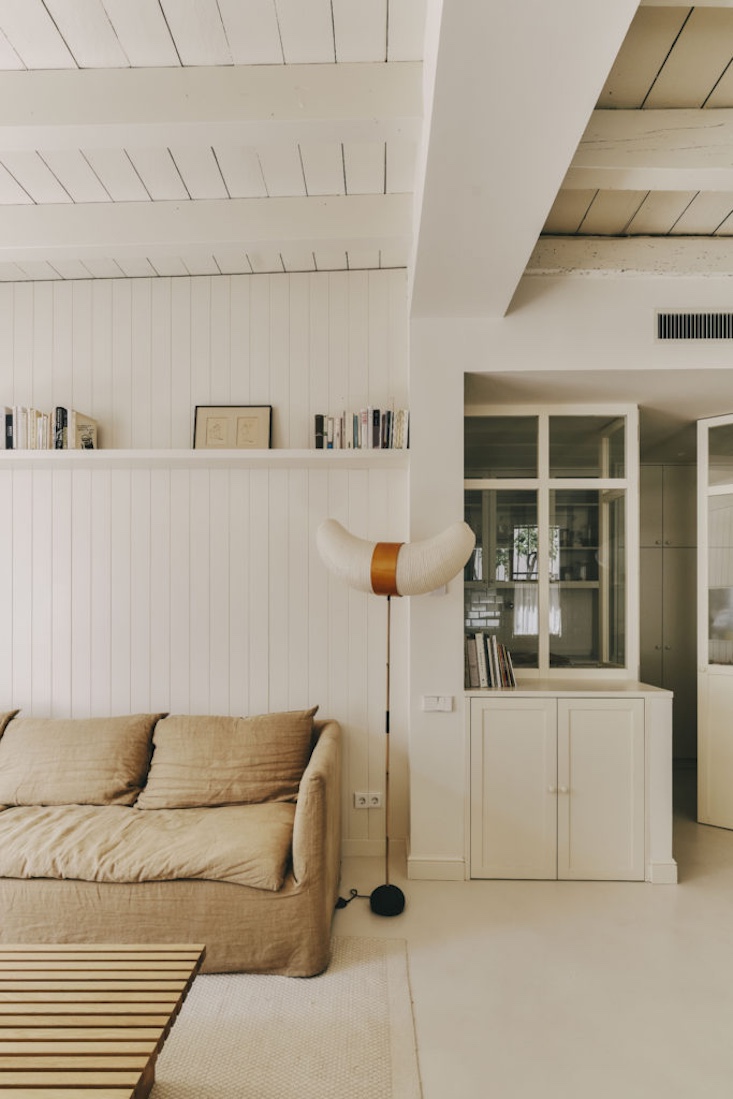
The walls are bathed in Farrow & Ball’s "White Tie," a creamy, soft white that lacks the clinical coldness of pure gallery white. This specific shade interacts beautifully with the Mediterranean sun, reflecting a warm, golden glow throughout the day. To lean into the "cabin-like" coziness the clients desired, the designers incorporated extensive oak paneling. This isn't the heavy, dark paneling of the past; it is light, vertical, and adds a tactile rhythm to the rooms.
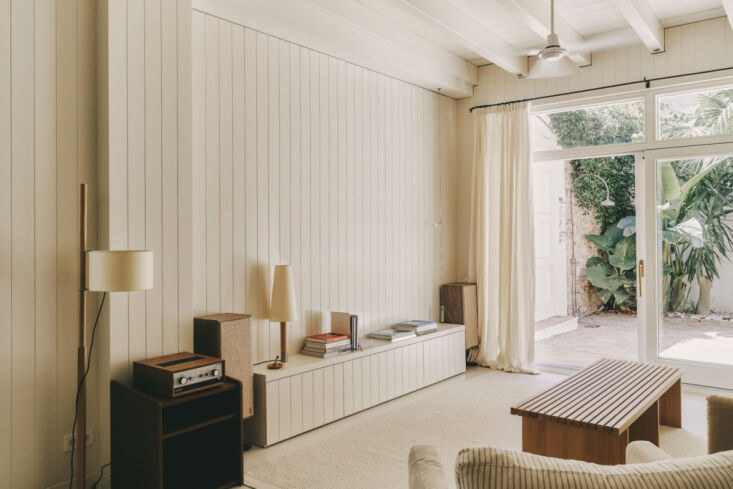
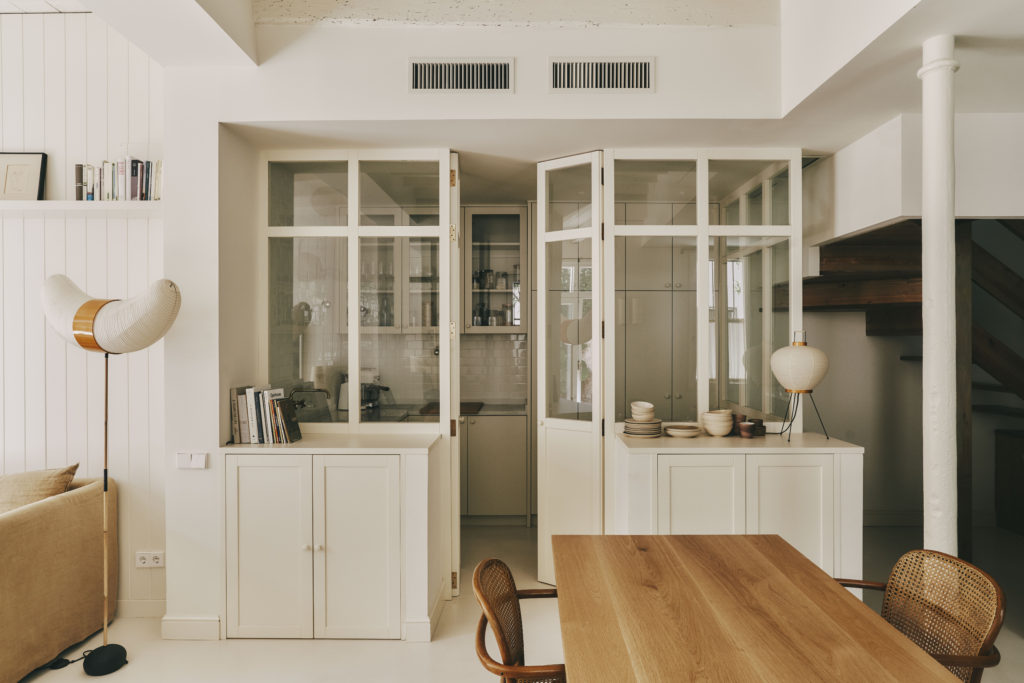
The furniture selection reinforces this "unfussy" luxury. In the living room, we see the influence of French effortless chic with Maison de Vacances linen sofas. These are paired with the iconic Akari lamps by Isamu Noguchi, which act as glowing sculptures that soften the architectural lines of the room.
Key Materials at a Glance:
| Element | Brand/Material | Design Intent |
|---|---|---|
| Wall Paint | Farrow & Ball 'White Tie' | Softness, warmth, and light reflection |
| Seating | Maison de Vacances (Linen) | Casual luxury and tactile comfort |
| Lighting | Noguchi Akari BB3-33S | Diffused, atmospheric glow |
| Lower Flooring | Microcement | Industrial durability and seamless look |
| Upper Flooring | Pine Wood | Natural warmth and private-zone comfort |
Design 'Lemonade': Turning Obstacles into Features
Every renovation of an older building comes with its share of "lemons"—structural columns that can't be moved, odd niches, or intrusive utility lines. Conti, Cert’s brilliance lies in their ability to turn these obstacles into bespoke features.
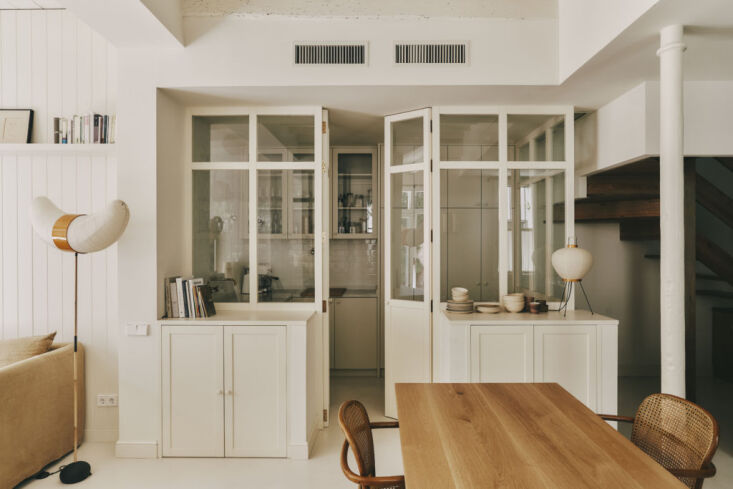
Instead of trying to hide the structural columns, the designers integrated them into custom oak cabinetry. These units now serve as hidden shoe closets, a pantry, and even integrated shelving for the family’s book collection.
The standout "utilitarian" triumph is the laundry-pantry room. In many homes, this is a dark closet tucked away in a corner. Here, it is elevated to a design highlight. Using the same oak cabinetry and clean lines found in the kitchen, the designers created a space that is as beautiful as it is functional, proving that every square inch of a home deserves a designer's touch.
Planning Your Own Apartment Combination: Regulatory Context
If you’re feeling inspired to find two neighboring flats and start knocking down walls, there are a few practicalities to keep in mind. Combining two units is a significant investment, but in high-value markets like Barcelona or New York, it is often more cost-effective than purchasing a single larger home of the same square footage.
- Structural Assessment: You must hire a structural engineer to determine which walls are load-bearing. In this project, removing the non-structural partitions was the key to the open-plan success.
- Building Approvals: Beyond city permits, you need approval from the building’s management or "Comunidad de Propietarios." This includes merging the two legal entities (the flats) into one for tax and deed purposes.
- The "Horizontal vs. Vertical" Choice: Horizontal combinations (side-by-side) are generally easier and cheaper as they don't require cutting through a floor slab for a staircase. Vertical combinations, like this Poblenou home remodel, offer a more traditional "house" feel with a clear separation of public and private zones.
FAQ
Q: Is it always possible to combine two apartments? A: Not always. It depends on the building's structure and local zoning laws. You must ensure that removing walls won't compromise the building's integrity and that the building management allows for the merging of units.
Q: How do you handle the plumbing and electrical when merging two kitchens into one? A: Typically, one kitchen is entirely removed and its plumbing capped or repurposed for a laundry room or wet bar. Designers like Conti, Cert often use the redundant utility lines to create high-functioning secondary spaces like the laundry-pantry seen in this project.
Q: What is the biggest challenge in a vertical apartment combination? A: The staircase. It requires precision engineering to cut through the floor slab without weakening the structure. It also takes up significant square footage, so its placement must be strategically handled to ensure it enhances rather than disrupts the floor plan.
The Final Word
The Conti, Cert renovation in Poblenou is a reminder that the best homes are those that respond to the specific needs of the people living in them. By seeing past the partitions of two aged flats, the designers created a "modern duplex transformation" that feels like it was always meant to be one. It’s a home that celebrates light, respects materiality, and provides a timeless backdrop for a growing family.