Quick Facts
- The 2026 Material of Choice: Porcelain and handmade ceramics are surpassing metal and glass as the preferred medium for sophisticated ceiling fixtures.
- Trend Alignment: These fixtures perfectly bridge the gap between 'Japandi' minimalism and 'Biophilic' warmth, focusing on organic, tactile surfaces.
- Lead Times: Due to the meticulous artisanal process, expect a standard 8-week production window, with an additional 2-3 weeks for bespoke glaze development.
- Technical Sweet Spot: For a functional yet spa-like ambiance, designers are specifying a color temperature range of 2700 K to 3000 K for porcelain diffusers.
- Durability: Naturally rust-resistant and non-corrosive, porcelain is the premier choice for high-humidity environments like luxury primary baths.
The Ceiling’s Quiet Revolution
For decades, the flush-mount ceiling light was the "forgotten" element of interior design—a utilitarian necessity often relegated to the dreaded 'boob light' or a generic metal disc. But as we move toward 2026, we are witnessing a quiet revolution on the "fifth wall." The shift from purely functional overhead lighting to ornamental, sculptural art pieces has fundamentally changed how we perceive low-ceilinged spaces.
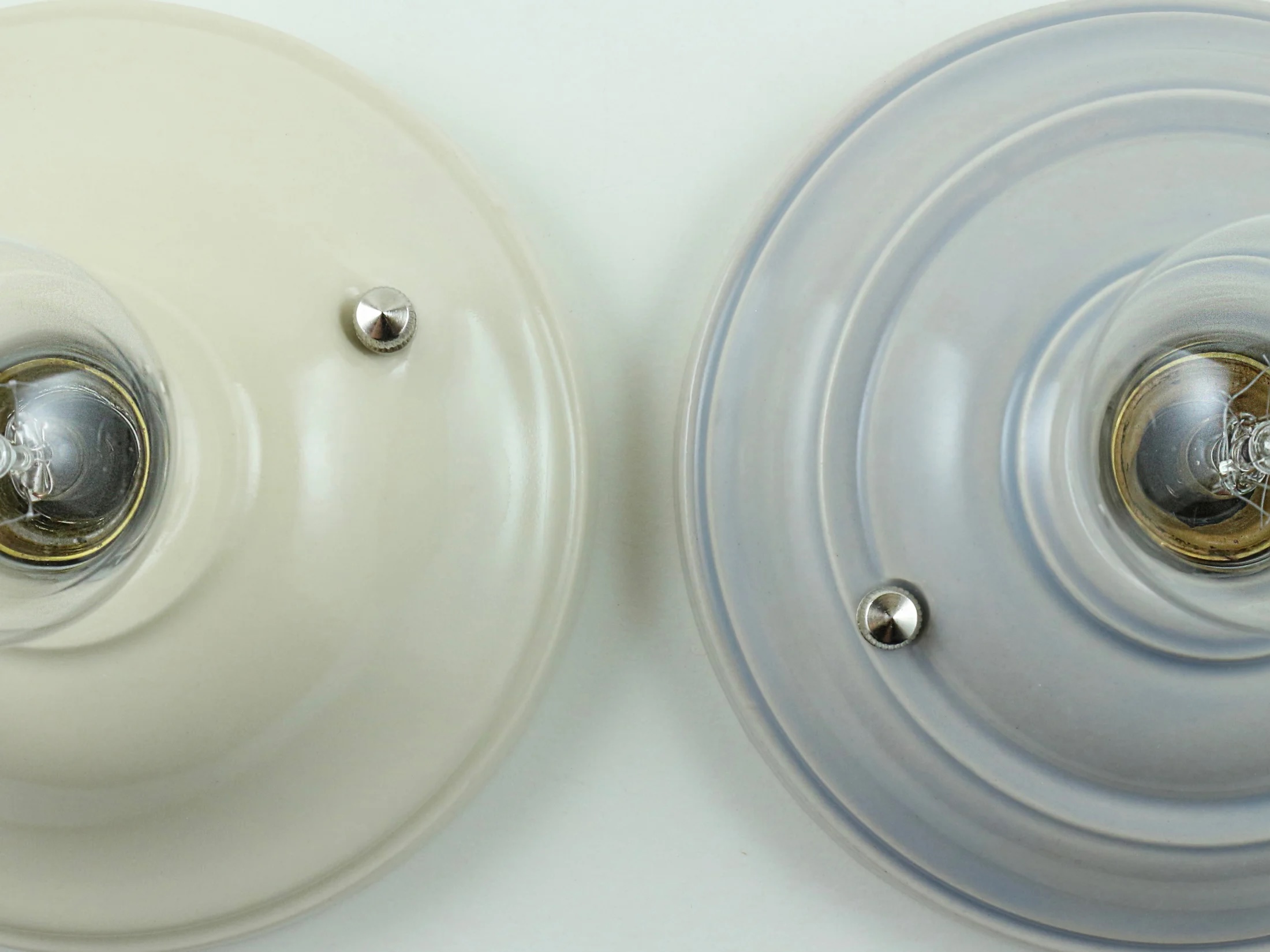
Porcelain flush-mounts are the secret weapon in this transformation. Unlike mass-produced plastic or cold metal alternatives, porcelain offers a unique combination of sculptural beauty, durability, and a soft, ethereal light-diffusing quality that is impossible to replicate. When illuminated, the clay body takes on a translucent glow, softening the harshness of LED bulbs and casting a warm, inviting light that feels more like a candlelit room than a modern interior. This material doesn't just hold light; it cradles it.

The 2026 Aesthetic: Biophilic, Japandi, and Mediterranean Textures
The design landscape of 2026 is defined by a craving for the "hand-touched." We are seeing a significant move away from the hyper-polished, sterile finishes of the early 2020s toward something more grounded and visceral. In 2026, porcelain lighting fixtures align perfectly with the rising 'biophilic' and 'Japandi' design trends, emphasizing organic materials and earthy glazes.
This aesthetic isn't just about looks; it’s about a feeling of permanence. The Mediterranean-inspired textures—think of the rough-hewn surfaces of an Alentejo farmhouse or the smooth, matte finish of a Cycladic villa—bring a sense of history into contemporary homes. Porcelain, as a medium, allows for these nuances. Whether it’s a glaze that mimics the subtle crackle of an antique vase or a raw, unglazed bisque finish that feels like stone, these fixtures serve as an anchor in a room, connecting the sleek lines of modern furniture with the timeless irregularities of the earth.

The 'Napkin Light' and Biomorphic Silhouettes
One of the most exciting developments in ceramic lighting is the departure from strict, industrial geometry. Designers are now treating clay like fabric, creating what I like to call 'napkin lights'—fixtures that appear to be draped or frozen in a state of fluid motion. These biomorphic silhouettes move beyond the standard dome or cylinder, offering pod-like forms, seed archetypes, and rippling textures that suggest a weightless drift across the ceiling.
This "Neo-Deco" influence combines the streamlined elegance of 1930s lighting with a 21st-century obsession with minimalism. A porcelain fixture with a scalloped edge or a gentle, asymmetrical curve provides a visual "pause" in a room. It draws the eye upward, not because it is flashy, but because its form feels inherently right, as if it grew there naturally rather than being installed.
Editor’s Tip: When choosing a sculptural fixture, consider how it looks when it’s off. A truly sophisticated porcelain flush-mount should function as a ceiling sculpture during the day, catching natural shadows in its ridges and folds.
Spotlight: MacLaren Fixtures Co – The Designer’s Secret Source
If you were to peek into the mood boards of the industry's top architects and designers right now, you would likely find the name MacLaren Fixtures Co. Based in Long Island City, John MacLaren has carved out a niche that perfectly captures this intersection of historic reverence and modern craft. Originally known for high-end custom furniture, MacLaren pivoted to lighting with a focus on the "architectural jewelry" of the home.
What makes MacLaren the definitive source for 2026 home decor lighting is the attention to the minute details. Every fixture is handcrafted, featuring bespoke elements like custom-machined thumb screws and the signature 'cove profile'—a silhouette that creates a soft transition between the light source and the ceiling. This isn't just lighting; it's a piece of Long Island City's artisanal heritage brought into the domestic sphere.
Customization and the Artisanal Timeline
The true luxury of porcelain lighting lies in the ability to customize. Unlike a metal fixture that comes in "Gold" or "Black," ceramic glazes offer a painterly palette. At MacLaren and similar high-end studios, the nomenclature of color has become poetic:
- 'Packed Snow': A soft, matte white with subtle crystalline depths.
- 'Cloud Dancer': A pale, ethereal grey that shifts with the afternoon light.
- 'Boiled Lobster': A daring, high-gloss terracotta that adds a Mediterranean punch to a neutral kitchen.
However, sophistication requires patience. Custom porcelain lighting typically involves a meticulous production process with an average lead time of 8 weeks for standard orders. If you are venturing into bespoke glaze development to match a specific fabric or paint swatch, expect an additional 2-3 weeks. This timeline is a testament to the quality; each piece must be cast, dried, fired, glazed, and fired again—a process where the kiln ultimately decides the final character of the piece.

Technical Elegance: Lighting for Wellness and Function
Beyond aesthetics, porcelain is a functional powerhouse, particularly in the most demanding rooms of the house. In 2026, the focus on "Wellness Design" has turned the bathroom into a home spa, and lighting is the most critical component of that atmosphere.
| Feature | Specification | Why it Matters |
|---|---|---|
| Color Temperature | 2700 K to 3000 K | The 2026 design standard for functional yet relaxing lighting; mimics the warmth of the golden hour. |
| Material Stability | Porcelain/Ceramic | Naturally resistant to rust and corrosion, making it superior to brass or steel in humid bathrooms. |
| Diffusion | Translucent Clay | Eliminates the "hot spots" of LED bulbs, creating an even, flattering glow for skin tones. |
Handcrafted porcelain fixtures currently maintain a standard 8-week production lead time to ensure this level of artisanal quality is met before reaching the designer's hands. By specifying a 2700 K bulb behind a porcelain shade, you create a luminous environment that supports the circadian rhythm, making it the perfect choice for a master suite.

Room-by-Room Styling Guide
How do you integrate these "secret" fixtures into your home? It’s about more than just replacing a bulb; it’s about spatial anchoring.
The Entryway: A Monumental First Impression
Use a larger, weightier porcelain composition in the foyer. The matte texture of the clay provides a stunning contrast to glass front doors or polished stone floors. It signals immediately that this is a home where materials matter.
The Kitchen: Softening the Workstation
In kitchens, porcelain fixtures like cove lights provide high-quality diffusion to reduce glare on countertops. Unlike glass pendants which can feel "busy," a row of ceramic flush-mounts creates a clean, architectural line that doesn't compete with your backsplash.

The Living Room: Mixing Materials
For 2026, we are seeing a trend of "Material Layering." Pair a porcelain ceiling light with raw stone side tables or brushed brass accents. The clay acts as a neutralizer, softening the harder edges of the room and making the space feel lived-in and curated.
Conclusion: Making Lighting Personal
The secret to sophisticated decor isn't about spending the most money; it's about choosing pieces that possess a soul. As we move away from generic, anonymous decor, the handmade porcelain flush-mount stands out as a beacon of personal expression. It is a spatial anchor—a single fixture that tells a story of craftsmanship, patience, and the enduring beauty of natural materials. When you look up at a MacLaren fixture, you aren't just seeing a light; you're seeing the hands of the maker and the transformative power of clay and fire.
FAQ
Q: Are porcelain flush-mounts difficult to clean? A: Not at all. Glazed porcelain is non-porous and incredibly durable. A simple wipe with a soft, damp microfiber cloth is usually enough to remove dust. For unglazed bisque finishes, a dry sponge or a gentle brush is recommended to maintain the matte texture.
Q: Can I use high-wattage LED bulbs in ceramic fixtures? A: Yes, but with a caveat. Porcelain is excellent at handling heat, but for the best aesthetic effect, we recommend using dimmable LEDs in the 2700 K to 3000 K range. This ensures the clay glows warmly rather than appearing "washed out" by overly bright, cool light.
Q: Why does it take 8-10 weeks to receive a fixture? A: Unlike factory-made lighting, handmade porcelain requires several stages of drying and high-temperature kiln firing. Each stage carries risks of cracking or warping, so the process cannot be rushed. This timeline ensures that your fixture is structurally sound and the glaze finish is perfect.