Quick Facts
- Project Cost: $2.15 Billion
- Roof Size: 9 Acres (approx. 392,000 square feet)
- Total Timber: 3.5 Million board feet of Douglas Fir
- Sourcing Radius: 100% sourced within 300 miles of the airport
- Energy Efficiency: Projected 50% reduction in energy loads per square foot
- Seismic Design: Engineered to withstand a Magnitude 9.0 Cascadia Subduction Zone earthquake
- Architect: ZGF Architects
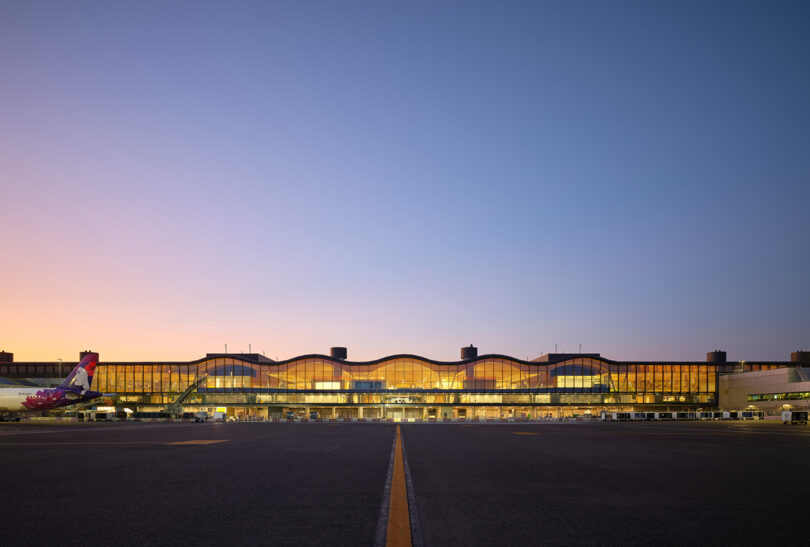
For decades, the "Jet Age" was defined by the cold, sweeping curves of reinforced concrete and the industrial skeleton of steel. Think of Eero Saarinen’s TWA Flight Center—a marvel of 1960s futurism that felt like a spaceship landed on a runway. But as we transition into an era defined by climate responsibility and a desperate need for a "sense of place," the architectural paradigm is shifting from the industrial to the biological. Nowhere is this more evident than at Portland International Airport (PDX).
The new terminal expansion isn't just a logistical upgrade; it is a $2.15 billion love letter to the Pacific Northwest (PNW). By swapping traditional steel for a massive, undulating nine-acre timber roof, the Port of Portland and ZGF Architects have created what is essentially a "forest in the city." As someone who has spent years advocating for energy-efficient home solutions and sustainable materials, I see the PDX expansion as more than just a public works project—it is a global template for how we can build at a civic scale without sacrificing the health of our planet.
Why did Portland Airport choose a timber roof over steel? PDX chose mass timber to drastically reduce its embodied carbon footprint, support the local Pacific Northwest economy, and create a biophilic environment. By utilizing wood instead of steel and concrete, the project significantly lowered the energy required for manufacturing and transportation, while the modular timber "cassette" construction allowed the airport to remain fully operational during a complex installation process.
The Engineering Feat: 3.5 Million Board Feet of Innovation
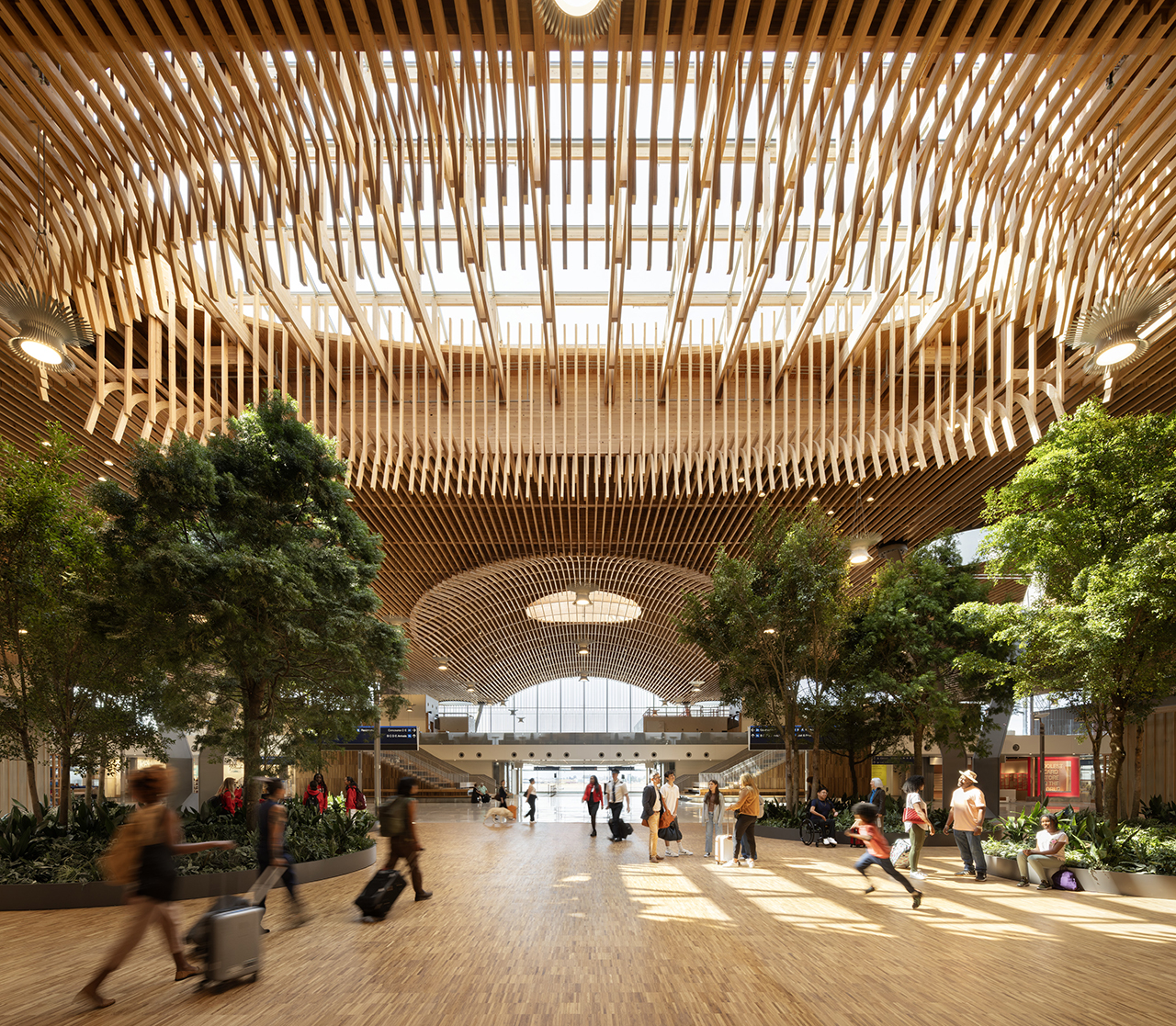
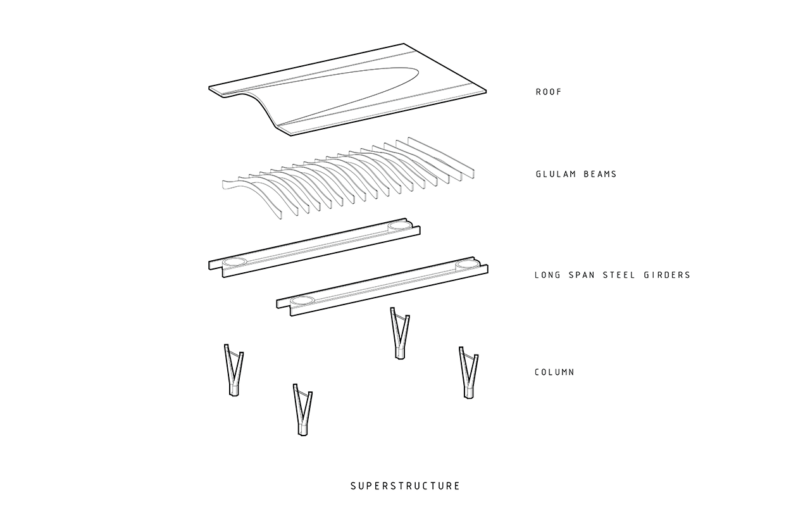
To appreciate the scale of this project, you have to look past the aesthetics and into the raw data. The roof is composed of approximately 3.5 million board feet of Douglas Fir. This isn't just "wood"; it is a sophisticated assembly of high-performance mass timber products engineered to perform structural tasks that were once reserved exclusively for steel.
The structural breakdown is a masterclass in modern material science:
- Glulam Arches: 2 million board feet were used for the massive glue-laminated (glulam) beams that form the primary structural curves.
- Mass-Plywood Panels (MPP): 850,000 board feet were converted into mass-plywood, a relatively new innovation from Freres Engineered Wood that offers incredible strength-to-weight ratios.
- Lattice Structure: 600,000 board feet make up the intricate lattice that filters light and provides the ceiling’s unique texture.
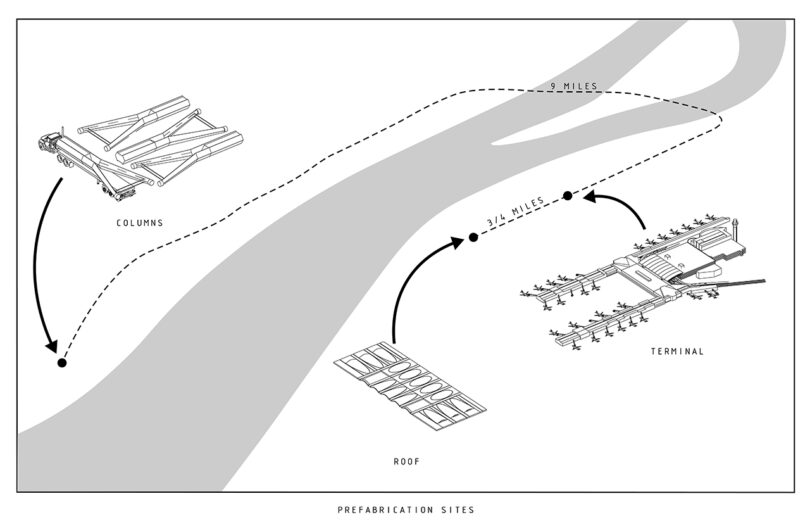
One of the most impressive logistical feats was the "Cassette" construction method. Rather than building the roof plank by plank over the heads of travelers, the team constructed the roof in 18 massive sections (or cassettes) on the airport's tarmac. These cassettes—each weighing up to 600,000 pounds—were then transported across active taxiways and hoisted into place using specialized hydraulic jacks.
While the roof is primarily timber, it sits on a foundation of 34 steel Y-columns. Each column weighs 96,000 pounds and is filled with thermal grout. This hybrid approach ensures that the structure can handle a "Big One"—a Magnitude 9.0 earthquake—by allowing the roof to move independently of the ground while maintaining its fireproofing integrity.
Sustainable Sourcing: A 300-Mile Radius Story
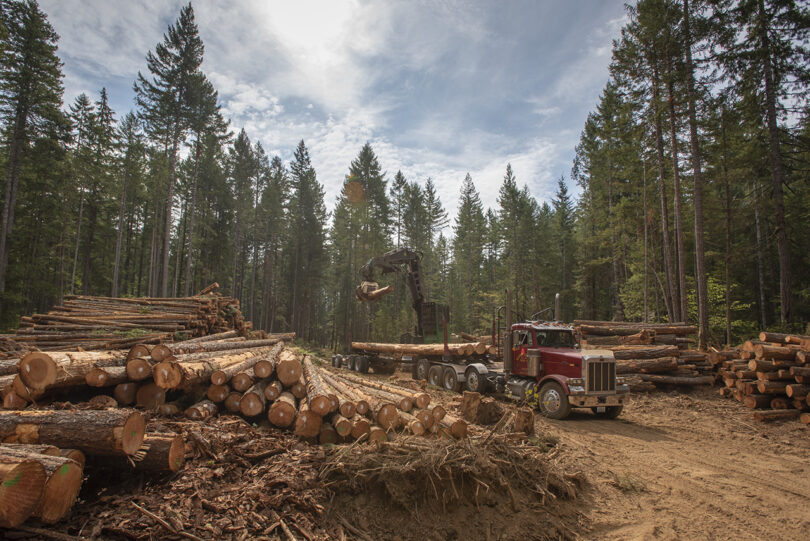
In the world of sustainable living, we often talk about "food miles." At PDX, they applied this concept to "timber miles." One of the most common criticisms of large-scale timber projects is that the carbon benefits are negated if the wood is shipped across oceans. PDX solved this through a radical commitment to hyper-local sourcing.
Where was the wood for the PDX roof sourced? 100% of the timber was sourced from within a 300-mile radius of Portland. Crucially, the Port of Portland prioritized transparency: 73% of the wood came from family-managed forests, small woodlots, and tribal landowners (including the Coquille Indian Tribe and the Cow Creek Band of Umpqua Tribe of Indians) who practice ecologically responsible, climate-smart forestry.
This sourcing strategy did more than just lower the carbon footprint; it revitalized the regional economy. By working with local mills like Zip-O-Laminators in Eugene and Freres in Lyons, the project kept investment within the Pacific Northwest, supporting small-town economies that have been the backbone of the region for generations.
The level of traceability in this project is unprecedented. Every single plank was tracked through BIM (Building Information Modeling) and even QR codes. This allowed architects to trace a specific beam back to the specific forest and even the specific landowner. For a sustainability editor, this is the "holy grail" of supply chain transparency. It proves that we can build massive infrastructure while being direct stewards of the land we harvest from.
Biophilic Design: Bringing the Forest to the Terminal
"Biophilia" is the innate human tendency to seek connections with nature and other forms of life. In airport design, this is often ignored in favor of sterile, wipe-clean surfaces. PDX takes the opposite approach. The goal was to create a "sense of place"—a feeling that you have arrived in Oregon the moment you step off the plane, even before you clear security.
The design creates an interior ecosystem through several key elements:
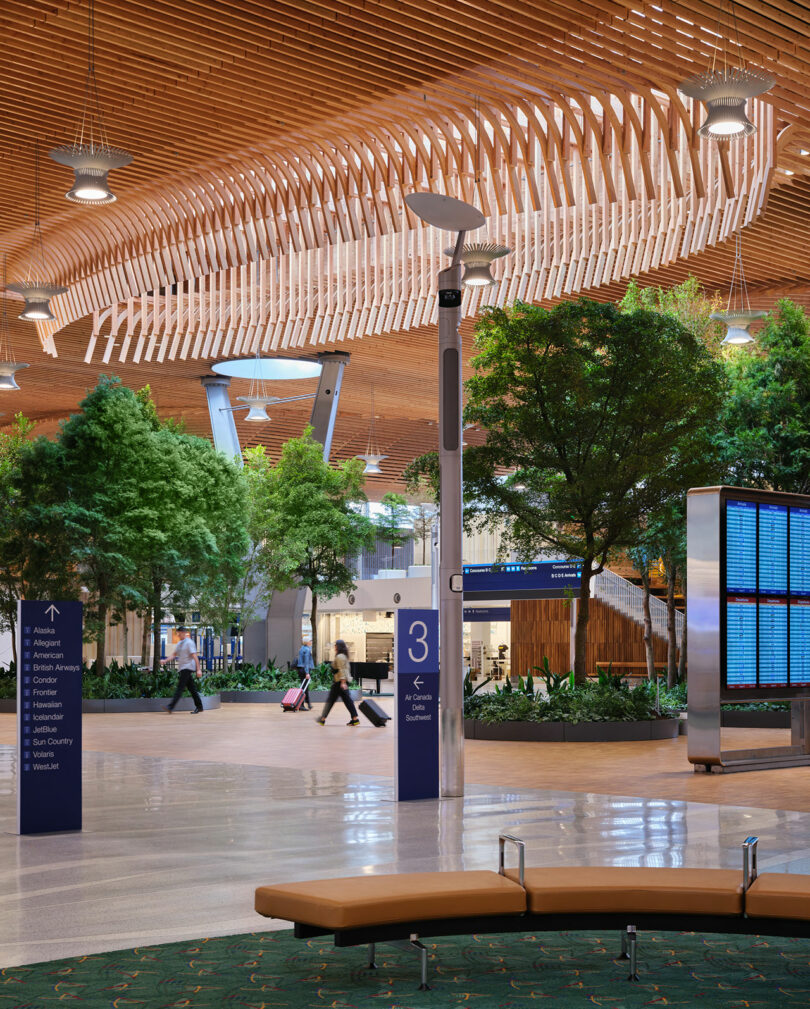
- A Forest of Columns: The Y-columns branch out like trees, supporting the vast timber canopy above.
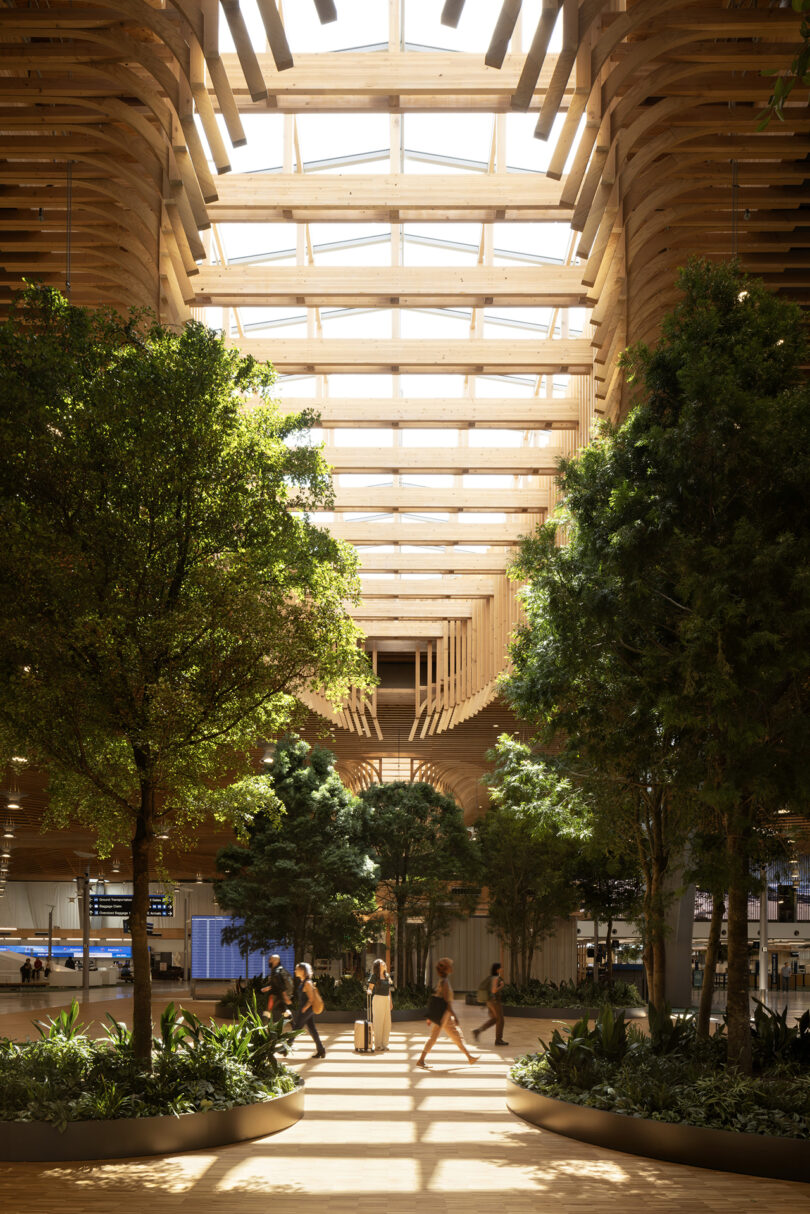
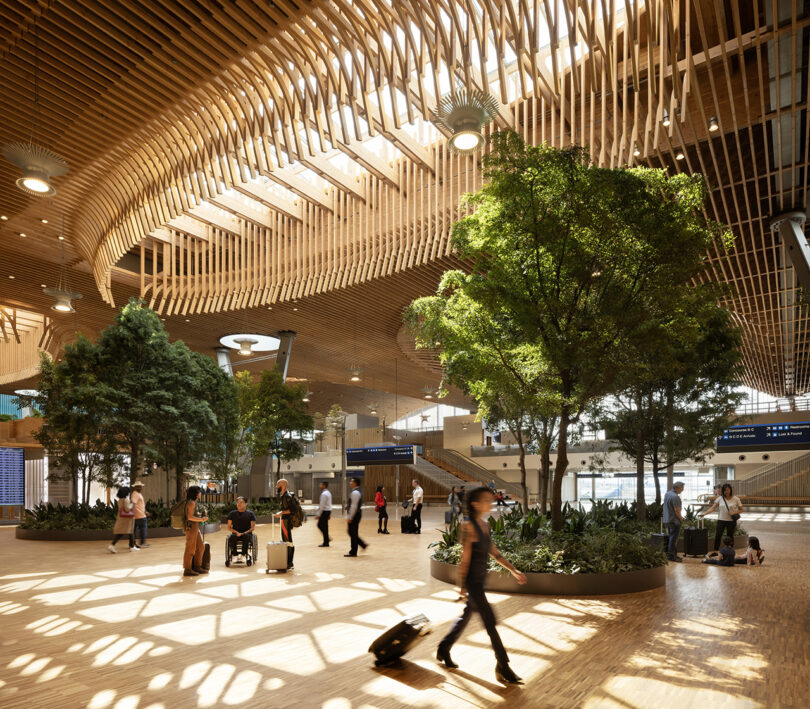
- Live Vegetation: The terminal features over 70 live trees and thousands of regional plants arranged in "parkland" plazas. These aren't just for show; they help filter the air and provide a calming acoustic environment.
- Dappled Light: The lattice structure of the roof, punctuated by skylights (oculi), is designed to mimic the "dappled light" effect found when walking through a dense forest clearing.
The psychological impact of this cannot be overstated. Travel is inherently stressful. Studies have shown that environments featuring natural wood and greenery significantly lower heart rates and cortisol levels in humans. By choosing timber over steel, PDX has turned a transit hub into a restorative space.
Efficiency Under the Hood: Reducing Energy Loads by 50%
While the timber roof is the visual star, the energy systems beneath it are equally revolutionary. As a sustainable living editor, I look for "deep efficiency"—the kind that isn't just a LEED plaque on the wall but a fundamental rethink of building performance.
The new terminal project features a ground-source heat pump system that is projected to reduce building energy loads by 50% per square foot. This system utilizes the earth's stable temperature to heat and cool the massive space, moving away from the carbon-heavy HVAC systems of the past.
Comparison: Mass Timber vs. Traditional Composites
| Feature | Mass Timber (PDX) | Traditional Steel/Glass |
|---|---|---|
| Embodied Carbon | Negative (Carbon Sequestration) | Extremely High (Smelting/Mfg) |
| Thermal Performance | Natural Insulation Properties | High Thermal Bridging |
| Construction Speed | Fast (Prefabricated Cassettes) | Slower On-site Assembly |
| Well-being Impact | High (Biophilic) | Low (Sterile) |
| Seismic Resilience | Flexible/Resilient | Rigid/Requires Dampers |
The wood itself contributes to this efficiency. Mass timber has natural insulating properties and a low thermal mass, meaning it doesn't "soak up" and radiate heat in the same way that a steel-and-glass box does. This makes the overall climate control of the terminal far more predictable and less energy-intensive.
Conclusion: The Future of Civic-Scale Timber
The Portland International Airport expansion is a watershed moment for sustainable engineering. It proves that we do not have to choose between massive scale and environmental integrity. By swapping steel for wood, PDX has created a structure that is more resilient, more energy-efficient, and more deeply connected to its local community than any airport in modern history.
With Phase 1 now open and Phase 2 completion slated for 2026, the world’s eyes are on Portland. As we look for ways to decarbonize our built environment, PDX stands as a glowing beacon of what is possible when we stop trying to dominate nature and start learning how to build with it.
FAQ
1. Is a timber roof actually safe in a fire compared to steel? Counter-intuitively, yes. While steel begins to buckle and lose structural integrity at high temperatures, large mass timber beams "char" on the outside. This char layer acts as an insulator, protecting the structural core of the beam and allowing it to maintain its load-bearing capacity for much longer during a fire. The PDX roof meets or exceeds all modern fire safety codes.
2. How did they ensure the wood was harvested sustainably? The project utilized a rigorous traceability program. 73% of the wood came from FSC-certified family forests or tribal lands where forestry practices focus on long-term forest health rather than clear-cutting. Every beam can be traced back to its forest of origin via QR codes and digital tracking.
3. Does the timber roof require more maintenance than steel? Inside the terminal, the timber is protected from the elements, meaning it requires very little maintenance—mostly routine inspections and cleaning. Because the roof is a "living" material, it actually handles the natural vibrations and expansions of a large building more gracefully than rigid steel in many cases.