Proportion is the silent architect of our living spaces. For decades, we have been conditioned to see furniture as a series of static anchors—objects designed to stay exactly where they are placed until the next major renovation. But as the boundaries between our professional and private lives blur, the rigid structures of the past are giving way to a more fluid philosophy. In an era where the home must transform from an office to a gallery to a dining hall within the span of a single afternoon, the concept of "adaptive mobility" has moved from a niche requirement to a central design pillar.
Internal data suggests that a staggering 78% of modern urban dwellers now prioritize furniture with adaptive mobility to accommodate these multi-use living spaces. This shift is not merely about adding casters to a coffee table; it is a fundamental reimagining of how furniture interacts with the floor and the inhabitant. We are witnessing the "Rolly Evolution," a movement where the utilitarian becomes the spectacular, spearheaded by the subversion of traditional scale.
The Rise of 'Adaptive Mobility' in Modern Interiors
The evolution of the mobile table represents a departure from the "invisible" caster. Historically, wheels on furniture were treated as unsightly necessities—small, metallic, and tucked away under skirts or recessed into legs to avoid breaking the visual line. However, as our spaces become smaller and our needs more varied, the need to move a heavy dining or work surface has become a daily reality.
The current trend toward oversized wheels—led by visionaries like Mike & Maaike—transforms the wheel from a hidden tool into a bold visual statement. This isn't just a design "hack"; it's a response to the way we live now. When a table can glide across a room with the nudge of a finger, the room itself becomes dynamic. The "Rolly" philosophy suggests that mobility should not be an afterthought, but the very soul of the piece. By enlarging the wheels to extreme proportions, designers are solving the physics of movement while creating a high-impact sculptural presence.
Spotlight: The Rolly Table by Mike & Maaike
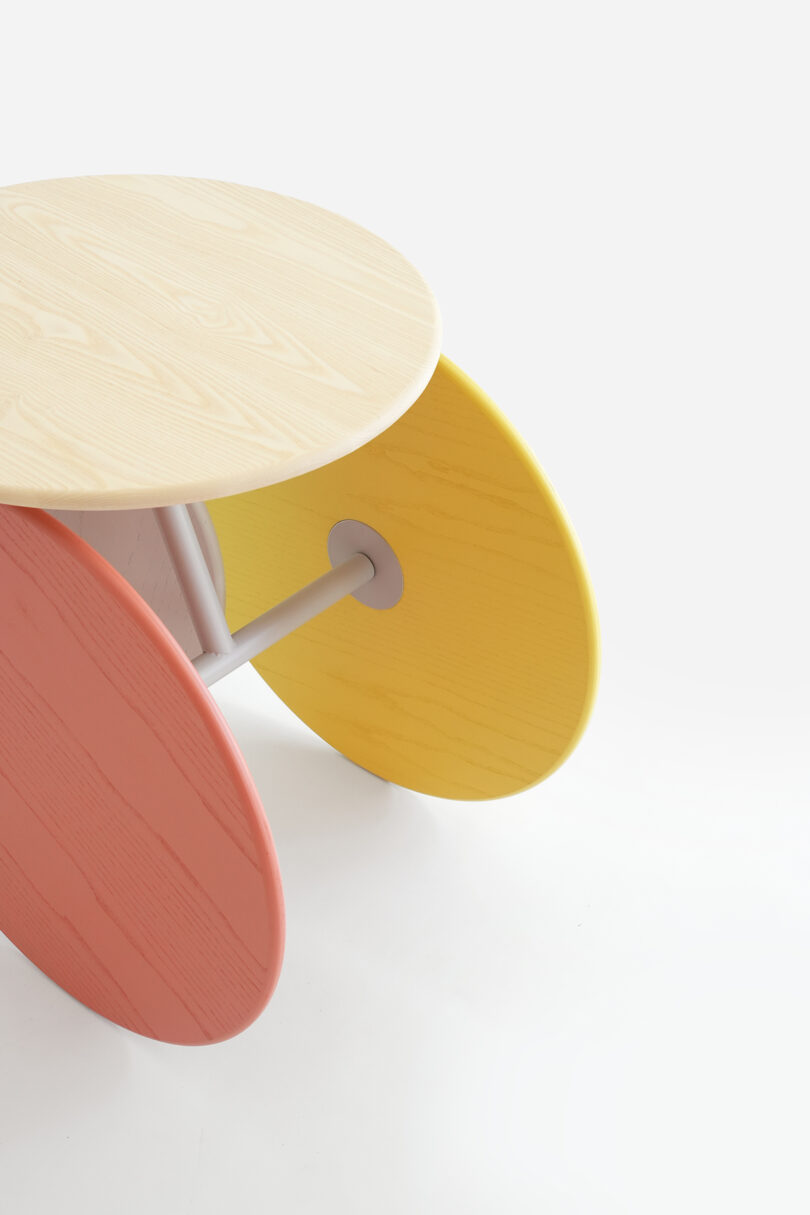
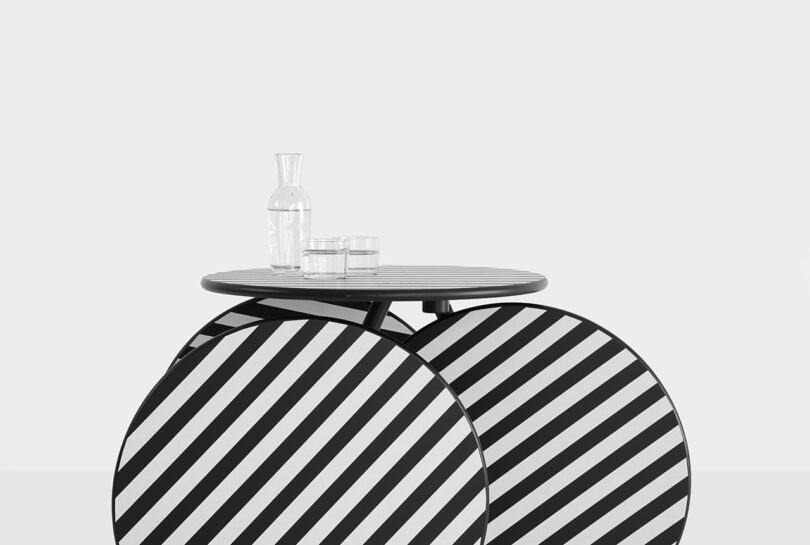
At the heart of this movement is the Rolly table, a collaboration between the acclaimed design studio Mike & Maaike and the furniture brand Antarria. The Rolly is perhaps the most distilled example of how sculptural art can blend with functional movement. Rather than traditional legs, the Rolly utilizes three oversized circular elements as its foundation.
What makes the Rolly particularly compelling is its material honesty. Crafted primarily from solid birch, the table celebrates the warmth and grain of natural wood, contrasting it against a hidden, minimal steel frame that provides the necessary structural integrity. This combination ensures that despite its whimsical appearance, the table feels grounded and permanent.
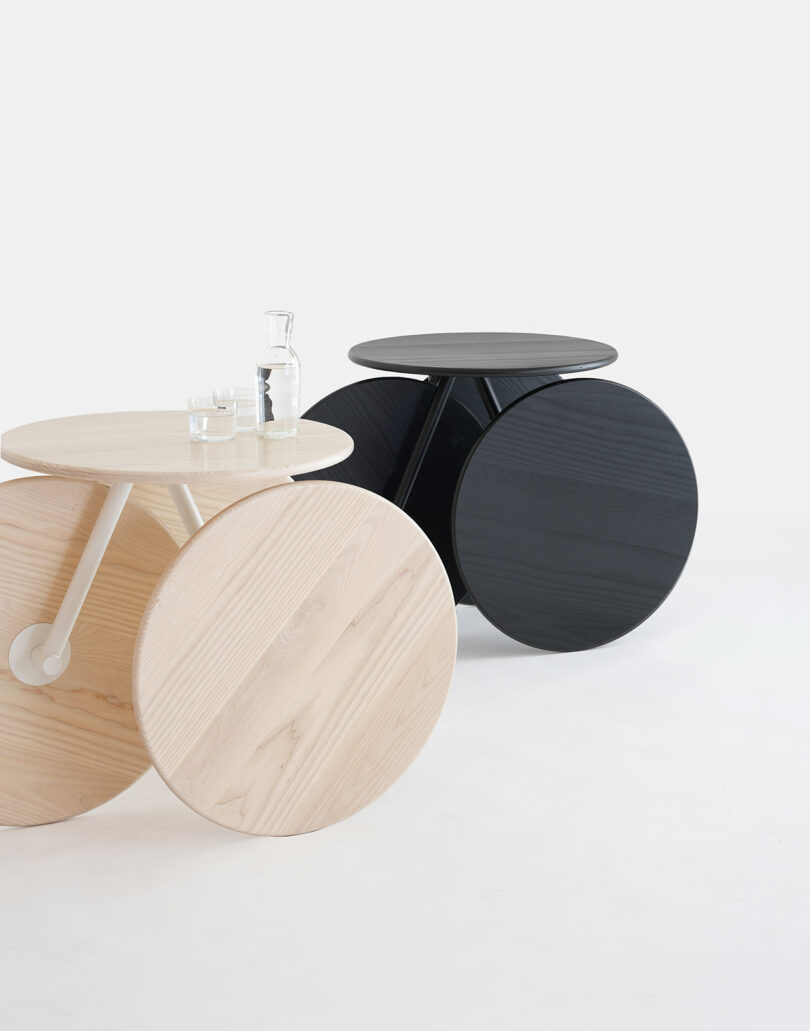
The aesthetic versatility of the Rolly is another reason it has captured the attention of the design world. It is available in several distinct finishes that highlight the birch's versatility:
- Natural Birch: A soft, satin finish that allows the distinctive grain variance to shine, perfect for Japandi or Scandinavian-inspired interiors.
- Black-and-White Stripes: A hand-painted, graphic iteration that turns the table into a piece of kinetic op-art.
- Terra Cotta Washes: A earthy, warm tone that bridges the gap between modern minimalism and organic, artisanal textures.
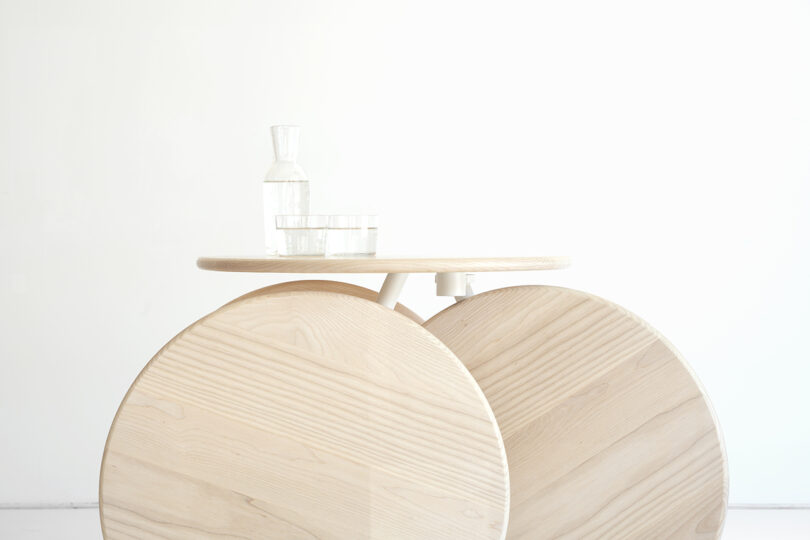
Ivy’s Insider Tip: When choosing a mobile table for a multi-purpose room, look for "hidden engineering." The Rolly’s steel frame is invisible to the eye, but it’s the reason the table can support a full dinner service without a hint of wobble.
Subverting Proportion: Why Larger is Better
There is a psychological shift that occurs when we see a familiar object at an unfamiliar scale. By enlarging the wheels of a table to nearly the height of the tabletop itself, designers like Mike & Maaike are playing with our perceptions of stability and weight. In traditional furniture, a high center of gravity is often a liability. However, the physics of the oversized three-wheel base creates a surprisingly secure foundation.
The "Rudder" effect is perhaps the most delightful aspect of this design. Unlike standard four-caster tables that can feel skittish or difficult to steer, the three-wheel configuration allows for a deliberate, elegant navigation through a room. It feels less like pushing furniture and more like guiding a vessel.
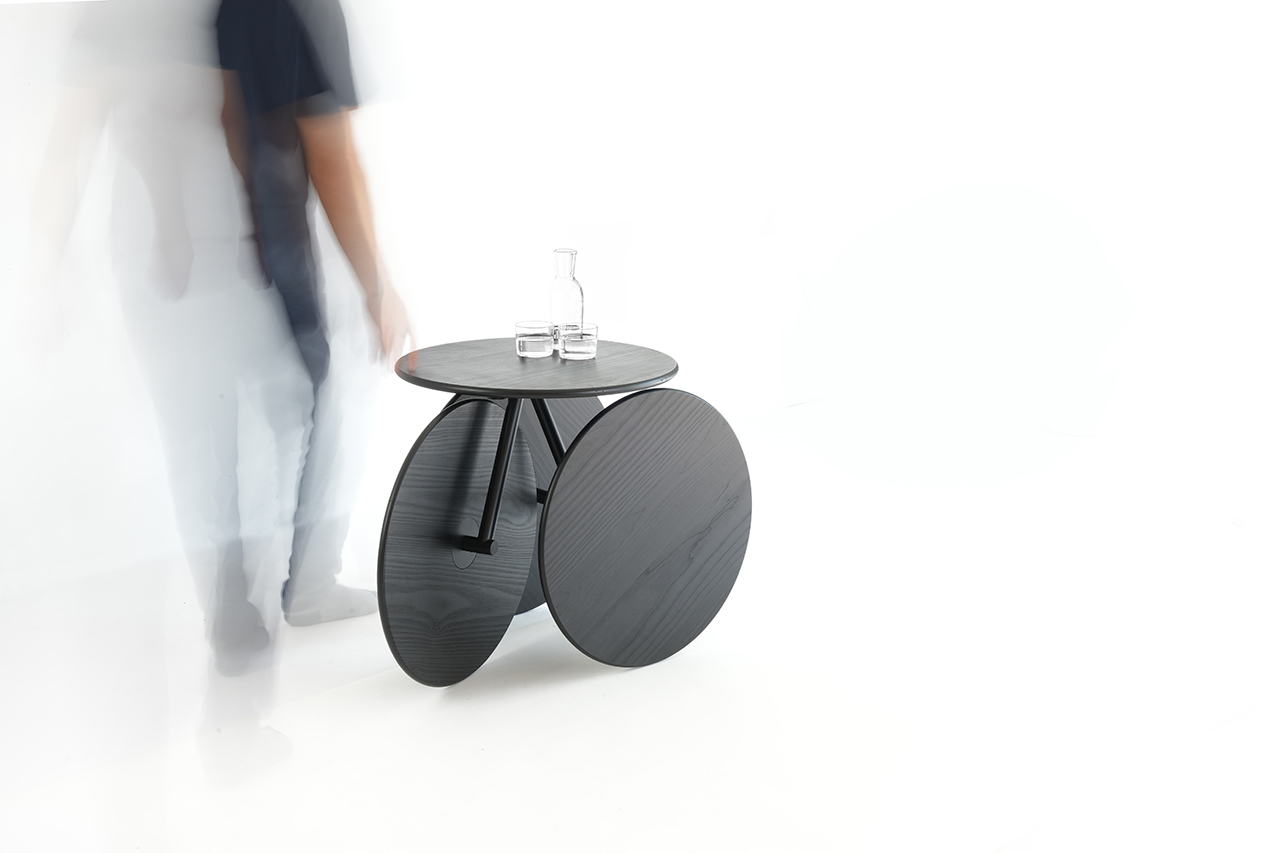
The oversized wheel also serves a practical purpose that small casters cannot: it negotiates transitions between different floor types—from hardwood to high-pile rugs—with ease. It brings a sense of "larger than life" playfulness to the home, proving that the most functional parts of our environment can also be the most beautiful.
2026 Trends: The Convergence of Sculpture and Function
As we look toward the 2026 interior design cycle, the "Functional Sculptural" category is projected to dominate. We have already seen a 42% increase in search interest for furniture that bridges the gap between utility and fine art. The industry is moving away from the "disposable" aesthetic of the last decade toward pieces that have a commanding presence.
In 2026, we expect to see a focus on:
- Tactile Materiality: The use of natural solid birch, microcement, and sand-blasted glass to create surfaces that demand to be touched.
- Graphic Geometry: Bold patterns, like the Rolly’s black-and-white stripes, will be used to break up the monotony of minimalist rooms.
- Satin Finishes: Moving away from high-gloss or completely matte looks, the satin finish provides a subtle glow that highlights material grain under varied lighting conditions.
Beyond the Rolly, brands like Roche Bobois and Antarria are leading the charge in sculptural base movements, experimenting with gravity-defying shapes and oversized industrial components. The message is clear: the base of the table is no longer just a support system; it is the main event.
Styling the Rolling Table in Your Space
Integrating a piece as bold as a rolling table requires a thoughtful approach to styling. Because these tables carry so much visual "weight" at the floor level, the surrounding environment should be curated to let the piece breathe.
1. The Serving Cart vs. The Static Piece Don't be afraid to use your mobile table for its intended purpose. In a dining context, a Rolly table in a natural finish makes for an exceptional oversized serving cart or a mobile bar. Conversely, in a living room, it can act as a static focal point, holding a curated stack of oversized art books or a single, sculptural vase.
2. Pairing Graphic Patterns If you opt for a bold pattern like the hand-painted stripes, keep the surrounding rug neutral. A monochrome jute or a low-pile cream wool rug will provide the perfect canvas for the table’s kinetic energy.
3. Maintenance of Birch and Satin To keep your designer furniture looking its best:
- Dusting: Use a soft, dry microfiber cloth. Avoid silicone-based polishes which can build up and dull the satin finish.
- Moisture: Birch is a hardwood but remains sensitive to extreme humidity. Use coasters for all glassware to prevent ring marks on the satin finish.
- Wheel Care: Periodically check the hidden frame and wheel pivots for any debris to ensure the "glide" remains effortless.
FAQ
Q: Is a three-wheeled table stable enough for everyday use? A: Yes, especially designs like the Rolly. The oversized nature of the wheels provides a wide footprint, and the hidden steel frame ensures the weight is distributed evenly. While it moves easily when pushed, it remains remarkably stable when stationary.
Q: Can these tables be used on carpet? A: Unlike small, standard casters that get stuck in carpet fibers, oversized wheels are designed to glide over various surfaces. However, for the best "rudder" experience, a low-pile rug or hard flooring is ideal.
Q: What makes birch the preferred wood for these designs? A: Birch offers a unique combination of strength and lightness. It has a fine, even grain that takes satin finishes and paints (like the Rolly’s stripes) exceptionally well, making it the perfect medium for furniture that needs to be both durable and artistic.
Conclusion
The redefinition of the table through oversized wheels is more than a passing trend; it is a reflection of our changing relationship with our homes. By elevating a utilitarian component to a work of art, designers like Mike & Maaike are teaching us that we don't have to choose between beauty and movement. The Rolly table and the broader "Adaptive Mobility" movement represent the future of the modern home—a space that is as flexible as it is sophisticated, and as playful as it is functional. As we move into 2026, expect to see more of these "functional sculptures" rolling into the center of the design conversation.