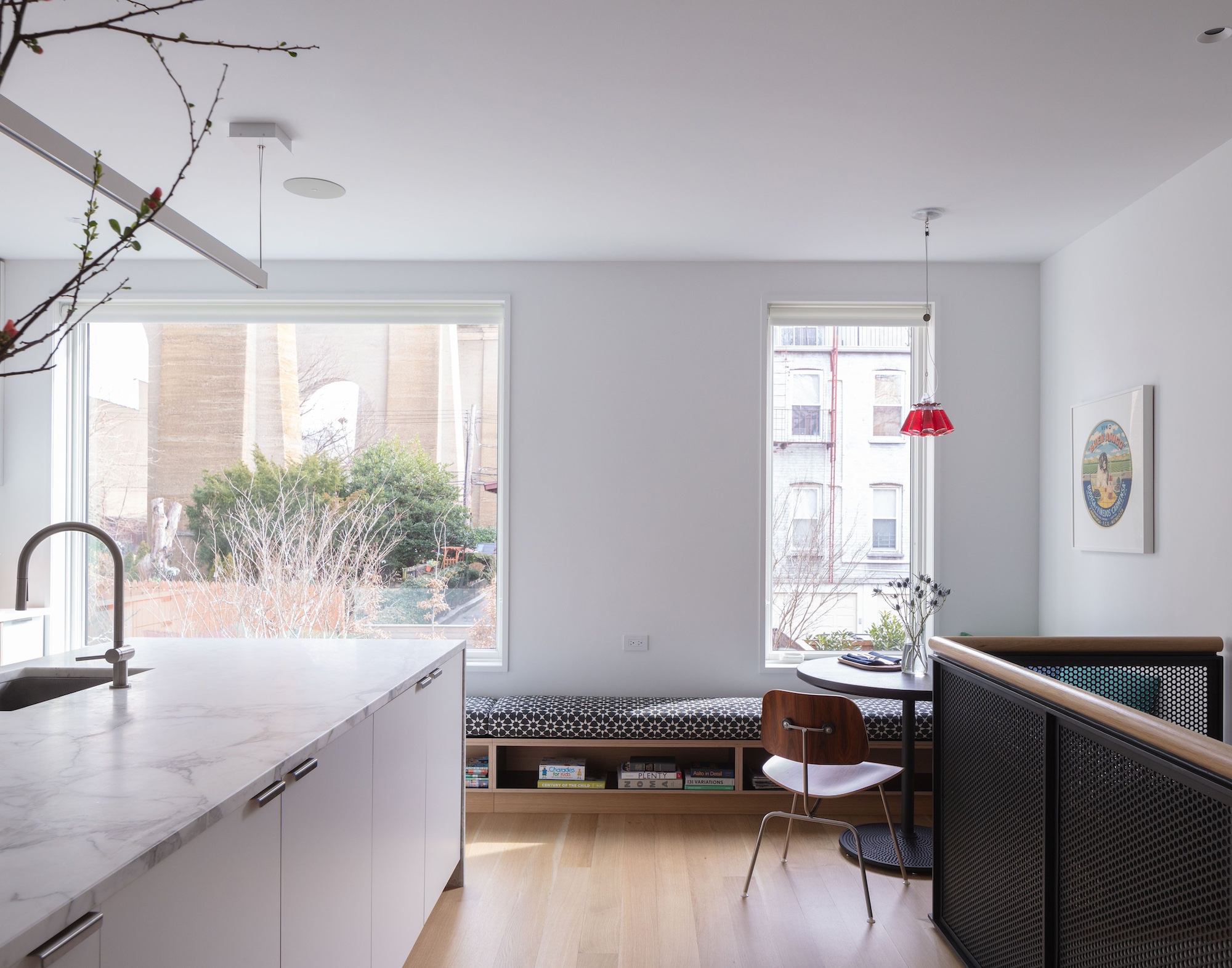
Walking down a tree-lined street in Astoria, you see the familiar rhythm of 1920s brick row houses—those sturdy, dependable silhouettes that have defined the Queens skyline for a century. From the sidewalk, one particular home looks exactly as it did during the Jazz Age: deep red masonry, a classic stoop, and the quiet dignity of a pre-war build. But step across the threshold, and the narrative shifts entirely. Under the shadow of the Hell's Gate Bridge, we are witnessing a "House Next Door" revolution. What was once a drafty, compartmentalized relic has been reimagined as a beacon of 21st-century performance, proving that we don’t have to sacrifice our architectural heritage to achieve a carbon-neutral future.
Modernizing a 1920s row house sustainably requires more than just a kitchen update; it demands a holistic "whole-house" philosophy. To achieve true efficiency, we implement passive house principles: sealing the building envelope to eliminate drafts, installing high-efficiency heat pumps for climate control, and adding Energy Recovery Ventilators (ERVs) to provide filtered fresh air. The goal is a home that remains whisper-quiet and thermally stable, all while preserving that iconic Queens facade.
The Vision: Implementing Passive House Style in Historic Envelopes
The primary challenge of a Queens row house renovation is the "envelope." In the 1920s, air leakage was considered ventilation. Today, we know better. To transform these structures into high-performance homes, we look toward Passive House standards without necessarily seeking the full certification, which can be cost-prohibitive for some.
The strategy begins with airtightness. By meticulously sealing every gap in the original masonry and joist pockets, we create a thermal bridge-free environment. This is followed by the installation of a dedicated ERV system. Think of the ERV as the "lungs" of the house; it constantly exhausts stale air from kitchens and bathrooms while pulling in fresh, filtered air from outside, capturing the heat in the process. When you combine this with high-efficiency air-source heat pumps, the result is a home that requires a fraction of the energy to stay warm in a New York winter or cool in a humid August.
Lucas’s Pro Tip: When sealing a historic home, never use standard spray foam against old brick. Historic masonry needs to "breathe" to some extent to allow moisture to migrate. We recommend using vapor-intelligent membranes that protect the structure while keeping the interior airtight.
Interior Redesign: Minimalist Flow and Light Reflection
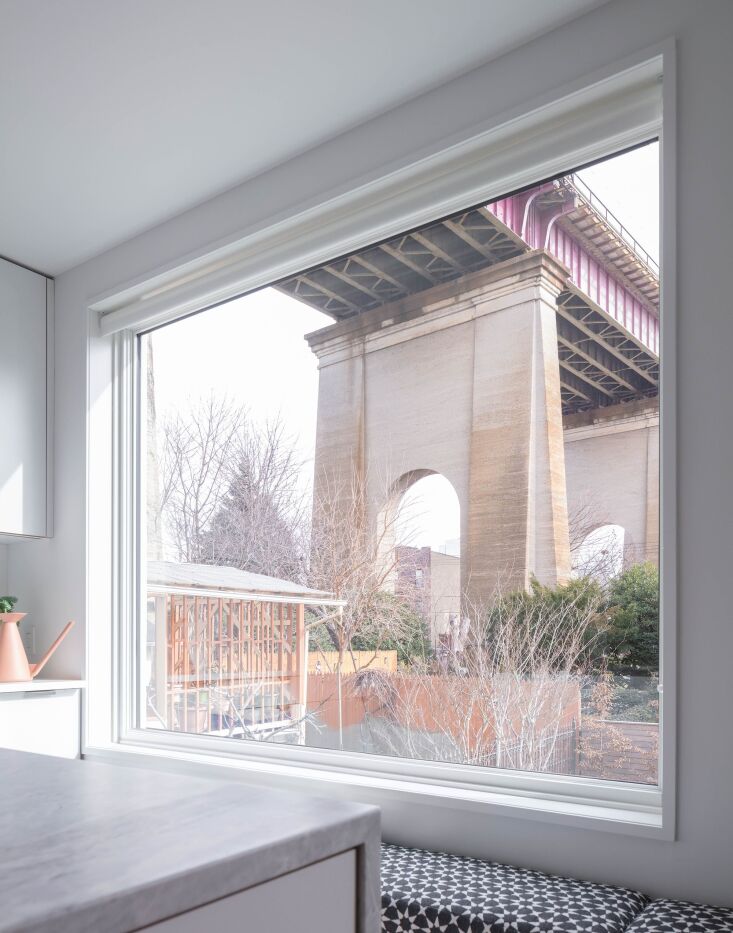
The original 1920s layout was a series of small, dark rooms designed to contain heat and smells. Our modern intervention flips this script. By removing non-structural partitions, we’ve connected the kitchen directly to the family room, creating a "great room" effect that allows light to penetrate from the front of the house all the way to the back.
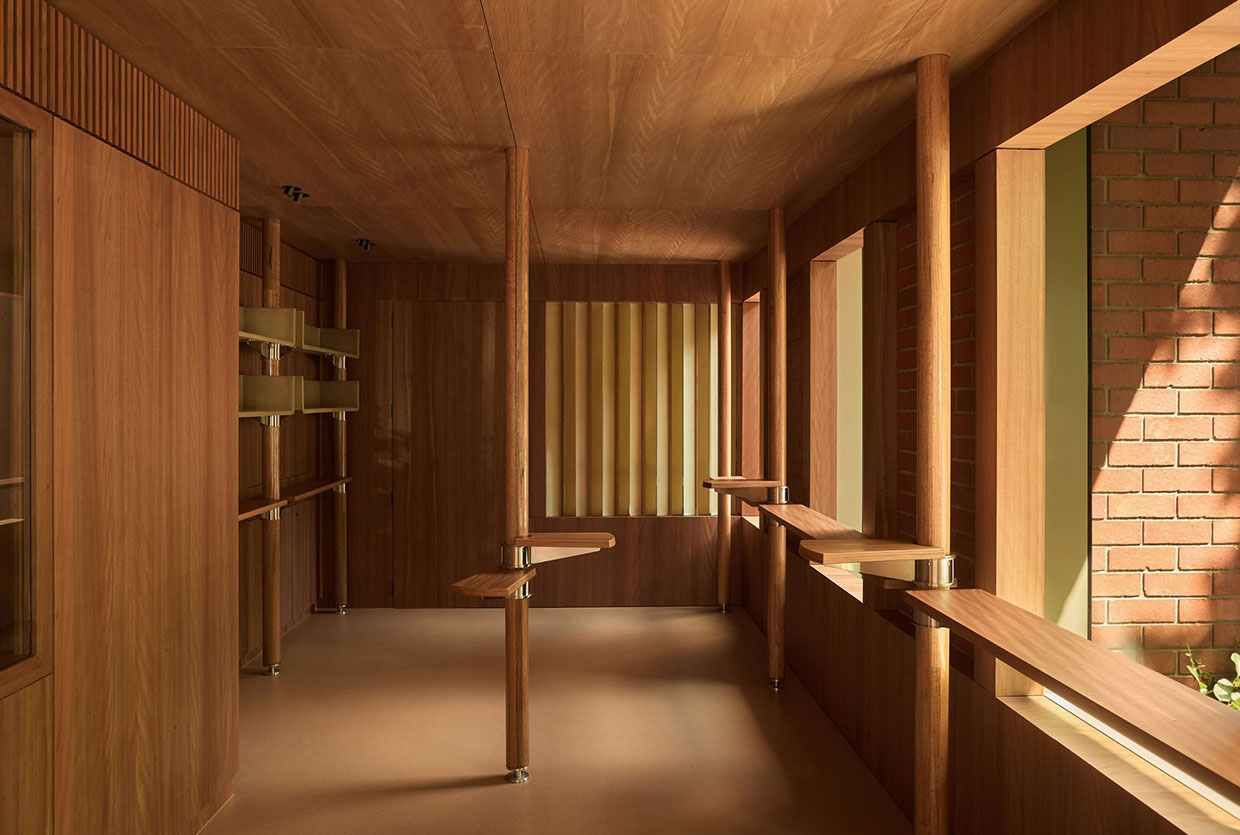
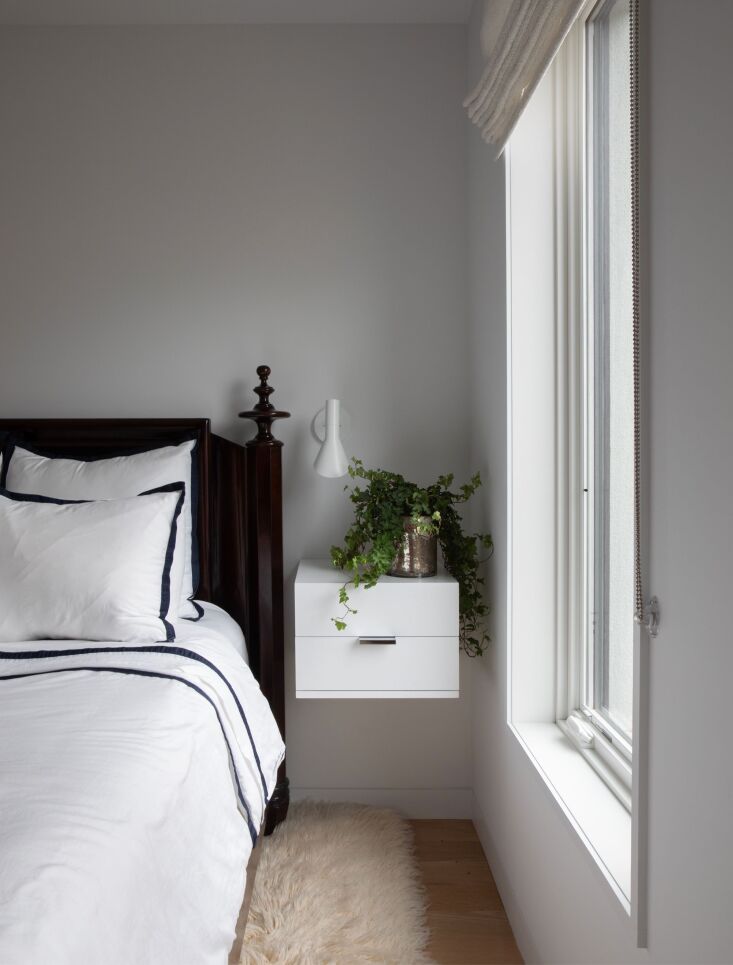
Materiality plays a crucial role in this transformation. We opted for 3/4-inch solid rift sawn white oak flooring throughout. This isn't just an aesthetic choice; rift sawn wood is incredibly stable and handles the expansion and contraction of the Northeast climate far better than standard cuts. To maximize the sense of volume, the walls are finished in Benjamin Moore’s "Chantilly Lace"—a crisp, reflective white that bounces the limited urban light into every corner.
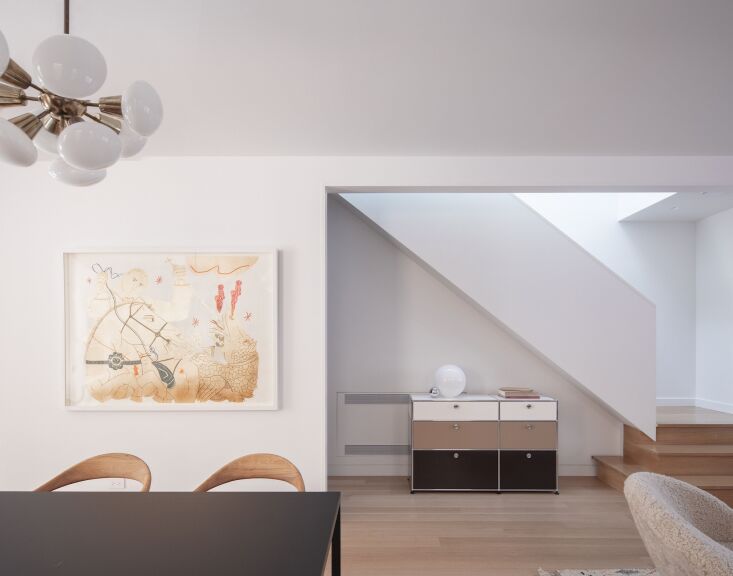
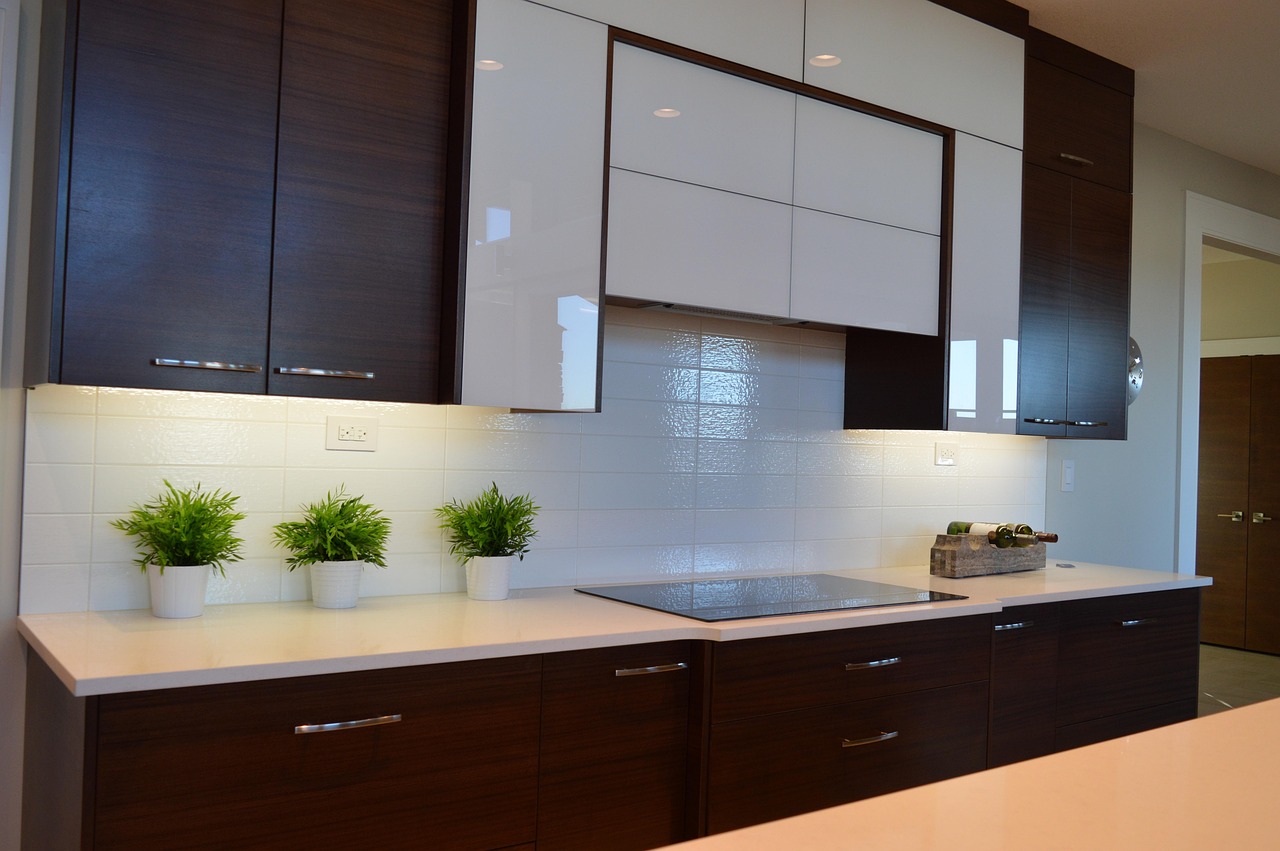
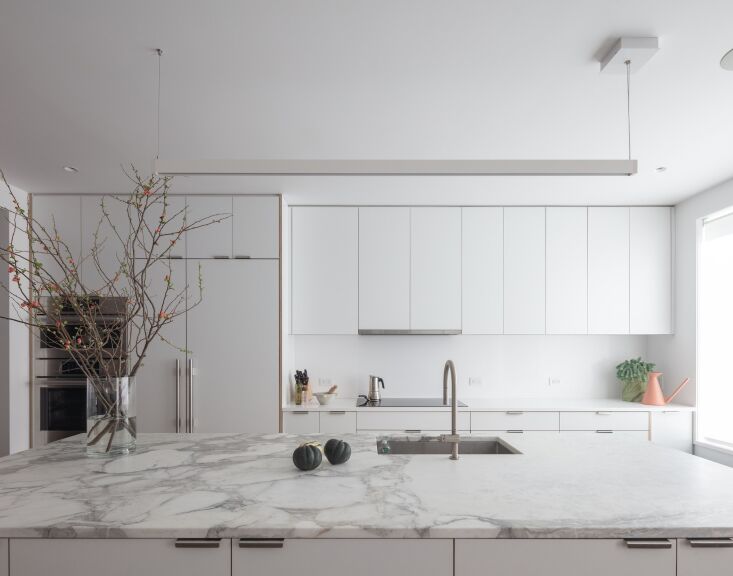
The "Modern Heritage" look is achieved by balancing these minimalist finishes with warm, organic textures. In the kitchen, we utilized custom walnut millwork to provide a grounded, mid-century feel. This is paired with a stunning Calacatta Venato marble island that serves as both a prep station and a social hub.
Invisible Energy: Solar Power on a Historic Flat Roof
One of the biggest hurdles for sustainable historic renovations is the aesthetic impact of solar panels. Many homeowners—and preservation boards—balk at the idea of gleaming blue glass disrupting a 100-year-old roofline. The solution we implemented here is the "horizontal solar installation."
By raising the solar panels only 6 inches from the flat roof surface, they remain completely invisible from the street level. Despite the low profile, these installations are remarkably effective. On a typical Queens row house, a horizontal solar array can cover approximately 50% of the building's total energy consumption. When paired with an all-electric HVAC system, the utility savings are immediate and profound.
To further preserve the historic character, we avoided bulky soffits or dropped ceilings to hide ductwork. Instead, we utilized high-velocity HVAC systems with flexible, small-diameter ducts that can be threaded through existing wall cavities like electrical conduit. This allowed us to maintain the original 9-foot ceiling heights that are so characteristic of these homes.
| Feature | Historic Standard (1920s) | Modern Sustainable Upgrade |
|---|---|---|
| Heating/Cooling | Oil boiler & Window AC | Air-source heat pumps (All-electric) |
| Ventilation | Drafty windows | Energy Recovery Ventilator (ERV) |
| Roofing | Standard asphalt/bitumen | Horizontal solar array + Cool roof coating |
| Insulation | None or Newspaper | Mineral wool & Intello vapor barrier |
| Glazing | Single-pane wood | Triple-pane, high-performance timber |
Climate Resilience: The Urban Garden as Infrastructure
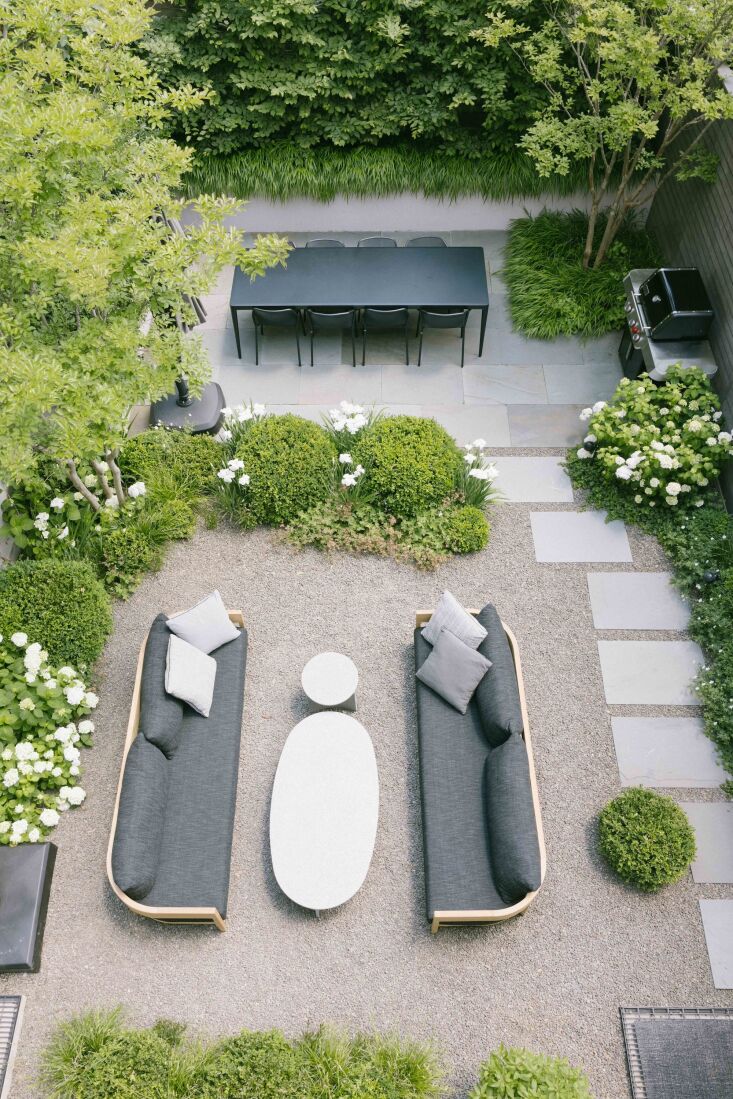
In Queens, we don't just worry about the cold; we worry about water. As extreme weather events become more frequent, the traditional paved backyard has become a liability, contributing to sewer overflows and basement flooding. In this renovation, we treated the garden as a piece of green infrastructure.
Sustainable urban garden design for row houses should include integrated drainage and dry well systems hidden beneath the surface. For this project, we installed a series of dry wells beneath a permeable gravel patio. This system is engineered to mitigate stormwater runoff from weather events as severe as a 50-year storm. Instead of the backyard becoming a pool during a downpour, the water is captured, filtered, and slowly released back into the ground, protecting both this home and the neighbors.
Structural Challenges and Preservation Ethics
When you peel back the layers of a century-old house, you inevitably find surprises. The most critical "rule" we follow is the Lime Mortar Rule. Many well-meaning contractors try to patch 1920s brick with modern Portland cement. This is a fatal mistake. Modern cement is harder than historic brick; when the house shifts or temperatures change, the cement won't give, causing the faces of the bricks to pop off (spalling). We insist on a lime-and-sand mix, which allows the masonry to move and breathe as it was designed to do.
Then there is the debate of "Restore vs. Replace." While we often advocate for preserving original wood windows, in a high-performance renovation, the air-sealing requirements usually tip the scales toward replacement. However, we opt for high-performance timber frames that mimic the original profiles, avoiding the "plastic" look of cheap vinyl.
Cost and ROI: The Value of 'Right-Sizing' Your Home
Let’s talk numbers. A sustainable historic renovation carries a premium—typically 15-20% higher than a standard "cosmetic" remodel. This covers the cost of the airtightness layer, high-performance windows, and the ERV system. However, the Return on Investment (ROI) is multi-faceted:
- Energy Savings: With solar and heat pumps, monthly utility bills are slashed by 60-80%.
- Maintenance: Modernizing the infrastructure (plumbing, electric, masonry) prevents the "emergency repairs" that plague old homes.
- Resale Value: In the NYC market, a "Passive House-lite" renovation is a massive differentiator. Furthermore, converting a basement into a legal, energy-efficient rental unit can offset a significant portion of the mortgage.
FAQ
Q: Can I achieve these energy savings without a full gut renovation? A: Yes. While a gut renovation is the best time to seal the envelope, you can make significant strides by "right-sizing" your HVAC to a heat pump, adding a smart thermostat, and focusing on attic and basement insulation.
Q: Are horizontal solar panels as efficient as tilted ones? A: They lose a small percentage of efficiency compared to a perfect 30-degree tilt, but in an urban row house context, the trade-off is worth it. You gain 100% of the aesthetic preservation and still cover about 50% of your energy needs.
Q: Does an airtight house feel "stuffy"? A: Quite the opposite. Because of the ERV (Energy Recovery Ventilator), an airtight home actually has fresher air than a "leaky" home. The air is constantly filtered, removing dust, pollen, and urban pollutants before they ever reach your lungs.
Transforming a 1920s Queens row house isn't about erasing the past; it's about ensuring the house has a future. By layering modern engineering over historic bones, we create homes that are not only beautiful but resilient, comfortable, and kind to the planet. That is the true meaning of sustainable living.